
Health and Safety Overview PHYSICAL HAZARDS Animal Related
- Slides: 28
Health and Safety Overview
PHYSICAL HAZARDS • Animal Related Incidents • Musculoskeletal Injuries • Slips, Trips and Falls • Fatigue Just In Time Training Health and Safety: Overview
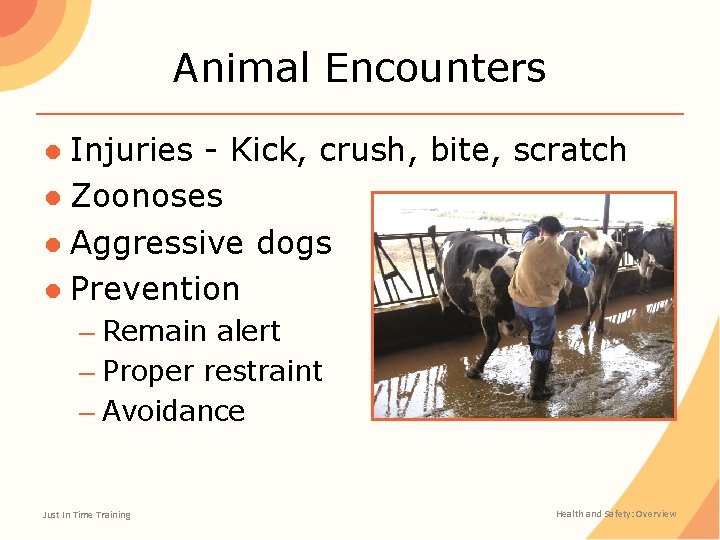
Animal Encounters ● Injuries - Kick, crush, bite, scratch ● Zoonoses ● Aggressive dogs ● Prevention – Remain alert – Proper restraint – Avoidance Just In Time Training Health and Safety: Overview
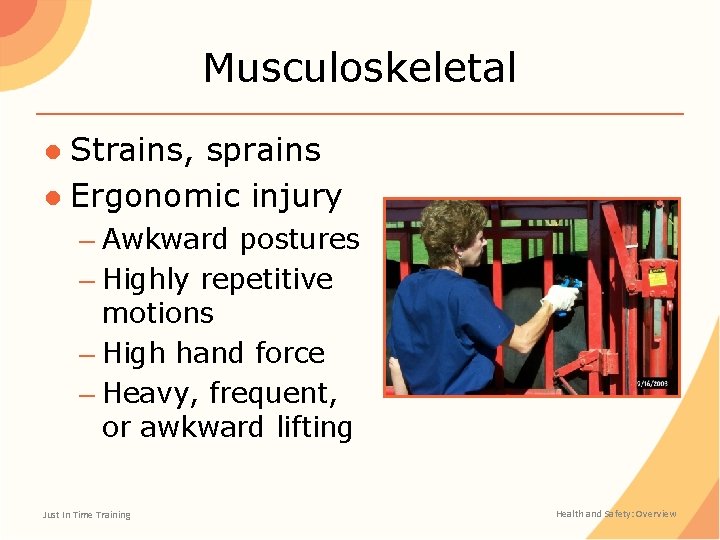
Musculoskeletal ● Strains, sprains ● Ergonomic injury – Awkward postures – Highly repetitive motions – High hand force – Heavy, frequent, or awkward lifting Just In Time Training Health and Safety: Overview
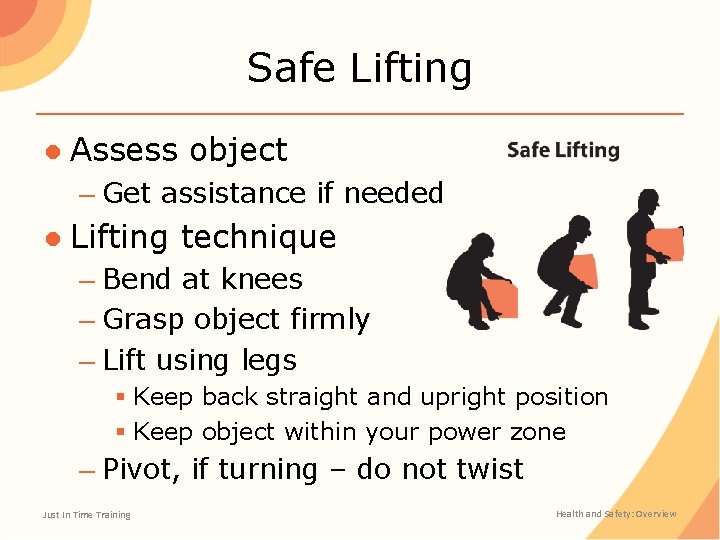
Safe Lifting ● Assess object – Get assistance if needed ● Lifting technique – Bend at knees – Grasp object firmly – Lift using legs § Keep back straight and upright position § Keep object within your power zone – Pivot, if turning – do not twist Just In Time Training Health and Safety: Overview
Slips, Trips and Falls ● Common – Uneven, wet, icy surfaces – Personal Protective Equipment § May limit motion and vision ● Prevention – Watch for hoses, cables, ropes § Keep out of walkways – Adequate lighting – Identify hazardous areas Just In Time Training Health and Safety: Overview
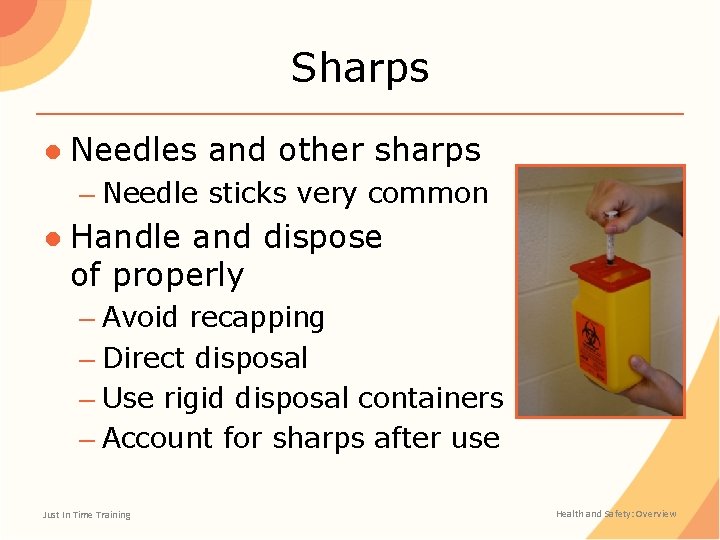
Sharps ● Needles and other sharps – Needle sticks very common ● Handle and dispose of properly – Avoid recapping – Direct disposal – Use rigid disposal containers – Account for sharps after use Just In Time Training Health and Safety: Overview
Fatigue ● Extended shifts – Increased errors, accidents, injuries ● Signs of fatigue – Sleepiness, decreased alertness or motivation – Irritability – Giddiness – Headaches, decreased appetite ● Rest or time off Just In Time Training Health and Safety: Overview
ENVIRONMENTAL HAZARDS • Weather Related Injury • Insects • Noise • Electrical Shock • Chemical Exposure Just In Time Training Health and Safety: Overview
Extreme Heat ● Sunburn, dehydration ● Heat cramps – Muscle spasms ● Heat exhaustion – Paleness, dizziness, nausea, fainting ● Heat stroke – High body temperature, little or no sweating, confusion – Seek medical attention immediately Just In Time Training Health and Safety: Overview
Extreme Heat ● Prevention – Sunscreen – Monitor yourself and others for signs – Take breaks and seek shade – Keep hydrated - water/sports drinks – Avoid caffeine/alcohol Just In Time Training Health and Safety: Overview
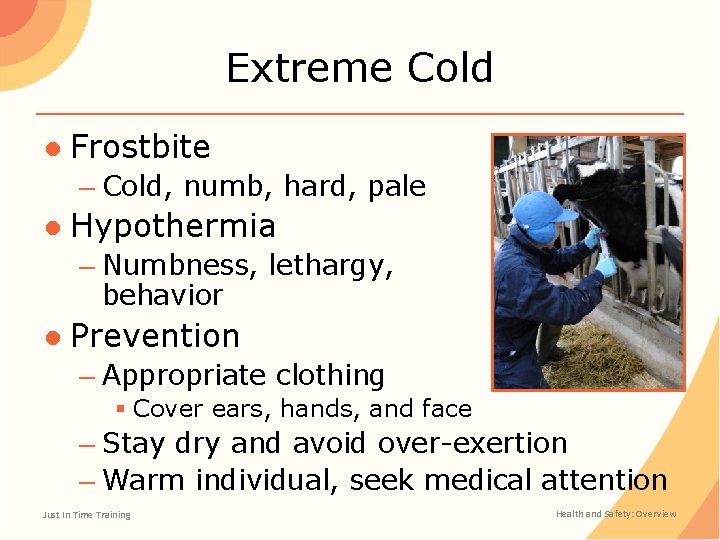
Extreme Cold ● Frostbite – Cold, numb, hard, pale ● Hypothermia – Numbness, lethargy, behavior ● Prevention – Appropriate clothing § Cover ears, hands, and face – Stay dry and avoid over-exertion – Warm individual, seek medical attention Just In Time Training Health and Safety: Overview
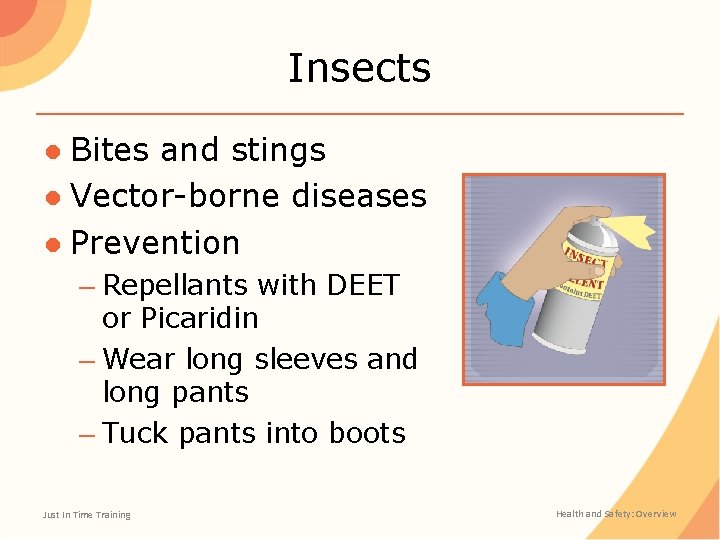
Insects ● Bites and stings ● Vector-borne diseases ● Prevention – Repellants with DEET or Picaridin – Wear long sleeves and long pants – Tuck pants into boots Just In Time Training Health and Safety: Overview
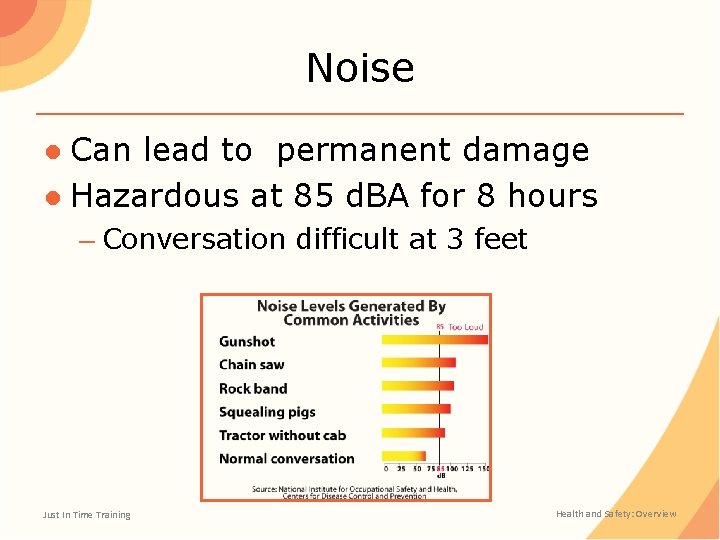
Noise ● Can lead to permanent damage ● Hazardous at 85 d. BA for 8 hours – Conversation difficult at 3 feet Just In Time Training Health and Safety: Overview
Electrical Shock ● Power equipment, cords, downed power lines ● Prevention of shock and electrocution – Inspect cords/ cables for damage – Do not use damaged cords/cables – Use caution when working in wet areas – Observe area for downed power lines – Assume all power lines are active Just In Time Training Health and Safety: Overview
Chemical Hazards ● Examples – Animal facilities – Carbon monoxide – Disinfectant products ● Prevention – Awareness – Do not use in confined spaces – Personal Protective Equipment Just In Time Training Health and Safety: Overview
PSYCHOLOGICAL HAZARDS • Stress • Depression Just In Time Training Health and Safety: Overview
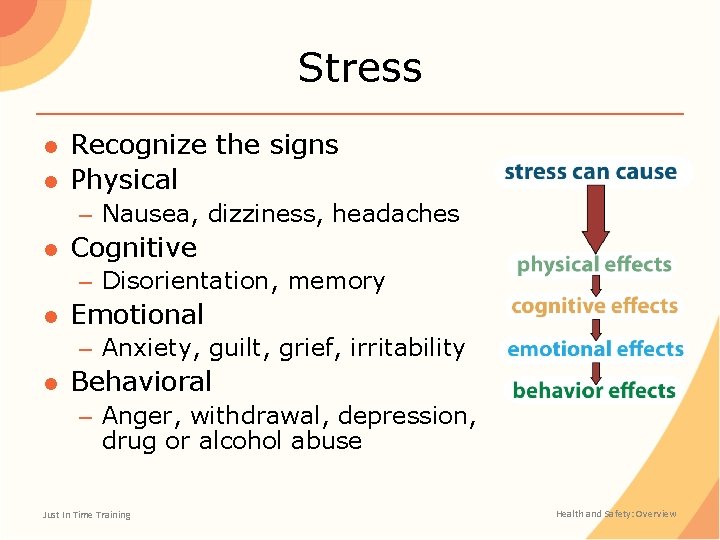
Stress ● Recognize the signs ● Physical – Nausea, dizziness, headaches ● Cognitive – Disorientation, memory ● Emotional – Anxiety, guilt, grief, irritability ● Behavioral – Anger, withdrawal, depression, drug or alcohol abuse Just In Time Training Health and Safety: Overview
Dealing with Stress ● Ways to reduce stress – Monitor self and others for signs – Take frequent rest breaks – Accept what cannot change – Maintain schedule as possible – Communicate with loved ones – Take advantage of support programs Just In Time Training Health and Safety: Overview
CONTINGENCY PLANS • Evacuation • Shelter-In-Place • Fire/Explosion • Hazardous Material Release • Severe Weather Just In Time Training Health and Safety: Overview
Contingency Plans ● Evacuation – Pre-determined signal and site – All are accounted for ● Shelter-In-Place – Pre-determined locations – Remain until “all clear” is given Just In Time Training Health and Safety: Overview
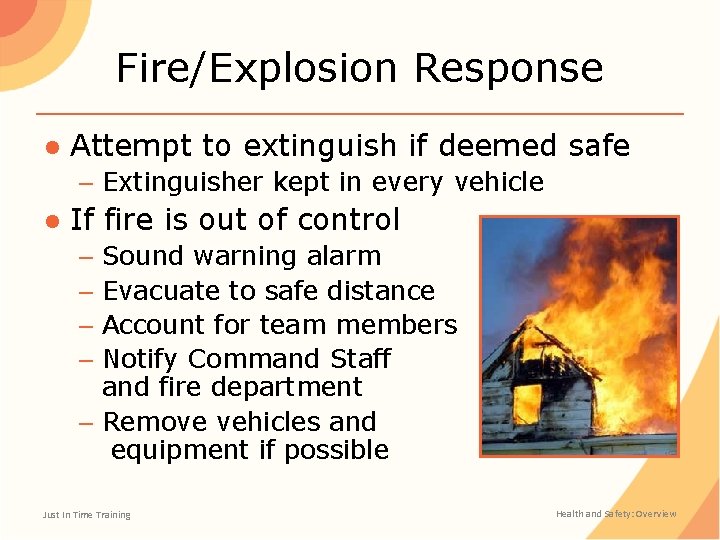
Fire/Explosion Response ● Attempt to extinguish if deemed safe – Extinguisher kept in every vehicle ● If fire is out of control – Sound warning alarm – Evacuate to safe distance – Account for team members – Notify Command Staff and fire department – Remove vehicles and equipment if possible Just In Time Training Health and Safety: Overview
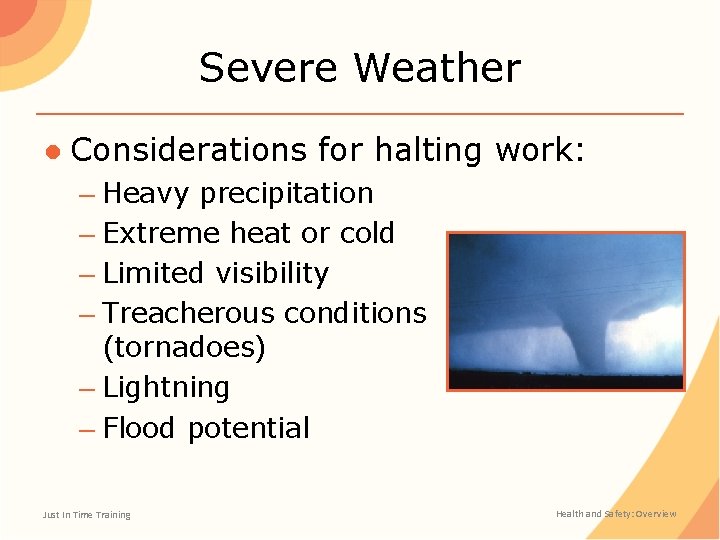
Severe Weather ● Considerations for halting work: – Heavy precipitation – Extreme heat or cold – Limited visibility – Treacherous conditions (tornadoes) – Lightning – Flood potential Just In Time Training Health and Safety: Overview
ROLES AND RESPONSIBILITY Just In Time Training Health and Safety: Overview
ICS: Health and Safety ● Safety Officer – Assure safe working environment – Identifies hazards and sets procedures – Provides training – Develops Health and Safety Plan – Authority to issue stop work order ● Other Sections also have a role ● Everyone’s responsibility Just In Time Training Health and Safety: Overview
Responder Responsibility ● Follow health and safety procedures ● Report all injuries, accidents ● Report unsafe conditions or safety concerns ● Adhere to the chain of command ● Be aware of surroundings ● Wear all PPE correctly Just In Time Training Health and Safety: Overview
Resources ● USDA Foreign Animal Disease Preparedness (FAD PRe. P) Guidelines: Health and Safety http: //www. aphis. usda. gov/animal_health/emrs/nahems. shtml Just In Time Training Health and Safety: Overview
Acknowledgments Development of this presentation was by the Center for Food Security and Public Health at Iowa State University through funding from the Multi-State Partnership for Security in Agriculture Authors: Dan Taylor, DVM, MPH; Glenda Dvorak, DVM, MPH, DACVPM Reviewers: Janice Mogan, DVM; Leslie Cole, DVM