
HEALING THE MULTITUDES Catholic Health Cares Commitment to




- Slides: 23
HEALING THE MULTITUDES Catholic Health Care’s Commitment to Community Health
SSM HEALTH Our Vision Through our participation in the healing ministry of Jesus Christ, communities, especially those that are economically, physically and socially marginalized, will experience improved health in mind, body, spirit and environment within the financial limits of the system.
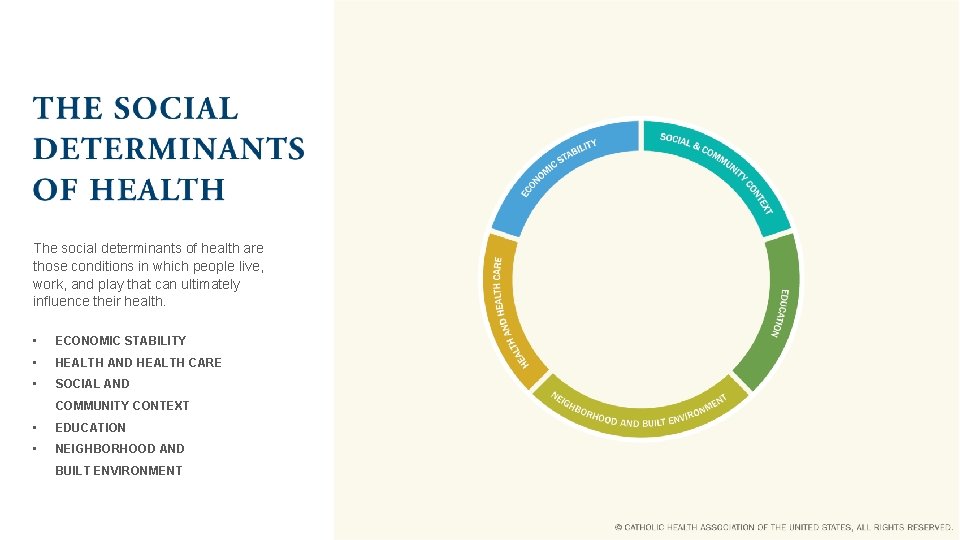
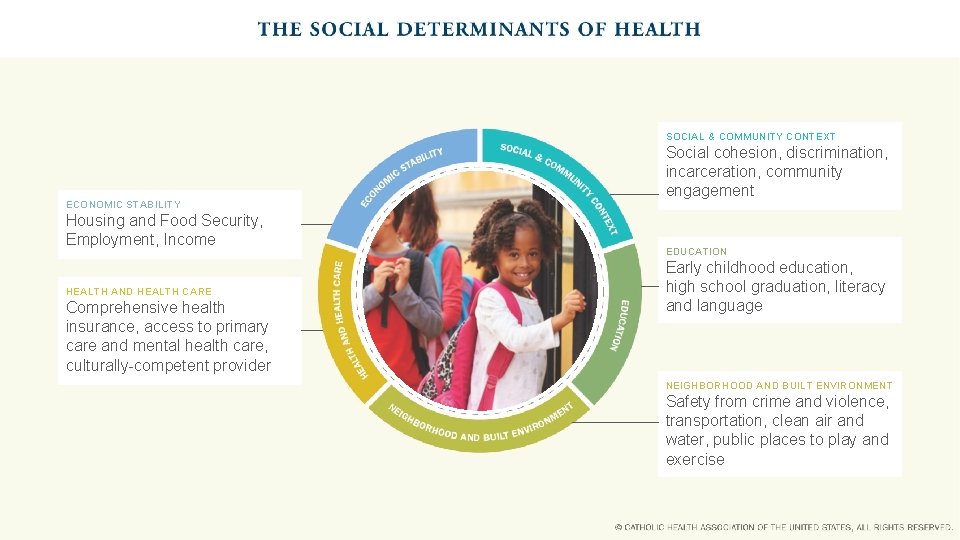
The social determinants of health are those conditions in which people live, work, and play that can ultimately influence their health. • ECONOMIC STABILITY • HEALTH AND HEALTH CARE • SOCIAL AND COMMUNITY CONTEXT • EDUCATION • NEIGHBORHOOD AND BUILT ENVIRONMENT
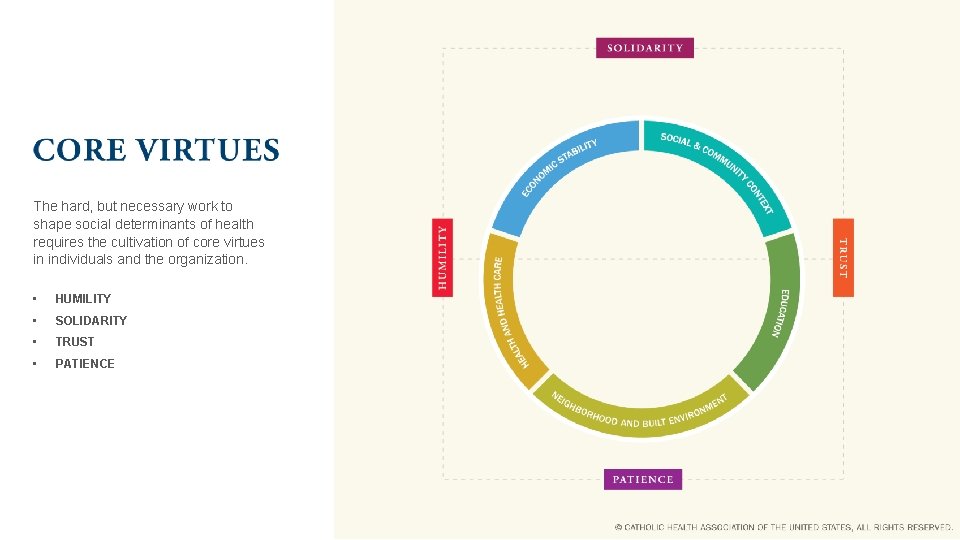
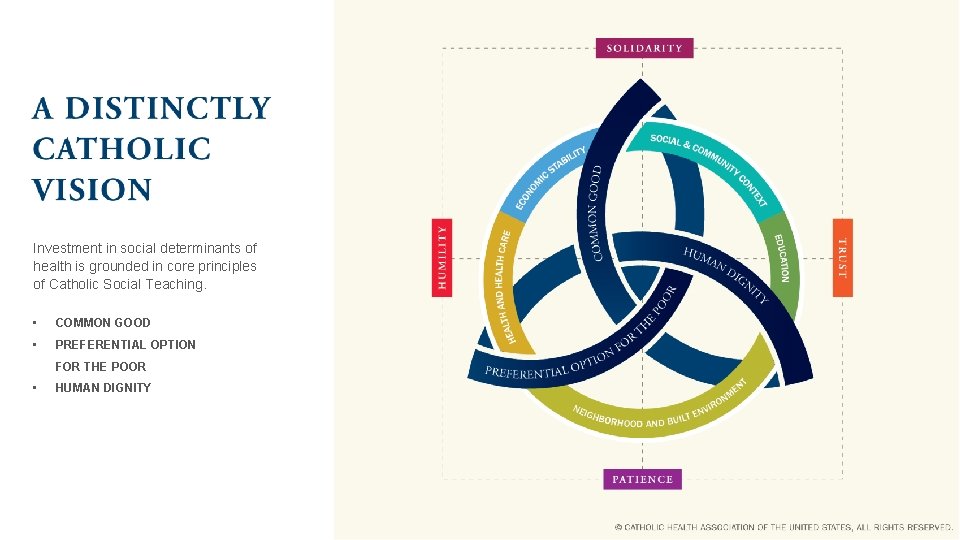
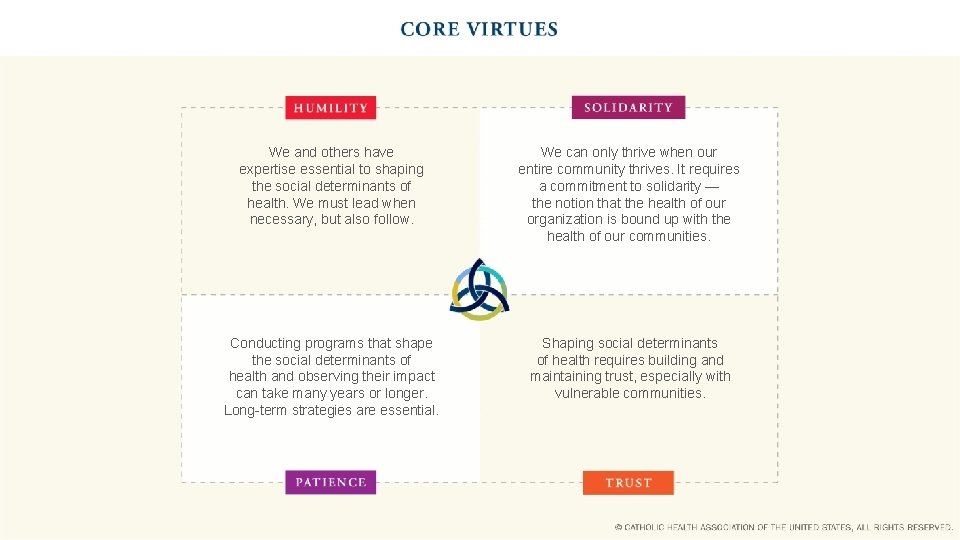
The hard, but necessary work to shape social determinants of health requires the cultivation of core virtues in individuals and the organization. • HUMILITY • SOLIDARITY • TRUST • PATIENCE
Investment in social determinants of health is grounded in core principles of Catholic Social Teaching. • COMMON GOOD • PREFERENTIAL OPTION FOR THE POOR • HUMAN DIGNITY
SOCIAL & COMMUNITY CONTEXT ECONOMIC STABILITY Housing and Food Security, Employment, Income HEALTH AND HEALTH CARE Comprehensive health insurance, access to primary care and mental health care, culturally-competent provider Social cohesion, discrimination, incarceration, community engagement EDUCATION Early childhood education, high school graduation, literacy and language NEIGHBORHOOD AND BUILT ENVIRONMENT Safety from crime and violence, transportation, clean air and water, public places to play and exercise
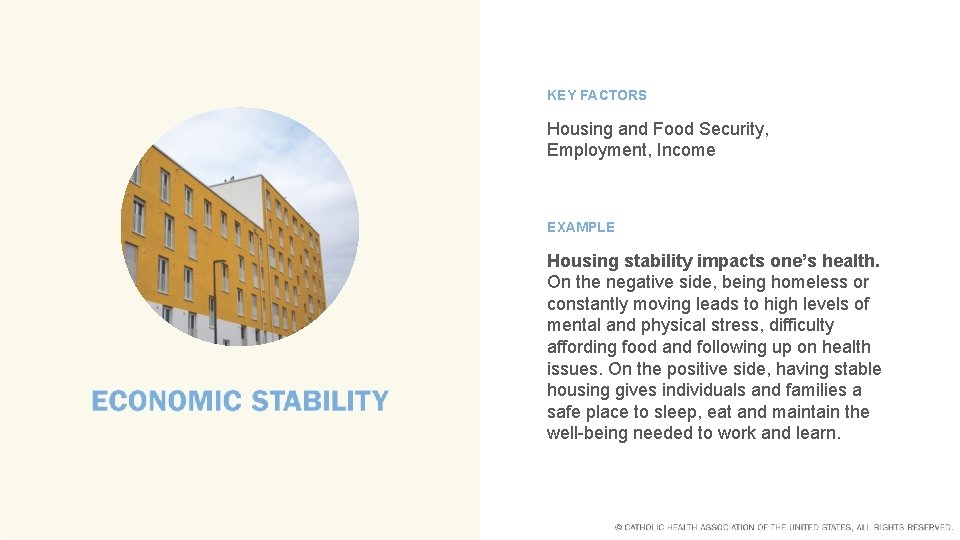
KEY FACTORS Housing and Food Security, Employment, Income EXAMPLE Housing stability impacts one’s health. On the negative side, being homeless or constantly moving leads to high levels of mental and physical stress, difficulty affording food and following up on health issues. On the positive side, having stable housing gives individuals and families a safe place to sleep, eat and maintain the well-being needed to work and learn.
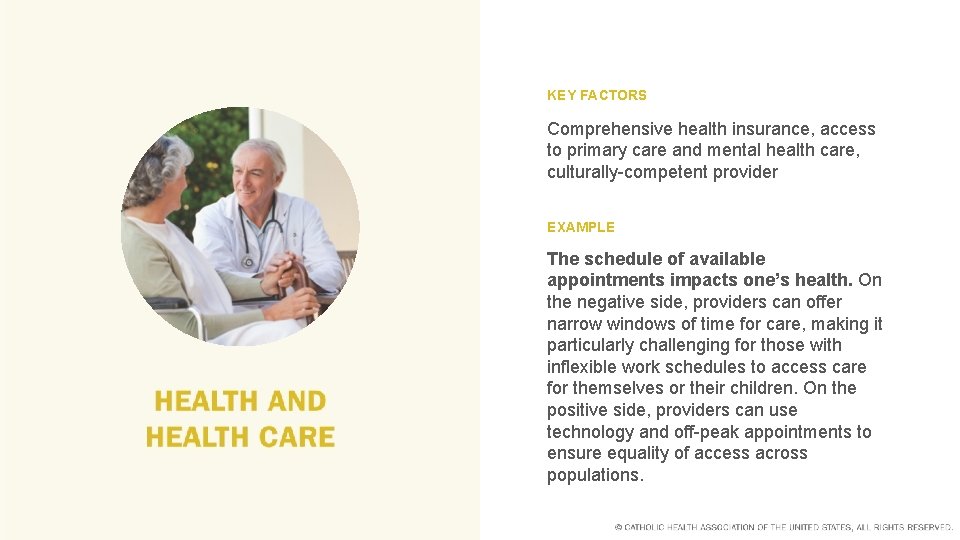
KEY FACTORS Comprehensive health insurance, access to primary care and mental health care, culturally-competent provider EXAMPLE The schedule of available appointments impacts one’s health. On the negative side, providers can offer narrow windows of time for care, making it particularly challenging for those with inflexible work schedules to access care for themselves or their children. On the positive side, providers can use technology and off-peak appointments to ensure equality of access across populations.
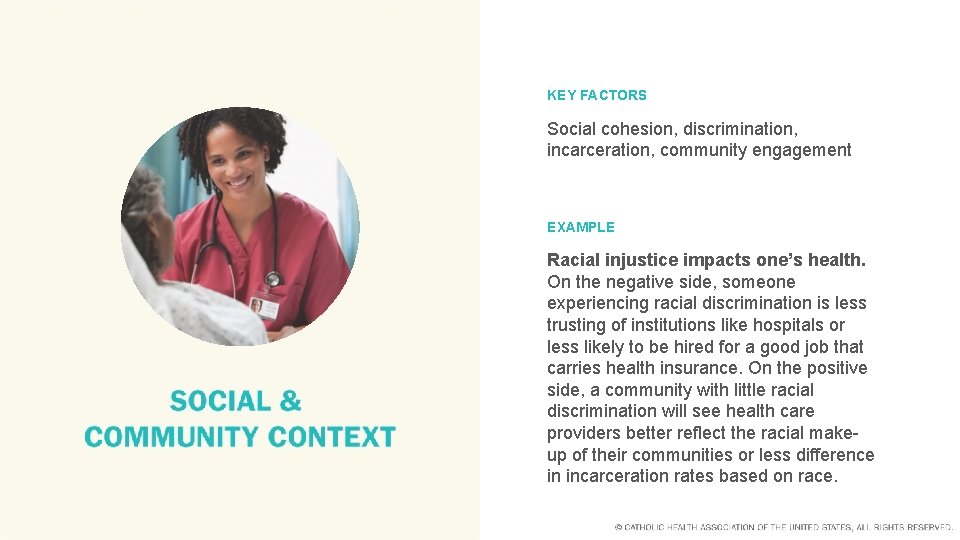
KEY FACTORS Social cohesion, discrimination, incarceration, community engagement EXAMPLE Racial injustice impacts one’s health. On the negative side, someone experiencing racial discrimination is less trusting of institutions like hospitals or less likely to be hired for a good job that carries health insurance. On the positive side, a community with little racial discrimination will see health care providers better reflect the racial makeup of their communities or less difference in incarceration rates based on race.
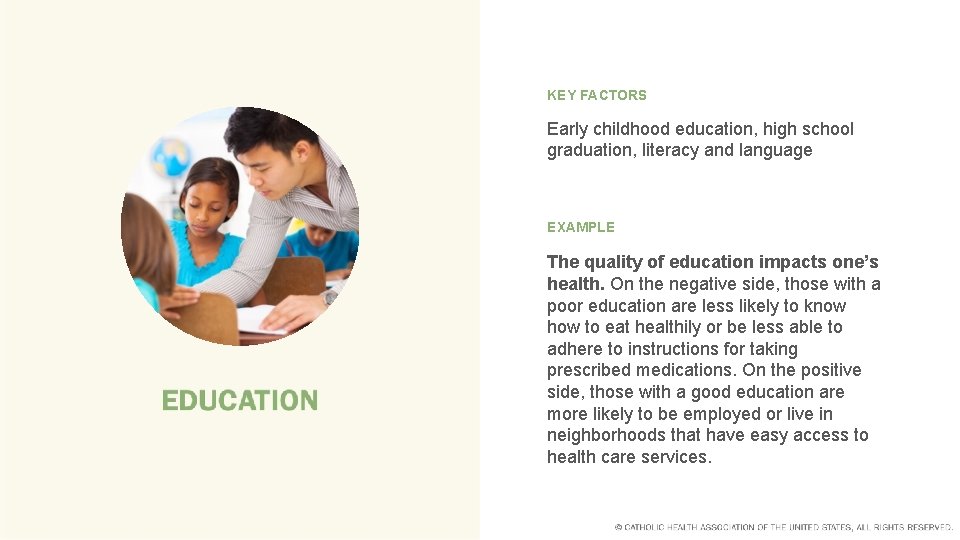
KEY FACTORS Early childhood education, high school graduation, literacy and language EXAMPLE The quality of education impacts one’s health. On the negative side, those with a poor education are less likely to know how to eat healthily or be less able to adhere to instructions for taking prescribed medications. On the positive side, those with a good education are more likely to be employed or live in neighborhoods that have easy access to health care services.
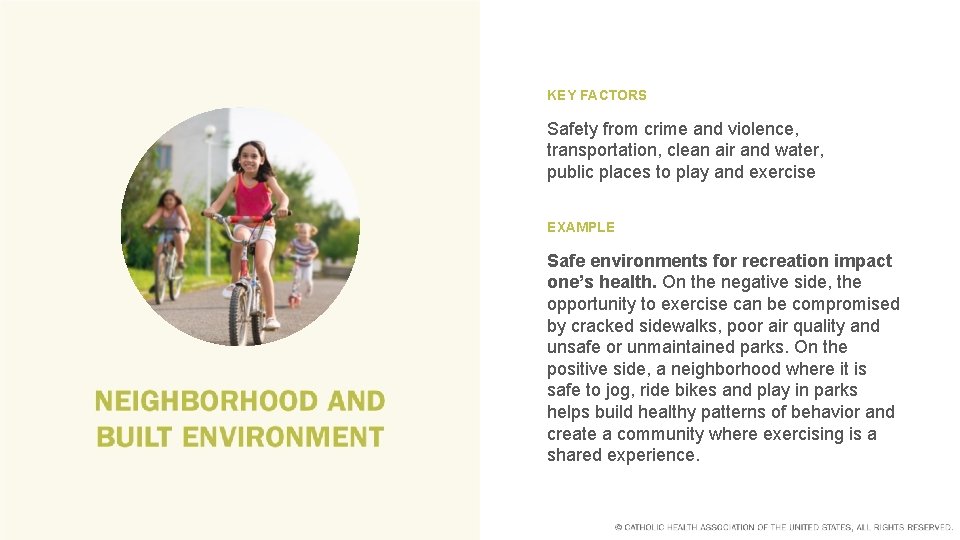
KEY FACTORS Safety from crime and violence, transportation, clean air and water, public places to play and exercise EXAMPLE Safe environments for recreation impact one’s health. On the negative side, the opportunity to exercise can be compromised by cracked sidewalks, poor air quality and unsafe or unmaintained parks. On the positive side, a neighborhood where it is safe to jog, ride bikes and play in parks helps build healthy patterns of behavior and create a community where exercising is a shared experience.
A comprehensive strategy requires engaging at three levels: • The clinical encounter • Organizational structures and processes • Community relationships
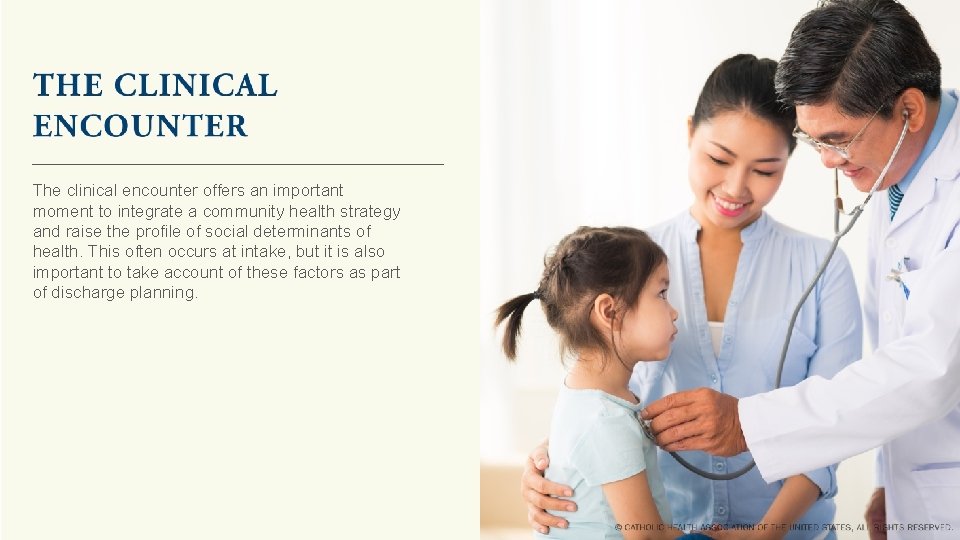
The clinical encounter offers an important moment to integrate a community health strategy and raise the profile of social determinants of health. This often occurs at intake, but it is also important to take account of these factors as part of discharge planning.
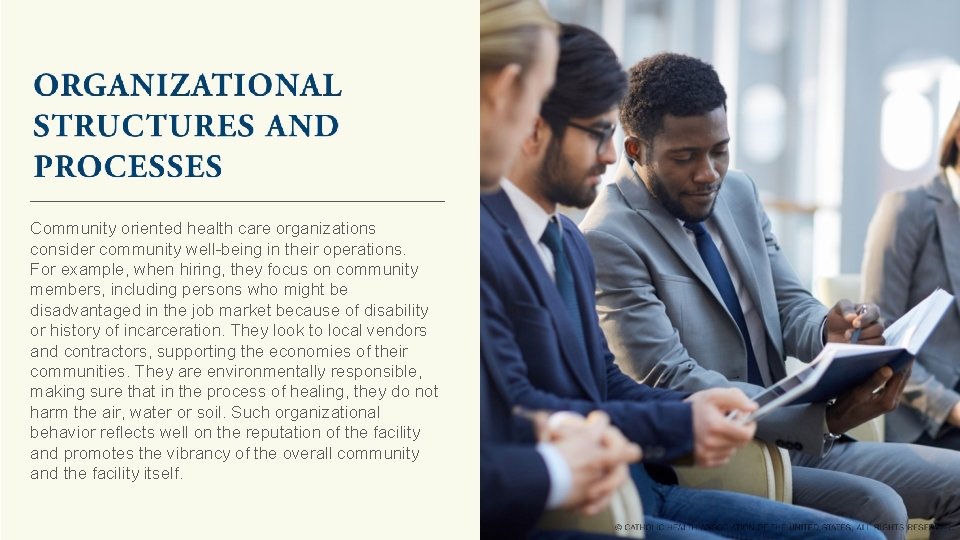
Community oriented health care organizations consider community well-being in their operations. For example, when hiring, they focus on community members, including persons who might be disadvantaged in the job market because of disability or history of incarceration. They look to local vendors and contractors, supporting the economies of their communities. They are environmentally responsible, making sure that in the process of healing, they do not harm the air, water or soil. Such organizational behavior reflects well on the reputation of the facility and promotes the vibrancy of the overall community and the facility itself.
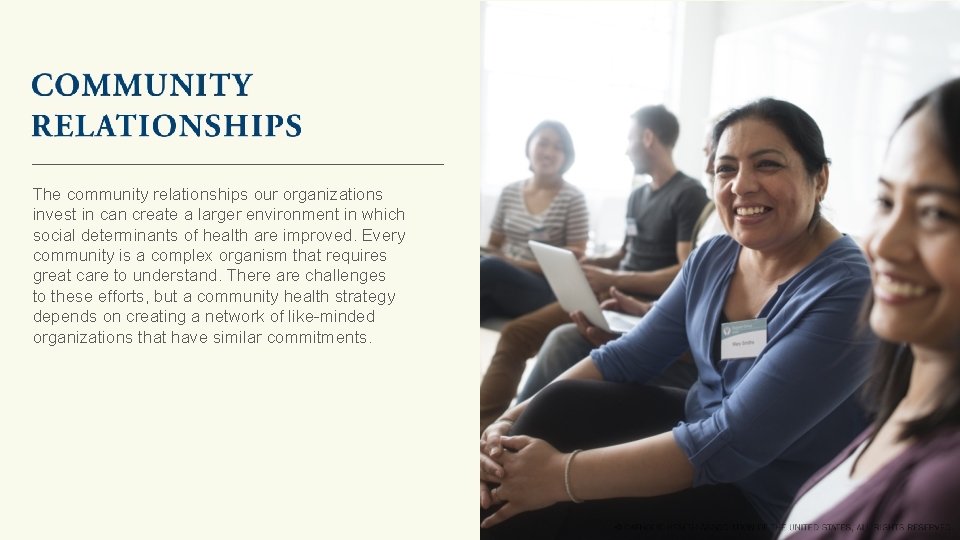
The community relationships our organizations invest in can create a larger environment in which social determinants of health are improved. Every community is a complex organism that requires great care to understand. There are challenges to these efforts, but a community health strategy depends on creating a network of like-minded organizations that have similar commitments.
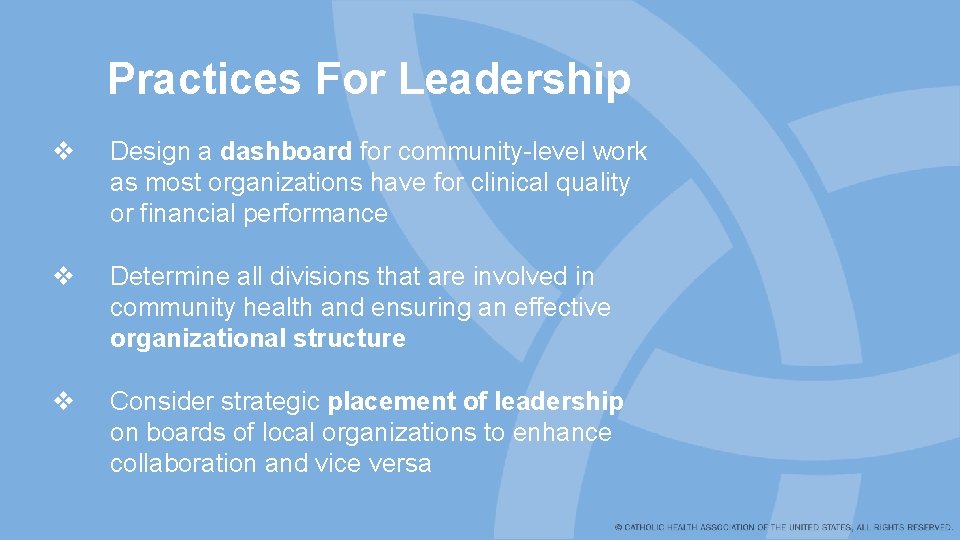
Practices For Leadership v Design a dashboard for community-level work as most organizations have for clinical quality or financial performance v Determine all divisions that are involved in community health and ensuring an effective organizational structure v Consider strategic placement of leadership on boards of local organizations to enhance collaboration and vice versa
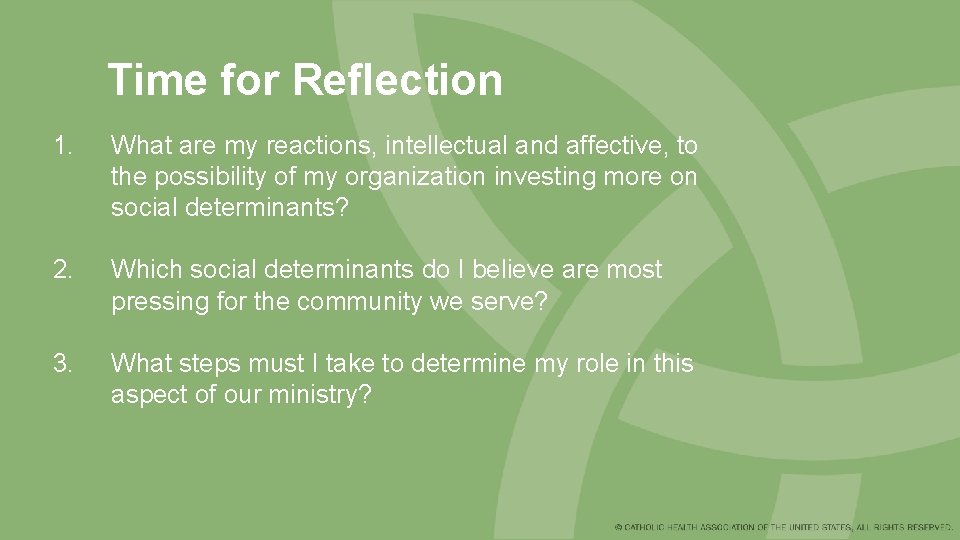
Time for Reflection 1. What are my reactions, intellectual and affective, to the possibility of my organization investing more on social determinants? 2. Which social determinants do I believe are most pressing for the community we serve? 3. What steps must I take to determine my role in this aspect of our ministry?
This is a Divider Slide
We and others have expertise essential to shaping the social determinants of health. We must lead when necessary, but also follow. We can only thrive when our entire community thrives. It requires a commitment to solidarity — the notion that the health of our organization is bound up with the health of our communities. Conducting programs that shape the social determinants of health and observing their impact can take many years or longer. Long-term strategies are essential. Shaping social determinants of health requires building and maintaining trust, especially with vulnerable communities.
Template slide for bulleted list or other: • Point 1 • Point 2 • Point 3
This is a Divider Slide
Quote slide Person who said the quote Title of person who said the quote