
Headache A Practical Summary for Primary Care Providers

- Slides: 53
Headache: A Practical Summary for Primary Care Providers ANNETTE GOODMAN, DO REDINGTON NEUROLOGY
Objectives Be able to identify common types of primary headache syndromes seen in primary care: Medication overuse headache Migraine Cluster Headache Muscle Tension Headache Avoid triggers contributing to medication overuse headache Differentiate between treatment options for migraines, both acutely and as a preventative Be aware of emerging therapies for migraines
Prevalence ½ - ¾ of adults have suffered from a headache within the past year. 30% have had a migraine in the past year. 1. 7 -4% have had a headache at least 15 days or more each month. Severe headache / migraine reported in 1 out of 6 Americans over a 3 month period. 9. 7% males, 20. 7% females Fifth leading cause of ER visits Third leading cause among females age 18 -44 1. 3% of outpatient visits Third highest cause nationwide of years lost to disability [YLD]. Headache. 2018 Apr; 58(4): 496 -505. doi: 10. 1111/head. 13281. Epub 2018 Mar 12. World Health Organization fact sheet, 2016
Today’s Scope: Medication Overuse Headache Migraine Tension-type Headache Cluster Headache
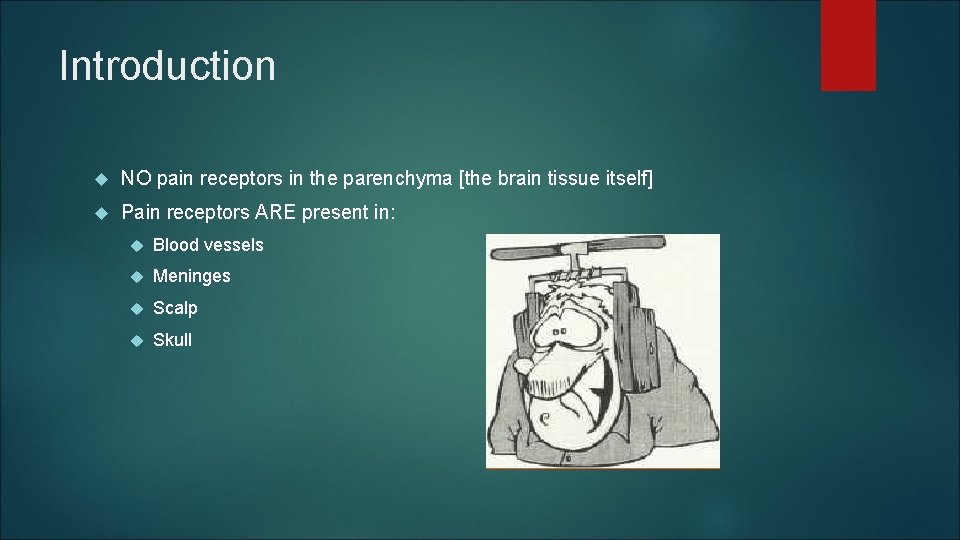
Introduction NO pain receptors in the parenchyma [the brain tissue itself] Pain receptors ARE present in: Blood vessels Meninges Scalp Skull
Medication Overuse Headache
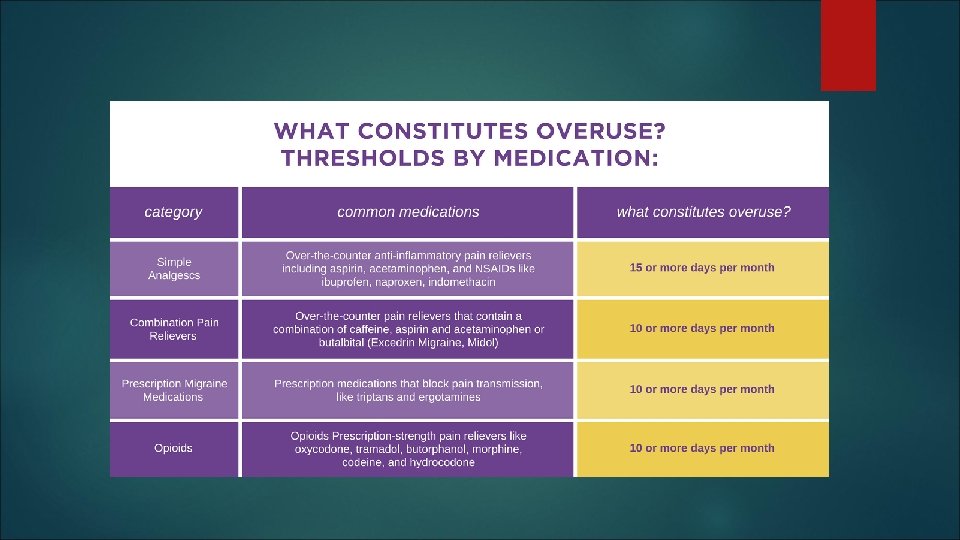
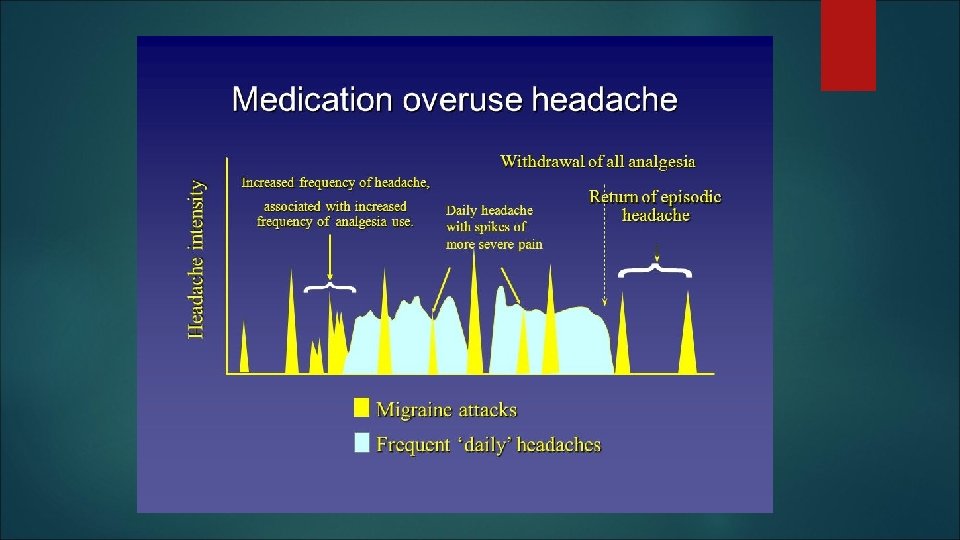
Medication Overuse Headache Also known as Rebound Headache Defined as: Headache present on >15 days/month. Regular overuse for >3 months of one or more drugs that can be taken for acute and/or symptomatic treatment of headache. Headache has developed or markedly worsened during medication overuse. Ther Adv Drug Saf. 2014 Apr; 5(2): 87– 99.
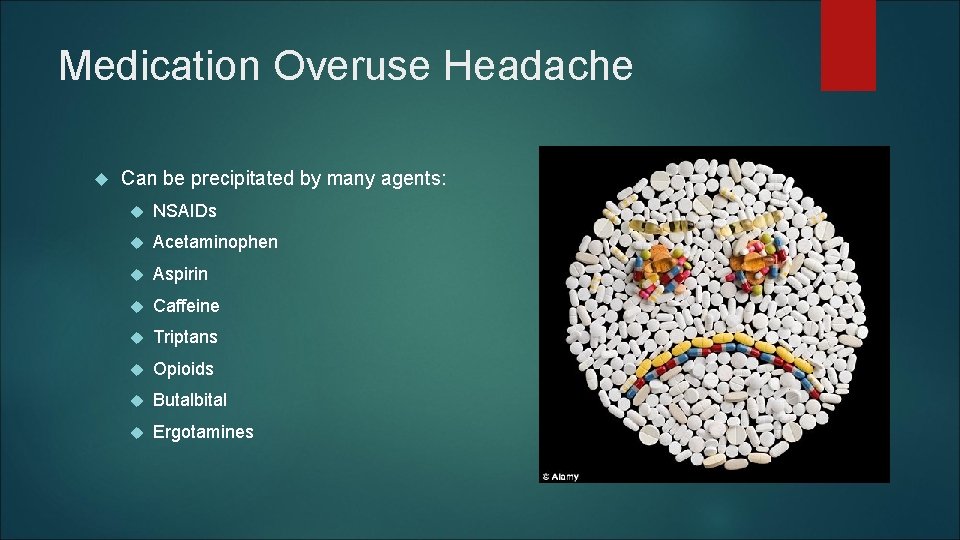
Medication Overuse Headache Can be precipitated by many agents: NSAIDs Acetaminophen Aspirin Caffeine Triptans Opioids Butalbital Ergotamines
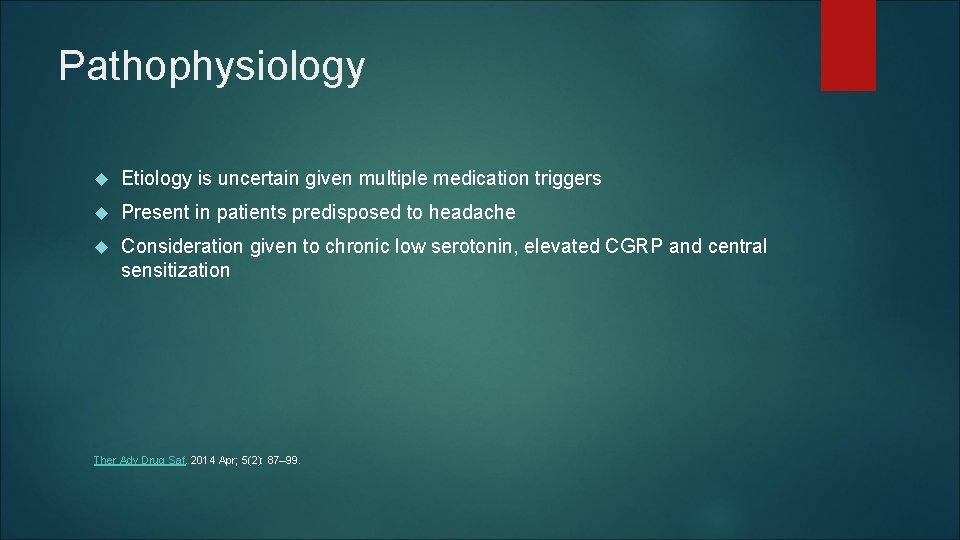
Pathophysiology Etiology is uncertain given multiple medication triggers Present in patients predisposed to headache Consideration given to chronic low serotonin, elevated CGRP and central sensitization Ther Adv Drug Saf. 2014 Apr; 5(2): 87– 99.
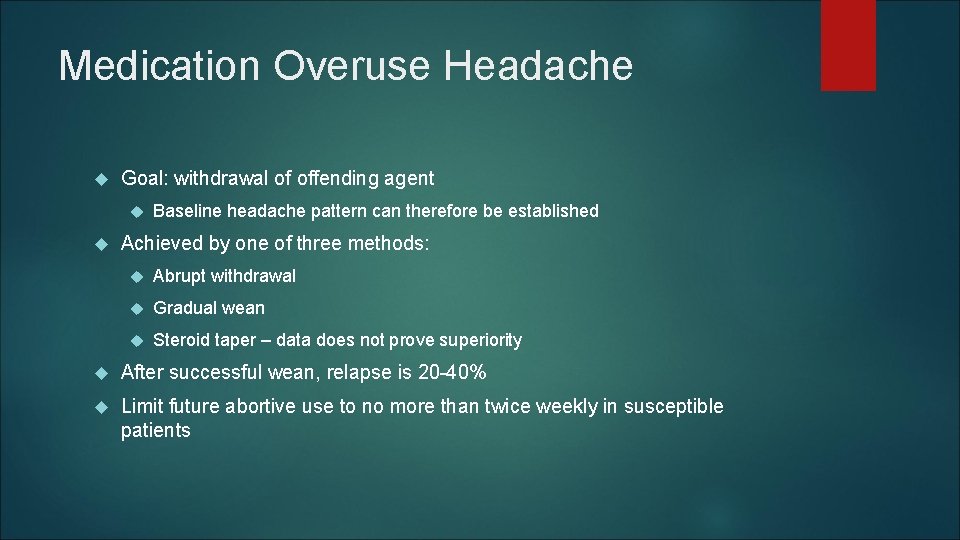
Medication Overuse Headache Goal: withdrawal of offending agent Baseline headache pattern can therefore be established Achieved by one of three methods: Abrupt withdrawal Gradual wean Steroid taper – data does not prove superiority After successful wean, relapse is 20 -40% Limit future abortive use to no more than twice weekly in susceptible patients
Migraine
Introduction Prevalence: Women 25% (lifetime) Men 8% (lifetime) 28 million persons have migraine each year in the U. S. Highest from 25 -50 years of age Genetics About 70% of migraineurs have a positive family history in a firstdegree relative Unknown mode of transmission
Strange (Scary) Facts Increased prevalence of: MVP PFO HTN Stroke Epilepsy Atopic allergies Asthma IBS Depression Bipolar disease Anxiety disorders Panic attacks
Migraine The International Classification of Headache Disorders, 3 rd edition A. At least five attacks fulfilling criteria B–D B. Headache attacks lasting 4– 72 hours (when untreated or unsuccessfully treated) C. Headache has at least two of the following four characteristics: 1. unilateral location 2. pulsating quality 3. moderate or severe pain intensity 4. aggravation by or causing avoidance of routine physical activity (e. g. walking or climbing stairs) D. During headache at least one of the following: 1. nausea and/or vomiting 2. photophobia and phonophobia E. Not better accounted for by another ICHD-3 diagnosis. Cephalalgia 2018, Vol. 38(1) 1– 211
Migraine without aura [common migraine] Migraine with aura [classic migraine]
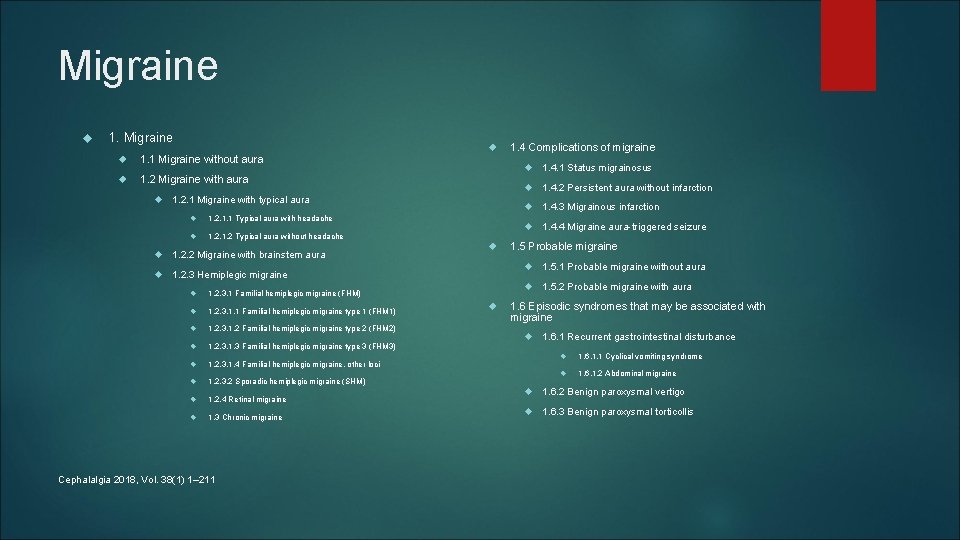
Migraine 1. 1 Migraine without aura 1. 2 Migraine with aura 1. 2. 1 Migraine with typical aura 1. 2. 1. 1 Typical aura with headache 1. 2 Typical aura without headache 1. 2. 2 Migraine with brainstem aura 1. 2. 3 Hemiplegic migraine 1. 2. 3. 1 Familial hemiplegic migraine (FHM) 1. 2. 3. 1. 1 Familial hemiplegic migraine type 1 (FHM 1) 1. 2. 3. 1. 2 Familial hemiplegic migraine type 2 (FHM 2) 1. 2. 3. 1. 3 Familial hemiplegic migraine type 3 (FHM 3) 1. 2. 3. 1. 4 Familial hemiplegic migraine, other loci 1. 2. 3. 2 Sporadic hemiplegic migraine (SHM) 1. 2. 4 Retinal migraine 1. 3 Chronic migraine Cephalalgia 2018, Vol. 38(1) 1– 211 1. 4 Complications of migraine 1. 4. 1 Status migrainosus 1. 4. 2 Persistent aura without infarction 1. 4. 3 Migrainous infarction 1. 4. 4 Migraine aura-triggered seizure 1. 5 Probable migraine 1. 5. 1 Probable migraine without aura 1. 5. 2 Probable migraine with aura 1. 6 Episodic syndromes that may be associated with migraine 1. 6. 1 Recurrent gastrointestinal disturbance 1. 6. 1. 1 Cyclical vomiting syndrome 1. 6. 1. 2 Abdominal migraine 1. 6. 2 Benign paroxysmal vertigo 1. 6. 3 Benign paroxysmal torticollis
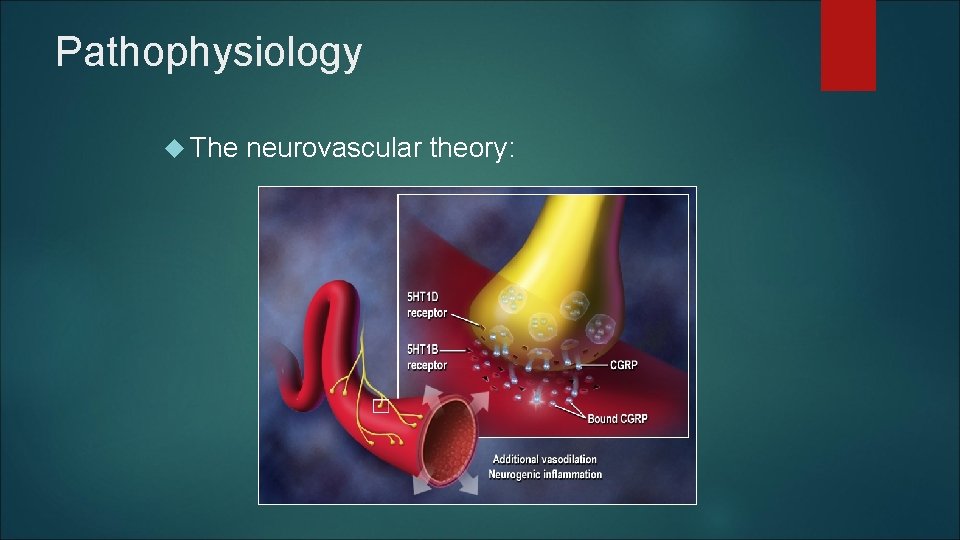
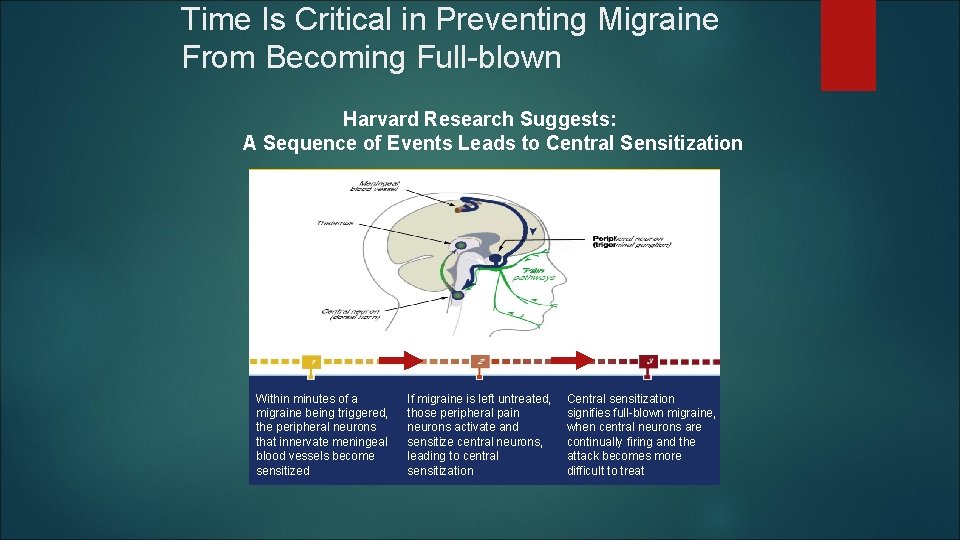
Pathophysiology The neurovascular theory:
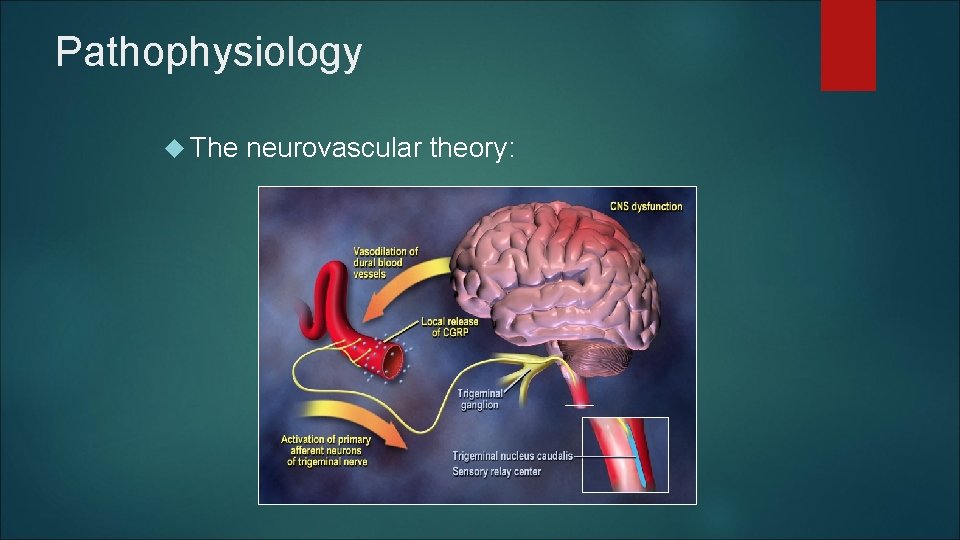
Pathophysiology The neurovascular theory:
Time Is Critical in Preventing Migraine From Becoming Full-blown Harvard Research Suggests: A Sequence of Events Leads to Central Sensitization Within minutes of a migraine being triggered, the peripheral neurons that innervate meningeal blood vessels become sensitized If migraine is left untreated, those peripheral pain neurons activate and sensitize central neurons, leading to central sensitization Central sensitization signifies full-blown migraine, when central neurons are continually firing and the attack becomes more difficult to treat
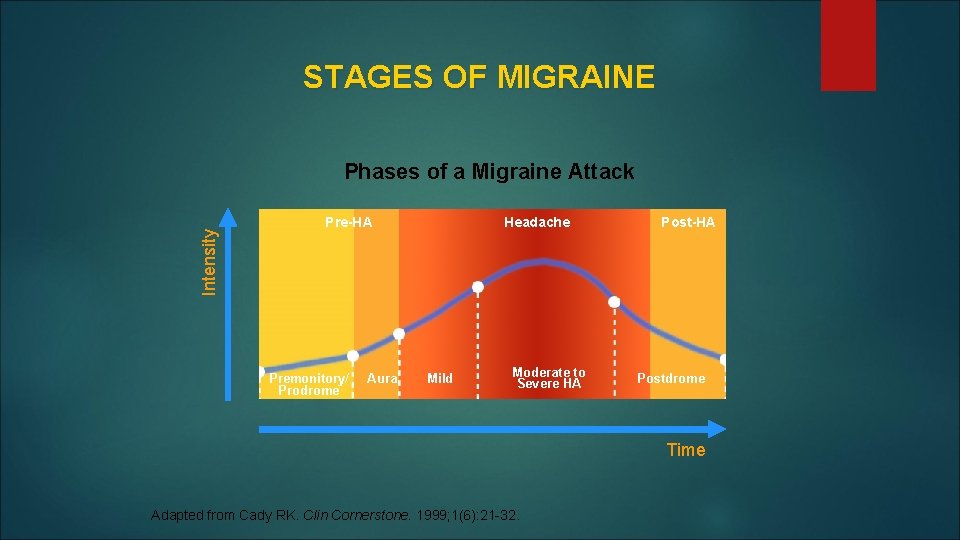
STAGES OF MIGRAINE Intensity Phases of a Migraine Attack Pre-HA Premonitory/ Prodrome Aura Headache Mild Moderate to Severe HA Post-HA Postdrome Time Adapted from Cady RK. Clin Cornerstone. 1999; 1(6): 21 -32.
Prodrome Mood Changes Neurologic symptoms Yawning, photo/phonophobia, vision changes Constitutional symptoms Irritability, depression, sleepy, apathy Fatigue, pallor, fluid retention, myalgia Alimentary symptoms Hunger, anorexia, nausea, diarrhea
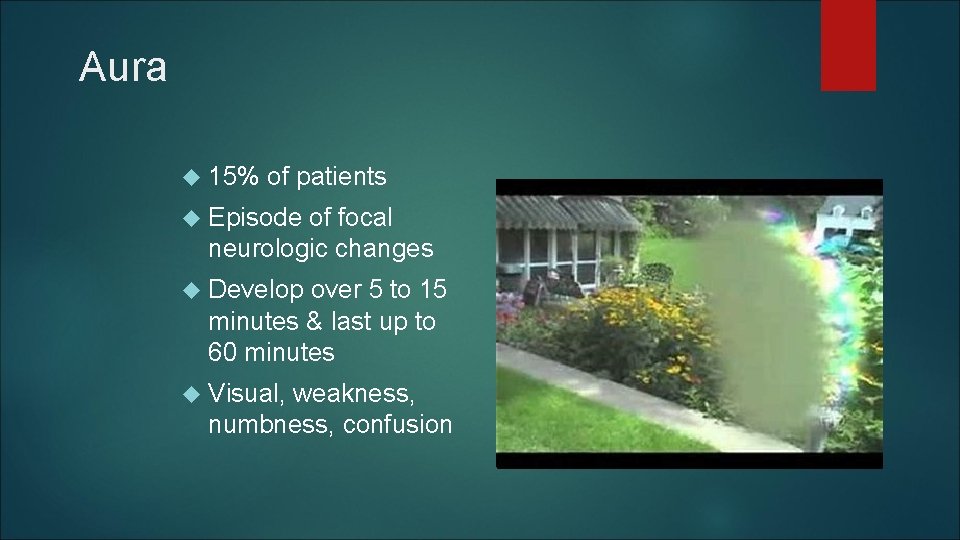
Aura 15% of patients Episode of focal neurologic changes Develop over 5 to 15 minutes & last up to 60 minutes Visual, weakness, numbness, confusion
Headache lasts hours to days Migraine head pain unilateral in 56 – 68% of patients 90% of patients have coexisting nausea Constitutional symptoms common
Postdrome Depression Drowsiness Cognitive changes Memory loss Difficulty with concentration
Treatment philosophy If the pain can be stopped early, the cascade of pain responses can be controlled Headache needs to be caught before central sensitization occurs Patients may receive the greatest benefit from their migraine medication if they: Practice early intervention Use a fast-acting migraine medication
General Treatment Avoid triggers! Maintain regular sleep schedule Maintain regular meal schedule Low tyramine Limit caffeine Avoid nitrates/nitrites/MSG Limit chocolate Reduce stress Adequate water intake
Treatment Options Two Treatment Approaches • Acute therapy Work quickly to relieve migraine pain and other symptoms Are taken only at migraine onset • Preventative therapy Prevent Are or reduce the number of migraine attacks taken on a daily basis
Migraine Abortives NSAIDs Triptans Acetaminophen/Butalbital/Caffeine OTC migraine preparations “Excedrin Migraine” DHE
Acute Treatment NSAIDS Inhibit prostaglandin formation, thus reducing inflammation Naproxen Ibuprofen ASA COX 2 inhibitors
Acute Treatment Triptans Selective 5 -HT 1 B/1 D agonists Block actions of 5 -HT such as dilation of cranial arteries/AV anastomoses, neurogenic dural plasma extravasation Use early! More effective in mild/moderate pain Caution about rebound
Acute Treatment Triptans: Almotriptan (Axert) Eletriptan (Relpax) Frovatriptan (Frova) Naratriptan (Amerge) Rizatriptan (Maxalt) Sumatriptan (Imitrex) Zolmitriptan (Zomig)
Acute Treatment Triptans side effects: Chest pressure/heaviness Jaw tightness Dizziness Somnolence Fatigue Nausea Paresthesias
Acute Treatment Triptans Relative contraindication: Complicated migraine CAD, CVD, PVD Smoker + oral contraception Severe HTN
Acute Treatment Ergotamine tartrate Available for over 50 years Vasoconstrictors Oral, SL, IV, PR Caution about rebound, dependence Contraindicated: CVD CAD PVD Severe HTN Sepsis CKD Hepatic disease Pregnancy
Acute Treatment OTC agents Cautious of rebound! Opioids and butalbital are NOT considered appropriate abortive agents except in cases of last resort. [US Headache Consortium]
Status Migrainosus Migraine lasting greater than 72 hours in duration Refractory to conventional treatment Steroid burst – oral methylprednisolone, prednisone “Headache cocktail”: Ketorolac 60 mg IM Diphenhydramine 50 mg IM Prochlorperazine 10 mg IM Patient must have a driver
Prophylactic Treatment Indicated in patients with: >2 migraines per month Attacks lasting for several days per week Severity/frequency that critically impacts patient’s daily life Abortive therapies are contraindicated, ineffective, overused, not tolerated Uncommon migraine type (hemiplegic, basilar, prolonged aura, migrainous infarction)
Prophylactic Treatment Start low and go slow! Adequate trial with adequate dose Consider comorbid conditions when choosing a medication May add a second medication
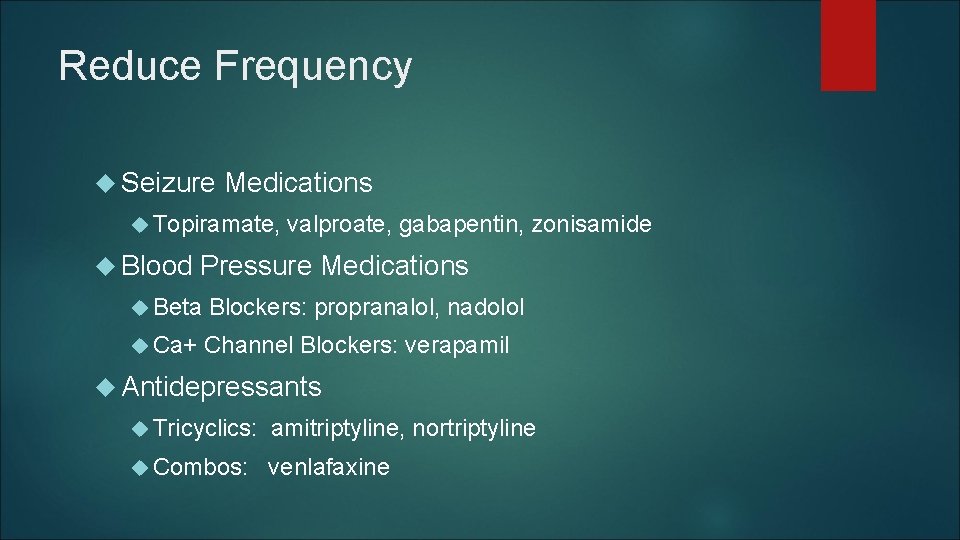
Reduce Frequency Seizure Medications Topiramate, Blood valproate, gabapentin, zonisamide Pressure Medications Beta Blockers: propranalol, nadolol Ca+ Channel Blockers: verapamil Antidepressants Tricyclics: amitriptyline, nortriptyline Combos: venlafaxine
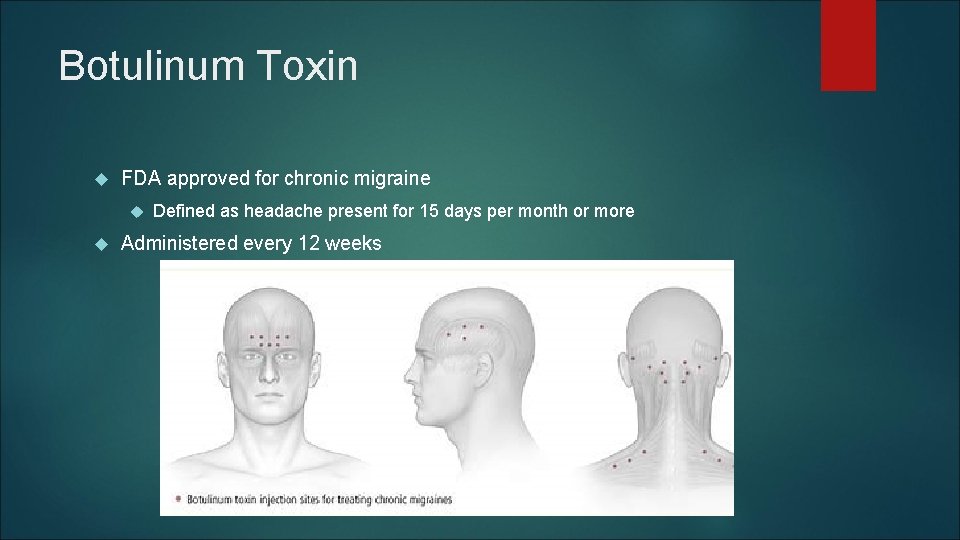
Botulinum Toxin FDA approved for chronic migraine Defined as headache present for 15 days per month or more Administered every 12 weeks
Other treatment options Magnesium Riboflavin glycinate 400 mg bid 400 mg daily Melatonin Co. Q 10 Butterbur/Feverfew/Skullcap Acupuncture Biofeedback/Yoga/Meditation
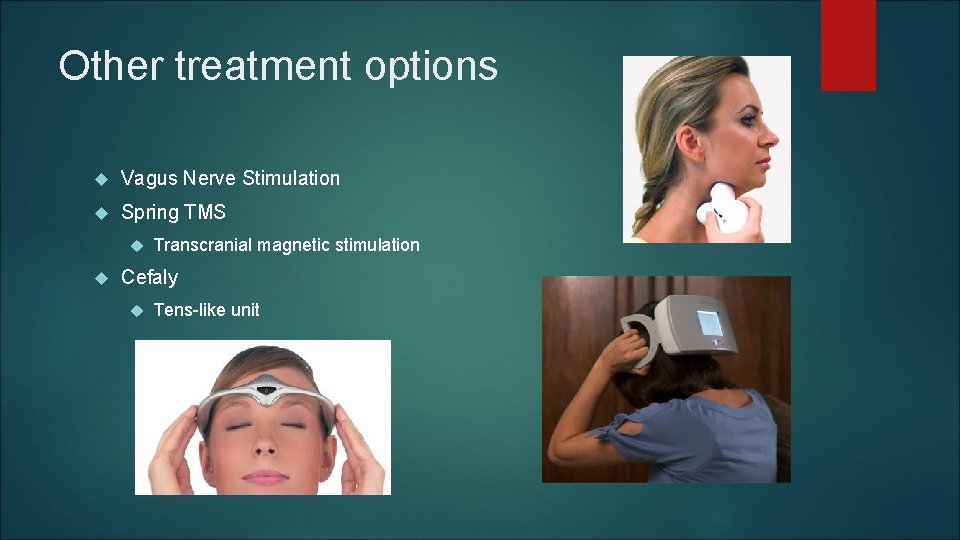
Other treatment options Vagus Nerve Stimulation Spring TMS Transcranial magnetic stimulation Cefaly Tens-like unit
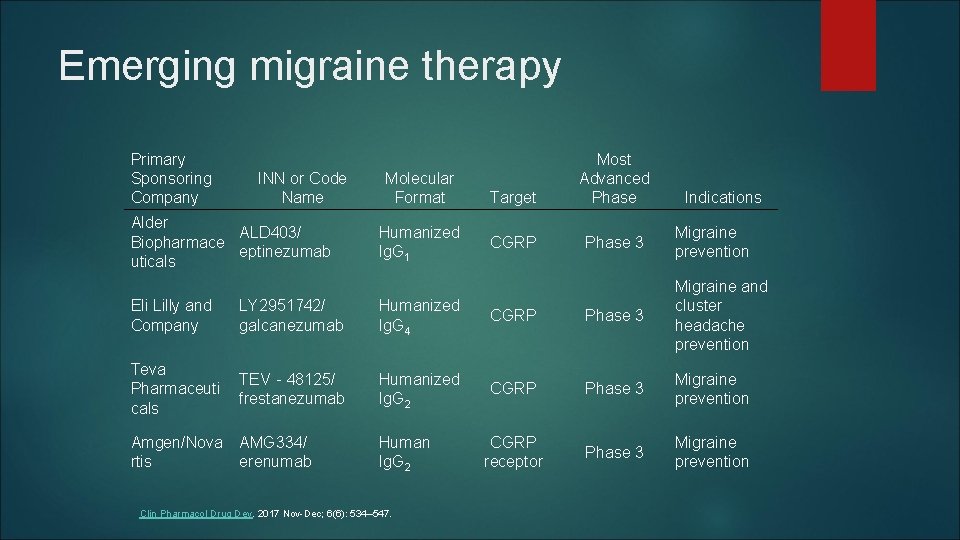
Emerging migraine therapy Primary Sponsoring Company INN or Code Name Alder ALD 403/ Biopharmace eptinezumab uticals Molecular Format Humanized Ig. G 1 Target Most Advanced Phase CGRP Phase 3 Migraine prevention Indications Eli Lilly and Company LY 2951742/ galcanezumab Humanized Ig. G 4 CGRP Phase 3 Migraine and cluster headache prevention Teva Pharmaceuti cals TEV‐ 48125/ frestanezumab Humanized Ig. G 2 CGRP Phase 3 Migraine prevention Amgen/Nova rtis AMG 334/ erenumab Human Ig. G 2 CGRP receptor Phase 3 Migraine prevention Clin Pharmacol Drug Dev. 2017 Nov-Dec; 6(6): 534– 547.
Tension-type Headache
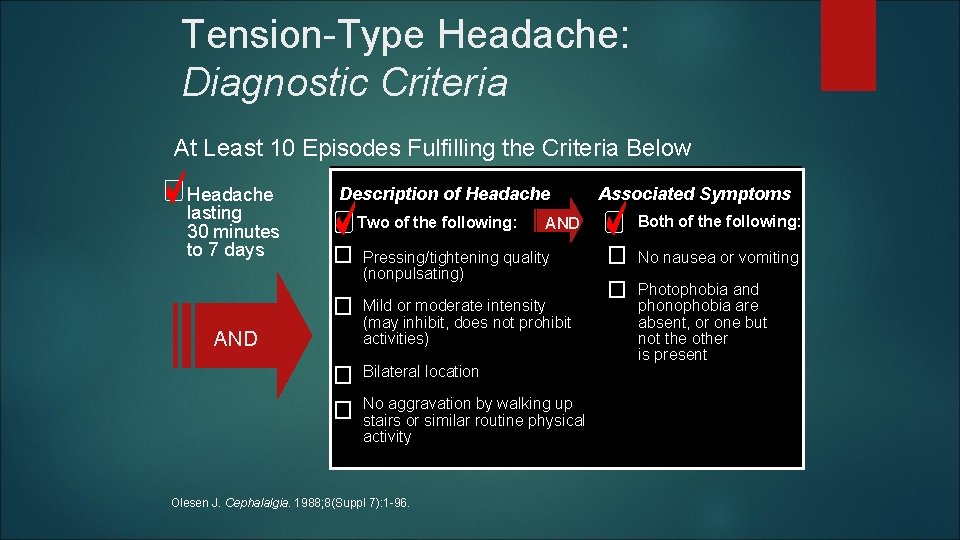
Tension-Type Headache: Diagnostic Criteria At Least 10 Episodes Fulfilling the Criteria Below Headache lasting 30 minutes to 7 days AND Description of Headache Two of the following: AND Pressing/tightening quality (nonpulsating) Mild or moderate intensity (may inhibit, does not prohibit activities) Bilateral location No aggravation by walking up stairs or similar routine physical activity Olesen J. Cephalalgia. 1988; 8(Suppl 7): 1 -96. Associated Symptoms Both of the following: No nausea or vomiting Photophobia and phonophobia are absent, or one but not the other is present
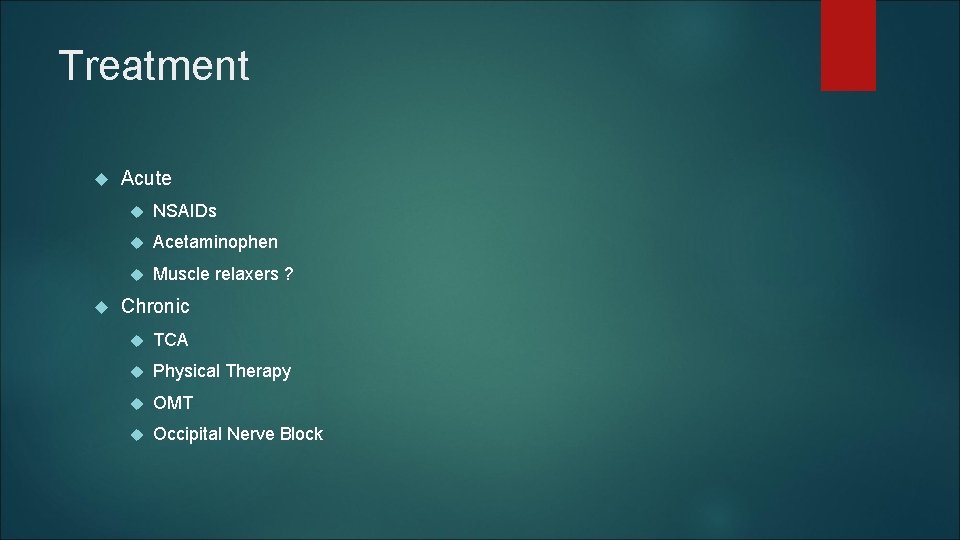
Treatment Acute NSAIDs Acetaminophen Muscle relaxers ? Chronic TCA Physical Therapy OMT Occipital Nerve Block
Cluster Headache
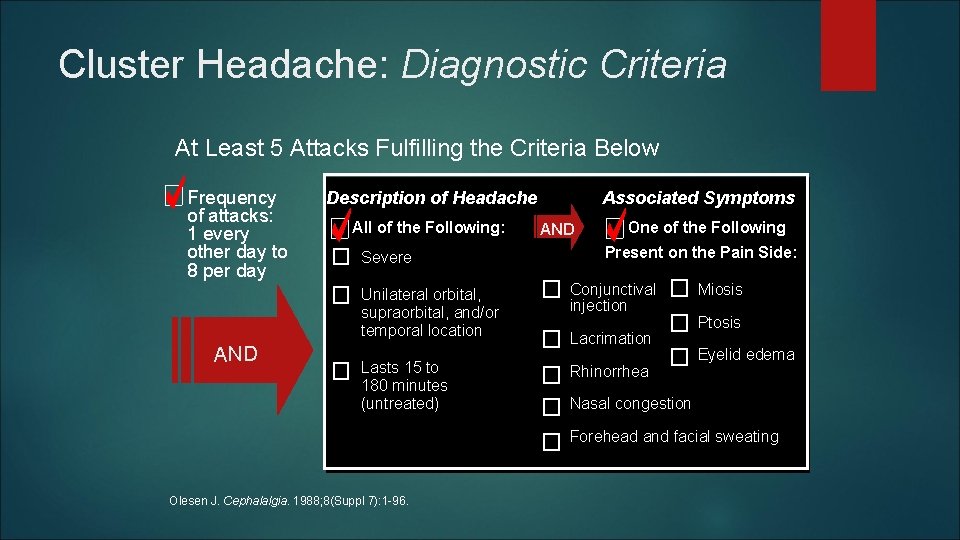
Cluster Headache: Diagnostic Criteria At Least 5 Attacks Fulfilling the Criteria Below Frequency of attacks: 1 every other day to 8 per day Description of Headache All of the Following: Severe Unilateral orbital, supraorbital, and/or temporal location AND Lasts 15 to 180 minutes (untreated) Associated Symptoms AND One of the Following Present on the Pain Side: Conjunctival injection Lacrimation Rhinorrhea Miosis Ptosis Eyelid edema Nasal congestion Forehead and facial sweating Olesen J. Cephalalgia. 1988; 8(Suppl 7): 1 -96.
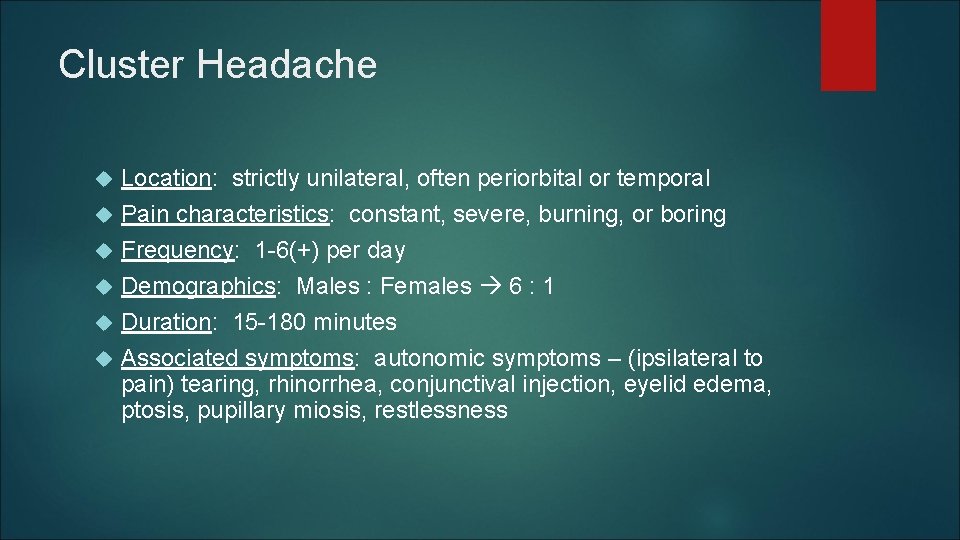
Cluster Headache Location: strictly unilateral, often periorbital or temporal Pain characteristics: constant, severe, burning, or boring Frequency: 1 -6(+) per day Demographics: Males : Females 6 : 1 Duration: 15 -180 minutes Associated symptoms: autonomic symptoms – (ipsilateral to pain) tearing, rhinorrhea, conjunctival injection, eyelid edema, ptosis, pupillary miosis, restlessness
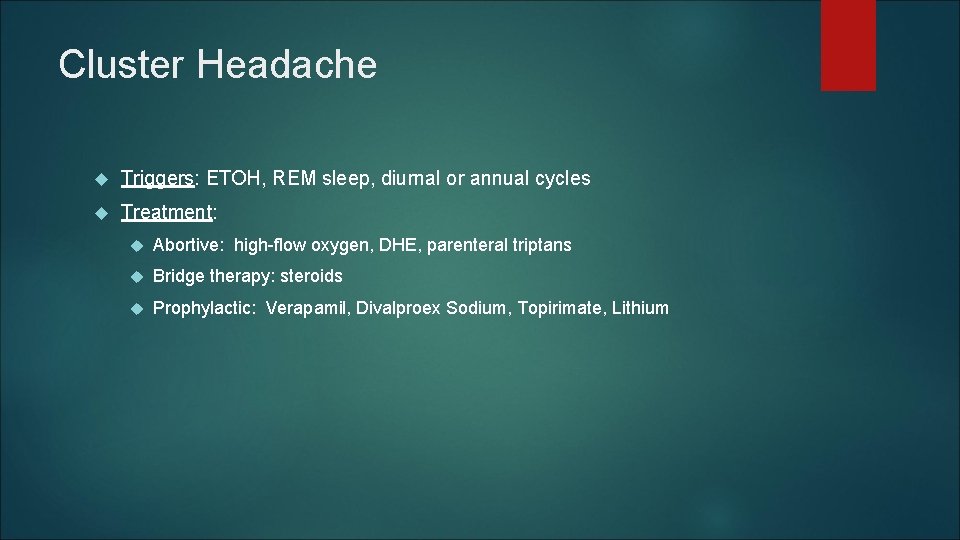
Cluster Headache Triggers: ETOH, REM sleep, diurnal or annual cycles Treatment: Abortive: high-flow oxygen, DHE, parenteral triptans Bridge therapy: steroids Prophylactic: Verapamil, Divalproex Sodium, Topirimate, Lithium
Summary Identify headache type Implement acute vs chronic therapies Avoid medication overuse