
Head and neck examination 4 The Nose Assessment

- Slides: 27
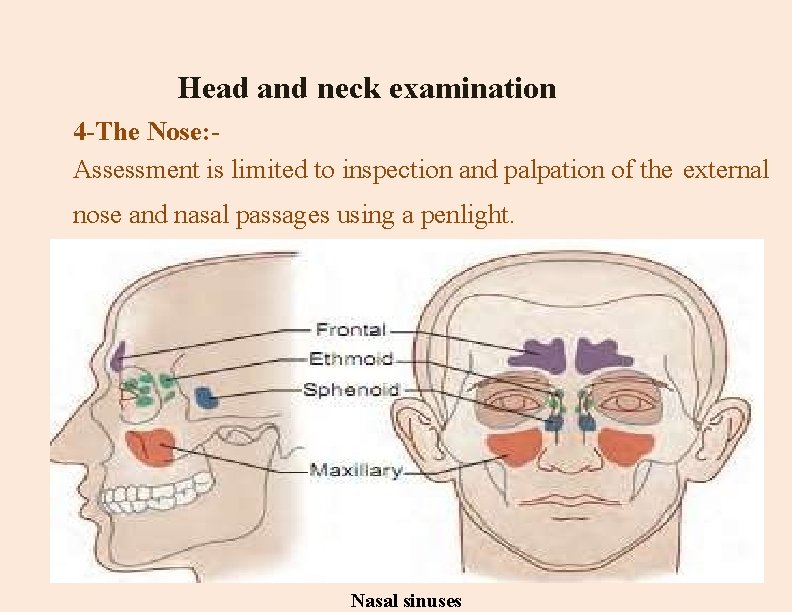
Head and neck examination 4 -The Nose: Assessment is limited to inspection and palpation of the external nose and nasal passages using a penlight. 1 Nasal sinuses
-Inspect nose for symmetry, edema, inflammation, and discharge. Normally, it located symmetrically, midline of face. Absence of edema, bleeding, lesions, or masses. - Test patency of each nostril: Instruct client to close mouth, apply pressure on one naris, and breathe. Normally, each nostril is patent. Inability of air to move through nostril (deviated septum, foreign body, upper respiratory infection, allergies, nasal polyps).
Inspect nasal cavities with a penlight. Inspect mucosa of each nostril for edema and discharge. Inspect nasal septum for deviation, perforation, lesions, or bleeding. Normally, mucosa is pink or dull red with no edema or polyps. A small amount of clear watery discharge is normal.
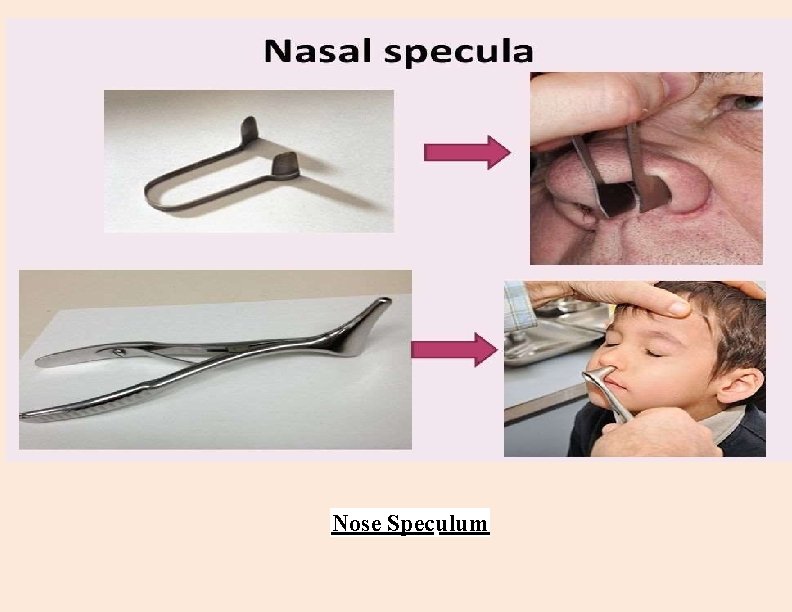
Nose Speculum
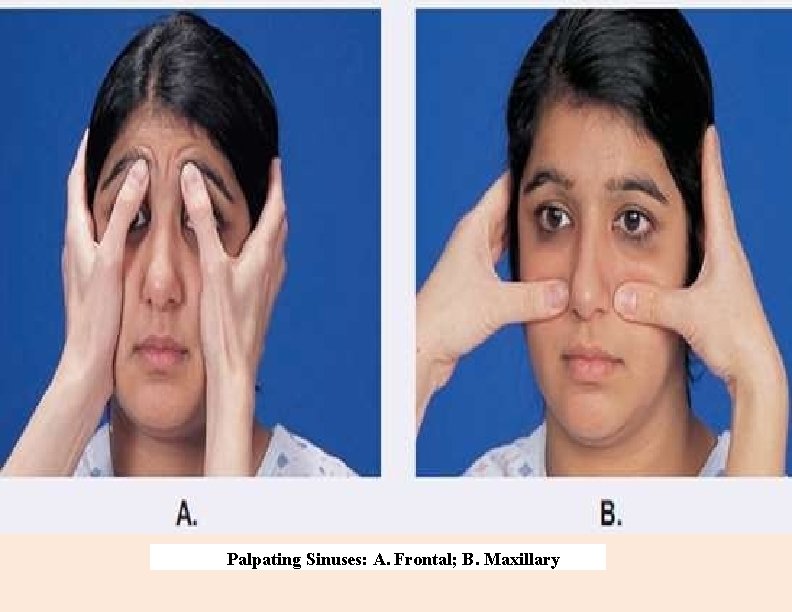
- Palpate nasal sinuses. Apply gentle upward pressure on frontal and maxillary areas. Percuss area and note the sound. Normally, non-tender, air-filled cavities, resonant to percussion. -Possible abnormalitiesinclude, pain or tenderness (allergy, viral or bacterial infection). Dull sound on percussion (obstruction, e. g. , congestion).
Palpating Sinuses: A. Frontal; B. Maxillary
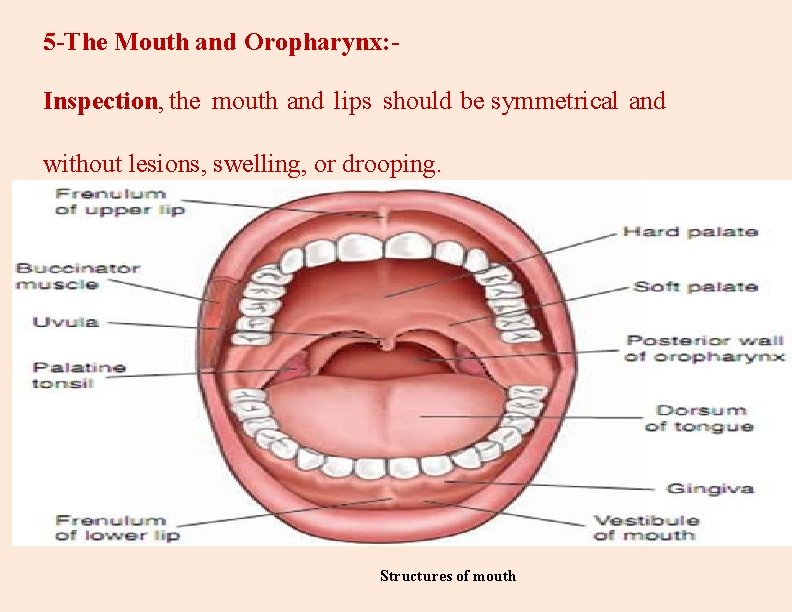
5 -The Mouth and Oropharynx: Inspection, the mouth and lips should be symmetrical and without lesions, swelling, or drooping. Structures of mouth
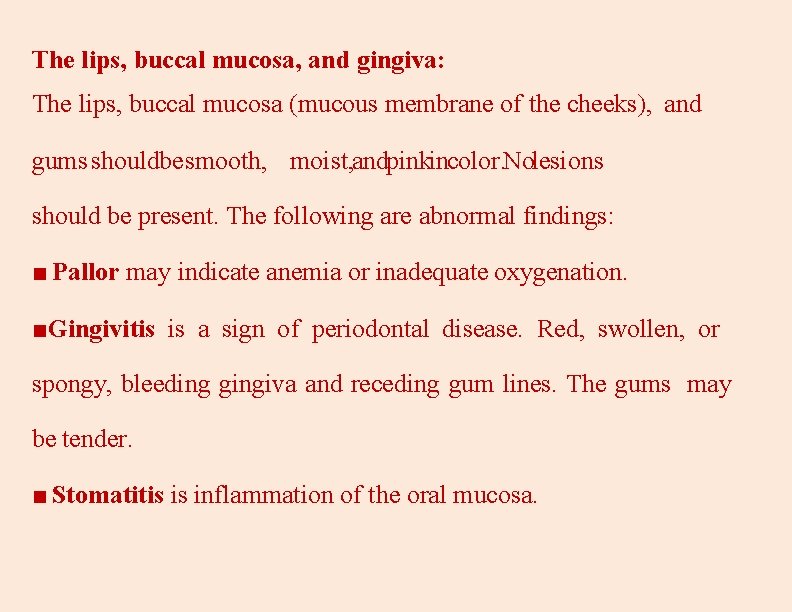
The lips, buccal mucosa, and gingiva: The lips, buccal mucosa (mucous membrane of the cheeks), and gums shouldbe smooth, moist, andpinkincolor. Nolesions should be present. The following are abnormal findings: ■ Pallor may indicate anemia or inadequate oxygenation. ■Gingivitis is a sign of periodontal disease. Red, swollen, or spongy, bleeding gingiva and receding gum lines. The gums may be tender. ■ Stomatitis is inflammation of the oral mucosa.
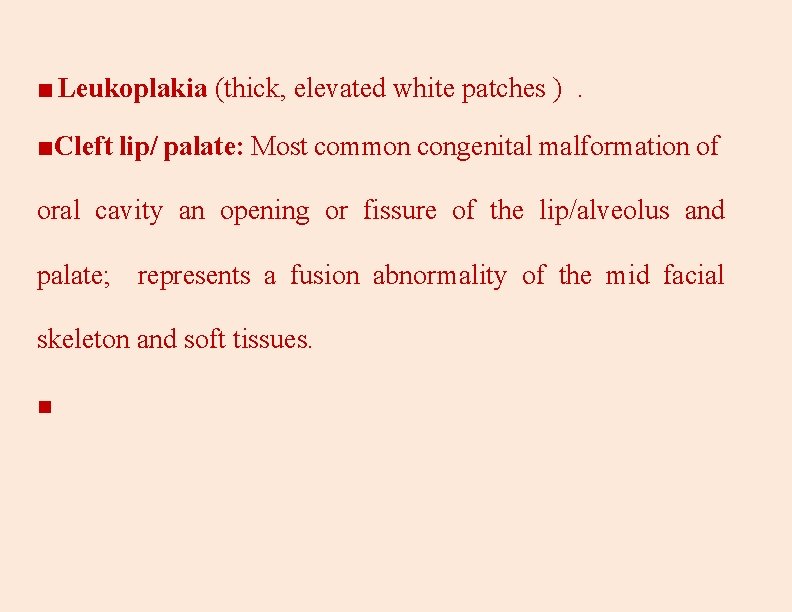
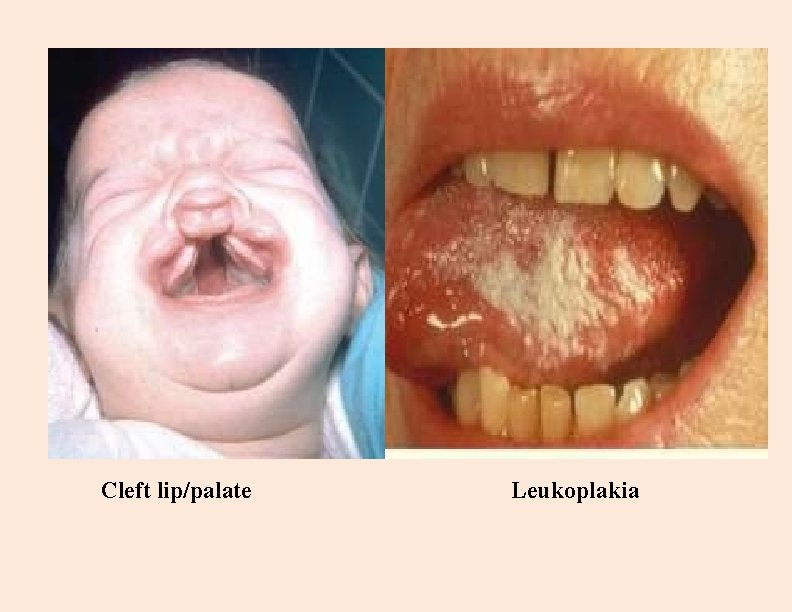
■ Leukoplakia (thick, elevated white patches ). ■Cleft lip/ palate: Most common congenital malformation of oral cavity an opening or fissure of the lip/alveolus and palate; represents a fusion abnormality of the mid facial skeleton and soft tissues. ■
Cleft lip/palate Leukoplakia
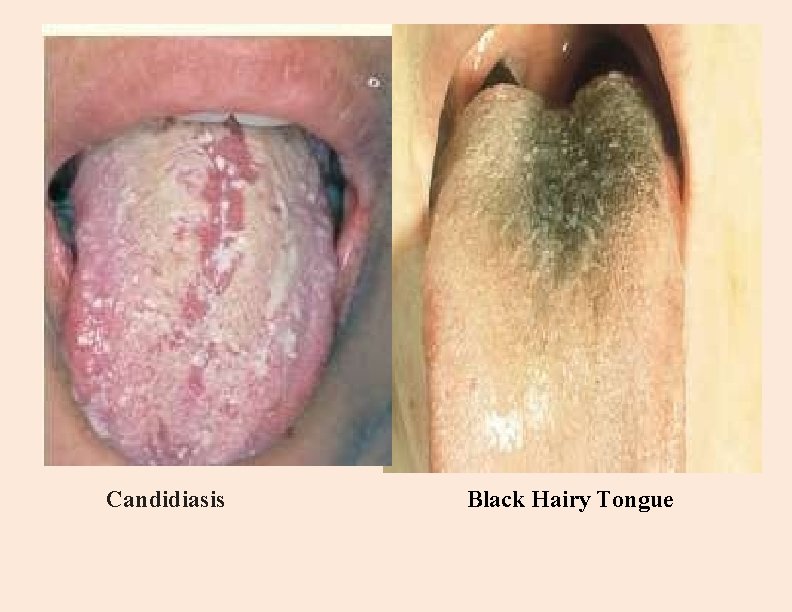
Candidiasis Black Hairy Tongue
-The Teeth: Healthy adults typically have 28 teeth or 32 if the wisdom teeth are present. The teeth should be fixed to the gum and without obvious debris or darkening that may indicate caries. Tooth decay and periodontal (gum) disease are common.
-The tongue: The tongue should be moist, symmetrical, slightly rough, smooth, pink, and freely movable. The following are abnormal findings: ■ Limited mobility of the tongue. ■Deviation from the midline, which may be caused by damage to the hypoglossal nerve (CN XII ). ■ Glossitis (inflammation of the tongue ).
■ A dry, furry tongue, which is associated with dehydration. ■A black, “hairy”tongue, which is associated with fungal infections. ■ Reddened mucosa, ulcerations, and absence of papillae which may indicate allergy, inflammation, or infection. ■ Swelling, nodules, or ulcers. ■ A smooth, red tongue, which may occur in patients who have a deficiency of iron, vitamin B 12, or vitamin B 3.
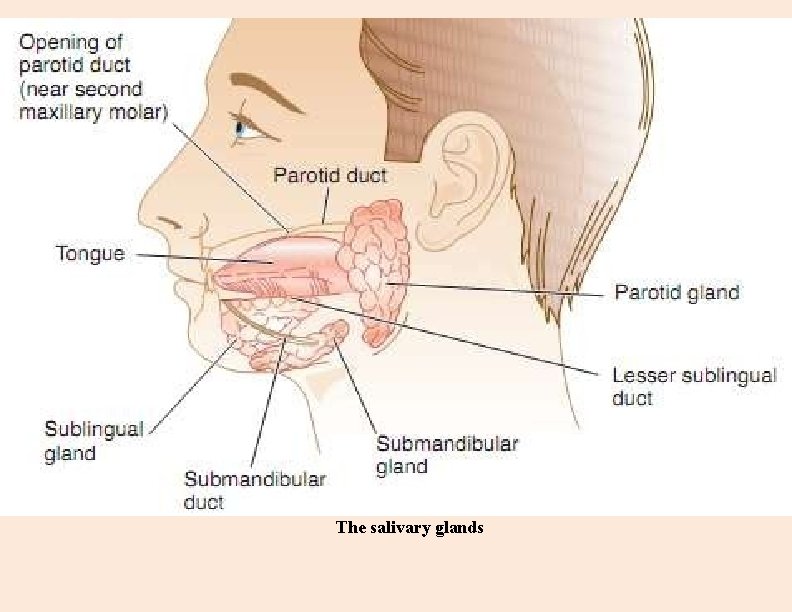
The salivary glands
The Hard and Soft Palates and Oropharynx: The hard palate, soft palate, and oropharynx should be pink, moist, and intact. No lesions, swelling, erythema, or discharge should be present. If the tonsils are present, they should be symmetrical, small in size, and free of exudate in a healthy person. The uvula is midline and should rise on phonation (vocalization. )
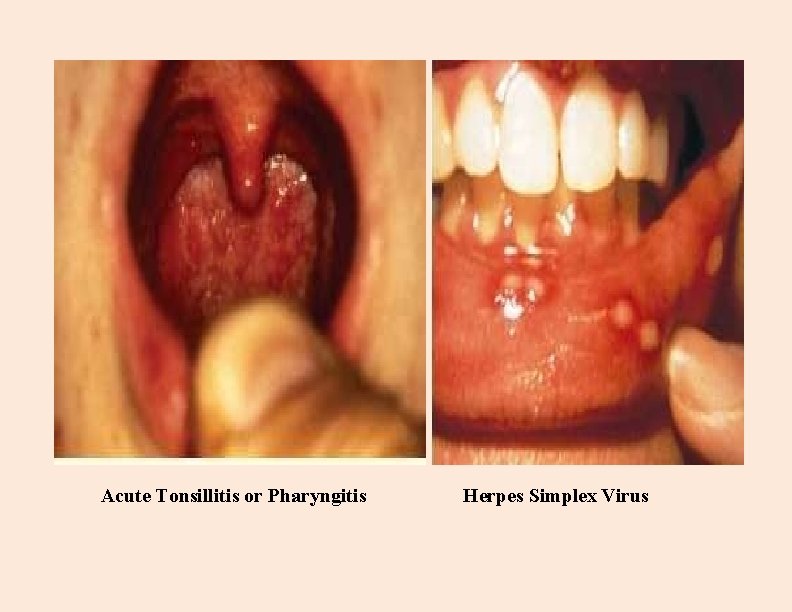
The following are abnormal findings: - Pharyngitisinflammation of pharyngeal wall may include tonsils, palate, uvula. - Tonsillitis: inflammation in tonsils. -Herpes Simplex Virus: Clear vesicular lesions with indurated base caused by herpes simplex 1 virus
Acute Tonsillitis or Pharyngitis Herpes Simplex Virus
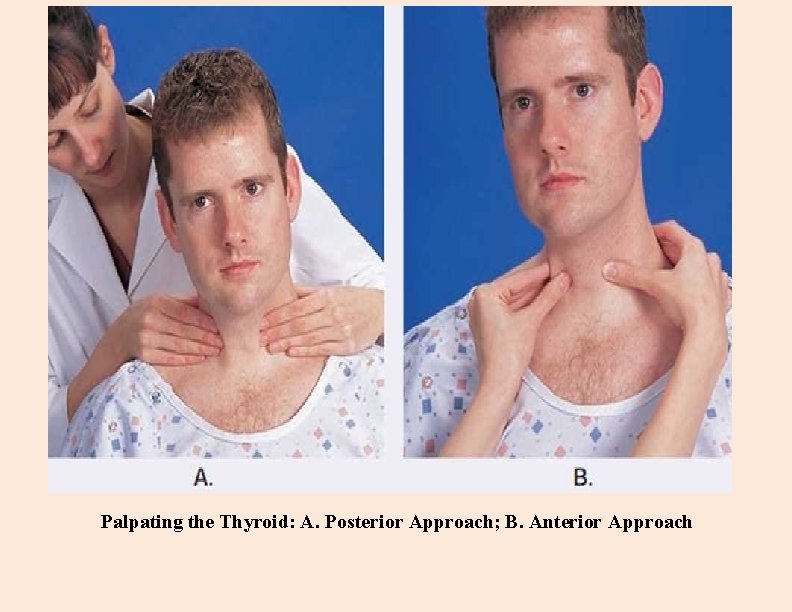
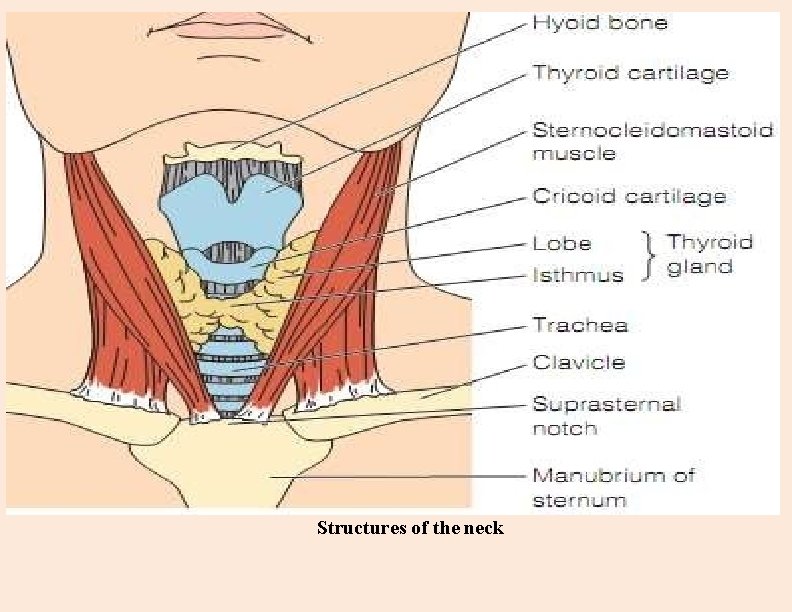
6 - The neck: The Thyroid Gland: Normally the thyroid is smooth, firm, and non-tender. It is often non palpable. Thyroid abnormalities are common. An enlarged thyroid may be associated with either hypothyroidism or hyperthyroidism. Thyroid tenderness usually results from inflammation. Thyroid masses may be malignant but are usually benign.
Palpating the Thyroid: A. Posterior Approach; B. Anterior Approach
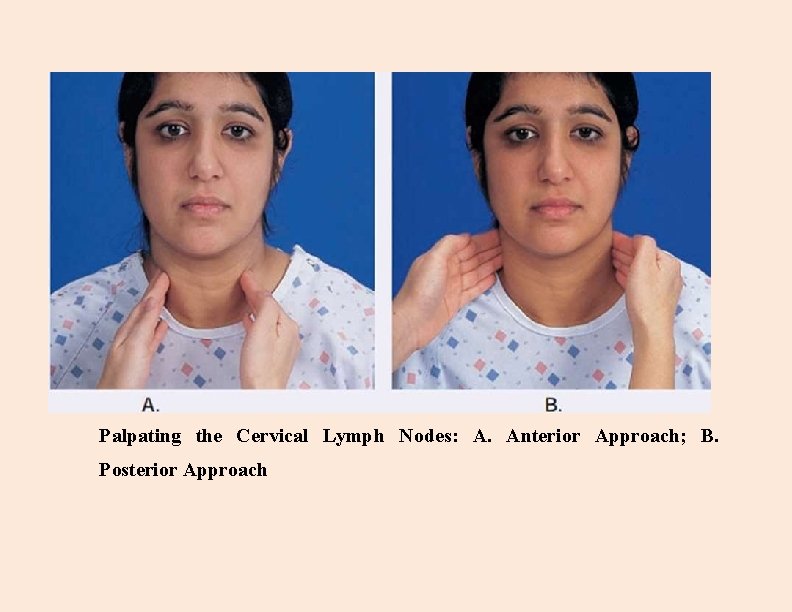
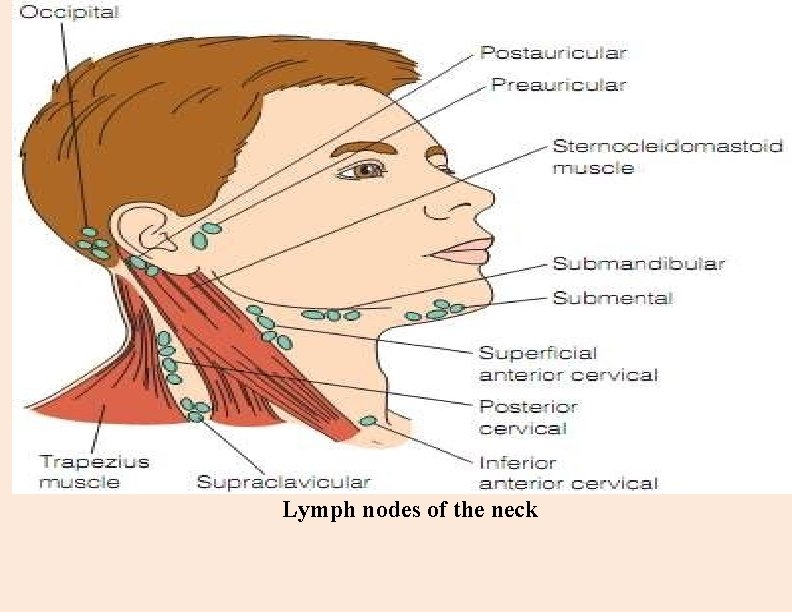
The Cervical Lymph Nodes: The cervical lymph nodes occur in three chains. The anterior chain is in the anterior triangle, the posterior chain in the posterior triangle. There is a deep cervical chain under the sternocleidomastoid muscle. The lymph nodes are generally not palpable, although occasionally nodes can be felt, especially in young children. Normal nodes are small in size (less than 1 cm), mobile, soft, and non-tender.
Palpating the Cervical Lymph Nodes: A. Anterior Approach; B. Posterior Approach
Enlarged nodes should describe (greater than 1 cm in diameter) according to their location, size, shape, consistency, mobility, and tenderness. Enlarged or tender nodes may be other diseases. caused by infection, malignancy, and
Structures of the neck
Lymph nodes of the neck