
Head and Nasal Injuries Skull fracture Cause of
- Slides: 15
Head and Nasal Injuries
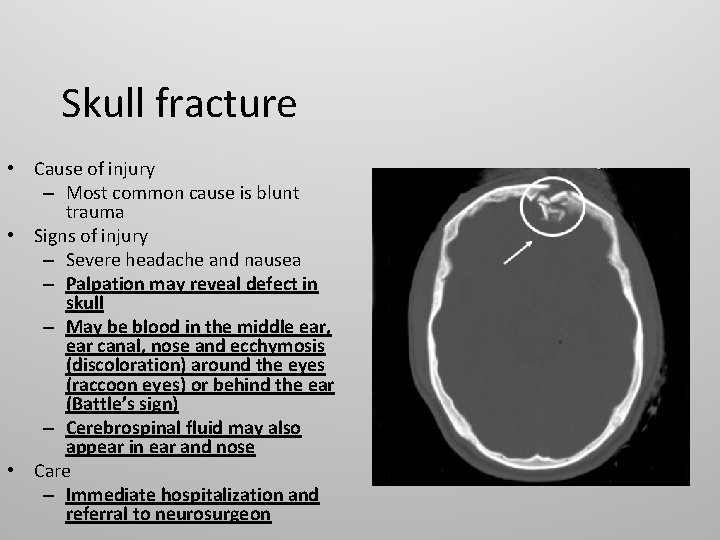
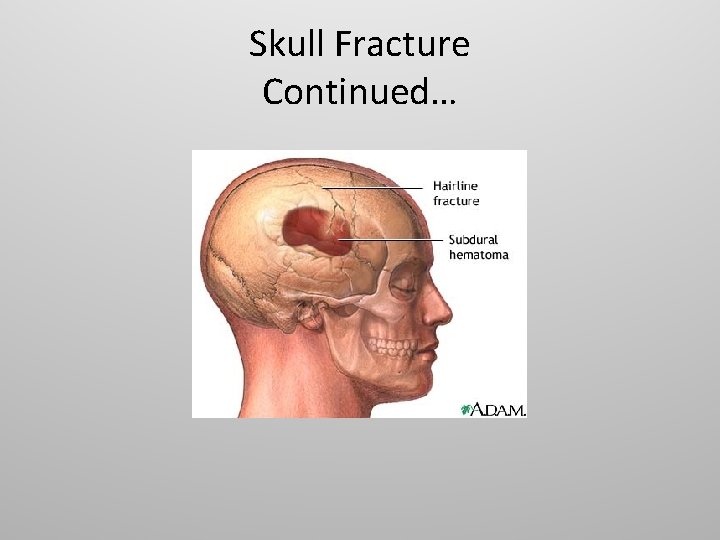
Skull fracture • Cause of injury – Most common cause is blunt trauma • Signs of injury – Severe headache and nausea – Palpation may reveal defect in skull – May be blood in the middle ear, ear canal, nose and ecchymosis (discoloration) around the eyes (raccoon eyes) or behind the ear (Battle’s sign) – Cerebrospinal fluid may also appear in ear and nose • Care – Immediate hospitalization and referral to neurosurgeon
Skull Fracture Continued…
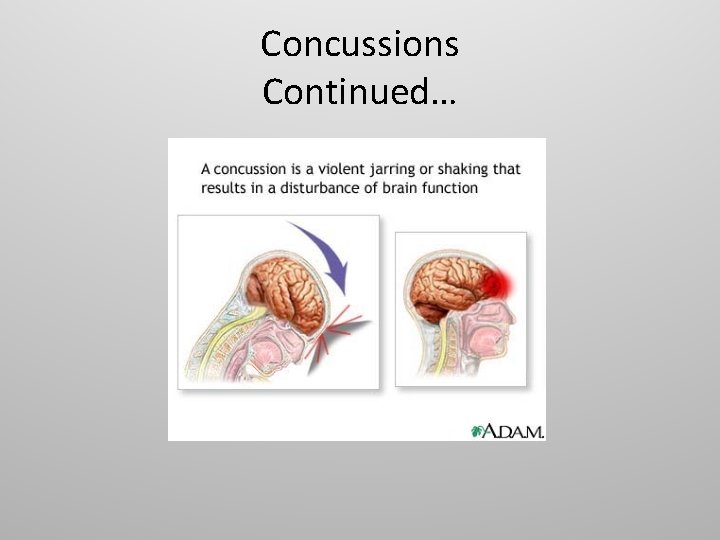
Concussions (Mild Head Injuries) • Cause of Injury – Result of direct blow, acceleration/deceleration forces results in the shaking of the brain • Signs of Injury – Brief periods of diminished consciousness or unconsciousness that lasts seconds or minutes – Headache, tinnitus (ringing in the ears), nausea, irritability, confusion, disorientation, dizziness, amnesia (loss of memory), concentration difficulty, blurred vision, photophobia (light sensitivity), sleep disturbances, phonophobia (sound sensitivity).
Concussions Continued… Care • Any sign and symptom of a head injury/concussive symptoms= STOP all participation in practice/play, refer to a physician for an evaluation, complete Gfellar-Waller Concussion Act Paperwork (and send it with athlete to the physician) – Objective measures (Symptom Checklist, Cranial Nerve Assessmnet, BESS and SAC) should be used to determine readiness to play as well as Baseline IMPACT cognitive computer test scores – All post-concussive symptoms should be resolved prior to returning to play – After asymptomatic, return to play should be gradual (5 -7 day process) – Athlete must be cleared by the team physician before FULL return to play – Recurrent concussions can produce cumulative traumatic injury to the brain – Following an initial concussion the chances of a second episode are 3 -6 times greater
Concussions Continued…
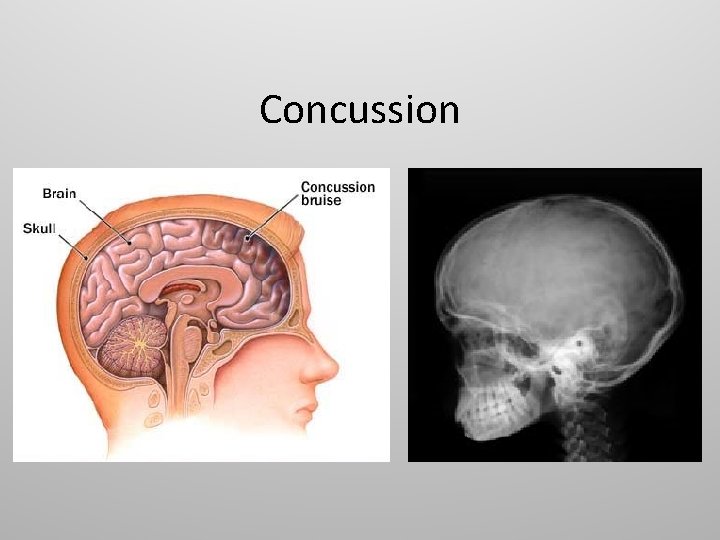
Concussion
Post concussion Syndrome-lingering symptoms that will not go away! • Cause of Injury – Condition which occurs following a concussion – May be associated with those Mild Heat Injuries that don’t involve LOC or in cases of severe concussions • Signs of Injury – Athlete complains of a range of post concussion problems • Persistent headaches, impaired memory, lack of concentration, anxiety and irritability, giddiness, fatigue, depression, visual disturbances – May begin immediately following injury and symptoms have fully resolved • Care – ATC should treat symptoms to greatest extent possible – Return athlete to play when all signs and symptoms have fully resolved
Second Impact Syndrome • Cause of Injury – Result of rapid swelling and herniation of brain after a second head injury before symptoms of the initial injury have resolved – Second impact may be relatively minimal and not involve contact with the cranium – Impact disrupts the brain’s blood autoregulatory system leading to swelling, increasing intracranial pressure • Signs of Injury – Often athlete does not LOC and may looked stunned – Within 15 seconds to several minutes of injury; the athlete’s condition degrades rapidly • Care • Dilated pupils, loss of eye movement, LOC leading to coma, and respiratory failure – Life-threatening injury that must be addressed within 5 minutes with life saving measures performed at an emergency facility – Best management is prevention from the ATC’s perspective-don’t let athletes return to play or participation with any sign or symptom of a head injury!!!!!
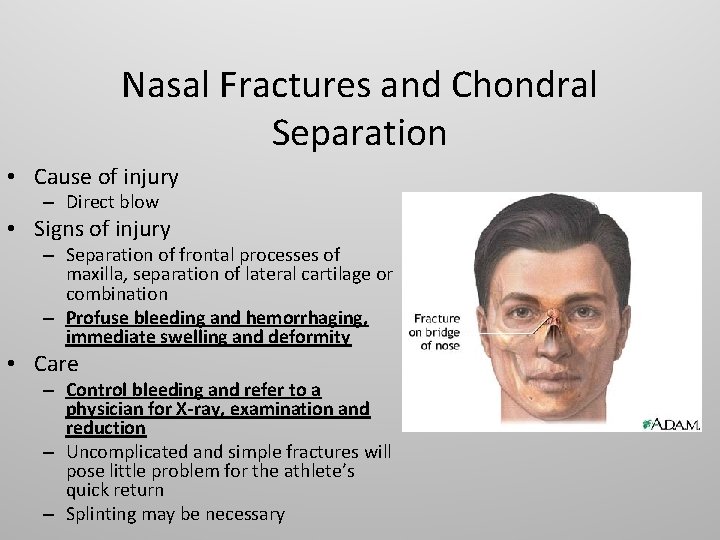
Nasal Fractures and Chondral Separation • Cause of injury – Direct blow • Signs of injury – Separation of frontal processes of maxilla, separation of lateral cartilage or combination – Profuse bleeding and hemorrhaging, immediate swelling and deformity • Care – Control bleeding and refer to a physician for X-ray, examination and reduction – Uncomplicated and simple fractures will pose little problem for the athlete’s quick return – Splinting may be necessary
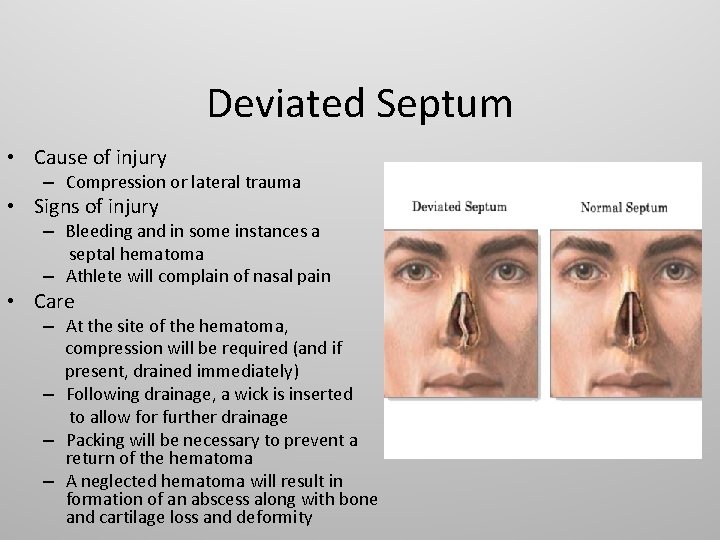
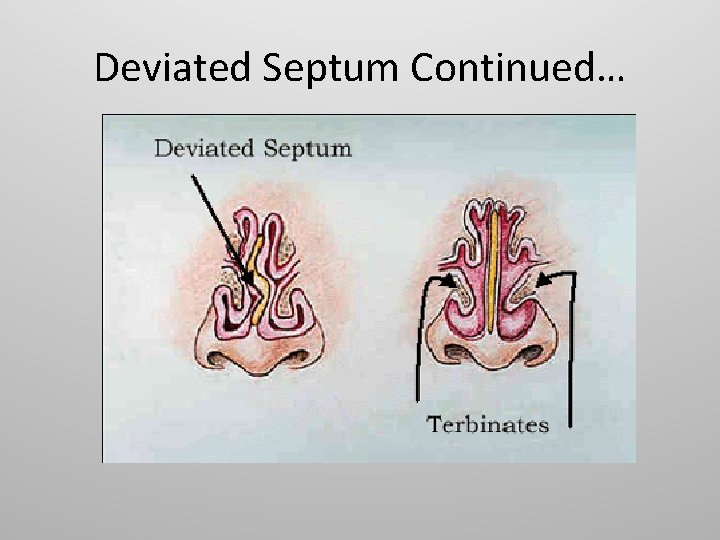
Deviated Septum • Cause of injury – Compression or lateral trauma • Signs of injury – Bleeding and in some instances a septal hematoma – Athlete will complain of nasal pain • Care – At the site of the hematoma, compression will be required (and if present, drained immediately) – Following drainage, a wick is inserted to allow for further drainage – Packing will be necessary to prevent a return of the hematoma – A neglected hematoma will result in formation of an abscess along with bone and cartilage loss and deformity
Deviated Septum Continued…
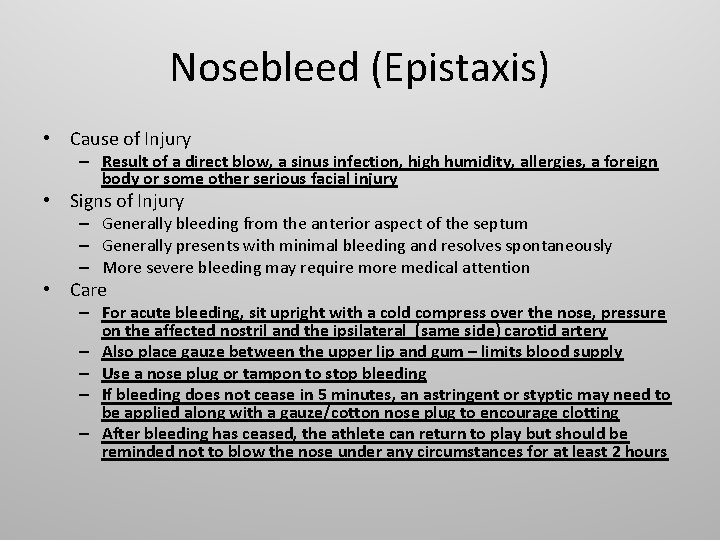
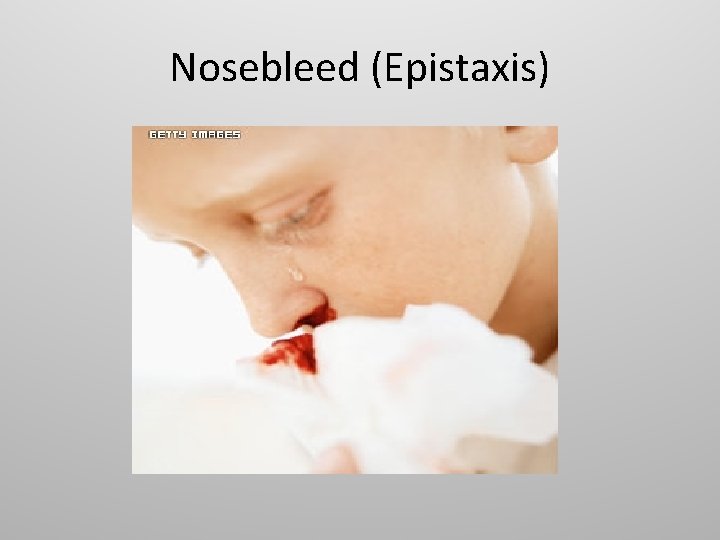
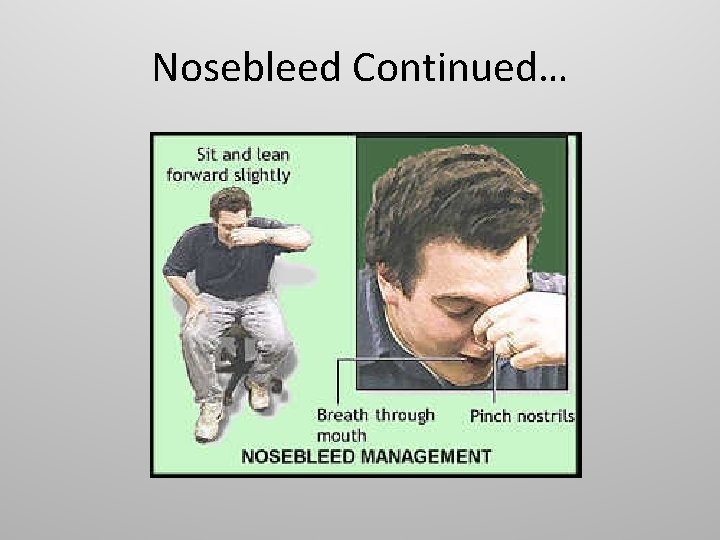
Nosebleed (Epistaxis) • Cause of Injury – Result of a direct blow, a sinus infection, high humidity, allergies, a foreign body or some other serious facial injury • Signs of Injury – Generally bleeding from the anterior aspect of the septum – Generally presents with minimal bleeding and resolves spontaneously – More severe bleeding may require more medical attention • Care – For acute bleeding, sit upright with a cold compress over the nose, pressure on the affected nostril and the ipsilateral (same side) carotid artery – Also place gauze between the upper lip and gum – limits blood supply – Use a nose plug or tampon to stop bleeding – If bleeding does not cease in 5 minutes, an astringent or styptic may need to be applied along with a gauze/cotton nose plug to encourage clotting – After bleeding has ceased, the athlete can return to play but should be reminded not to blow the nose under any circumstances for at least 2 hours
Nosebleed (Epistaxis)
Nosebleed Continued…