
Head and Face Injuries Anatomy and Select Facial
- Slides: 21
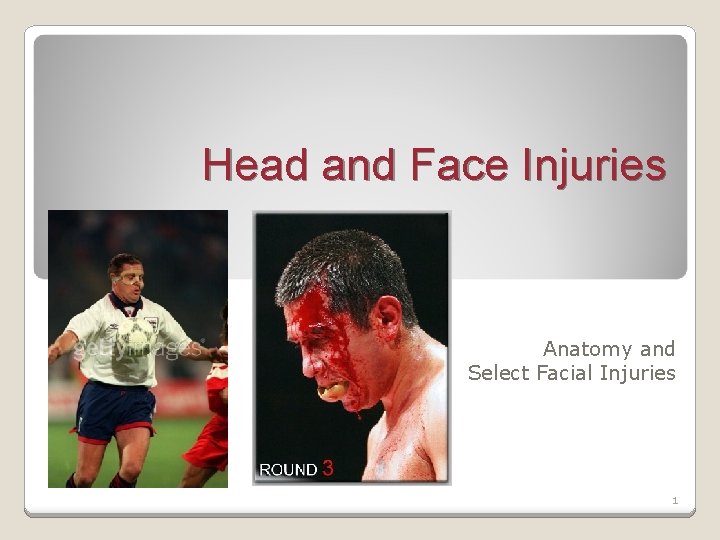
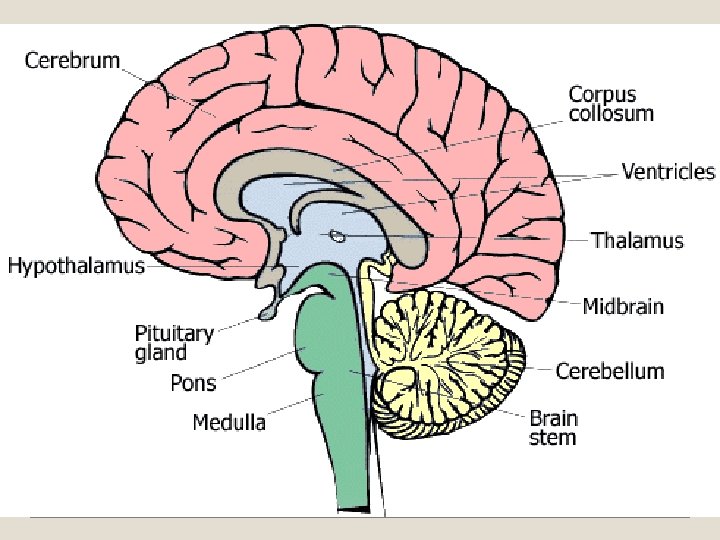
Head and Face Injuries Anatomy and Select Facial Injuries 1
Diving Example http: //www. youtube. com/watch? v=i 5 Rqhi. Gd. P 0 c Ice Hockey Example http: //www. youtube. com/watch? v=c. IVAUo 1 CL 2 g&feature=Play. List &p=29 D 8 DEB 14 BDCC 1 D 6&playnext=1&playnext_from=PL&index =25 Many times the blood masks what the “problem” is…. . have gloves handy! 2
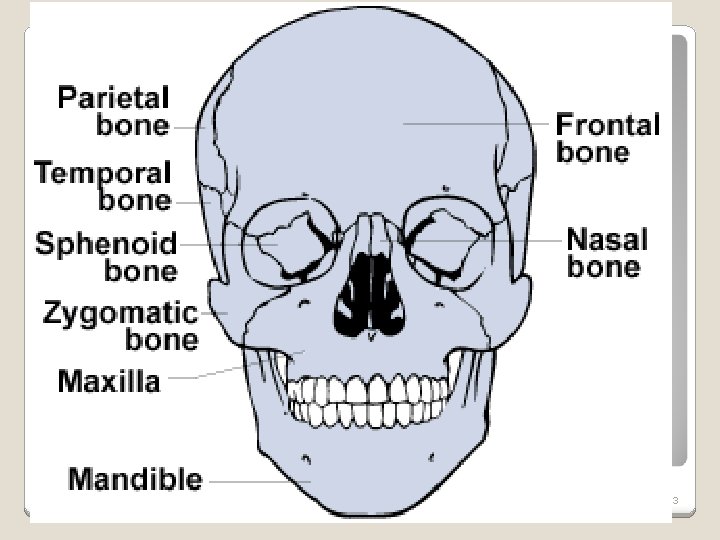
3
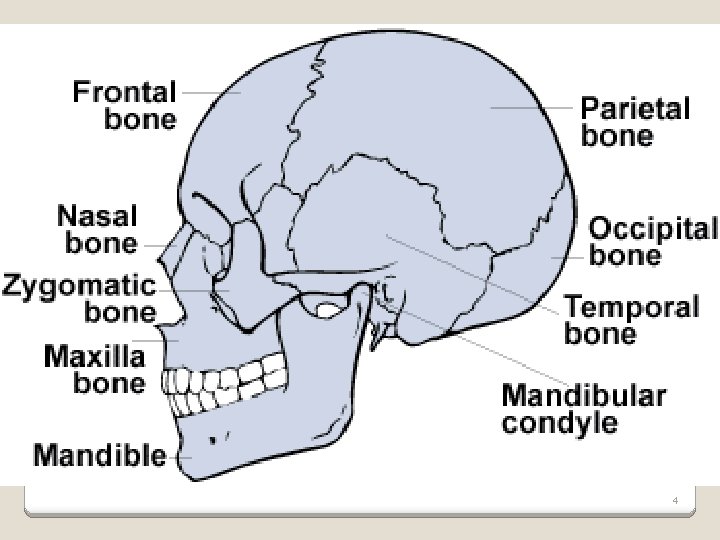
4
5
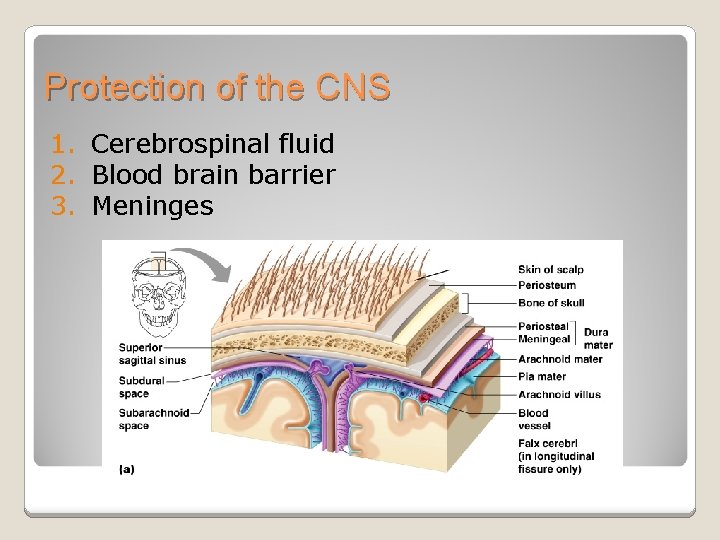
Protection of the CNS 1. Cerebrospinal fluid 2. Blood brain barrier 3. Meninges
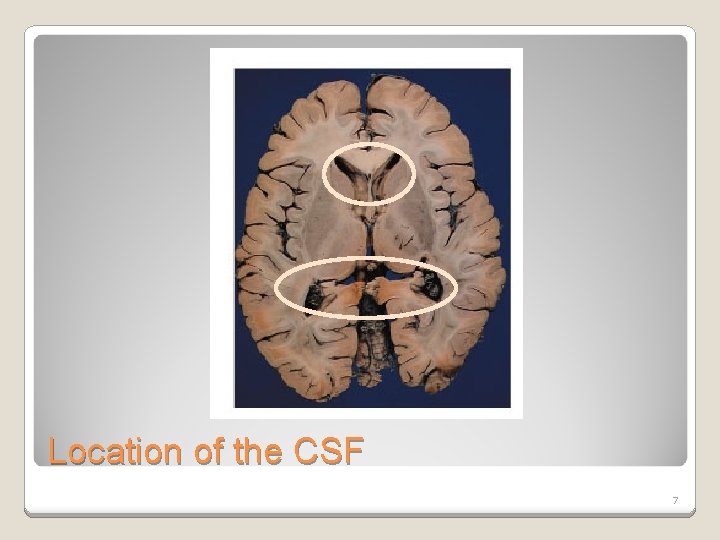
Location of the CSF 7
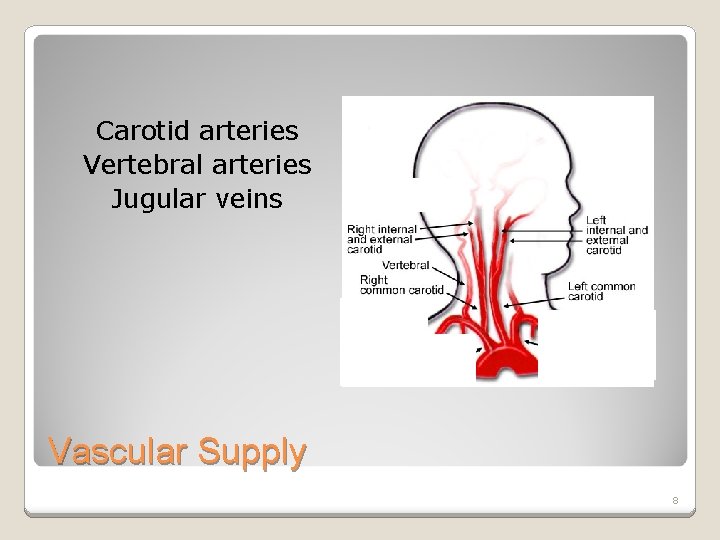
Carotid arteries Vertebral arteries Jugular veins Vascular Supply 8
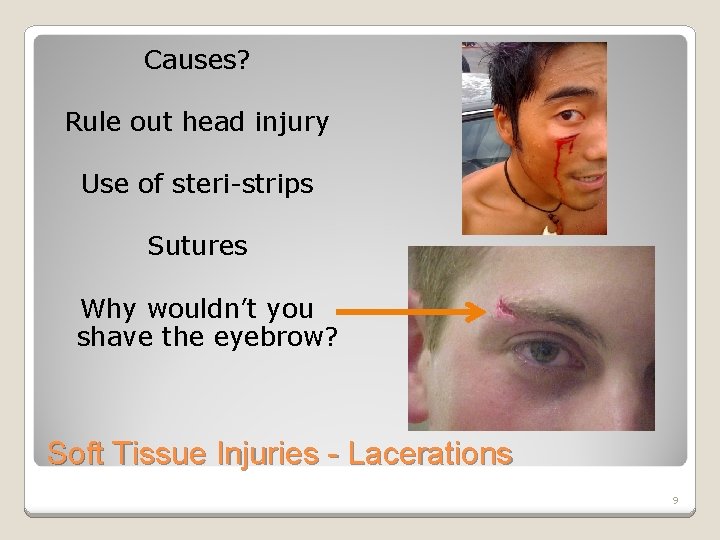
Causes? Rule out head injury Use of steri-strips Sutures Why wouldn’t you shave the eyebrow? Soft Tissue Injuries - Lacerations 9
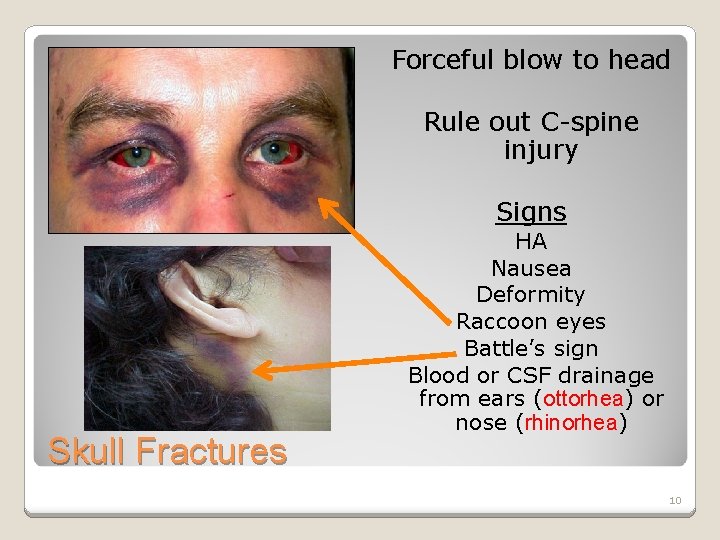
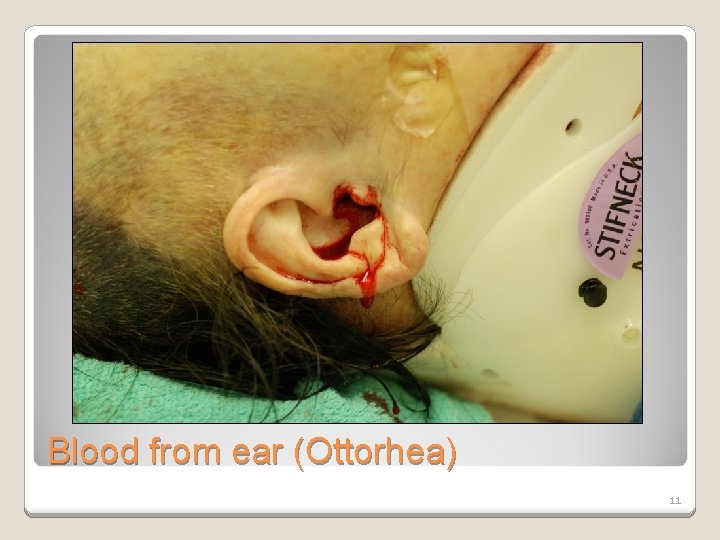
Forceful blow to head Rule out C-spine injury Signs Skull Fractures HA Nausea Deformity Raccoon eyes Battle’s sign Blood or CSF drainage from ears (ottorhea) or nose (rhinorhea) 10
Blood from ear (Ottorhea) 11
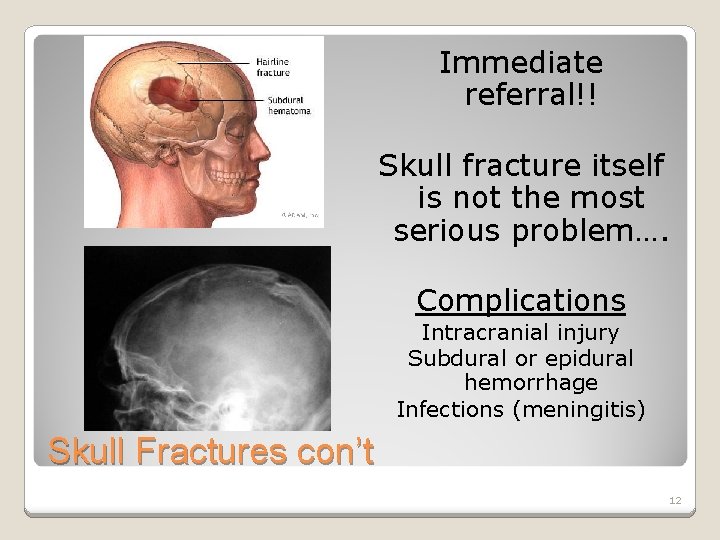
Immediate referral!! Skull fracture itself is not the most serious problem…. Complications Intracranial injury Subdural or epidural hemorrhage Infections (meningitis) Skull Fractures con’t 12
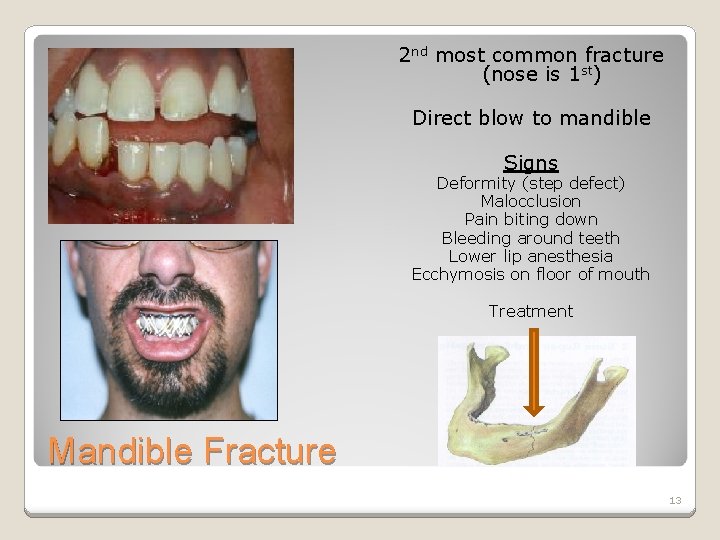
2 nd most common fracture (nose is 1 st) Direct blow to mandible Signs Deformity (step defect) Malocclusion Pain biting down Bleeding around teeth Lower lip anesthesia Ecchymosis on floor of mouth Treatment Mandible Fracture 13
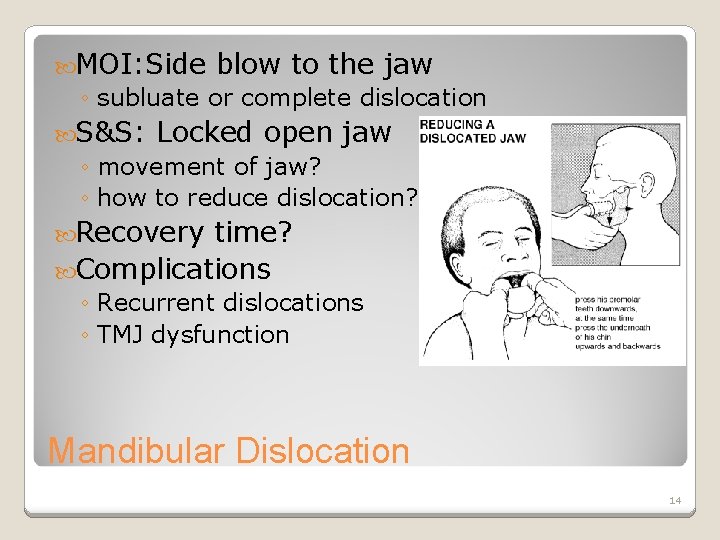
MOI: Side blow to the jaw ◦ subluate or complete dislocation S&S: Locked open jaw ◦ movement of jaw? ◦ how to reduce dislocation? Recovery time? Complications ◦ Recurrent dislocations ◦ TMJ dysfunction Mandibular Dislocation 14
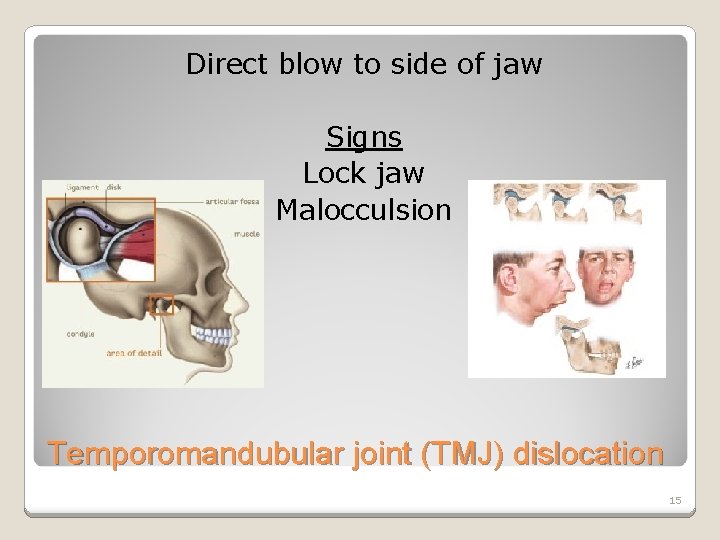
Direct blow to side of jaw Signs Lock jaw Malocculsion Temporomandubular joint (TMJ) dislocation 15
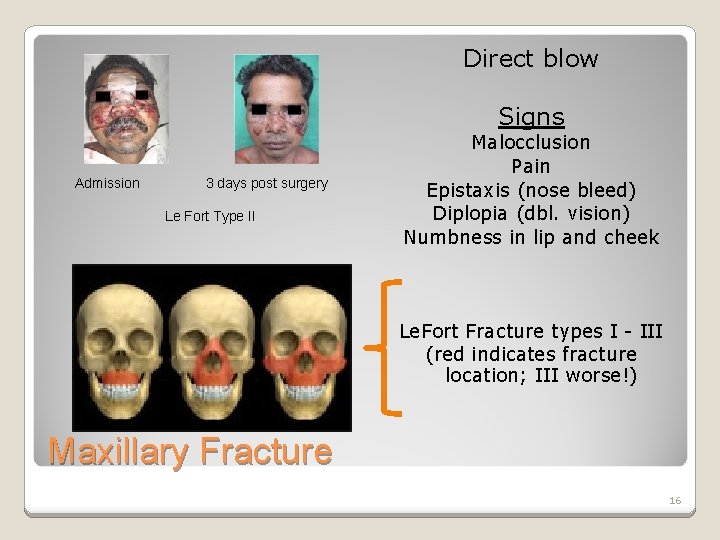
Direct blow Signs Admission 3 days post surgery Le Fort Type II Malocclusion Pain Epistaxis (nose bleed) Diplopia (dbl. vision) Numbness in lip and cheek Le. Fort Fracture types I - III (red indicates fracture location; III worse!) Maxillary Fracture 16
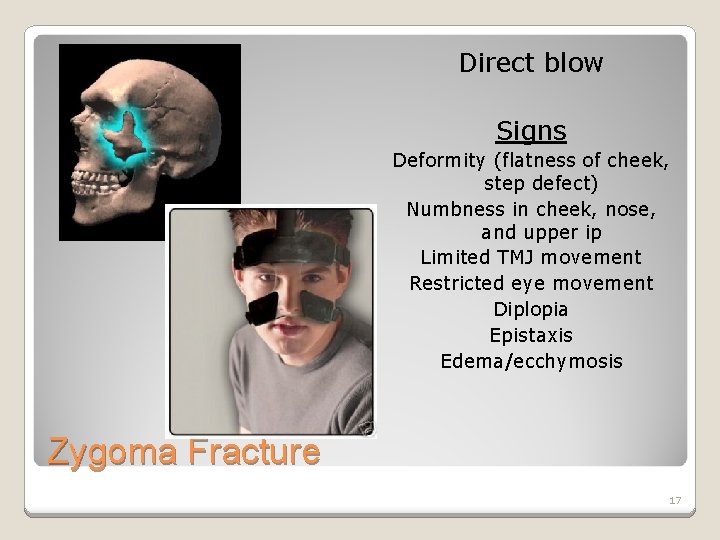
Direct blow Signs Deformity (flatness of cheek, step defect) Numbness in cheek, nose, and upper ip Limited TMJ movement Restricted eye movement Diplopia Epistaxis Edema/ecchymosis Zygoma Fracture 17
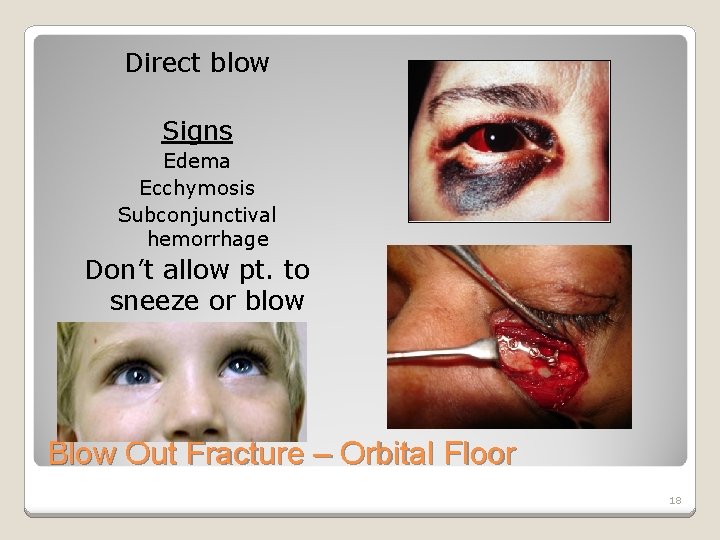
Direct blow Signs Edema Ecchymosis Subconjunctival hemorrhage Don’t allow pt. to sneeze or blow nose Blow Out Fracture – Orbital Floor 18
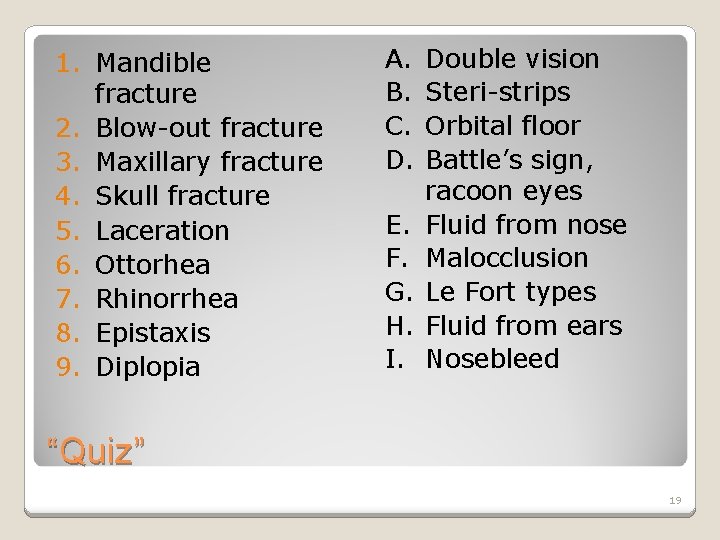
1. Mandible fracture 2. Blow-out fracture 3. Maxillary fracture 4. Skull fracture 5. Laceration 6. Ottorhea 7. Rhinorrhea 8. Epistaxis 9. Diplopia A. B. C. D. E. F. G. H. I. Double vision Steri-strips Orbital floor Battle’s sign, racoon eyes Fluid from nose Malocclusion Le Fort types Fluid from ears Nosebleed “Quiz” 19
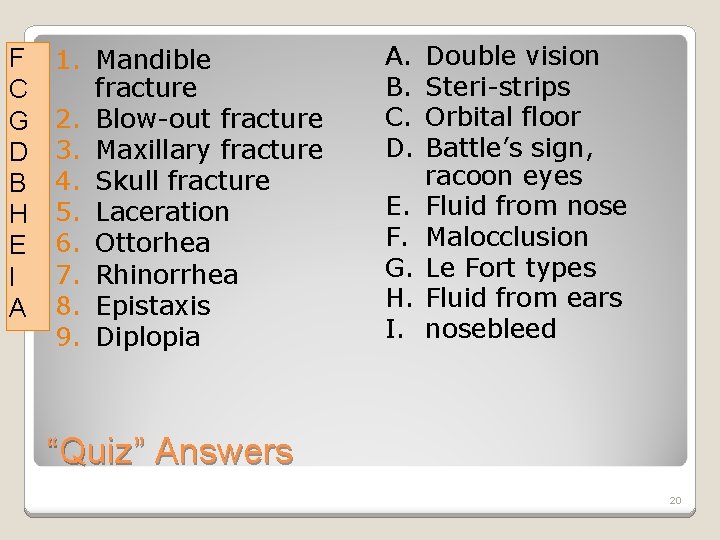
F C G D B H E I A 1. Mandible fracture 2. Blow-out fracture 3. Maxillary fracture 4. Skull fracture 5. Laceration 6. Ottorhea 7. Rhinorrhea 8. Epistaxis 9. Diplopia A. B. C. D. E. F. G. H. I. Double vision Steri-strips Orbital floor Battle’s sign, racoon eyes Fluid from nose Malocclusion Le Fort types Fluid from ears nosebleed “Quiz” Answers 20
Dental, Nasal, Ear and Eye Injuries on Wednesday! 21