
HCI Iconic Book Don Norman Worked for industry


HCI Iconic Book • Don Norman • Worked for industry (Apple) • Professor • • First published in 1988 Does not focus on computer interfaces Coined: user-centered design Goal: • Motivate us to not accept bad design • Put forth design principles for good design
Why are everyday things so hard to use? • Doors • Design • Telephones • Multiple function buttons • VCRs and Dishwashers • Features • Thermostats • Mental models
Contents • The Psychopathology of Everyday Things • How does a thermostat work? • The Psychology of Everyday Actions • What would assume if all your gauges in your car went out? • Knowledge in the Head and in the World • Typist and keyboards • Knowing What to Do • Affordance • To Err Is Human • Will happen, who gets the blame • The Design Challenge
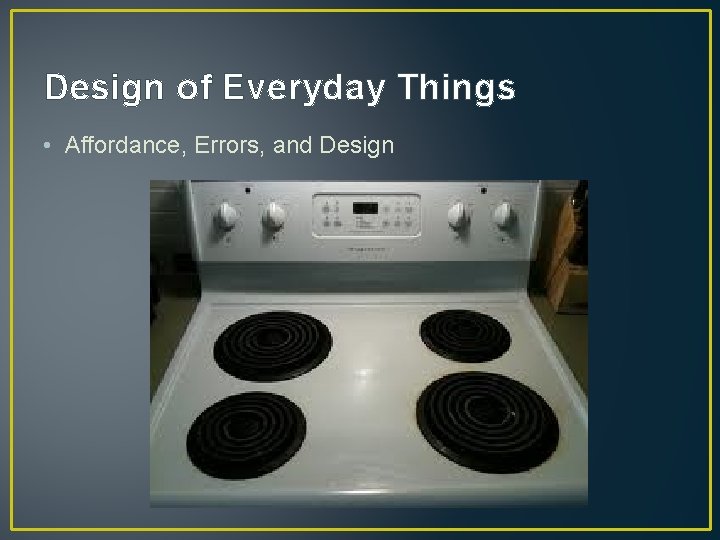
Design of Everyday Things • Affordance, Errors, and Design

Norman Doors
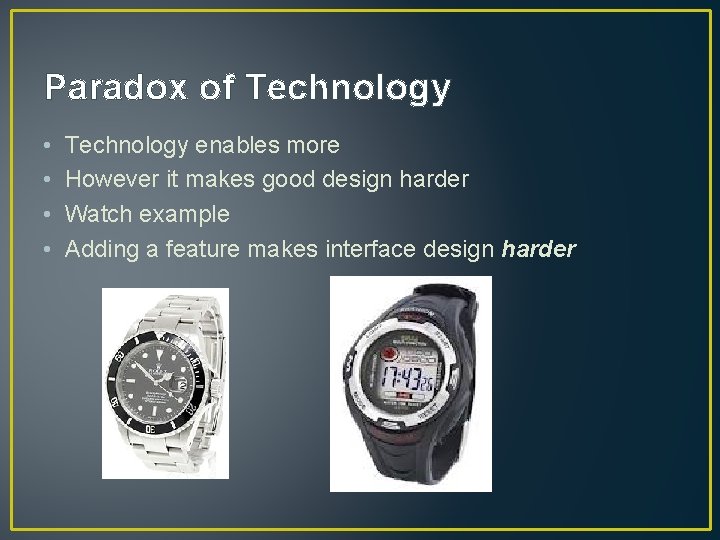
Paradox of Technology • • Technology enables more However it makes good design harder Watch example Adding a feature makes interface design harder
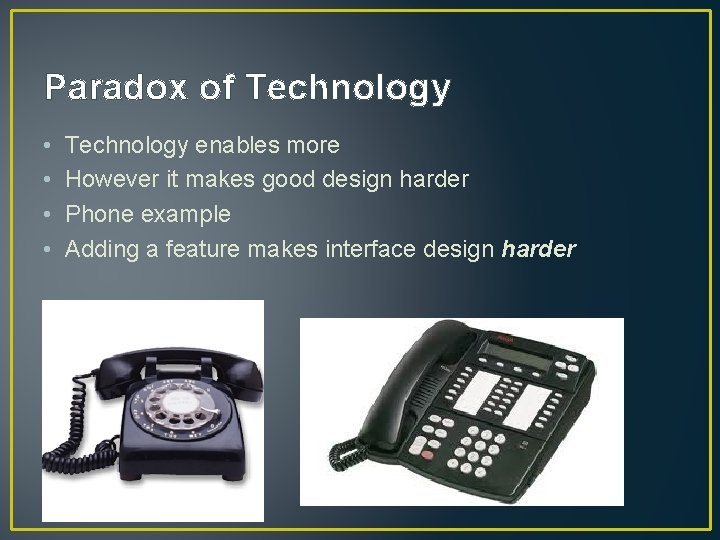
Paradox of Technology • • Technology enables more However it makes good design harder Phone example Adding a feature makes interface design harder
Good Design • Visibility – Can I see it? • Feedback – What is it doing? • Affordance – How do I use it? • Conceptual Model – How do I think it works? • Constraints – What can/can’t I do?
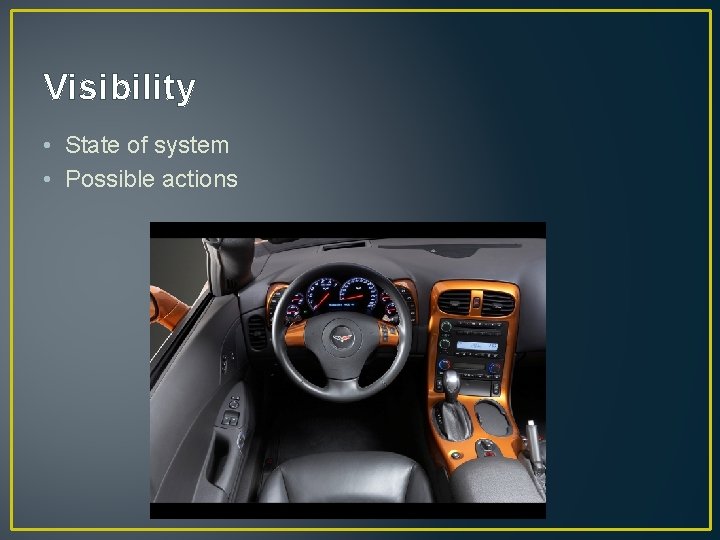
Visibility • State of system • Possible actions
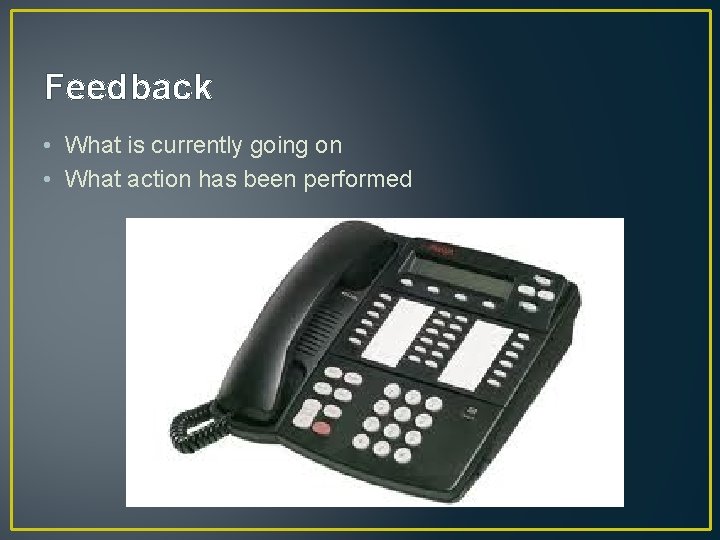
Feedback • What is currently going on • What action has been performed
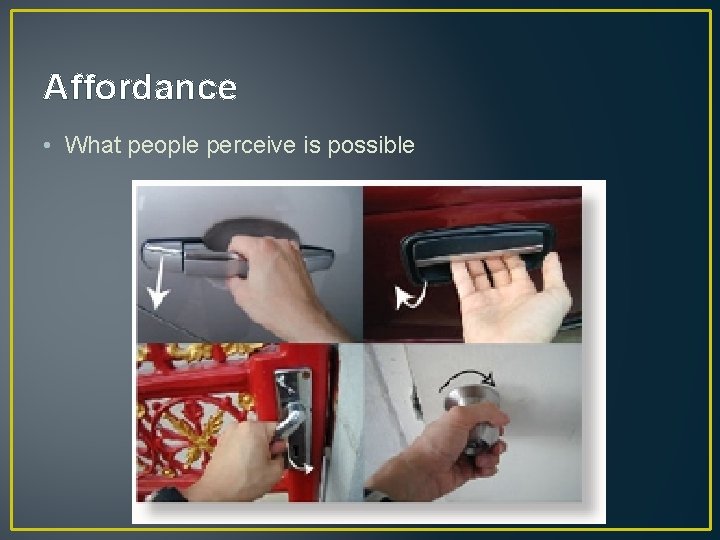
Affordance • What people perceive is possible
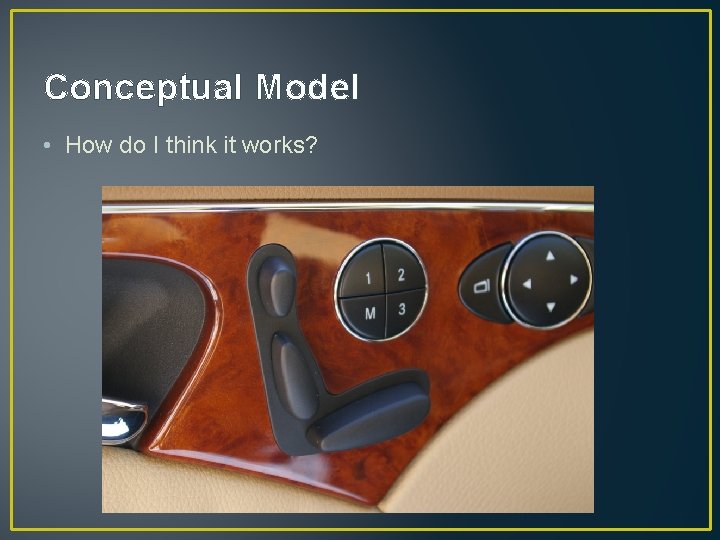
Conceptual Model • How do I think it works?
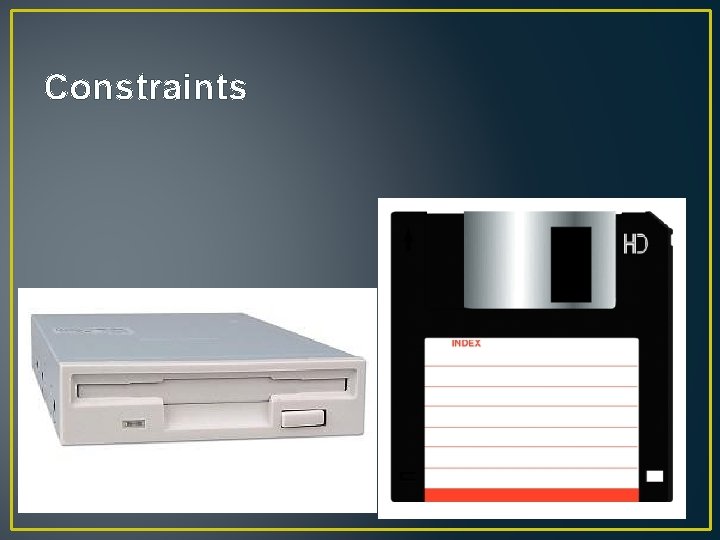
Constraints
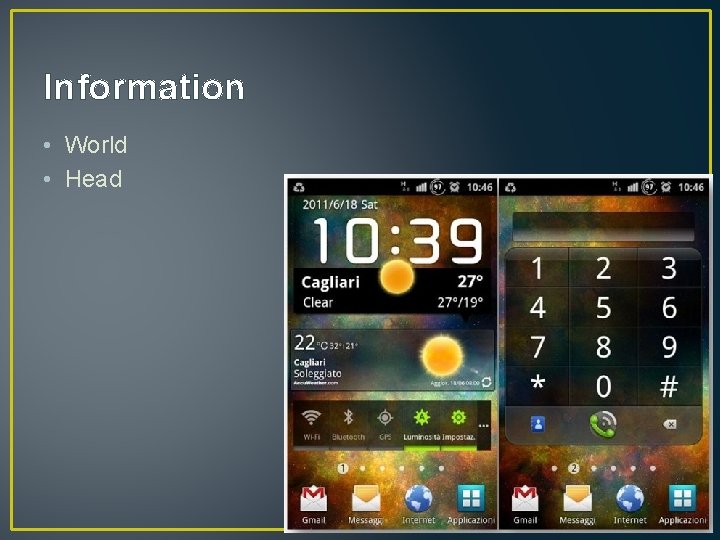
Information • World • Head
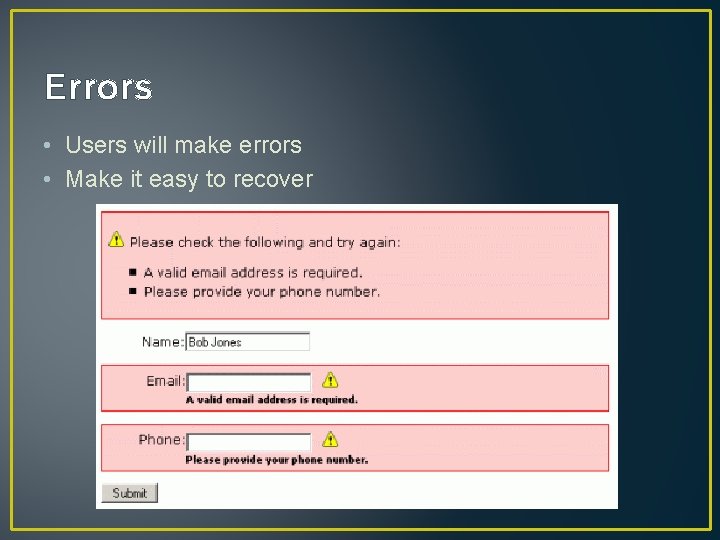
Errors • Users will make errors • Make it easy to recover
Natural Mappings • http: //www. usabilitypost. com/2010/11/17/the-design-ofeveryday-things/ • http: //www. ted. com/talks/don_norman_on_design_and_e motion? language=en
- Slides: 17