
HCI History in 3 Waves Stephen Gilbert https
HCI: History in 3 Waves Stephen Gilbert https: //youtu. be/QUQsq. Bqxo. R 4? t=7 s Gilbert, SPIRE-EIT 2019 Week 1
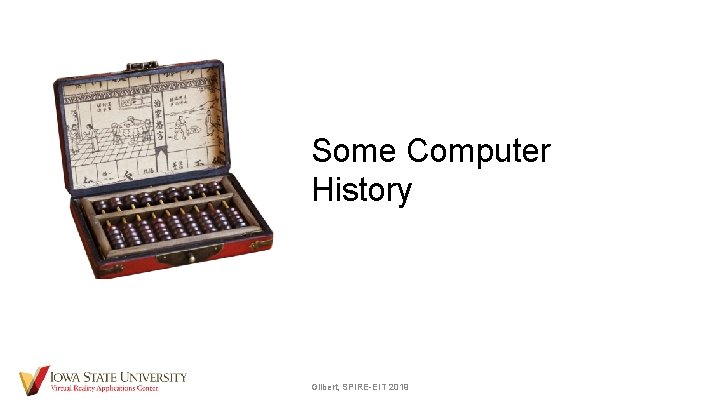
Some Computer History Gilbert, SPIRE-EIT 2019
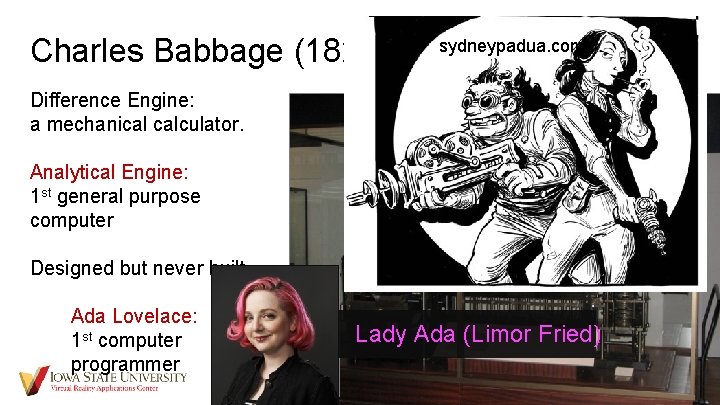
Charles Babbage (1822) sydneypadua. com Difference Engine: a mechanical calculator. Analytical Engine: 1 st general purpose computer Designed but never built. Ada Lovelace: 1 st computer programmer Lady Ada (Limor Fried) Gilbert, SPIRE-EIT 2019

Atanasoff-Berry Computer (1941) First electronic digital computing device At Iowa State! Gilbert, SPIRE-EIT 2019
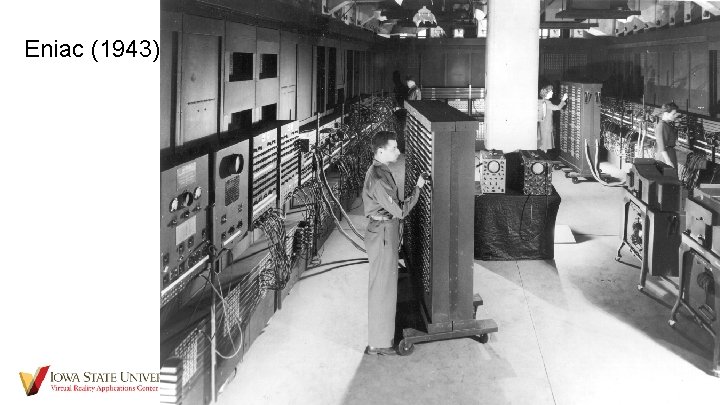
Eniac (1943) Gilbert, SPIRE-EIT 2019 From IBM Archives.
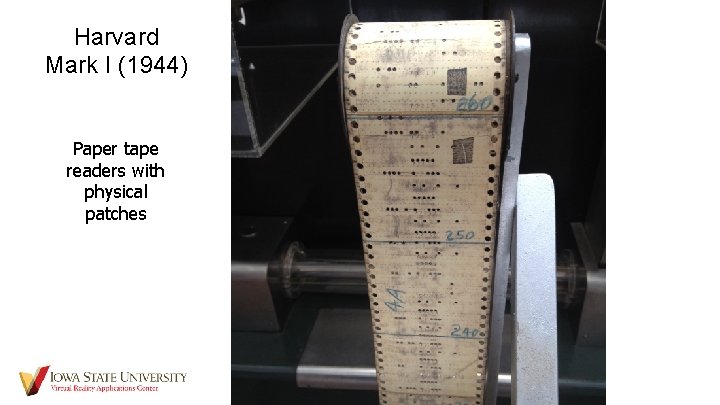
Harvard Mark I (1944) Paper tape readers with physical patches Gilbert, SPIRE-EIT 2019
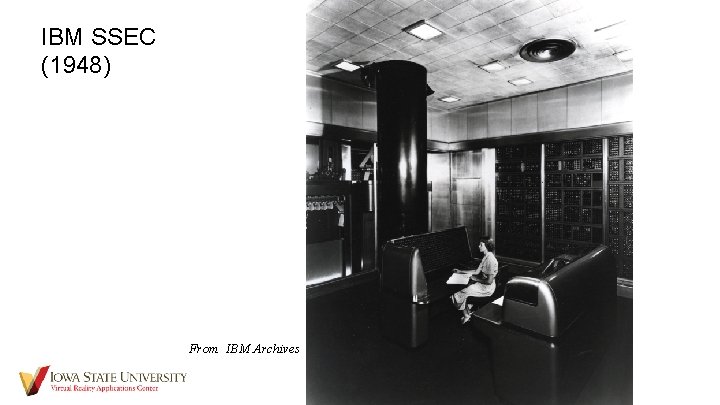
IBM SSEC (1948) From IBM Archives Gilbert, SPIRE-EIT 2019
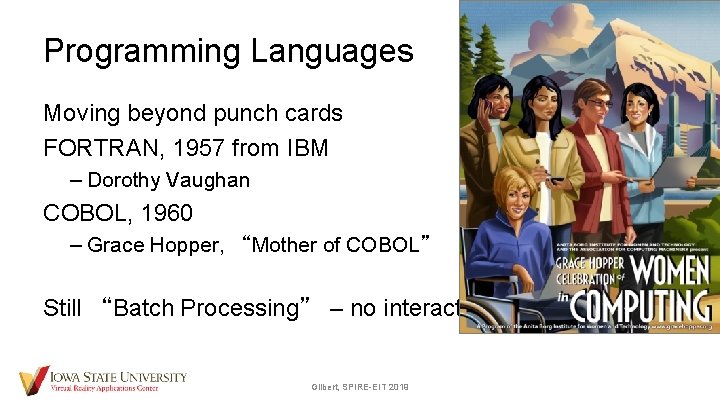
Programming Languages Moving beyond punch cards FORTRAN, 1957 from IBM – Dorothy Vaughan COBOL, 1960 – Grace Hopper, “Mother of COBOL” Still “Batch Processing” – no interaction Gilbert, SPIRE-EIT 2019 Hidden Figure
Vannevar Bush (1945) “As We May Think” in Atlantic Monthly “wholly new forms of encyclopedias will appear, ready made with a mesh of associative trails running through them, ready to be dropped into the memex and there amplified” http: //www. theatlantic. com/doc/194507/bush Gilbert, SPIRE-EIT 2019
J. C. R. Licklider 1960 – Described “Man-Computer Symbiosis” – Time-sharing – Networking – Human-centered focus Gilbert, SPIRE-EIT 2019
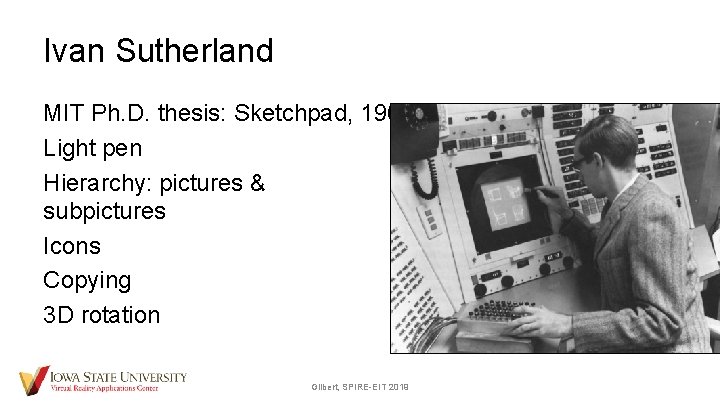
Ivan Sutherland MIT Ph. D. thesis: Sketchpad, 1963 Light pen Hierarchy: pictures & subpictures Icons Copying 3 D rotation Gilbert, SPIRE-EIT 2019
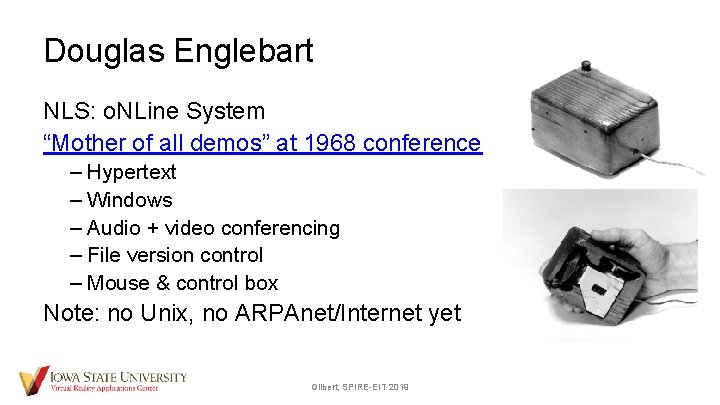
Douglas Englebart NLS: o. NLine System “Mother of all demos” at 1968 conference – Hypertext – Windows – Audio + video conferencing – File version control – Mouse & control box Note: no Unix, no ARPAnet/Internet yet Gilbert, SPIRE-EIT 2019

Alan Kay Dynabook, 1969 Xerox PARC “Imagine having your own self-contained knowledge manipulator in a portable package the size and shape of an ordinary notebook. Suppose it had enough power to out-race your senses of sight and hearing, enough capacity to store for later retrieval thousands of page-equivalents of reference materials, poems, letters, recipes, records, drawings, animations, musical scores. . . ” Gilbert, SPIRE-EIT 2019
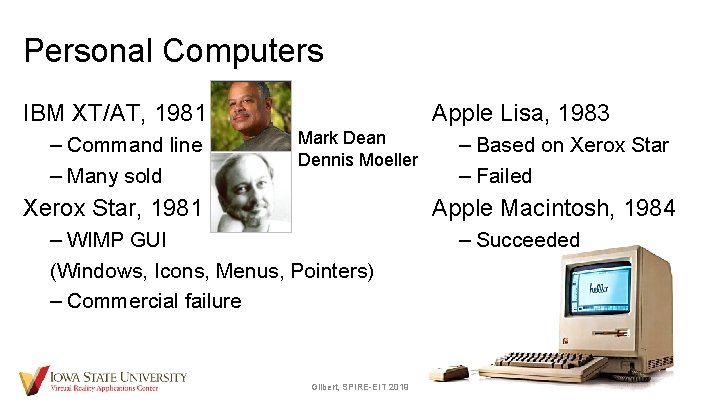
Personal Computers IBM XT/AT, 1981 – Command line – Many sold Apple Lisa, 1983 Mark Dean Dennis Moeller Xerox Star, 1981 – Based on Xerox Star – Failed Apple Macintosh, 1984 – WIMP GUI (Windows, Icons, Menus, Pointers) – Commercial failure Gilbert, SPIRE-EIT 2019 – Succeeded
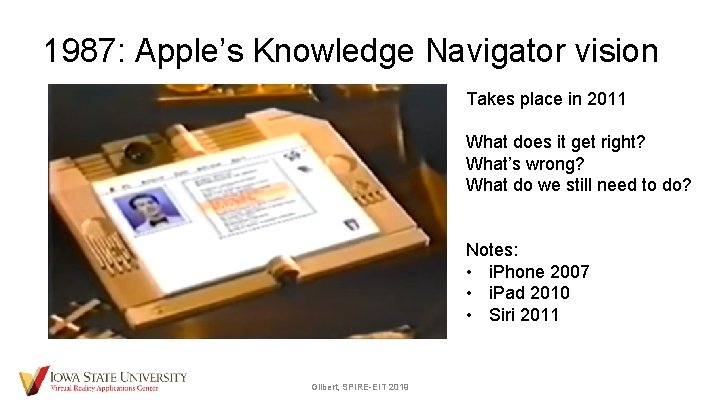
1987: Apple’s Knowledge Navigator vision Takes place in 2011 What does it get right? What’s wrong? What do we still need to do? Notes: • i. Phone 2007 • i. Pad 2010 • Siri 2011 Gilbert, SPIRE-EIT 2019
HCI History: 3 Waves Gilbert, SPIRE-EIT 2019
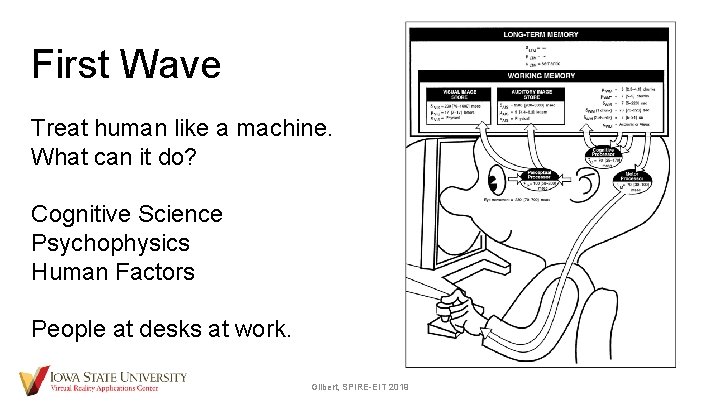
First Wave Treat human like a machine. What can it do? Cognitive Science Psychophysics Human Factors People at desks at work. Gilbert, SPIRE-EIT 2019
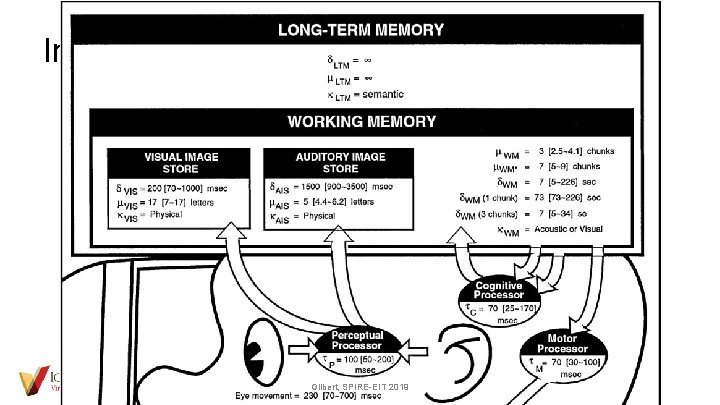
Info Processing Model Gilbert, SPIRE-EIT 2019
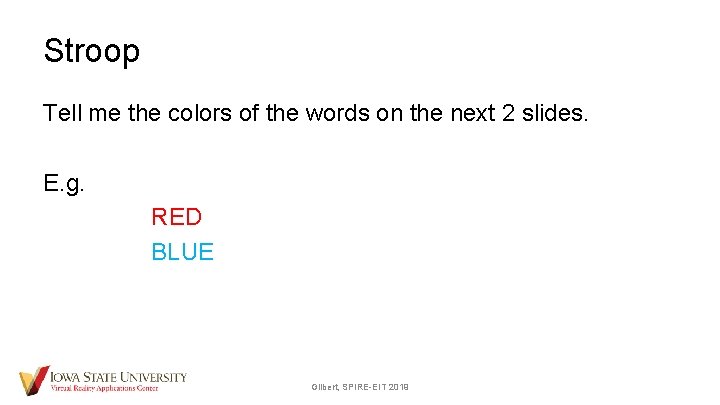
Stroop Tell me the colors of the words on the next 2 slides. E. g. RED BLUE Gilbert, SPIRE-EIT 2019
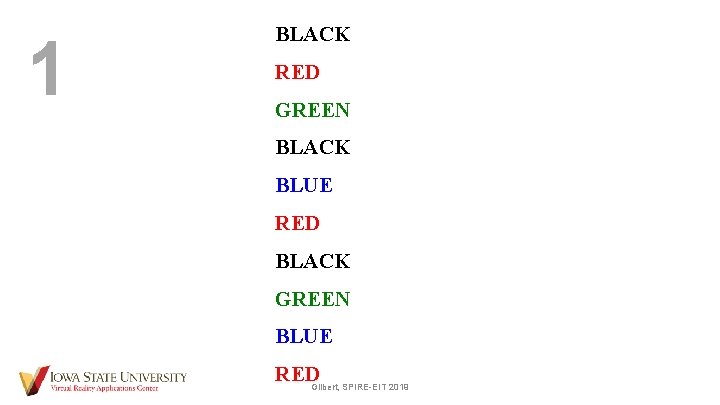
1 BLACK RED GREEN BLACK BLUE RED BLACK GREEN BLUE REDGilbert, SPIRE-EIT 2019
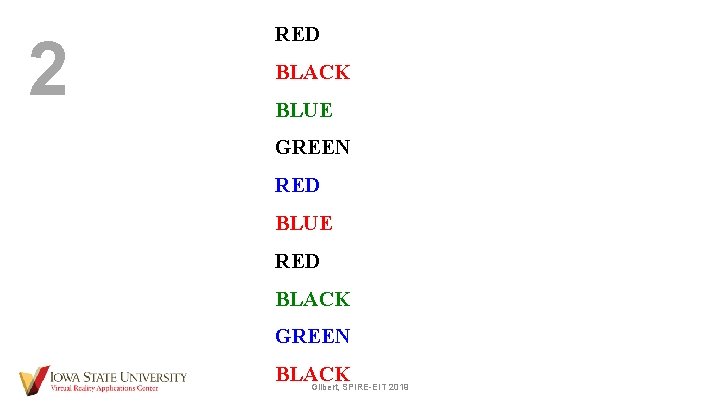
2 RED BLACK BLUE GREEN RED BLUE RED BLACK GREEN BLACK Gilbert, SPIRE-EIT 2019
Gilbert, SPIRE-EIT 2019
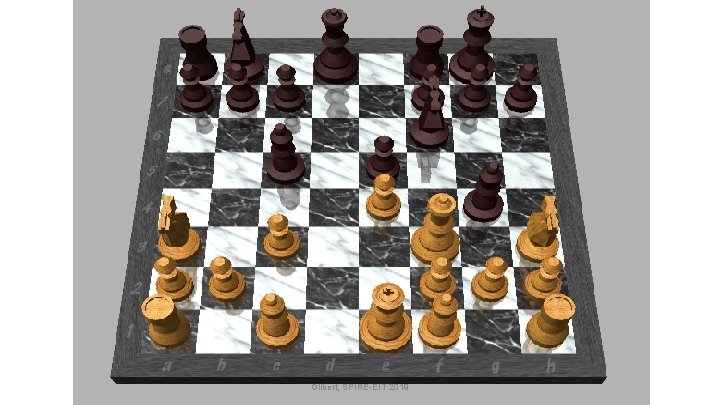
Chess Who is winning? Gilbert, SPIRE-EIT 2019
Chess Who is winning? How do you know? Gilbert, SPIRE-EIT 2019
Chess Who is winning? How do you know? What do you remember? Experts vs. Amateurs Gilbert, SPIRE-EIT 2019
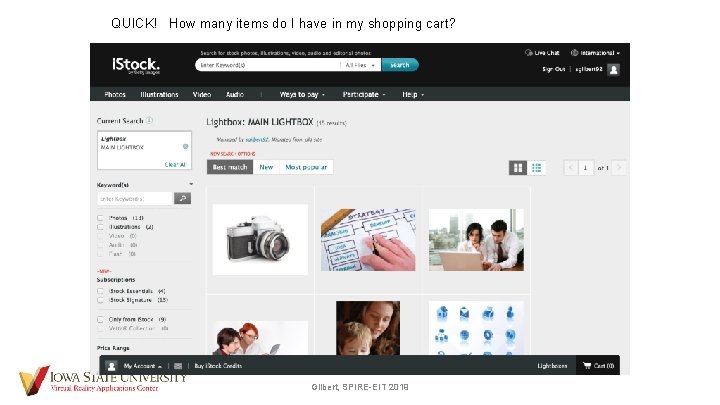
QUICK! How many items do I have in my shopping cart? Gilbert, SPIRE-EIT 2019
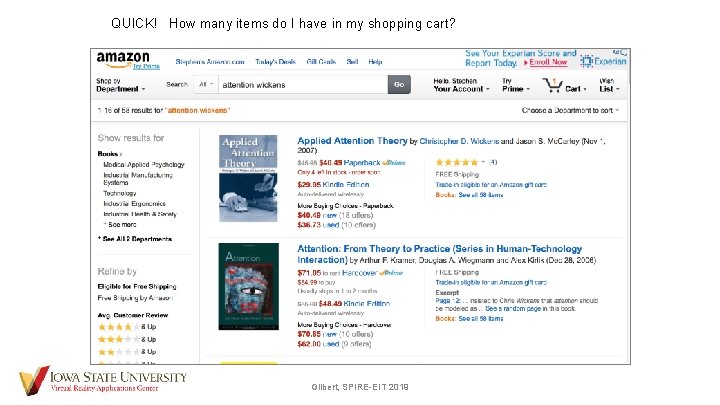
QUICK! How many items do I have in my shopping cart? Gilbert, SPIRE-EIT 2019
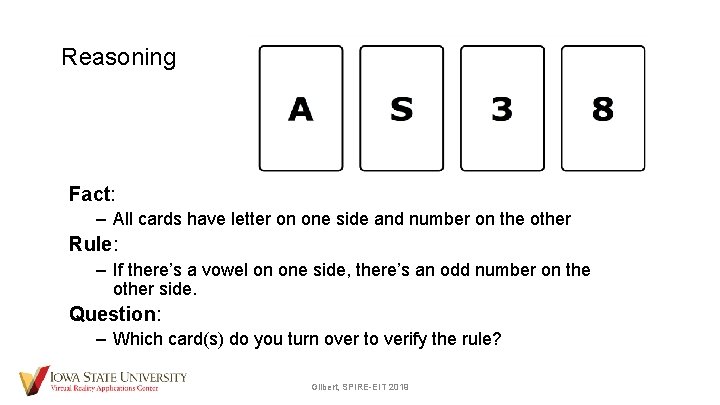
Reasoning Fact: – All cards have letter on one side and number on the other Rule: – If there’s a vowel on one side, there’s an odd number on the other side. Question: – Which card(s) do you turn over to verify the rule? Gilbert, SPIRE-EIT 2019
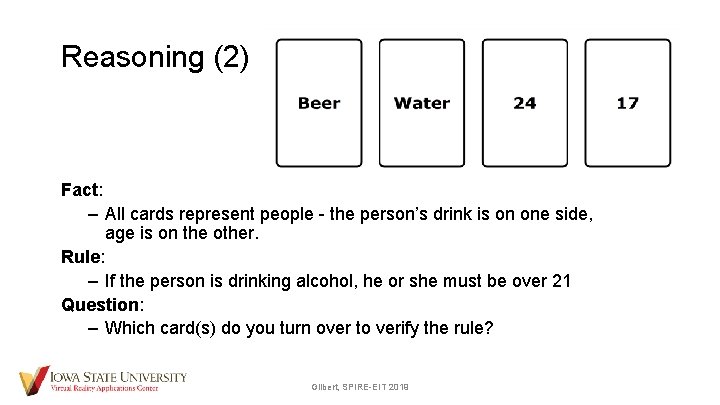
Reasoning (2) Fact: – All cards represent people - the person’s drink is on one side, age is on the other. Rule: – If the person is drinking alcohol, he or she must be over 21 Question: – Which card(s) do you turn over to verify the rule? Gilbert, SPIRE-EIT 2019
What's missing from the First Wave? Gilbert, SPIRE-EIT 2019
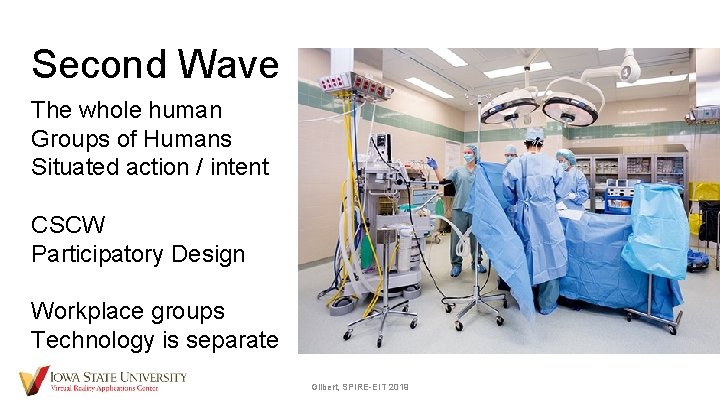
Second Wave The whole human Groups of Humans Situated action / intent CSCW Participatory Design Workplace groups Technology is separate Gilbert, SPIRE-EIT 2019
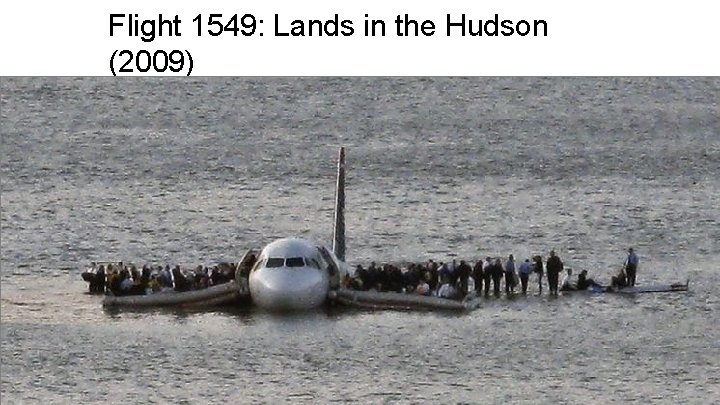
Flight 1549: Lands in the Hudson (2009) Gilbert, SPIRE-EIT 2019
What's missing from the Second Wave? Gilbert, SPIRE-EIT 2019
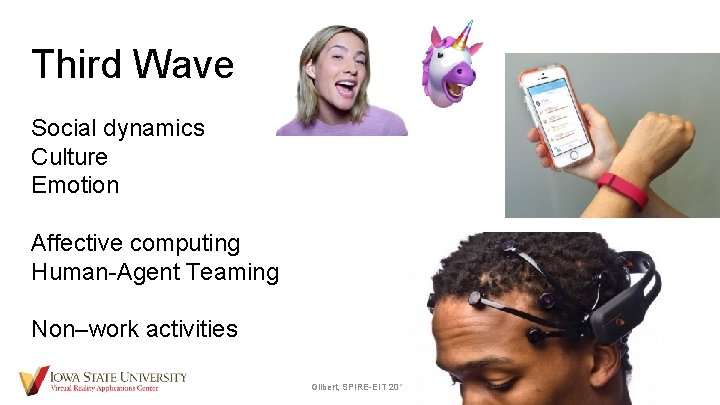
Third Wave Social dynamics Culture Emotion Affective computing Human-Agent Teaming Non–work activities Gilbert, SPIRE-EIT 2019
HCI Homework: Bad Usability Scavenger Hunt Find 2 interfaces that are frustrating for the user (websites or physical items: Doors, Chairs, Game Controllers, etc. ) and capture them (photo or screenshot) by end of Friday. Describe: • • The user’s task and context What is working/not working, what could make it better Blog them: start post title with “HCI: ” Due by end of Friday Gilbert, SPIRE-EIT 2019
- Slides: 35