
HCC EXPERTS ROUND TABLE ASIAPACIFIC Prof Pierce Chow
HCC EXPERTS ROUND TABLE (ASIA-PACIFIC) Prof. Pierce Chow MBBS MMed, FAMS, FRCSE, Ph. D National Cancer Centre Singapore and Singapore General Hospital Singapore OVERVIEW OF KEY DATA July 2020 HCC, hepatocellular carcinoma 2
DISCLAIMER Please note: Views expressed within this presentation are the personal opinions of the author. They do not necessarily represent the views of the author’s academic institution, organisation, or other group or individual. This content is supported by an Independent Educational Grant from Roche. Disclosures: Prof. Pierce Chow has received honoraria from the following: Sirtex Medical, Ipsen, Bristol-Myers Squibb, Oncosil, Bayer, New B Innovation, MSD, BTG Plc, Guerbet, Perspectum, IQVIA, Genentech, Roche, Astra. Zeneca, AUM Biosciences, L. E. K. Consulting Pte Ltd. 3
EXECUTIVE SUMMARY • The HCC Experts Round Table took place as two virtual meetings on 6 and 7 July 2020 • With 7 Experts from the Asia-Pacific region: – 1× Patient advocate – 1× Payer/health economics expert – 5× Physicians (representing hepatology, medical oncology, and surgery) • 26 questions discussed: – 11 questions related to treatment of choice in advanced 1 L HCC in Asia (sorafenib and lenvatinib) – 6 questions related to the management of advanced HCC patients in Asia (e. g. clinical setting, costs, multidisciplinary tumour board) – 9 questions related to IMbrave 150 data and potential impact in clinical practice in Asia • Next step: Building a manuscript to reflect consensus outcomes 1 L, first-line; HCC, hepatocellular carcinoma 4
INTRODUCTION AND TREATMENT OVERVIEW OF ADVANCED HCC, hepatocellular carcinoma 5
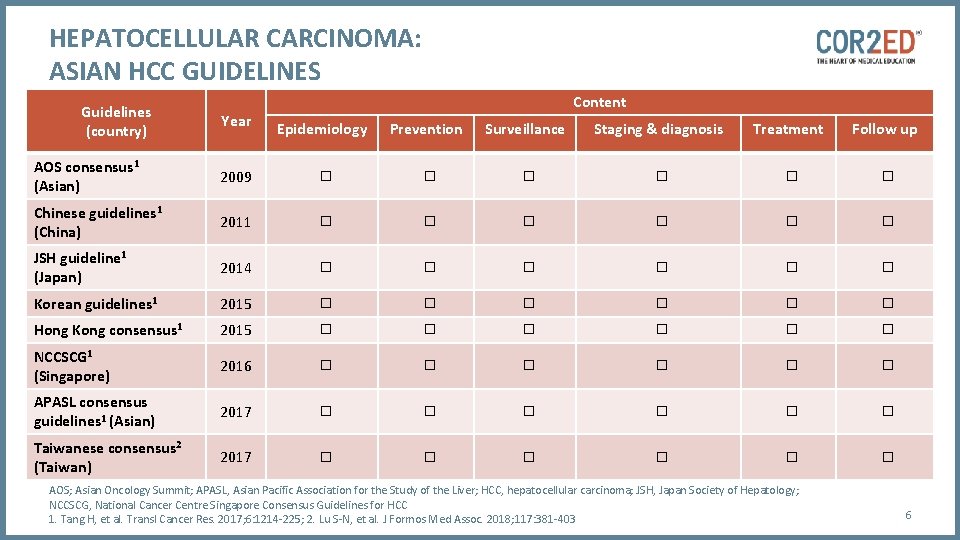
HEPATOCELLULAR CARCINOMA: ASIAN HCC GUIDELINES Guidelines (country) Year Content Epidemiology Prevention Surveillance Staging & diagnosis Treatment Follow up AOS consensus 1 (Asian) 2009 � � � Chinese guidelines 1 (China) 2011 � � � JSH guideline 1 (Japan) 2014 � � � Korean guidelines 1 2015 � � � Hong Kong consensus 1 2015 � � � NCCSCG 1 (Singapore) 2016 � � � APASL consensus guidelines 1 (Asian) 2017 � � � Taiwanese consensus 2 (Taiwan) 2017 � � � AOS; Asian Oncology Summit; APASL, Asian Pacific Association for the Study of the Liver; HCC, hepatocellular carcinoma; JSH, Japan Society of Hepatology; NCCSCG, National Cancer Centre Singapore Consensus Guidelines for HCC 1. Tang H, et al. Transl Cancer Res. 2017; 6: 1214 -225; 2. Lu S-N, et al. J Formos Med Assoc. 2018; 117: 381 -403 6
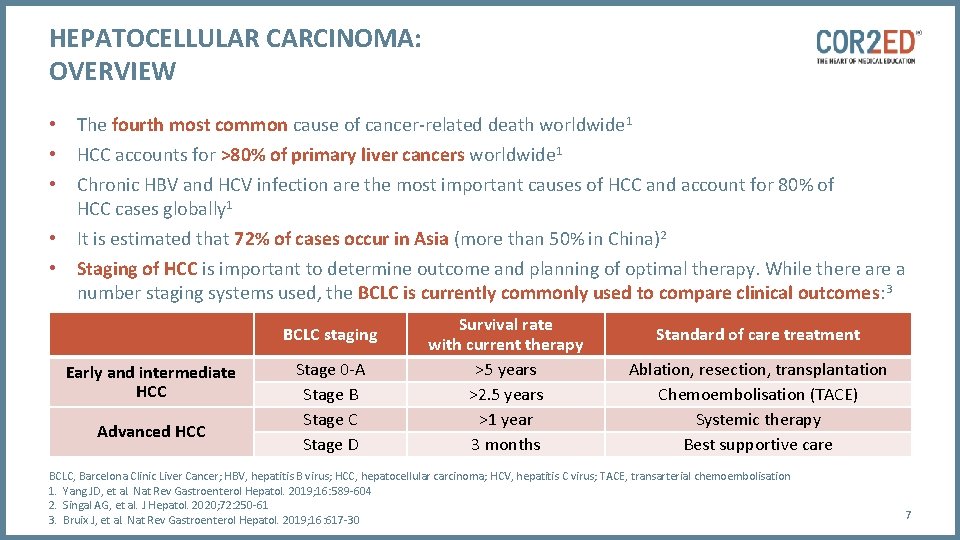
HEPATOCELLULAR CARCINOMA: OVERVIEW • • • The fourth most common cause of cancer-related death worldwide 1 HCC accounts for >80% of primary liver cancers worldwide 1 Chronic HBV and HCV infection are the most important causes of HCC and account for 80% of HCC cases globally 1 It is estimated that 72% of cases occur in Asia (more than 50% in China)2 Staging of HCC is important to determine outcome and planning of optimal therapy. While there a number staging systems used, the BCLC is currently commonly used to compare clinical outcomes: 3 BCLC staging Early and intermediate HCC Advanced HCC Stage 0 -A Stage B Stage C Stage D Survival rate with current therapy >5 years >2. 5 years >1 year 3 months Standard of care treatment Ablation, resection, transplantation Chemoembolisation (TACE) Systemic therapy Best supportive care BCLC, Barcelona Clinic Liver Cancer; HBV, hepatitis B virus; HCC, hepatocellular carcinoma; HCV, hepatitis C virus; TACE, transarterial chemoembolisation 1. Yang JD, et al. Nat Rev Gastroenterol Hepatol. 2019; 16: 589 -604 2. Singal AG, et al. J Hepatol. 2020; 72: 250 -61 3. Bruix J, et al. Nat Rev Gastroenterol Hepatol. 2019; 16: 617 -30 7
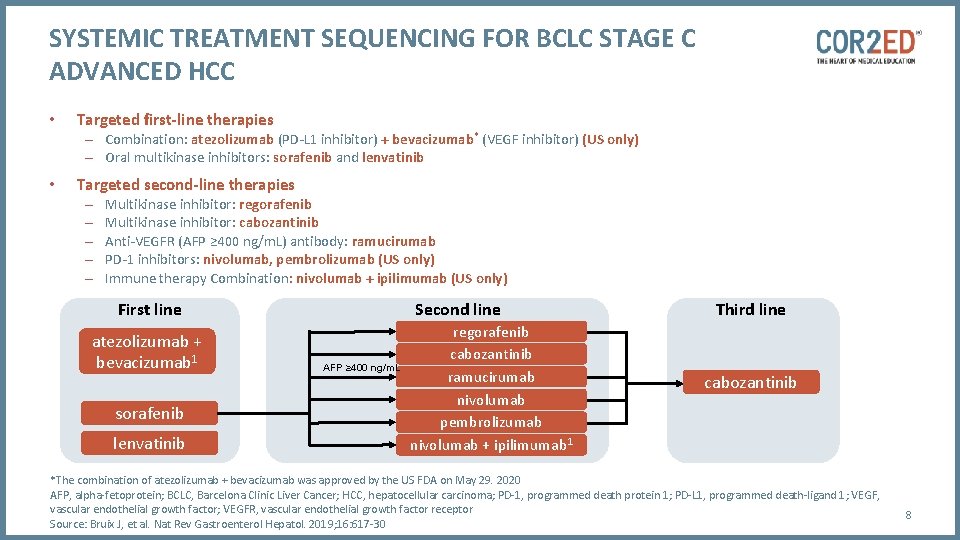
SYSTEMIC TREATMENT SEQUENCING FOR BCLC STAGE C ADVANCED HCC • Targeted first-line therapies – Combination: atezolizumab (PD-L 1 inhibitor) + bevacizumab* (VEGF inhibitor) (US only) – Oral multikinase inhibitors: sorafenib and lenvatinib • Targeted second-line therapies – – – Multikinase inhibitor: regorafenib Multikinase inhibitor: cabozantinib Anti-VEGFR (AFP ≥ 400 ng/m. L) antibody: ramucirumab PD-1 inhibitors: nivolumab, pembrolizumab (US only) Immune therapy Combination: nivolumab + ipilimumab (US only) First line atezolizumab + bevacizumab 1 sorafenib lenvatinib Second line AFP ≥ 400 ng/m. L regorafenib cabozantinib ramucirumab nivolumab pembrolizumab nivolumab + ipilimumab 1 Third line cabozantinib *The combination of atezolizumab + bevacizumab was approved by the US FDA on May 29. 2020 AFP, alpha-fetoprotein; BCLC, Barcelona Clinic Liver Cancer; HCC, hepatocellular carcinoma; PD-1, programmed death protein 1; PD-L 1, programmed death-ligand 1; VEGF, vascular endothelial growth factor; VEGFR, vascular endothelial growth factor receptor Source: Bruix J, et al. Nat Rev Gastroenterol Hepatol. 2019; 16: 617 -30 8
SORAFENIB / LENVATINIB EFFICACY AND SAFETY DATA IN 1 L FOR ADVANCED HCC PATIENTS 1 L, first-line; HCC, hepatocellular carcinoma 9
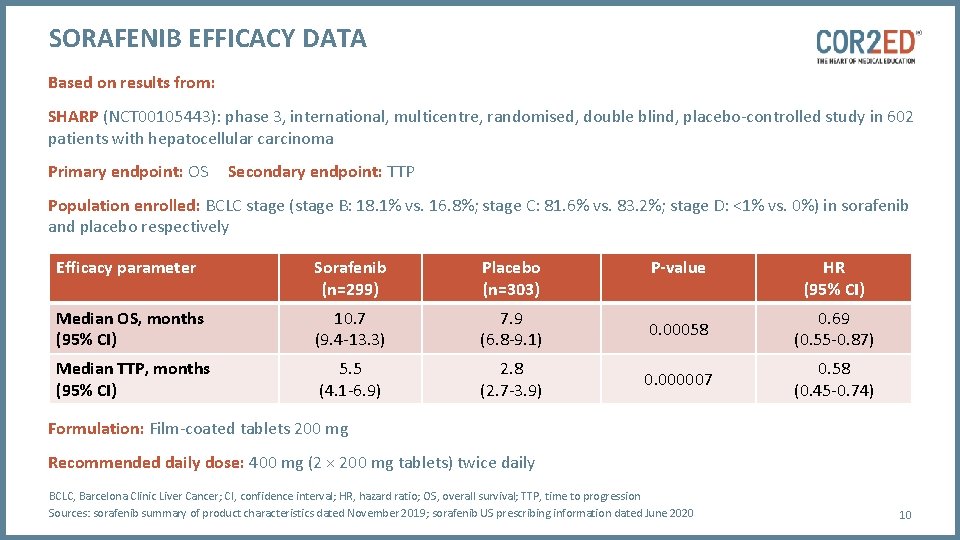
SORAFENIB EFFICACY DATA Based on results from: SHARP (NCT 00105443): phase 3, international, multicentre, randomised, double blind, placebo-controlled study in 602 patients with hepatocellular carcinoma Primary endpoint: OS Secondary endpoint: TTP Population enrolled: BCLC stage (stage B: 18. 1% vs. 16. 8%; stage C: 81. 6% vs. 83. 2%; stage D: <1% vs. 0%) in sorafenib and placebo respectively Efficacy parameter Sorafenib (n=299) Placebo (n=303) P-value HR (95% CI) Median OS, months (95% CI) 10. 7 (9. 4 -13. 3) 7. 9 (6. 8 -9. 1) 0. 00058 0. 69 (0. 55 -0. 87) Median TTP, months (95% CI) 5. 5 (4. 1 -6. 9) 2. 8 (2. 7 -3. 9) 0. 000007 0. 58 (0. 45 -0. 74) Formulation: Film-coated tablets 200 mg Recommended daily dose: 400 mg (2 × 200 mg tablets) twice daily BCLC, Barcelona Clinic Liver Cancer; CI, confidence interval; HR, hazard ratio; OS, overall survival; TTP, time to progression Sources: sorafenib summary of product characteristics dated November 2019; sorafenib US prescribing information dated June 2020 10
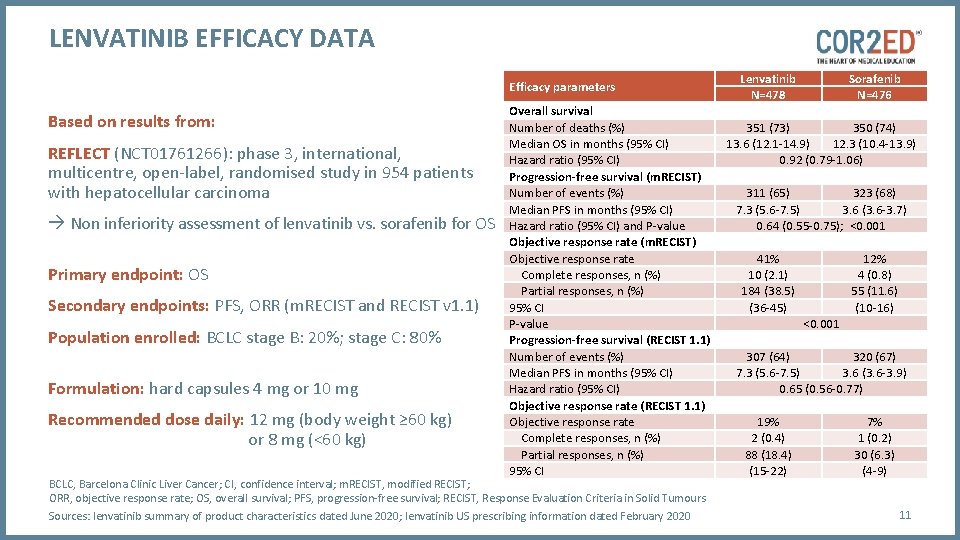
LENVATINIB EFFICACY DATA Efficacy parameters Based on results from: REFLECT (NCT 01761266): phase 3, international, multicentre, open-label, randomised study in 954 patients with hepatocellular carcinoma Non inferiority assessment of lenvatinib vs. sorafenib for OS Primary endpoint: OS Secondary endpoints: PFS, ORR (m. RECIST and RECIST v 1. 1) Population enrolled: BCLC stage B: 20%; stage C: 80% Formulation: hard capsules 4 mg or 10 mg Recommended dose daily: 12 mg (body weight ≥ 60 kg) or 8 mg (<60 kg) Overall survival Number of deaths (%) Median OS in months (95% CI) Hazard ratio (95% CI) Progression-free survival (m. RECIST) Number of events (%) Median PFS in months (95% CI) Hazard ratio (95% CI) and P-value Objective response rate (m. RECIST) Objective response rate Complete responses, n (%) Partial responses, n (%) 95% CI P-value Progression-free survival (RECIST 1. 1) Number of events (%) Median PFS in months (95% CI) Hazard ratio (95% CI) Objective response rate (RECIST 1. 1) Objective response rate Complete responses, n (%) Partial responses, n (%) 95% CI BCLC, Barcelona Clinic Liver Cancer; CI, confidence interval; m. RECIST, modified RECIST; ORR, objective response rate; OS, overall survival; PFS, progression-free survival; RECIST, Response Evaluation Criteria in Solid Tumours Sources: lenvatinib summary of product characteristics dated June 2020; lenvatinib US prescribing information dated February 2020 Lenvatinib N=478 Sorafenib N=476 351 (73) 350 (74) 13. 6 (12. 1 -14. 9) 12. 3 (10. 4 -13. 9) 0. 92 (0. 79 -1. 06) 311 (65) 323 (68) 7. 3 (5. 6 -7. 5) 3. 6 (3. 6 -3. 7) 0. 64 (0. 55 -0. 75); <0. 001 41% 10 (2. 1) 184 (38. 5) (36 -45) 12% 4 (0. 8) 55 (11. 6) (10 -16) <0. 001 307 (64) 320 (67) 7. 3 (5. 6 -7. 5) 3. 6 (3. 6 -3. 9) 0. 65 (0. 56 -0. 77) 19% 2 (0. 4) 88 (18. 4) (15 -22) 7% 1 (0. 2) 30 (6. 3) (4 -9) 11
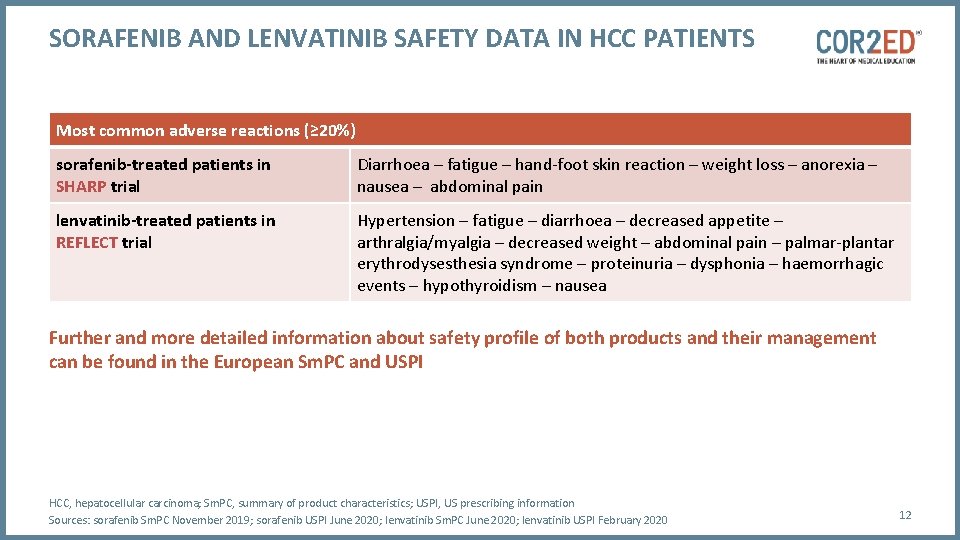
SORAFENIB AND LENVATINIB SAFETY DATA IN HCC PATIENTS Most common adverse reactions (≥ 20%) sorafenib-treated patients in SHARP trial Diarrhoea – fatigue – hand-foot skin reaction – weight loss – anorexia – nausea – abdominal pain lenvatinib-treated patients in REFLECT trial Hypertension – fatigue – diarrhoea – decreased appetite – arthralgia/myalgia – decreased weight – abdominal pain – palmar-plantar erythrodysesthesia syndrome – proteinuria – dysphonia – haemorrhagic events – hypothyroidism – nausea Further and more detailed information about safety profile of both products and their management can be found in the European Sm. PC and USPI HCC, hepatocellular carcinoma; Sm. PC, summary of product characteristics; USPI, US prescribing information Sources: sorafenib Sm. PC November 2019; sorafenib USPI June 2020; lenvatinib Sm. PC June 2020; lenvatinib USPI February 2020 12
IMbrave 150: A STUDY OF ATEZOLIZUMAB IN COMBINATION WITH BEVACIZUMAB COMPARED WITH SORAFENIB IN PATIENTS WITH UNTREATED LOCALLY ADVANCED OR METASTATIC HCC Clinical. Trials. gov Identifier: NCT 03434379 HCC, hepatocellular carcinoma 13
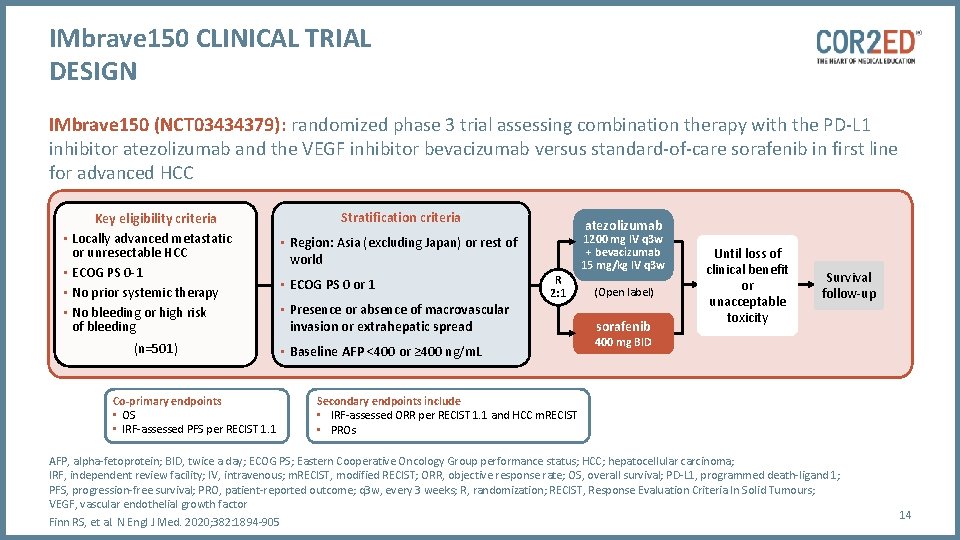
IMbrave 150 CLINICAL TRIAL DESIGN IMbrave 150 (NCT 03434379): randomized phase 3 trial assessing combination therapy with the PD-L 1 inhibitor atezolizumab and the VEGF inhibitor bevacizumab versus standard-of-care sorafenib in first line for advanced HCC Key eligibility criteria • Locally advanced metastatic or unresectable HCC • ECOG PS 0 -1 • No prior systemic therapy • No bleeding or high risk of bleeding (n=501) Co-primary endpoints • OS • IRF-assessed PFS per RECIST 1. 1 Stratification criteria atezolizumab 1200 mg IV q 3 w + bevacizumab 15 mg/kg IV q 3 w • Region: Asia (excluding Japan) or rest of world • ECOG PS 0 or 1 R 2: 1 • Presence or absence of macrovascular invasion or extrahepatic spread • Baseline AFP <400 or ≥ 400 ng/m. L (Open label) sorafenib Until loss of clinical benefit or unacceptable toxicity Survival follow-up 400 mg BID Secondary endpoints include • IRF-assessed ORR per RECIST 1. 1 and HCC m. RECIST • PROs AFP, alpha-fetoprotein; BID, twice a day; ECOG PS; Eastern Cooperative Oncology Group performance status; HCC; hepatocellular carcinoma; IRF, independent review facility; IV, intravenous; m. RECIST, modified RECIST; ORR, objective response rate; OS, overall survival; PD-L 1, programmed death-ligand 1; PFS, progression-free survival; PRO, patient-reported outcome; q 3 w, every 3 weeks; R, randomization; RECIST, Response Evaluation Criteria In Solid Tumours; VEGF, vascular endothelial growth factor Finn RS, et al. N Engl J Med. 2020; 382: 1894 -905 14
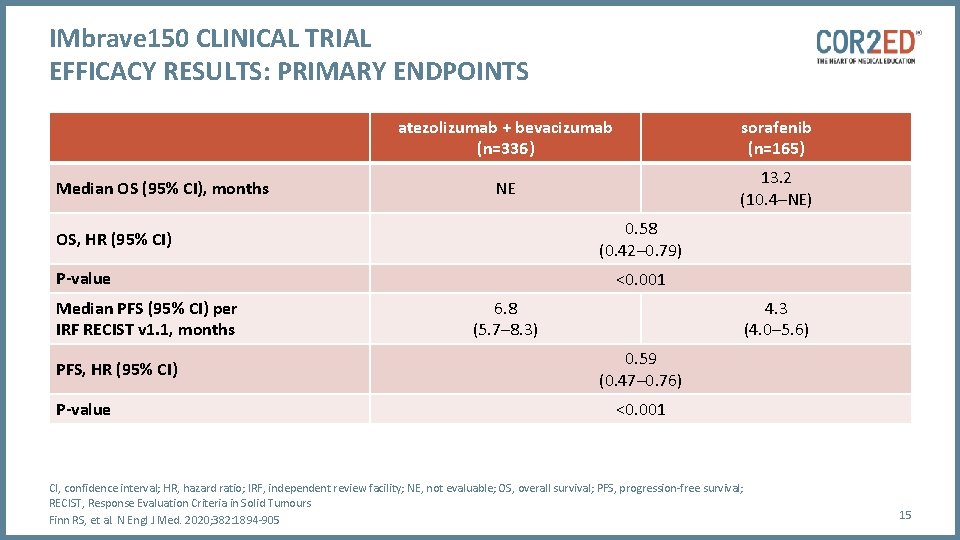
IMbrave 150 CLINICAL TRIAL EFFICACY RESULTS: PRIMARY ENDPOINTS Median OS (95% CI), months atezolizumab + bevacizumab (n=336) sorafenib (n=165) NE 13. 2 (10. 4–NE) 0. 58 (0. 42– 0. 79) OS, HR (95% CI) P-value Median PFS (95% CI) per IRF RECIST v 1. 1, months PFS, HR (95% CI) P-value <0. 001 6. 8 (5. 7– 8. 3) 4. 3 (4. 0– 5. 6) 0. 59 (0. 47– 0. 76) <0. 001 CI, confidence interval; HR, hazard ratio; IRF, independent review facility; NE, not evaluable; OS, overall survival; PFS, progression-free survival; RECIST, Response Evaluation Criteria in Solid Tumours Finn RS, et al. N Engl J Med. 2020; 382: 1894 -905 15
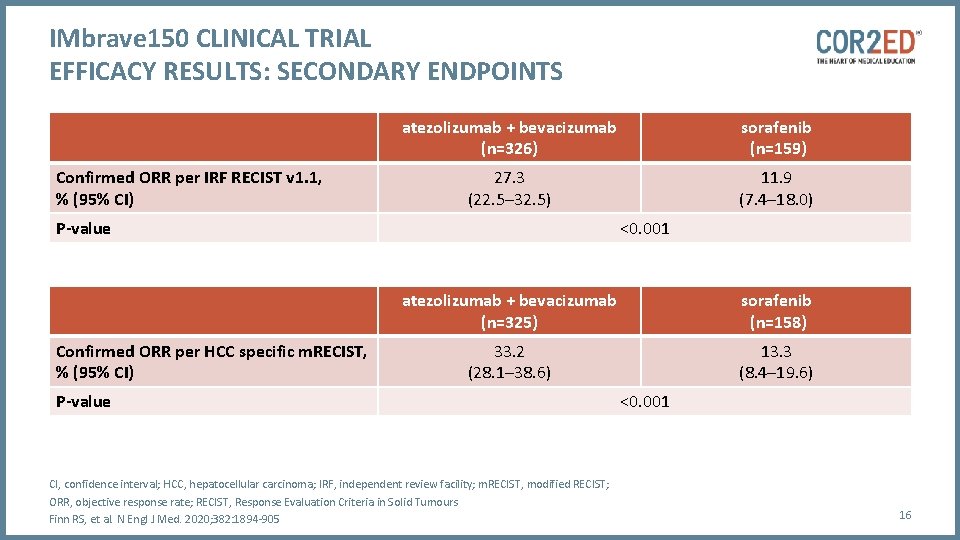
IMbrave 150 CLINICAL TRIAL EFFICACY RESULTS: SECONDARY ENDPOINTS Confirmed ORR per IRF RECIST v 1. 1, % (95% CI) atezolizumab + bevacizumab (n=326) sorafenib (n=159) 27. 3 (22. 5– 32. 5) 11. 9 (7. 4– 18. 0) P-value Confirmed ORR per HCC specific m. RECIST, % (95% CI) <0. 001 atezolizumab + bevacizumab (n=325) sorafenib (n=158) 33. 2 (28. 1– 38. 6) 13. 3 (8. 4– 19. 6) P-value CI, confidence interval; HCC, hepatocellular carcinoma; IRF, independent review facility; m. RECIST, modified RECIST; ORR, objective response rate; RECIST, Response Evaluation Criteria in Solid Tumours Finn RS, et al. N Engl J Med. 2020; 382: 1894 -905 <0. 001 16
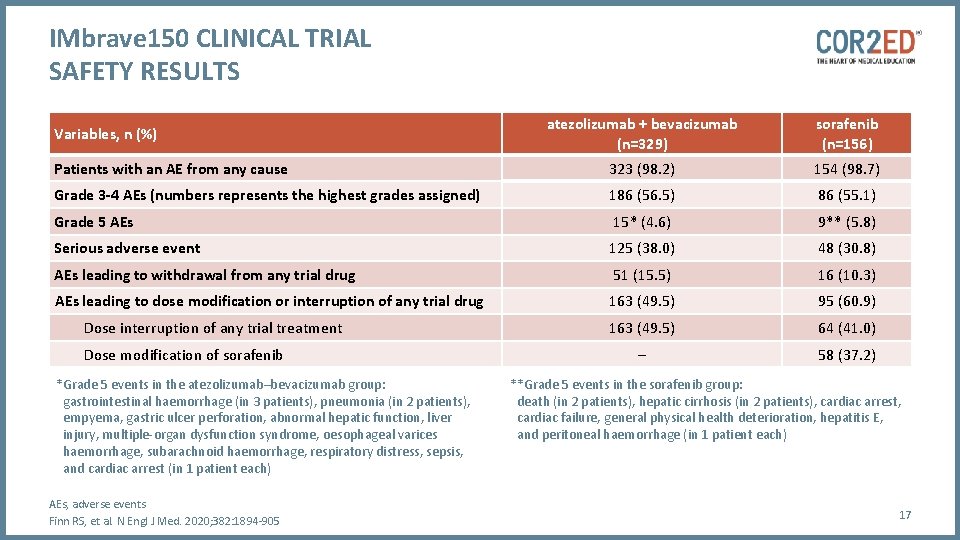
IMbrave 150 CLINICAL TRIAL SAFETY RESULTS atezolizumab + bevacizumab (n=329) sorafenib (n=156) Patients with an AE from any cause 323 (98. 2) 154 (98. 7) Grade 3 -4 AEs (numbers represents the highest grades assigned) 186 (56. 5) 86 (55. 1) Grade 5 AEs 15* (4. 6) 9** (5. 8) Serious adverse event 125 (38. 0) 48 (30. 8) AEs leading to withdrawal from any trial drug 51 (15. 5) 16 (10. 3) AEs leading to dose modification or interruption of any trial drug 163 (49. 5) 95 (60. 9) Dose interruption of any trial treatment 163 (49. 5) 64 (41. 0) – 58 (37. 2) Variables, n (%) Dose modification of sorafenib *Grade 5 events in the atezolizumab–bevacizumab group: gastrointestinal haemorrhage (in 3 patients), pneumonia (in 2 patients), empyema, gastric ulcer perforation, abnormal hepatic function, liver injury, multiple-organ dysfunction syndrome, oesophageal varices haemorrhage, subarachnoid haemorrhage, respiratory distress, sepsis, and cardiac arrest (in 1 patient each) AEs, adverse events Finn RS, et al. N Engl J Med. 2020; 382: 1894 -905 **Grade 5 events in the sorafenib group: death (in 2 patients), hepatic cirrhosis (in 2 patients), cardiac arrest, cardiac failure, general physical health deterioration, hepatitis E, and peritoneal haemorrhage (in 1 patient each) 17
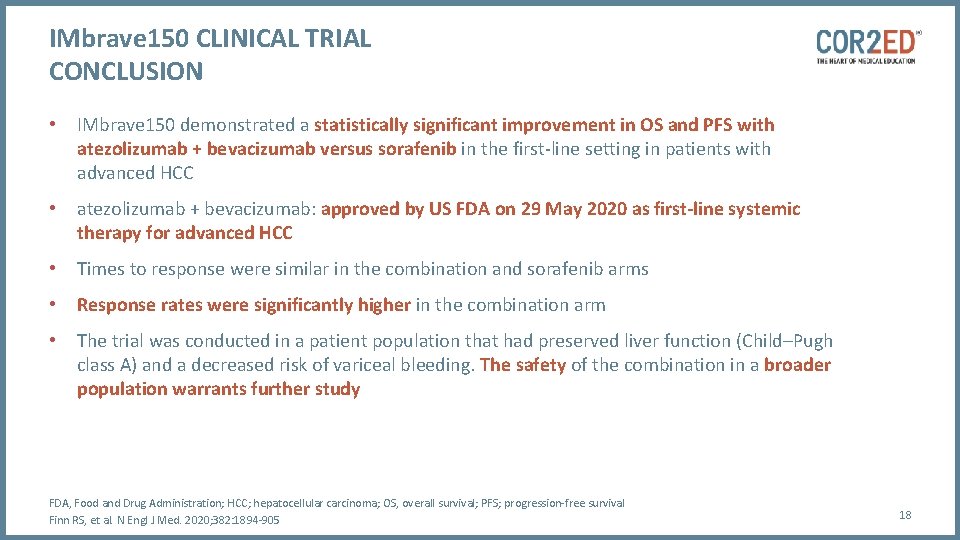
IMbrave 150 CLINICAL TRIAL CONCLUSION • IMbrave 150 demonstrated a statistically significant improvement in OS and PFS with atezolizumab + bevacizumab versus sorafenib in the first-line setting in patients with advanced HCC • atezolizumab + bevacizumab: approved by US FDA on 29 May 2020 as first-line systemic therapy for advanced HCC • Times to response were similar in the combination and sorafenib arms • Response rates were significantly higher in the combination arm • The trial was conducted in a patient population that had preserved liver function (Child–Pugh class A) and a decreased risk of variceal bleeding. The safety of the combination in a broader population warrants further study FDA, Food and Drug Administration; HCC; hepatocellular carcinoma; OS, overall survival; PFS; progression-free survival Finn RS, et al. N Engl J Med. 2020; 382: 1894 -905 18
COR 2 ED Bodenackerstrasse 17 4103 Bottmingen SWITZERLAND Dr. Froukje Sosef MD +31 6 2324 3636 froukje. sosef@cor 2 ed. com Dr. Antoine Lacombe Pharm D, MBA +41 79 529 42 79 antoine. lacombe@cor 2 ed. com Heading to the heart of Independent Medical Education Since 2012
- Slides: 19