
HB Dr Nasim Hemeproteins are a group of

HB Dr. Nasim
Hemeproteins are a group of specialized proteins that contain heme as a tightly bound prosthetic group hemoglobin and myoglobin, the two most abundant hemeproteins in humans, the heme group serves to reversibly bind oxygen.
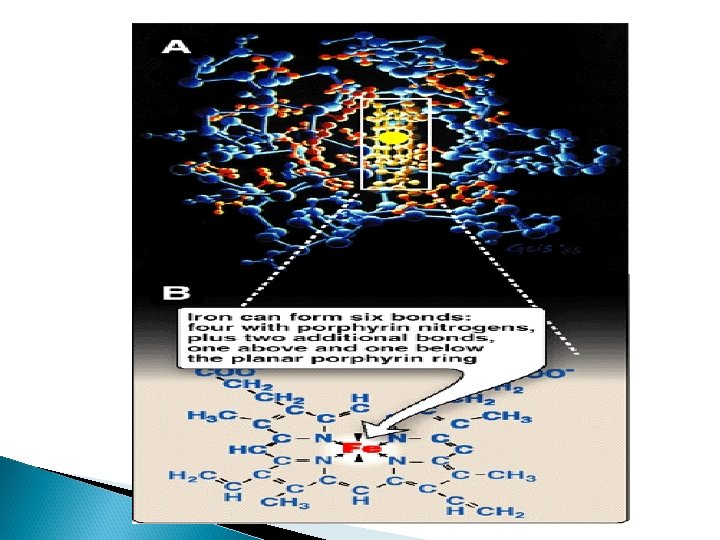
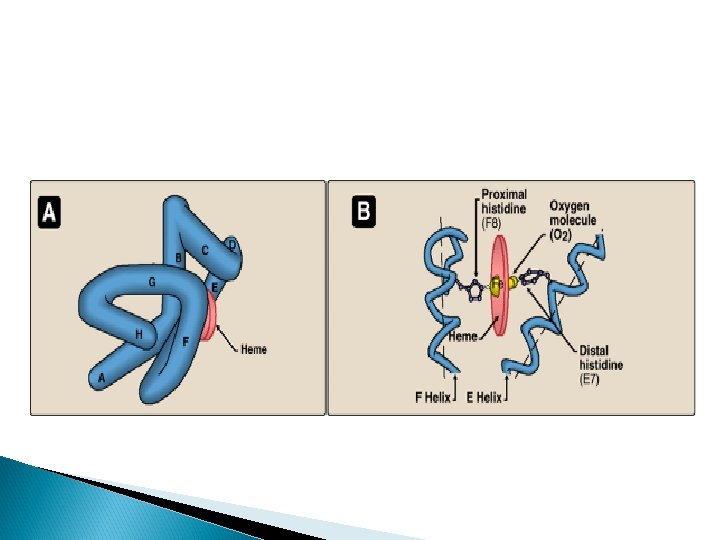
Structure of heme Heme is a complex of protoporphyrin IX and ferrous iron (Fe 2+). The iron is held in the center of the heme molecule by bonds to the four nitrogens of the porphyrin ring. The heme Fe 2+ can form two additional bonds, one on each side of the planar porphyrin ring. In myoglobin and hemoglobin, one of these positions is coordinated to the side chain of a histidine residue of the globin molecule, whereas the other position is available to bind oxygen
Hemoglobin is found exclusively in red blood cells
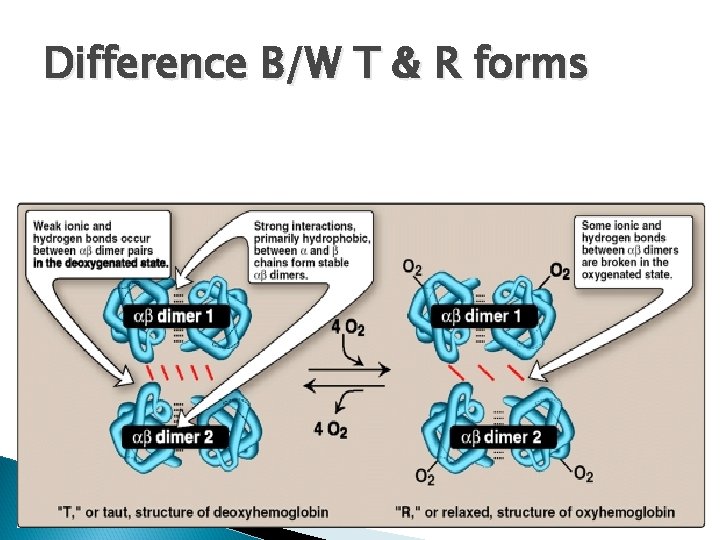
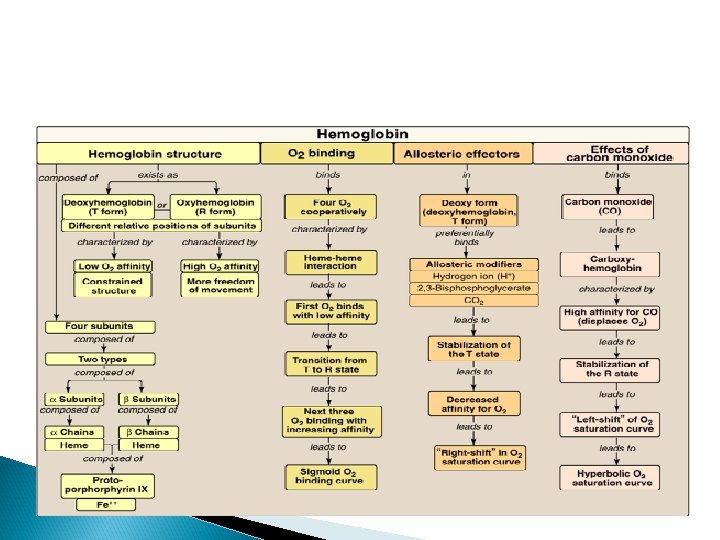
Difference B/W T & R forms
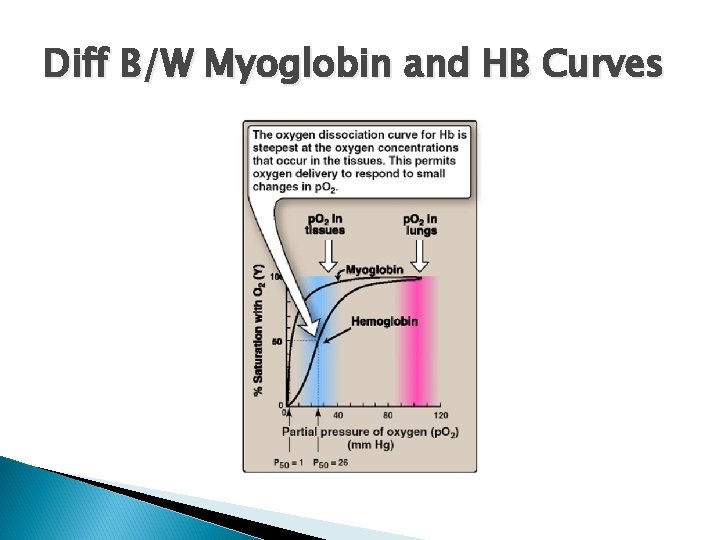
Diff B/W Myoglobin and HB Curves
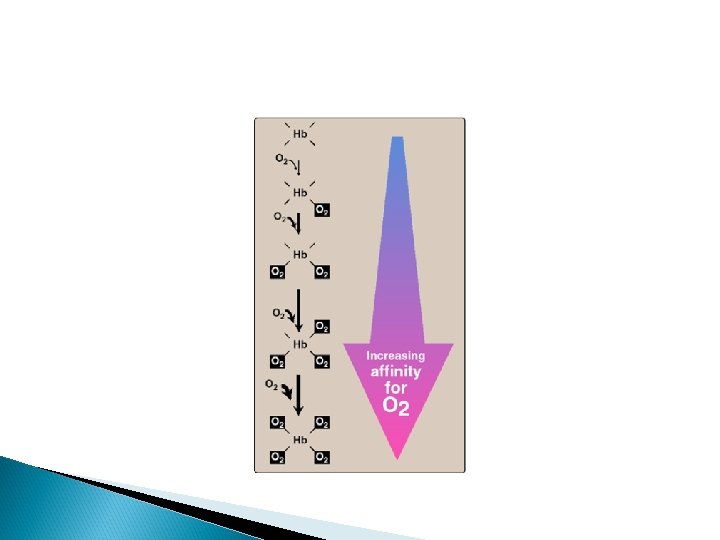
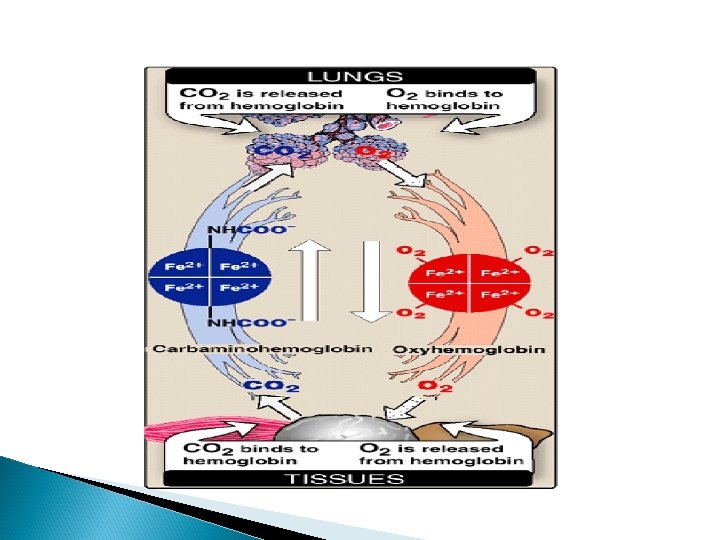
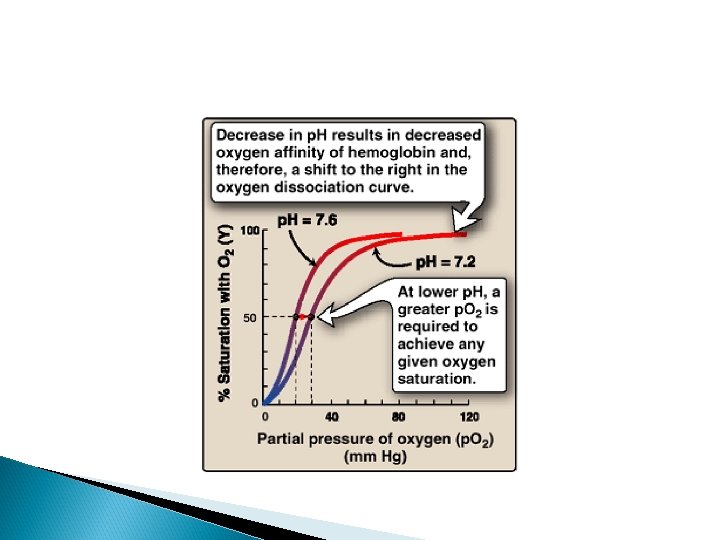
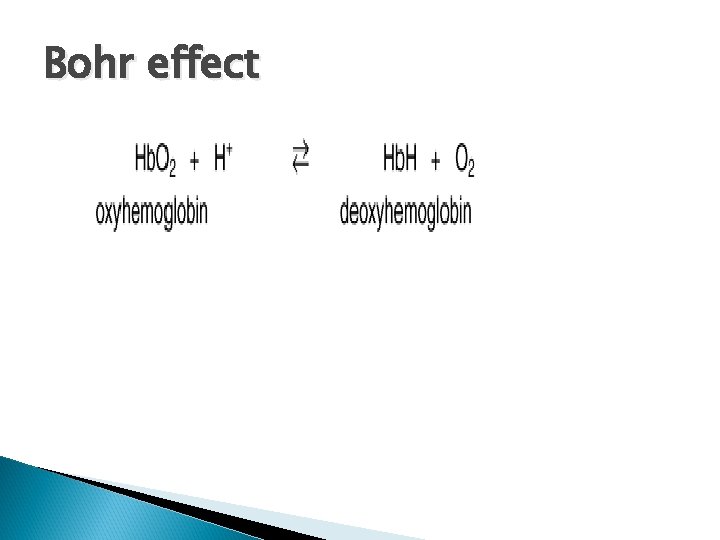
Bohr effect
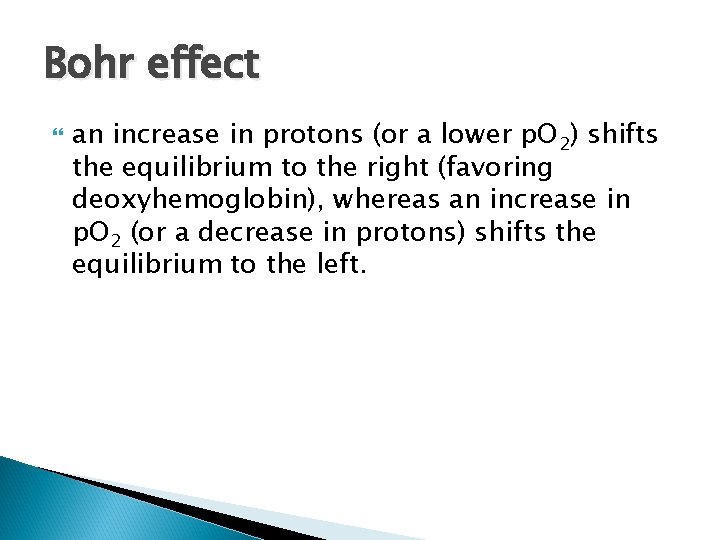
Bohr effect an increase in protons (or a lower p. O 2) shifts the equilibrium to the right (favoring deoxyhemoglobin), whereas an increase in p. O 2 (or a decrease in protons) shifts the equilibrium to the left.
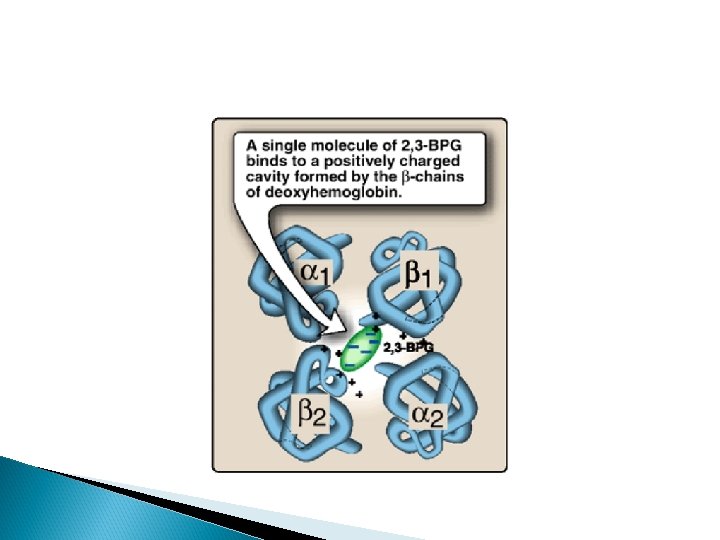
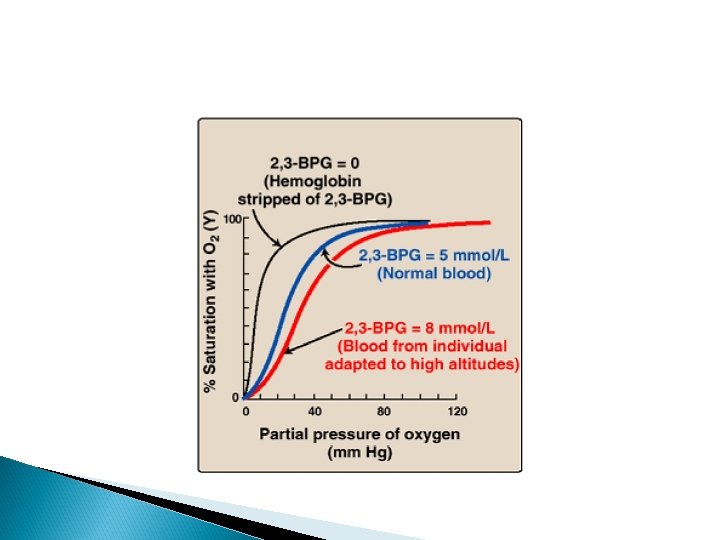
Bisphoglycerate (2, 3 -BPG) Bisphoglycerate (2, 3 -BPG) is an important regulator of the binding of oxygen to hemoglobin. It is the most abundant organic phosphate in the red blood cell, where its concentration is approximately that of hemoglobin. 2, 3 -BPG is synthesized from an intermediate of the glycolytic pathway
Function of 2, 3 BPG 2, 3 -BPG decreases the oxygen affinity of hemoglobin by binding to deoxyhemoglobin but not to oxyhemoglobin. Thus helps in unloading of HB
- Slides: 20