
Hazardous Waste Used Oil Notification and Reporting Noa






- Slides: 36
Hazardous Waste & Used Oil Notification and Reporting Noa Logan Klein, Hazardous Waste Program Planner Solid & Hazardous Waste Branch, Hawaii Dept. of Health 1
Outline of today’s presentation Notification and reporting requirements for: Generator Importer/Exporter Transporter RCRAInfo Industry Application Setting up your account Online notification form E-manifest TSDF Universal waste handler Used Oil transporter, processor, etc. New notification requirements 2
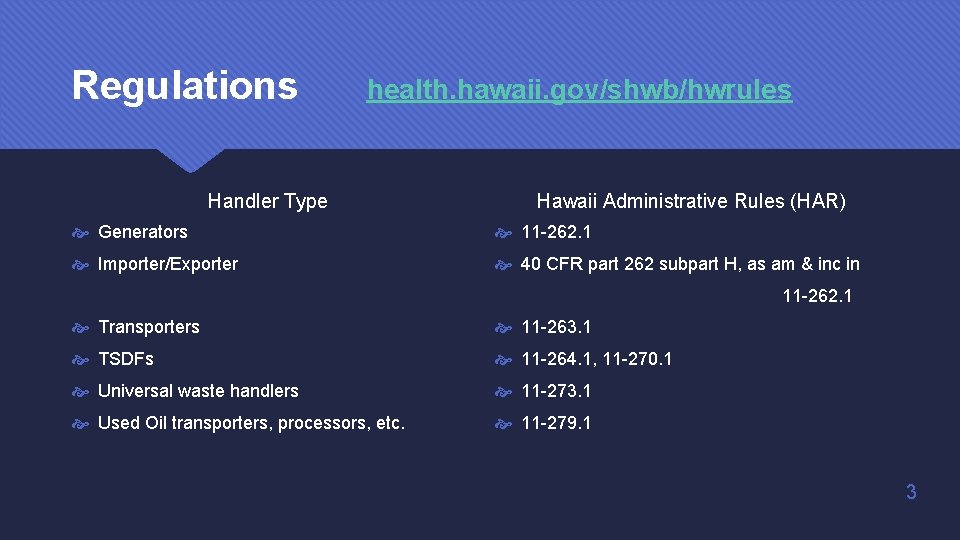
Regulations health. hawaii. gov/shwb/hwrules Handler Type Hawaii Administrative Rules (HAR) Generators 11 -262. 1 Importer/Exporter 40 CFR part 262 subpart H, as am & inc in 11 -262. 1 Transporters 11 -263. 1 TSDFs 11 -264. 1, 11 -270. 1 Universal waste handlers 11 -273. 1 Used Oil transporters, processors, etc. 11 -279. 1 3
Hazardous Waste Generators 4
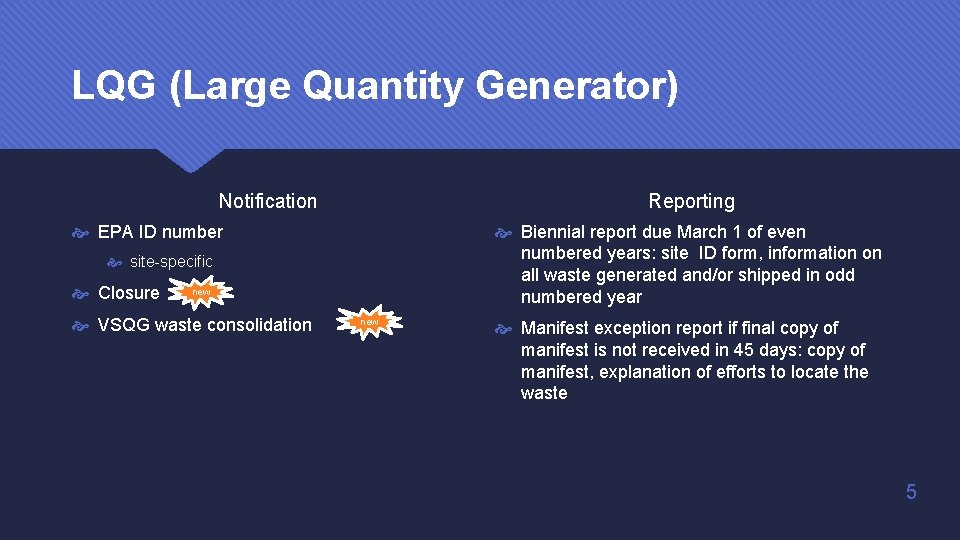
LQG (Large Quantity Generator) Notification Reporting EPA ID number Biennial report due March 1 of even numbered years: site ID form, information on all waste generated and/or shipped in odd numbered year site-specific Closure new VSQG waste consolidation new Manifest exception report if final copy of manifest is not received in 45 days: copy of manifest, explanation of efforts to locate the waste 5
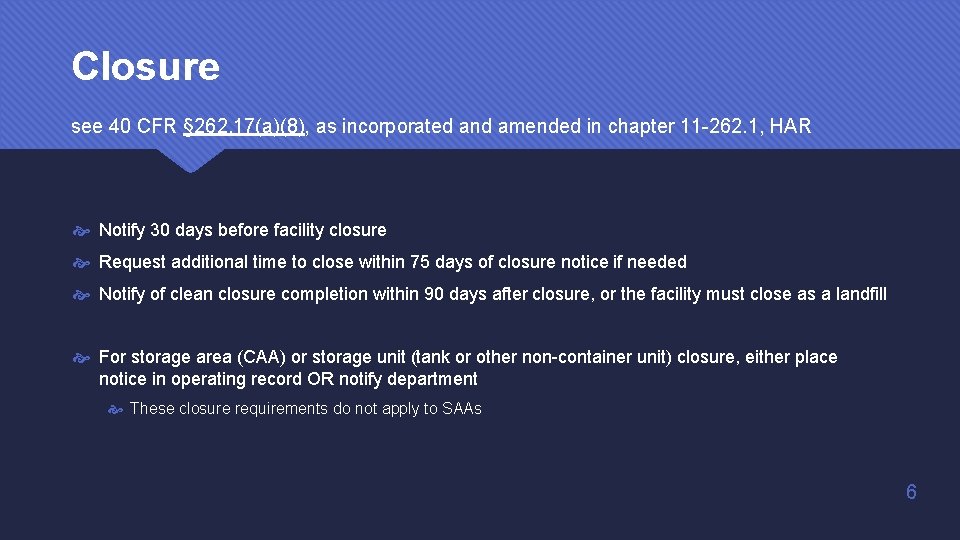
Closure see 40 CFR § 262. 17(a)(8), as incorporated and amended in chapter 11 -262. 1, HAR Notify 30 days before facility closure Request additional time to close within 75 days of closure notice if needed Notify of clean closure completion within 90 days after closure, or the facility must close as a landfill For storage area (CAA) or storage unit (tank or other non-container unit) closure, either place notice in operating record OR notify department These closure requirements do not apply to SAAs 6
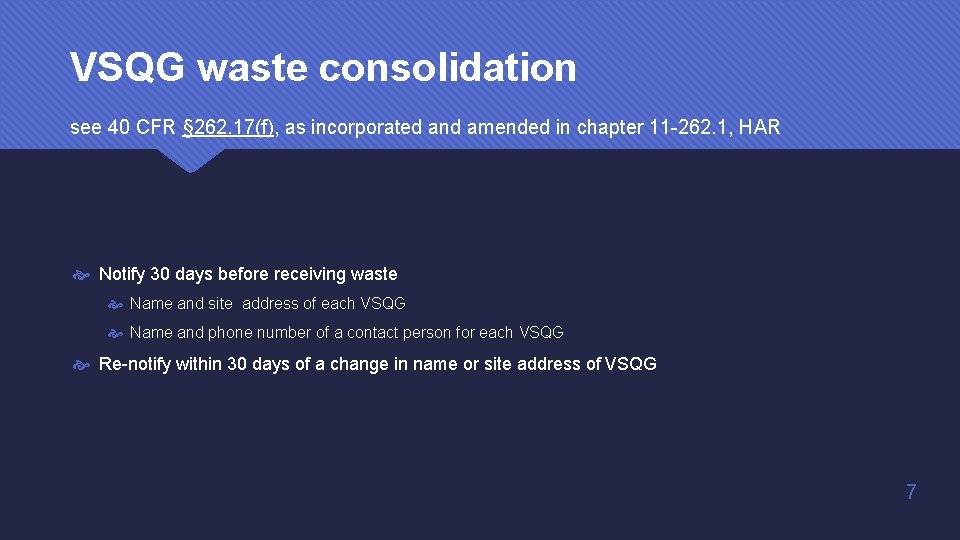
VSQG waste consolidation see 40 CFR § 262. 17(f), as incorporated and amended in chapter 11 -262. 1, HAR Notify 30 days before receiving waste Name and site address of each VSQG Name and phone number of a contact person for each VSQG Re-notify within 30 days of a change in name or site address of VSQG 7
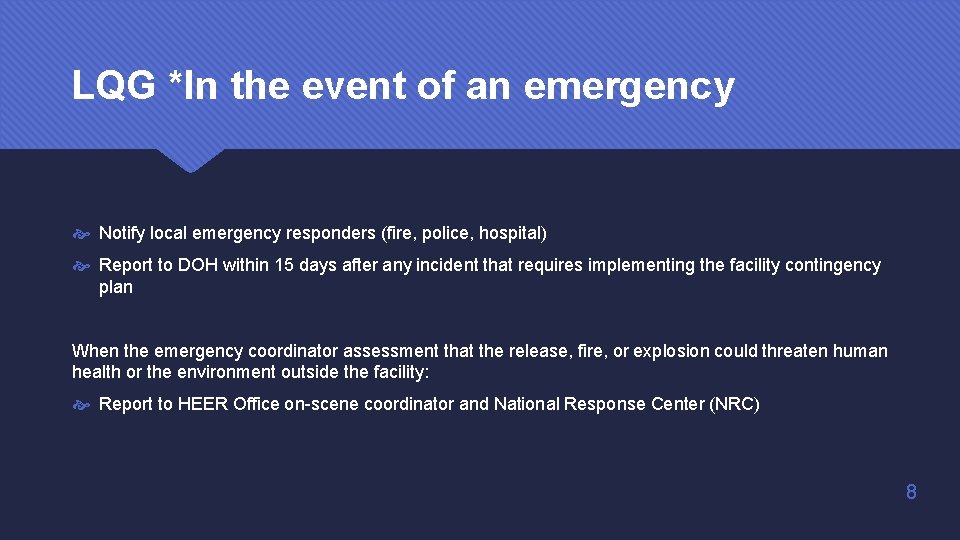
LQG *In the event of an emergency Notify local emergency responders (fire, police, hospital) Report to DOH within 15 days after any incident that requires implementing the facility contingency plan When the emergency coordinator assessment that the release, fire, or explosion could threaten human health or the environment outside the facility: Report to HEER Office on-scene coordinator and National Response Center (NRC) 8
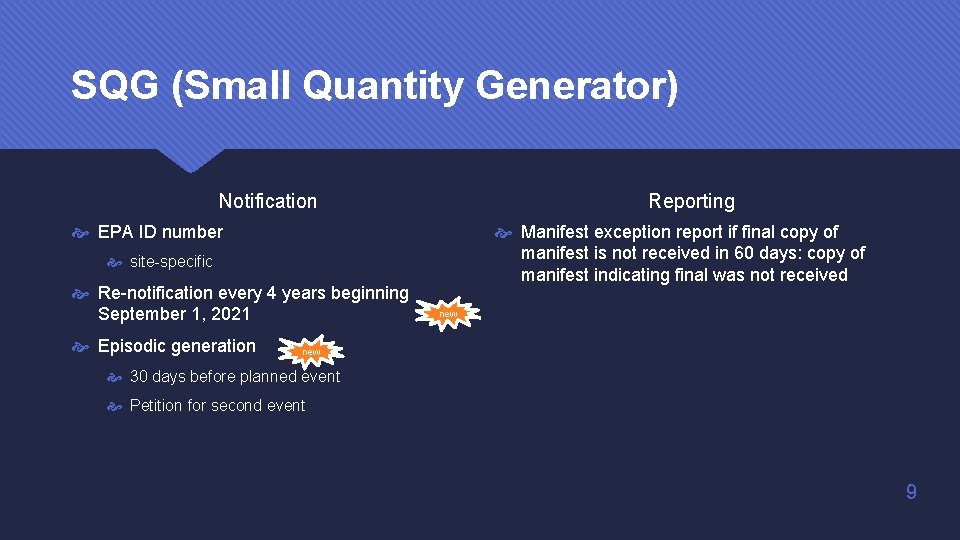
SQG (Small Quantity Generator) Notification Reporting EPA ID number Manifest exception report if final copy of manifest is not received in 60 days: copy of manifest indicating final was not received site-specific Re-notification every 4 years beginning September 1, 2021 Episodic generation new 30 days before planned event Petition for second event 9
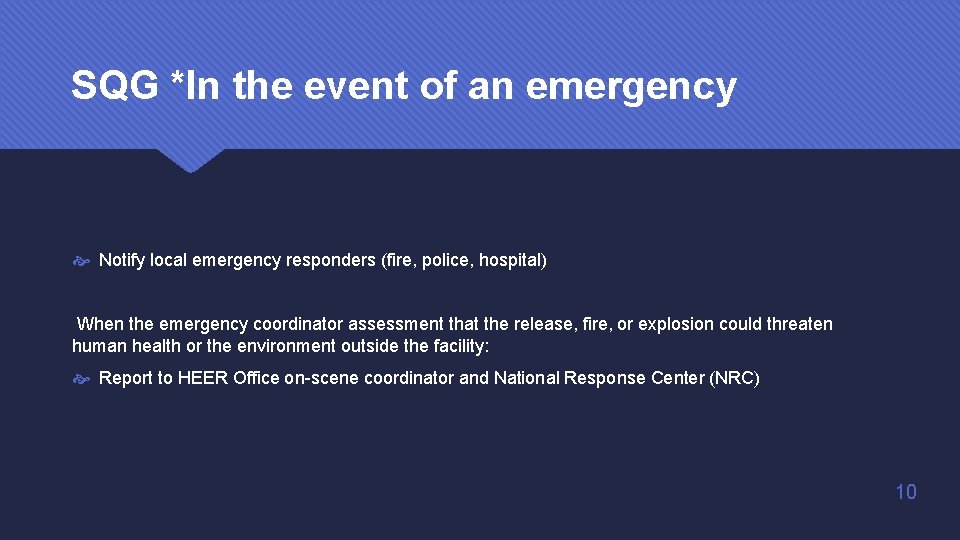
SQG *In the event of an emergency Notify local emergency responders (fire, police, hospital) When the emergency coordinator assessment that the release, fire, or explosion could threaten human health or the environment outside the facility: Report to HEER Office on-scene coordinator and National Response Center (NRC) 10
VSQG (Very Small Quantity Generator) *previously known as CESQG Notification Episodic generation new 30 days before planned event Petition for second event If you want to access the e-manifest system: EPA ID number 11
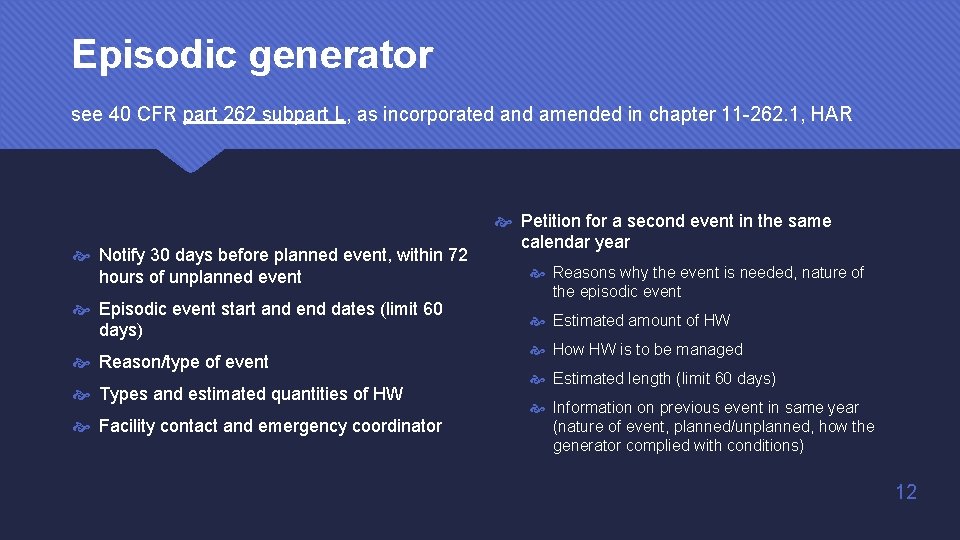
Episodic generator see 40 CFR part 262 subpart L, as incorporated and amended in chapter 11 -262. 1, HAR Notify 30 days before planned event, within 72 hours of unplanned event Episodic event start and end dates (limit 60 days) Reason/type of event Types and estimated quantities of HW Facility contact and emergency coordinator Petition for a second event in the same calendar year Reasons why the event is needed, nature of the episodic event Estimated amount of HW How HW is to be managed Estimated length (limit 60 days) Information on previous event in same year (nature of event, planned/unplanned, how the generator complied with conditions) 12
Importer / Exporter 13
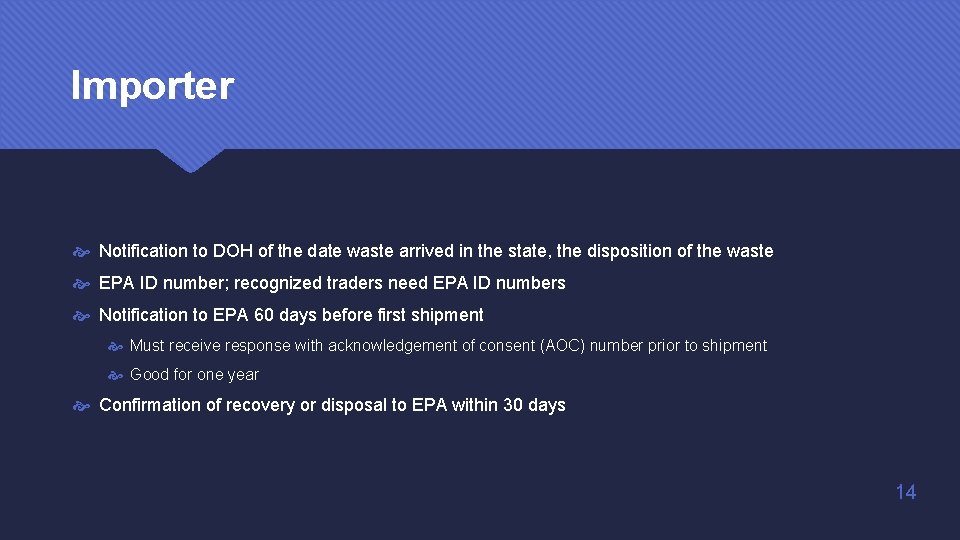
Importer Notification to DOH of the date waste arrived in the state, the disposition of the waste EPA ID number; recognized traders need EPA ID numbers Notification to EPA 60 days before first shipment Must receive response with acknowledgement of consent (AOC) number prior to shipment Good for one year Confirmation of recovery or disposal to EPA within 30 days 14
Importer *from US mainland Notification to DOH of the date waste arrived in the state, the disposition of the waste 15
Exporter EPA ID number; recognized traders also need EPA ID numbers Notification to EPA 60 days before first shipment Must receive response with acknowledgement of consent (AOC) number prior to shipment Good for one year Electronic export information (EEI) to EPA for each shipment Annual report to EPA due March 1 Exception report to EPA if: exporter does not receive copy of manifest indicating shipment outside the US within 45 days exporter does not receive final copy of manifest from receiving facility within 90 days Waste shipment is rejected or re-routed to an alternate receiving facility 16
Transporter 17
Transporter Notification EPA ID number Reporting Report spills/discharge Immediate phone report to the HEER Office and National Response Center (NRC)(if required by 49 CFR 171. 15) Written report to federal DOT within 30 days (if required by 49 CFR 171. 16) Immediate phone report to t he NRC of water bulk shipment spills of oil and hazardous substances (as required by 33 CFR 153. 203) 18
DOT reporting requirements * 49 CFR § 171. 15 (b) Reportable incident. … any of the following occurs during the course of transportation in commerce (including loading, unloading, and temporary storage): (1) As a direct result of a hazardous material— (i) A person is killed; (ii) A person receives an injury requiring admittance to a hospital; (iii) The general public is evacuated for one hour or more; (iv) A major transportation artery or facility is closed or shut down for one hour or more; or (v) The operational flight pattern or routine of an aircraft is altered; (2) Fire, breakage, spillage, or suspected radioactive contamination occurs involving a radioactive material (see also § 176. 48 of this subchapter); (3) Fire, breakage, spillage, or suspected contamination occurs involving an infectious substance other than a regulated medical waste; (4) A release of a marine pollutant occurs in a quantity exceeding 450 L (119 gallons) for a liquid or 400 kg (882 pounds) for a solid; (5) A situation exists of such a nature (e. g. , a continuing danger to life exists at the scene of the incident) that, in the judgment of the person in possession of the hazardous material, it should be reported to the NRC even though it does not meet the criteria of paragraphs (b)(1), (2), (3) or (4) of this section; or (6) During transportation by aircraft, a fire, violent rupture, explosion or dangerous evolution of heat (i. e. , an amount of heat sufficient to be 19 dangerous to packaging or personal safety to include charring of packaging, melting of packaging, scorching of packaging, or other evidence) occurs as a direct result of a battery or battery-powered device.
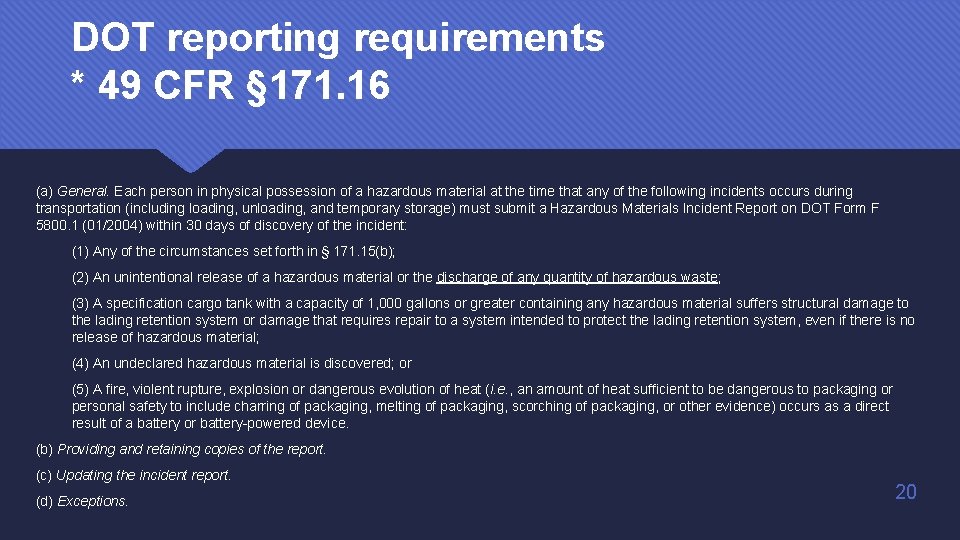
DOT reporting requirements * 49 CFR § 171. 16 (a) General. Each person in physical possession of a hazardous material at the time that any of the following incidents occurs during transportation (including loading, unloading, and temporary storage) must submit a Hazardous Materials Incident Report on DOT Form F 5800. 1 (01/2004) within 30 days of discovery of the incident: (1) Any of the circumstances set forth in § 171. 15(b); (2) An unintentional release of a hazardous material or the discharge of any quantity of hazardous waste; (3) A specification cargo tank with a capacity of 1, 000 gallons or greater containing any hazardous material suffers structural damage to the lading retention system or damage that requires repair to a system intended to protect the lading retention system, even if there is no release of hazardous material; (4) An undeclared hazardous material is discovered; or (5) A fire, violent rupture, explosion or dangerous evolution of heat (i. e. , an amount of heat sufficient to be dangerous to packaging or personal safety to include charring of packaging, melting of packaging, scorching of packaging, or other evidence) occurs as a direct result of a battery or battery-powered device. (b) Providing and retaining copies of the report. (c) Updating the incident report. (d) Exceptions. 20
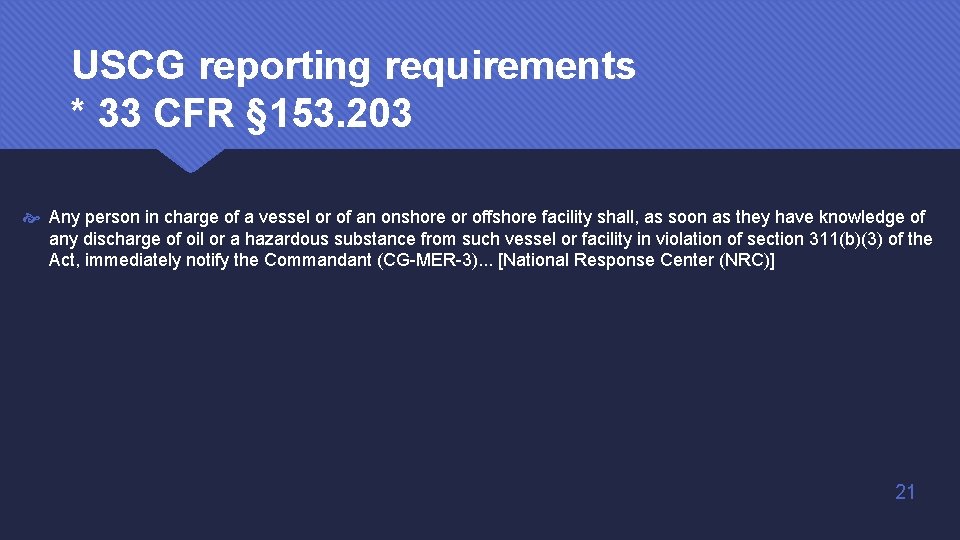
USCG reporting requirements * 33 CFR § 153. 203 Any person in charge of a vessel or of an onshore or offshore facility shall, as soon as they have knowledge of any discharge of oil or a hazardous substance from such vessel or facility in violation of section 311(b)(3) of the Act, immediately notify the Commandant (CG-MER-3). . . [National Response Center (NRC)] 21
Treatment, Storage, or Disposal Facility (TSDF) 22
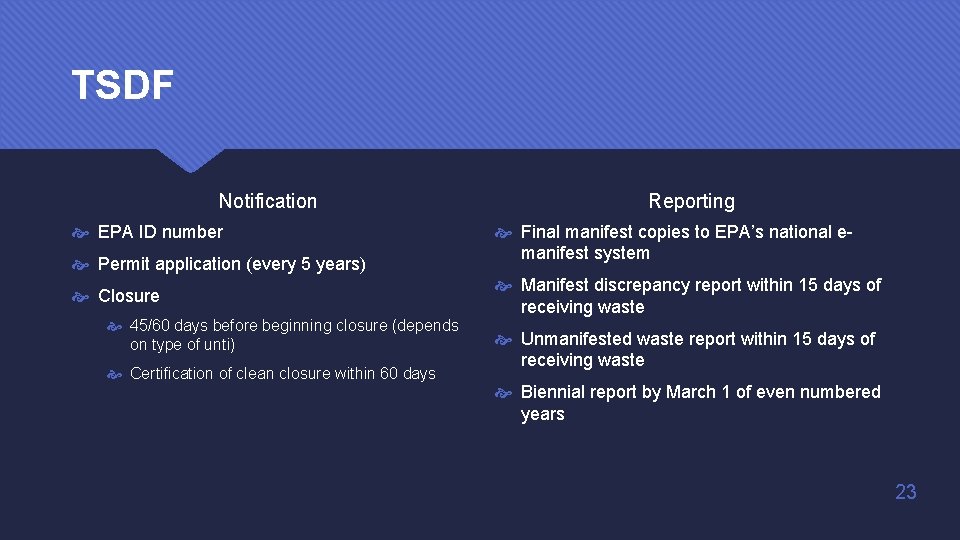
TSDF Notification EPA ID number Permit application (every 5 years) Closure 45/60 days before beginning closure (depends on type of unti) Certification of clean closure within 60 days Reporting Final manifest copies to EPA’s national emanifest system Manifest discrepancy report within 15 days of receiving waste Unmanifested waste report within 15 days of receiving waste Biennial report by March 1 of even numbered years 23
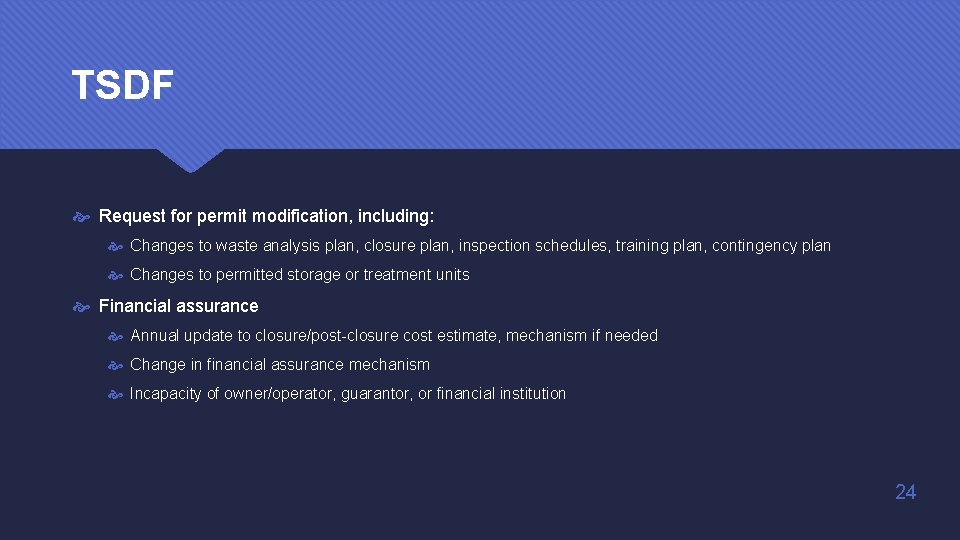
TSDF Request for permit modification, including: Changes to waste analysis plan, closure plan, inspection schedules, training plan, contingency plan Changes to permitted storage or treatment units Financial assurance Annual update to closure/post-closure cost estimate, mechanism if needed Change in financial assurance mechanism Incapacity of owner/operator, guarantor, or financial institution 24
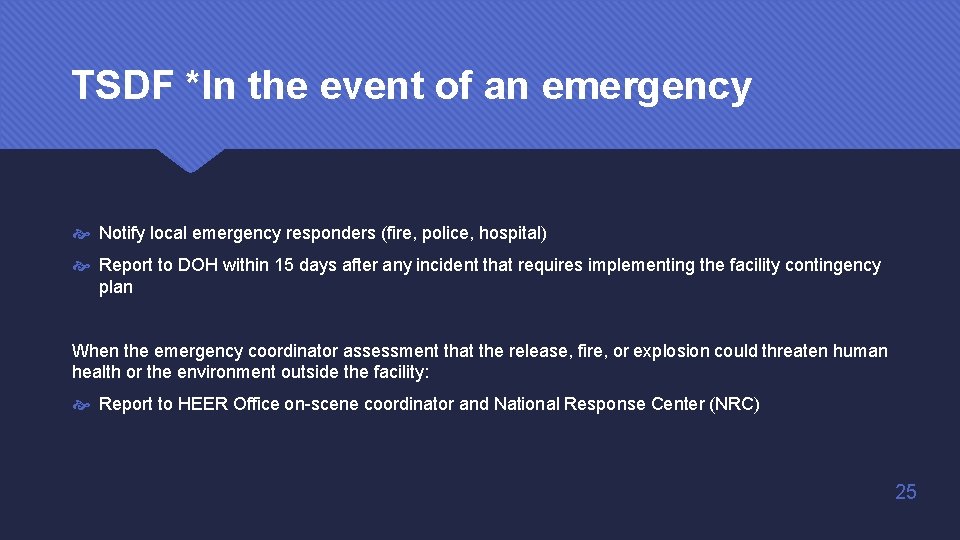
TSDF *In the event of an emergency Notify local emergency responders (fire, police, hospital) Report to DOH within 15 days after any incident that requires implementing the facility contingency plan When the emergency coordinator assessment that the release, fire, or explosion could threaten human health or the environment outside the facility: Report to HEER Office on-scene coordinator and National Response Center (NRC) 25
Universal waste 26
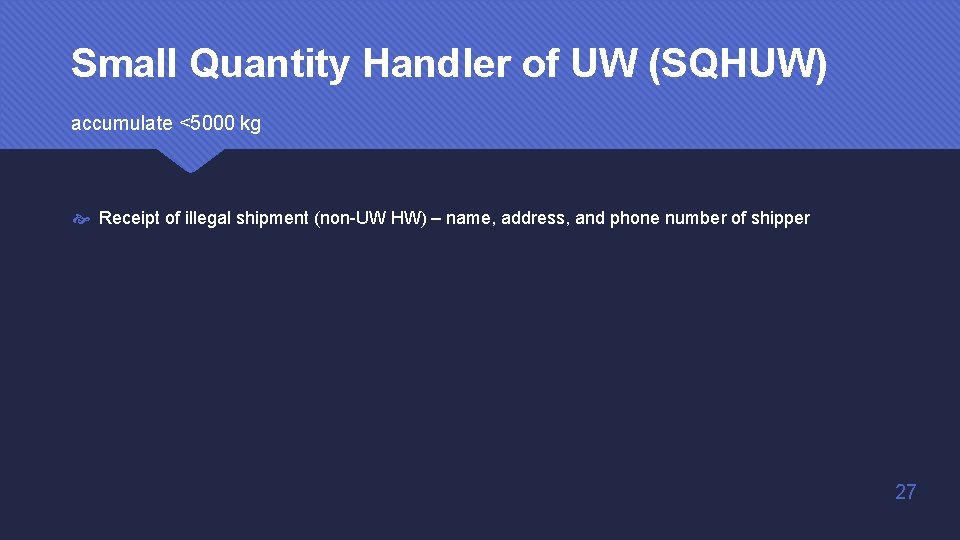
Small Quantity Handler of UW (SQHUW) accumulate <5000 kg Receipt of illegal shipment (non-UW HW) – name, address, and phone number of shipper 27
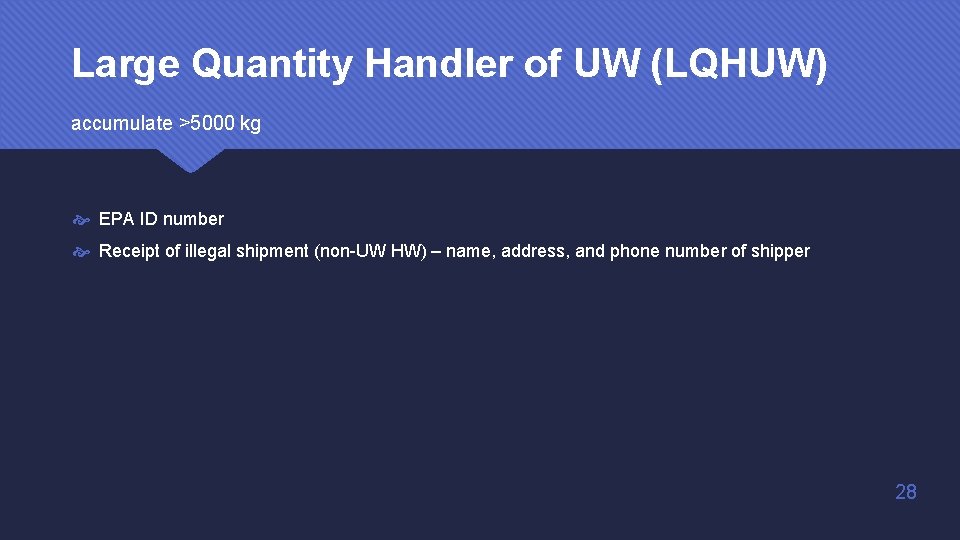
Large Quantity Handler of UW (LQHUW) accumulate >5000 kg EPA ID number Receipt of illegal shipment (non-UW HW) – name, address, and phone number of shipper 28
Used Oil 29
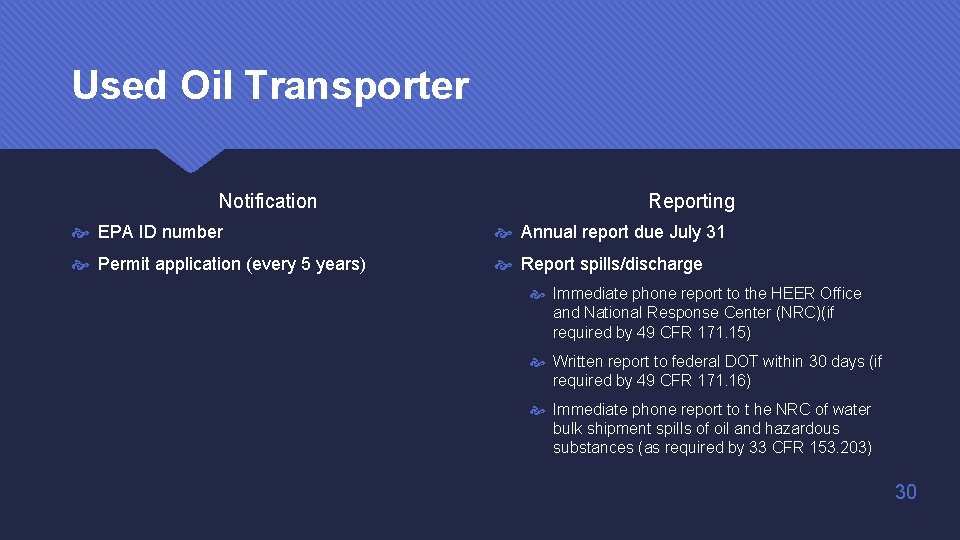
Used Oil Transporter Notification Reporting EPA ID number Annual report due July 31 Permit application (every 5 years) Report spills/discharge Immediate phone report to the HEER Office and National Response Center (NRC)(if required by 49 CFR 171. 15) Written report to federal DOT within 30 days (if required by 49 CFR 171. 16) Immediate phone report to t he NRC of water bulk shipment spills of oil and hazardous substances (as required by 33 CFR 153. 203) 30
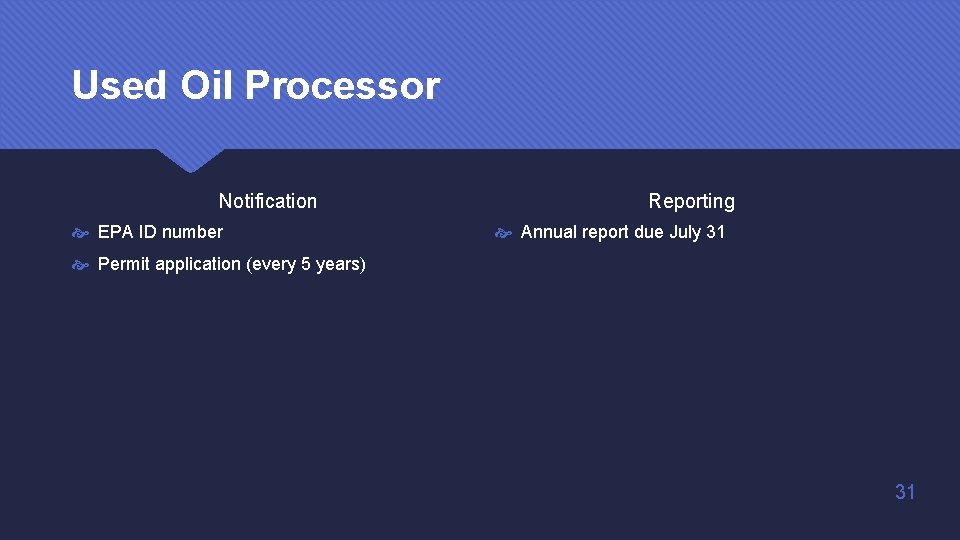
Used Oil Processor Notification EPA ID number Reporting Annual report due July 31 Permit application (every 5 years) 31
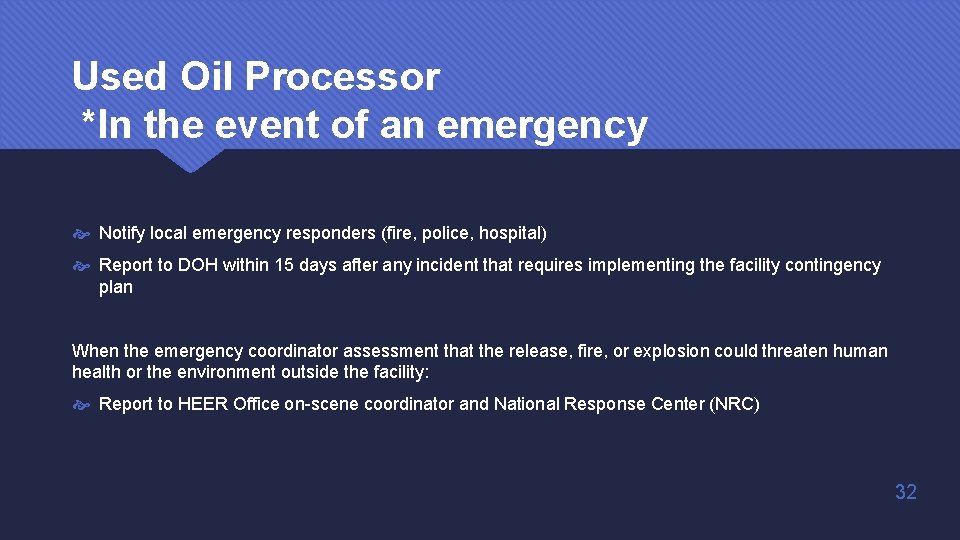
Used Oil Processor *In the event of an emergency Notify local emergency responders (fire, police, hospital) Report to DOH within 15 days after any incident that requires implementing the facility contingency plan When the emergency coordinator assessment that the release, fire, or explosion could threaten human health or the environment outside the facility: Report to HEER Office on-scene coordinator and National Response Center (NRC) 32
Used Oil Burner, Used Oil Fuel Marketer Notification EPA ID number 33
RCRAInfo Industry Application https: //rcrainfo. epa. gov/rcrainfoprod/action/secured/login 34
Thanks everyone! Questions? Noa Logan Klein Hazardous Waste Program Planner noa. klein@doh. hawaii. gov health. hawaii. gov/shwb/hazwaste 35
Recordkeeping (new only) Quick response guide (submitted to local emergency responders) Tanks (accumulation time limit) 50 foot waiver (from AHJ for fire) Arrangements with local authorities (record of arrangements or attempts to make arrangements) 36