
Hazardous Pollutants and Waste Management Chapter 17 and
- Slides: 15
Hazardous Pollutants and Waste Management Chapter 17 and 21 “All substances are poisons: there is none which is not a poison. The right dose differentiates a poison and a remedy. " Paracelsus (1493 -1541)
�Risk: probability of suffering harm from a hazard that can cause injury, disease, death or economic loss or damage �Risk assessment �Risk management �Biological, chemical, natural, cultural and lifestyle hazards
Biological Hazards �Infectious disease (flu, malaria, TB) �Transmissible disease (measles, HIV) �Nontransmissible disease (cancer, asthma, diabetes, malnutrition) �Major concerns include flu, AIDS (HIV), Hepatitis B, malaria and emergent diseases (west nile, Ebola) �Eliminate through infectious disease prevention, education, vaccines, improving quality of life and decreasing malnutrition
Chemical Hazards �Toxic chemical: can cause temporary or permanent harm or death to humans or animals �Top 5 include: arsenic, lead, mercury, vinyl chloride (plastics) and PCBs �Carcinogen: promotes cancer �Arsenic, benzene, formaldehyde, gamma and UV radiation, PCBs, radon, tobacco smoke, vinyl chloride �Mutagen: increases frequency of mutations �Teratogen: cause harm or birth defects to fetus/embryo �Alcohol, benzene, formaldehyde, lead, mercury, PCBs, phalates, thalidomide, vinyl chloride
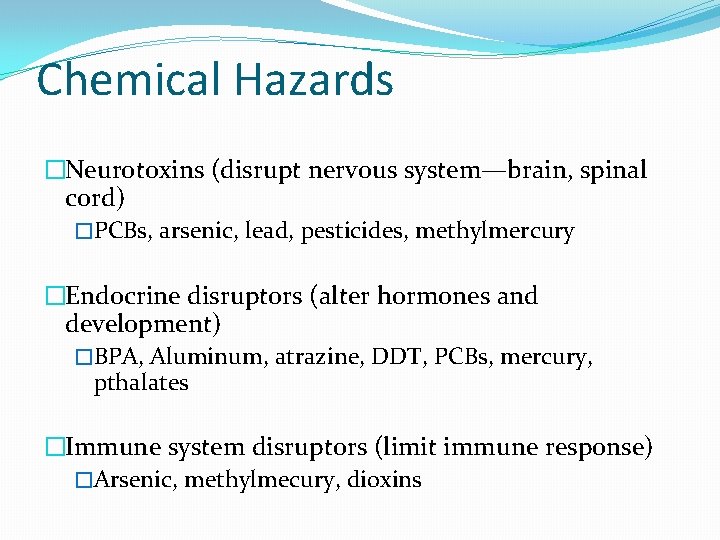
Chemical Hazards �Neurotoxins (disrupt nervous system—brain, spinal cord) �PCBs, arsenic, lead, pesticides, methylmercury �Endocrine disruptors (alter hormones and development) �BPA, Aluminum, atrazine, DDT, PCBs, mercury, pthalates �Immune system disruptors (limit immune response) �Arsenic, methylmecury, dioxins
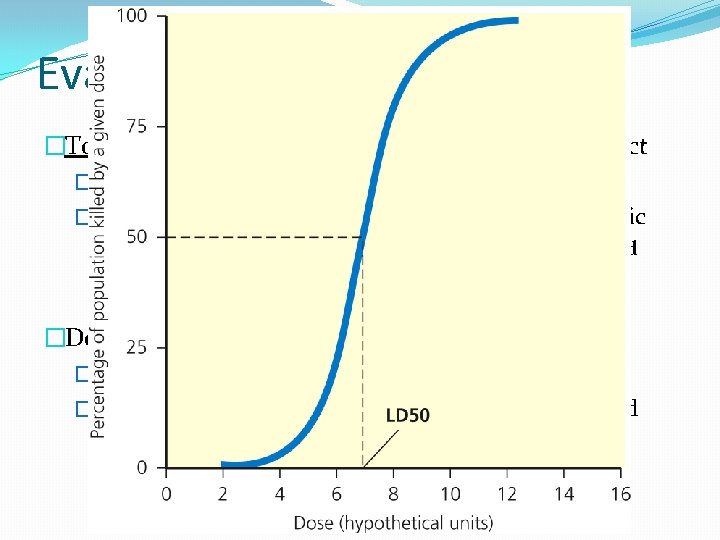
Evaluating Chemical Hazards �Toxicity: measure of the harmfulness of the product �Dose: amount ingested, inhaled, or absorbed �Response: damage to health, may be acute or chronic � Depends on age, genetic makeup, solubility of compound (water vs. oil) and persistence �Dose-response Studies �Tests on animals with measure doses of chemical �Plot results of chemical tests to determine curve and lethal doses
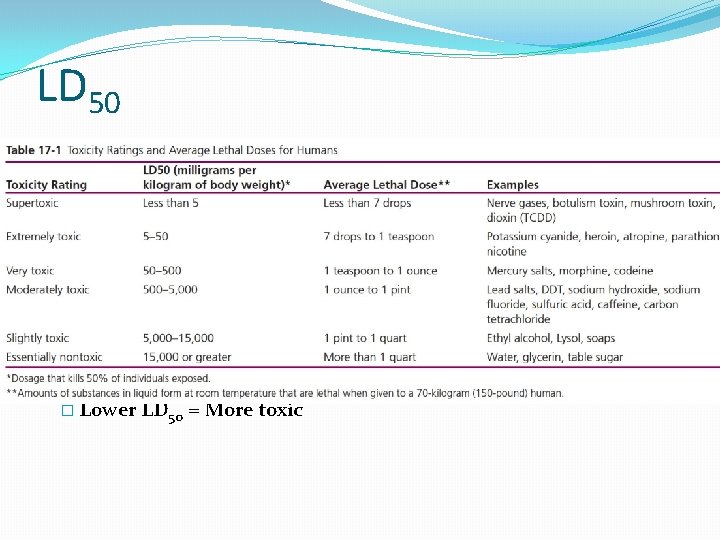
LD 50 �Lethal dose 50: Amount of chemical that kills 50% of a test population within 18 days. �Varies depending on substance �Determines if a new substance is more or less lethal than other chemicals used �Usually tested on rats…then extrapolated to humans � Gives values for acute toxicity � Lower LD 50 = More toxic
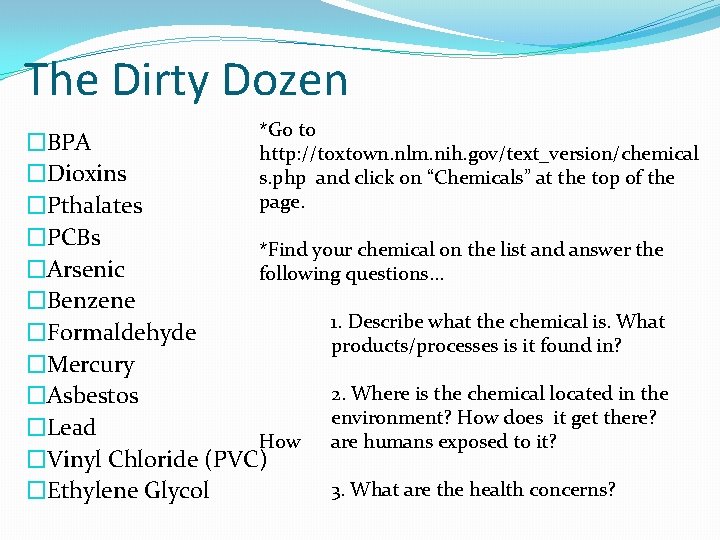
The Dirty Dozen *Go to �BPA http: //toxtown. nlm. nih. gov/text_version/chemical �Dioxins s. php and click on “Chemicals” at the top of the page. �Pthalates �PCBs *Find your chemical on the list and answer the �Arsenic following questions… �Benzene 1. Describe what the chemical is. What �Formaldehyde products/processes is it found in? �Mercury 2. Where is the chemical located in the �Asbestos environment? How does it get there? �Lead How are humans exposed to it? �Vinyl Chloride (PVC) 3. What are the health concerns? �Ethylene Glycol
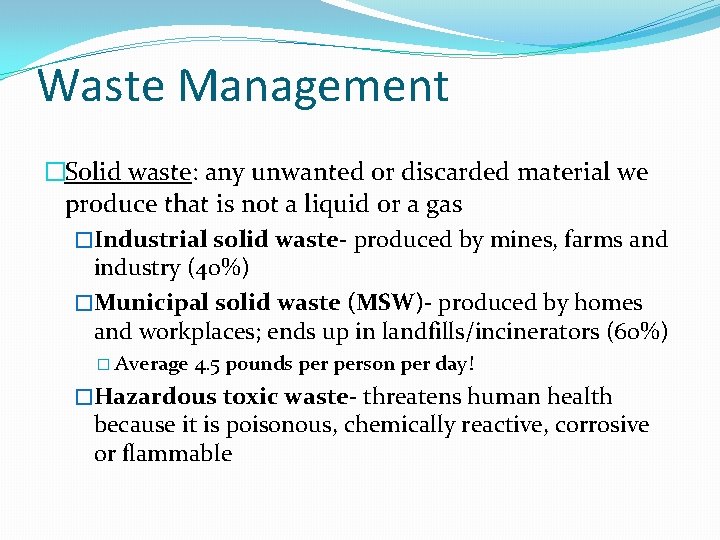
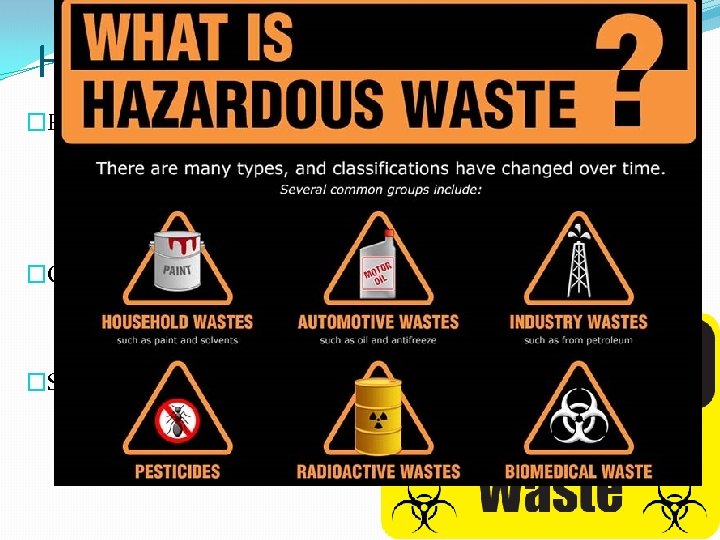
Waste Management �Solid waste: any unwanted or discarded material we produce that is not a liquid or a gas �Industrial solid waste- produced by mines, farms and industry (40%) �Municipal solid waste (MSW)- produced by homes and workplaces; ends up in landfills/incinerators (60%) � Average 4. 5 pounds person per day! �Hazardous toxic waste- threatens human health because it is poisonous, chemically reactive, corrosive or flammable
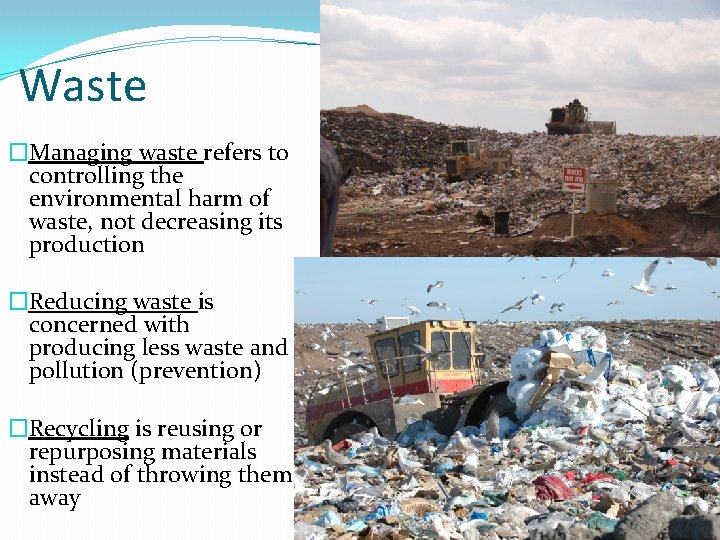
Waste �Managing waste refers to controlling the environmental harm of waste, not decreasing its production �Reducing waste is concerned with producing less waste and pollution (prevention) �Recycling is reusing or repurposing materials instead of throwing them away
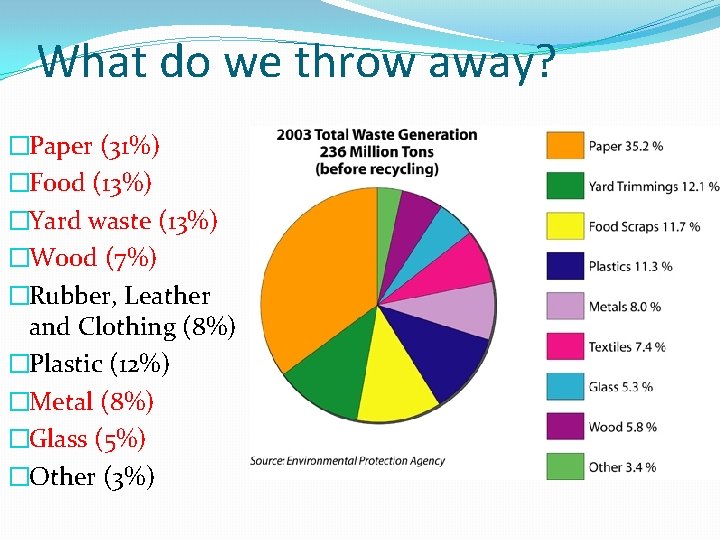
What do we throw away? �Paper (31%) �Food (13%) �Yard waste (13%) �Wood (7%) �Rubber, Leather and Clothing (8%) �Plastic (12%) �Metal (8%) �Glass (5%) �Other (3%)
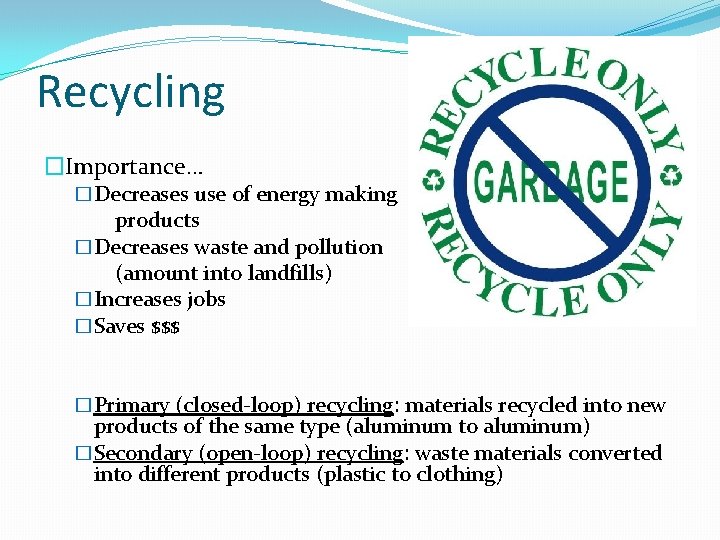
Recycling �Importance… �Decreases use of energy making products �Decreases waste and pollution (amount into landfills) �Increases jobs �Saves $$$ �Primary (closed-loop) recycling: materials recycled into new products of the same type (aluminum to aluminum) �Secondary (open-loop) recycling: waste materials converted into different products (plastic to clothing)
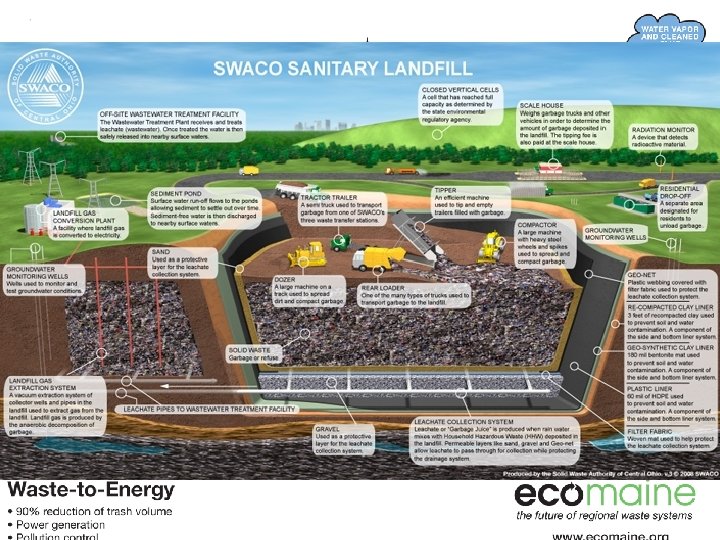
Burning and Burying Waste �Waste-to-Energy Incinerators (13%) �Garbage and waste is burned, water is boiled and energy is created �Produces high number of pollutants �Sanitary Landfills (54%) �Waste buried underground in layers, alternating with clay, plastic or foam; sides of landfill are lined to prevent leaching of chemicals; pipes to collect leaching liquid (prevent soil and water contamination) �Methane (byproduct of decomposition) is collected and burned for fuel �Concerns about chemicals leaking to groundwater (leachate)
Hazardous Waste �Priority in reducing waste �Most comes from industrial processes (textiles, computer manufacturing, dry cleaners, service stations) �Difficult to dispose of…responsibility is on company or homeowner �Can convert to non-hazardous substances �Physical, chemical or biological methods �Must be treated before disposal �Stored forever �Deep well disposal �Surface impoundments �Steel Drums
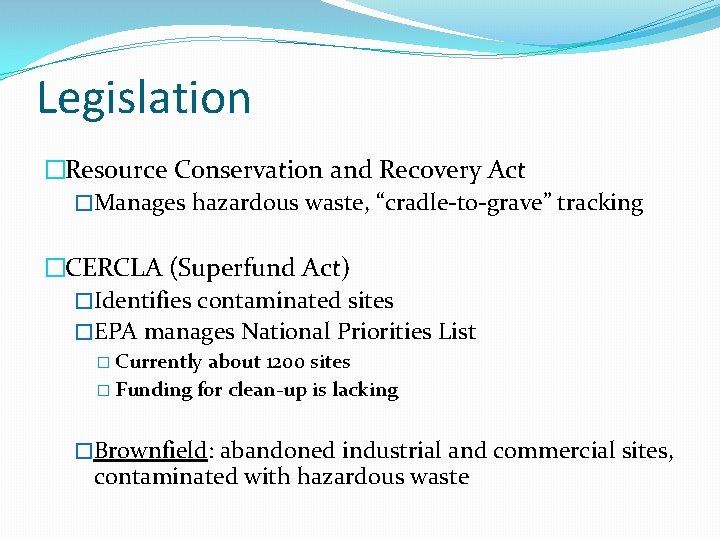
Legislation �Resource Conservation and Recovery Act �Manages hazardous waste, “cradle-to-grave” tracking �CERCLA (Superfund Act) �Identifies contaminated sites �EPA manages National Priorities List � Currently about 1200 sites � Funding for clean-up is lacking �Brownfield: abandoned industrial and commercial sites, contaminated with hazardous waste