
Hazardous Materials Production to Destruction l Occupational Safety
- Slides: 19
Hazardous Materials Production to Destruction
l Occupational Safety and Health Administration – The toxicity of a substance is its ability to cause harmful effects. – All chemicals can cause harm. – When only a very large amount of the chemical can cause damage, the chemical is considered to be relatively non-toxic. When a small amount can be harmful, the chemical is considered toxic.
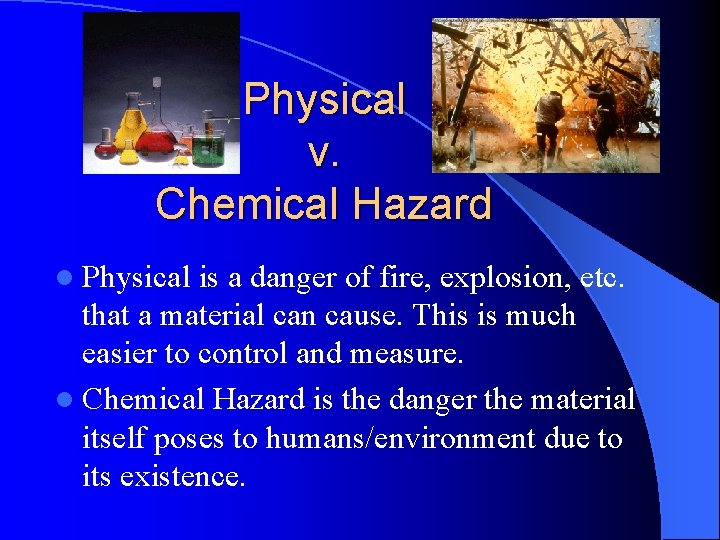
Physical v. Chemical Hazard l Physical is a danger of fire, explosion, etc. that a material can cause. This is much easier to control and measure. l Chemical Hazard is the danger the material itself poses to humans/environment due to its existence.
Toxic v. Hazardous l The toxicity of a substance is the potential of that substance to cause harm, and is only one factor in determining whether a hazard exists. The hazard of a chemical is the practical likelihood that the chemical will cause harm. A chemical is determined to be a hazard depending on the following factors: – toxicity: how much of the substance is required to cause harm, – route of exposure: how the substance enters your body – dose : how much enters your body
Toxic v. Hazardous – duration: the length of time you are exposed, – reaction and interaction: other substances you are exposed to, and – sensitivity: how your body reacts to the substance compared to others
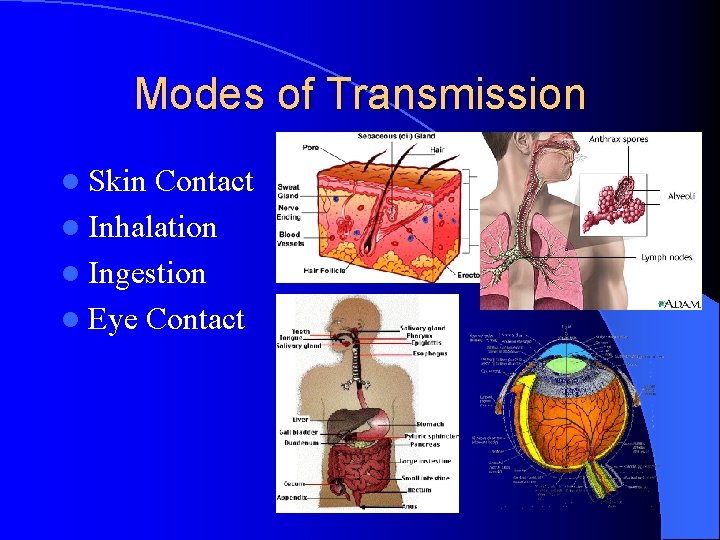
Modes of Transmission l Skin Contact l Inhalation l Ingestion l Eye Contact
Health Affects l Acute – Meaning they act immediately like producing a cough, watery eyes, nausea, etc. l Chronic Affects – Meaning the effect they have is long term and sometimes cumulative. X-ray exposure, noxious cleaning chemicals, etc.
What form do hazardous materials take? l Solid l Liquid l Gas l Vapor l Dust l Fume l Fiber l Mist
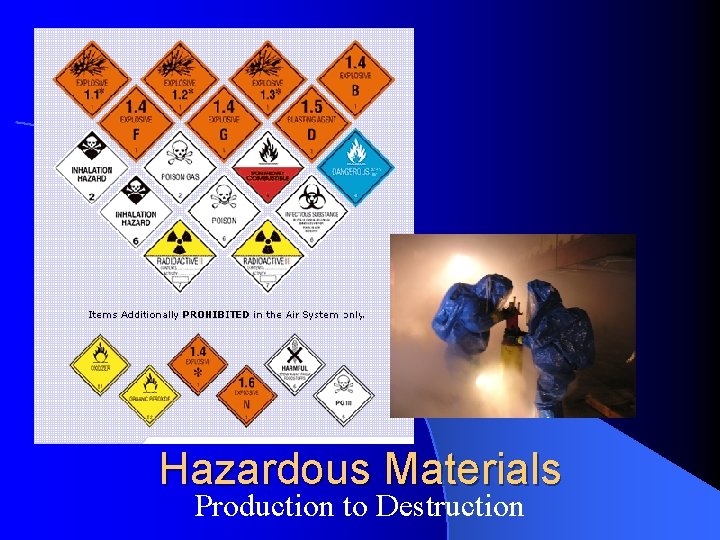
How are we protected l Workers must have access to MSDS sheets of materials they work with l Trucks are placarded l Warning Labels on Containers l Rivalry between EPA and OSHA keeps everyone on their toes
How does using HM impact everyone? l Insurance rates l Injuries/Death l Cleanup l Environmental Damage l Evacuation l Product Loss l Traffic Delays
Costs on Highways Only l 2, 484 Accidents/yr l Accidents = $1. 2 B/yr – Includes: losses of product l emergency vehicles l Insurance l Deaths l and cleanup l
What to do with HMW l Incinerate l Landfill l Chemically Treat l Resource Recovery l Deep Injection Wells l Export
Problems with disposal l Costly, in most cases the cost of fines for release are much less expensive than cost of proper disposal l Lack of Space l Environmental Racism
What is the US doing? l l l Cercla – Comprehensive Environmental Response, Compensation And Liability Act of 1980 Resource Conservation and Recovery Act Superfund Program taxes oil refineries and hazardous materials producers and uses these to finance cleanup of these sites once they are unusable. National Priorities List rates these. Not surprisingly this is not enough to pay for pollution/cleanup
What is the US doing? l Transporters of waste and materials are charged a fee – This money is used to fund grants for states to train Hazardous Emergency Response Teams and develop planning for such emergencies
Countries that address HM and Waste l These are mostly taxes/fees for dumping hazardous wastes l France l Spain l Belgium among others
What is the world community doing? l Basel Convention (ESM - environmentally sound management) – US has not ratified
HMW l Hazardous waste taxes are a statistically and economically significant deterrent to interstate waste transport, that taxes are being imposed by large-capacity and large-import states, and that therefore these taxes have had a decentralizing effect on the" national pattern of hazardous waste transport and disposal.
Sources l l l l http: //www. fmcsa. dot. gov/ http: //www. osha. gov http: //www. epa. gov http: //papers. ssrn. com/sol 3/papers. cfm? abstract_id=226069 http: //www-hoover. stanford. edu/publications/epp/93/93 c. html http: //hazmat. dot. gov/files/registration/0304/regbrch 2004. pdf http: //www. europa. eu. int