
Hazardous Materials Incidents by Chris Hawley CHAPTER 2
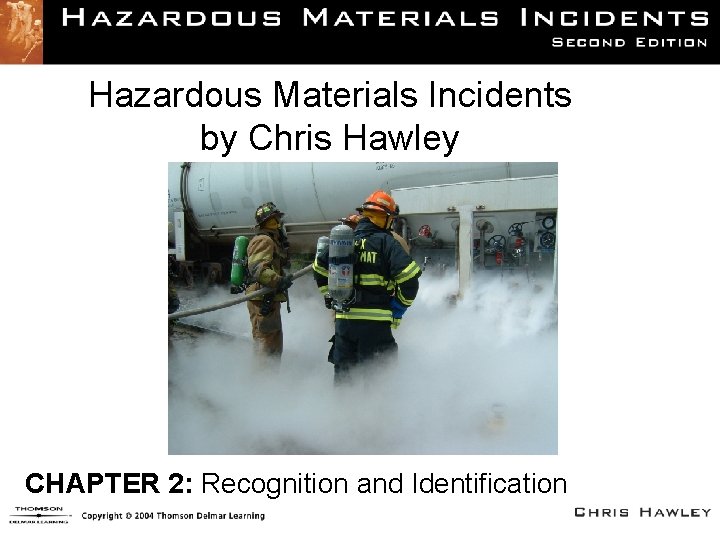
Hazardous Materials Incidents by Chris Hawley CHAPTER 2: Recognition and Identification
Chapter 2: Overview • • Introduction Location and occupancy Placards, labels, and markings Other identification systems Containers Use of senses Chemical and physical properties Summary 2
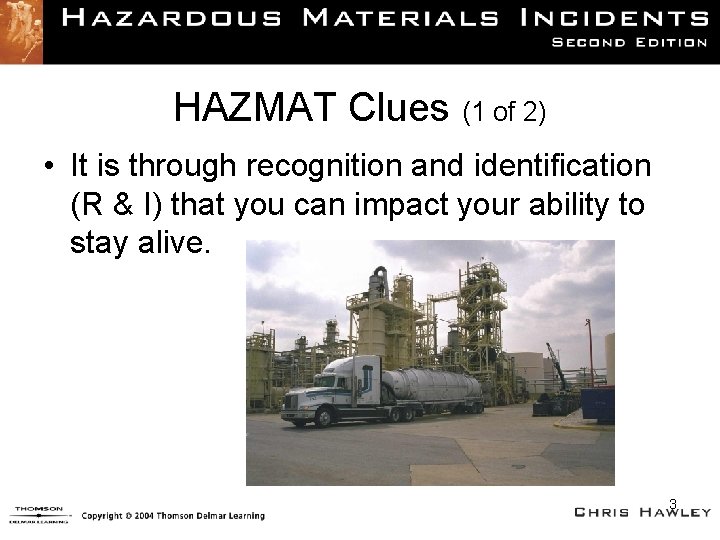
HAZMAT Clues (1 of 2) • It is through recognition and identification (R & I) that you can impact your ability to stay alive. 3
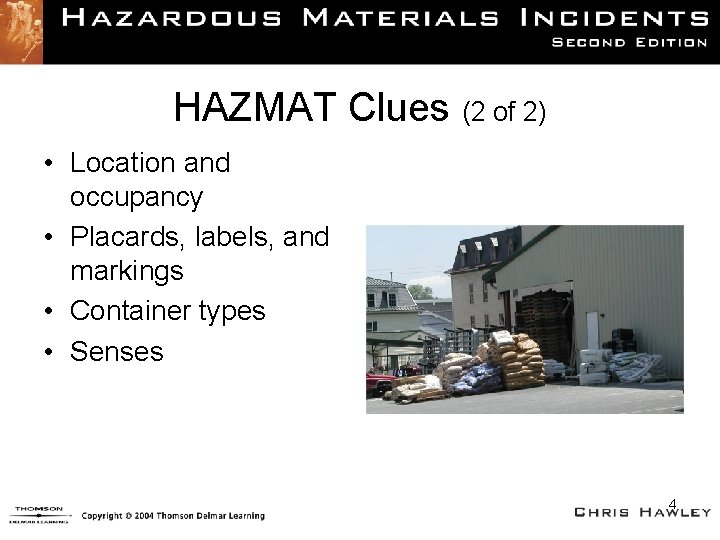
HAZMAT Clues (2 of 2) • Location and occupancy • Placards, labels, and markings • Container types • Senses 4
Location and Occupancy • The size of the community does not impact the potential for hazardous materials; every community has hazardous materials – Major transportation corridors – Buildings that store chemicals 5
Some Examples • Hardware stores, hospitals • Auto part supply stores • Dry cleaners • Manufacturing facilities • Print shops • Doctors’ offices • Photo labs • Agricultural supply stores • Semi-conductor manufacturing facilities • Electronic manufacturing • • • Light to heavy industrial Marine terminals Rail yards Airport terminals and fueling areas Pool chemical stores Paint stores Hotels Swimming pools Food manufacturing Many others 6
Placards, Labels, and Markings • The Department of Transportation (DOT) regulates the movement of hazardous materials (dangerous goods in Canada) by air, rail, water, roadway, and pipeline which can be located in 49 CFR 170 -180. 7
DOT Placarding (1 of 2) • Table 1 placards – Require placarding at any amount • Table 2 placards – Require placarding at 1, 001 pounds 8
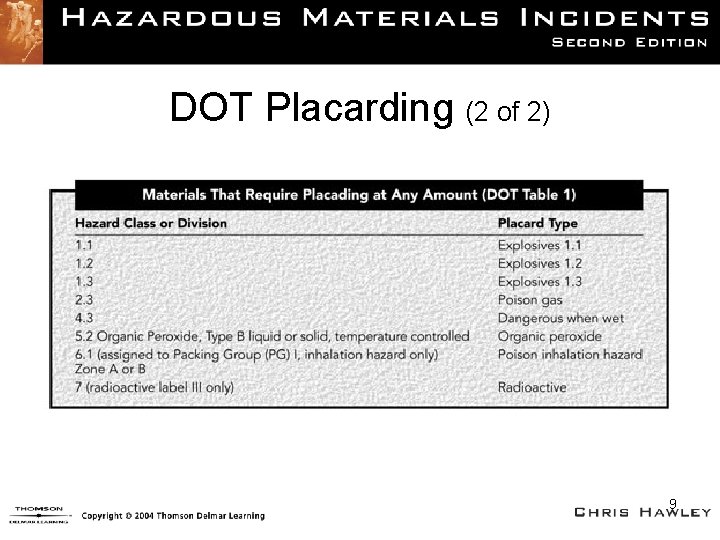
DOT Placarding (2 of 2) 9
DOT Hazard Classes (1 of 2) • DOT has established 9 hazard classes. – Classes 1 -8 are specific. – Class 9 is a miscellaneous category. • Some classes have subdivisions. 10
DOT Hazard Classes (2 of 2) • • • Class 1: Explosives Class 2: Gases Class 3: Flammable liquids Class 4: Oxidizers and organic peroxides Class 5: Flammable solids, water reactives, and spontaneously reactive Class 6: Poisons Class 7: Radioactives Class 8: Corrosives Class 9: Miscellaneous hazards 11
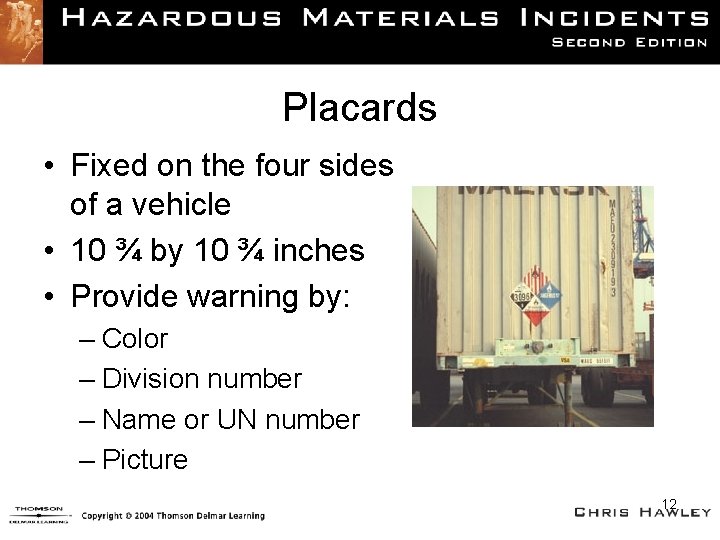
Placards • Fixed on the four sides of a vehicle • 10 ¾ by 10 ¾ inches • Provide warning by: – Color – Division number – Name or UN number – Picture 12
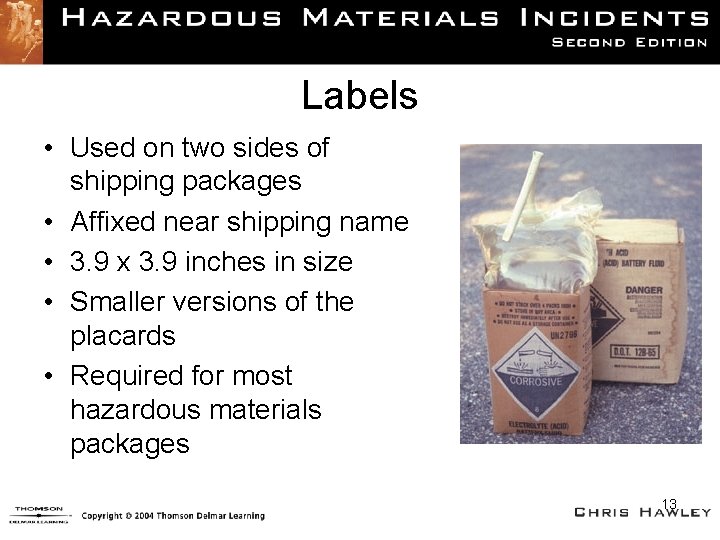
Labels • Used on two sides of shipping packages • Affixed near shipping name • 3. 9 x 3. 9 inches in size • Smaller versions of the placards • Required for most hazardous materials packages 13
Class 1: Explosives • Division 1. 1 – Mass explosion hazard • Division 1. 2 - Projectile hazard • Division 1. 3 - Fire hazard or minor blast hazard • Division 1. 4 – Minor explosion hazard • Division 1. 5 – Very insensitive explosives • Division 1. 6 –Also very insensitive explosives 14
Explosives and Fires • • Extremely dangerous Withdrawing usually best option Consult DOT ERG 1988 Kansas City, MO, lost six firefighters to a fire involving explosives. 15
Packing Groups • Some materials may not be shipped with others. • They have established packing groups. – Packing group I – greatest danger – Packing group 2 – medium danger – Packing group 3 – minor danger • DOT rules state which materials can be shipped with the various packing groups. 16
Class 2: Gases (1 of 2) • Division 2. 1 – Flammable gases • Division 2. 2 – Non-flammable, nonpoisonous, and compressed gas – Liquefied gas – Pressurized cryogenic gas – Compressed gas in solution • Division 2. 3 – Poisonous gases 17
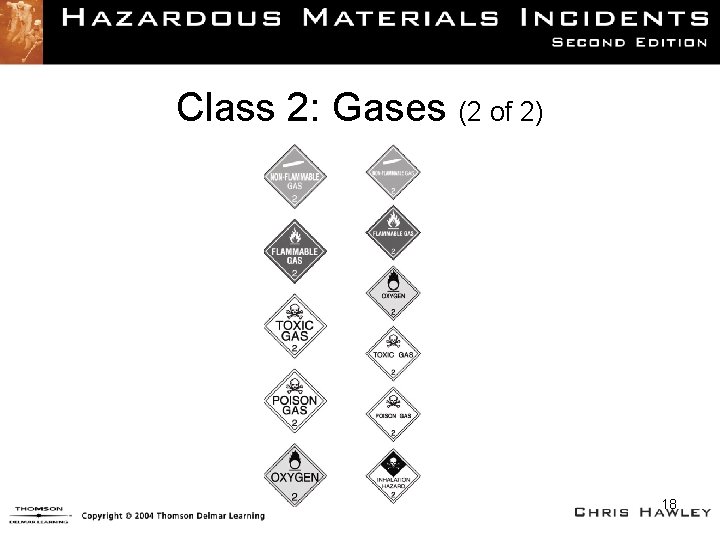
Class 2: Gases (2 of 2) 18
Hazard Zones • DOT has established hazard zones that signify the amount of toxicity a particular material may present. • Hazard zones are listed as A-D. • A material listed with “Hazard zone A” is extremely toxic and presents significant inhalation risk. • Hazard zone D is also severely toxic, but not as toxic as “A. ” 19
Class 3: Flammable Liquids (1 of 2) • Flammable liquids are those that have flash points below 141º F. • Combustible liquids are those that have flash points above 141º F. 20

Class 3: Flammable Liquids (2 of 2) 21
Class 4: Flammable Solids (1 of 2) • Division 4. 1 – Flammable solids • Division 4. 2 – Spontaneously combustible materials • Division 4. 3 – Dangerous when wet materials 22
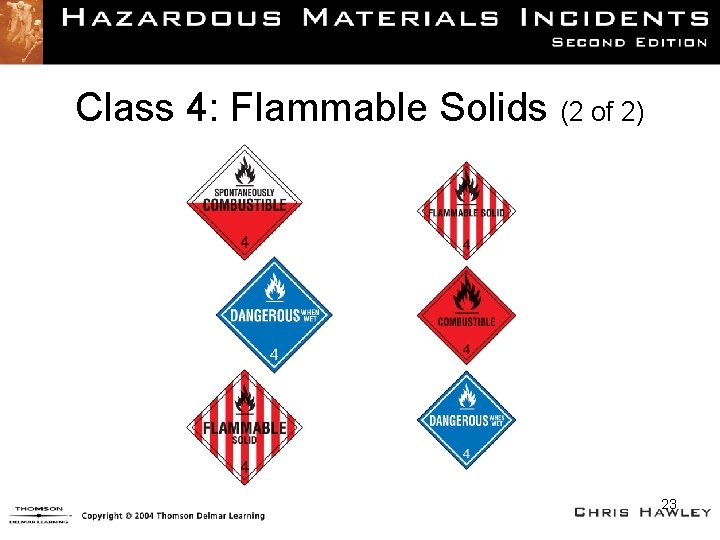
Class 4: Flammable Solids (2 of 2) 23
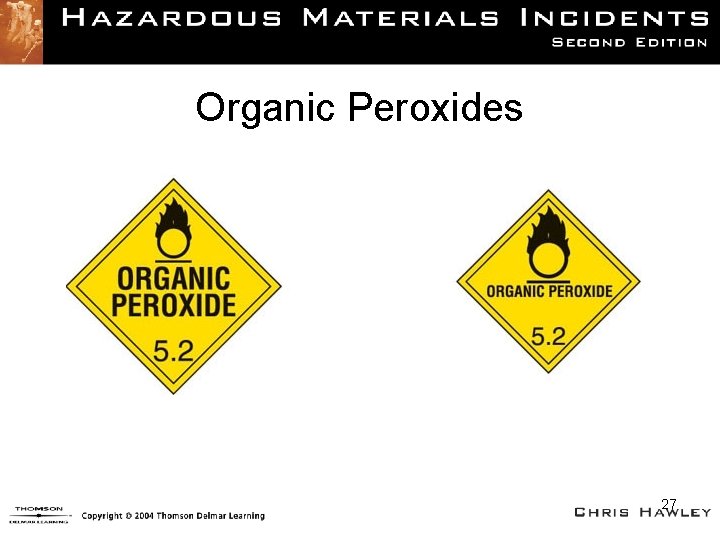
Class 5 Oxidizers and Organic Peroxides • Division 5. 1 - Oxidizers • Division 5. 2 - Organic peroxides 24
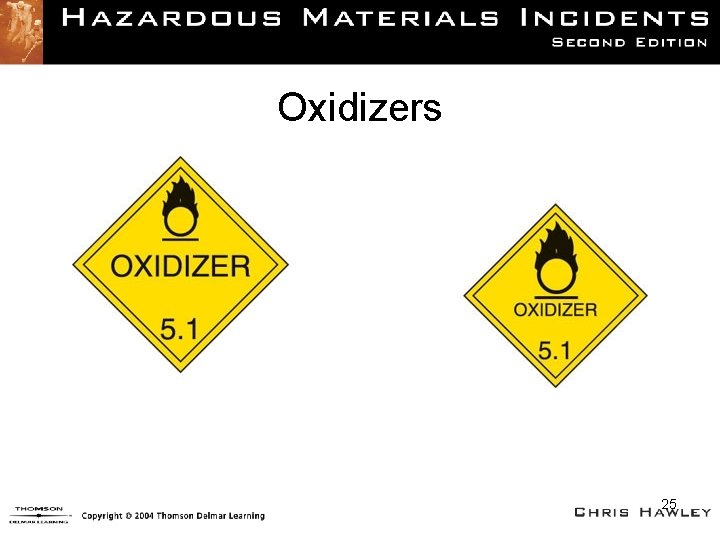
Oxidizers 25
Organic Peroxides • Ability to polymerize • May be violently reactive or explosive • May violently rupture container, if contained • Sensitive to shock, heat, or contamination 26
Organic Peroxides 27
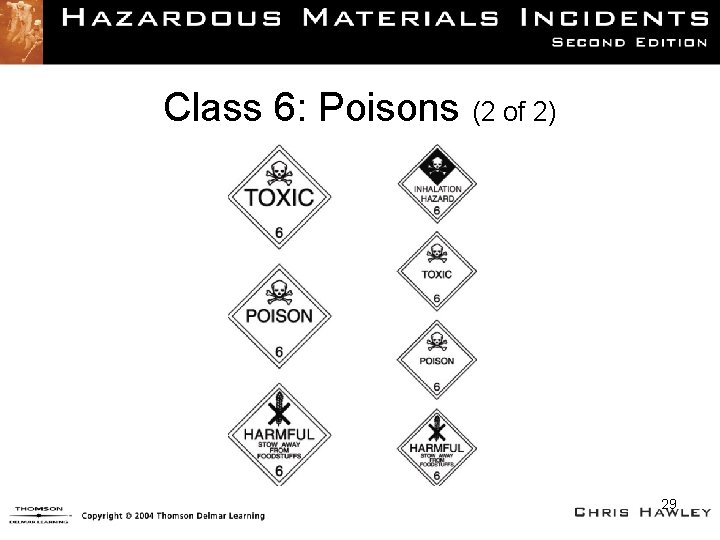
Class 6: Poisons (1 of 2) • Division 6. 1 – Materials that present a risk to humans during transportation • Division 6. 2 – Microorganisms, or their toxins, that can cause disease • Has two hazard zones 28
Class 6: Poisons (2 of 2) 29
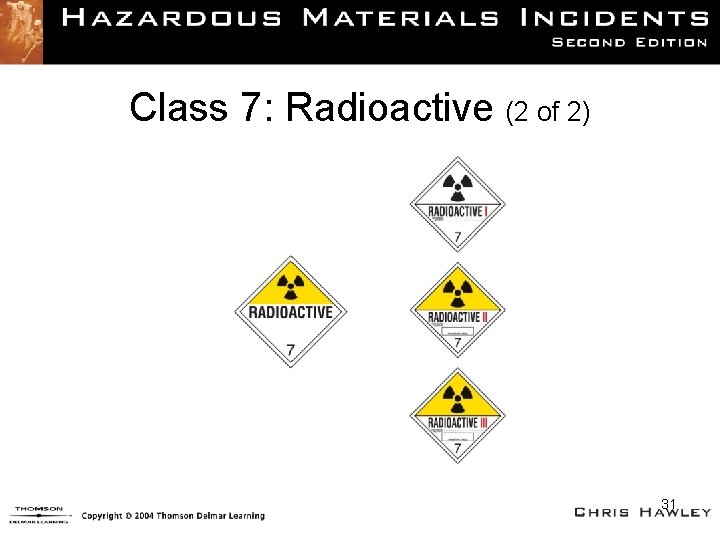
Class 7: Radioactive (1 of 2) • There are no sub-divisions for radioactives. • There are three labels. – Radioactive III 30
Class 7: Radioactive (2 of 2) 31
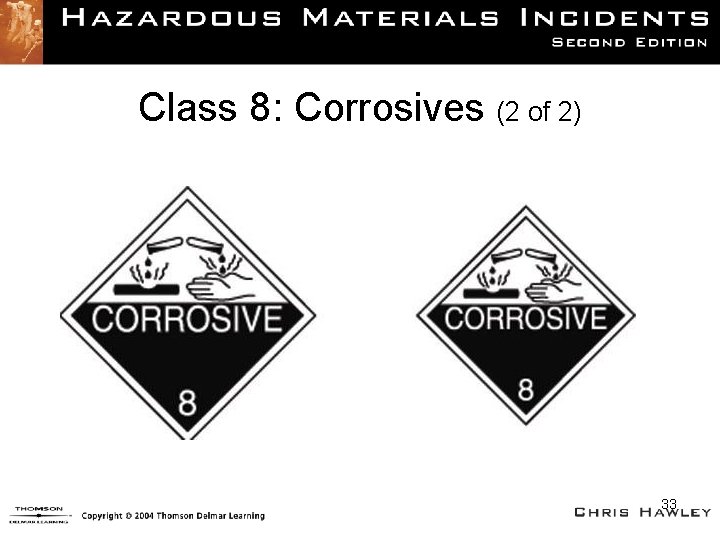
Class 8: Corrosives (1 of 2) • Includes acids and bases • Capable of causing destruction to humans and metal 32
Class 8: Corrosives (2 of 2) 33
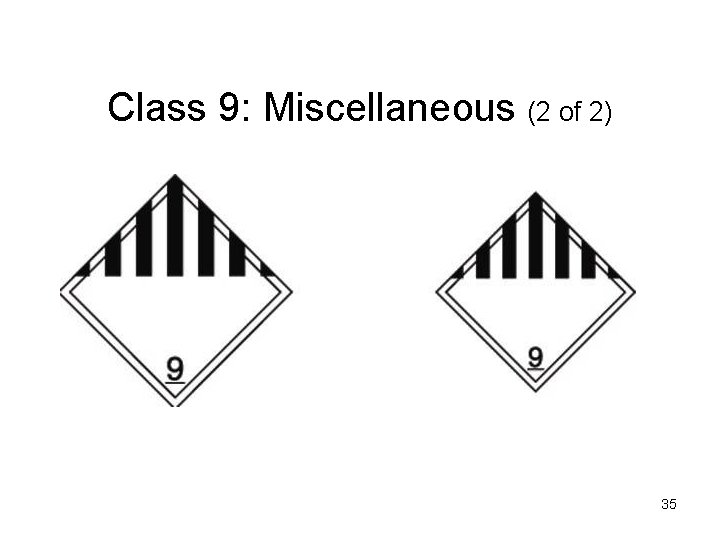
Class 9: Miscellaneous (1 of 2) • Present hazard not listed in previous classes – Dry ice – Molten sulfur – Hazardous waste 34
Class 9: Miscellaneous (2 of 2) 35
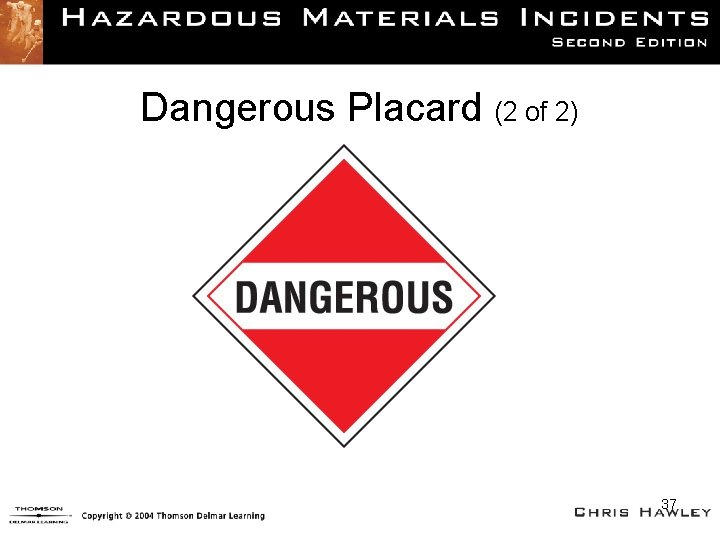
Dangerous Placard (1 of 2) • Placard means mixed load is being carried. • Load consists of two materials that would require placarding. • More than 2, 205 lbs. requires dangerous placard and specific hazard placard. 36
Dangerous Placard (2 of 2) 37
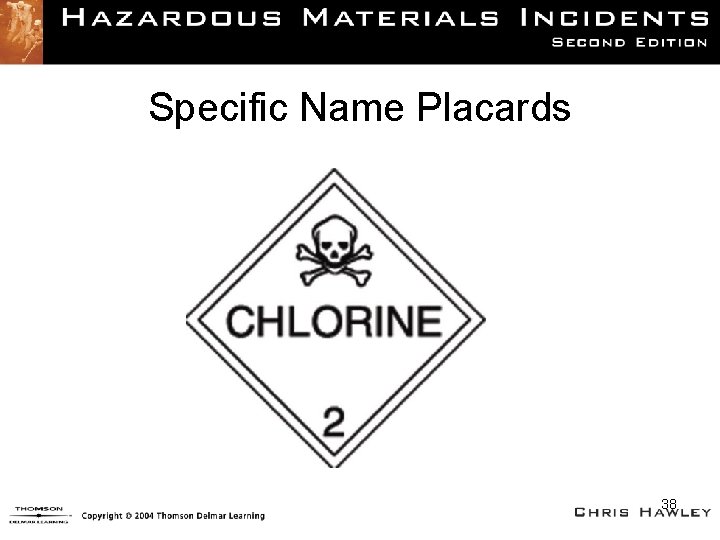
Specific Name Placards 38
Primary Placards • Provides primary hazard and subsidiary hazard. • Subsidiary hazard does not have class/division number. • Subsidiary placard is below primary hazard. 39
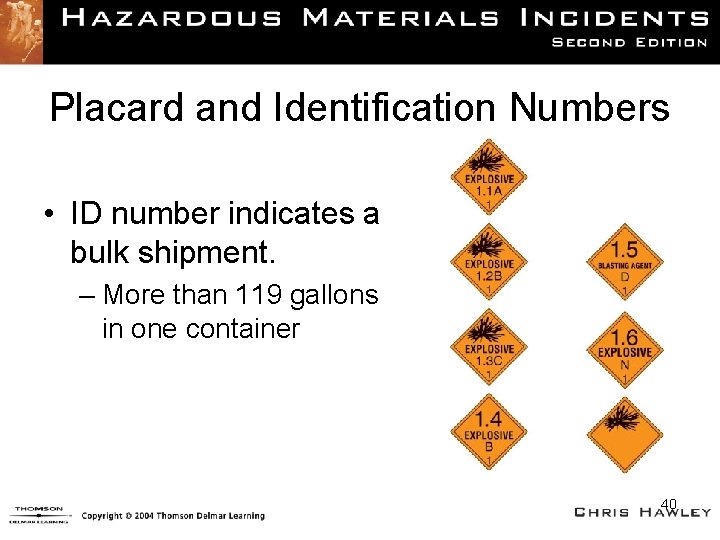
Placard and Identification Numbers • ID number indicates a bulk shipment. – More than 119 gallons in one container 40
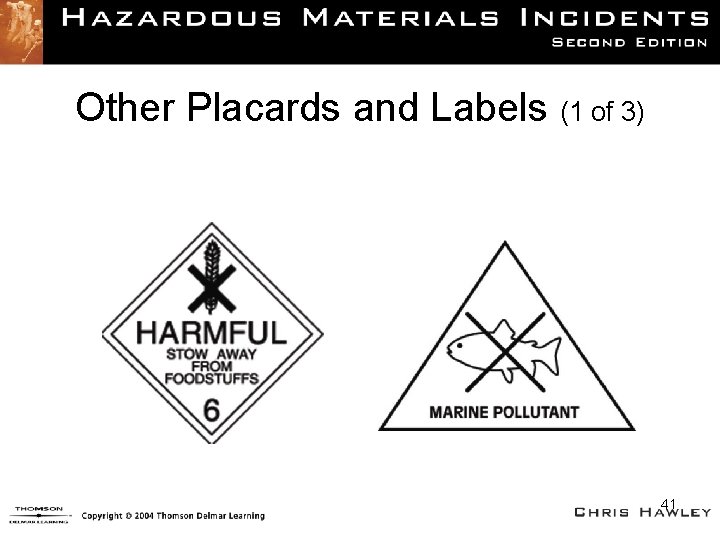
Other Placards and Labels (1 of 3) 41
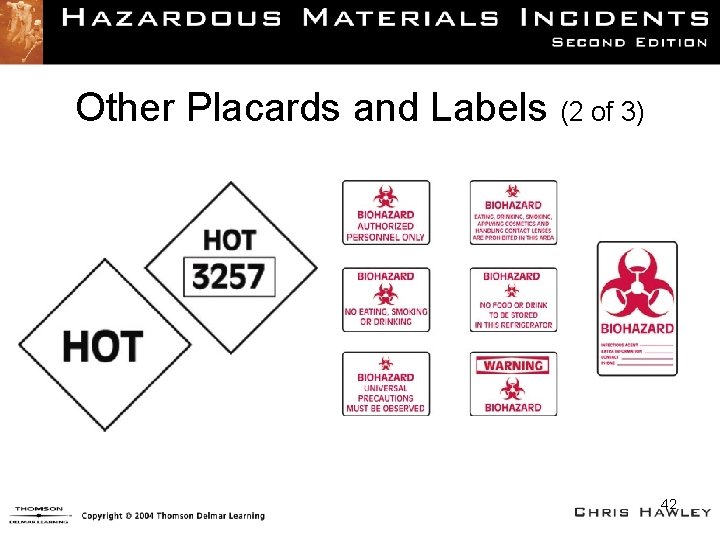
Other Placards and Labels (2 of 3) 42
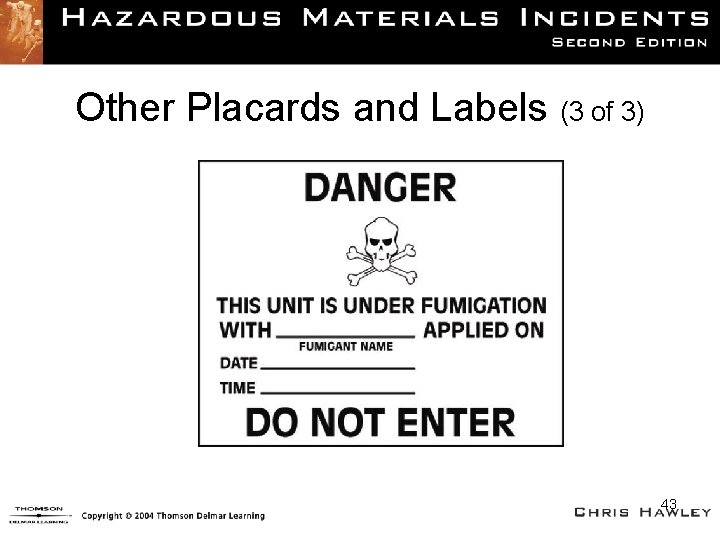
Other Placards and Labels (3 of 3) 43
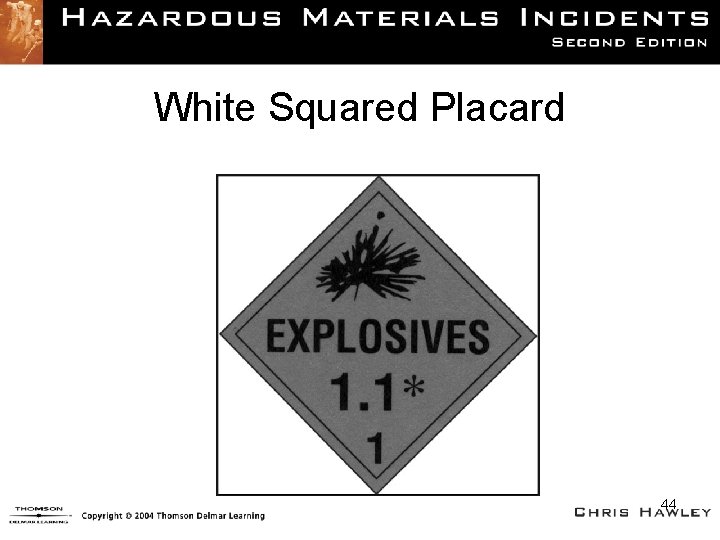
White Squared Placard 44
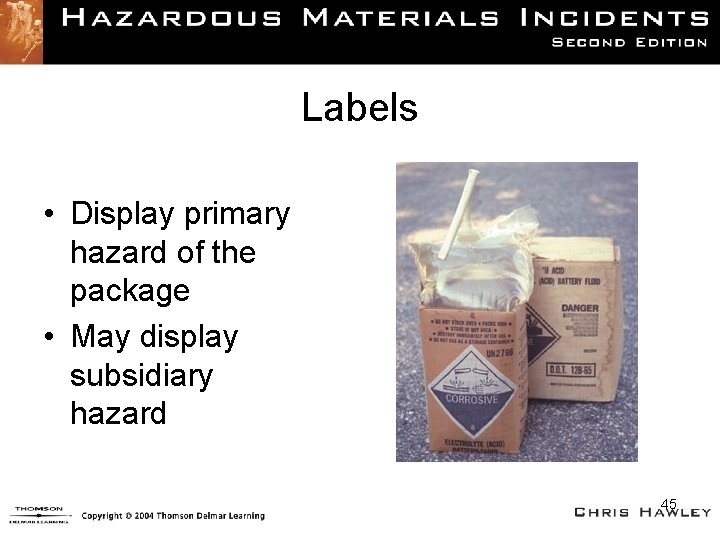
Labels • Display primary hazard of the package • May display subsidiary hazard 45
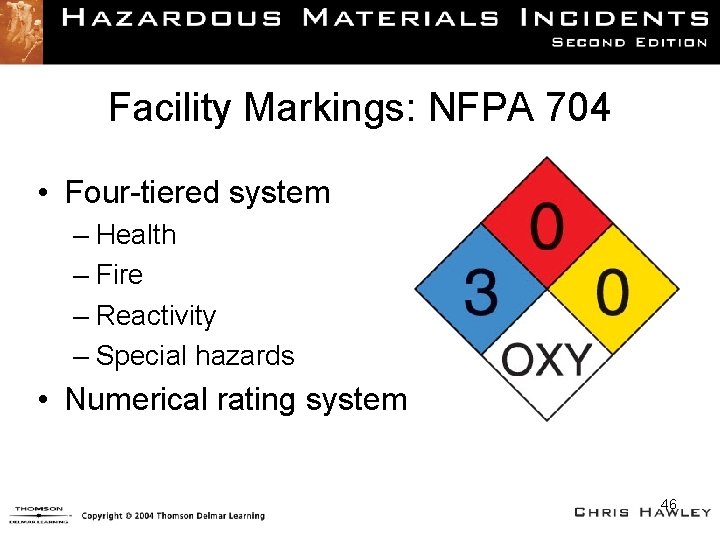
Facility Markings: NFPA 704 • Four-tiered system – Health – Fire – Reactivity – Special hazards • Numerical rating system 0 -4 46
Ratings • • • 4 – Severe hazard 3 – Serious hazard 2 – Moderate hazard 1 – Slight hazard 0 – Minimal hazard 47
Hazardous Materials Information System (HMIS) • On containers • Used by employers to comply with hazard communication regulation 48
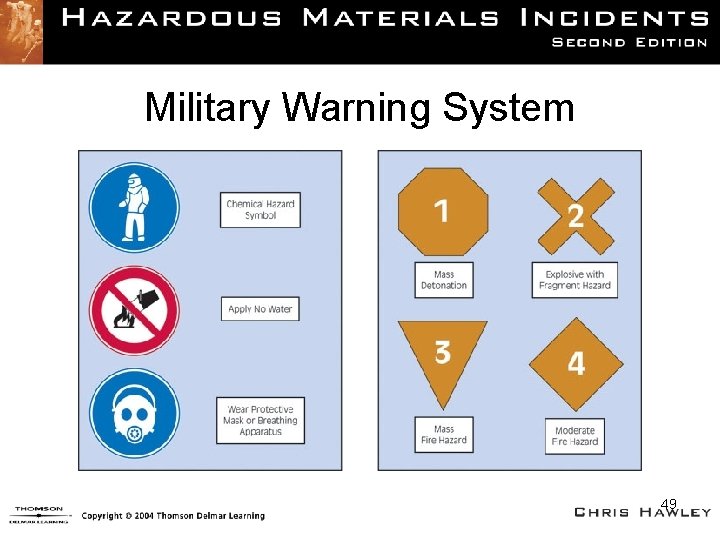
Military Warning System 49
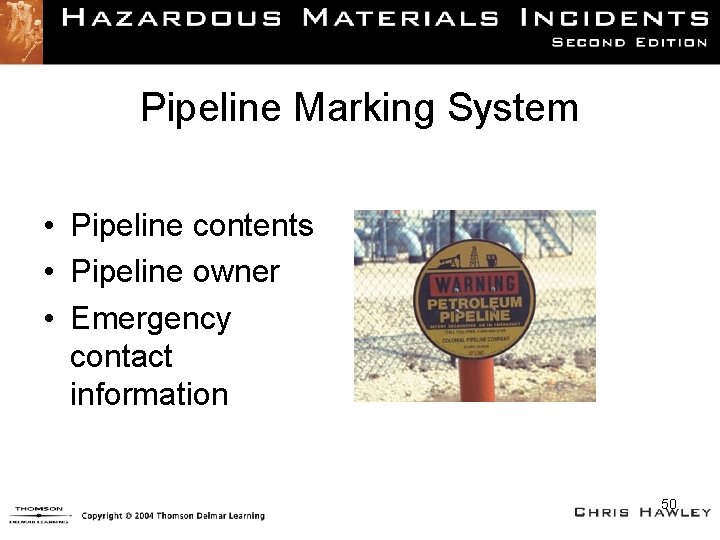
Pipeline Marking System • Pipeline contents • Pipeline owner • Emergency contact information 50
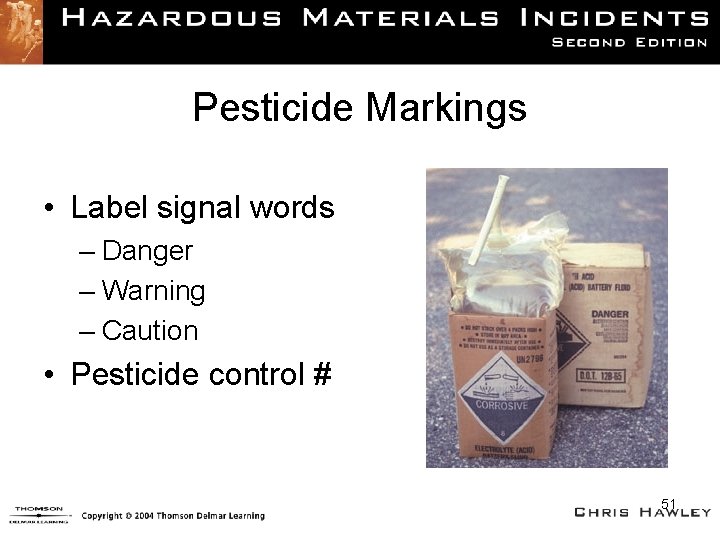
Pesticide Markings • Label signal words – Danger – Warning – Caution • Pesticide control # 51
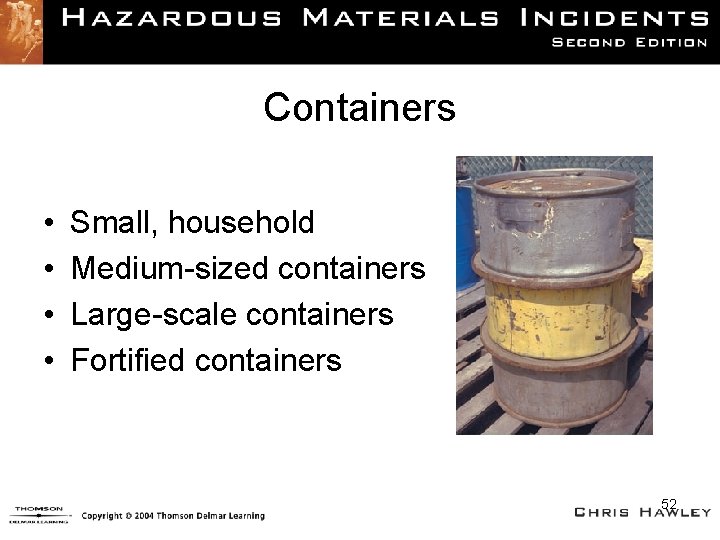
Containers • • Small, household Medium-sized containers Large-scale containers Fortified containers 52
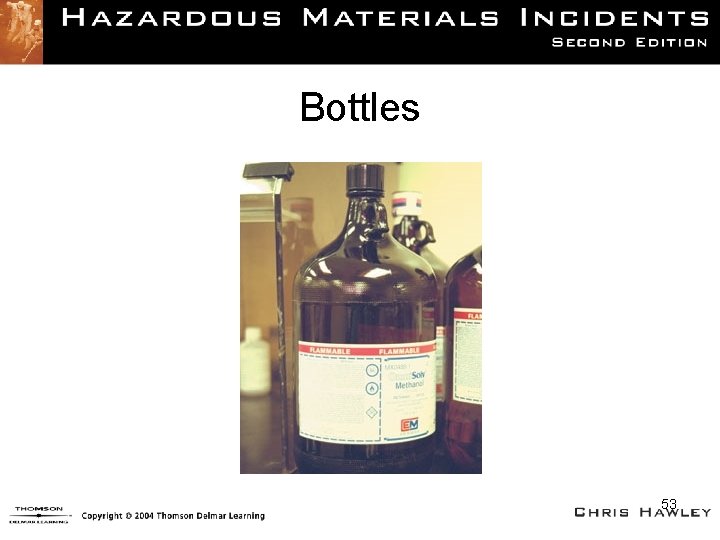
Bottles 53
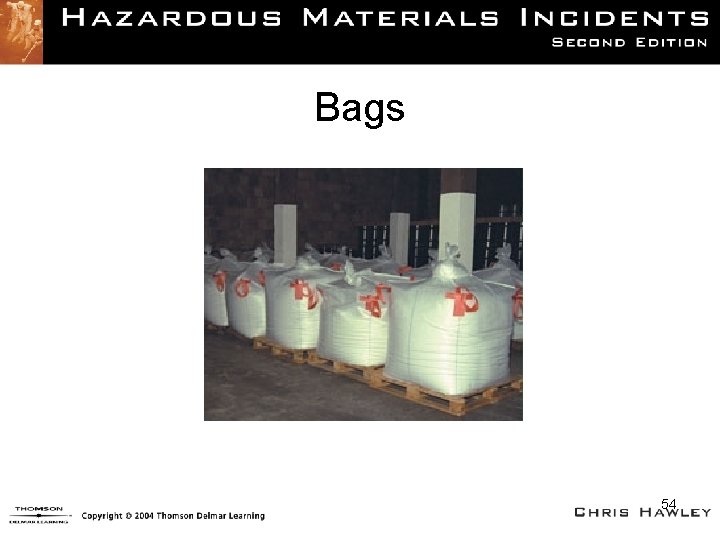
Bags 54
Drums • Fiberboard plastic lined • Plastic (poly) • Steel • Stainless steel • Aluminum • Dry, granular • Wetted materials, slurries • Corrosives • Flammables • Hazardous corrosives • Pesticides or steel reacting materials 55
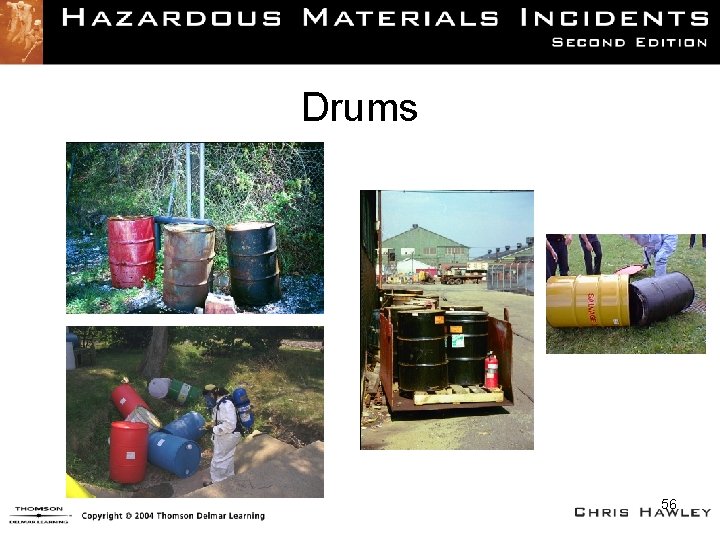
Drums 56
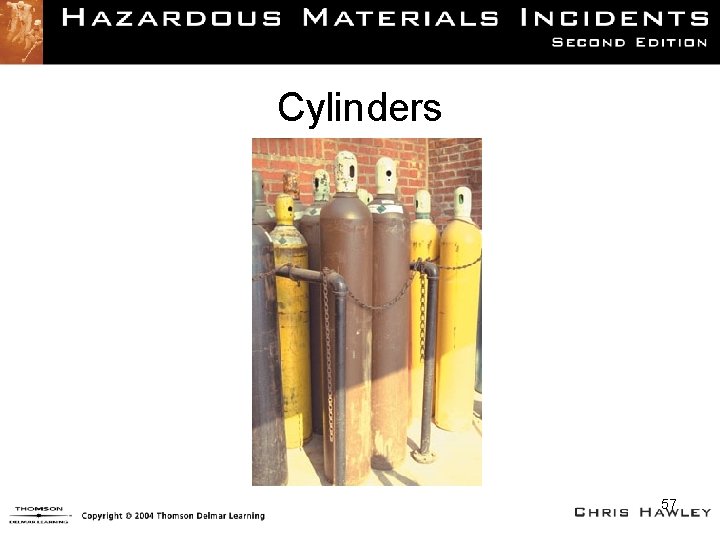
Cylinders 57
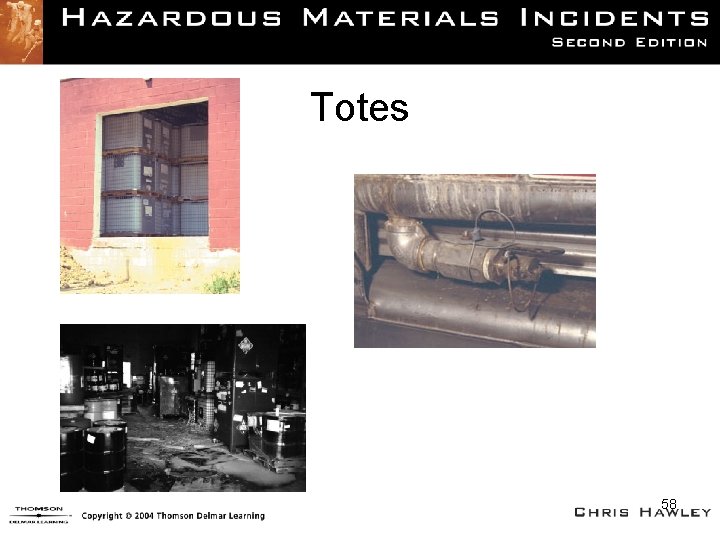
Totes 58
Highway Transportation • Box trucks – Land sea container (sea box) • • • Atmospheric tank truck Chemical hauler Corrosive tank Pressurized tanks Inter-modal containers 59
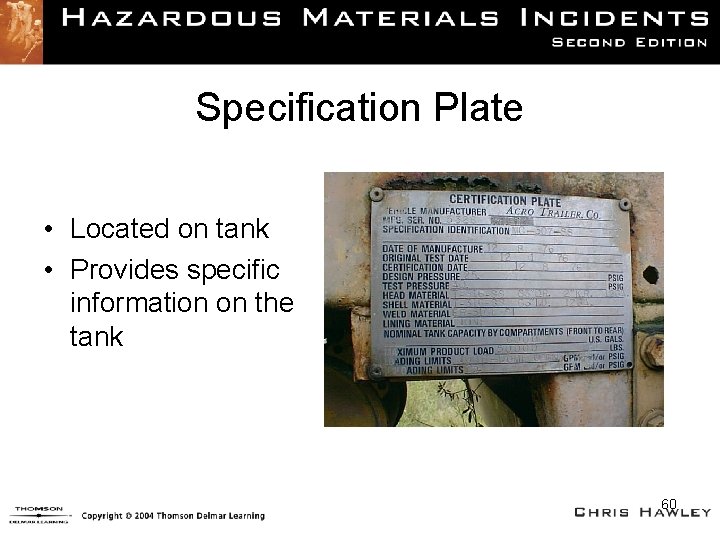
Specification Plate • Located on tank • Provides specific information on the tank 60
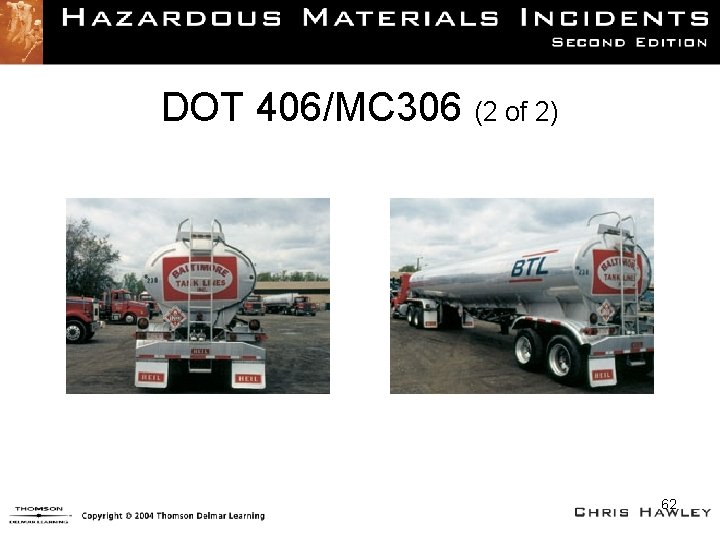
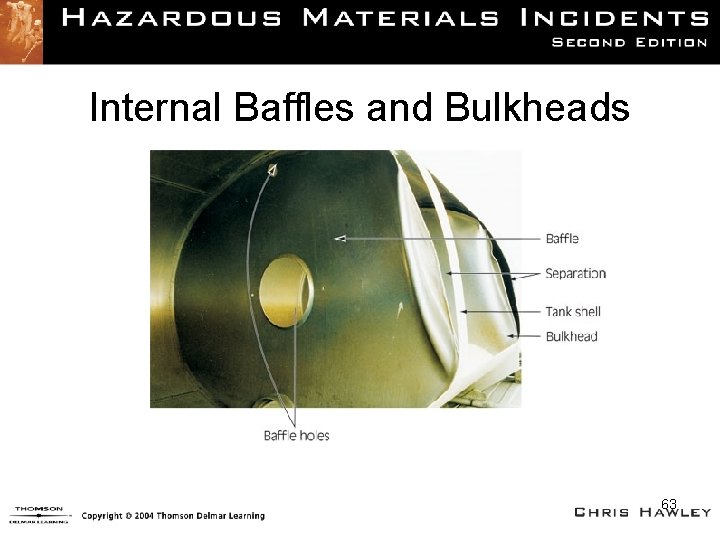
DOT 406/MC 306 (1 of 2) • Atmospheric tank truck – Commonly called gasoline tank truck • • • 2 -5 compartments Up to 11, 000 gallons Aluminum construction Elliptical in shape Rollover protection 61
DOT 406/MC 306 (2 of 2) 62
Internal Baffles and Bulkheads 63
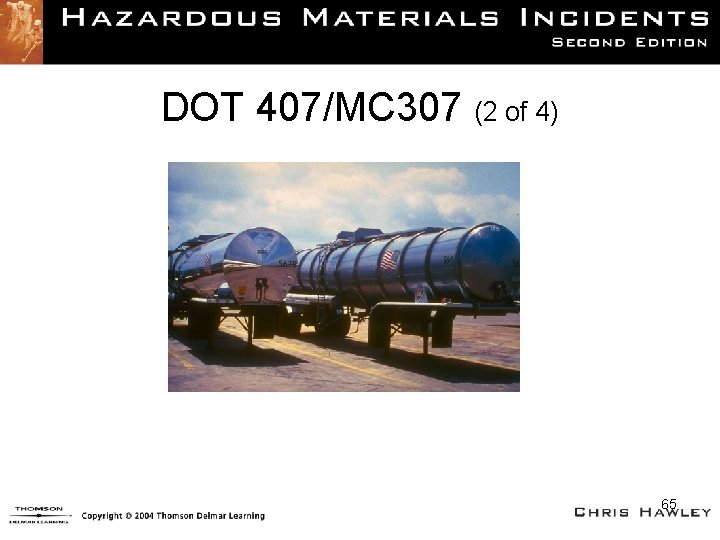
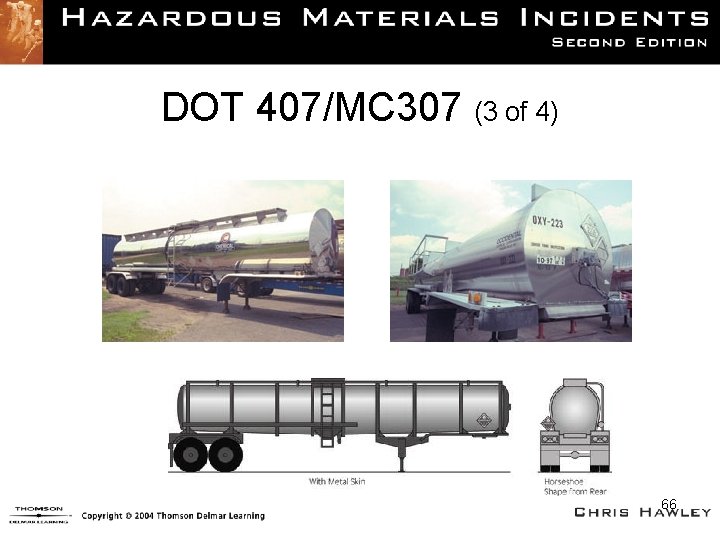
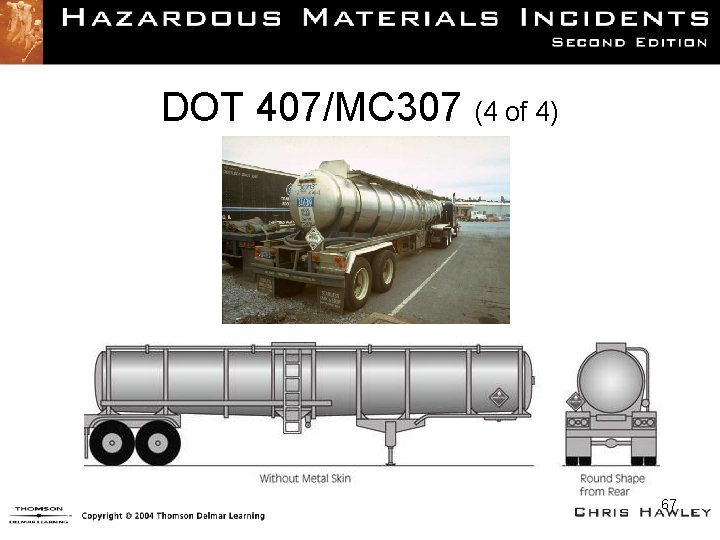
DOT 407/MC 307 (1 of 4) • Chemical workhorse • Two types – Insulated – Non-insulated • 2000 -7000 gallons (5000 normal) • Usually one compartment 64
DOT 407/MC 307 (2 of 4) 65
DOT 407/MC 307 (3 of 4) 66
DOT 407/MC 307 (4 of 4) 67
Insulated 407/307 • Typically one compartment • Inner tank surrounded by insulation and outer shell • Steam lines or heated lines in insulation • Horseshoe shaped 68
Non–Insulated 407/307 • Reinforced rings • Typically one compartment • Round in shape 69
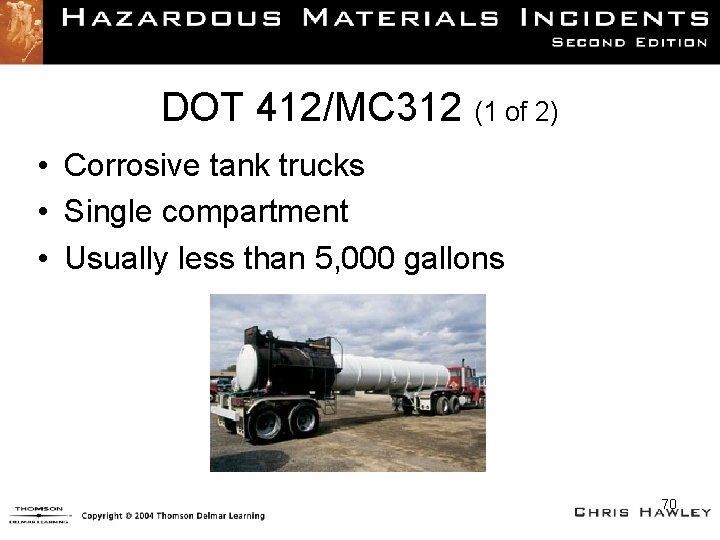
DOT 412/MC 312 (1 of 2) • Corrosive tank trucks • Single compartment • Usually less than 5, 000 gallons 70
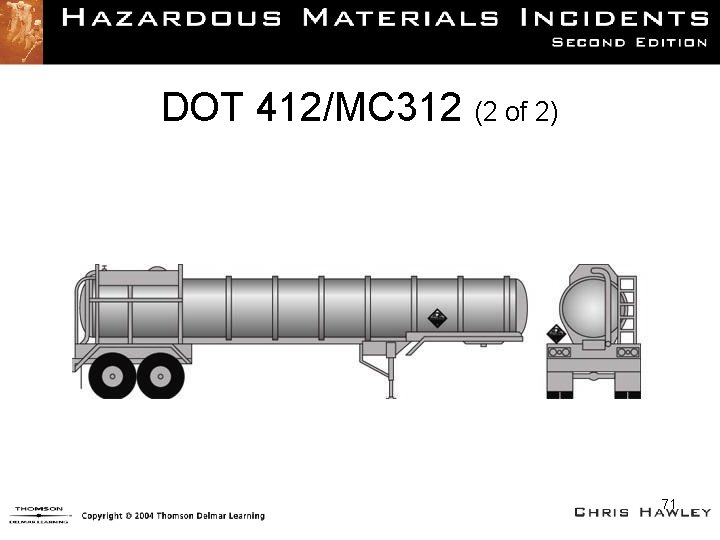
DOT 412/MC 312 (2 of 2) 71
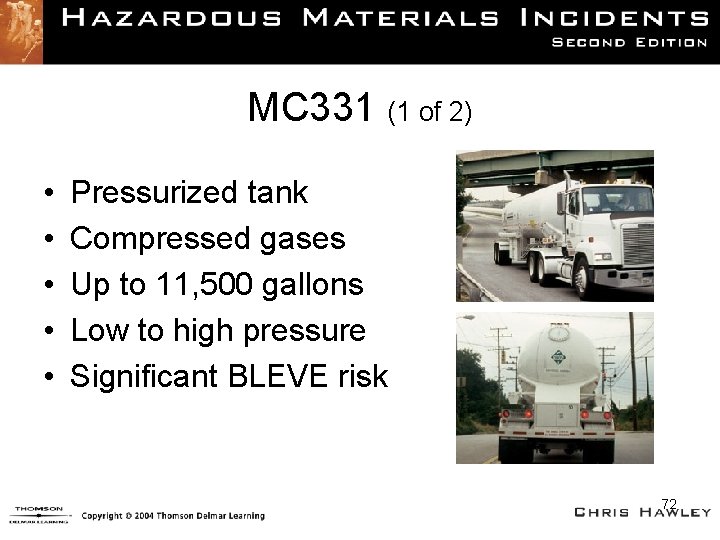
MC 331 (1 of 2) • • • Pressurized tank Compressed gases Up to 11, 500 gallons Low to high pressure Significant BLEVE risk 72
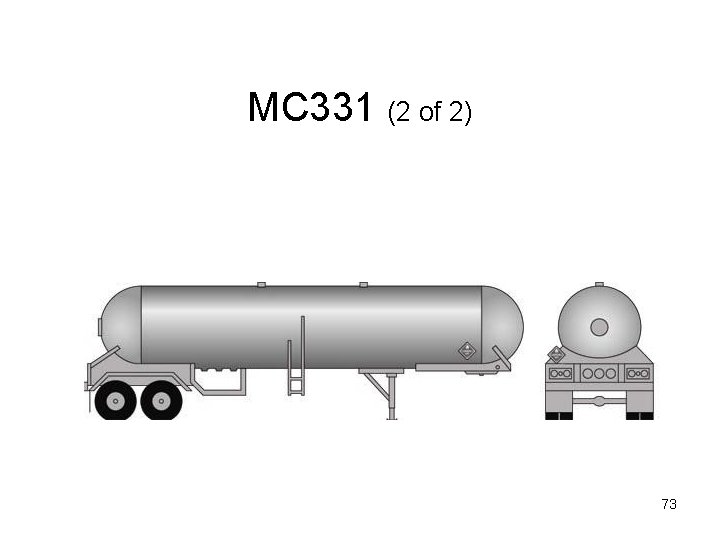
MC 331 (2 of 2) 73
BLEVE • They pose significant risk to responders. • Fires involving sealed containers can violently rupture. – Propane tanks are common examples 74
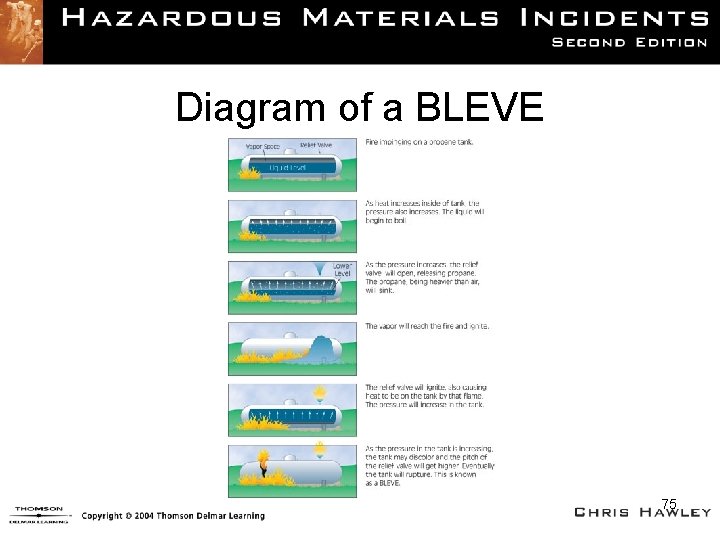
Diagram of a BLEVE 75
BLEVE Recommendations (1 of 2) • Withdraw immediately in case of rising sound from venting relief valves or discoloration of the tank. • Fight the fire from a distance with unstaffed hose holders or monitor nozzles. • Cool the tank with flooding quantities long after the fire is out. – A minimum of 500 gpm at the point of flame impingement is recommended by the NFPA. 76
BLEVE Recommendations (2 of 2) • If the water is vaporizing on contact, you are not putting enough water on the tank. – Water should be running off the tank if you are cooling the tank. • Do not direct water at relief valves or safety devices, as icing may occur which would block the venting material causing an increase in pressure inside the tank. • The tank may fail from any direction, but avoid the ends of the tank. • For massive fire, use unmanned hose holders or monitor nozzles. If impossible, withdraw from the area and let fire burn. 77
Dangers Associated with BLEVEs • The fireball can engulf responders and exposures. • Metal parts of the tank can fly considerable distance. • Liquid propane can be released into the surrounding area and be ignited. • The shock wave, air blast, or flying metal parts created by a BLEVE can collapse buildings, or move responders and equipment. 78
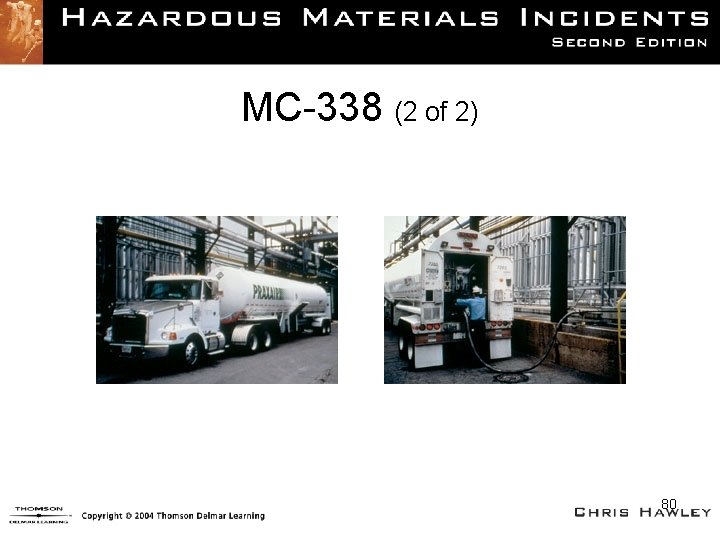
MC-338 (1 of 2) • • Cryogenic containers Vacuum-sealed inner container Well insulated Low pressure 79
MC-338 (2 of 2) 80
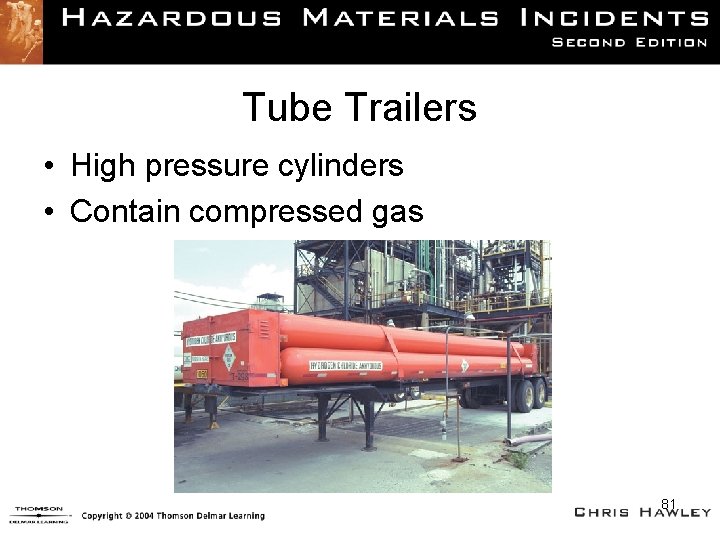
Tube Trailers • High pressure cylinders • Contain compressed gas 81
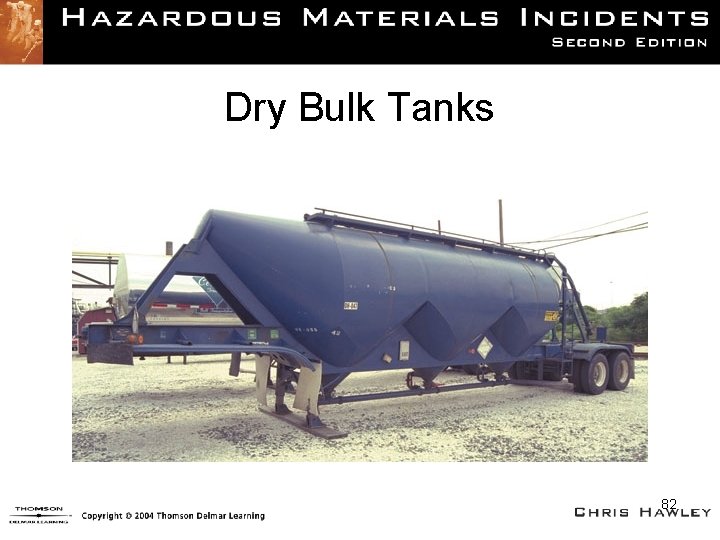
Dry Bulk Tanks 82
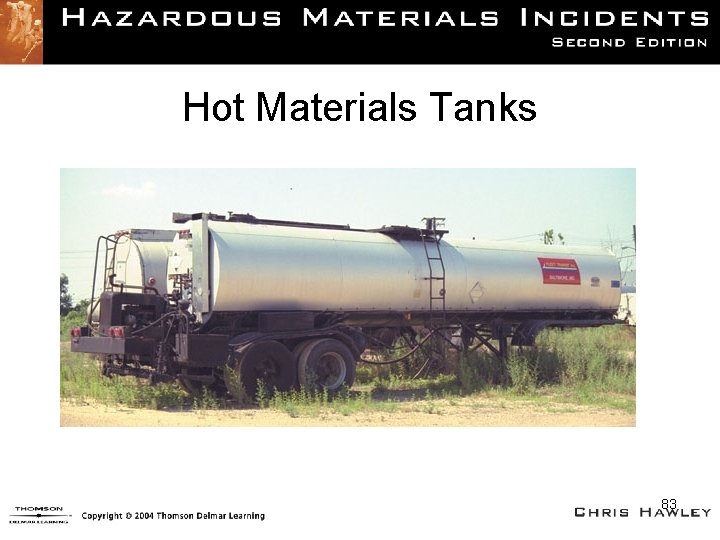
Hot Materials Tanks 83
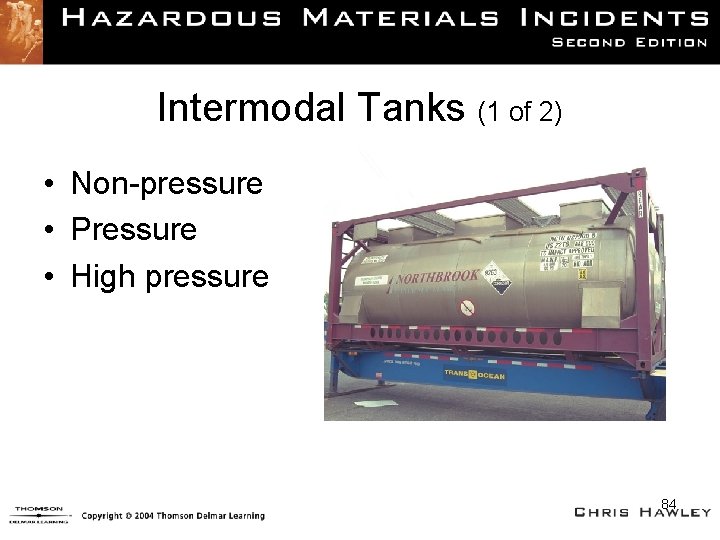
Intermodal Tanks (1 of 2) • Non-pressure • Pressure • High pressure 84
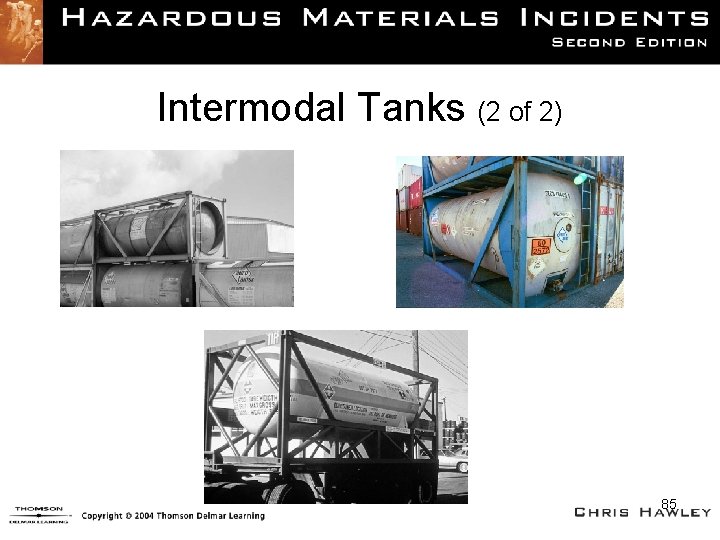
Intermodal Tanks (2 of 2) 85
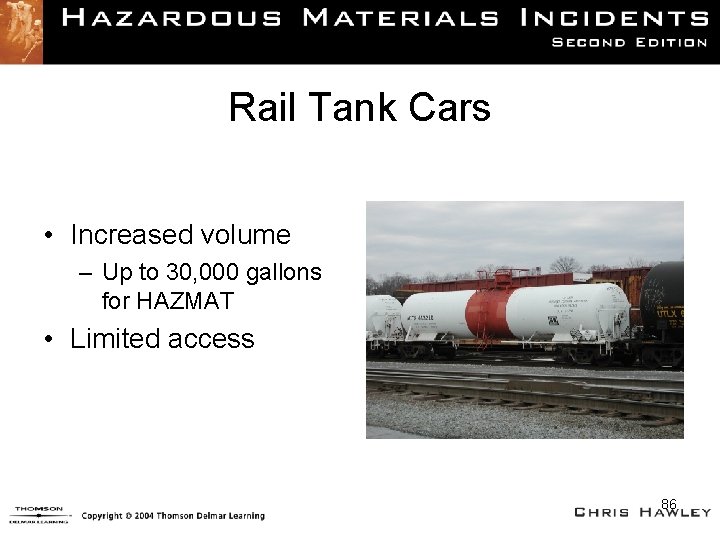
Rail Tank Cars • Increased volume – Up to 30, 000 gallons for HAZMAT • Limited access 86
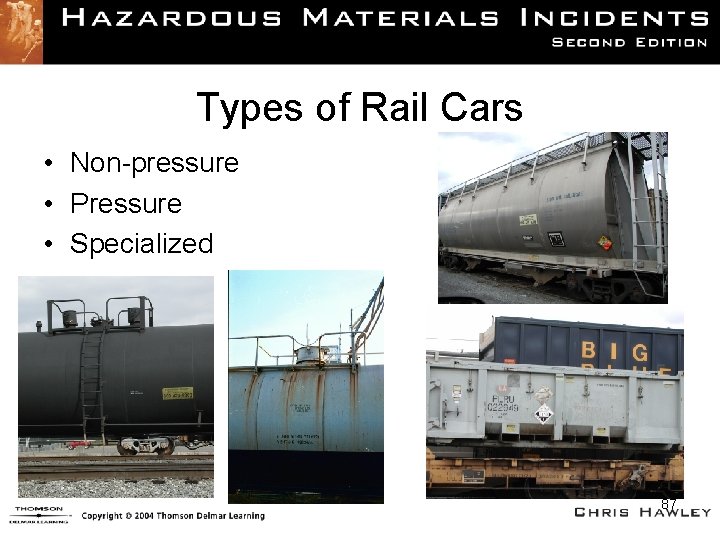
Types of Rail Cars • Non-pressure • Pressure • Specialized 87
Non-pressure Cars (1 of 2) • Up to 100 psi pressure • Known as General Service cars • All piping valves, lines, relief valves on the outside 88
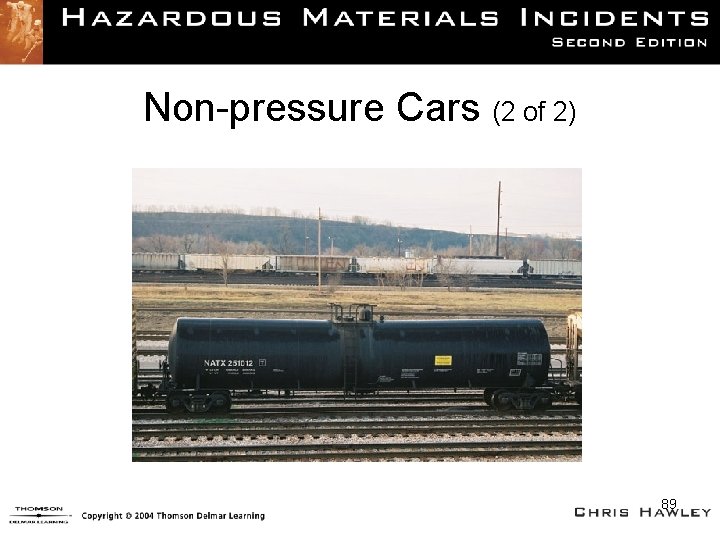
Non-pressure Cars (2 of 2) 89
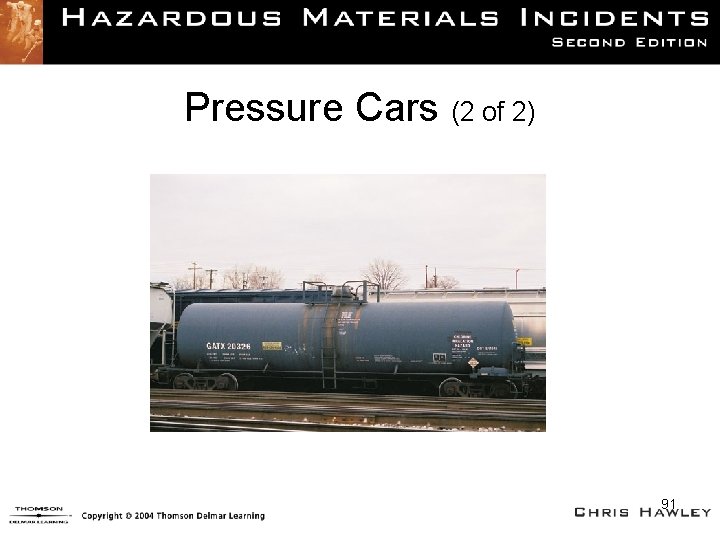
Pressure Cars (1 of 2) • Over 100 psi pressure • Liquefied gases • All pipes, valves, and fittings under a protective dome 90
Pressure Cars (2 of 2) 91
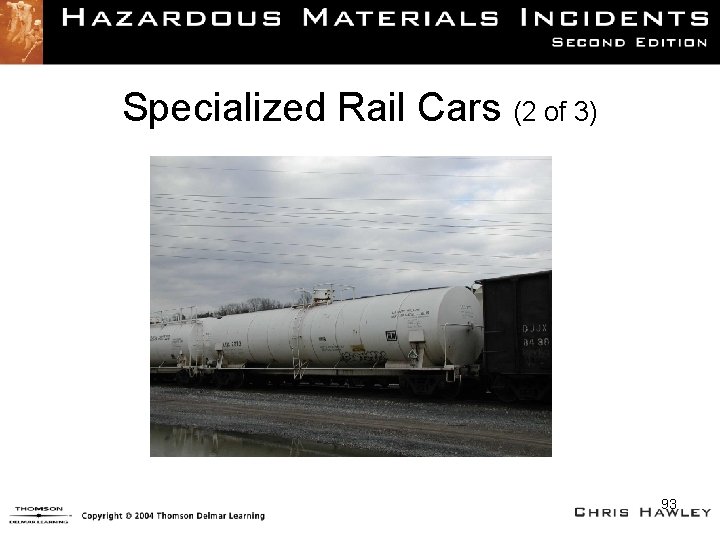
Specialized Rail Cars (1 of 3) • • Trailers of flat car Box cars Cryogenic cars Tube cars 92
Specialized Rail Cars (2 of 3) 93
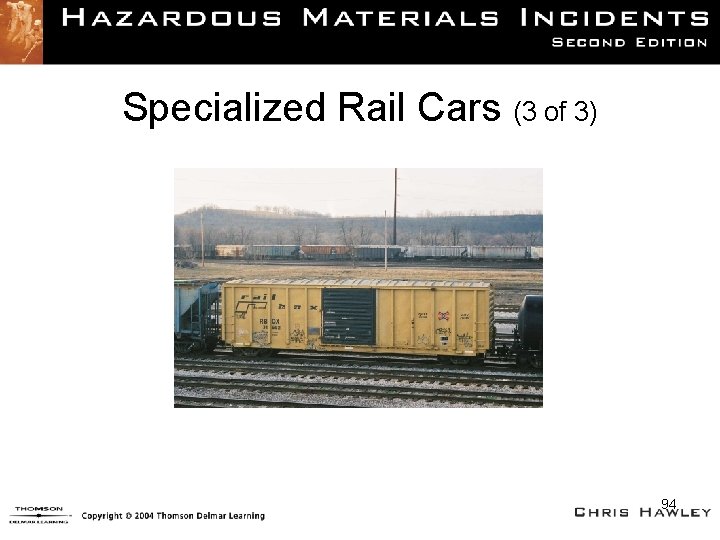
Specialized Rail Cars (3 of 3) 94
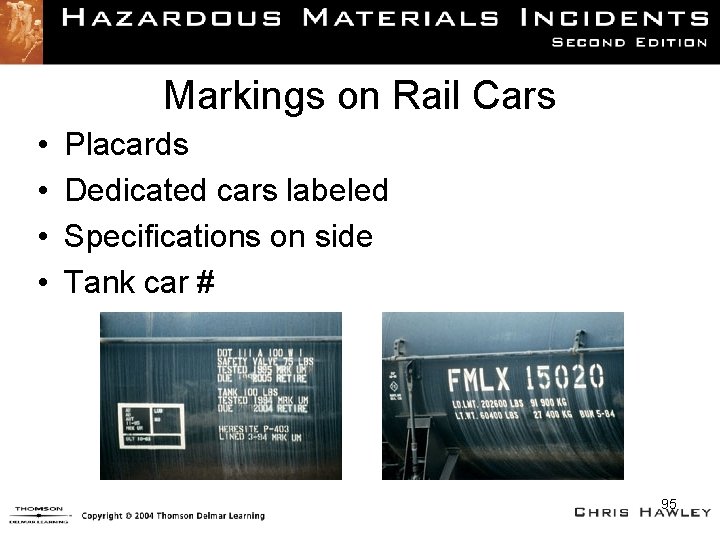
Markings on Rail Cars • • Placards Dedicated cars labeled Specifications on side Tank car # 95
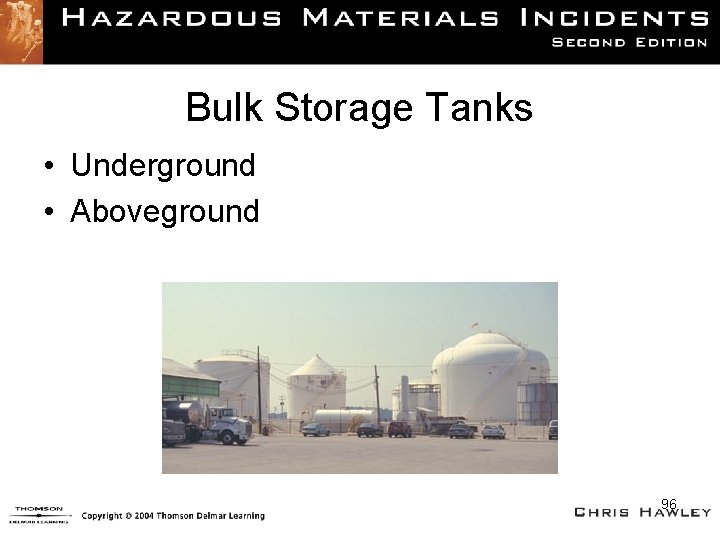
Bulk Storage Tanks • Underground • Aboveground 96
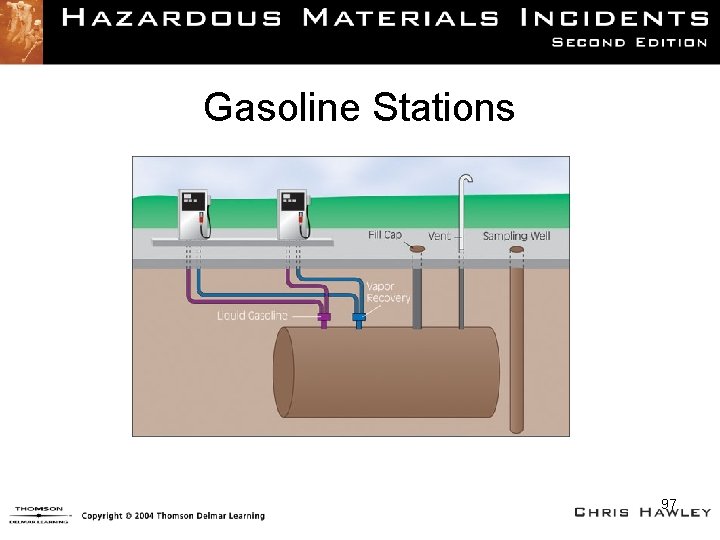
Gasoline Stations 97
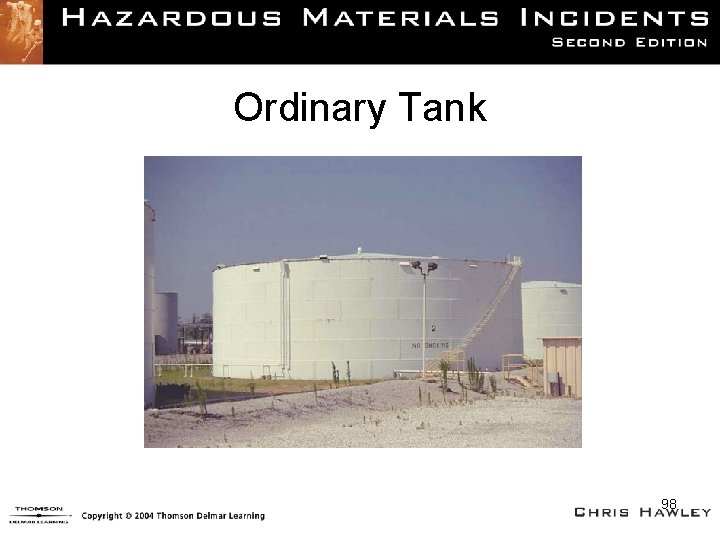
Ordinary Tank 98
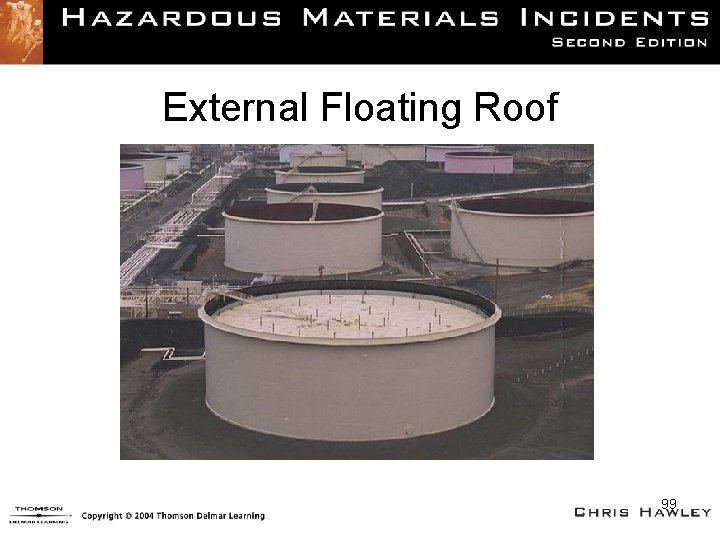
External Floating Roof 99
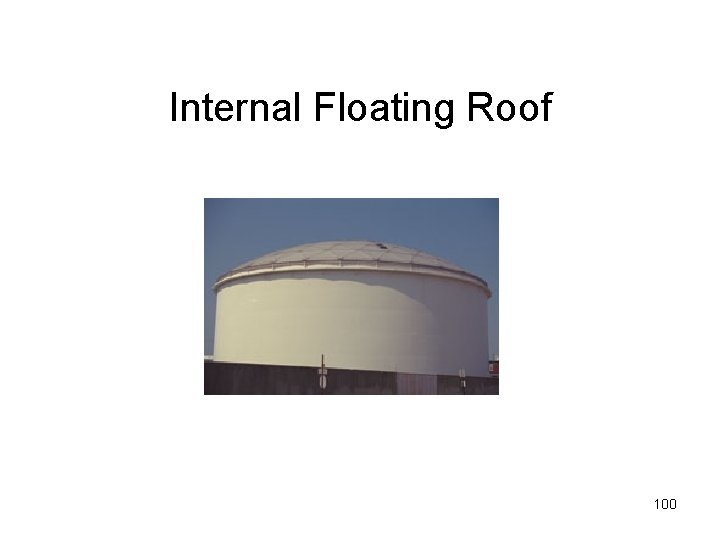
Internal Floating Roof 100
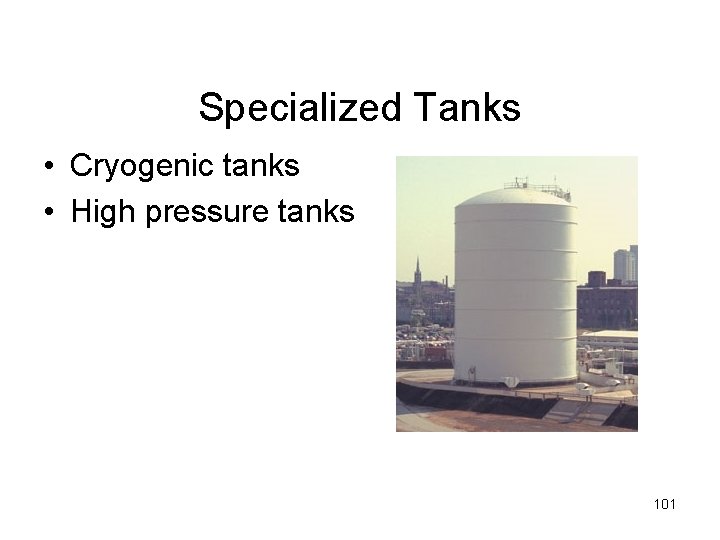
Specialized Tanks • Cryogenic tanks • High pressure tanks 101
Senses • Touch, taste, smell are dangerous tools to use for recognition and identification. • Sight and sounds are acceptable, but always maintain distance. 102
Chemical and Physical Properties • Follow the science to guide your response. 103
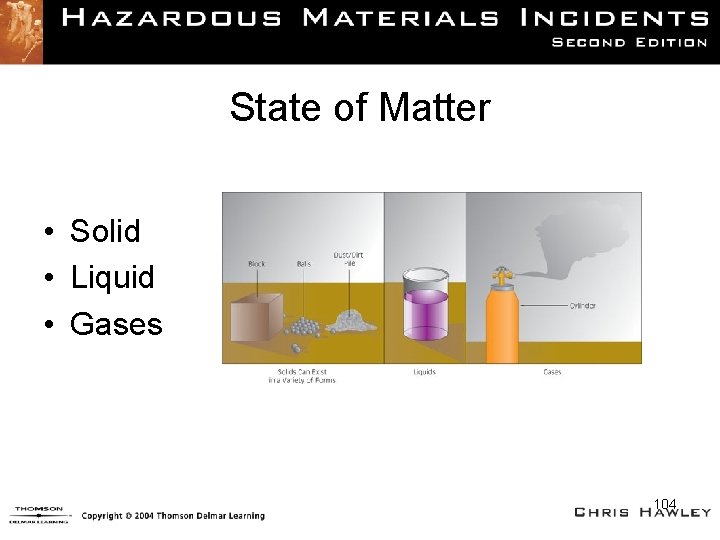
State of Matter • Solid • Liquid • Gases 104
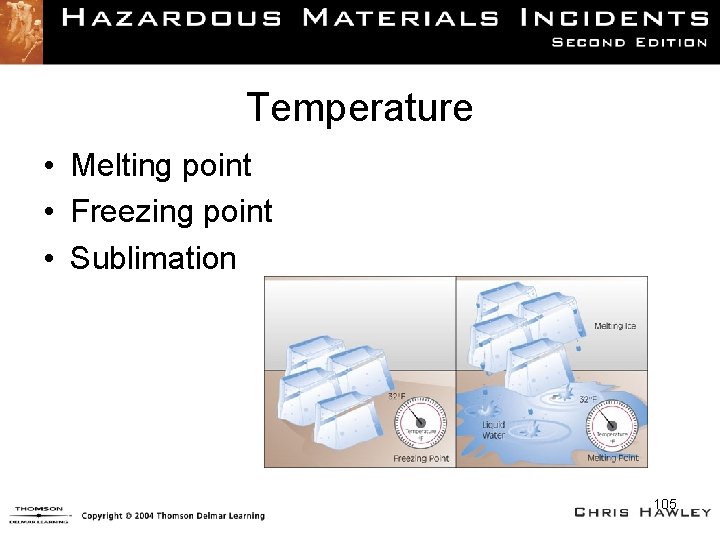
Temperature • Melting point • Freezing point • Sublimation 105
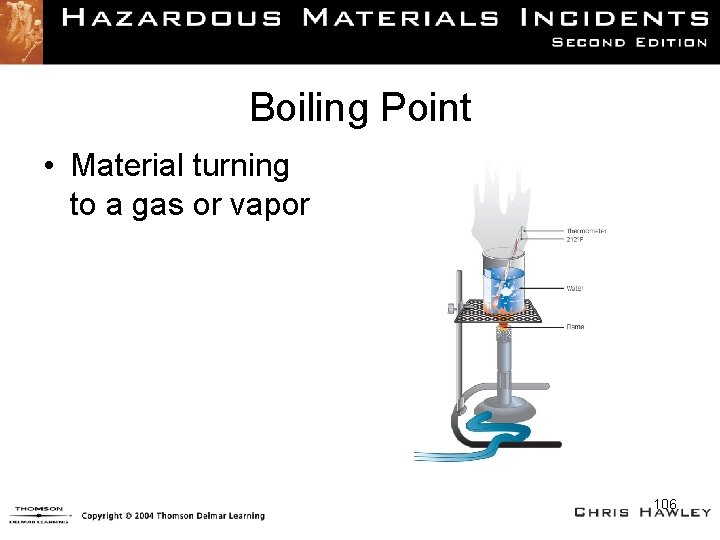
Boiling Point • Material turning to a gas or vapor 106
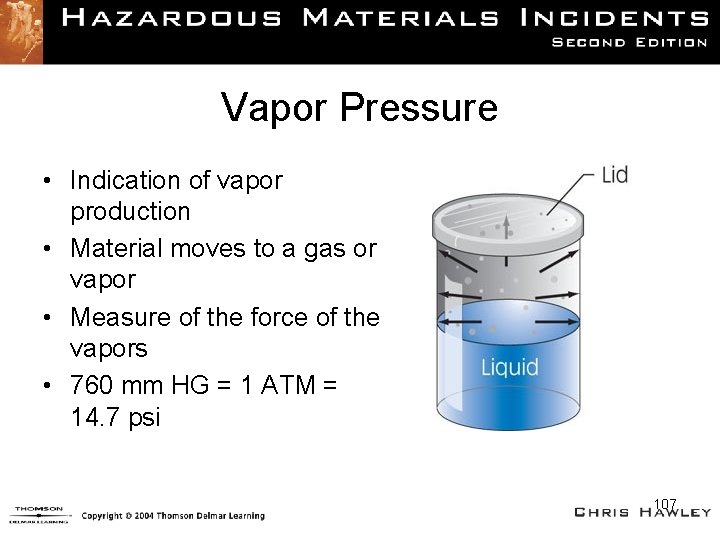
Vapor Pressure • Indication of vapor production • Material moves to a gas or vapor • Measure of the force of the vapors • 760 mm HG = 1 ATM = 14. 7 psi 107
Common Vapor Pressures • Water – 25 mm Hg • Acetone – 180 mm Hg • Gasoline – 300 mm Hg • Ethyl ether – 440 mm Hg • Methyl alcohol – 100 mm Hg • Diesel fuel – 5 mm Hg • Sodium hydroxide – 1 mm Hg @ 2534º F • Sulfuric acid – 0. 001 mm Hg • Ethion – 0. 0000015 mm Hg • Sarin – 2. 1 mm Hg 108
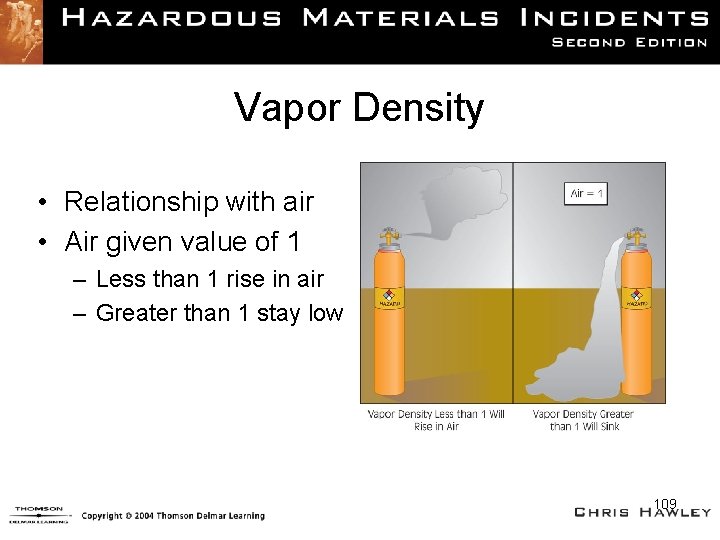
Vapor Density • Relationship with air • Air given value of 1 – Less than 1 rise in air – Greater than 1 stay low 109
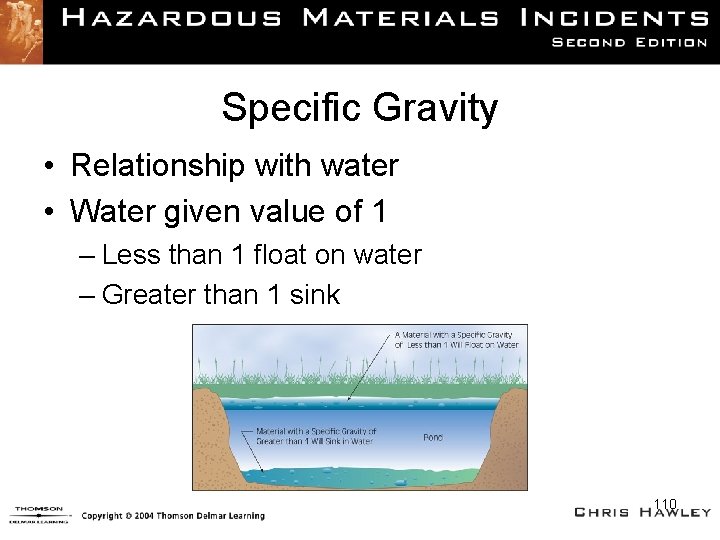
Specific Gravity • Relationship with water • Water given value of 1 – Less than 1 float on water – Greater than 1 sink 110
Corrosivity • Acids have a value of 0 -6. 9. • Bases are 7. 1 -14. • Neutral is a p. H of 7. 111
Common p. Hs • • Water – 7 Stomach acid – 2 Orange juice – 3 Drain cleaner – 14 Potassium hydroxide – 14 Sulfuric acid – 1 Pepsi – 2 Ammonia - 12 112
Chemical Reactivity • Exothermic – Releases heat • Endothermic – Absorbs heat 113
Flash Point • Temperature of the liquid when, while being heated, an ignition source is introduced into the vapor/air mixture located above the liquid, causing a flash fire 114
Common Flashpoints • • • Gasoline – 45º F Isopropyl alcohol – 53º F Acetone – -4º F Diesel fuel – >100º F Motor oil 300 – -450º F Xylene – 90º F 115
Autoignition Temperature • Material is heated and ignites on its own without the presence of an ignition source. 116
SADT • Self Accelerating Decomposition Temperature – Temperature at which the material will rapidly decompose • Usually reacting violently or burning 117
Flammable Range (1 of 2) • Lower Explosive Limit (LEL) – Minimum amount in air needed to have a fire • Upper Explosive Limit (UEL) – Maximum amount in air to have a fire • Range in between LEL and UEL is the flammable range. • Fires and explosions occur in the flammable range. 118
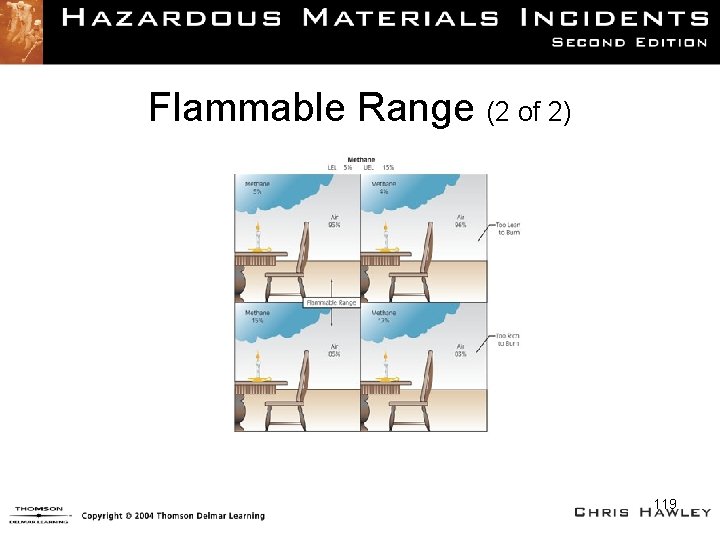
Flammable Range (2 of 2) 119
Toxic Products of Combustion • When most materials burn, smoke is usually very toxic. • Even wood, wool, hay, and many other common items present a significant risk. • Smoke from plastic burning is extremely toxic. • Respiratory protection should always be worn in the presence of smoke. 120
Summary • Hazard classes • Containers • Chemical and physical properties 121
- Slides: 121