
Hazardous Materials Common to Hospitals and Healthcare Facilities

- Slides: 8
Hazardous Materials Common to Hospitals and Healthcare Facilities • Medical Gases • Found in patient care and treatment areas • Include Oxygen, Carbon Dioxide and Nitrous Oxide
• Increase the intensity of fire Dangers of Medical Gases • Displaces oxygen which leads to breathing issues • Affect coordination and judgement
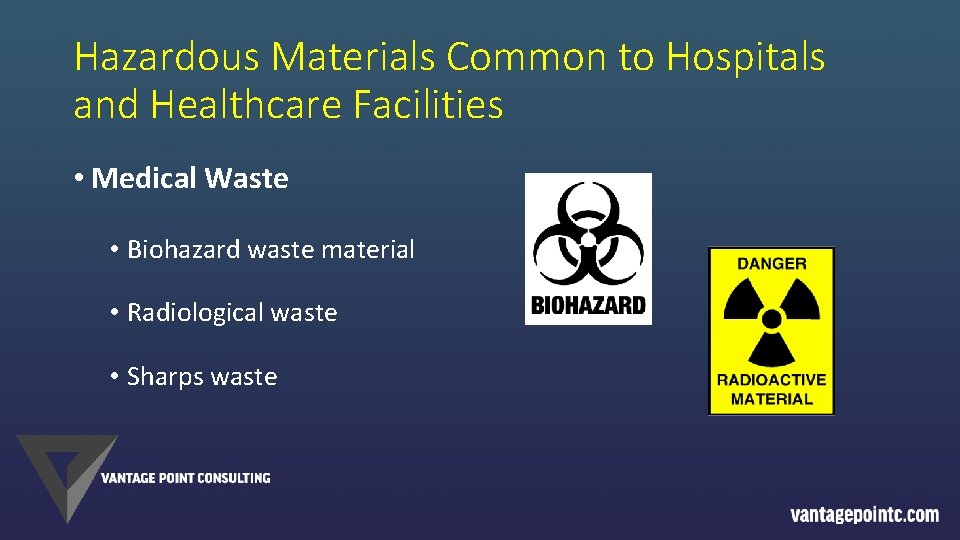
Hazardous Materials Common to Hospitals and Healthcare Facilities • Medical Waste • Biohazard waste material • Radiological waste • Sharps waste
• Products contaminated with blood and body fluids Dangers of Medical Waste • Radiation from machines utilizing nuclear or radioactive materials • Needle sticks from contaminated sharps
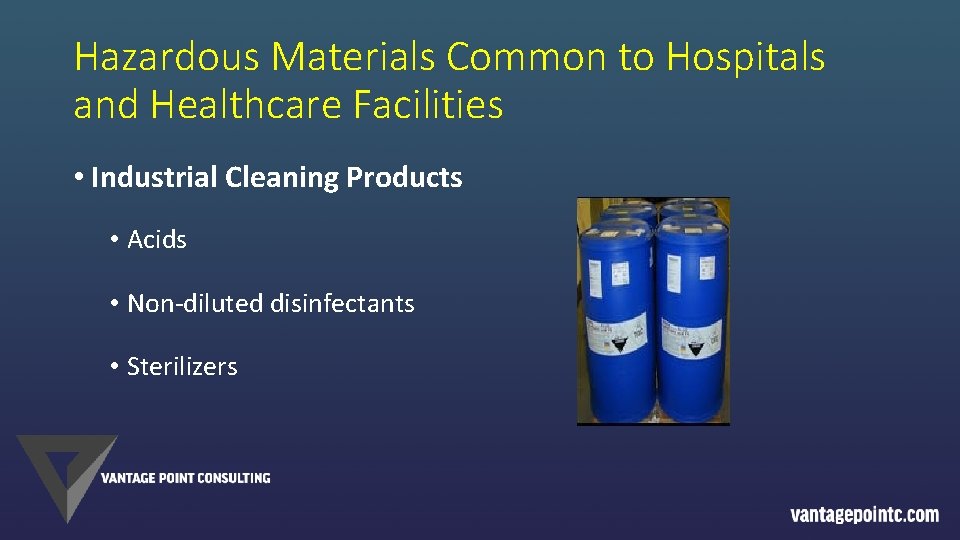
Hazardous Materials Common to Hospitals and Healthcare Facilities • Industrial Cleaning Products • Acids • Non-diluted disinfectants • Sterilizers
Dangers of Cleaning Products • Cleaning agents used in nonpatient care areas may be dangerous • Products may contain corrosives or other dangers products • Many types of gas sterilization products are poisonous
Additional Chances for Hazmat Contamination • Patients transported by EMS • Patients self-transported to hospital • Visitors • Contractors
Types of Exposure • Inhalation-Breathing fumes and vapors • Absorption-Skin contact • Ingestion-Eating • Injection-Skin penetration