
Hazardous area classification in areas containing multiple hazards
- Slides: 11
Hazardous area classification in areas containing multiple hazards A new procedure for the classification of hazardous areas in explosives buildings Matthew Cook This document is the property of Roxel and must not be copied, reproduced, duplicated nor disclosed to any third Party, nor used in any manner whatsoever without prior written consent of Roxel. © Roxel 2016
Purpose • Prevention of fire and explosions • Compliance with the COMAH regulations • Support for our FERA programme • Supporting the management of change programme • Purchase of new equipment • Review of our existing arrangements • Cost savings against our previous policy of blanket zoning • Cost savings due to design efficiencies; ‘we know the standard required. ’ This document is the property of Roxel and must not be copied, reproduced, duplicated nor disclosed to any third Party, nor used in any manner whatsoever without prior written consent of Roxel. © Roxel 2016 Page 2
Our process for change • HAZID leading to any or all of the following as required: • FERA • HAZOP and functional safety assessment • Explosive atmosphere risk assessment (the subject of this talk). This document is the property of Roxel and must not be copied, reproduced, duplicated nor disclosed to any third Party, nor used in any manner whatsoever without prior written consent of Roxel. © Roxel 2016 Page 3
Explosive atmosphere assessment hazards • Explosive vapours • Explosive dusts • Vapour of explosives • Dust of explosives This document is the property of Roxel and must not be copied, reproduced, duplicated nor disclosed to any third Party, nor used in any manner whatsoever without prior written consent of Roxel. © Roxel 2016 Page 4
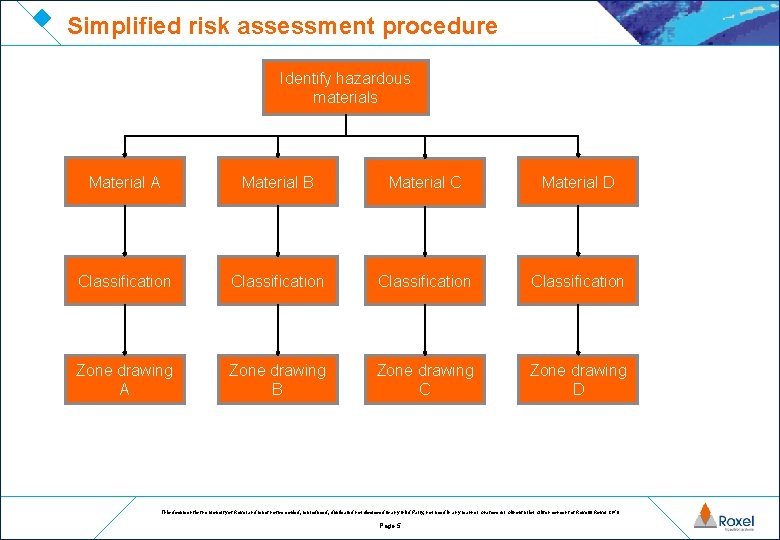
Simplified risk assessment procedure Identify hazardous materials Material A Material B Material C Material D Classification Zone drawing A Zone drawing B Zone drawing C Zone drawing D This document is the property of Roxel and must not be copied, reproduced, duplicated nor disclosed to any third Party, nor used in any manner whatsoever without prior written consent of Roxel. © Roxel 2016 Page 5
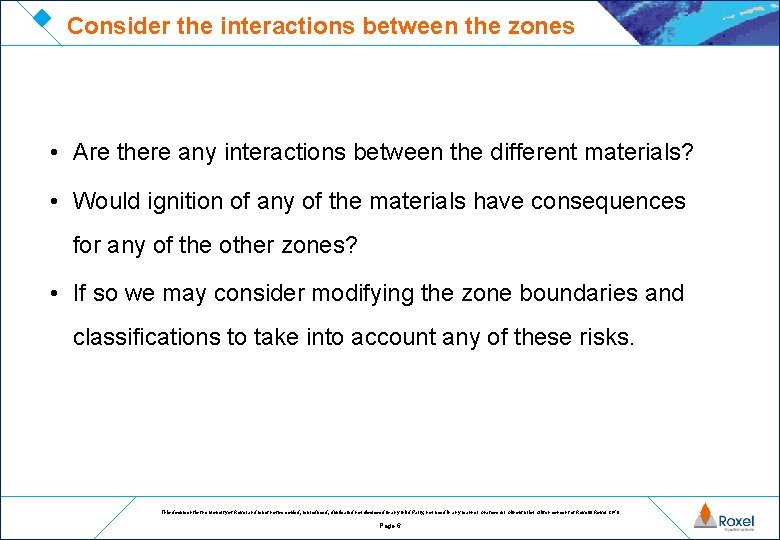
Consider the interactions between the zones • Are there any interactions between the different materials? • Would ignition of any of the materials have consequences for any of the other zones? • If so we may consider modifying the zone boundaries and classifications to take into account any of these risks. This document is the property of Roxel and must not be copied, reproduced, duplicated nor disclosed to any third Party, nor used in any manner whatsoever without prior written consent of Roxel. © Roxel 2016 Page 6
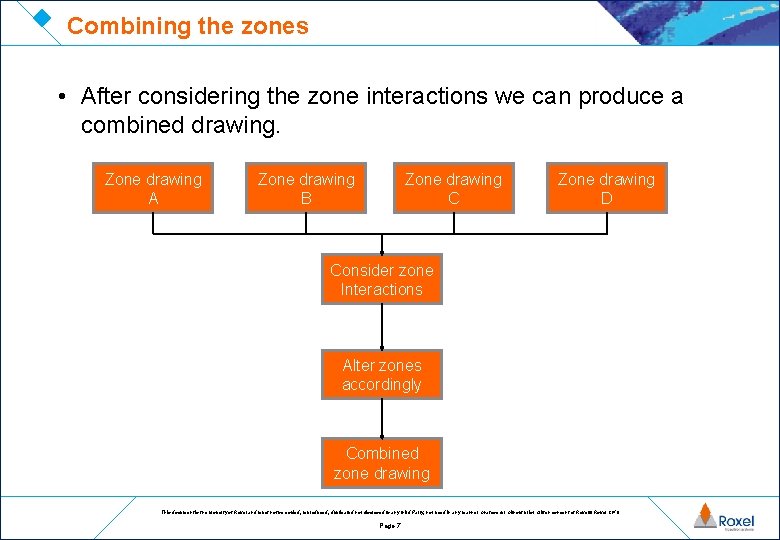
Combining the zones • After considering the zone interactions we can produce a combined drawing. Zone drawing A Zone drawing B Zone drawing C Zone drawing D Consider zone Interactions Alter zones accordingly Combined zone drawing This document is the property of Roxel and must not be copied, reproduced, duplicated nor disclosed to any third Party, nor used in any manner whatsoever without prior written consent of Roxel. © Roxel 2016 Page 7
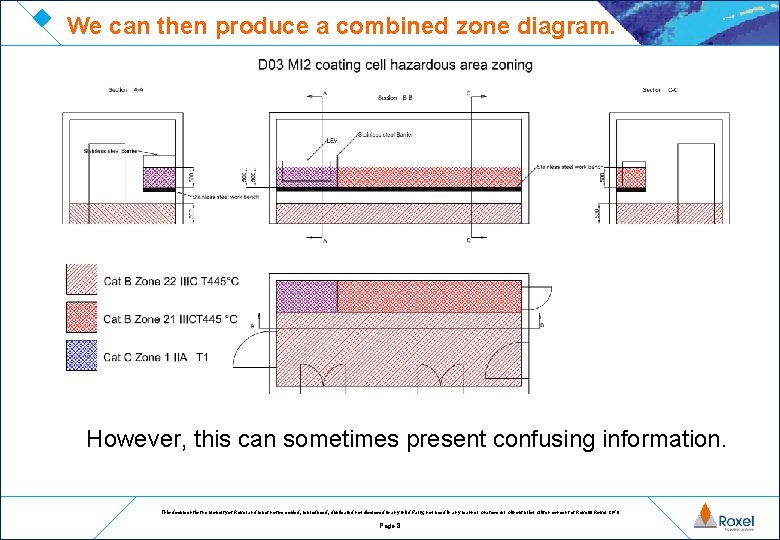
We can then produce a combined zone diagram. However, this can sometimes present confusing information. This document is the property of Roxel and must not be copied, reproduced, duplicated nor disclosed to any third Party, nor used in any manner whatsoever without prior written consent of Roxel. © Roxel 2016 Page 8
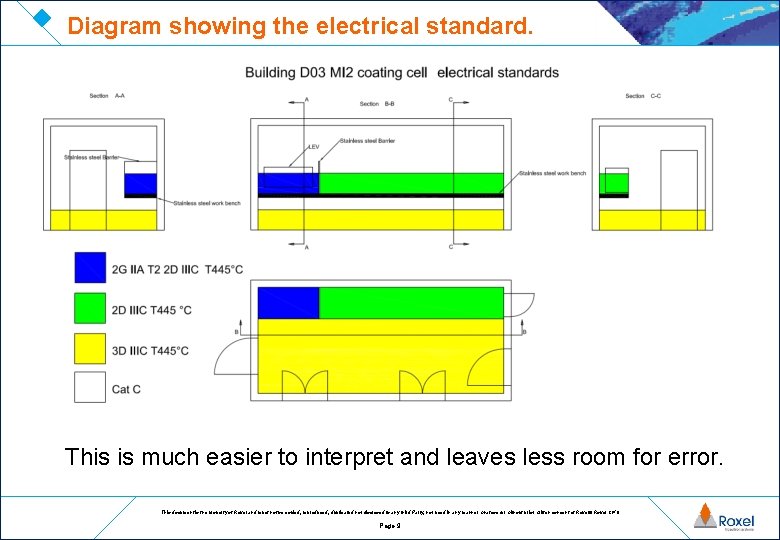
Diagram showing the electrical standard. This is much easier to interpret and leaves less room for error. This document is the property of Roxel and must not be copied, reproduced, duplicated nor disclosed to any third Party, nor used in any manner whatsoever without prior written consent of Roxel. © Roxel 2016 Page 9
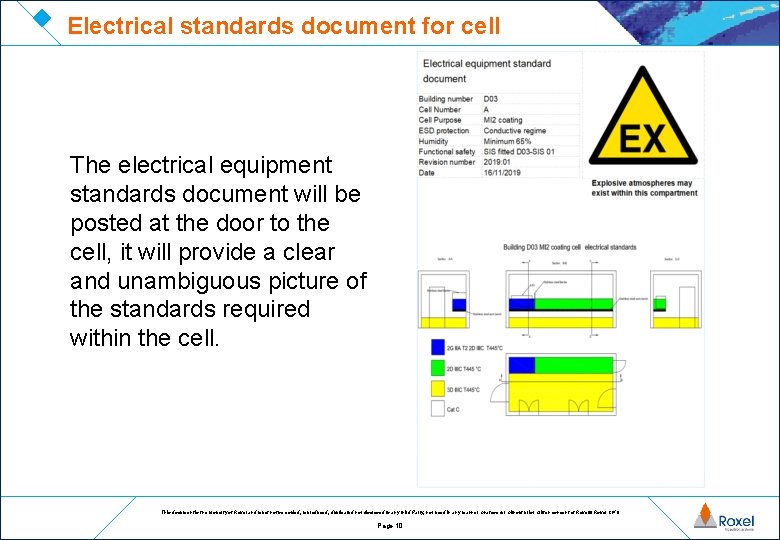
Electrical standards document for cell The electrical equipment standards document will be posted at the door to the cell, it will provide a clear and unambiguous picture of the standards required within the cell. This document is the property of Roxel and must not be copied, reproduced, duplicated nor disclosed to any third Party, nor used in any manner whatsoever without prior written consent of Roxel. © Roxel 2016 Page 10
Summary • Identify hazards • Carry out risk assessments • Produce electrical standards documents Unambiguous and easy to understand for designers, installers and inspectors of the electrical installation. This document is the property of Roxel and must not be copied, reproduced, duplicated nor disclosed to any third Party, nor used in any manner whatsoever without prior written consent of Roxel. © Roxel 2016 Page 11