
HAZARD COMMUNICATION OSHA Standard 29 CFR 1910 1200

- Slides: 24
HAZARD COMMUNICATION OSHA Standard 29 CFR 1910. 1200
Introduction The federal Hazard Communication Standard says that you have a “Right-To-Know” what hazards you face on the job and how to protect yourself against those hazards. That’s your Right-To-Know!
Purpose The standard was developed to make sure that everyone who works with any hazardous chemical is aware of the hazards and the necessary precautions.
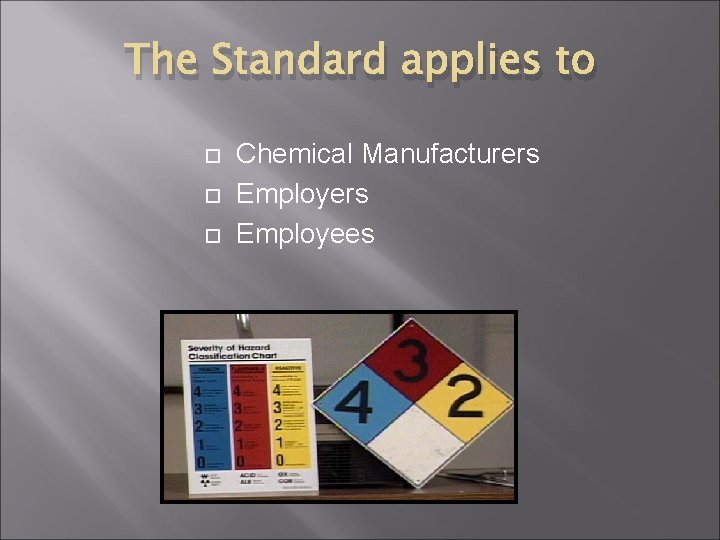
The Standard applies to Chemical Manufacturers Employees
Chemical Manufacturers Must determine the physical and health hazards of the products they make and provide that information to users. OSHA requires that the following information be included on all labels: Product name A warning statement, message or symbol Manufactures of hazardous chemical include a statement describing safe handling procedures.
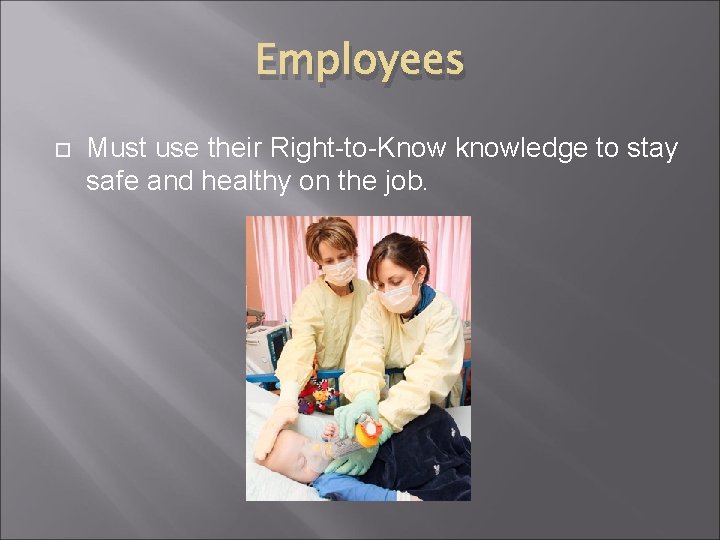
Employees Must use their Right-to-Know knowledge to stay safe and healthy on the job.
Why learn about chemicals? Chemicals have many valuable uses and are used often. But many chemicals also have hazards that can present risks to health and safety when they’re used on the job.
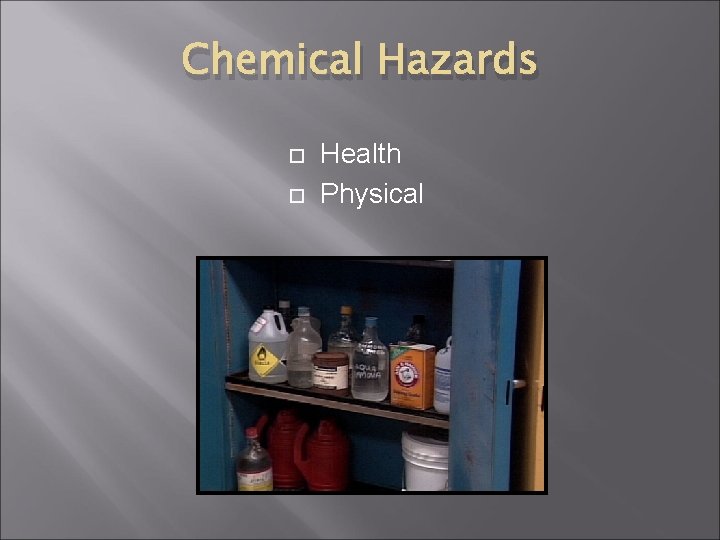
Chemical Hazards Health Physical
Health Hazards Acute Health Problems symptoms show up immediately after exposure Chronic Health Problems problems develop gradually from prolonged or repeated exposure
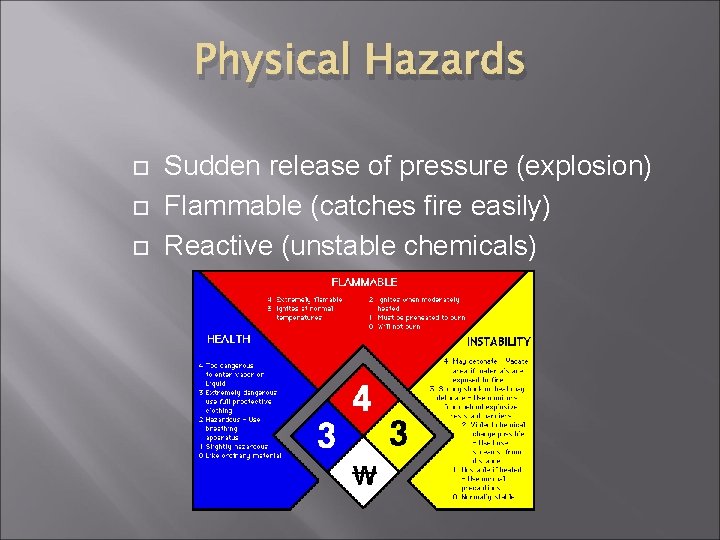
Physical Hazards Sudden release of pressure (explosion) Flammable (catches fire easily) Reactive (unstable chemicals)
Routes of Entry Inhalation Ingestion Injection Skin Contact or Absorption
5 Main Areas of Haz Com Inventory Labeling Material Safety Data Sheets Written Program Education and Training
Inventory Materials Inventory – Here is a list of the hazardous materials commonly used in a homecare setting. Albuteral sulfate Alcohol Oxygen Vinegar Oxygen Hydrogen peroxide Tobramycin Intal Control 111 Mercury Bleach And various household cleaners
Labeling Every container of hazardous chemicals is labeled by the manufacturer. Labels make it easy to find at a glance the chemical’s possible hazards and basic steps to take to protect yourself against those risks.
Parts of a Label Identity Name and Address of the Manufacturer Physical Hazards Health Hazards Proper Storage and Handling
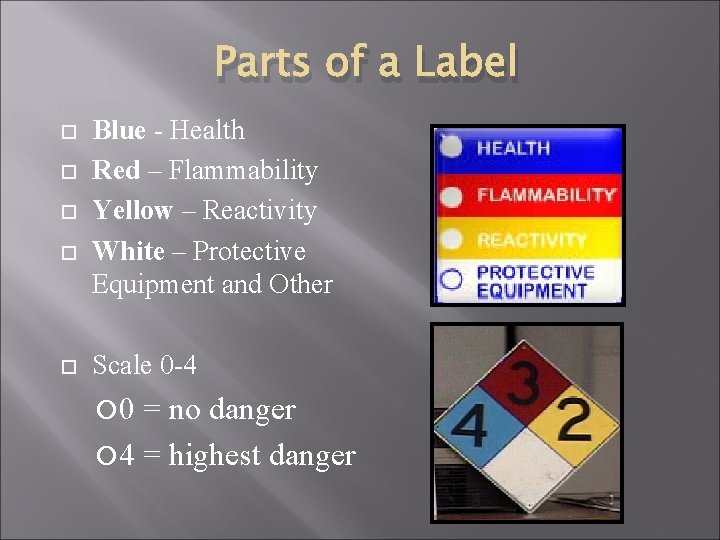
Parts of a Label Blue - Health Red – Flammability Yellow – Reactivity White – Protective Equipment and Other Scale 0 -4 0 = no danger 4 = highest danger
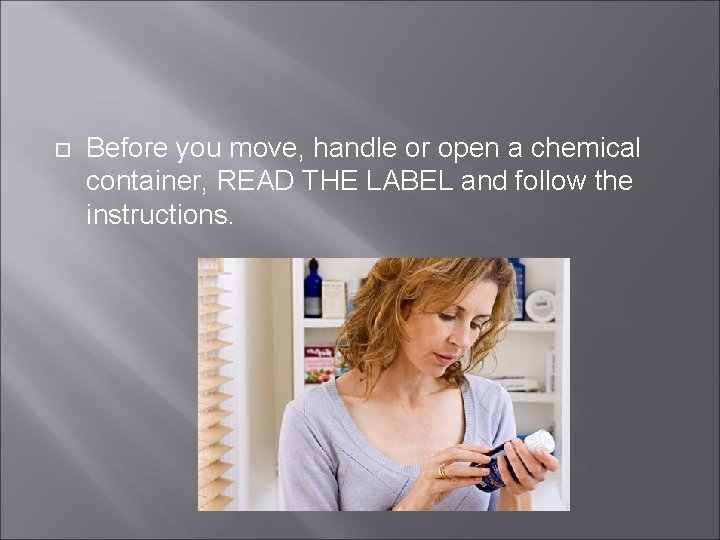
Before you move, handle or open a chemical container, READ THE LABEL and follow the instructions.
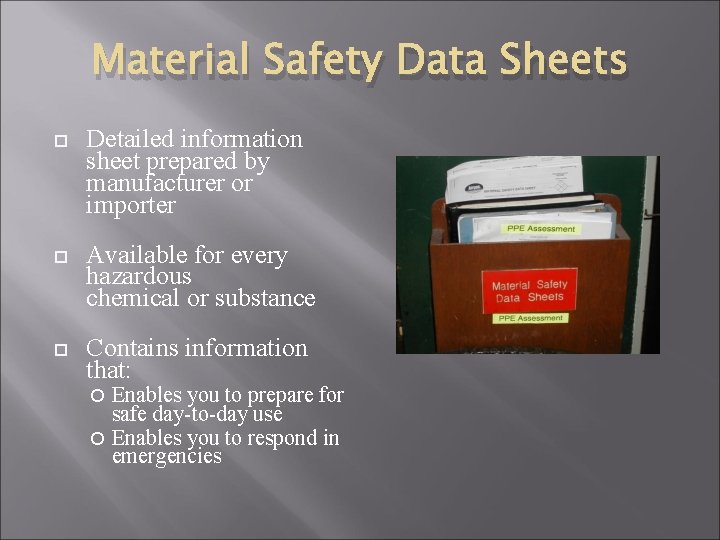
Material Safety Data Sheets Detailed information sheet prepared by manufacturer or importer Available for every hazardous chemical or substance Contains information that: Enables you to prepare for safe day-to-day use Enables you to respond in emergencies
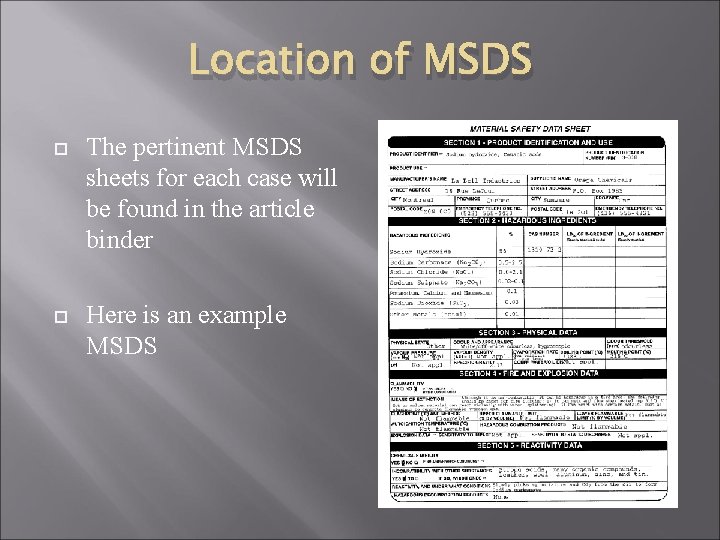
Contents of MSDS Chemical name -Health hazard data Company information -Reactivity data Hazardous ingredients Physical characteristics Fire and explosion data -Special precautions Safe handling practices PPE What to do in case of spills or leaks
Location of MSDS The pertinent MSDS sheets for each case will be found in the article binder Here is an example MSDS
Written Program PNS must have a written Hazard Communication Program Inform employees about standard Information and training on the Hazard Communication program Must be available to all employees
Education & Training PNS must provide employees with education and training on hazardous chemicals in their work area at the time of initial assignment, and whenever a new chemical hazard is introduced into the work area.
Summary You have a right to know about the chemical hazards in your workplace. And you have a duty to use that right to learn about and protect yourself from those hazards.
After completing the training module, please take the corresponding quiz, and complete the acknowledgement found under “Educational” on the PNS Website.