
Hazard Communication Awareness Training Your Right to Know
- Slides: 27
Hazard Communication Awareness Training Your Right to Know & Understand
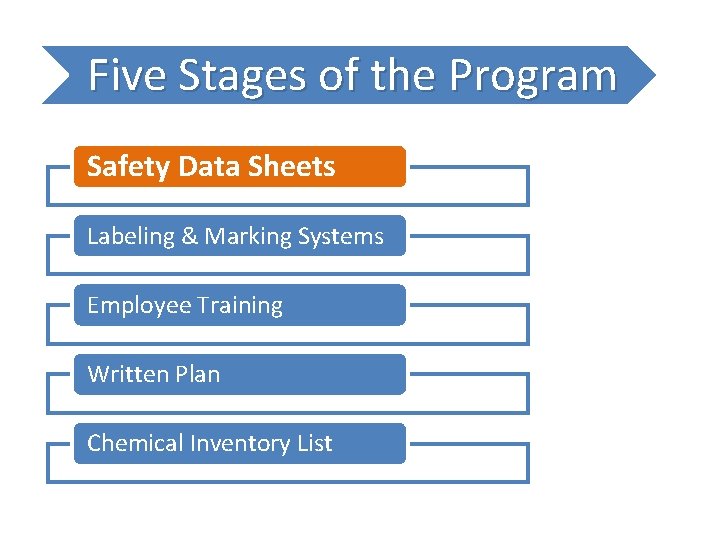
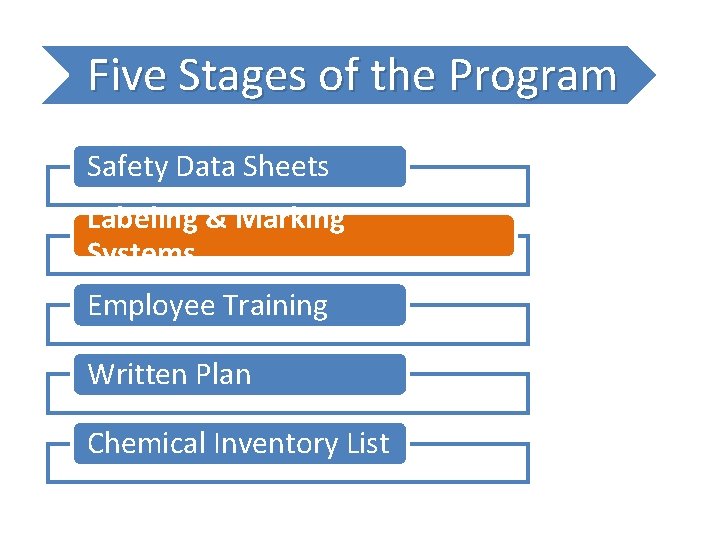
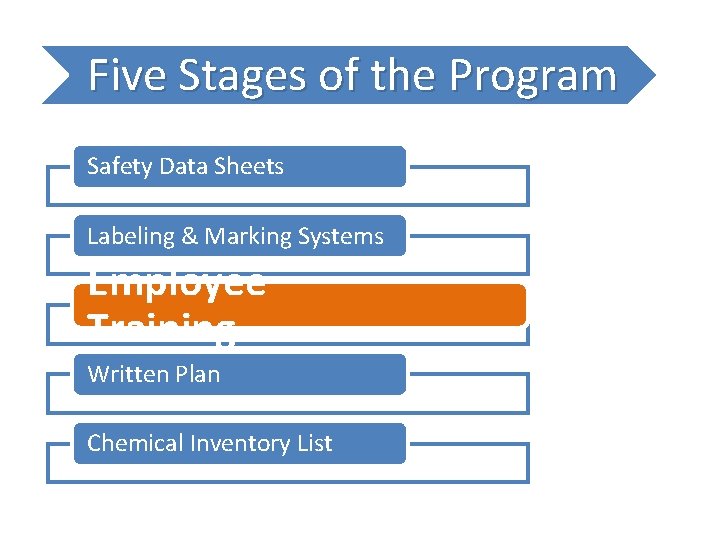
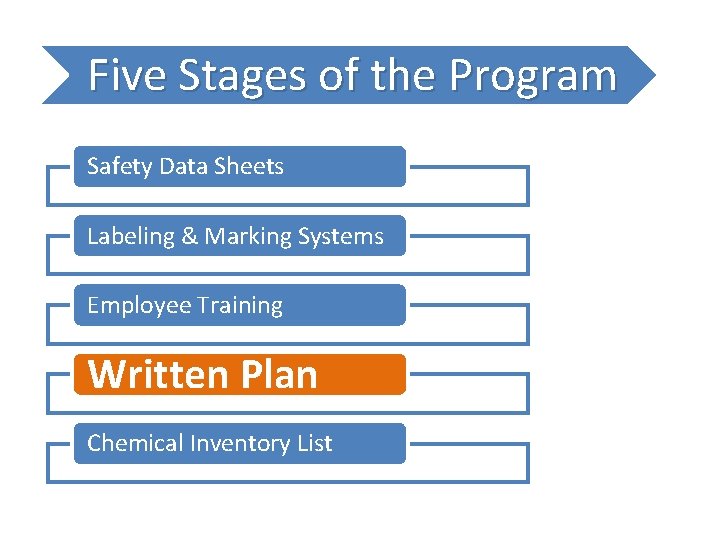
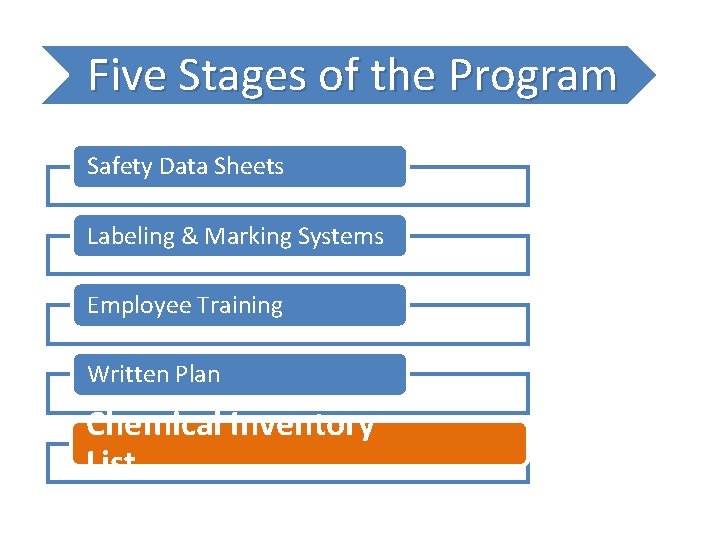
Five Stages of the Program Safety Data Sheets Labeling & Marking Systems Employee Training Written Plan Chemical Inventory List
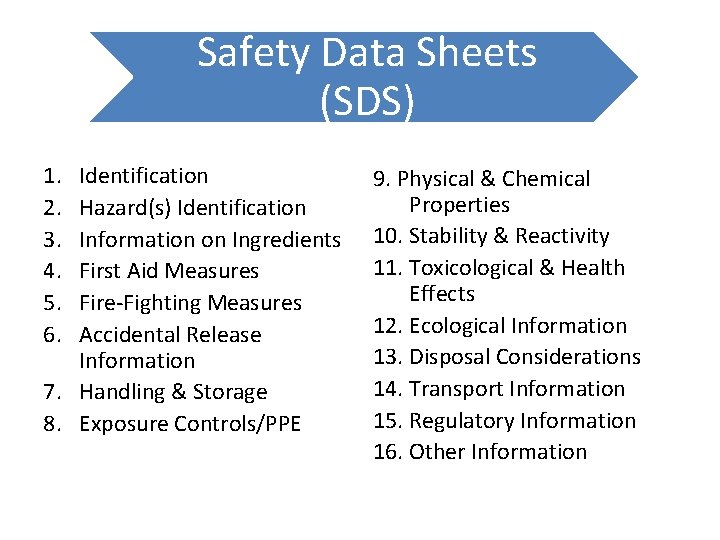
Safety Data Sheets (SDS) 1. 2. 3. 4. 5. 6. Identification Hazard(s) Identification Information on Ingredients First Aid Measures Fire-Fighting Measures Accidental Release Information 7. Handling & Storage 8. Exposure Controls/PPE 9. Physical & Chemical Properties 10. Stability & Reactivity 11. Toxicological & Health Effects 12. Ecological Information 13. Disposal Considerations 14. Transport Information 15. Regulatory Information 16. Other Information
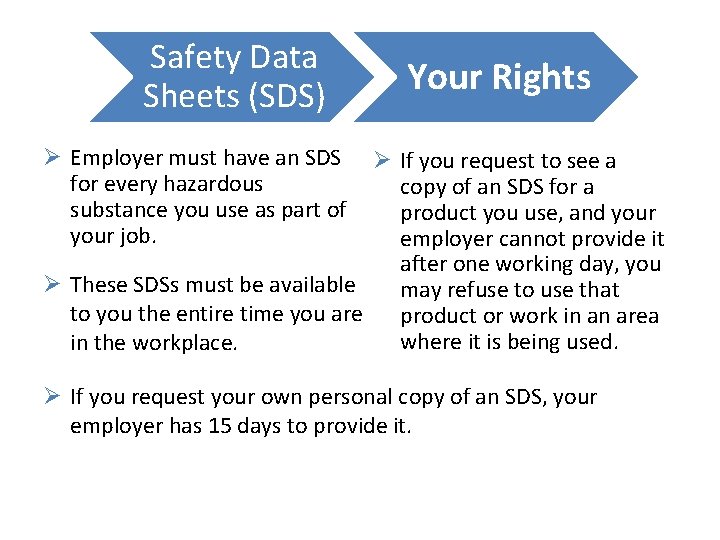
Safety Data Sheets (SDS) Your Rights Ø Employer must have an SDS for every hazardous substance you use as part of your job. Ø If you request to see a copy of an SDS for a product you use, and your employer cannot provide it after one working day, you Ø These SDSs must be available may refuse to use that to you the entire time you are product or work in an area where it is being used. in the workplace. Ø If you request your own personal copy of an SDS, your employer has 15 days to provide it.
Five Stages of the Program Safety Data Sheets Labeling & Marking Systems Employee Training Written Plan Chemical Inventory List
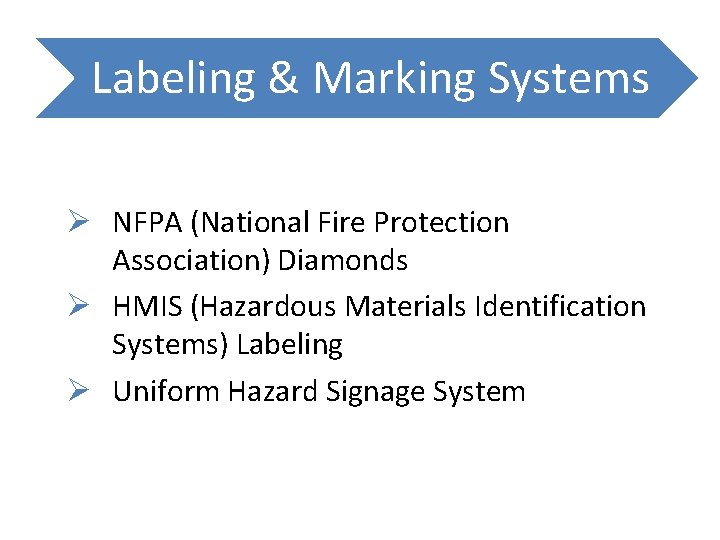
Labeling & Marking Systems Ø NFPA (National Fire Protection Association) Diamonds Ø HMIS (Hazardous Materials Identification Systems) Labeling Ø Uniform Hazard Signage System
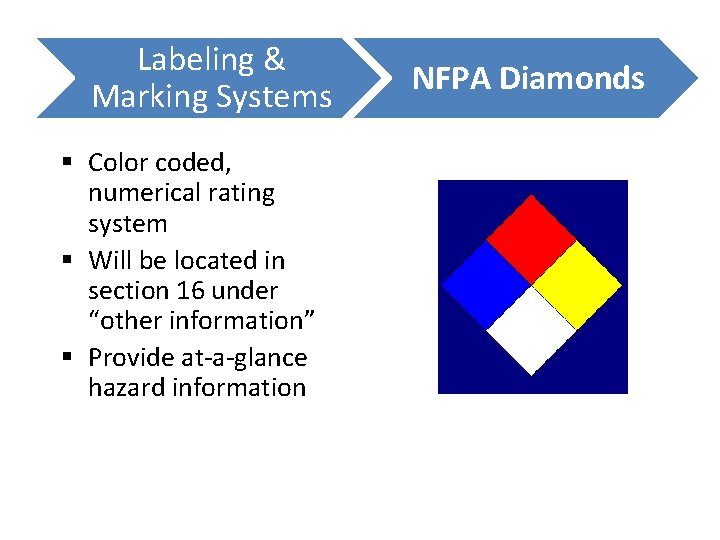
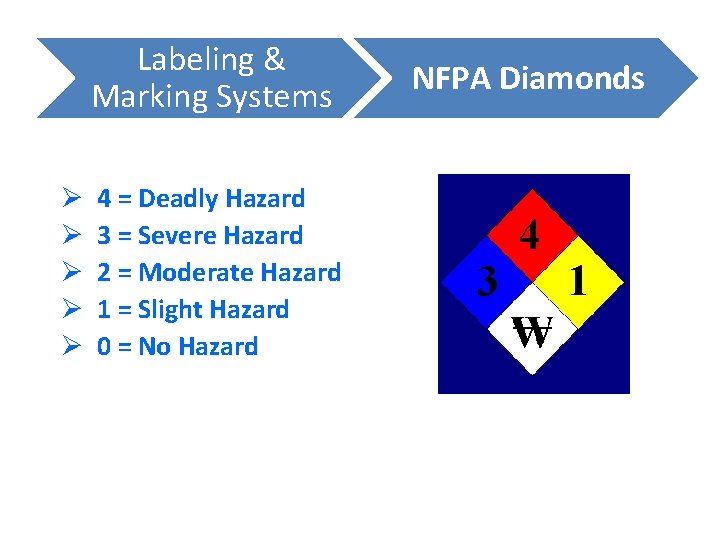
Labeling & Marking Systems § Color coded, numerical rating system § Will be located in section 16 under “other information” § Provide at-a-glance hazard information NFPA Diamonds
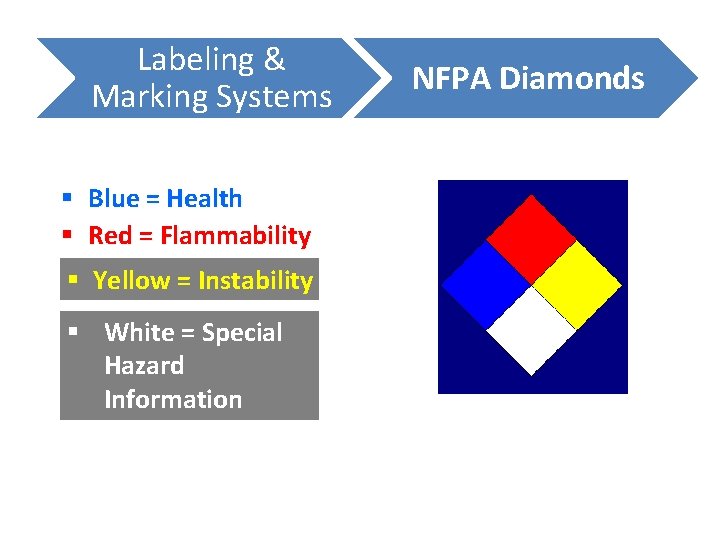
Labeling & Marking Systems § Blue = Health § Red = Flammability § Yellow = Instability § White = Special Hazard Information NFPA Diamonds
Labeling & Marking Systems Ø Ø Ø 4 = Deadly Hazard 3 = Severe Hazard 2 = Moderate Hazard 1 = Slight Hazard 0 = No Hazard NFPA Diamonds
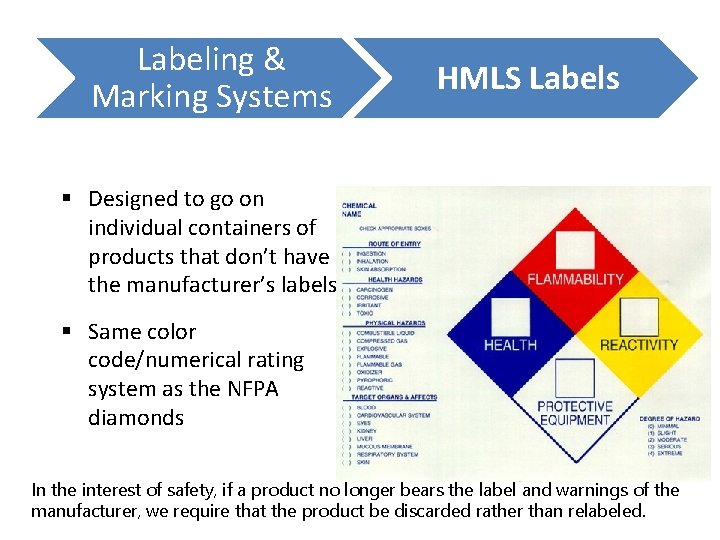
Labeling & Marking Systems HMLS Labels § Designed to go on individual containers of products that don’t have the manufacturer’s labels § Same color code/numerical rating system as the NFPA diamonds In the interest of safety, if a product no longer bears the label and warnings of the manufacturer, we require that the product be discarded rather than relabeled.
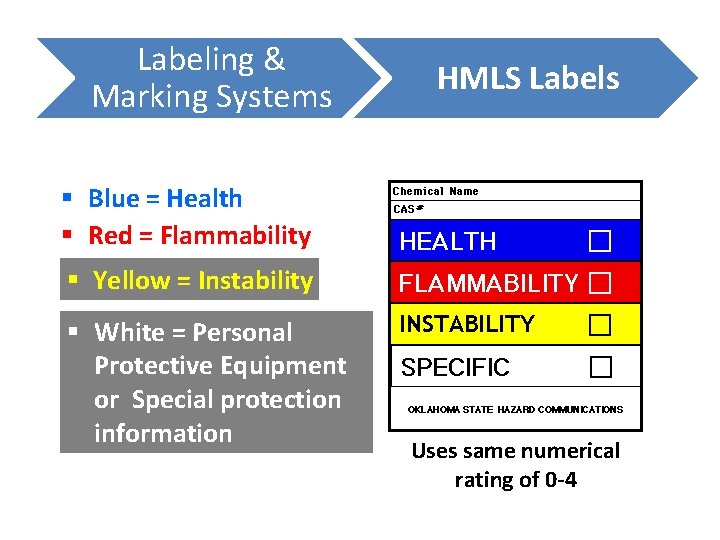
Labeling & Marking Systems HMLS Labels § Blue = Health § Red = Flammability § Yellow = Instability § White = Personal Protective Equipment or Special protection information Uses same numerical rating of 0 -4
Labeling & Marking Systems Chemical Labels You should never have any unlabeled containers in your workplace! This includes ALL containers, even those THOUGHT to contain consumable liquids!
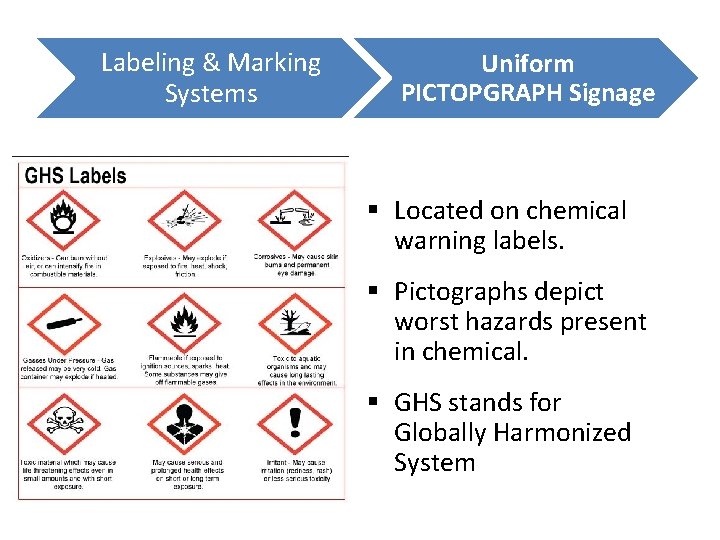
Labeling & Marking Systems Uniform PICTOPGRAPH Signage § Located on chemical warning labels. § Pictographs depict worst hazards present in chemical. § GHS stands for Globally Harmonized System
Labeling & Marking Systems Uniform Signage . Always check with the appropriate personnel (maintenance manager, safety manager, supervisor, etc. ) before performing work or maintenance with an unfamiliar chemical!
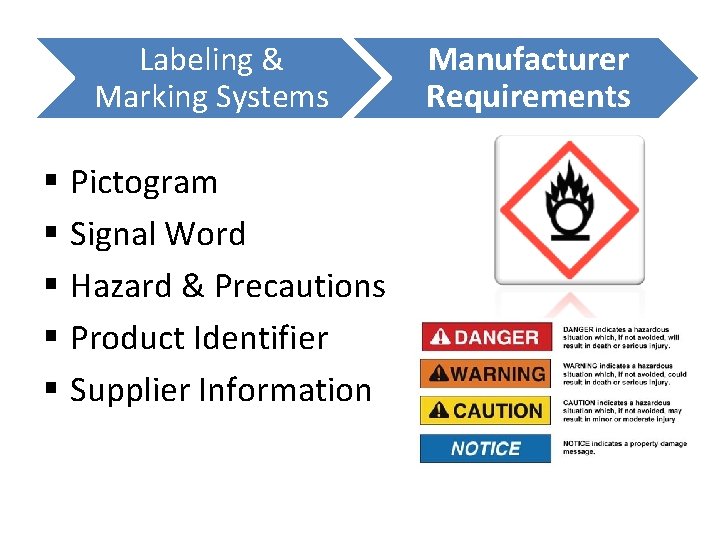
Labeling & Marking Systems § Pictogram § Signal Word § Hazard & Precautions § Product Identifier § Supplier Information Manufacturer Requirements
Five Stages of the Program Safety Data Sheets Labeling & Marking Systems Employee Training Written Plan Chemical Inventory List
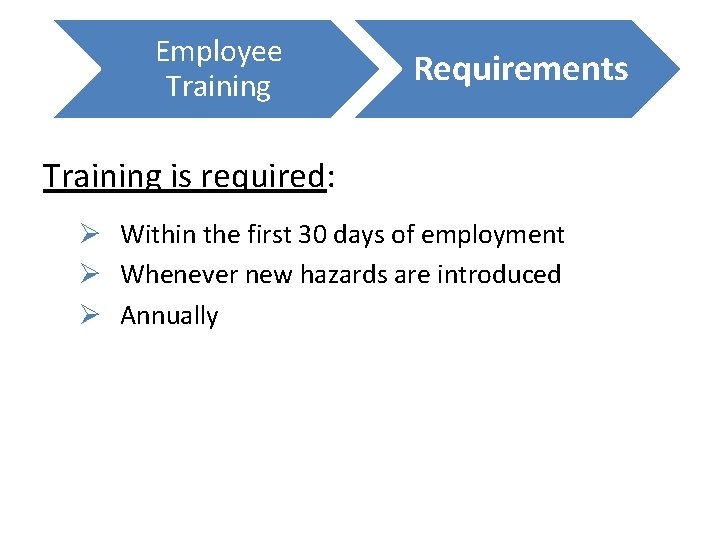
Employee Training Requirements Training is required: Ø Within the first 30 days of employment Ø Whenever new hazards are introduced Ø Annually
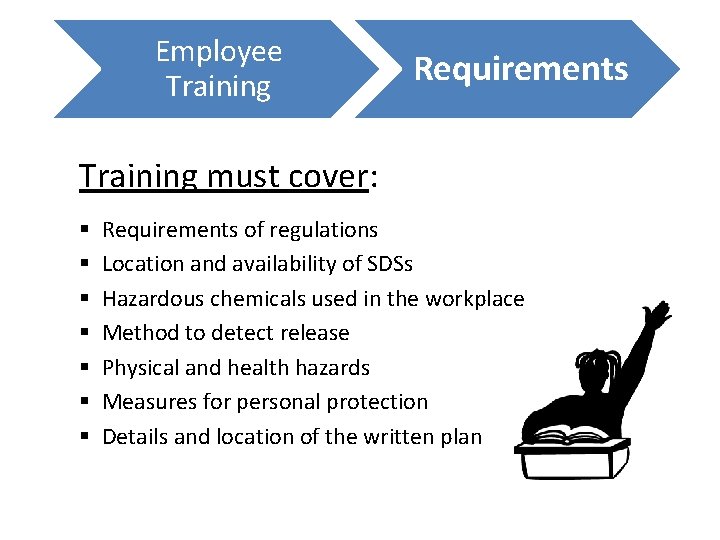
Employee Training Requirements Training must cover: § § § § Requirements of regulations Location and availability of SDSs Hazardous chemicals used in the workplace Method to detect release Physical and health hazards Measures for personal protection Details and location of the written plan
Five Stages of the Program Safety Data Sheets Labeling & Marking Systems Employee Training Written Plan Chemical Inventory List
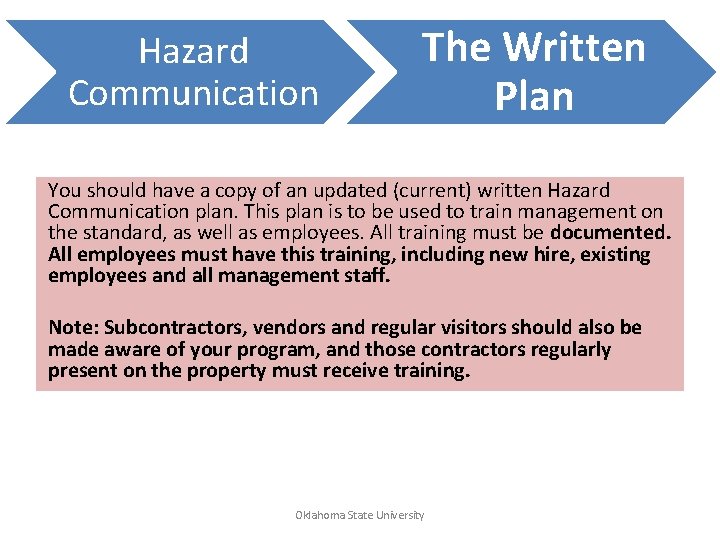
Hazard Communication The Written Plan You should have a copy of an updated (current) written Hazard Communication plan. This plan is to be used to train management on the standard, as well as employees. All training must be documented. All employees must have this training, including new hire, existing employees and all management staff. Note: Subcontractors, vendors and regular visitors should also be made aware of your program, and those contractors regularly present on the property must receive training. Oklahoma State University
Hazard Communication The Written Plan Part of the Written Plan is that the employee notify their supervisor should they be exposed to a potentially hazardous chemical in the workplace. The supervisor should immediately refer the employee for a medical evaluation and treatment, if necessary.
Five Stages of the Program Safety Data Sheets Labeling & Marking Systems Employee Training Written Plan Chemical Inventory List
Hazard Communication Chemical Inventory List Federal law requires an inventory of all chemicals at the location, and that it be updated at least annually. In order to be effective, the inventory list should be updated whenever a new chemical is introduced into the workplace. A regular method of identifying random chemicals and checking for their documented presence should be implelented.
Hazard Communication Chemical Inventory List This list is used to determine correct signage for chemicals stored, and is made available to the fire department for their use during emergencies.
Hazard Communication Chemical Inventory List Information on the new HAZCOM regulations and standards can be found on the Keolis Safety Resource Center.
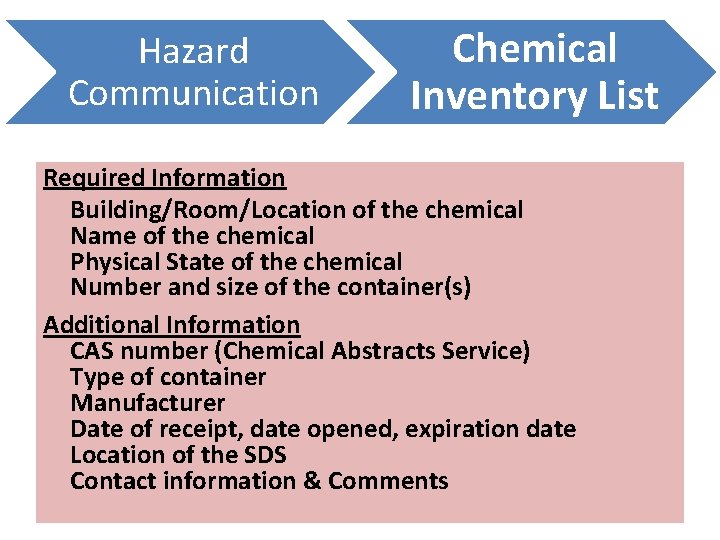
Hazard Communication Chemical Inventory List Required Information Building/Room/Location of the chemical Name of the chemical Physical State of the chemical Number and size of the container(s) Additional Information CAS number (Chemical Abstracts Service) Type of container Manufacturer Date of receipt, date opened, expiration date Location of the SDS Contact information & Comments
Keolis Transit America Hazard Communication Be SAFE – not sorry