
Hazard Communication 29 CFR 1910 1200 1 Introduction
- Slides: 32
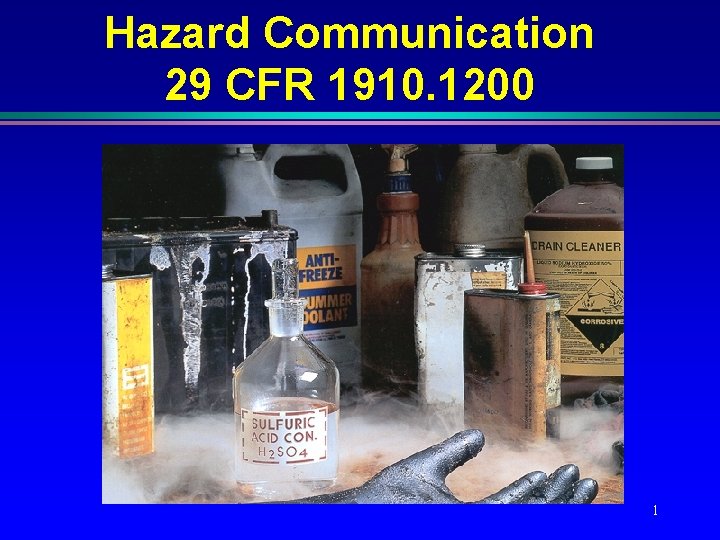
Hazard Communication 29 CFR 1910. 1200 1
Introduction l What is Hazard Communication? l Why are we doing it? l What do we have to do? 2
What is Hazard Communication? l A written program to inform workers of the chemicals hazards they work with or may be exposed to on the job. l To list and explain control measures that may protect exposed workers. 3
Why Are We Doing It? l To keep employees Informed and safe l To comply with OSHA requirements 4
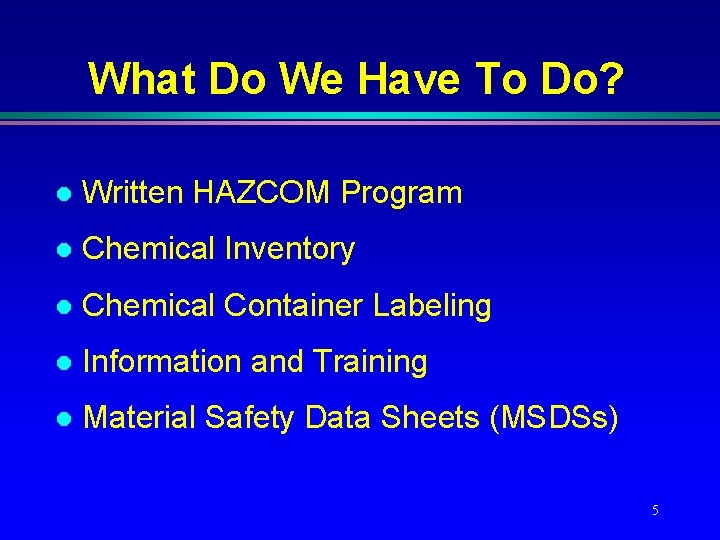
What Do We Have To Do? l Written HAZCOM Program l Chemical Inventory l Chemical Container Labeling l Information and Training l Material Safety Data Sheets (MSDSs) 5
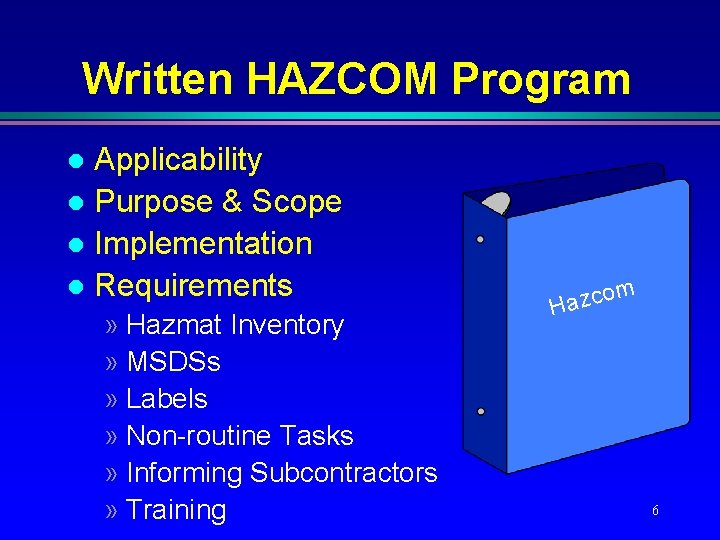
Written HAZCOM Program Applicability l Purpose & Scope l Implementation l Requirements l » Hazmat Inventory » MSDSs » Labels » Non-routine Tasks » Informing Subcontractors » Training m o c z a H 6
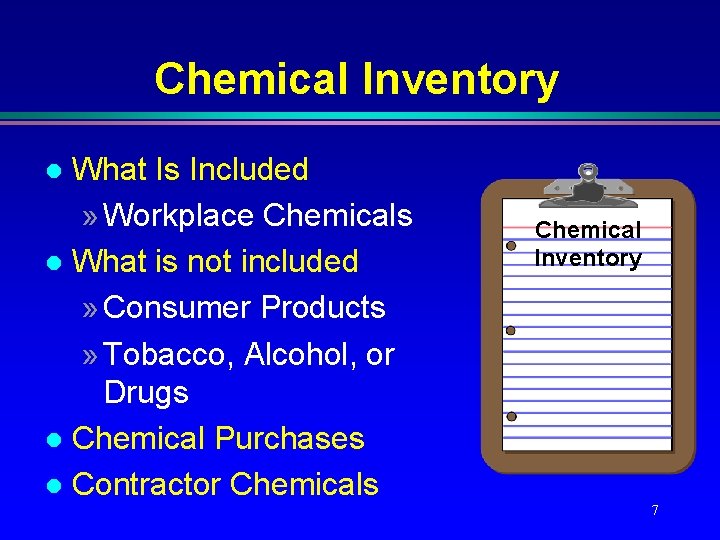
Chemical Inventory What Is Included » Workplace Chemicals l What is not included » Consumer Products » Tobacco, Alcohol, or Drugs l Chemical Purchases l Contractor Chemicals l Chemical Inventory 7
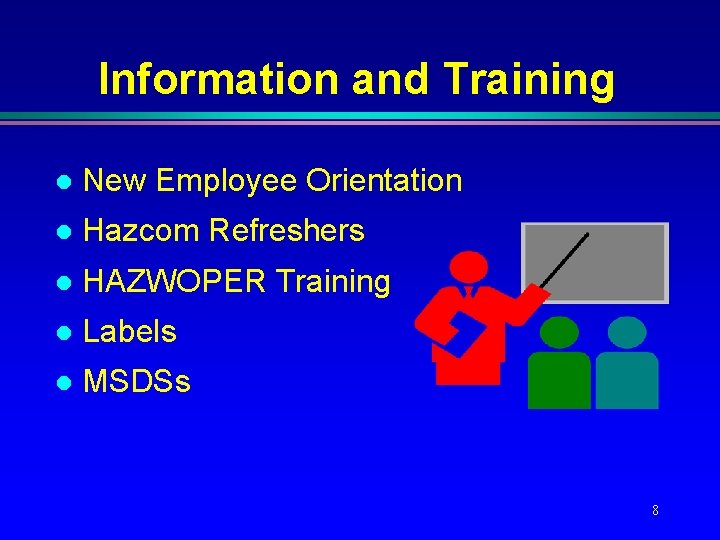
Information and Training l New Employee Orientation l Hazcom Refreshers l HAZWOPER Training l Labels l MSDSs 8
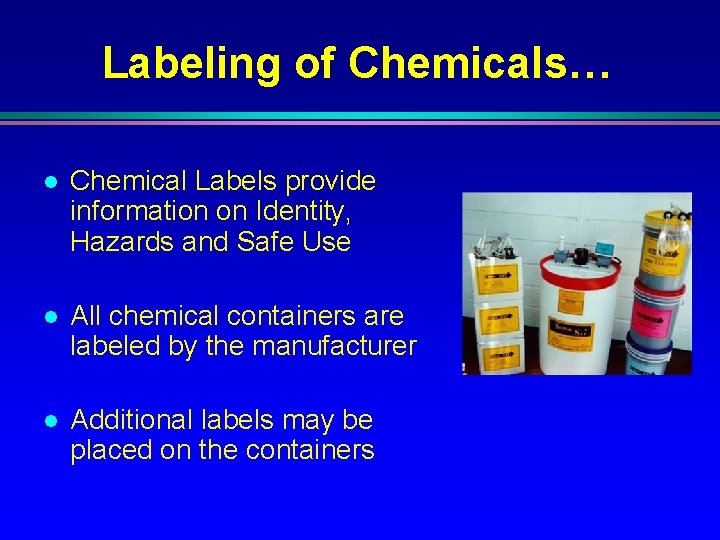
Labeling of Chemicals… l Chemical Labels provide information on Identity, Hazards and Safe Use l All chemical containers are labeled by the manufacturer l Additional labels may be placed on the containers
Labeling of Chemicals… l If chemicals are placed in another container, the new container must have a label on it. l All containers must be properly labeled » Chemical Name » Hazard Warning » Name and Address of Manufacturer
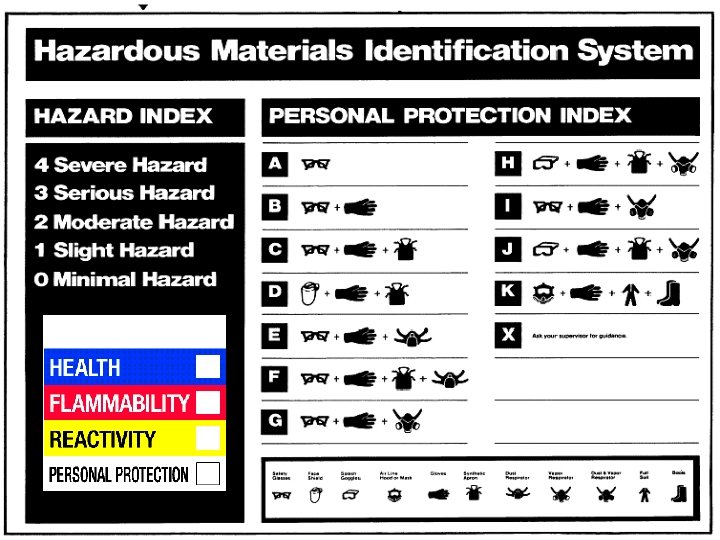
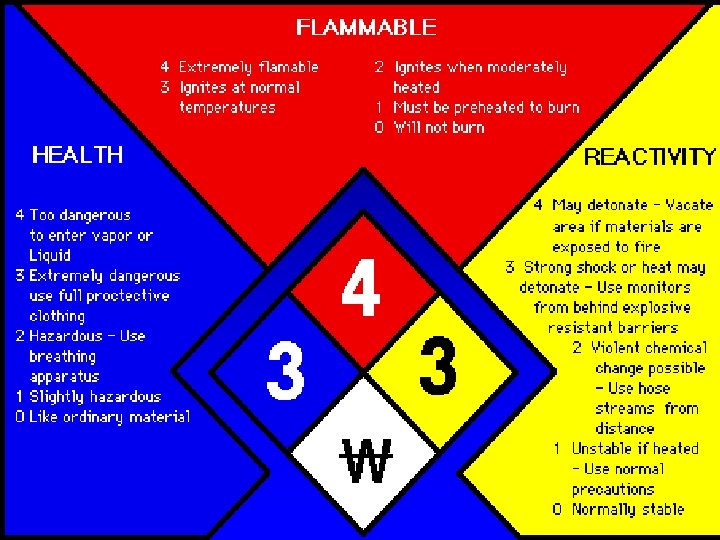
Uniform Labeling System… l “Uniform Labels” are used to ensure we have one labeling system. l 2 Basic “Uniform Labels” » HMIS - Hazardous Material Identification » NFPA - National Fire protection Association – Both types must identify the – chemical name and hazards
HMIS & NFPA labels l Both labels are very similar l Both use colored boxes to identify specific hazards l Numbers or codes in the boxes tell you the hazard value l higher number = higher hazard
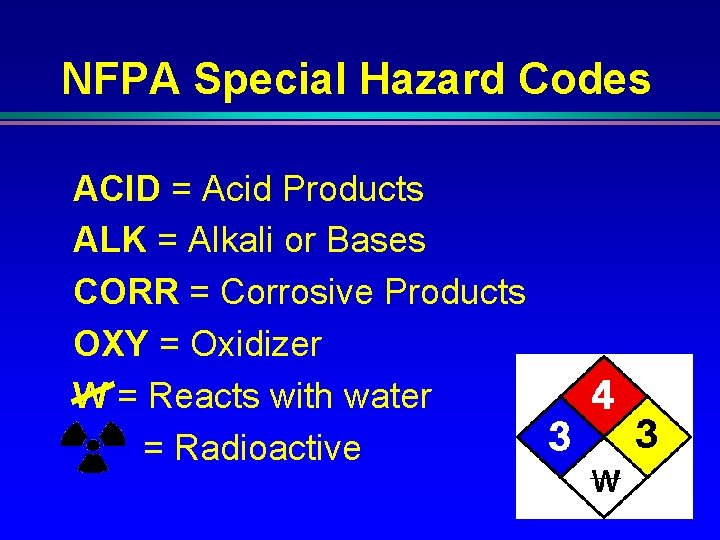
NFPA Special Hazard Codes ACID = Acid Products ALK = Alkali or Bases CORR = Corrosive Products OXY = Oxidizer W = Reacts with water = Radioactive
Information and Training l How to Detect Chemicals l Chemical Hazards l How to Protect Yourself 16
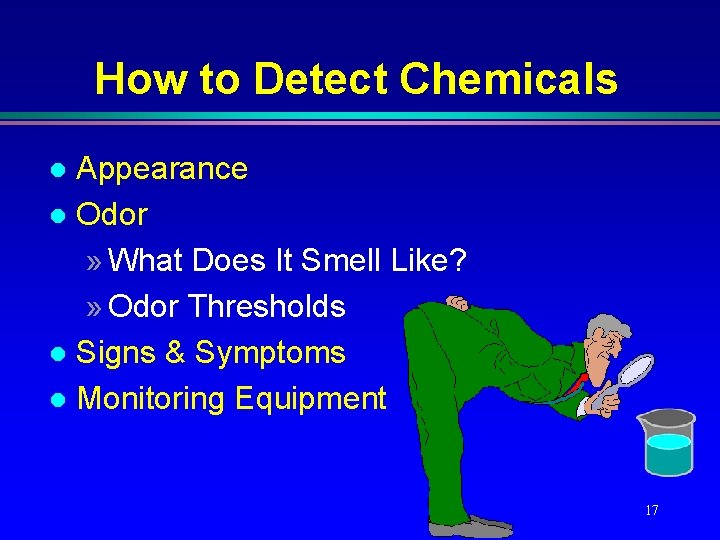
How to Detect Chemicals Appearance l Odor » What Does It Smell Like? » Odor Thresholds l Signs & Symptoms l Monitoring Equipment l 17
Chemical Hazards l Physical Hazards l Health Hazards 18
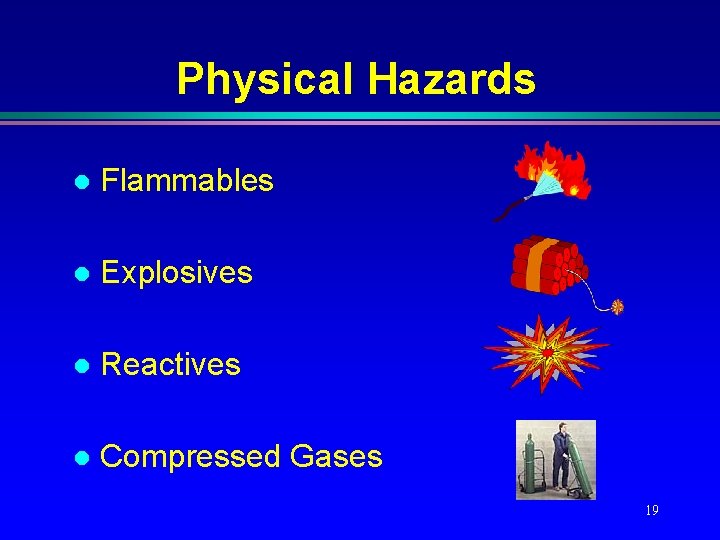
Physical Hazards l Flammables l Explosives l Reactives l Compressed Gases 19
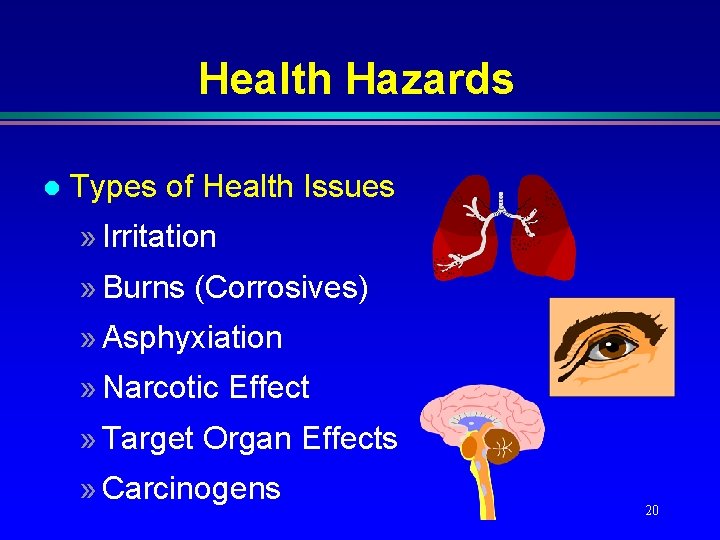
Health Hazards l Types of Health Issues » Irritation » Burns (Corrosives) » Asphyxiation » Narcotic Effect » Target Organ Effects » Carcinogens 20
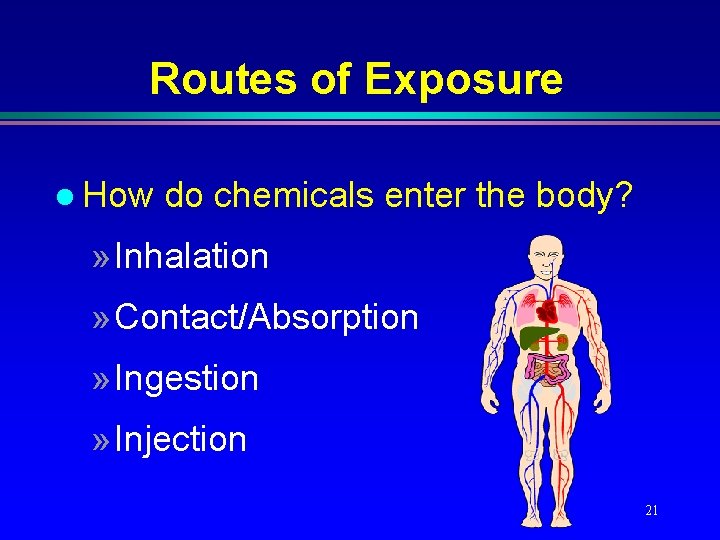
Routes of Exposure l How do chemicals enter the body? » Inhalation » Contact/Absorption » Ingestion » Injection 21
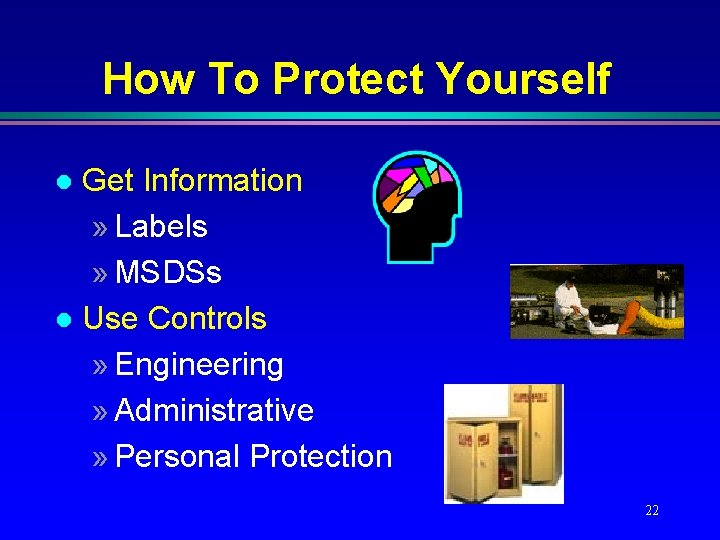
How To Protect Yourself Get Information » Labels » MSDSs l Use Controls » Engineering » Administrative » Personal Protection l 22
How To Protect Yourself l Follow Safe Work Practices » Keep containers closed » Minimize the amount of chemicals you use » Avoid skin contact » Avoid breathing vapors » Don’t eat or drink around chemicals » Wear Protective Clothing 23
Material Safety Data Sheets l Show chemical safety information l Each chemical has a separate MSDS l Prepared by the chemical manufacturer or importer l Must be in English and include information regarding the specific chemical identity and common names l Must be readily accessible to employees in their work area at all times during work hours 24
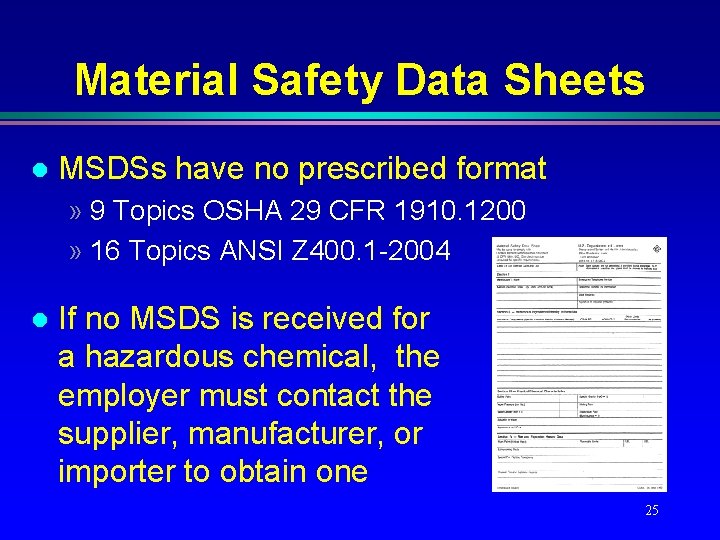
Material Safety Data Sheets l MSDSs have no prescribed format » 9 Topics OSHA 29 CFR 1910. 1200 » 16 Topics ANSI Z 400. 1 -2004 l If no MSDS is received for a hazardous chemical, the employer must contact the supplier, manufacturer, or importer to obtain one 25
Each MSDS tells you… 1. Chemical Identity 2. Manufacturers name and contact info, emergency phone numbers, date the MSDS was written 3. Hazardous ingredients / identity info 4. Physical & chemical characteristics
Each MSDS tells you… 5. Fire and explosion hazard data 6. Reactivity data 7. Health Hazard data 8. Precautions for safe handling 9. Control measures
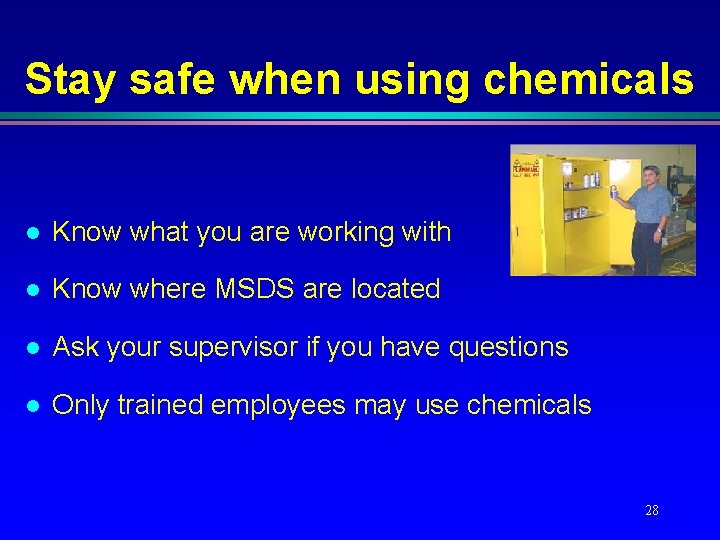
Stay safe when using chemicals l Know what you are working with l Know where MSDS are located l Ask your supervisor if you have questions l Only trained employees may use chemicals 28
Stay safe when using chemicals l Make sure all containers are properly labeled l Use the proper protective equipment l Store chemicals only in approved areas l Immediately report leaks and spills l Dispose of all waste chemicals and containers properly 29
Training is required for employees who are exposed to hazardous chemicals in their work area: l At the time of initial assignment l Whenever a new hazard is introduced into their work area l At least annually 30
Training Employees must be informed of: l The Haz. Com standard and its requirements l Operations in their work areas where hazardous chemicals are present l Location and availability of the written hazard communications program, lists of hazardous chemicals, and the required MSDSs 31
Summary l OSHA’s Hazard Communication Standard is based on one simple concept. . . » employees have both a right and a need to know about the hazards and chemicals they are exposed to in the workplace l Employees also need to know what protective measures are available to prevent adverse effects from occurring 32