
Hawkley Hall High School An outstanding school providing
- Slides: 13
Hawkley Hall High School ‘An outstanding school providing an excellent quality of education and care for its students’. Wellbeing for exams Session aims: To explore how children’s emotional resilience and wellbeing can be supported through their final GCSE year. Alison O’Brien – Assistant Headteacher (Pastoral) Chloe Ali- Assistant Head of Y 7/Mental Health Lead
True or false? • Children with better health and wellbeing are likely to achieve better academically. • Effective social and emotional competencies are associated with greater health and wellbeing. • A positive association exists between academic attainment and physical activity levels of pupils. • Positive mental health reduces risky behaviours, increases earning potential and improves better resilience for life.
True or false? E U • Children with better health and wellbeing are likely to achieve better academically. • Effective social and emotional competencies are associated with greater health and wellbeing. • A positive association exists between academic attainment and physical activity levels of pupils. • Positive mental health reduces risky behaviours, increases earning potential and improves better resilience for life. R T
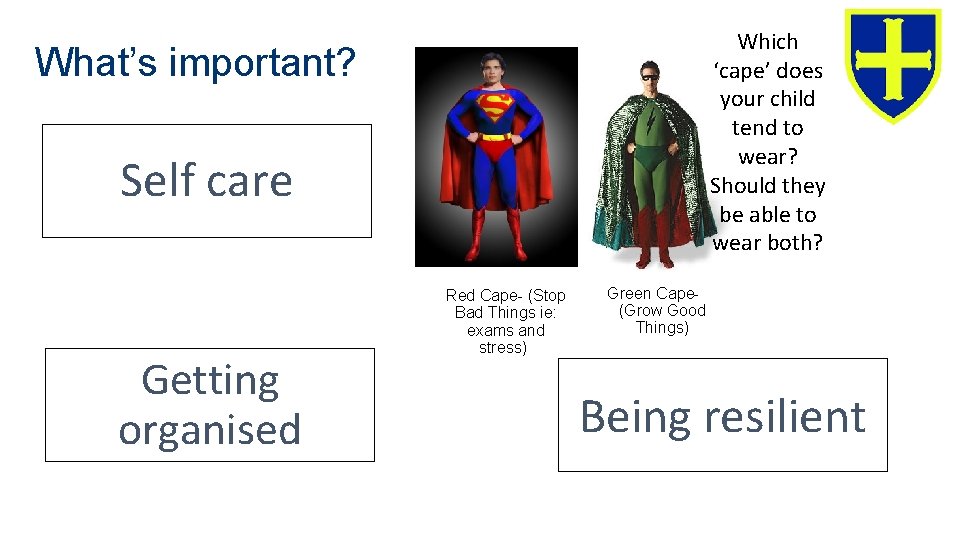
Which ‘cape’ does your child tend to wear? Should they be able to wear both? What’s important? Self care Getting organised Red Cape- (Stop Bad Things ie: exams and stress) Green Cape(Grow Good Things) Being resilient
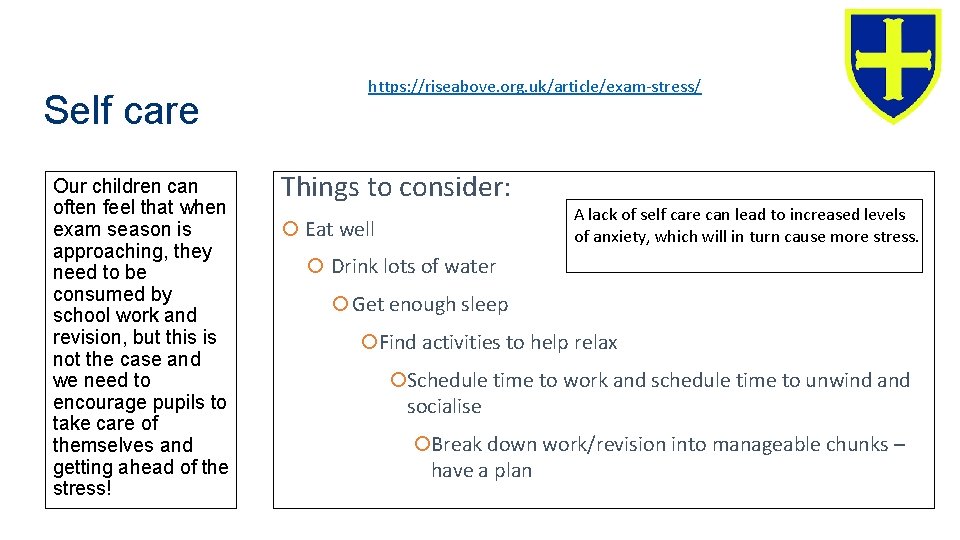
Self care Our children can often feel that when exam season is approaching, they need to be consumed by school work and revision, but this is not the case and we need to encourage pupils to take care of themselves and getting ahead of the stress! https: //riseabove. org. uk/article/exam-stress/ Things to consider: Eat well A lack of self care can lead to increased levels of anxiety, which will in turn cause more stress. Drink lots of water Get enough sleep Find activities to help relax Schedule time to work and schedule time to unwind and socialise Break down work/revision into manageable chunks – have a plan
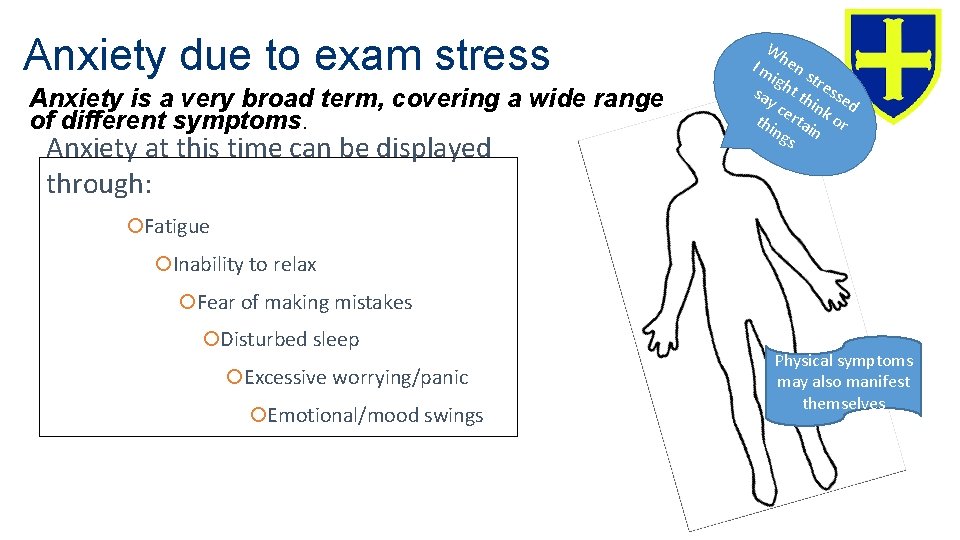
Anxiety due to exam stress Anxiety is a very broad term, covering a wide range of different symptoms. Anxiety at this time can be displayed through: W I m hen igh stre say t th sse ce ink d thi rta or ng in s Fatigue Inability to relax Fear of making mistakes Disturbed sleep Excessive worrying/panic Emotional/mood swings Physical symptoms may also manifest themselves
Dare to share? Consider…. . As an adult, how do you experience anxiety? What do you do to combat anxiety?
Consider…. . As 15/16 year olds, how do they display anxiety? How do they tackle it?
ONLINE STRESS • Does your child suffer from F. O. M. O? (FEAR OF MISSING OUT) • • • Do you think that FOMO is experienced regularly by young people? Why? Does FOMO affect the studies of our children? How can we tackle this? Building in regular 10 minute breaks in order to check phone if absolutely necessary and of course good stretches of time (planned in) to socialise and get active.
Supporting the wellbeing/mental health for Hawkley students… *Student counsellor (on-site) who will prioritise Y 11 students where possible during exam season *‘Trusted Adult’ referral where students can elect which member of staff they would like to share their worries with *Pastoral staff (Mr Cassidy, Miss Smith etc)- always at the end of the phone for parents *Subject staff available for students subject-specific drop –ins at breaks/lunches and after school *Additional exam support meetings- linking with individual parents *Attendance support- Mrs Serjent (it is very important that students do not miss any of their mock exams (wc 19 th Nov and wc 10 th Dec). If you require help getting your child in to school for any reason, please do not hesitate to contact us. *Mentors can be arranged for students in order to further support learning and revision.
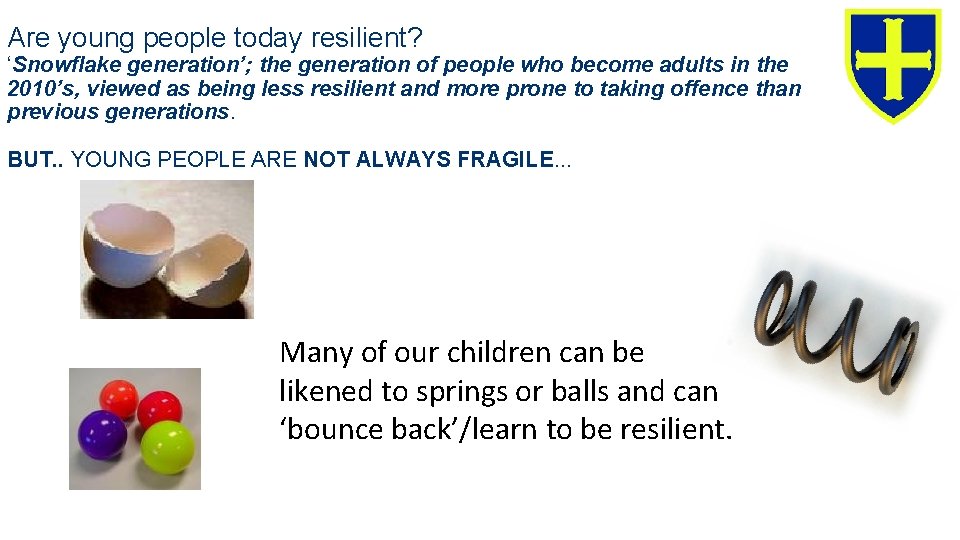
Are young people today resilient? ‘Snowflake generation’; the generation of people who become adults in the 2010’s, viewed as being less resilient and more prone to taking offence than previous generations. BUT. . YOUNG PEOPLE ARE NOT ALWAYS FRAGILE. . . Many of our children can be likened to springs or balls and can ‘bounce back’/learn to be resilient.
Resilience Building resilience in our children… Positive thinking Failure can lead to success Good habits/routines Knowing their worth Consistent boundaries Hold high expectations Don’t overprotect We need to build their ‘bounce back’ ability, allowing them to carry on and flourish, even after setbacks.
Getting organised… • Break your revision down into small chunks, and form a plan. • Think about when and where you work best. • Don't set yourself ridiculous goals. Nobody can revise 10 topics in a day! Avoid setting the day up to be a disappointment. • Schedule in plenty of free time to unwind, and protect this time. Nobody can work all day every day. • Don't panic if you go slightly off schedule - tomorrow is another day. • Find activities that help you relax. • Don't cut out all the enjoyment from your life. • Don't be put off by peers saying they're doing huge amounts of revision. If you're feeling really worried or anxious, chat to a good friend, family member, or teacher. • FORGET THE DRAMA! (THINK FOMO)!