
having the opposite of the desired effect Counterproductive
- Slides: 13
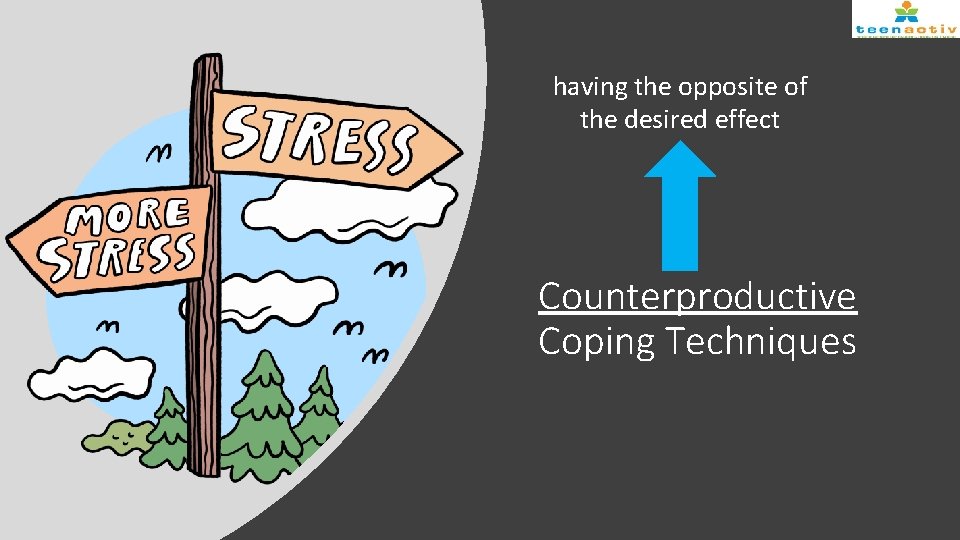
having the opposite of the desired effect Counterproductive Coping Techniques
Video Q & A https: //www. youtube. com/watch? v=s. NFr. Q 6 ix. An. M&t=248 s • Name the mental health issue is the boy experiencing? • What is the cause of this issue? • How is he trying to cope with the situation? • List the bad decisions he makes while under the influence of alcohol? • What does this coping mechanism lead to in the end? • Why does he think that this is a good solution? • Why could we say that his friends “don’t really care about him”? • At the end of the video we see that the boy had taken the abovementioned into consideration and decided not to drink the alcohol.
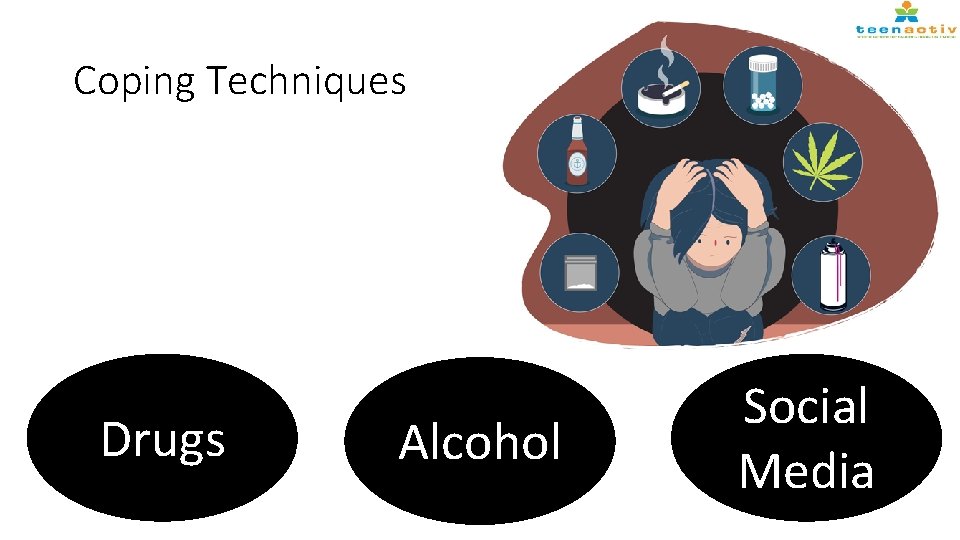
Coping Techniques Drugs Alcohol Social Media
Why do people abuse substances in difficult situations? • Alcohol and Drugs: • could make you feel sleepy • could make you feel awake • could make you feel relaxed • could seem to relieve anxiety So what is the problem? None of these effects solve the problem you are dealing with. It is essentially making it worse.
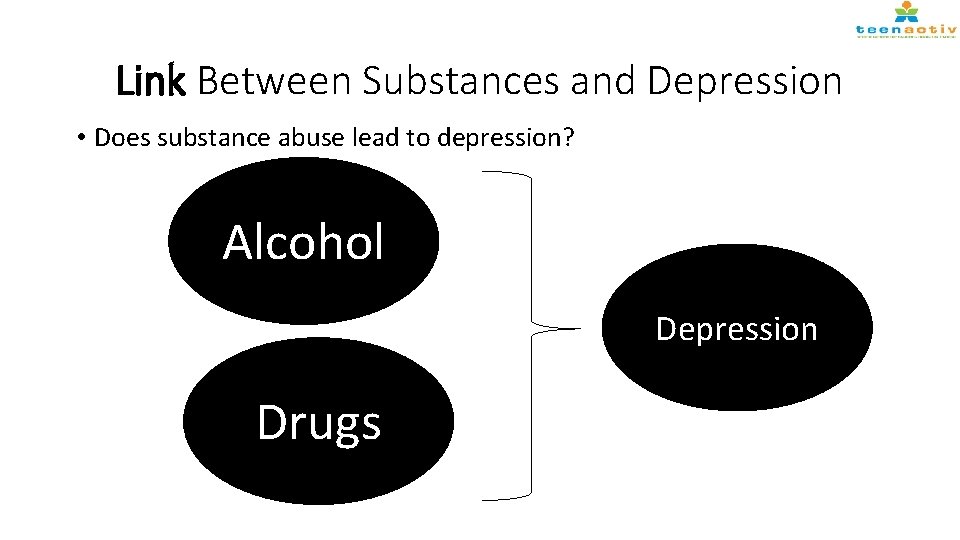
Link Between Substances and Depression • Does substance abuse lead to depression? Alcohol Depression Drugs
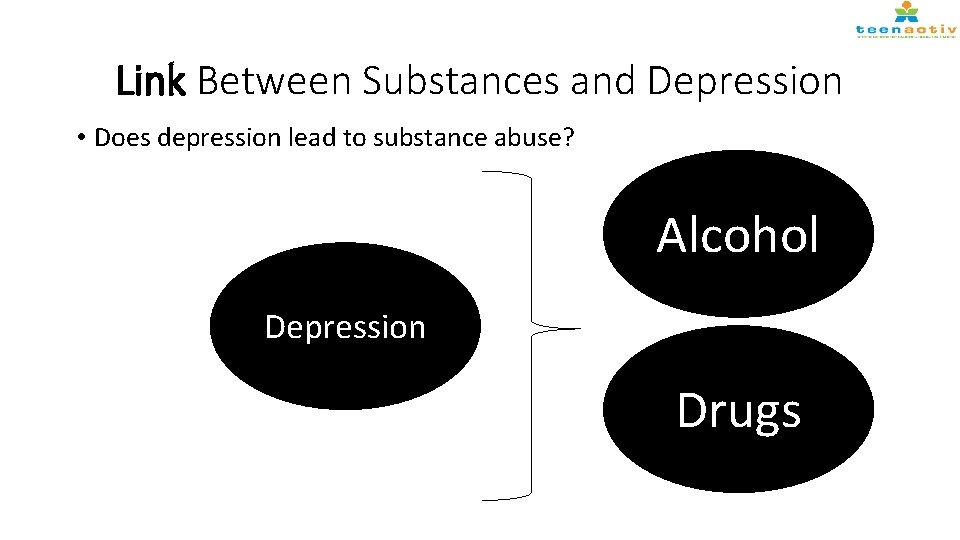
Link Between Substances and Depression • Does depression lead to substance abuse? Alcohol Depression Drugs
What does research say? • Nearly one-third of people with major depression also have an alcohol problem. • Often, the depression comes first. • Research shows that depressed kids are more likely to have problems with alcohol a few years down the road. • Also, teens who've had a bout of major depression are twice as likely to start drinking as those who haven’t.
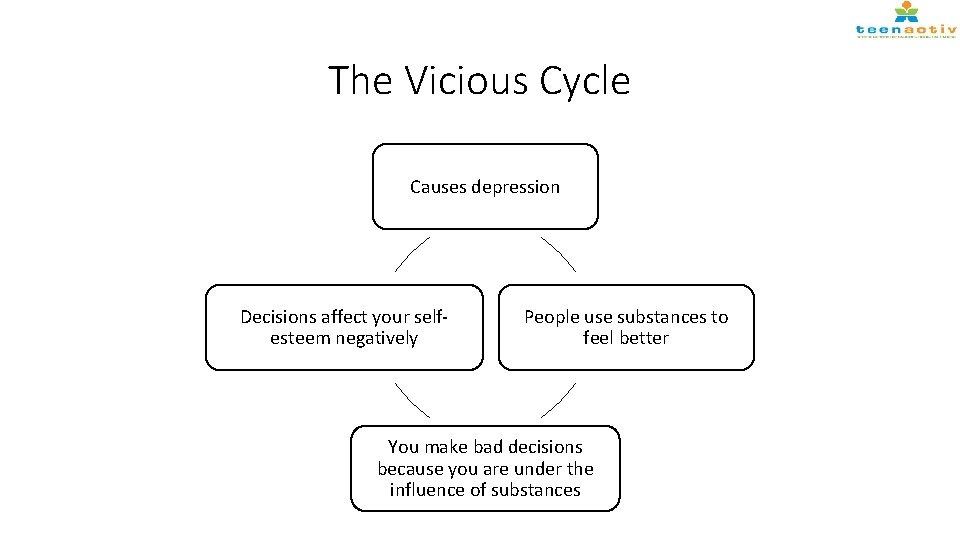
The Vicious Cycle • When you drink too much or use drugs, you’re more likely to make bad decisions or act on impulse, such as: • • • Ruining a relationship with someone Getting into a car with a drunk friend/ driving a car yourself Spending a lot of money Making unhealthy sexual choices Putting your life in danger physically When that happens, you're more likely to feel down once you are sober again.
The Vicious Cycle Causes depression Decisions affect your selfesteem negatively People use substances to feel better You make bad decisions because you are under the influence of substances
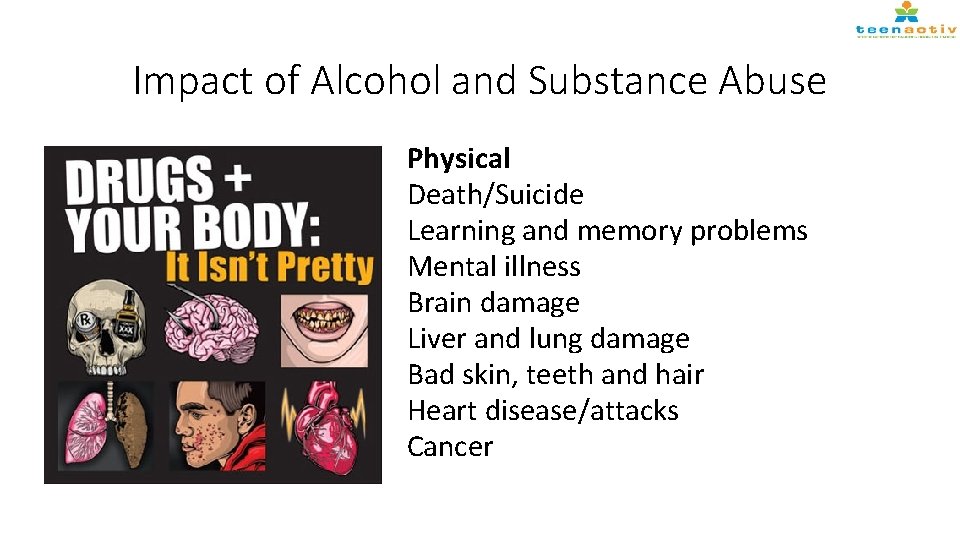
Impact of Alcohol and Substance Abuse Physical Death/Suicide Learning and memory problems Mental illness Brain damage Liver and lung damage Bad skin, teeth and hair Heart disease/attacks Cancer
Effects on Family and Friends • Emotional stress on family and friends • Aggressive and violent towards loved ones • Withdraw from loved ones • Could lie, steal from family and friends to get drugs/alcohol • Could get involved in more serious crimes • Could get expelled from school – losing out on education • Could lose the support of family and friends • Become lonely, depressed or even suicidal.
Warning Signs and Where to find help • SADAG – The South African Depression and Anxiety Group 0800 12 13 14 • Alcoholics Anonymous 0861 435 7222 • Narcotics Anonymous 083 900 6962
In an Emergency • Call an Ambulance 10 111 • Stay calm. • Call for help and stay with the person until help arrives. • Keep them talking and don’t let them fall asleep. • If they are asleep, try and wake them up. • Do not try to get them to vomit unless told to by a doctor. • Don’t put the person in a bath – they could drown. Adapted from: The Department of Social Development: Say. NOto. Drugs leaflet