
HAVING OUR HEADS EXAMINED INTRODUCTION Lesion RECORDING THE

- Slides: 121
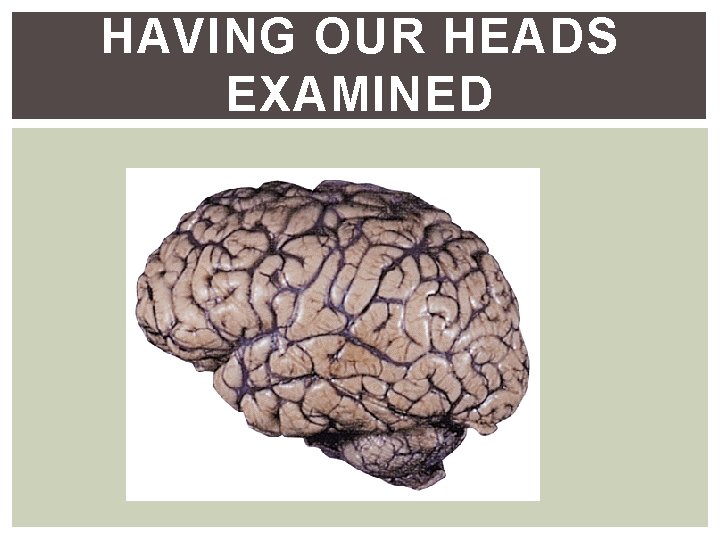
HAVING OUR HEADS EXAMINED
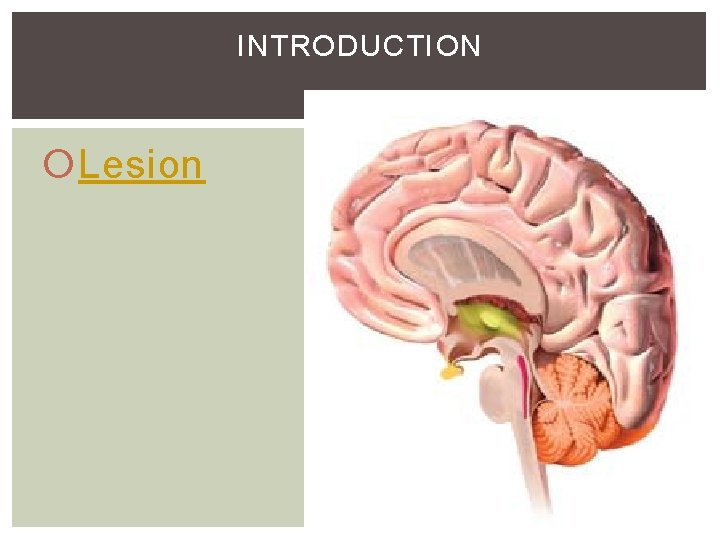
INTRODUCTION Lesion
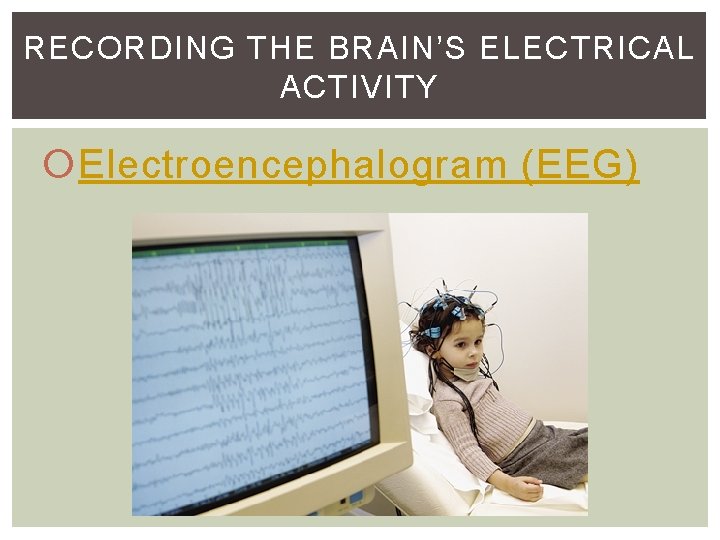
RECORDING THE BRAIN’S ELECTRICAL ACTIVITY Electroencephalogram (EEG)
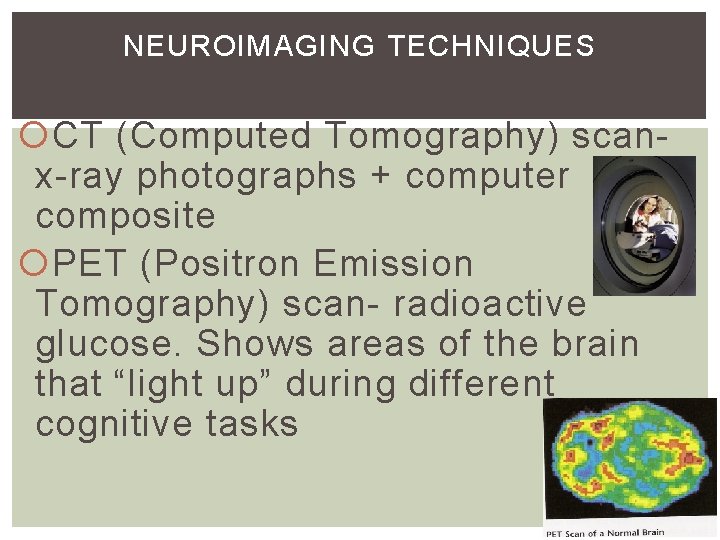
NEUROIMAGING TECHNIQUES CT (Computed Tomography) scanx-ray photographs + computer composite PET (Positron Emission Tomography) scan- radioactive glucose. Shows areas of the brain that “light up” during different cognitive tasks
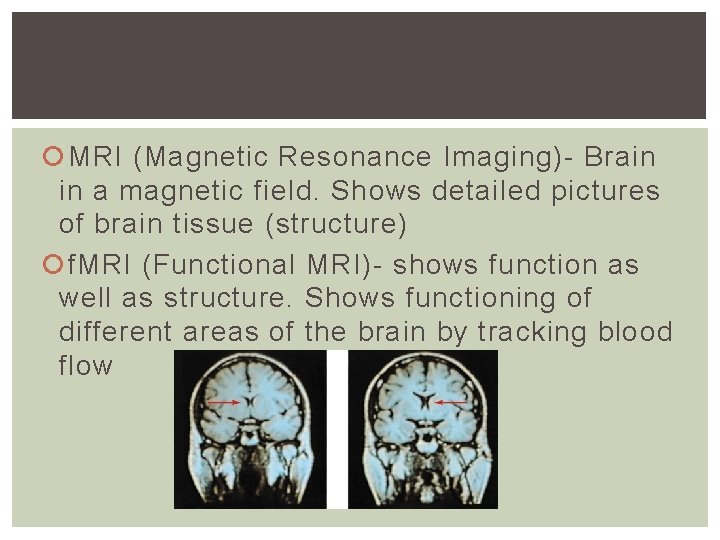
MRI (Magnetic Resonance Imaging)- Brain in a magnetic field. Shows detailed pictures of brain tissue (structure) f. MRI (Functional MRI)- shows function as well as structure. Shows functioning of different areas of the brain by tracking blood flow
OLDER BRAIN STRUCTURES
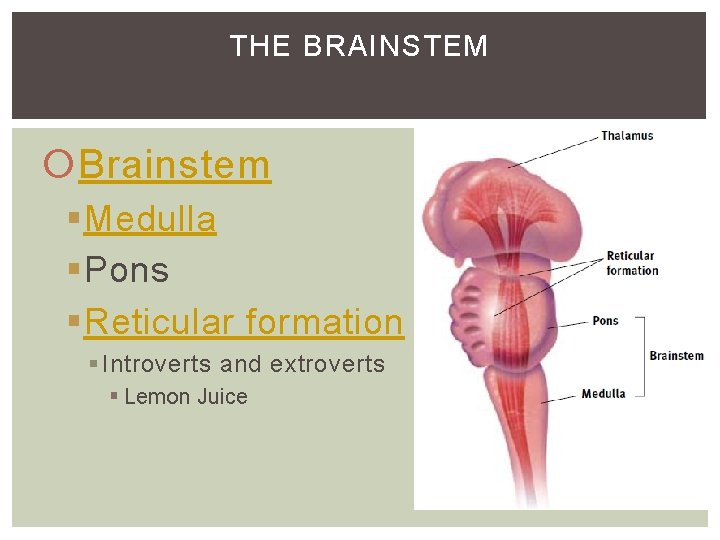
THE BRAINSTEM Brainstem §Medulla §Pons §Reticular formation § Introverts and extroverts § Lemon Juice
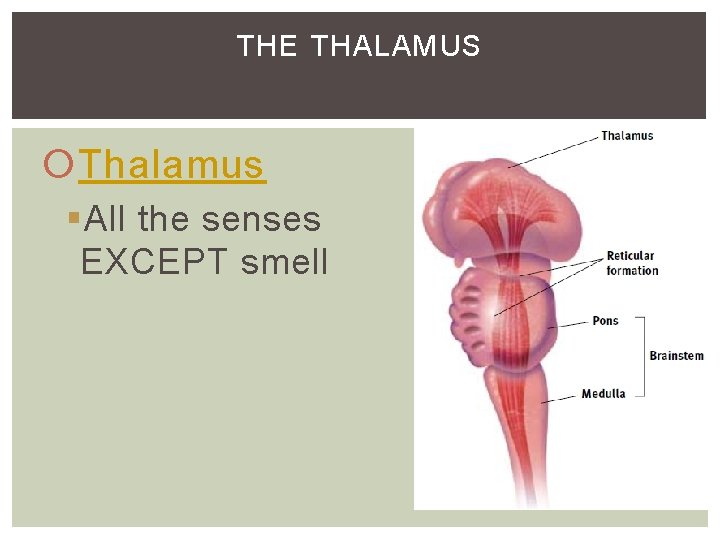
THE THALAMUS Thalamus §All the senses EXCEPT smell
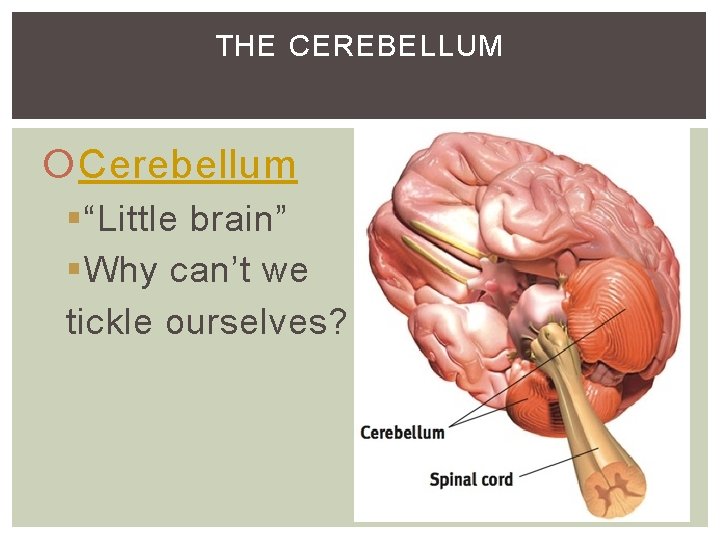
THE CEREBELLUM Cerebellum §“Little brain” §Why can’t we tickle ourselves?
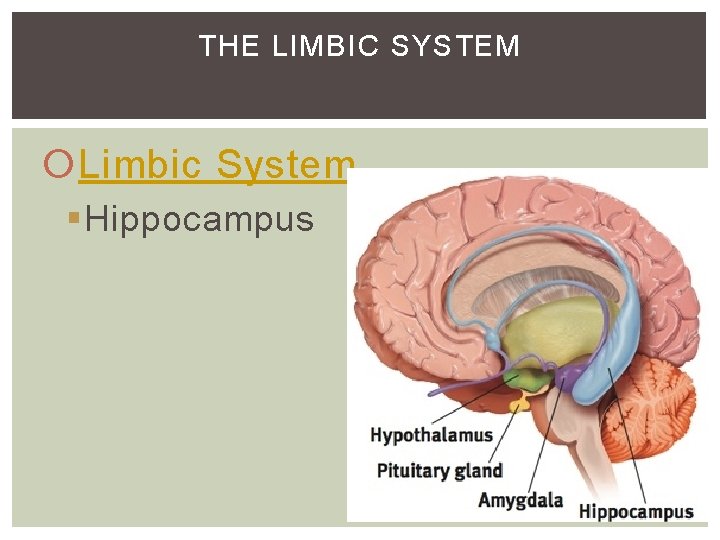
THE LIMBIC SYSTEM Limbic System §Hippocampus
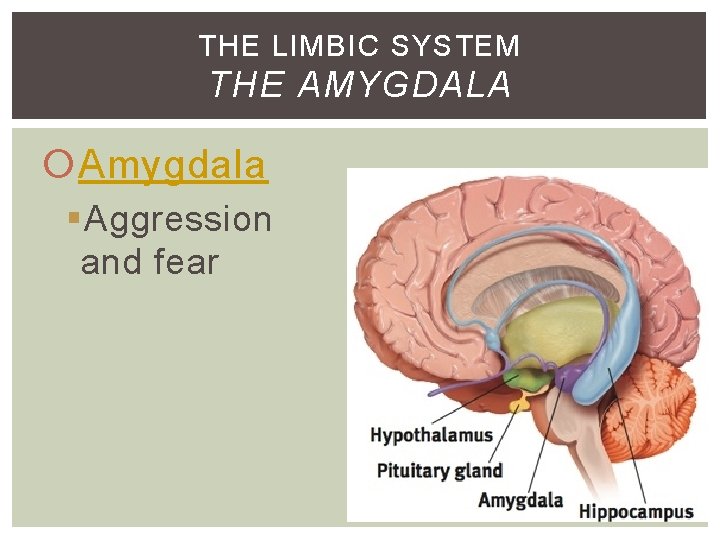
THE LIMBIC SYSTEM THE AMYGDALA Amygdala §Aggression and fear
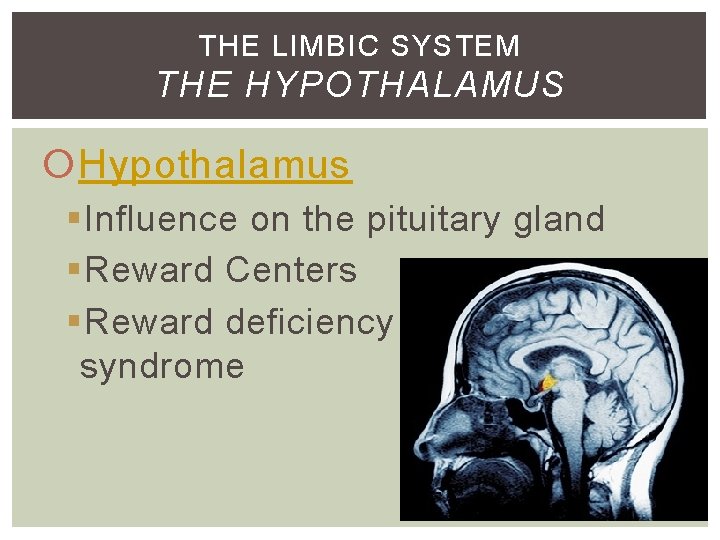
THE LIMBIC SYSTEM THE HYPOTHALAMUS Hypothalamus §Influence on the pituitary gland §Reward Centers §Reward deficiency syndrome
THE CEREBRAL CORTEX
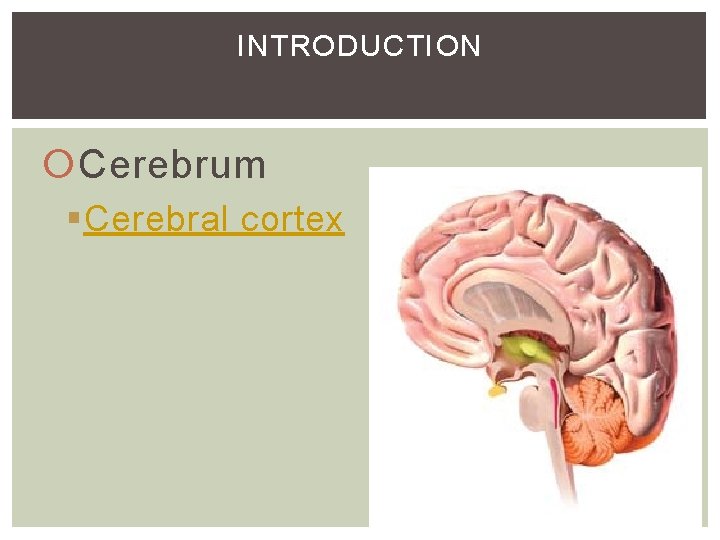
INTRODUCTION Cerebrum §Cerebral cortex
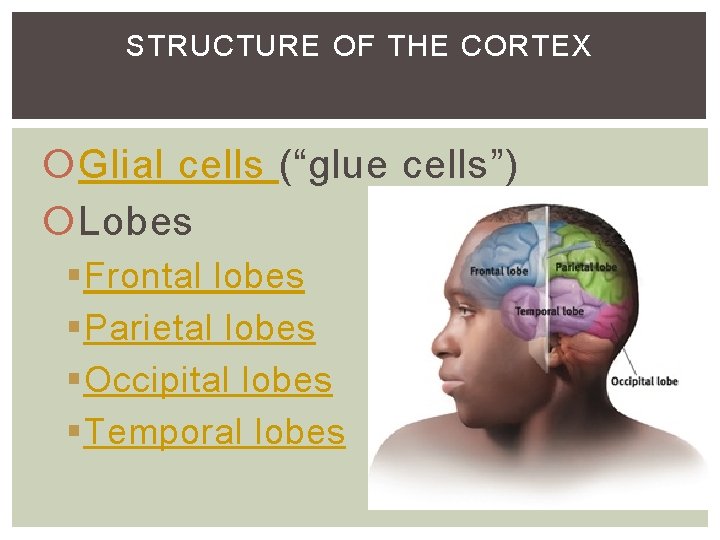
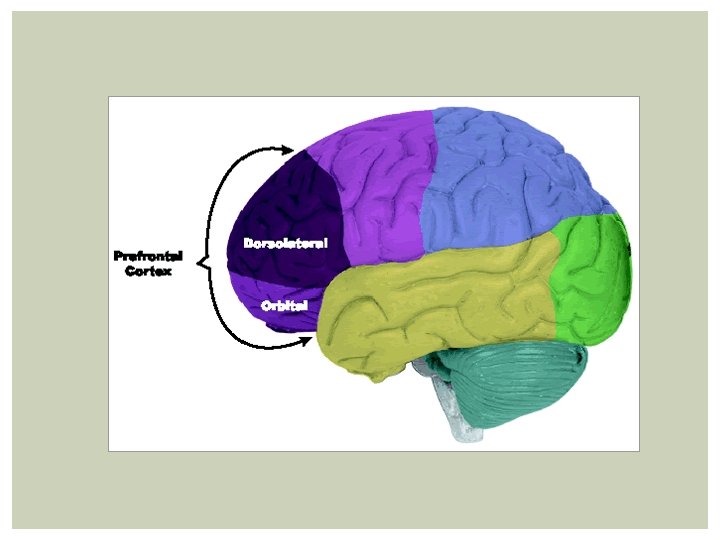
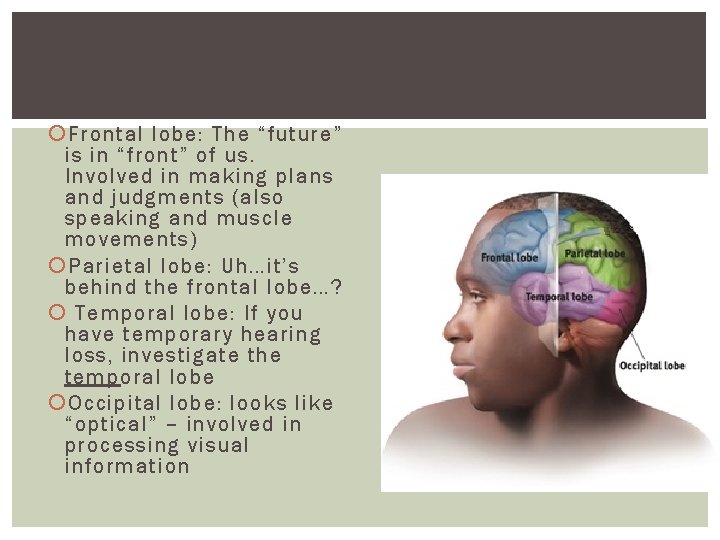
STRUCTURE OF THE CORTEX Glial cells (“glue cells”) Lobes §Frontal lobes §Parietal lobes §Occipital lobes §Temporal lobes
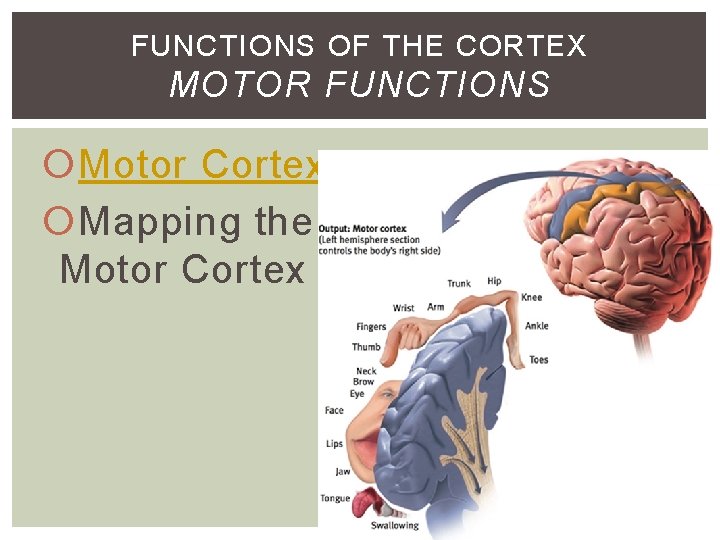
FUNCTIONS OF THE CORTEX MOTOR FUNCTIONS Motor Cortex Mapping the Motor Cortex
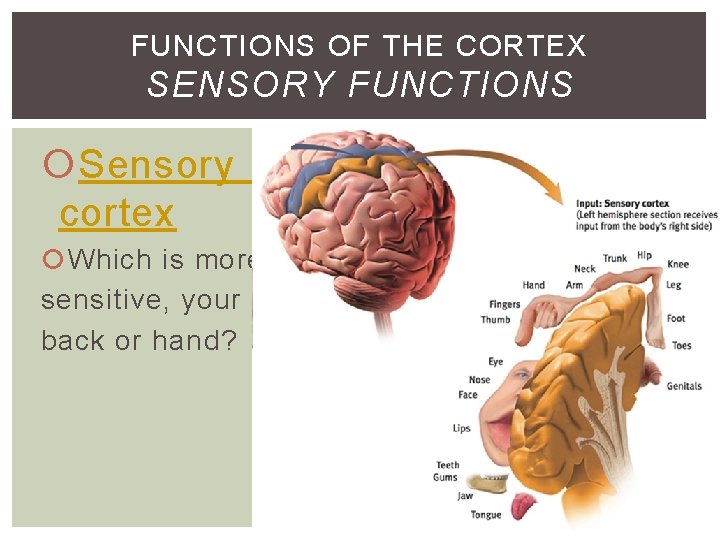
FUNCTIONS OF THE CORTEX SENSORY FUNCTIONS Sensory cortex Which is more sensitive, your back or hand?
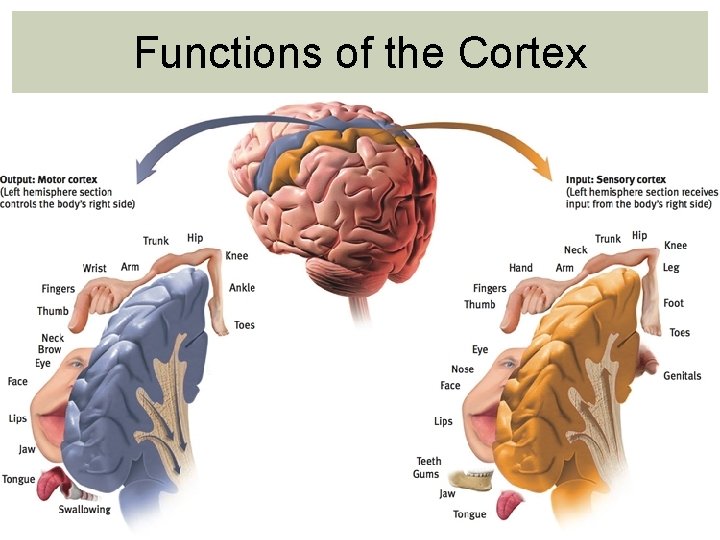
Functions of the Cortex
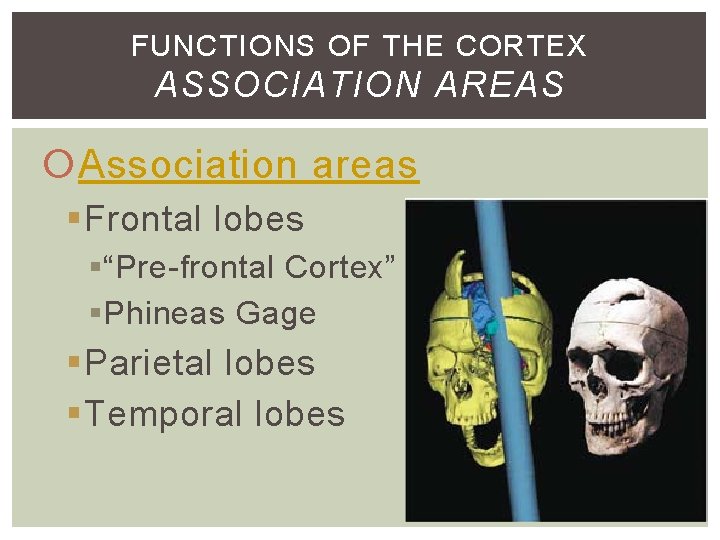
FUNCTIONS OF THE CORTEX ASSOCIATION AREAS Association areas §Frontal lobes § “Pre-frontal Cortex” § Phineas Gage §Parietal lobes §Temporal lobes
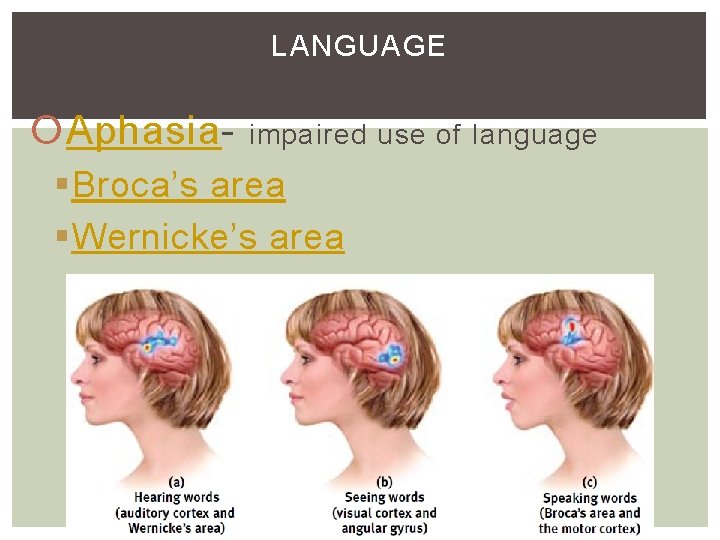
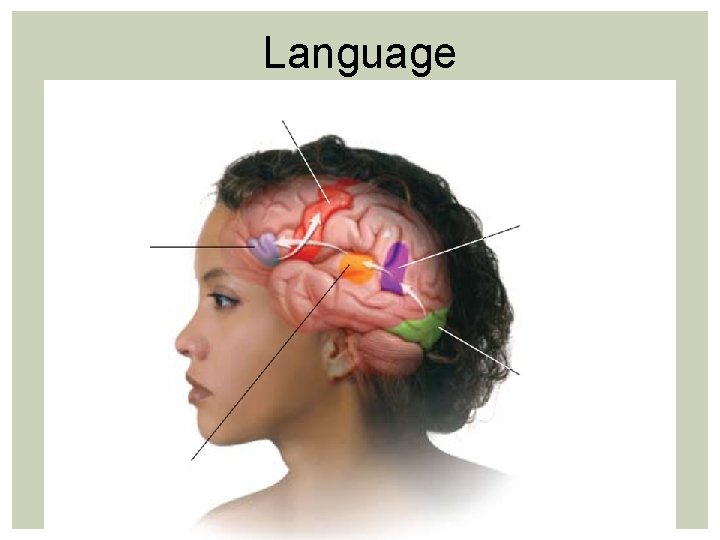
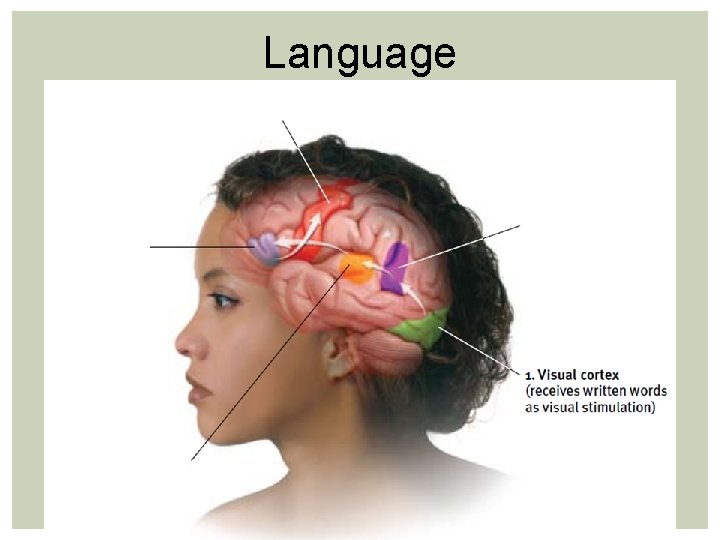
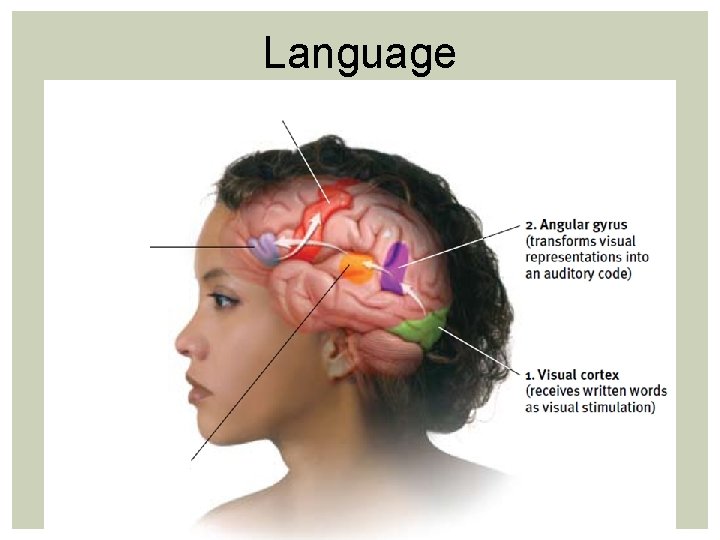
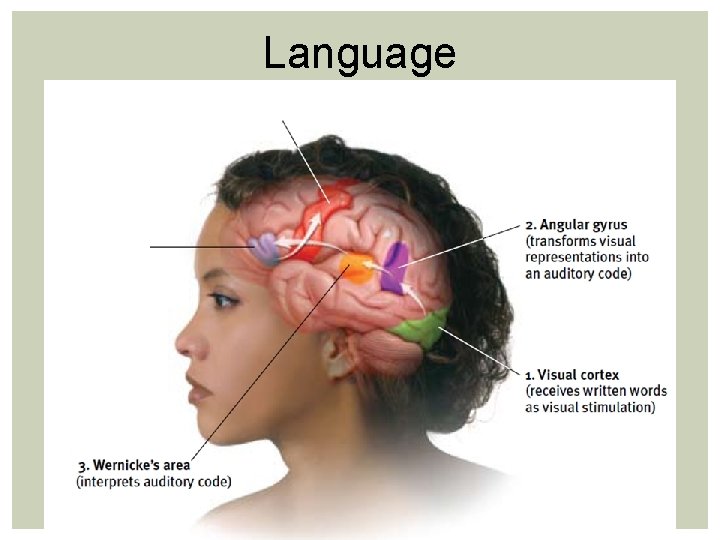
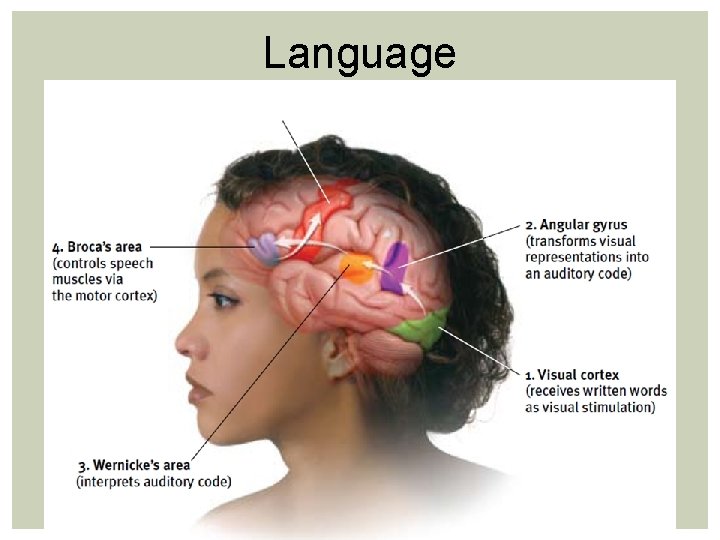
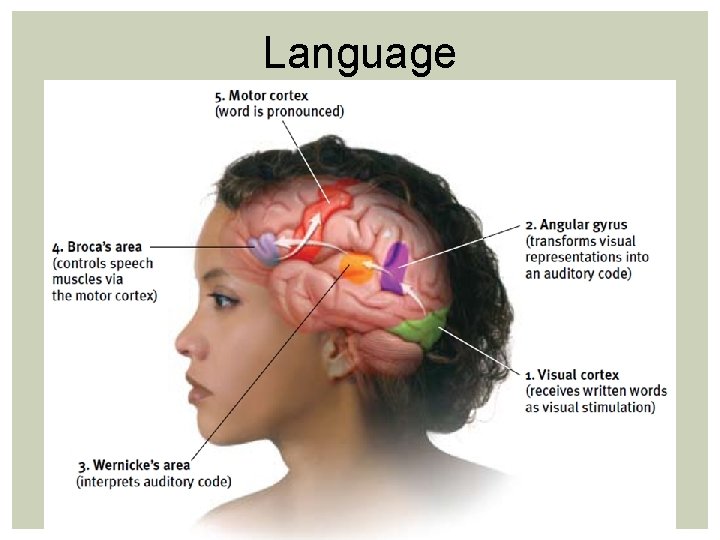
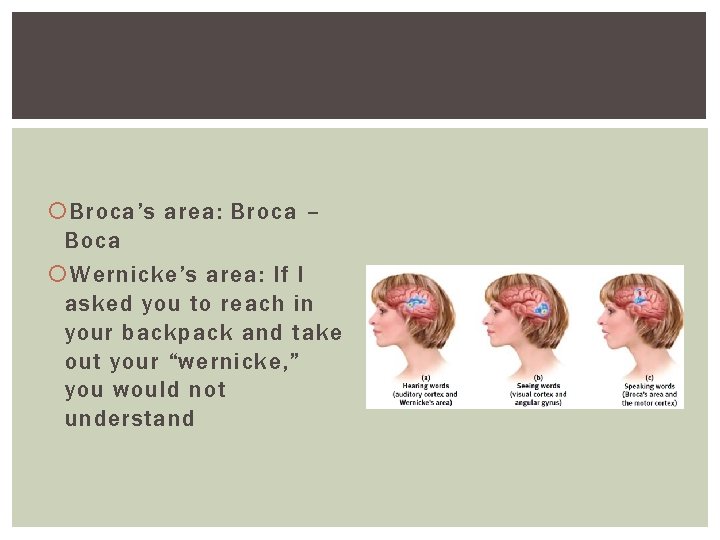
LANGUAGE Aphasia- impaired use of language §Broca’s area §Wernicke’s area
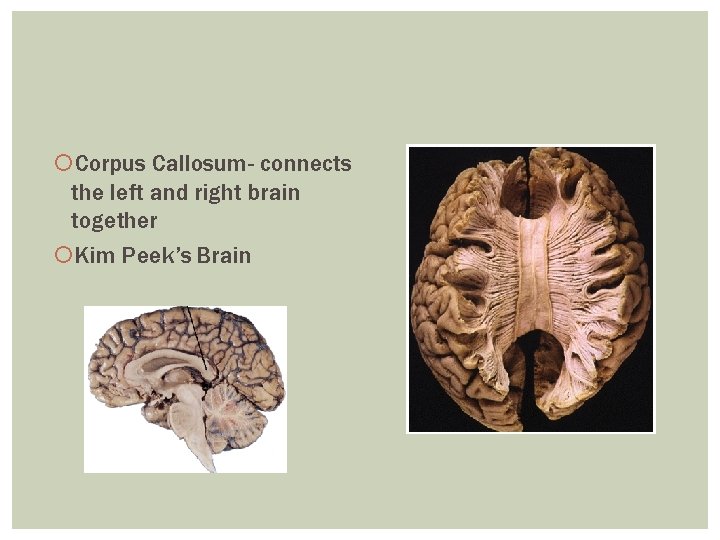
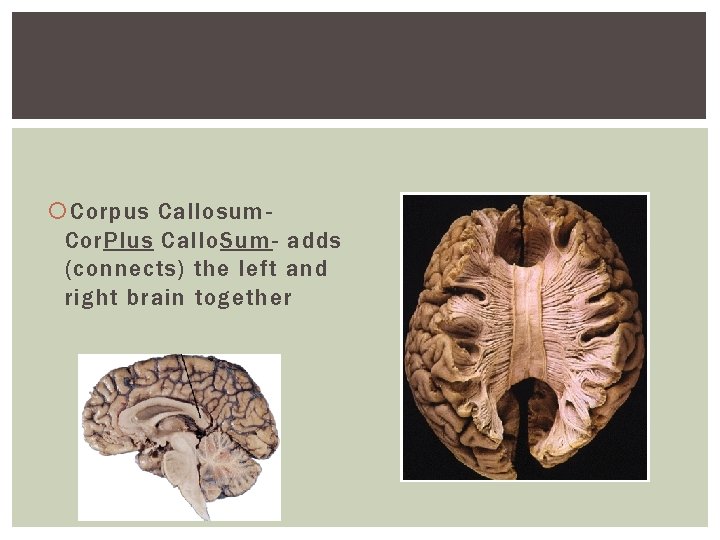
Corpus Callosum- connects the left and right brain together Kim Peek’s Brain
Language
Language
Language
Language
Language
Language
THE BRAIN’S PLASTICITY Brain Damage §Plasticity §Neural prosthetics
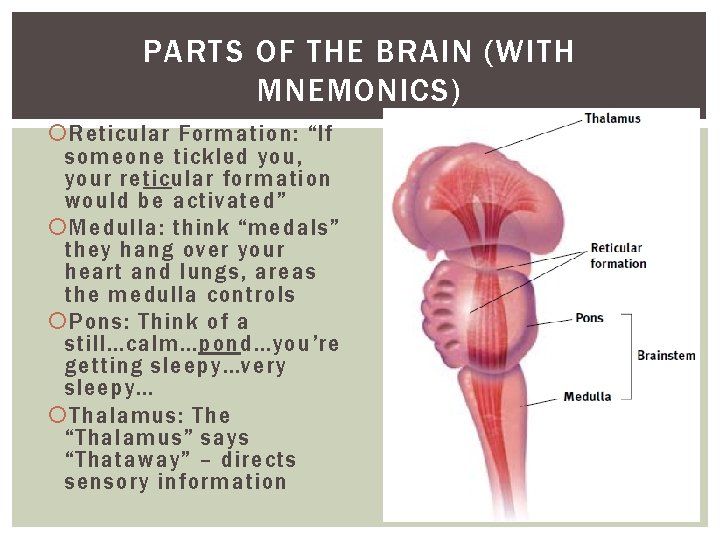
PARTS OF THE BRAIN (WITH MNEMONICS) Reticular Formation: “If someone tickled you, your reticular formation would be activated” Medulla: think “medals” they hang over your heart and lungs, areas the medulla controls Pons: Think of a still…calm…pond…you’re getting sleepy…very sleepy… Thalamus: The “Thalamus” says “Thataway” – directs sensory information
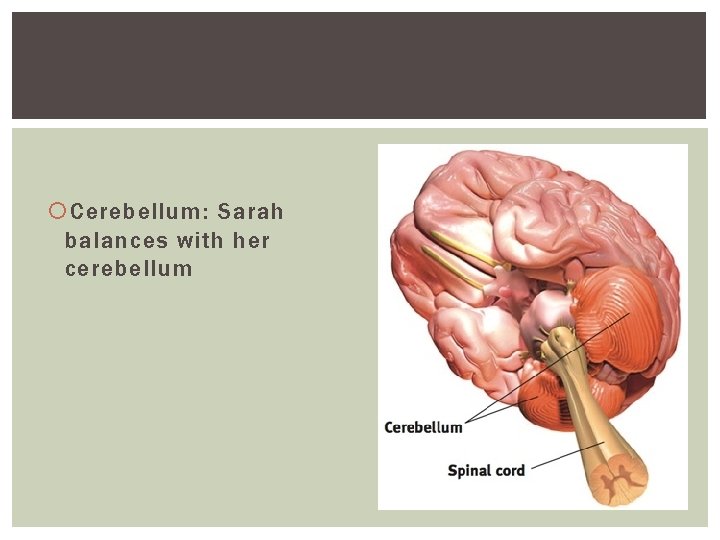
Cerebellum: Sarah balances with her cerebellum
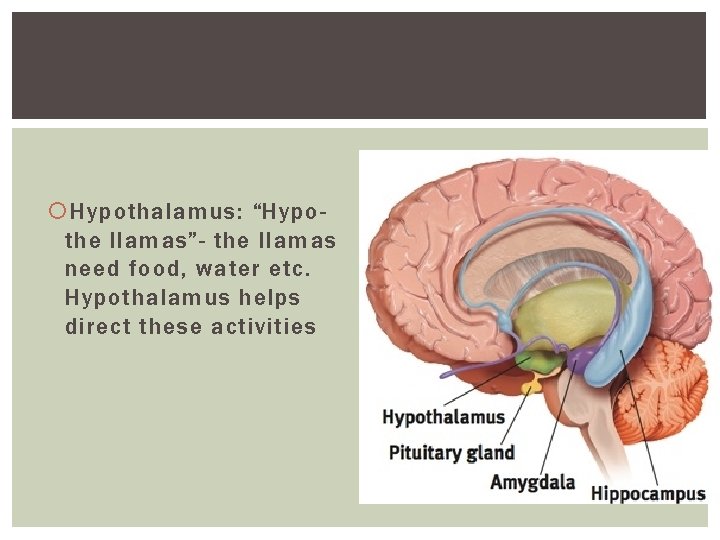
Hypothalamus: “Hypothe llamas”- the llamas need food, water etc. Hypothalamus helps direct these activities
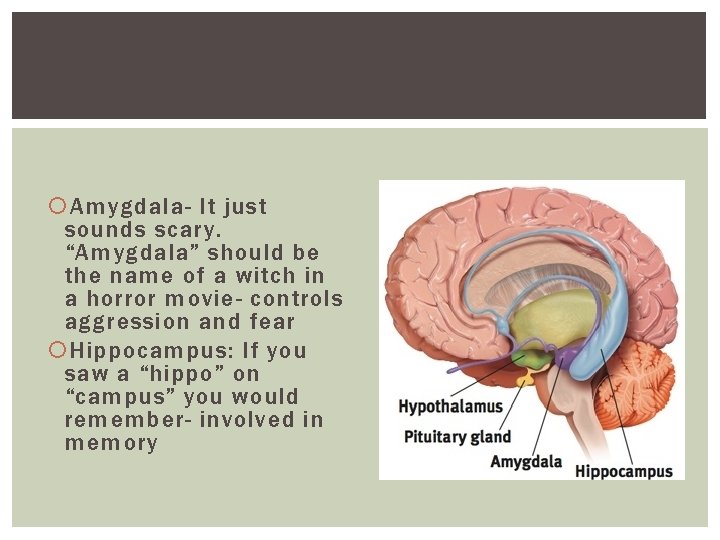
Amygdala- It just sounds scary. “Amygdala” should be the name of a witch in a horror movie- controls aggression and fear Hippocampus: If you saw a “hippo” on “campus” you would remember- involved in memory
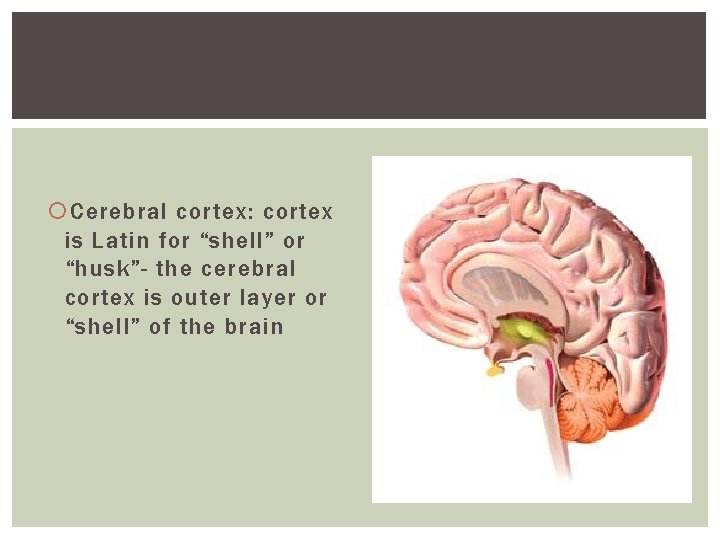
Cerebral cortex: cortex is Latin for “shell” or “husk”- the cerebral cortex is outer layer or “shell” of the brain
Frontal lobe: The “future” is in “front” of us. Involved in making plans and judgments (also speaking and muscle movements) Parietal lobe: Uh…it’s behind the frontal lobe…? Temporal lobe: If you have temporary hearing loss, investigate the temporal lobe Occipital lobe: looks like “optical” – involved in processing visual information
Broca’s area: Broca – Boca Wernicke’s area: If I asked you to reach in your backpack and take out your “wernicke, ” you would not understand
Corpus Callosum. Cor. Plus Callo. Sum- adds (connects) the left and right brain together
MNEMONICS Reticular Formation: “If someone tickled you, your re ticular formation would be activated” Medulla: think “medals” they hang over your heart and lungs, areas the medulla controls Pons: Think of a still…calm…pond…you’re getting sleepy…very sleepy… Thalamus: The “Thalamus” says “Thataway” – directs sensory information Cerebellum: Sarah balances with her cerebellum Hypothalamus: “Hypo-the llamas”- the llamas need food, water etc. Hypothalamus helps direct these activities
MNEMONICS CONT. Amygdala- It just sounds scary. “Amygdala” should be the name of a witch in a horror movie- controls aggression and fear Hippocampus: If you saw a “hippo” on “campus” you would rememberinvolved in memory Cerebral cortex: cortex is Latin for “shell” or “husk”- the cerebral cortex is outer layer or “shell” of the brain Frontal lobe: The “future” is in “front” of us. Involved in making plans and judgments (also speaking and muscle movements) Parietal lobe: Uh…it’s behind the frontal lobe…? Temporal lobe: If you have temporary hearing loss, investigate the temporal lobe Occipital lobe: looks like “optical” – involved in processing visual information Broca’s area: Broca – Boca Wernicke’s area: If I asked you to reach in your backpack and take out your “wernicke, ” you would not understand Corpus Callosum- Cor. Plus Callo. Sum- adds (connects) the left and right brain together
OUR DIVIDED BRAIN
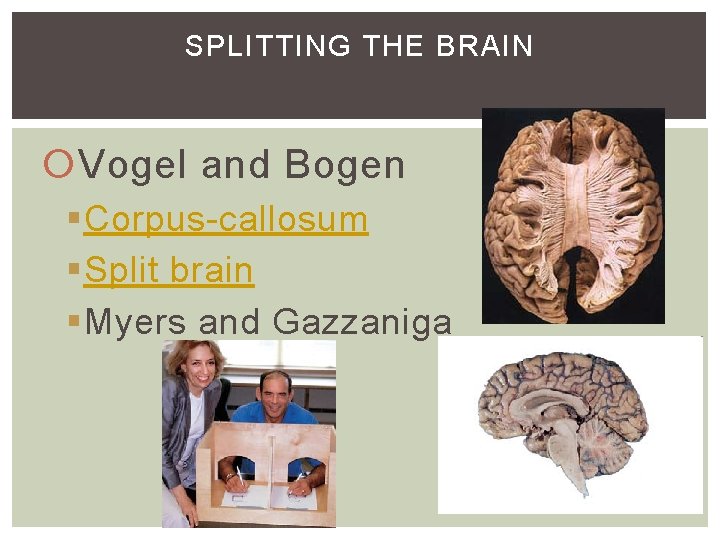
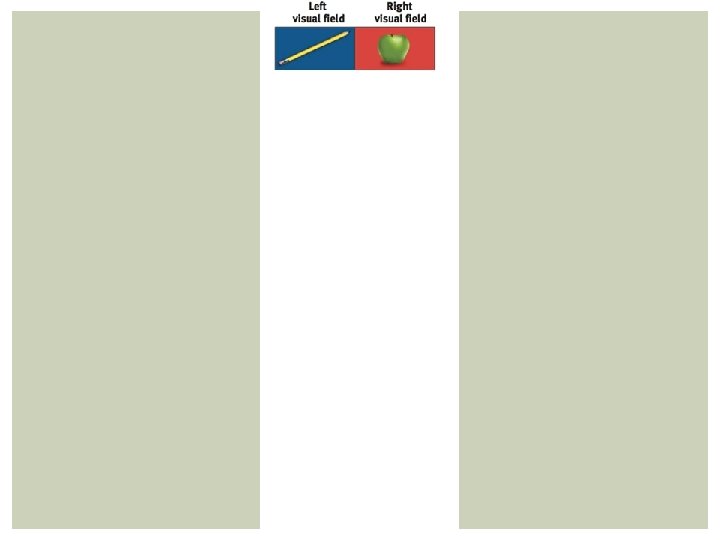
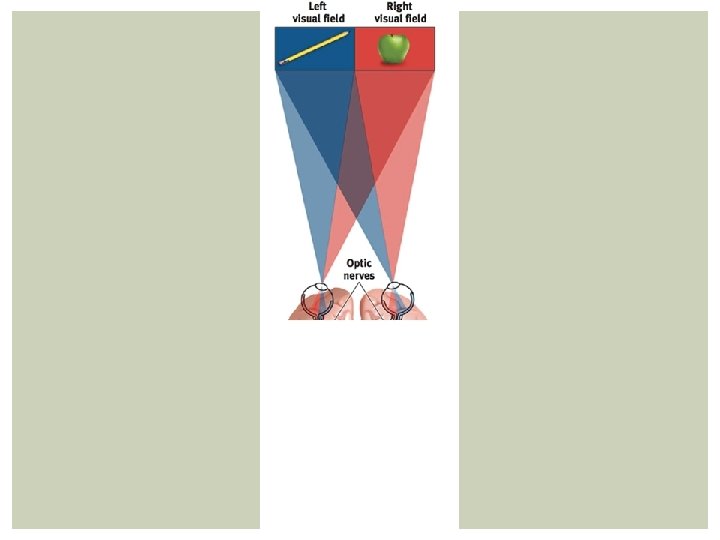
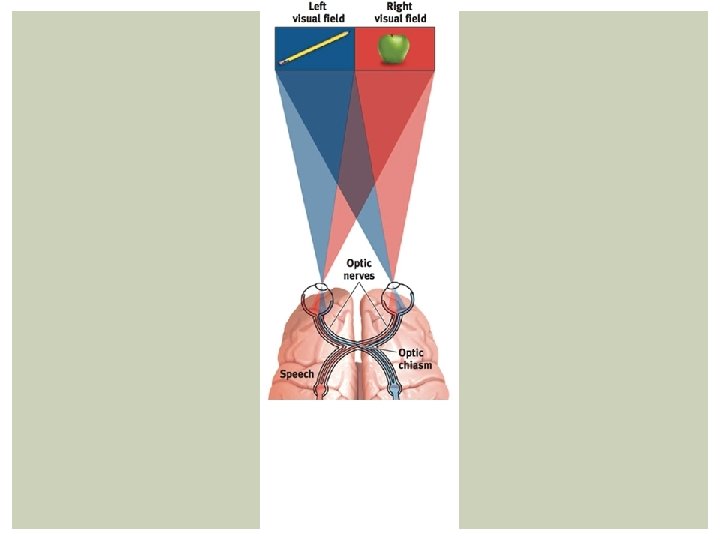
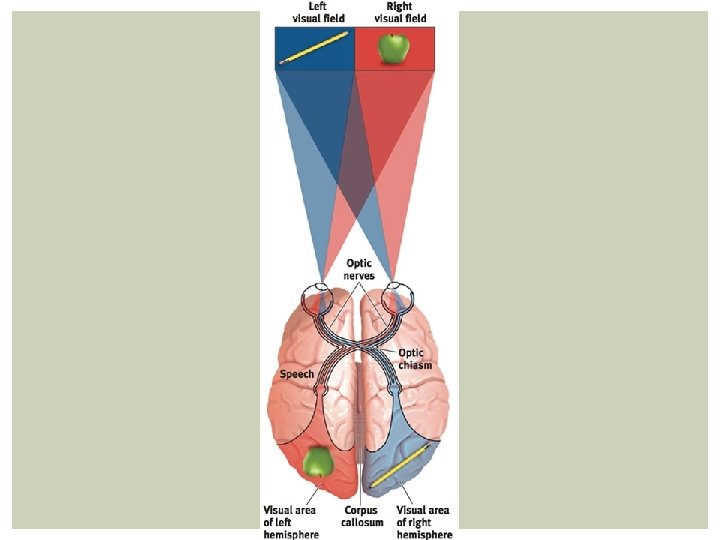
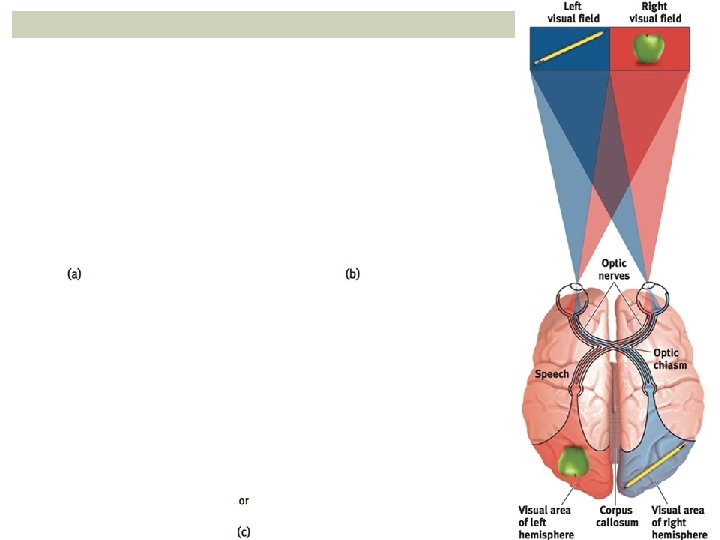
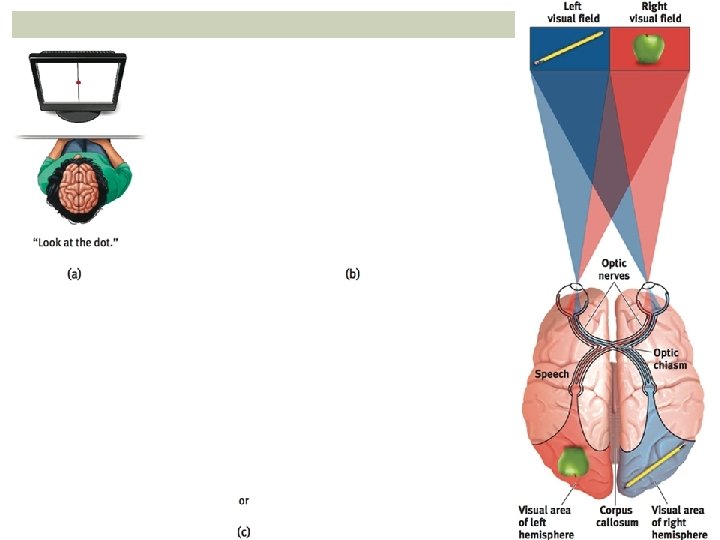
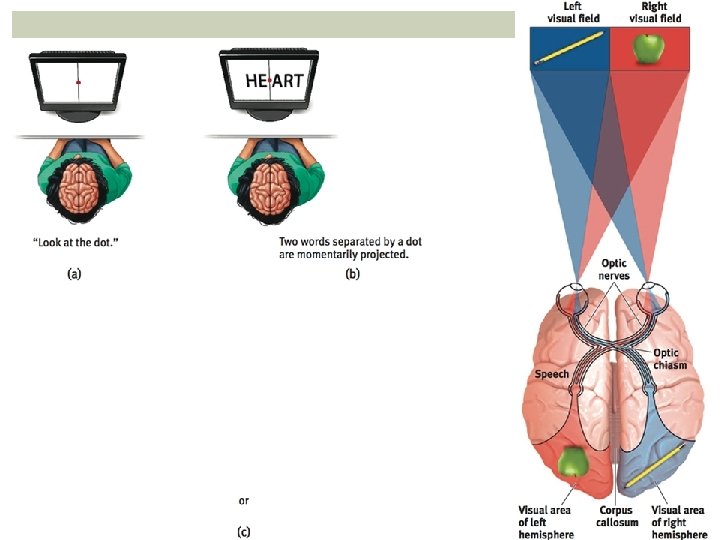
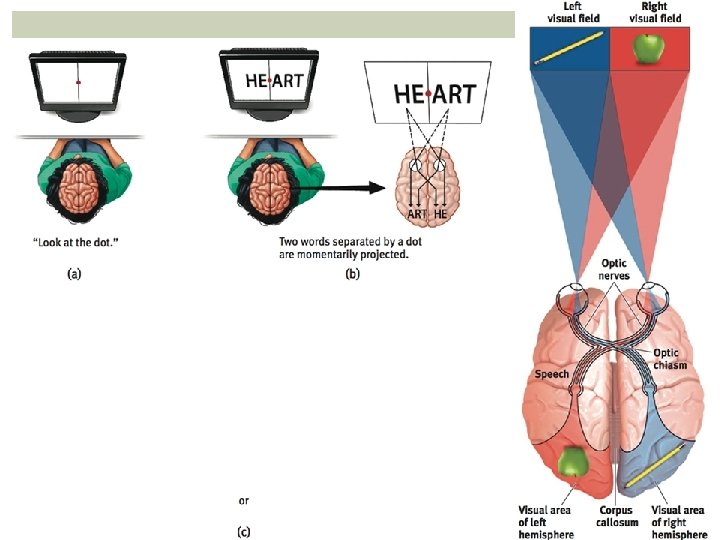
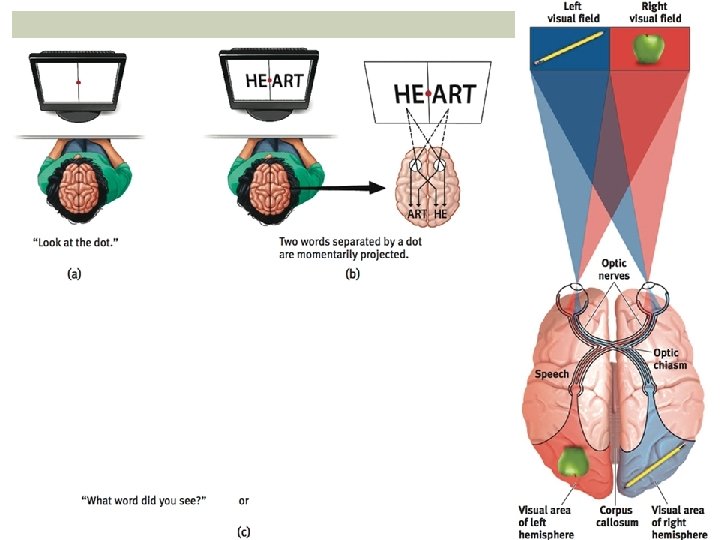
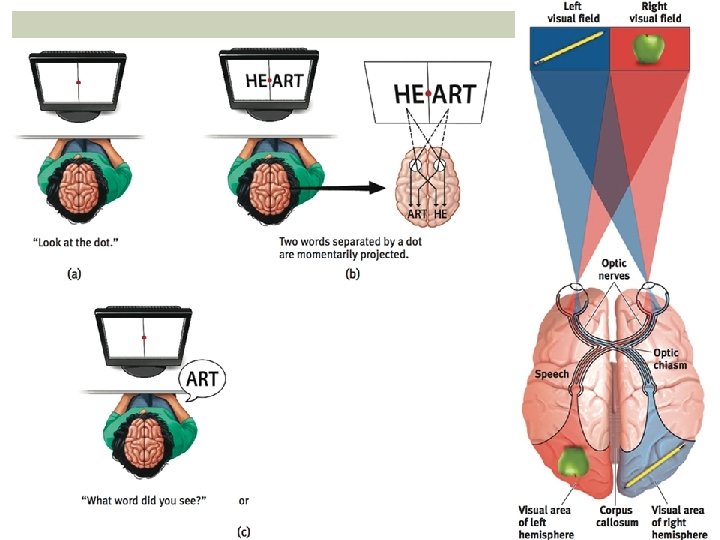
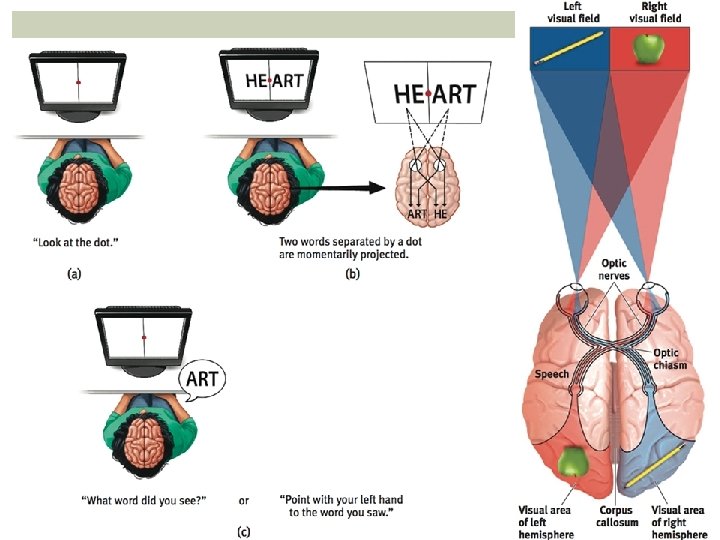
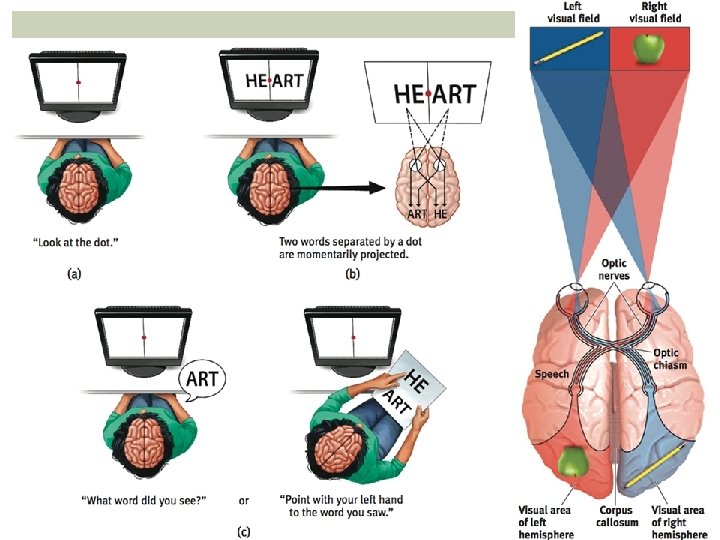
SPLITTING THE BRAIN Vogel and Bogen §Corpus-callosum §Split brain §Myers and Gazzaniga
HE. ART
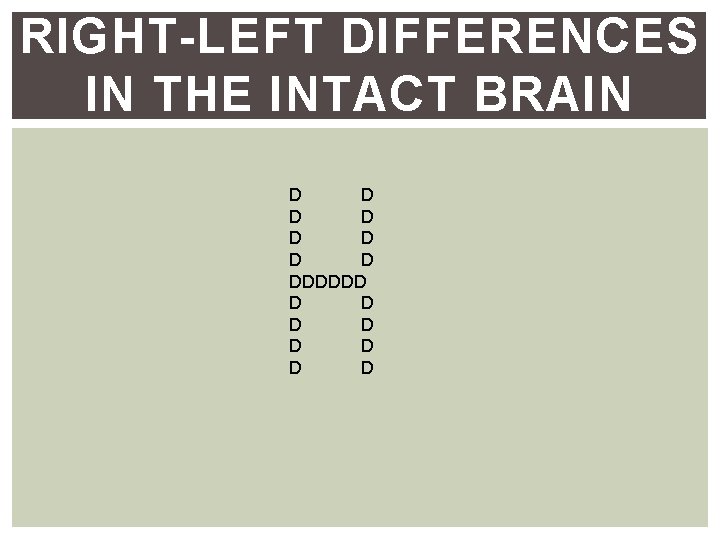
RIGHT-LEFT DIFFERENCES IN THE INTACT BRAIN D D D D DDDDDD D D D D
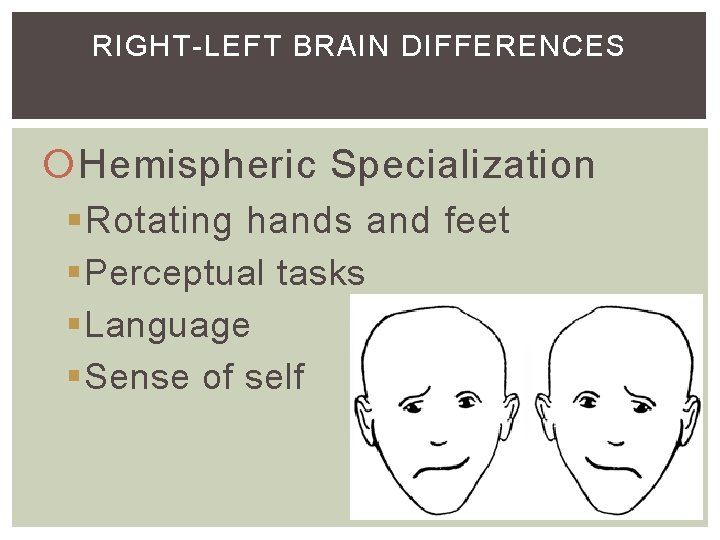
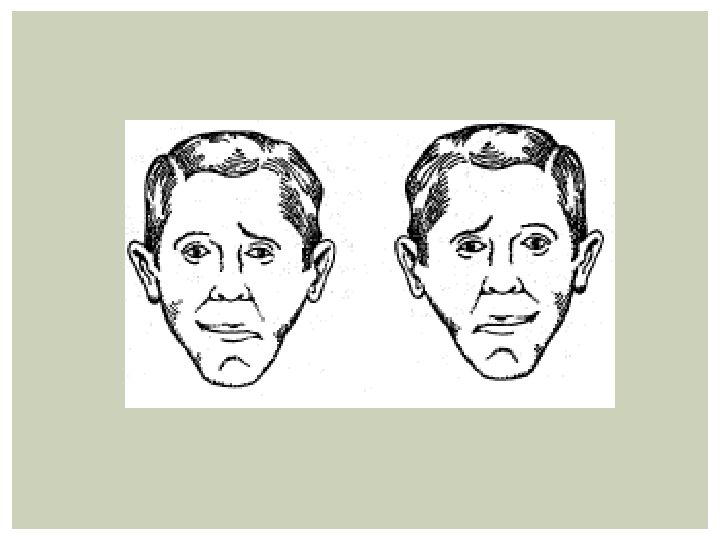
RIGHT-LEFT BRAIN DIFFERENCES Hemispheric Specialization §Rotating hands and feet §Perceptual tasks §Language §Sense of self
Twisted hands
NAME THE COLOR YOU SEE
Blue
Yellow
Green
Purple
Orange
Blue
Yellow
Green
Purple
Orange
Wagner Preference Inventory
Left-handedness Q: Is it alright to be left handed? A: No, it is not alright. JK, of course it is Lefthanders tend to be a little better at: § Math § Music § Chess § Recover more quickly from strokes § Language represented in both hemispheres § Da Vinci, Ben Franklin, Michelangelo
Fun fact: the word “sinister” comes from the word “sinistral, ” meaning “left” Do righties live longer? § What causes left-handedness? § Brain damage § Prenatal factors § Genetic factors (dominant gene for language in the left hemisphere and in the process, right hand dominance)
THE BRAIN AND CONSCIOUSNESS
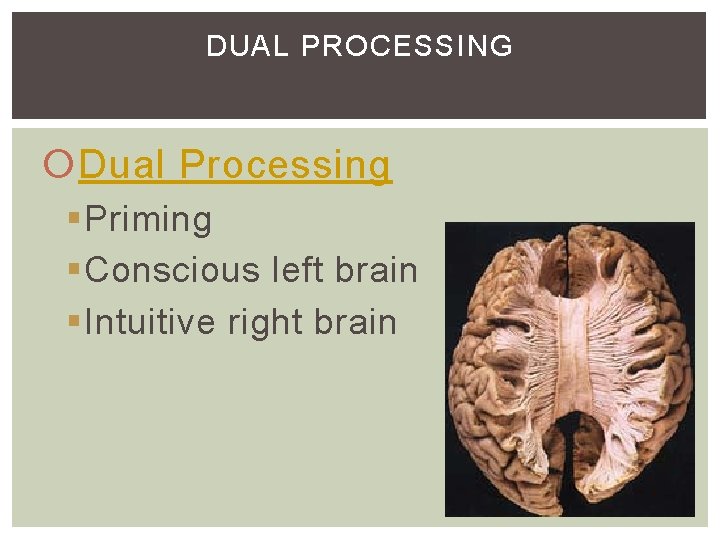
DUAL PROCESSING Dual Processing §Priming §Conscious left brain §Intuitive right brain
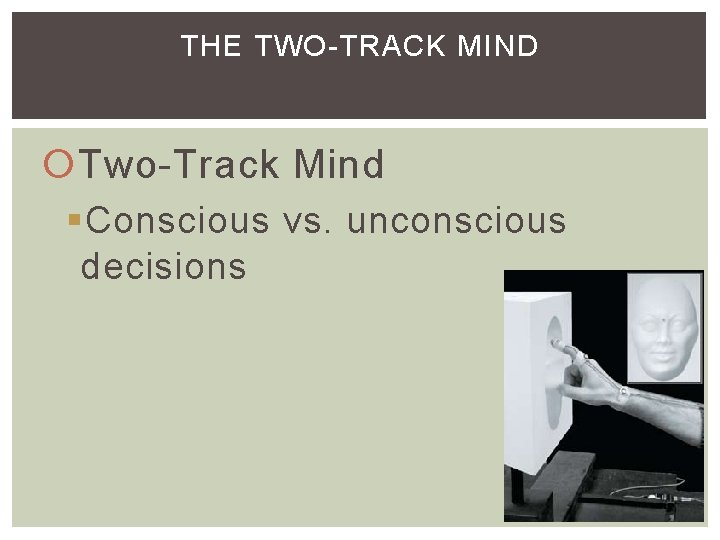
THE TWO-TRACK MIND Two-Track Mind §Conscious vs. unconscious decisions
NEUROSCIENCE AND MORAL JUDGMENTS Wartime dilemma Trolley dilemma
It’s wartime and you are hiding in the basement with a group of townspeople. Enemy soldiers are outside. Your baby starts to cry loudly; if nothing is done, the soldiers will find you and kill everyone including the baby. The only way to prevent this loss of life is to cover the baby’s mouth; if you do, the baby will smother. What should you do?
A runaway trolley is hurtling down the tracks toward five people who will be killed if it proceeds on its present course. You can save these five people by diverting the trolley onto a different set of tracks, one that has only one person on it, but if you do this that person will be killed. Is it morally permissible to turn the trolley and thus prevent five deaths at the cost of one?
Now consider a slightly different dilemma. Once again, the trolley is headed for five people. You are on a footbridge over the tracks next to a large man. The only way to save the five people is to push this man off the bridge and into the path of the trolley. Is that morally permissible?
When a dilemma is posed, our reasoning processes conflict with our more basic emotional processes and the decision takes longer.
OUR SHRINKING BRAINS Dumber Smarter/efficient Nicer
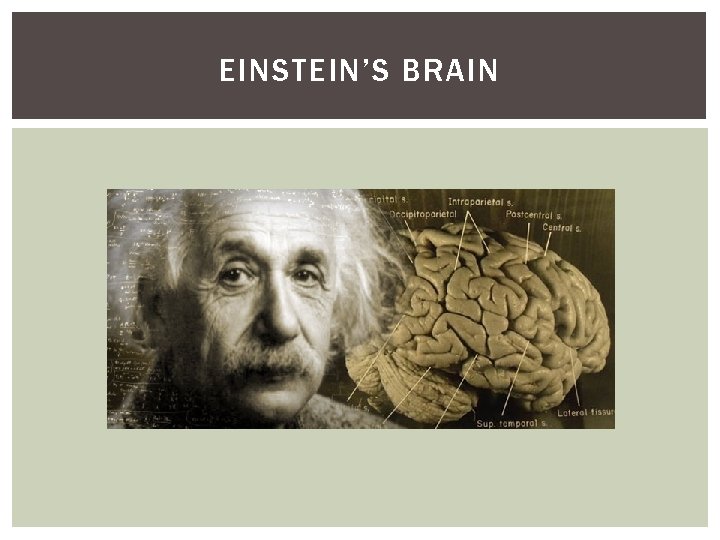
EINSTEIN’S BRAIN
MIND READING?
THE END
DEFINITI ON SLIDES
LESION = tissue destruction; a brain lesion is a naturally or experimentally caused destruction of brain tissue.
ELECTROENCEPHALOGRAM (EEG) = an amplified recording of the waves of electrical activity that sweep across the brain’s surface. These waves are measured by electrodes placed on the scalp.
CT (COMPUTED TOMOGRAPHY) SCAN = a series of X-ray photographs taken from different angles and combined by computer into a composite representation of a slice through the body. Also called CAT scan.
PET (POSITRON EMISSION TOMOGRAPHY) SCAN = a visual display of brain activity that detects where a radioactive form of glucose goes while the brain performs a given task.
MRI (MAGNETIC RESONANCE IMAGING) = a technique that uses magnetic fields and radio waves to produce computer-generated images of soft tissue. MRI scans show brain anatomy.
FMRI (FUNCTIONAL MRI) = a technique for revealing bloodflow and, therefore, brain activity by comparing successive MRI scans. f. MRI scans show brain function.
BRAINSTEM = the oldest part of the central core of the brain, beginning where the spinal cord swells as it enters the skull; the brainstem is responsible for automatic survival functions.
MEDULLA = the base of the brainstem; controls heartbeat and breathing.
RETICULAR FORMATION = a nerve network in the brainstem that plays an important role in controlling arousal.
THALAMUS = the brain’s sensory switchboard, located on top of the brainstem; it directs messages to the sensory receiving areas in the cortex and transmits replies to the cerebellum and medulla.
CEREBELLUM = the “little brain” at the rear of the brainstem; functions include processing sensory input and coordinating movement output and balance.
LIMBIC SYSTEM = doughnut-shaped neural system (including the hippocampus, amygdala, and hypothalamus) located below the cerebral hemispheres; associated with emotions and drives.
AMYGDALA = two lima bean-sized neural clusters in the limbic system; linked to emotion.
HYPOTHALAMUS = a neural structure lying below (hypo) the thalamus; it directs several maintenance activities (eating, drinking, body temperature), helps govern the endocrine system via the pituitary gland, and is linked to emotion and reward.
CEREBRAL CORTEX = the intricate fabric of interconnected neural cells covering the cerebral hemispheres; the body’s ultimate control and information-processing center.
GLIAL CELLS = cells in the nervous system that support, nourish, and protect neurons.
FRONTAL LOBES = portion of the cerebral cortex lying just behind the forehead; involved in speaking and muscle movements and in making plans and judgments.
PARIETAL LOBES = portion of the cerebral cortex lying at the top of the head and toward the rear; receives sensory input for touch and body position.
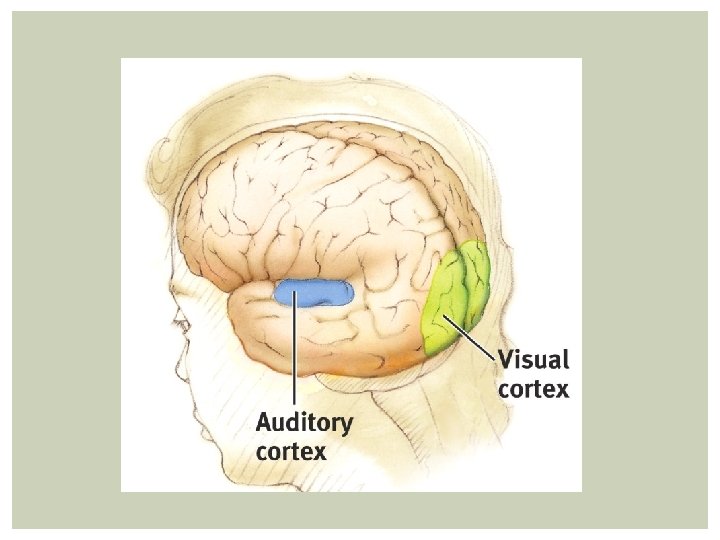
OCCIPITAL LOBES = portion of the cerebral cortex lying at the back of the head; includes areas that receive information from the visual fields.
TEMPORAL LOBES = portion of the cerebral cortex lying roughly above the ears; includes the auditory areas, each receiving information primarily from the opposite ear.
MOTOR CORTEX = an area at the rear of the frontal lobes that controls voluntary movements.
SENSORY CORTEX = area at the front of the parietal lobes that registers and processes body touch and movement sensations.
ASSOCIATION AREAS = areas of the cerebral cortex that are not involved in primary motor or sensory functions; rather, they are involved in higher mental functions such as learning, remembering, thinking, and speaking.
APHASIA = impairment of language, usually caused by left hemisphere damage either to Broca’s area (impairing speaking) or to Wernicke’s area (impairing understanding).
BROCA’S AREA = controls language expression that directs the muscle movements involved in speech.
WERNICKE’S AREA = controls language reception – a brain area involved in language comprehension and expression; usually in the left temporal lobe.
PLASTICITY = the brain’s ability to change, especially during childhood, by reorganizing after damage or by building new pathways based on experience.
NEUROGENESIS = the formation of new neurons.
CORPUS CALLOSUM = the large band of neural fibers connecting the two brain hemispheres and carrying messages between them.
SPLIT BRAIN = a condition resulting from surgery that isolates the brain’s two hemispheres by cutting the fibers (mainly those of the corpus callosum) connecting them.
CONSCIOUSNESS = our awareness of ourselves and our environment.
COGNITIVE NEUROSCIENCE = the interdisciplinary study of the brain activity linked with cognition (including perception, thinking, memory and language).
DUAL PROCESSING =the principle that information is often simultaneously processed on separate conscious and unconscious tracks.