
Hatchery planning and management Hatchery design Hatchery types

- Slides: 50
Hatchery planning and management
Hatchery design
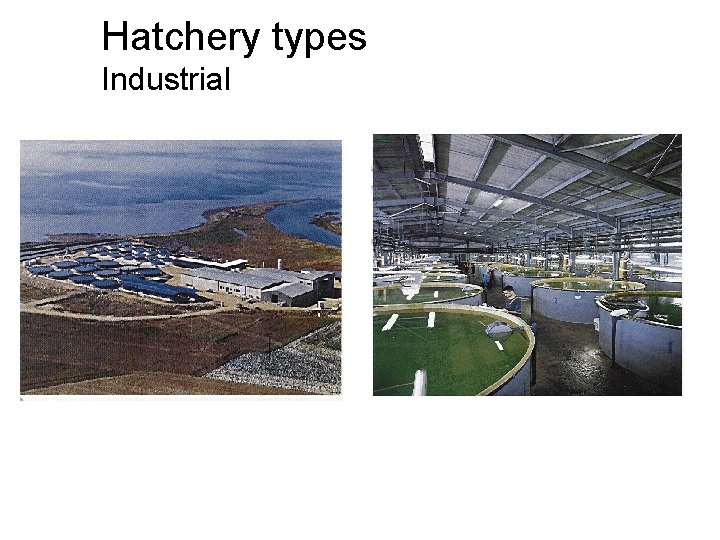
Hatchery types Industrial
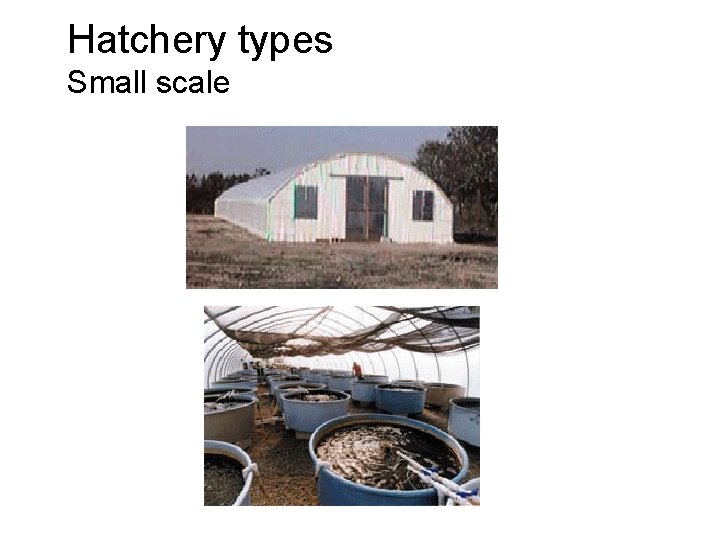
Hatchery types Small scale
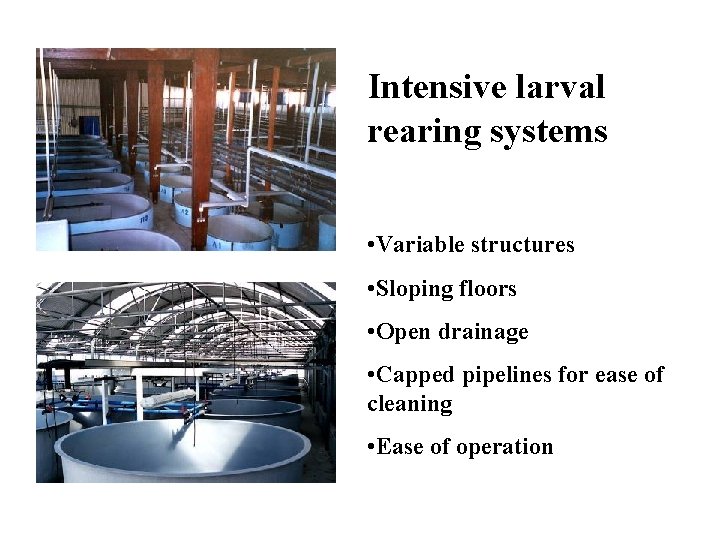
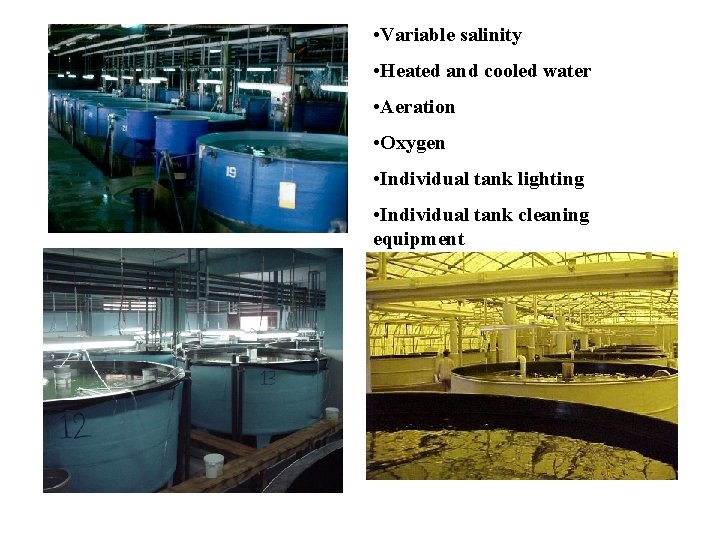
Intensive larval rearing systems • Variable structures • Sloping floors • Open drainage • Capped pipelines for ease of cleaning • Ease of operation
• Variable salinity • Heated and cooled water • Aeration • Oxygen • Individual tank lighting • Individual tank cleaning equipment
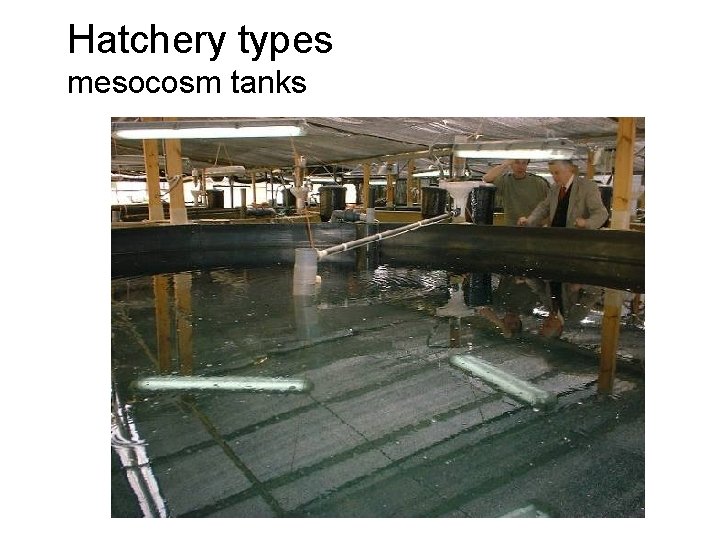
Hatchery types mesocosm tanks
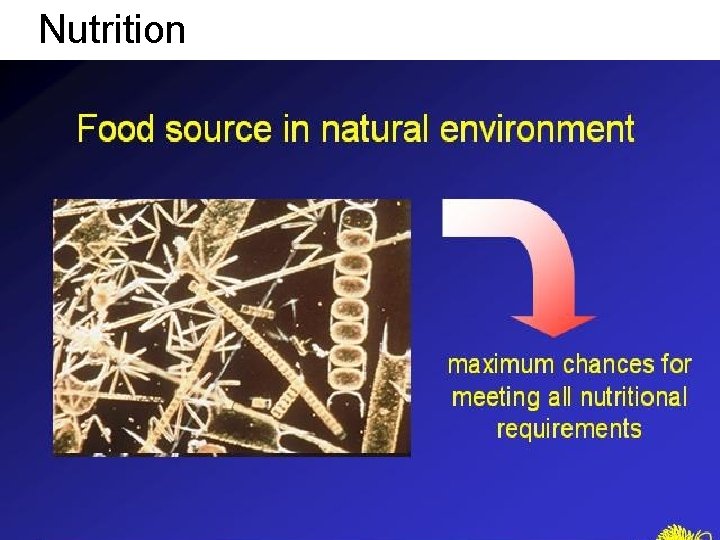
Nutrition
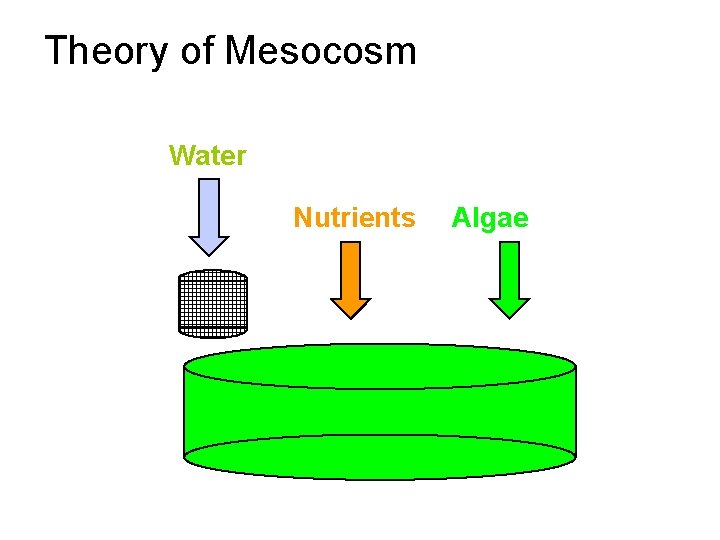
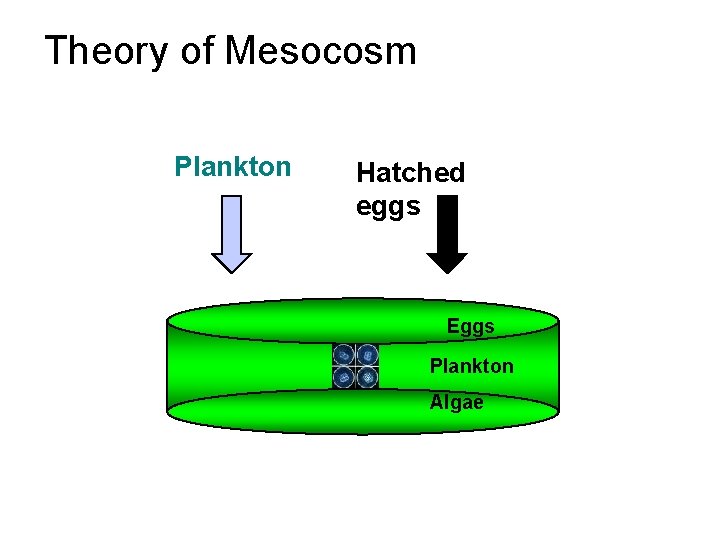
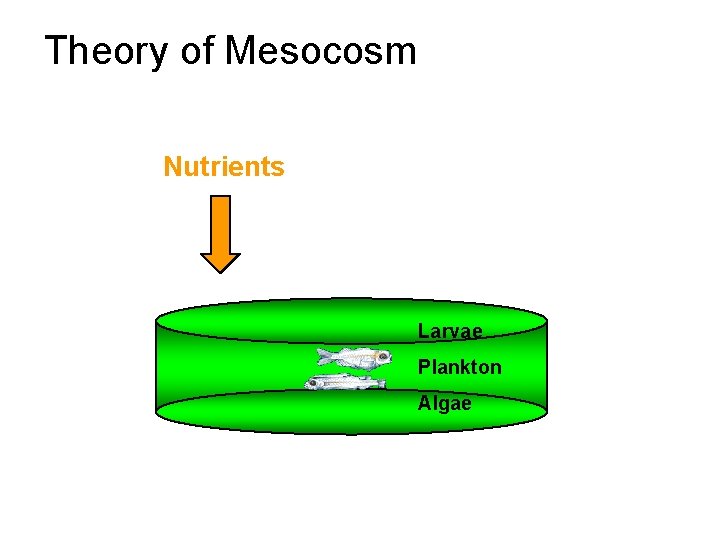
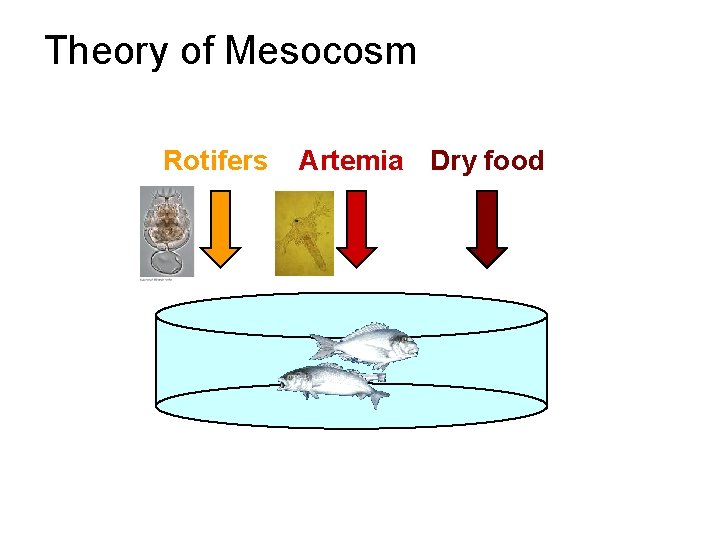
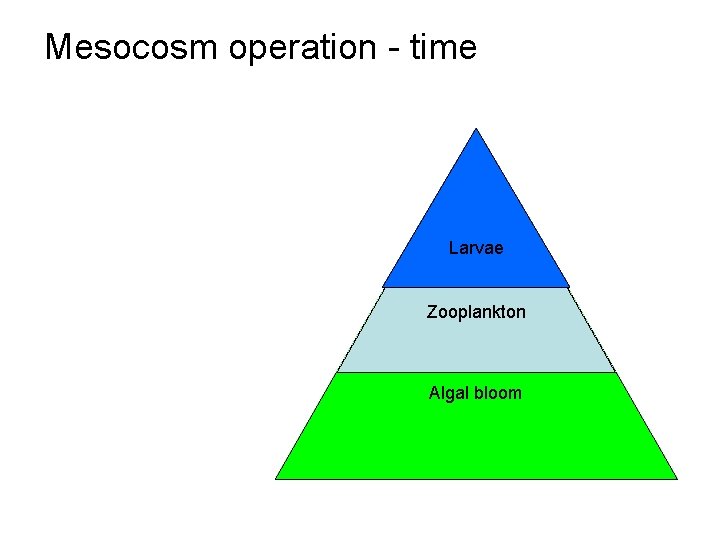
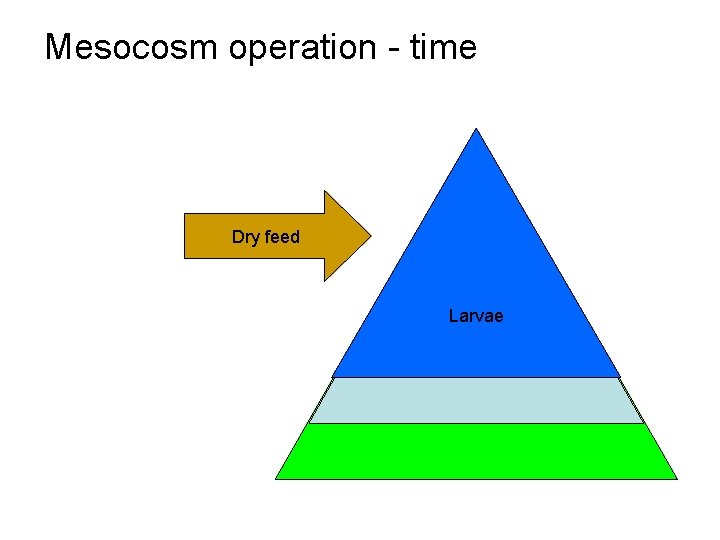
Theory of Mesocosm fry production Mesocosms are controlled blooms of phyto and zooplankton to allow the necessary supply of zooplankton with the necessary nutritional qualities and of a particle size small enough for the larvae to ingest. • However, the zooplankton in mesocosms soon become depleted by the larvae. • Therefore additional enriched rotifers and Artemia are added to supplement the feed requirement. • When larvae are of a sufficient size, then inert feeds can be added and the fry weaned from live to dry feeds.
Theory of Mesocosm Water Nutrients Algae
Theory of Mesocosm Plankton Hatched eggs Eggs Plankton Algae
Theory of Mesocosm Nutrients Larvae Plankton Algae
Theory of Mesocosm Rotifers Artemia Dry food
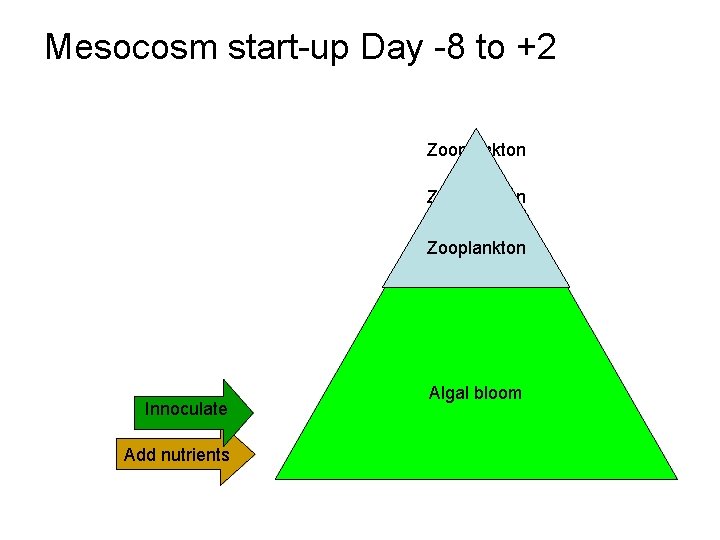
Mesocosm start-up Day -8 to +2 Zooplankton Innoculate Add nutrients Algal Water bloom
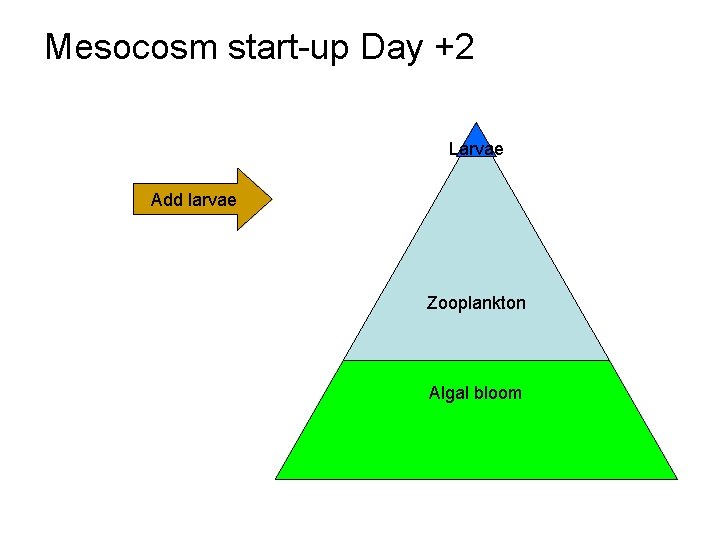
Mesocosm start-up Day +2 Larvae Add larvae Zooplankton Algal bloom
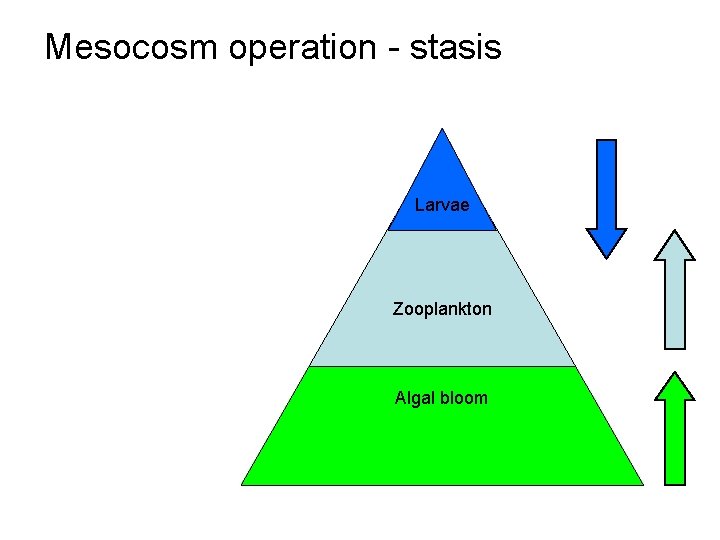
Mesocosm operation - stasis Larvae Zooplankton Algal Water bloom
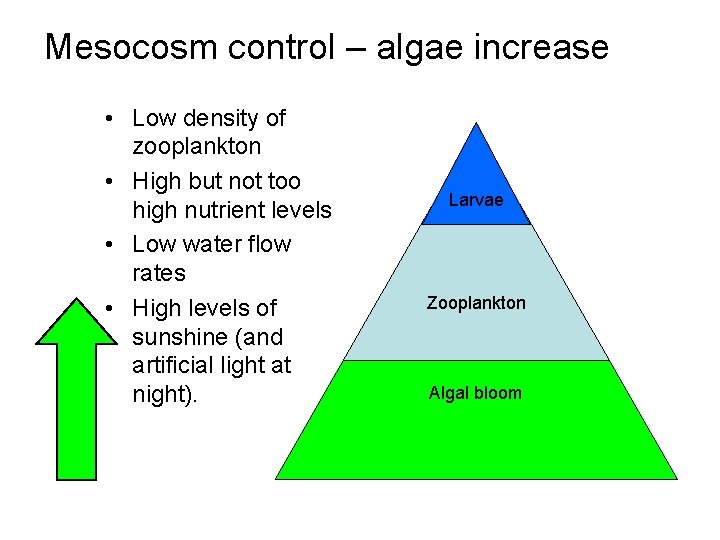
Mesocosm control – algae increase • Low density of zooplankton • High but not too high nutrient levels • Low water flow rates • High levels of sunshine (and artificial light at night). Larvae Zooplankton Algal Water bloom
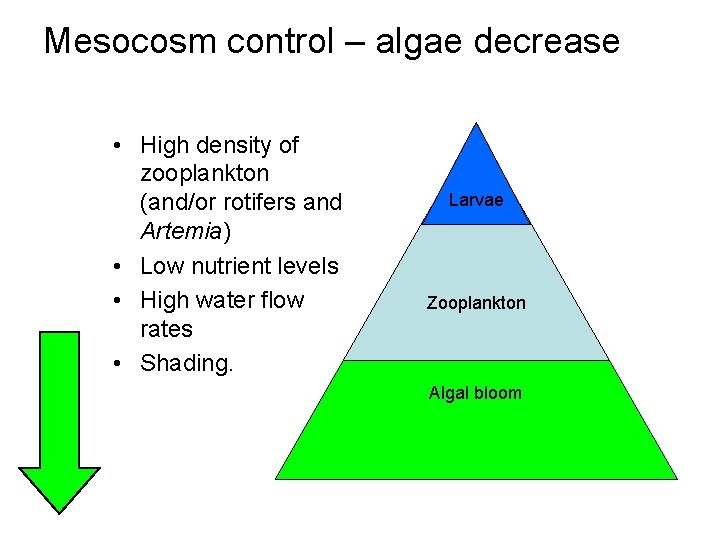
Mesocosm control – algae decrease • High density of zooplankton (and/or rotifers and Artemia) • Low nutrient levels • High water flow rates • Shading. Larvae Zooplankton Algal Water bloom
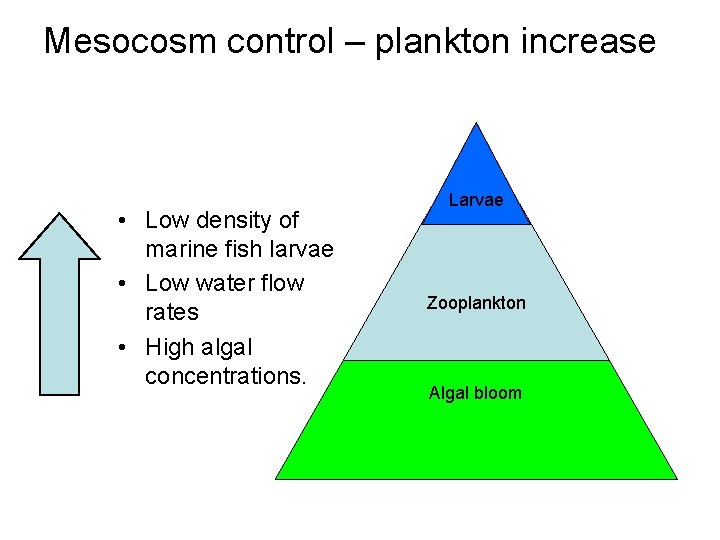
Mesocosm control – plankton increase • Low density of marine fish larvae • Low water flow rates • High algal concentrations. Larvae Zooplankton Algal Water bloom
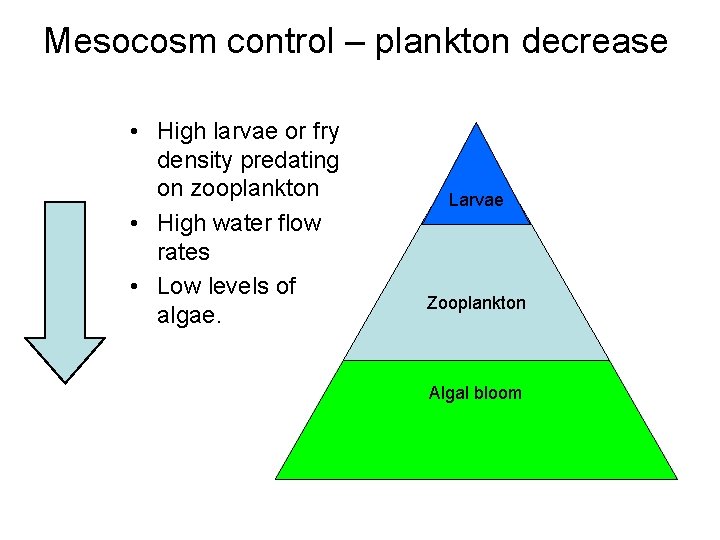
Mesocosm control – plankton decrease • High larvae or fry density predating on zooplankton • High water flow rates • Low levels of algae. Larvae Zooplankton Algal Water bloom
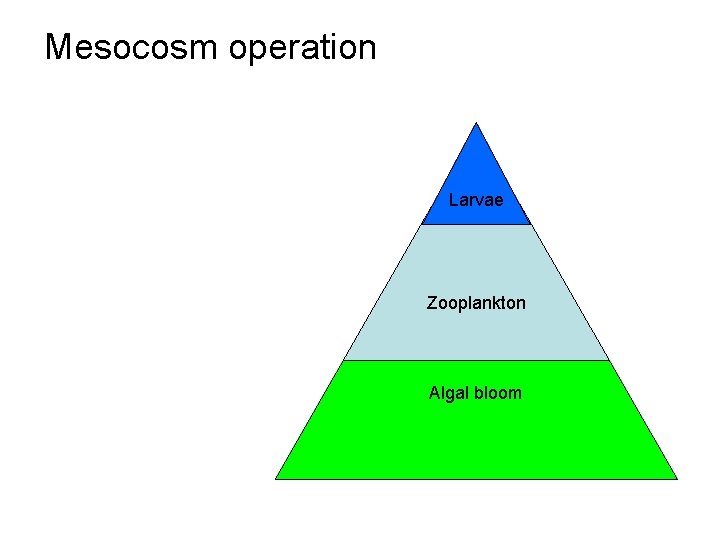
Mesocosm operation Larvae Zooplankton Algal Water bloom
Mesocosm operation - time Larvae Zooplankton Algal Water bloom
Mesocosm operation - time Dry feed Larvae Zooplankton Algal Water bloom
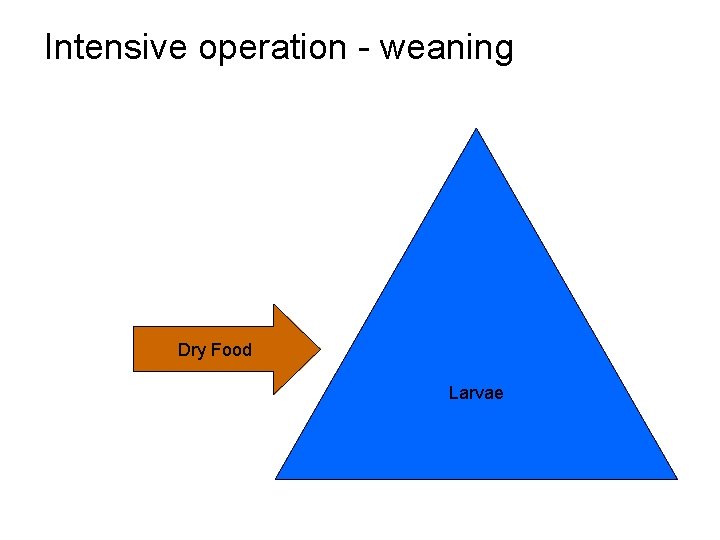
Intensive operation - weaning Dry Food Larvae Water
Monitoring and control Sustaining the phytoplankton and zooplankton bloom will be undertaken by • Monitoring • algal concentration and type • zooplankton concentration • larvae and fry density • Nutrient levels • Oxygen levels
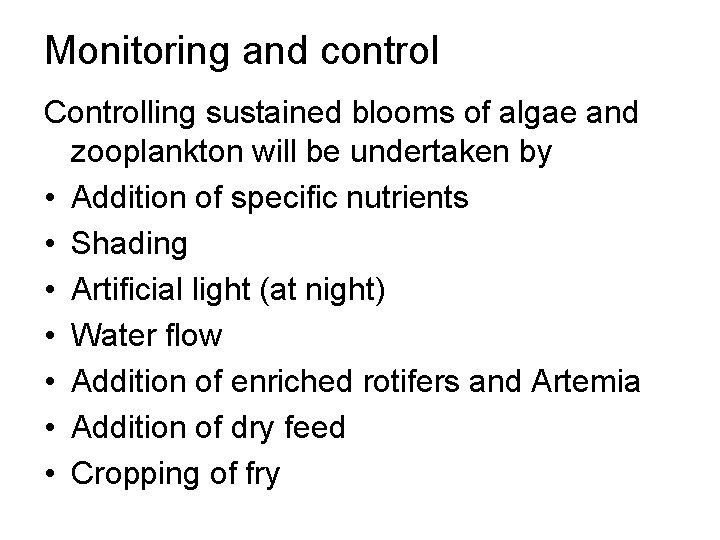
Monitoring and control Controlling sustained blooms of algae and zooplankton will be undertaken by • Addition of specific nutrients • Shading • Artificial light (at night) • Water flow • Addition of enriched rotifers and Artemia • Addition of dry feed • Cropping of fry
Production cycle planning
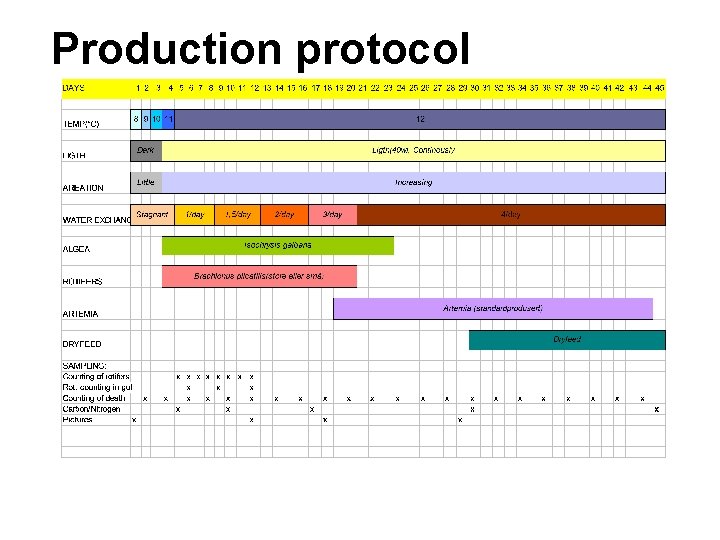
Production protocol
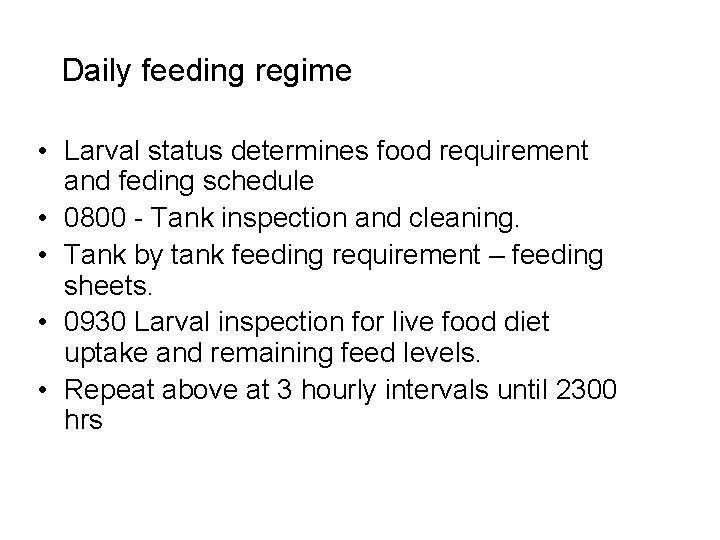
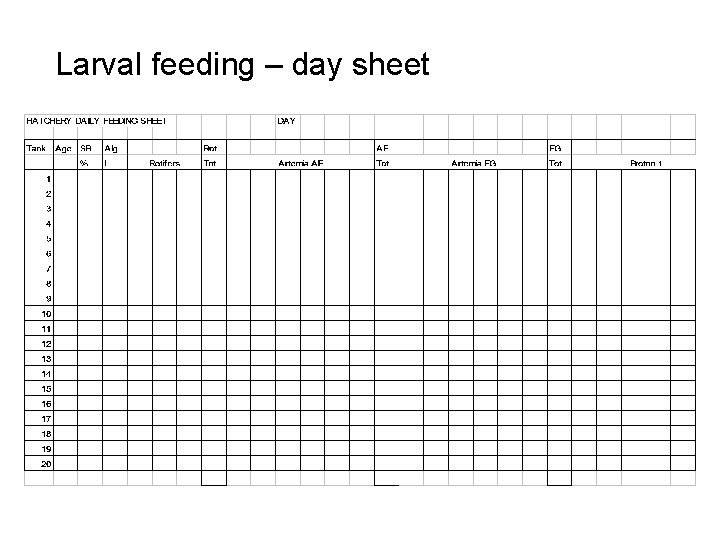
Daily feeding regime • Larval status determines food requirement and feding schedule • 0800 - Tank inspection and cleaning. • Tank by tank feeding requirement – feeding sheets. • 0930 Larval inspection for live food diet uptake and remaining feed levels. • Repeat above at 3 hourly intervals until 2300 hrs
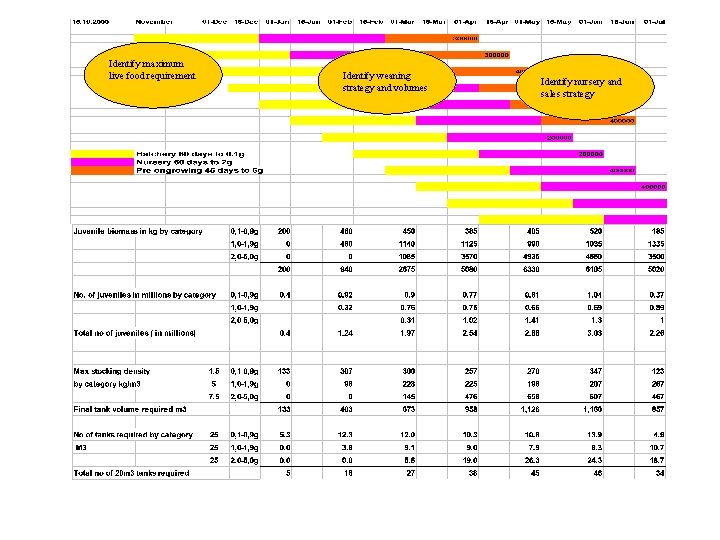
Identify maximum live food requirement Identify weaning strategy and volumes Identify nursery and sales strategy
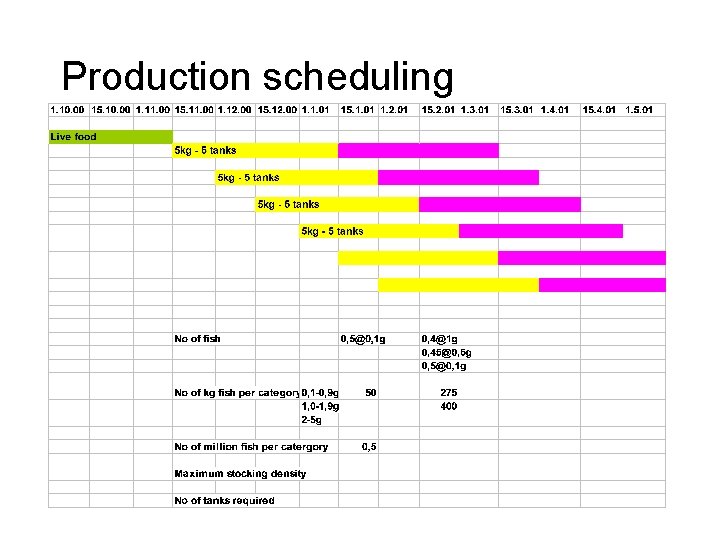
Production scheduling
Staff management
Impact of poor management strategies Frequent problems encountered How does this impact production ? • Inappropriate human resource management poor skills • Lack of communication • Lack of anticipation • Lack of priorities • Poorly identified departments activities and responsibilities • Low personal motivation • Resignation of key personnel and high staff turnover • Ineffective staff performance Ø Delays in hatchery production, scheduling and productivity Ø Lack of accountability Ø Deviation from procedures and protocols Ø In consistent and variable stocking rates, feeding strategies, survival rates and quality parameters Result: - Poor and variable survivals, low productivity, higher costs and periodic production failures - unsatisfied customers
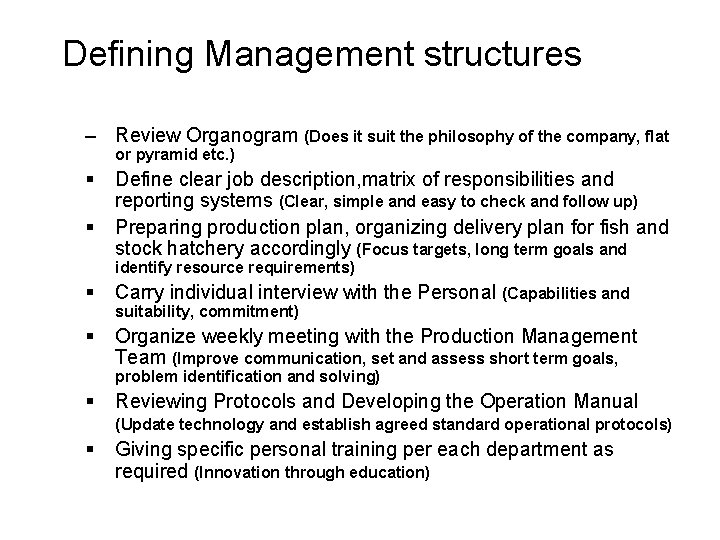
Defining Management structures – Review Organogram (Does it suit the philosophy of the company, flat or pyramid etc. ) § § Define clear job description, matrix of responsibilities and reporting systems (Clear, simple and easy to check and follow up) Preparing production plan, organizing delivery plan for fish and stock hatchery accordingly (Focus targets, long term goals and identify resource requirements) § Carry individual interview with the Personal (Capabilities and § Organize weekly meeting with the Production Management Team (Improve communication, set and assess short term goals, suitability, commitment) problem identification and solving) § Reviewing Protocols and Developing the Operation Manual (Update technology and establish agreed standard operational protocols) § Giving specific personal training per each department as required (Innovation through education)
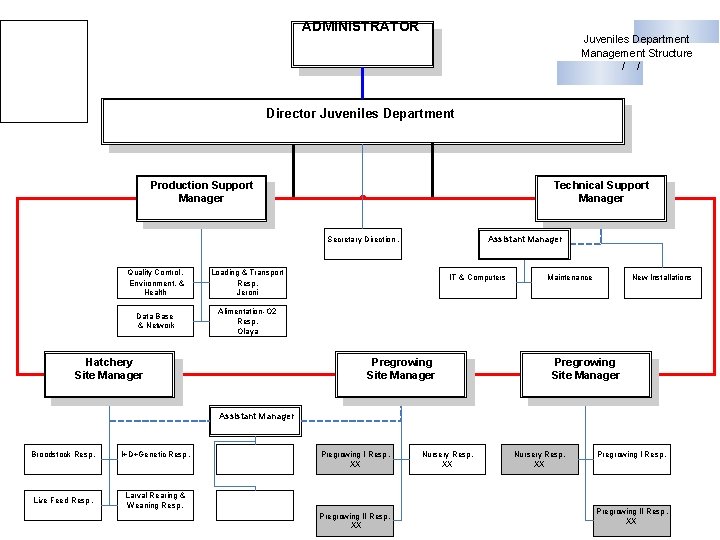
ADMINISTRATOR Juveniles Department Management Structure / / Director Juveniles Department Production Support Manager Technical Support Manager Assistant Manager Secretary Direction. Quality Control, Environment. & Health Loading & Transport Resp. Jeroni Data Base & Network Alimentation-O 2 Resp. Olaya Hatchery Site Manager IT & Computers Pregrowing Site Manager Maintenance New Installations Pregrowing Site Manager Assistant Manager Broodstock Resp. I+D+Genetic Resp. Live Feed Resp. Larval Rearing & Weaning Resp. Pregrowing I Resp. XX Pregrowing II Resp. XX Nursery Resp. XX Pregrowing I Resp. Pregrowing II Resp. XX
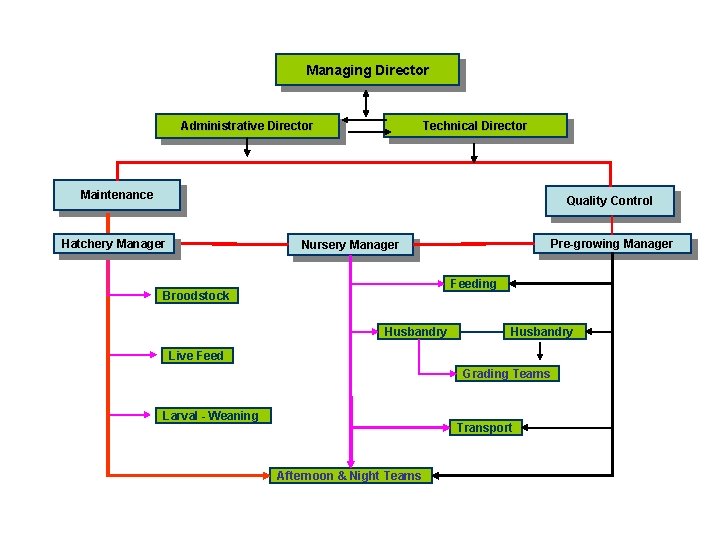
Managing Director Technical Director Administrative Director Maintenance Quality Control Hatchery Manager Pre-growing Manager Nursery Manager Feeding Broodstock Husbandry Live Feed Grading Teams Larval - Weaning Transport Afternoon & Night Teams
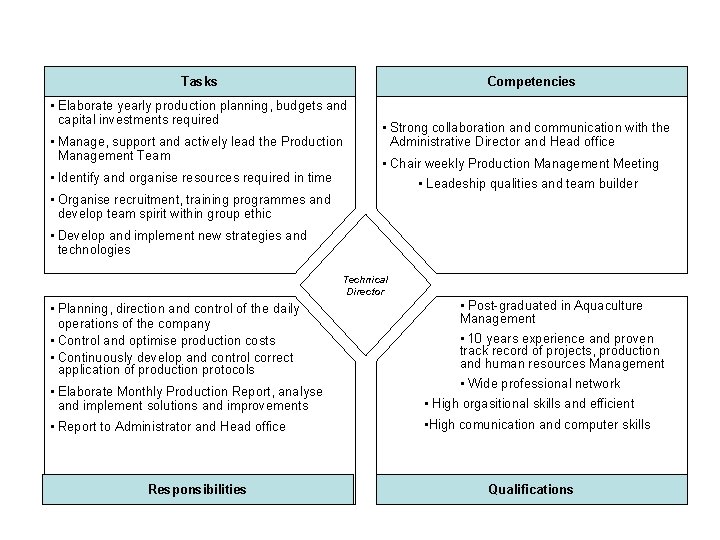
Tasks Competencies • Elaborate yearly production planning, budgets and capital investments required • Manage, support and actively lead the Production Management Team • Identify and organise resources required in time • Strong collaboration and communication with the Administrative Director and Head office • Chair weekly Production Management Meeting • Leadeship qualities and team builder • Organise recruitment, training programmes and develop team spirit within group ethic • Develop and implement new strategies and technologies Technical Director • Planning, direction and control of the daily operations of the company • Control and optimise production costs • Continuously develop and control correct application of production protocols • Post-graduated in Aquaculture Management • 10 years experience and proven track record of projects, production and human resources Management • Wide professional network • Elaborate Monthly Production Report, analyse and implement solutions and improvements • High orgasitional skills and efficient • Report to Administrator and Head office • High comunication and computer skills Responsibilities Qualifications
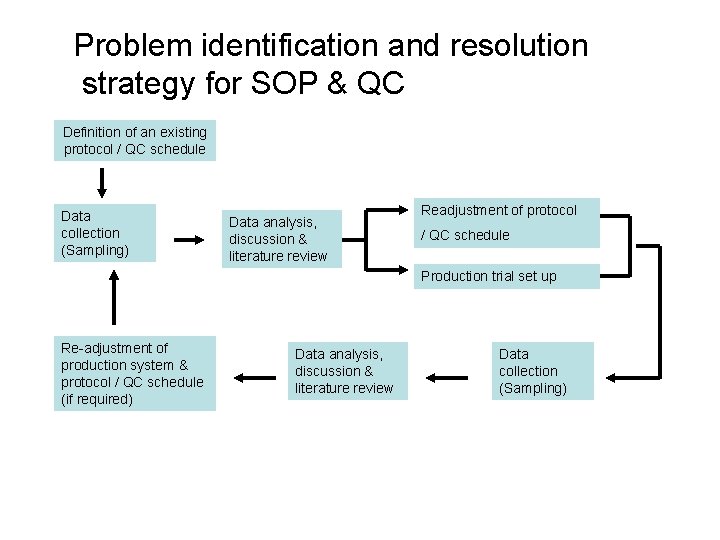
Problem identification and resolution strategy for SOP & QC Definition of an existing protocol / QC schedule Data collection (Sampling) Data analysis, discussion & literature review Readjustment of protocol / QC schedule Production trial set up Re-adjustment of production system & protocol / QC schedule (if required) Data analysis, discussion & literature review Data collection (Sampling)
Management of fry production • Provide feed for larvae – – – Correct size Correct nutritional quality Correct frequency Correct amount Correct distribution • To maximizing survival and growth. – Water quality – Biosecurity – hygiene • To produce fry in a cost efficient manner
Management requirements of the hatchery • All departments to work in in close cooperation with each other to: • Organize production schedules and define targets for the hatchery concerning the future stocking programme for larvae. • Organise • • • Staff working schedules and holidays Ordering feed and materials Ordering new equipment repairs and renewals. Develop annual and monthly budgets for the above Provide daily and weekly production schedules for the operation. Supervise operations and undertake quality control. Keep records stock lists and organize product supply. Provide monthly reporting on the above to the management with reference to the agreed budget. • Supervise.
Definition of a good hatchery manager • • • Organizational ability Attention to detail Tidy and clean working procedures Ability to follow detailed protocols Innovative crisis management ability Never leaves anything until tomorrow
Production cost estimation
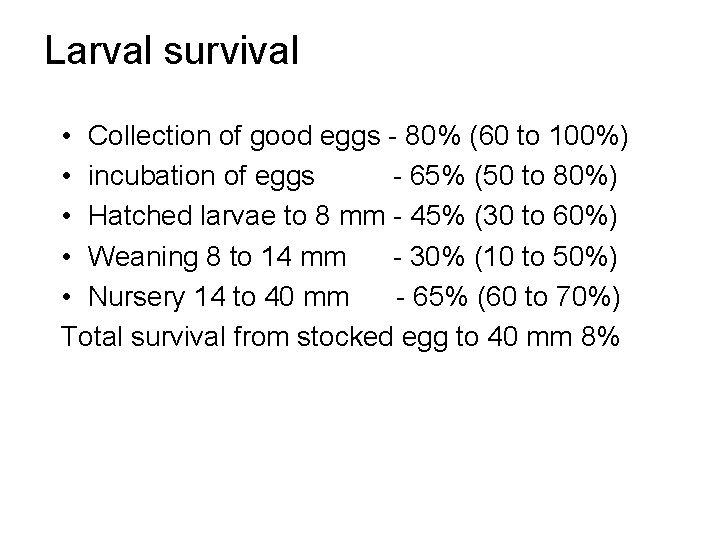
Larval survival • Collection of good eggs - 80% (60 to 100%) • incubation of eggs - 65% (50 to 80%) • Hatched larvae to 8 mm - 45% (30 to 60%) • Weaning 8 to 14 mm - 30% (10 to 50%) • Nursery 14 to 40 mm - 65% (60 to 70%) Total survival from stocked egg to 40 mm 8%
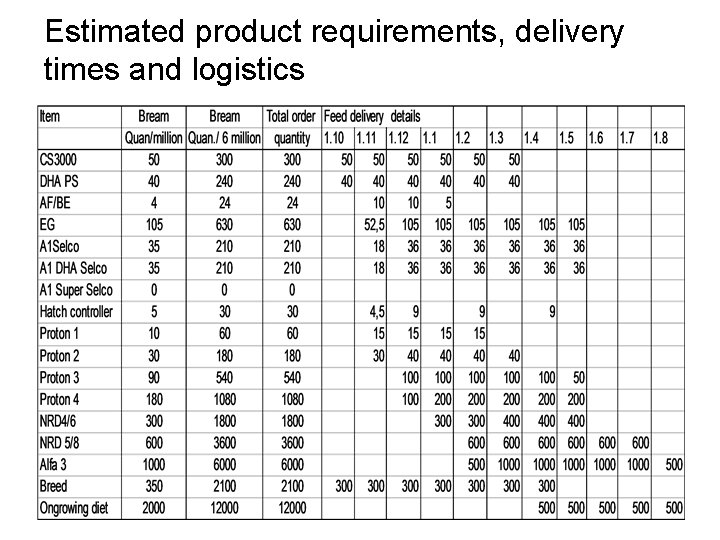
Estimated product requirements, delivery times and logistics
Sensitivity analysis
Larval feeding – day sheet
Cause and cure • Human error • Mechanical error • System overload and failure • Third party problems (Electrical failure to sabotage) • Management structures • Maintenance, repairs and renewals • Incorrect production programming • Various
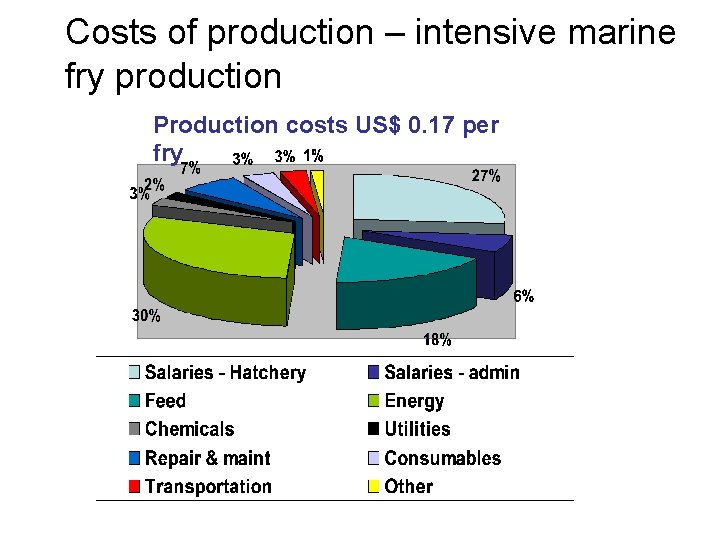
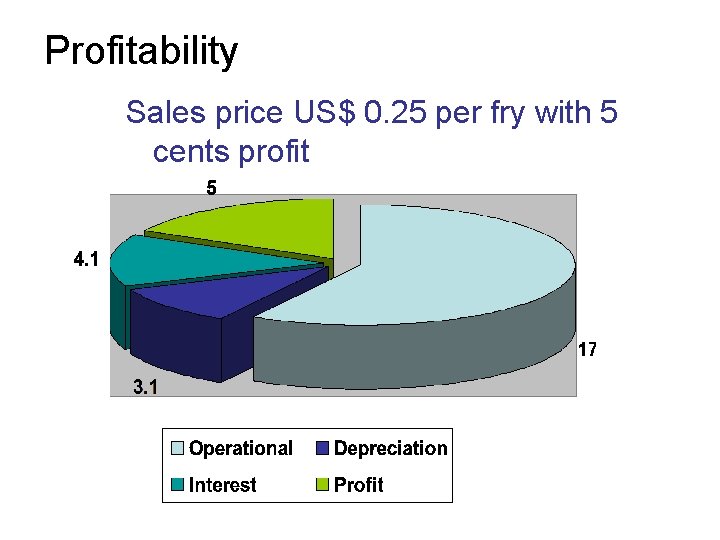
Costs of production – intensive marine fry production Production costs US$ 0. 17 per fry
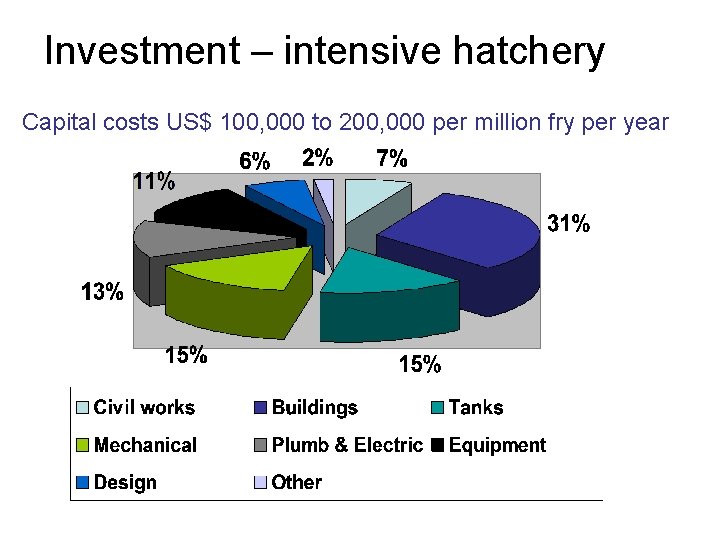
Investment – intensive hatchery Capital costs US$ 100, 000 to 200, 000 per million fry per year
Profitability Sales price US$ 0. 25 per fry with 5 cents profit