
HARVARD MEDICAL SCHOOL Anatomic Pathology Information The Challenge

- Slides: 50
HARVARD MEDICAL SCHOOL Anatomic Pathology Information – The Challenge of Tracking and Routing at MGH Information Received, I Understand • • Thomas M. Gudewicz, MD Massachusetts General Hospital • Harvard Medical School
HARVARD MEDICAL SCHOOL Summary • The complexity of pathology information workflow can be optimized by the application of automated systems, including asset tracking and routing • Automating a system requires detailed information on workflow to optimize analysis and design considerations • The collection and analysis of such information is in itself a definable process that assists design • Iteration is a key component of optimizing analysis and design
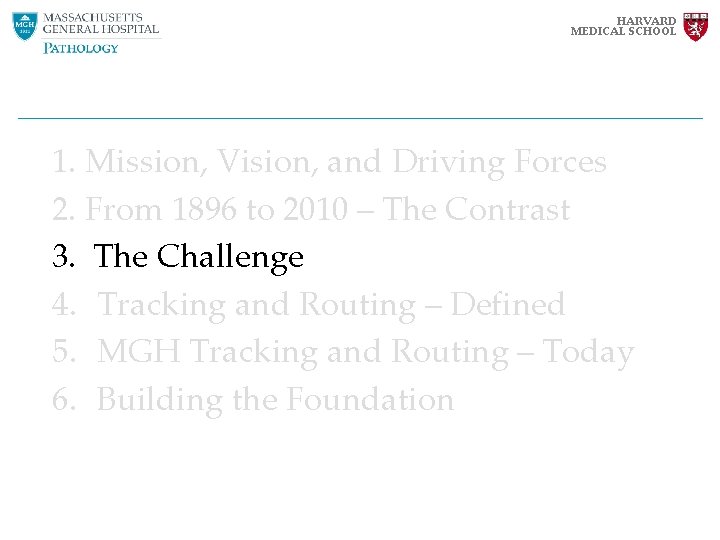
HARVARD MEDICAL SCHOOL Outline 1. 2. 3. 4. 5. 6. Mission, Vision and Driving Forces From 1896 to 2010 - The Contrast The Challenge Tracking and Routing – Defined MGH Tracking and Routing – Today Building the Foundation
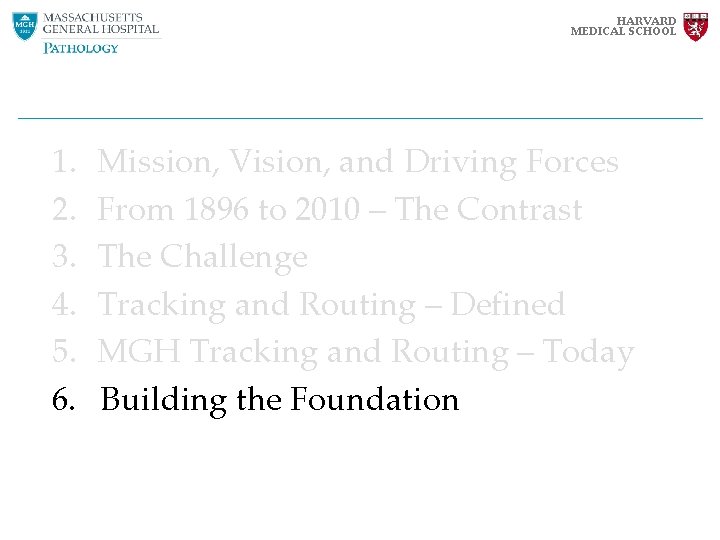
HARVARD MEDICAL SCHOOL 1. 2. 3. 4. 5. 6. Mission, Vision and Driving Forces From 1896 to 2010 – The Contrast The Challenge Tracking and Routing – Defined MGH Tracking and Routing – Today Building the Foundation
HARVARD MEDICAL SCHOOL The Mission and Vision of the MGH Pathology Service
HARVARD MEDICAL SCHOOL To deliver the highest quality pathology services and to move the field of pathology forward
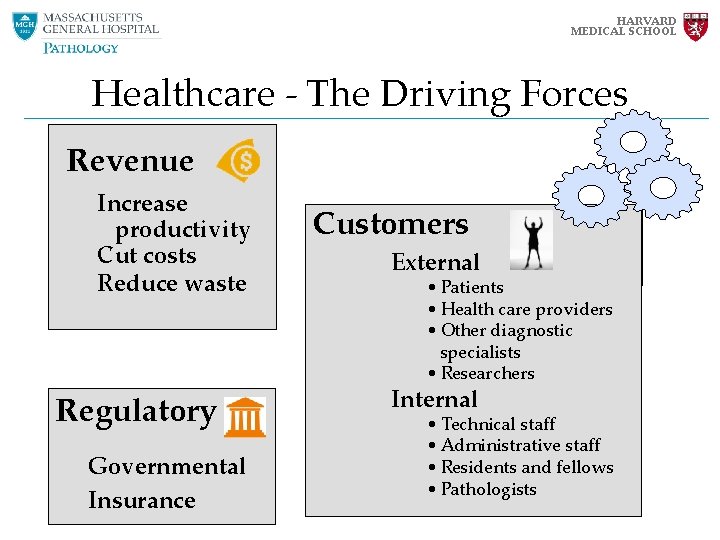
HARVARD MEDICAL SCHOOL Healthcare - The Driving Forces Revenue Increase productivity Cut costs Reduce waste Regulatory Governmental Insurance Customers External • Patients • Health care providers • Other diagnostic specialists • Researchers Internal • Technical staff • Administrative staff • Residents and fellows • Pathologists
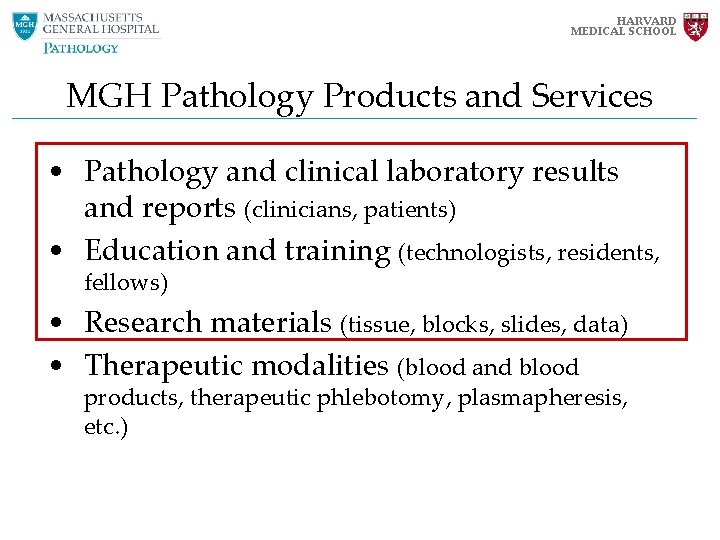
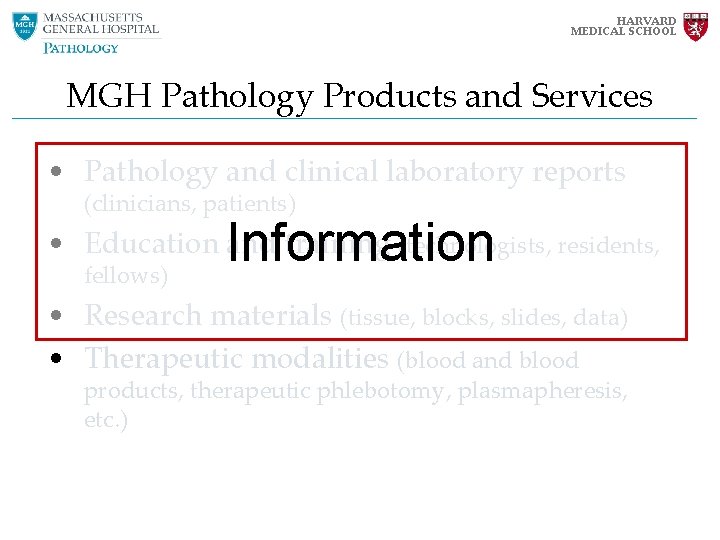
HARVARD MEDICAL SCHOOL MGH Pathology Products and Services • Pathology and clinical laboratory results and reports (clinicians, patients) • Education and training (technologists, residents, fellows) • Research materials (tissue, blocks, slides, data) • Therapeutic modalities (blood and blood products, therapeutic phlebotomy, plasmapheresis, etc. )
HARVARD MEDICAL SCHOOL MGH Pathology Products and Services • Pathology and clinical laboratory reports (clinicians, patients) Information • Education and training (technologists, residents, fellows) • Research materials (tissue, blocks, slides, data) • Therapeutic modalities (blood and blood products, therapeutic phlebotomy, plasmapheresis, etc. )
HARVARD MEDICAL SCHOOL 1. 2. 3. 4. 5. 6. Mission, Vision, and Driving Forces From 1896 to 2010, the Contrast The Challenge Tracking and Routing – Defined MGH Tracking and Routing – Today Building the Foundation
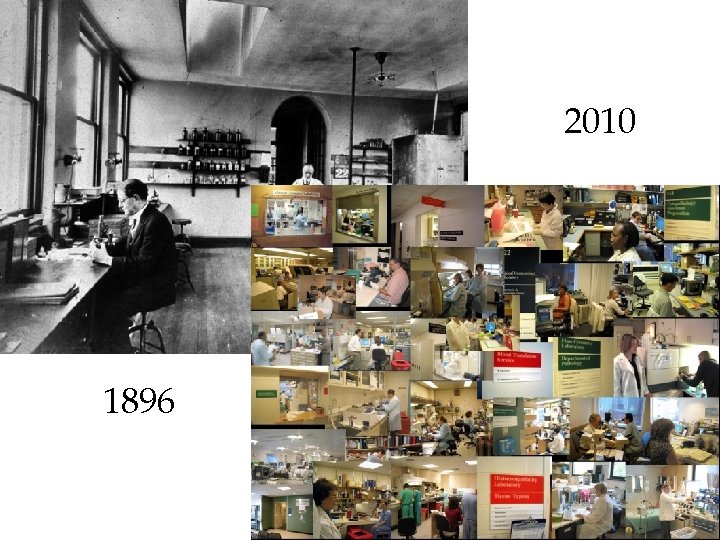
2010 1896
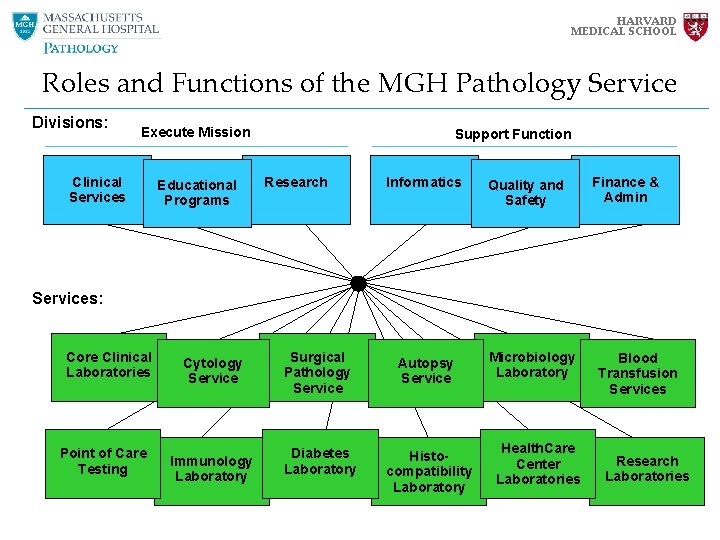
HARVARD MEDICAL SCHOOL Roles and Functions of the MGH Pathology Service Divisions: Execute Mission Clinical Services Educational Programs Support Function Research Informatics Quality and Safety Finance & Admin Services: Core Clinical Laboratories Point of Care Testing Cytology Service Immunology Laboratory Surgical Pathology Service Autopsy Service Diabetes Laboratory Histocompatibility Laboratory Microbiology Laboratory Health. Care Center Laboratories Blood Transfusion Services Research Laboratories
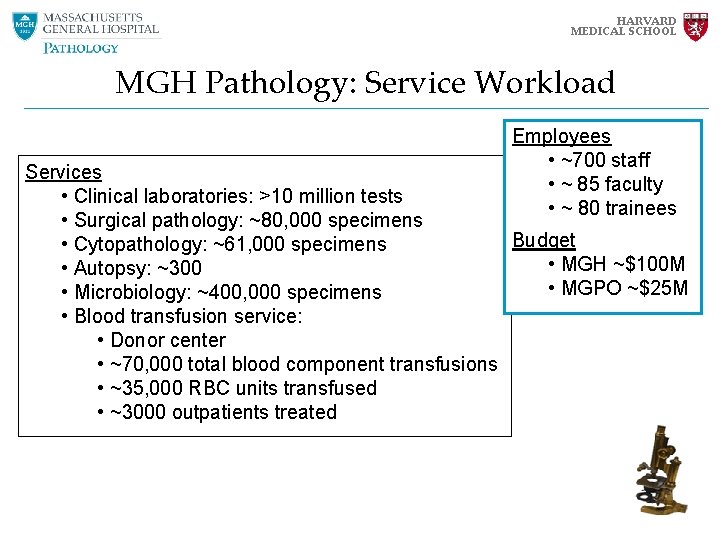
HARVARD MEDICAL SCHOOL MGH Pathology: Service Workload Employees • ~700 staff • ~ 85 faculty • ~ 80 trainees Services • Clinical laboratories: >10 million tests • Surgical pathology: ~80, 000 specimens Budget • Cytopathology: ~61, 000 specimens • MGH ~$100 M • Autopsy: ~300 • MGPO ~$25 M • Microbiology: ~400, 000 specimens • Blood transfusion service: • Donor center • ~70, 000 total blood component transfusions • ~35, 000 RBC units transfused • ~3000 outpatients treated
HARVARD MEDICAL SCHOOL 1. Mission, Vision, and Driving Forces 2. From 1896 to 2010 – The Contrast 3. The Challenge 4. Tracking and Routing – Defined 5. MGH Tracking and Routing – Today 6. Building the Foundation
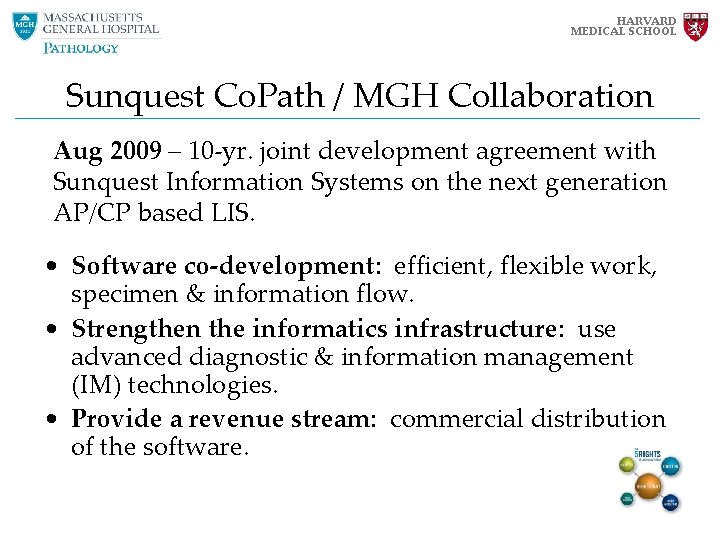
HARVARD MEDICAL SCHOOL Sunquest Co. Path / MGH Collaboration Aug 2009 – 10 -yr. joint development agreement with Sunquest Information Systems on the next generation AP/CP based LIS. • Software co-development: efficient, flexible work, specimen & information flow. • Strengthen the informatics infrastructure: use advanced diagnostic & information management (IM) technologies. • Provide a revenue stream: commercial distribution of the software.
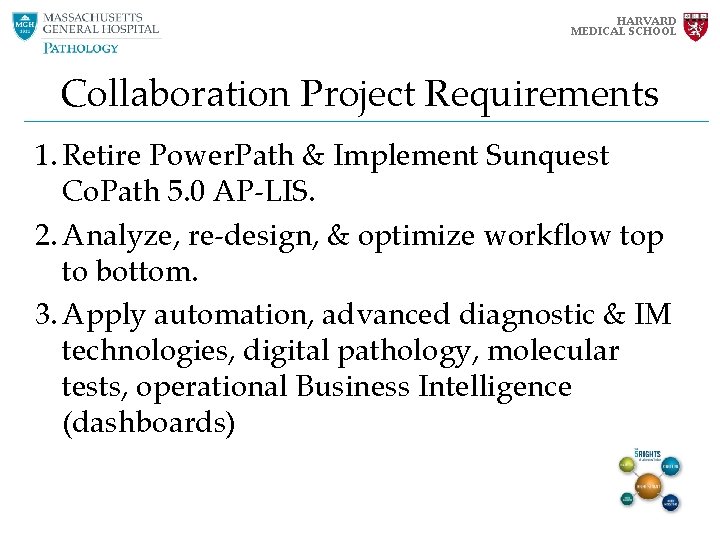
HARVARD MEDICAL SCHOOL Collaboration Project Requirements 1. Retire Power. Path & Implement Sunquest Co. Path 5. 0 AP-LIS. 2. Analyze, re-design, & optimize workflow top to bottom. 3. Apply automation, advanced diagnostic & IM technologies, digital pathology, molecular tests, operational Business Intelligence (dashboards)
HARVARD MEDICAL SCHOOL 1. 2. 3. 4. 5. 6. Mission, Vision, and Driving Forces From 1896 to 2010 – The Contrast The Challenge Tracking and Routing – Defined MGH Tracking and Routing – Today Building the Foundation
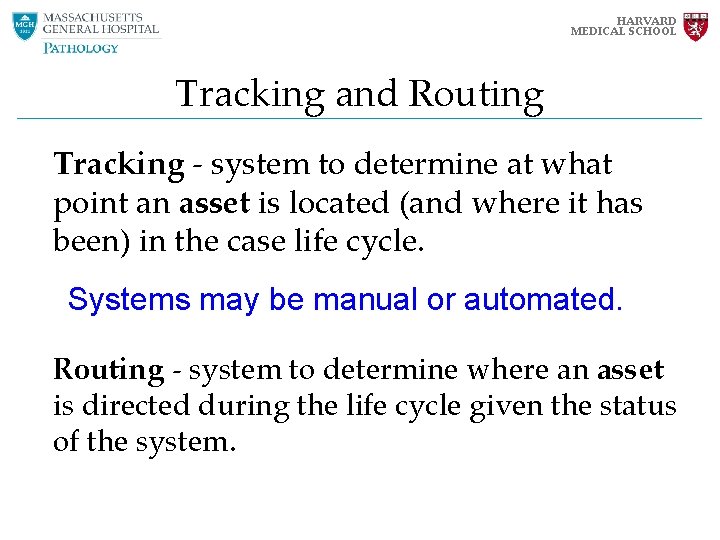
HARVARD MEDICAL SCHOOL Tracking and Routing Tracking - system to determine at what point an asset is located (and where it has been) in the case life cycle. Systems may be manual or automated. Routing - system to determine where an asset is directed during the life cycle given the status of the system.
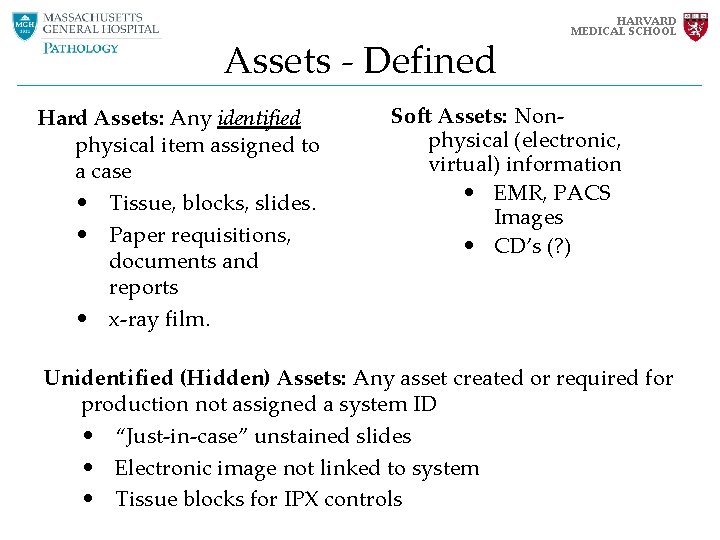
Assets - Defined Hard Assets: Any identified physical item assigned to a case • Tissue, blocks, slides. • Paper requisitions, documents and reports • x-ray film. HARVARD MEDICAL SCHOOL Soft Assets: Nonphysical (electronic, virtual) information • EMR, PACS Images • CD’s (? ) Unidentified (Hidden) Assets: Any asset created or required for production not assigned a system ID • “Just-in-case” unstained slides • Electronic image not linked to system • Tissue blocks for IPX controls
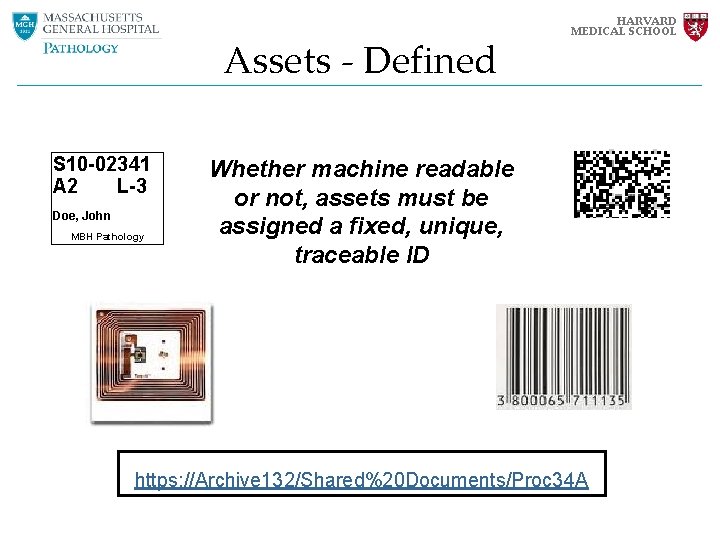
Assets - Defined S 10 -02341 A 2 L-3 Doe, John MBH Pathology HARVARD MEDICAL SCHOOL Whether machine readable or not, assets must be assigned a fixed, unique, traceable ID https: //Archive 132/Shared%20 Documents/Proc 34 A
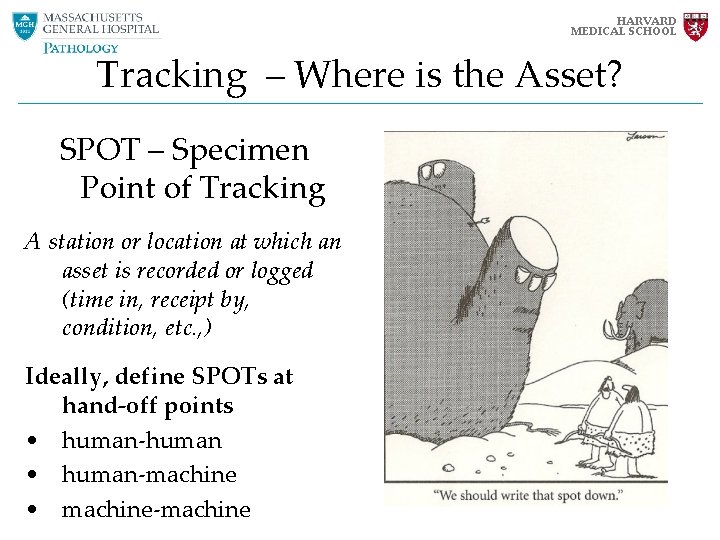
HARVARD MEDICAL SCHOOL Tracking – Where is the Asset? SPOT – Specimen Point of Tracking A station or location at which an asset is recorded or logged (time in, receipt by, condition, etc. , ) Ideally, define SPOTs at hand-off points • human-human • human-machine • machine-machine
HARVARD MEDICAL SCHOOL Routing – Where Do Assets Go? Route: User defined criteria outlining the SPOTs that an asset must enter & exit for processing 3 Types: 1. Standard Process 2. Contextual Process 3. Business Intelligence (BI) Process
HARVARD MEDICAL SCHOOL Routing – Where Do Assets Go? Standard: Route pre-defined at receipt by limited criteria (e. g. , prostate core bx – Route routine process, 3 L H&E slide/block). Contextual: Standard route modified by pre-defined data that drive special considerations (e. g. , priority, day of week or time, pathologist, consult case, associated assets, phone requests). BI: Real-time redirected routes based on up- & downstream conditions (optimized Work in Progress (WIP), i. e. , dashboard driven).
HARVARD MEDICAL SCHOOL 1. 2. 3. 4. 5. 6. Mission, Vision, and Driving Forces From 1896 to 2010 – The Contrast The Challenge Tracking and Routing – Defined MGH Tracking and Routing – Today Building the Foundation
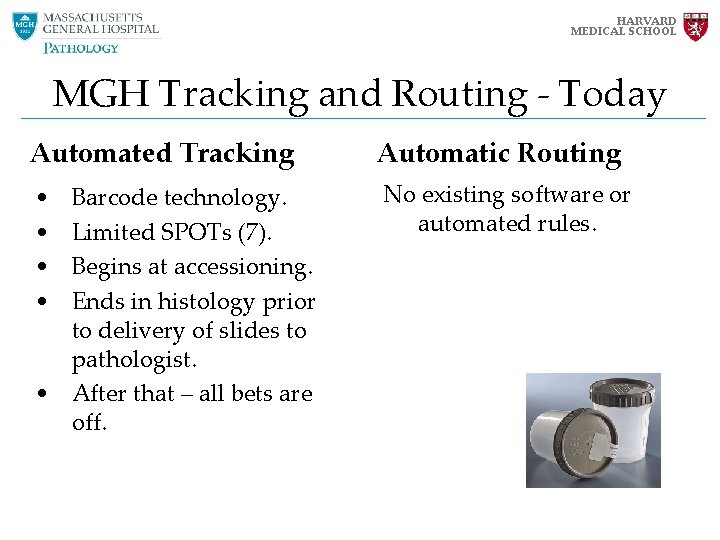
HARVARD MEDICAL SCHOOL MGH Tracking and Routing - Today Automated Tracking Automatic Routing • • No existing software or automated rules. Barcode technology. Limited SPOTs (7). Begins at accessioning. Ends in histology prior to delivery of slides to pathologist. • After that – all bets are off.
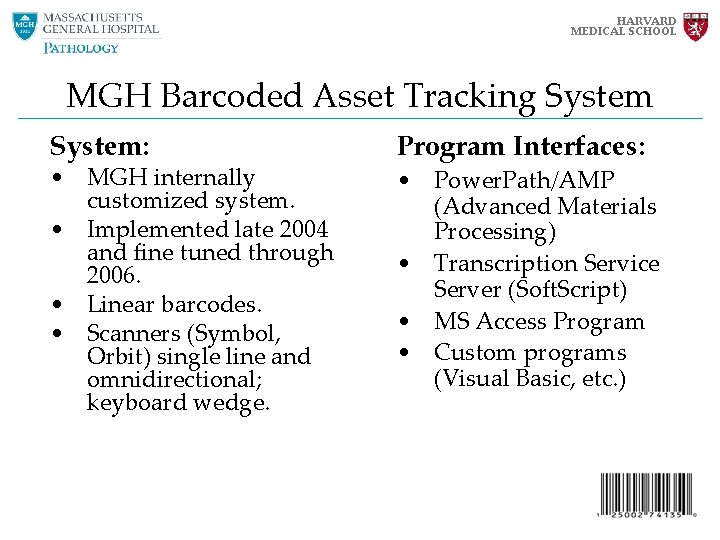
HARVARD MEDICAL SCHOOL MGH Barcoded Asset Tracking System: • MGH internally customized system. • Implemented late 2004 and fine tuned through 2006. • Linear barcodes. • Scanners (Symbol, Orbit) single line and omnidirectional; keyboard wedge. Program Interfaces: • Power. Path/AMP (Advanced Materials Processing) • Transcription Service Server (Soft. Script) • MS Access Program • Custom programs (Visual Basic, etc. )
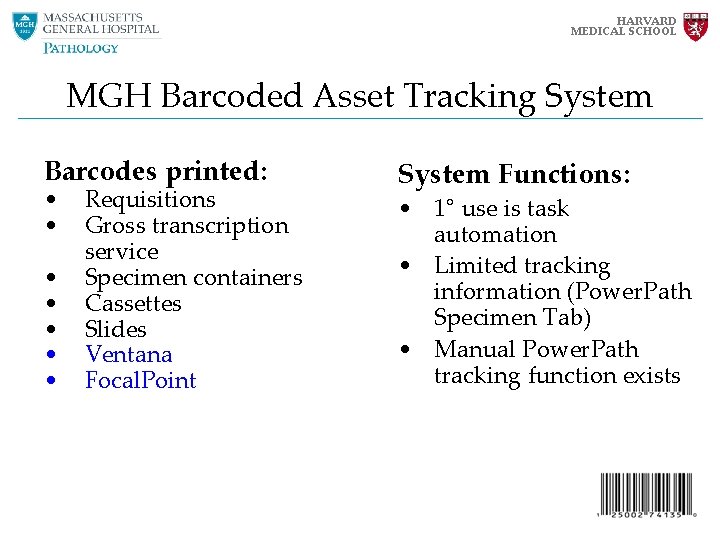
HARVARD MEDICAL SCHOOL MGH Barcoded Asset Tracking System Barcodes printed: • • Requisitions Gross transcription service Specimen containers Cassettes Slides Ventana Focal. Point System Functions: • 1° use is task automation • Limited tracking information (Power. Path Specimen Tab) • Manual Power. Path tracking function exists
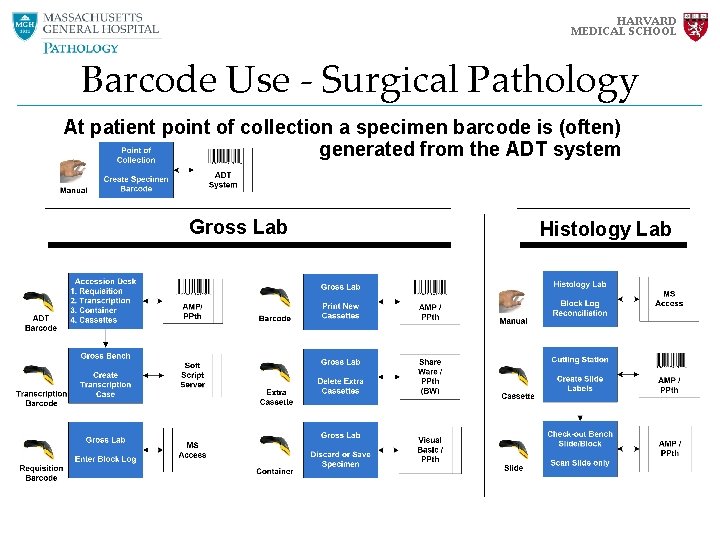
HARVARD MEDICAL SCHOOL Barcode Use - Surgical Pathology At patient point of collection a specimen barcode is (often) generated from the ADT system Gross Lab Histology Lab
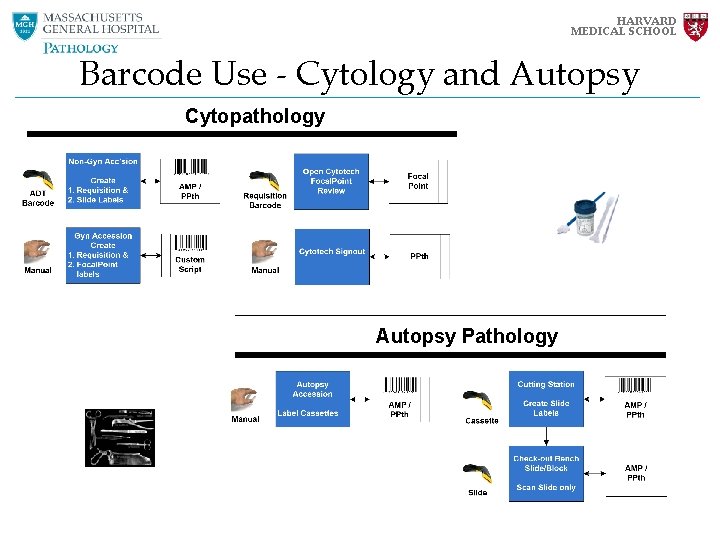
HARVARD MEDICAL SCHOOL Barcode Use - Cytology and Autopsy Cytopathology Autopsy Pathology
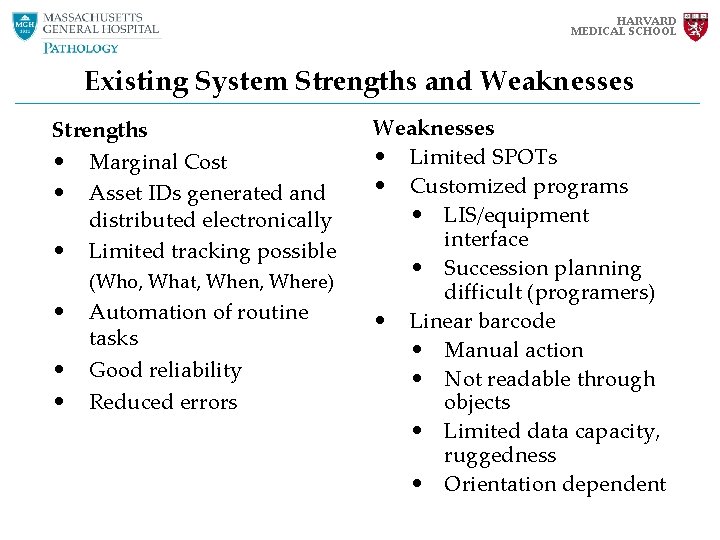
HARVARD MEDICAL SCHOOL Existing System Strengths and Weaknesses Strengths • Marginal Cost • Asset IDs generated and distributed electronically • Limited tracking possible (Who, What, When, Where) • • • Automation of routine tasks Good reliability Reduced errors Weaknesses • Limited SPOTs • Customized programs • LIS/equipment interface • Succession planning difficult (programers) • Linear barcode • Manual action • Not readable through objects • Limited data capacity, ruggedness • Orientation dependent
HARVARD MEDICAL SCHOOL 1. 2. 3. 4. 5. 6. Mission, Vision, and Driving Forces From 1896 to 2010 – The Contrast The Challenge Tracking and Routing – Defined MGH Tracking and Routing – Today Building the Foundation
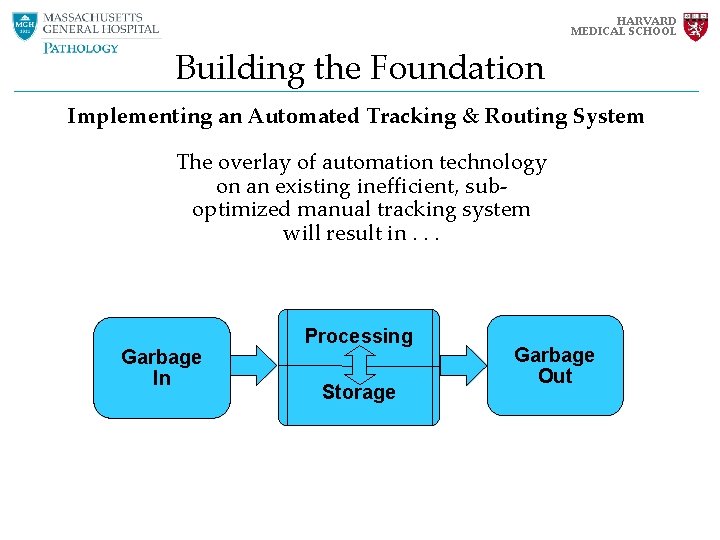
HARVARD MEDICAL SCHOOL Building the Foundation Implementing an Automated Tracking & Routing System The overlay of automation technology on an existing inefficient, suboptimized manual tracking system will result in. . . Garbage In Processing Storage Garbage Out
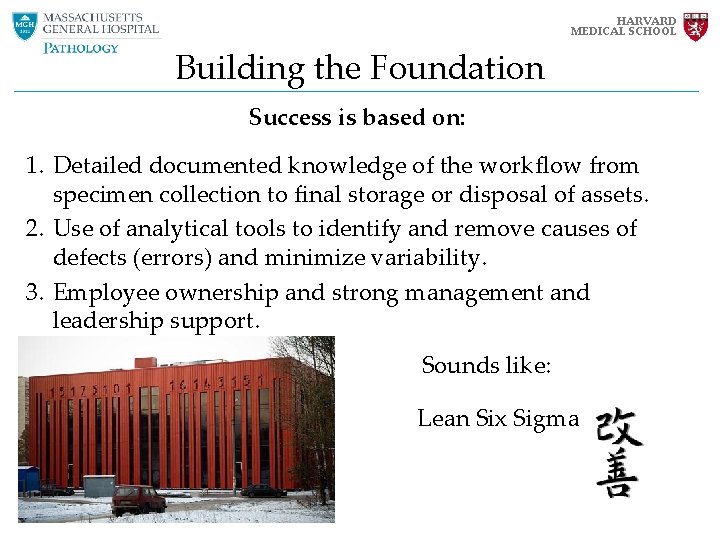
HARVARD MEDICAL SCHOOL Building the Foundation Success is based on: 1. Detailed documented knowledge of the workflow from specimen collection to final storage or disposal of assets. 2. Use of analytical tools to identify and remove causes of defects (errors) and minimize variability. 3. Employee ownership and strong management and leadership support. Sounds like: Lean Six Sigma
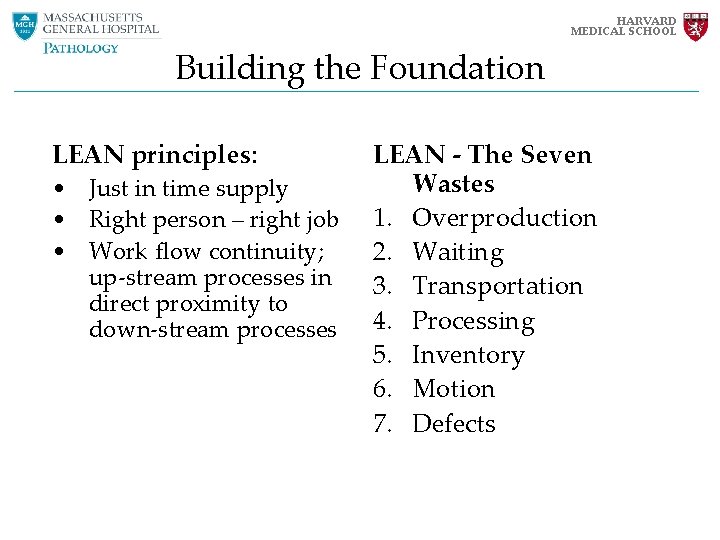
HARVARD MEDICAL SCHOOL Building the Foundation LEAN principles: • Just in time supply • Right person – right job • Work flow continuity; up-stream processes in direct proximity to down-stream processes LEAN - The Seven Wastes 1. Overproduction 2. Waiting 3. Transportation 4. Processing 5. Inventory 6. Motion 7. Defects
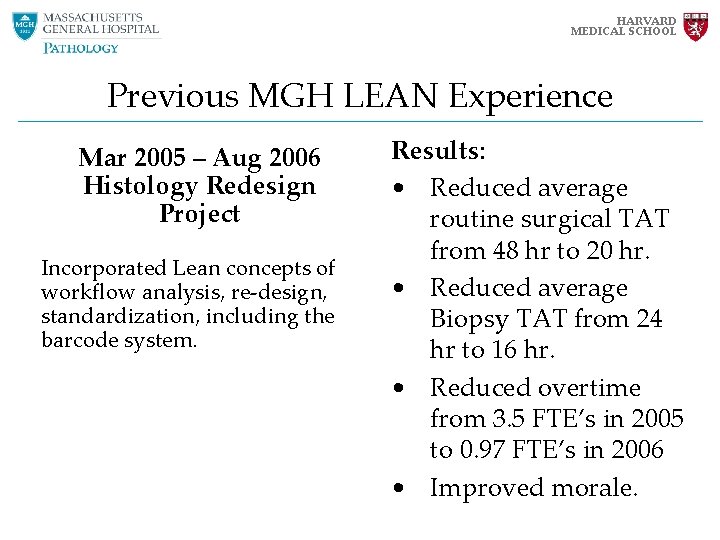
HARVARD MEDICAL SCHOOL Previous MGH LEAN Experience Mar 2005 – Aug 2006 Histology Redesign Project Incorporated Lean concepts of workflow analysis, re-design, standardization, including the barcode system. Results: • Reduced average routine surgical TAT from 48 hr to 20 hr. • Reduced average Biopsy TAT from 24 hr to 16 hr. • Reduced overtime from 3. 5 FTE’s in 2005 to 0. 97 FTE’s in 2006 • Improved morale.
HARVARD MEDICAL SCHOOL Foundation Building – 1 st Step Document workflow from specimen collection to final storage or disposal of assets.
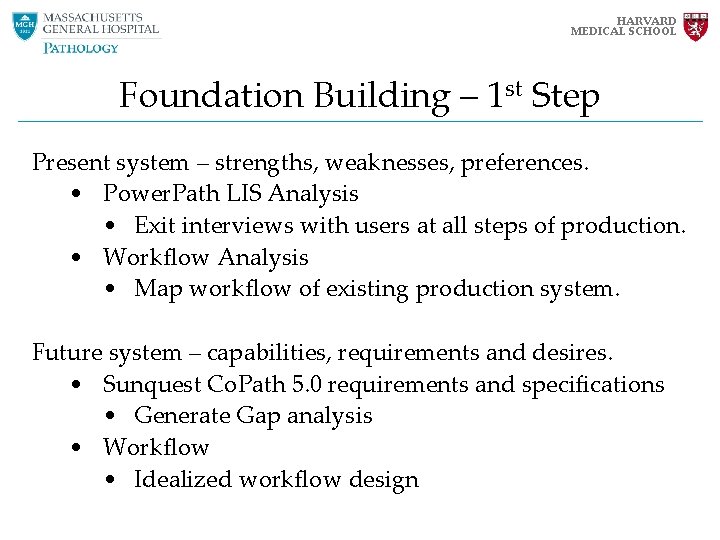
HARVARD MEDICAL SCHOOL Foundation Building – 1 st Step Present system – strengths, weaknesses, preferences. • Power. Path LIS Analysis • Exit interviews with users at all steps of production. • Workflow Analysis • Map workflow of existing production system. Future system – capabilities, requirements and desires. • Sunquest Co. Path 5. 0 requirements and specifications • Generate Gap analysis • Workflow • Idealized workflow design
HARVARD MEDICAL SCHOOL Foundation Building – 2 nd Step Use analytical tools to identify and remove causes of defects (errors) and minimize variability.
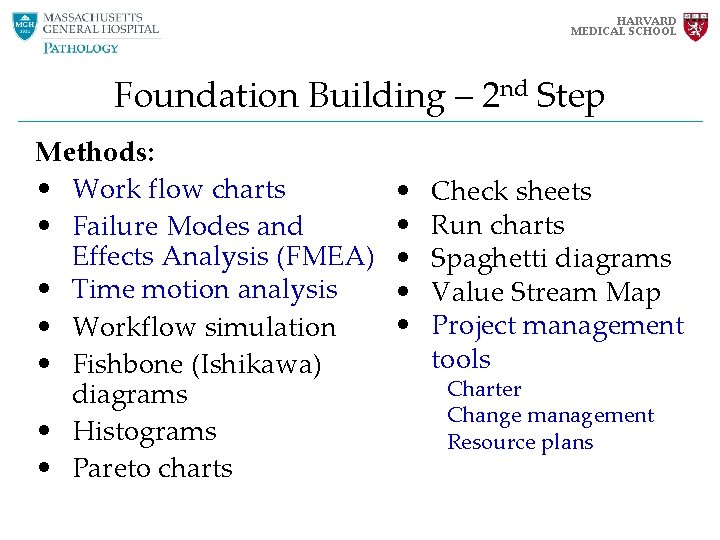
HARVARD MEDICAL SCHOOL Foundation Building – 2 nd Step Methods: • Work flow charts • Failure Modes and Effects Analysis (FMEA) • Time motion analysis • Workflow simulation • Fishbone (Ishikawa) diagrams • Histograms • Pareto charts • • • Check sheets Run charts Spaghetti diagrams Value Stream Map Project management tools Charter Change management Resource plans
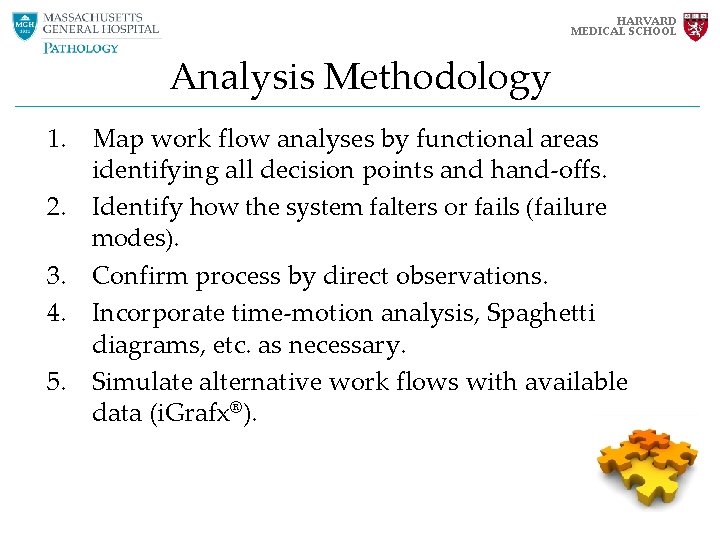
HARVARD MEDICAL SCHOOL Analysis Methodology 1. Map work flow analyses by functional areas identifying all decision points and hand-offs. 2. Identify how the system falters or fails (failure 3. 4. 5. modes). Confirm process by direct observations. Incorporate time-motion analysis, Spaghetti diagrams, etc. as necessary. Simulate alternative work flows with available data (i. Grafx®).
HARVARD MEDICAL SCHOOL Workflow Chart – Back Bench The Devil in the Details
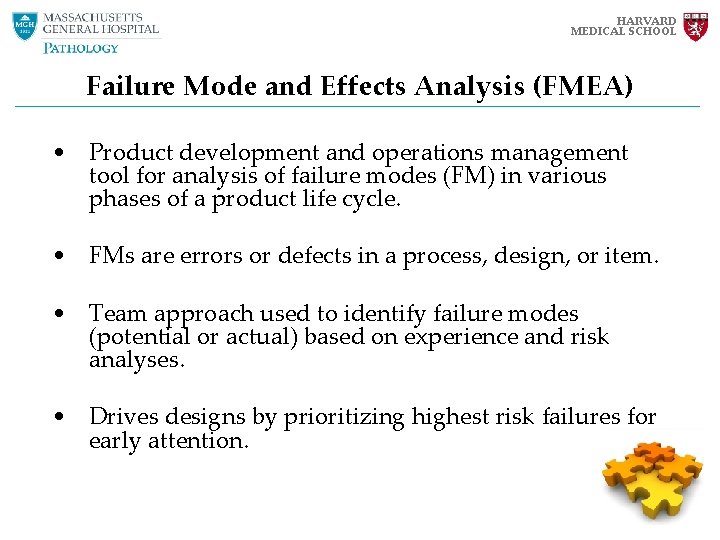
HARVARD MEDICAL SCHOOL Failure Mode and Effects Analysis (FMEA) • Product development and operations management tool for analysis of failure modes (FM) in various phases of a product life cycle. • FMs are errors or defects in a process, design, or item. • Team approach used to identify failure modes (potential or actual) based on experience and risk analyses. • Drives designs by prioritizing highest risk failures for early attention.
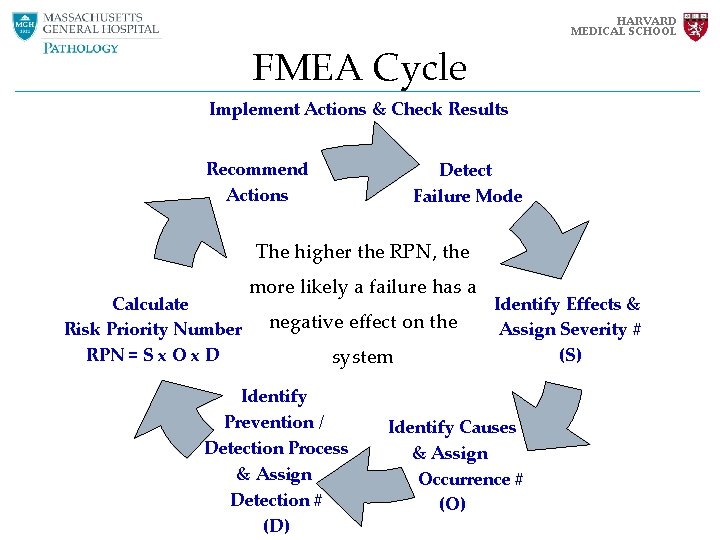
HARVARD MEDICAL SCHOOL FMEA Cycle Implement Actions & Check Results Recommend Actions Detect Failure Mode The higher the RPN, the Calculate Risk Priority Number RPN = S x O x D more likely a failure has a negative effect on the system Identify Prevention / Detection Process & Assign Detection # (D) Identify Effects & Assign Severity # (S) Identify Causes & Assign Occurrence # (O)
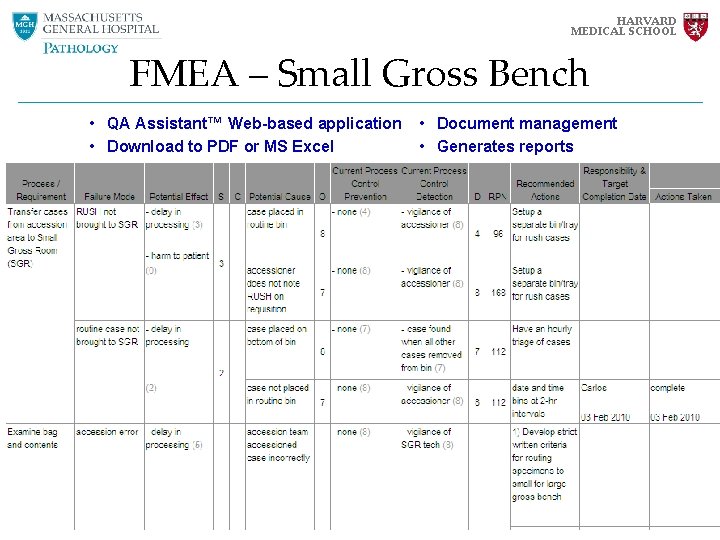
HARVARD MEDICAL SCHOOL FMEA – Small Gross Bench • QA Assistant™ Web-based application • Download to PDF or MS Excel • Document management • Generates reports
HARVARD MEDICAL SCHOOL FMEA – Failure Modes Summation
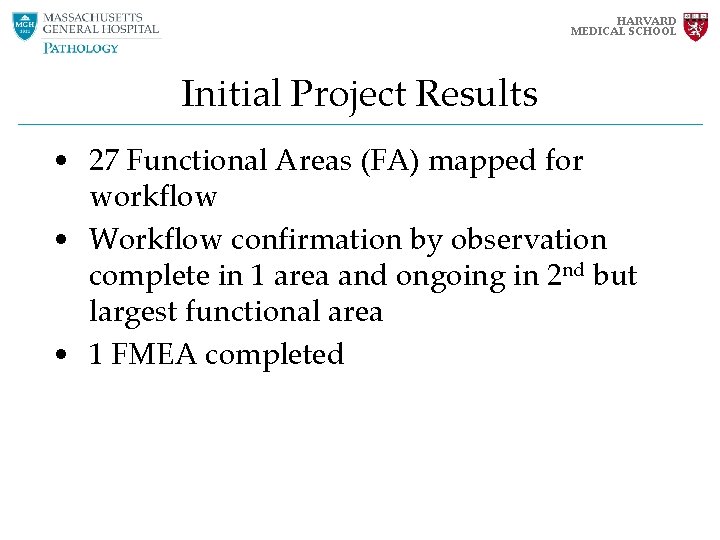
HARVARD MEDICAL SCHOOL Initial Project Results • 27 Functional Areas (FA) mapped for workflow • Workflow confirmation by observation complete in 1 area and ongoing in 2 nd but largest functional area • 1 FMEA completed
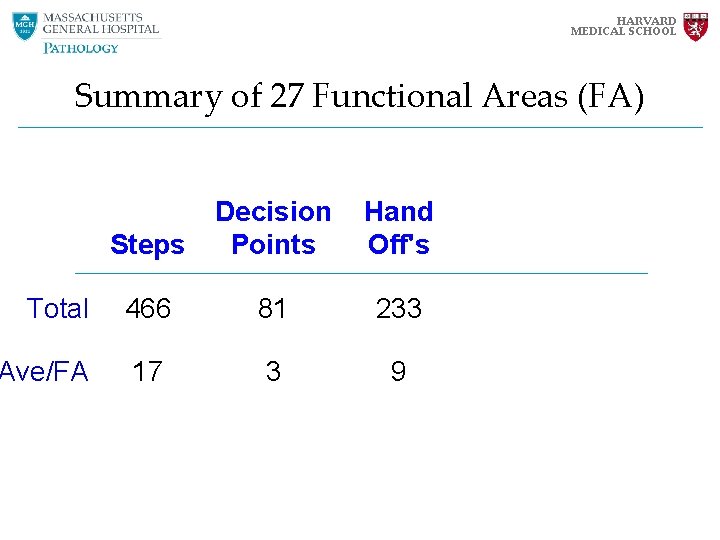
HARVARD MEDICAL SCHOOL Summary of 27 Functional Areas (FA) Steps Decision Points Hand Off's Total 466 81 233 Ave/FA 17 3 9
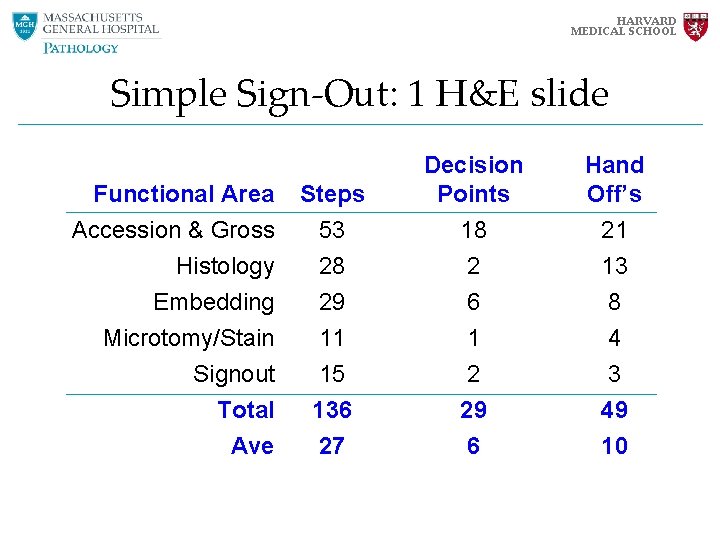
HARVARD MEDICAL SCHOOL Simple Sign-Out: 1 H&E slide Functional Area Accession & Gross Histology Embedding Microtomy/Stain Signout Total Ave Steps Decision Points Hand Off’s 53 28 29 11 15 136 27 18 2 6 1 2 29 6 21 13 8 4 3 49 10
HARVARD MEDICAL SCHOOL Acknowledgments Carlos Alaya William Amin Denise Bland-Piontek Maya Daderling James Happel Chris Oberg David Mc. Clintock Michelle Schwab-Macdonald
HARVARD MEDICAL SCHOOL Questions?