
HARPC Preventive Controls Food Safety Implications 1 SAI

- Slides: 17
HARPC: Preventive Controls & Food Safety Implications 1 SAI K. RAMASWAMY DR. GRETCHEN A. MOSHER NC-213, KANSAS CITY NC-213 The U. S. Quality Grains Research Consortium
Food Safety Modernization Act (FSMA) 2 �Most sweeping food safety reform: signed 2011 � 34 sections already enforced , 7 sections in rulemaking �Wide impact- Farmers to Grain handlers to Processors to Importers �Prevention rather than reaction
Good Manufacturing Practices (GMP’s) (Pre-FSMA) 3 �Systematic program to ensure food products meet safety, quality & legal requirements �HACCP (Hazard Analysis and Critical Control Point) one such popular program �Focus on managing critical controls to prevent, eliminate or reduce hazards �Mostly a voluntary program
GMP’s - post FSMA 4 �Same goal different approach to handle safety, quality & legal requirements �Identify hazards and controls measures associated with the hazards + Risks �Required to implement Hazard Analysis and Risk-Based Preventive Controls (“Harp sea”) �Mandatory for many of food & grain handling facilities registered with FDA
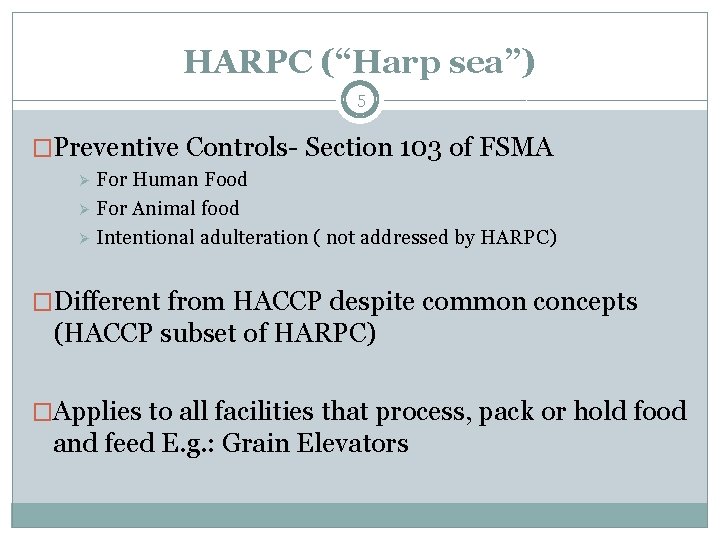
HARPC (“Harp sea”) 5 �Preventive Controls- Section 103 of FSMA For Human Food Ø For Animal food Ø Intentional adulteration ( not addressed by HARPC) Ø �Different from HACCP despite common concepts (HACCP subset of HARPC) �Applies to all facilities that process, pack or hold food and feed E. g. : Grain Elevators
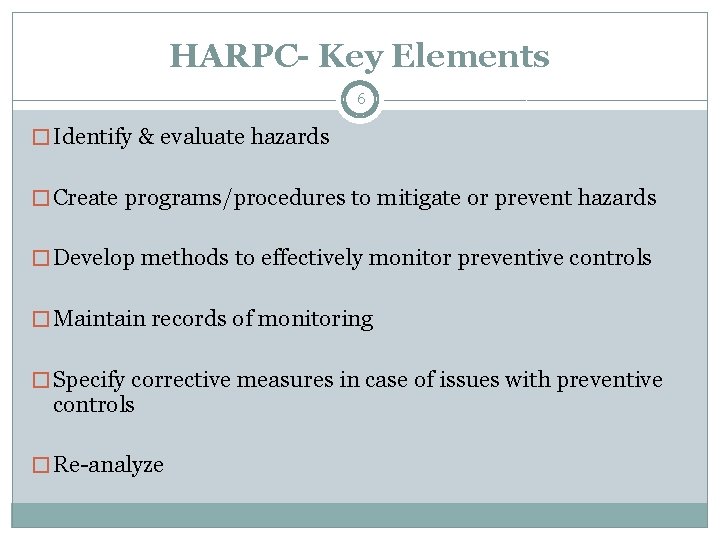
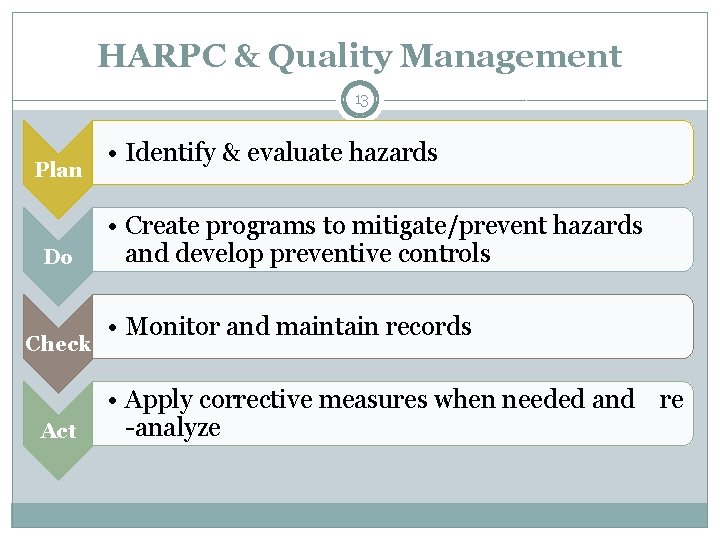
HARPC- Key Elements 6 � Identify & evaluate hazards � Create programs/procedures to mitigate or prevent hazards � Develop methods to effectively monitor preventive controls � Maintain records of monitoring � Specify corrective measures in case of issues with preventive controls � Re-analyze
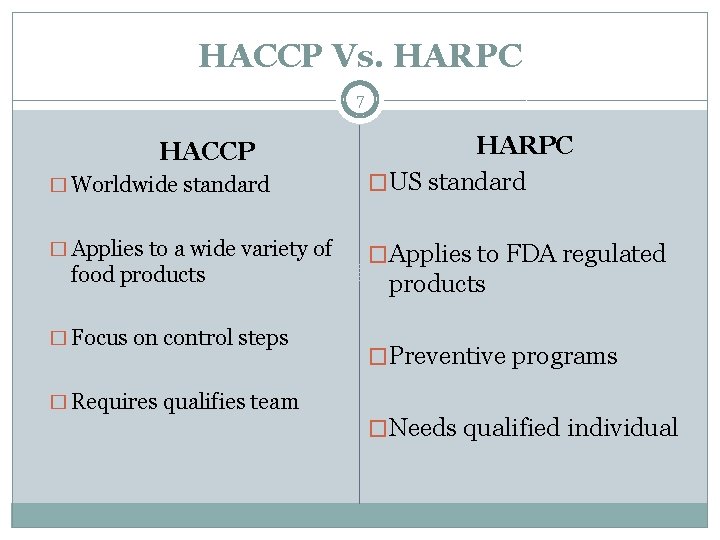
HACCP Vs. HARPC 7 � Worldwide standard HARPC �US standard � Applies to a wide variety of �Applies to FDA regulated HACCP food products � Focus on control steps � Requires qualifies team products �Preventive programs �Needs qualified individual
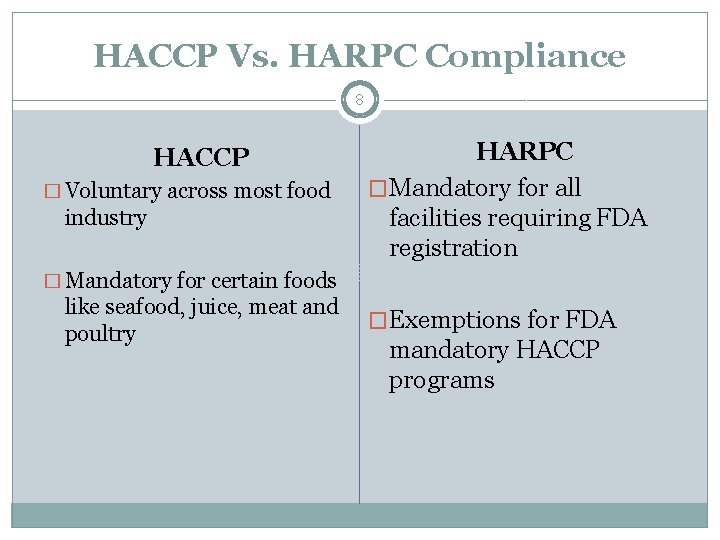
HACCP Vs. HARPC Compliance 8 HACCP � Voluntary across most food industry HARPC �Mandatory for all facilities requiring FDA registration � Mandatory for certain foods like seafood, juice, meat and poultry �Exemptions for FDA mandatory HACCP programs
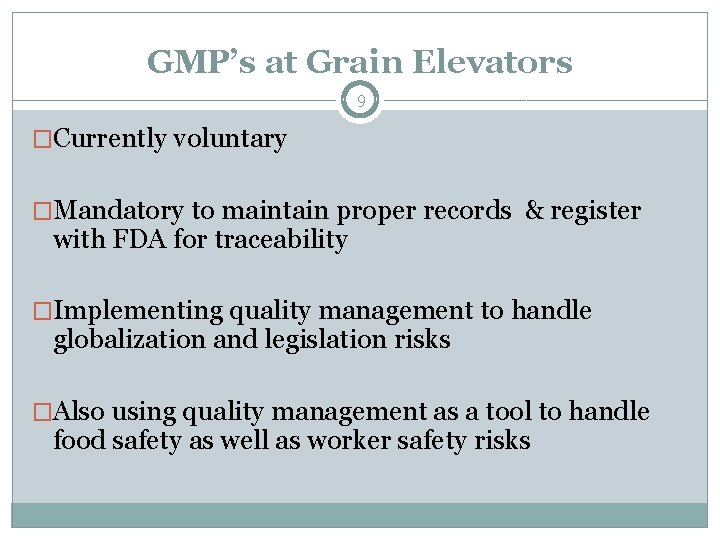
GMP’s at Grain Elevators 9 �Currently voluntary �Mandatory to maintain proper records & register with FDA for traceability �Implementing quality management to handle globalization and legislation risks �Also using quality management as a tool to handle food safety as well as worker safety risks
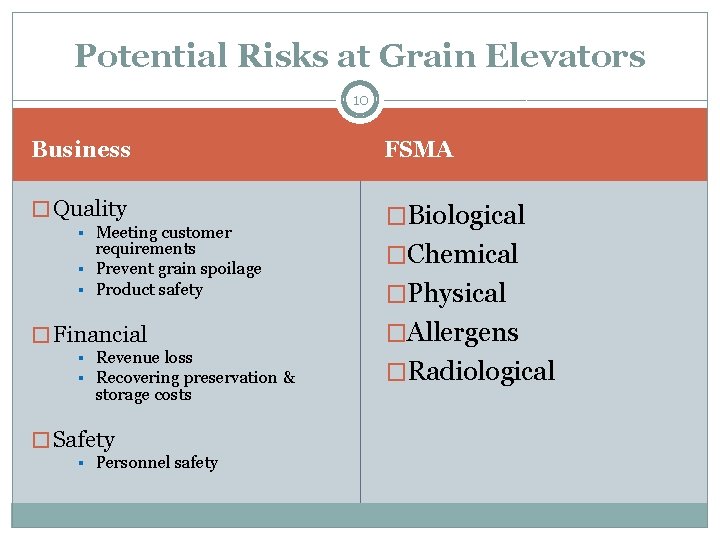
Potential Risks at Grain Elevators 10 Business FSMA � Quality �Biological § § § Meeting customer requirements Prevent grain spoilage Product safety � Financial § § Revenue loss Recovering preservation & storage costs � Safety § Personnel safety �Chemical �Physical �Allergens �Radiological
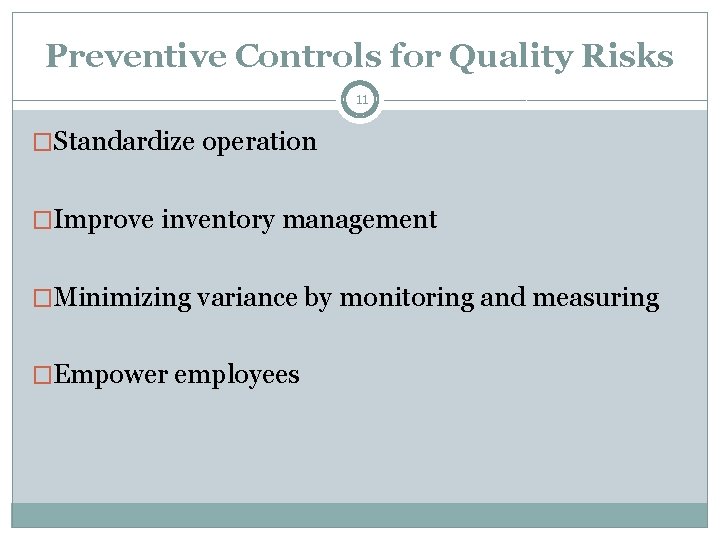
Preventive Controls for Quality Risks 11 �Standardize operation �Improve inventory management �Minimizing variance by monitoring and measuring �Empower employees
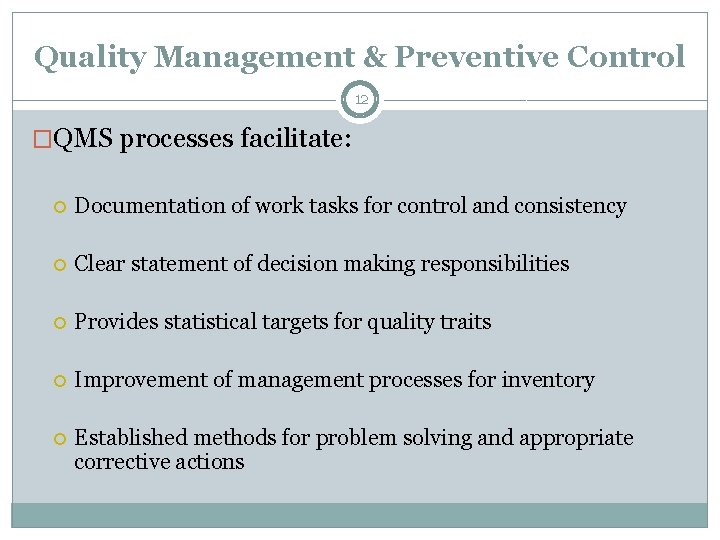
Quality Management & Preventive Control 12 �QMS processes facilitate: Documentation of work tasks for control and consistency Clear statement of decision making responsibilities Provides statistical targets for quality traits Improvement of management processes for inventory Established methods for problem solving and appropriate corrective actions
HARPC & Quality Management 13 Plan Do Check Act • Identify & evaluate hazards • Create programs to mitigate/prevent hazards and develop preventive controls • Monitor and maintain records • Apply corrective measures when needed and re -analyze
Recommendations 14 �Grain elevators can manage grain quality and product safety with QMS �QMS can help manage inventory and help decision making related to : § § Preservation methods Storage options Blending Shipping details
Recommendations cont. . 15 �Grain elevators implementing QMS are better suited to handle changes due to new legislation �QMS focus on control, consistency, and reproducibility helpful in hazard management part of HARPC program �QMS could assist in managing risk of intentional adulteration and keeping the facility secure
Questions 16
Potential Risks at Grain Elevators 17 �Quality § § § Meeting customer requirements Prevent grain spoilage Product safety �Financial § § Revenue loss Recovering preservation & storage costs �Safety § Personnel safety