
HARMFUL HUMAN BACTERIAL DISEASE By Dr Hesnaa Saeed
HARMFUL HUMAN BACTERIAL DISEASE By Dr. Hesnaa Saeed Al-Mossawi
Bacterial Diseases A. Airborne Bacterial Diseases B. Foodborne & Waterborne Bacterial Diseases C. Soil borne Bacterial Diseases E. Sexually Transmitted Bacterial Diseases
Airborne Bacterial Diseases 1. 2. 3. 4. 5. 6. 7. 8. 9. Streptococcal Diseases Diphtheria Pertussis Meningococcal Infections Haemophilus influenzae Infections Tuberculosis Pneumococcal Pneumonia Primary Atypical Pneumonia Legionellosis
Streptococcal Diseases � Diseases Associated with Streptococcus pyogenes � Respiratory Symptoms Upper Respiratory Tract Pharyngitis � Systemic Symptoms Septicemia Internal infections Scarlet fever : Due to strains that produce an erythrogenic toxin � Immune-Related Complications � Rheumatic fever Glomerulonephritis � Other Conditions/Portals of Entry Erysipelas , Necrotizing fasciitis , Puerperal sepsis
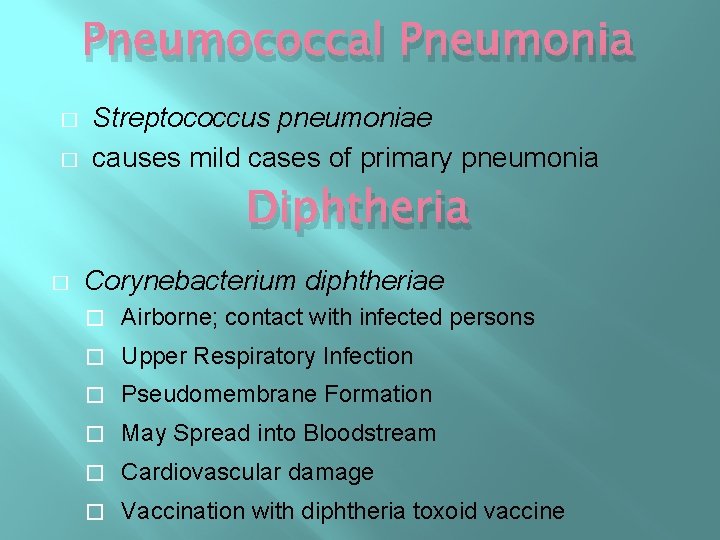
Pneumococcal Pneumonia � � Streptococcus pneumoniae causes mild cases of primary pneumonia Diphtheria � Corynebacterium diphtheriae � Airborne; contact with infected persons � Upper Respiratory Infection � Pseudomembrane Formation � May Spread into Bloodstream � Cardiovascular damage � Vaccination with diphtheria toxoid vaccine
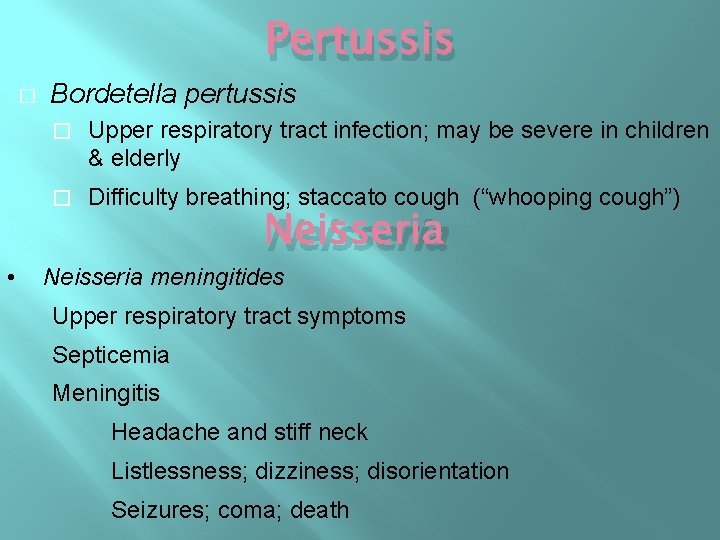
Pertussis � • Bordetella pertussis � Upper respiratory tract infection; may be severe in children & elderly � Difficulty breathing; staccato cough (“whooping cough”) Neisseria meningitides Upper respiratory tract symptoms Septicemia Meningitis Headache and stiff neck Listlessness; dizziness; disorientation Seizures; coma; death
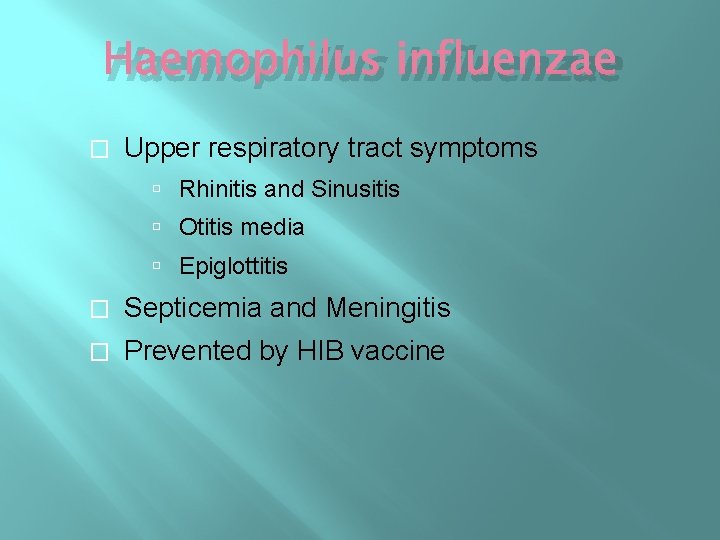
Haemophilus influenzae � Upper respiratory tract symptoms Rhinitis and Sinusitis Otitis media Epiglottitis � Septicemia and Meningitis � Prevented by HIB vaccine
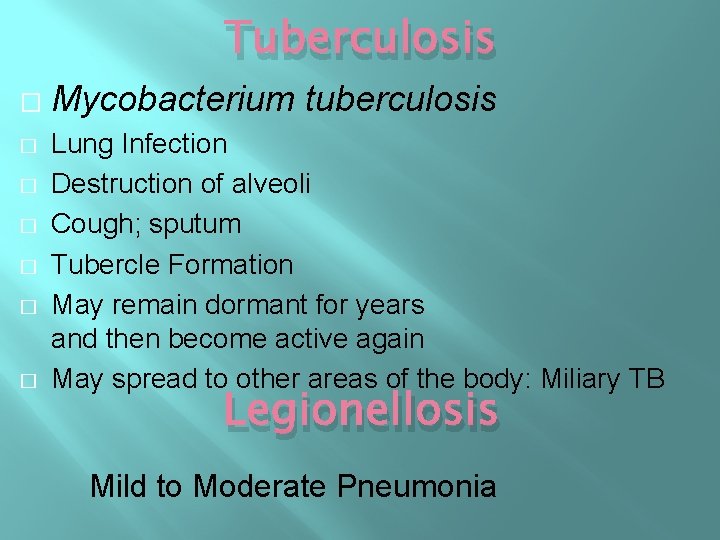
Tuberculosis � � � � Mycobacterium tuberculosis Lung Infection Destruction of alveoli Cough; sputum Tubercle Formation May remain dormant for years and then become active again May spread to other areas of the body: Miliary TB Legionellosis Mild to Moderate Pneumonia
Foodborne & Waterborne Bacterial Diseases 1. 2. 3. 4. 5. 6. 7. 8. 9. Botulism Staphylococcal Food Poisoning Clostridial Food Poisoning Typhoid Fever Salmonellosis Shigellosis Cholera Diseases associated with Escherichia coli Camphylobacteriosis and Helicobacteriosis
Botulism � Clostridium botulinum � Botulinum toxin: A neurotoxic exotoxin Heat sensitive Inhibits synaptic transmission at motor neuron end plates Causes flaccid paralysis Very deadly: Death due to respiratory & cardiac failure Treatment: Administration of antitoxin
Staphylococcal Food Poisoning � Staphylococcus aureus Certain strains of Staph. aureus: Produce staphylococcal enterotoxin � Toxin is secreted in contaminated food � Causes abdominal pain, nausea, diarrhea, for a few hours � Clostridial Food Poisoning Clostridium perfringins Similar to staphylococcal food poisoning
Typhoid Fever � Salmonella typhi � Invades intestinal epithelium tissue ulceration bloody stools but little diarrhea Blood invasion fever; delirium blood vessel hemorrhaging rose-colored spots on the abdomen bowel perforation gall-bladder infection
Salmonellosis � Salmonella enteriditis � Contaminated food Meat Poultry products Dairy products � Gastroenteritis Cramps Nausea Vomiting Diarrhea
Shigellosis � Gastroenteritis Often with watery diarrhea Sometimes with bloody stools: Dysentery Cholera • Vibrio cholerae Gastroenteritis with extensive severe diarrhea Cholera enterotoxin Toxin blocks water reabsorption by inhibiting the anion active transport mechanism in large intestinal epithelium “Rice water” stools Dehydration & death
Diseases associated with Escherichia coli Infantile diarrhea § Traveler's diarrhea § Camphylobacter jejuni • Common cause of mild to moderate gastroenteritis • Can colonize the stomach lining underneath the protective mucous layer • Stomach irritation and ulcers Helicobacter pylori
Soilborne Bacterial Diseases 1. Anthrax 2. Tetanus 3. Gas Gangrene 4. Leptospirosis 5. Listeriosis
Anthrax � Bacillus anthracis � Skin anthrax � Intestinal anthrax � Pulmonary anthrax; “Woolsorter’s disease” Tetanus Clostridium tetani Wounds or puncture wounds Tetanospasmin: A neurotoxic exotoxin , Acts as a cholinesterase inhibitor“Short-circuits” nerve synapses; esp. in the central nervous system which Causes rigid paralysis
Gas Gangrene � Clostridium perfringins � Wounds; esp. deep wounds Gangrene: � Tissue death due to reduced oxygen to tissue � Gas or moist gangrene: Gangrene accompanied by bacterial infection � Swelling; tissue death; blackish discoloration
Arthropodborne Bacterial Diseases: Plague � Yersinia pestis � Vector: Fleas, esp. rodent fleas � Bubonic plague: Infection of lymph node tissue; swelling; hemorrhaging; buboes � Septicemic plague � Pneumonic plague
Sexually Transmitted Bacterial Diseases � � Syphilis Treponema pallidum � Primary Syphilis Few days after contact Hard Chancre � Secondary Syphilis Several weeks after chancre disappears Fever; flu-like symptoms Rash � Tertiary Syphilis Months or years later Gummae: Lesions on skin & mucous membranes Damage to internal organs Cardiovascular & central nervous system damage
Leprosy � Mycobacterium leprae � Skin contact; not particularly contagious � Whitish skin lesions � Loss of sensation due to nerve damage � Disfiguration
- Slides: 21