
Harmful algal blooms What are HABs l Algae
Harmful algal blooms
What are HABs? l Algae that produce toxins ¡Dinoflagellates ¡Diatoms ¡Cyanobacteria (fresh water) l Very potent toxins (few cells per liter can produce toxic effects) l Adversely affect overall environmental quality
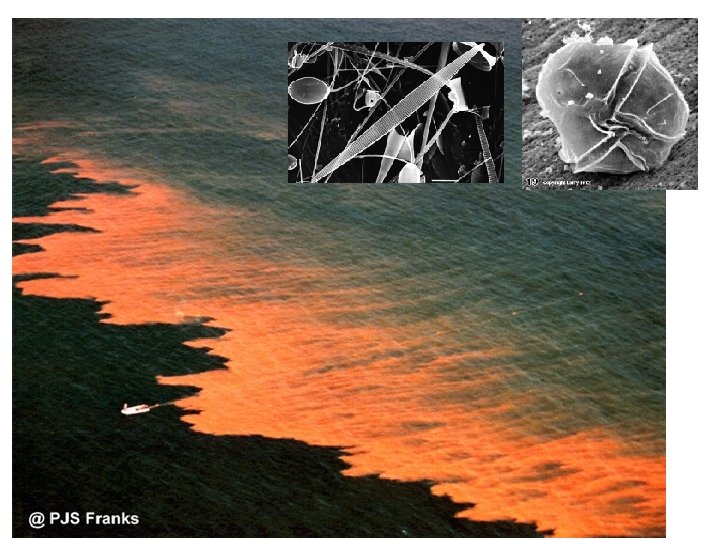
Environmental impacts l Toxic effects on organisms l Physical impairment of fish l Nuisance conditions from odors or discoloration of water or habitats
History of HABs l HABs are not a new phenomenon! l Documentation of HABs goes back to ancient times l Apparent increase of the HAB occurrence in modern times – real or imaginary?
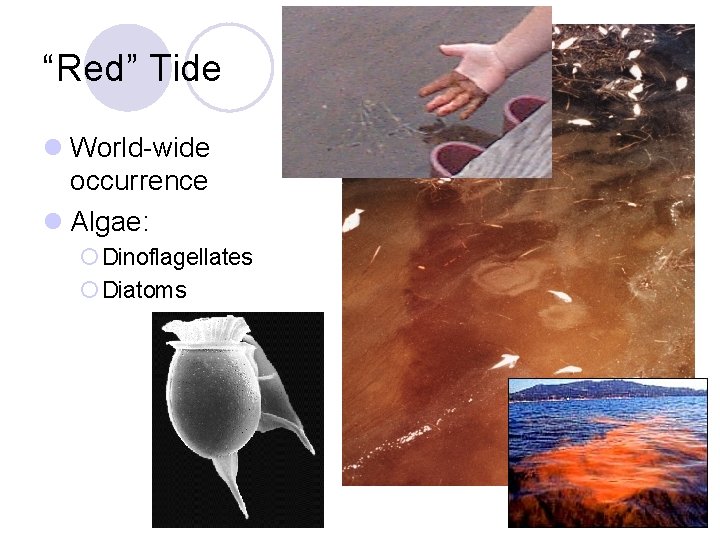
“Red” Tide l World-wide occurrence l Algae: ¡ Dinoflagellates ¡ Diatoms
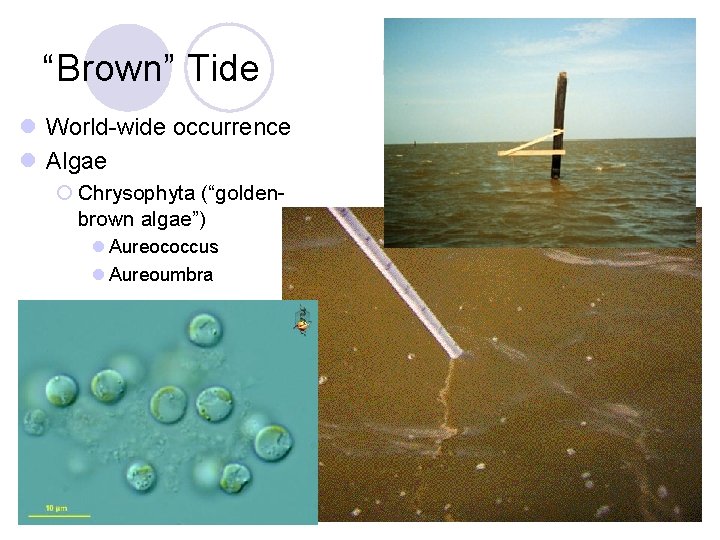
“Brown” Tide l World-wide occurrence l Algae ¡ Chrysophyta (“goldenbrown algae”) l Aureococcus l Aureoumbra
Algae associated with HABs l Toxic dinoflagellate blooms ¡ Ciguatera Fish Poisoning ¡ Diarrhetic Shellfish Poisoning ¡ Neurotoxic Shellfish Poisoning ¡ Paralytic Shellfish Poisoning l Toxic diatom blooms ¡ Amnesic Shellfish Poisoning l Harmful blooms (non-toxic or toxicity not confirmed) ¡ Fish kills l Pfiesteria, Chaetoceros, Heterosigma ¡ Brown tides l Aureococcus, Aureoumbra
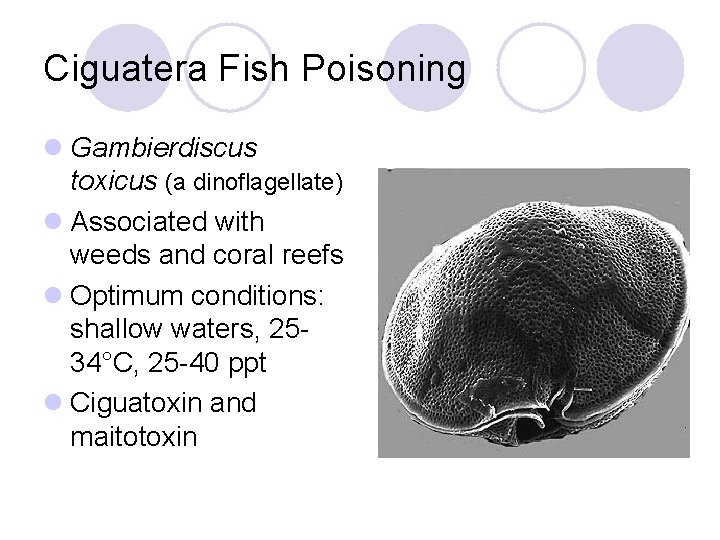
Ciguatera Fish Poisoning l Gambierdiscus toxicus (a dinoflagellate) l Associated with weeds and coral reefs l Optimum conditions: shallow waters, 2534°C, 25 -40 ppt l Ciguatoxin and maitotoxin
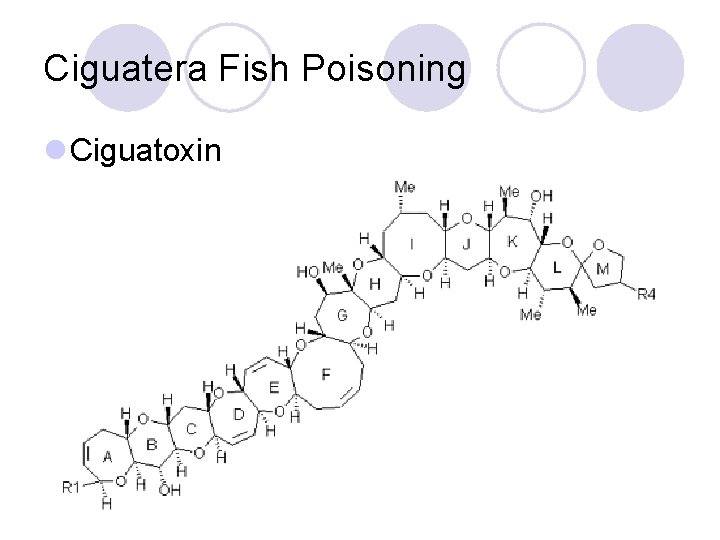
Ciguatera Fish Poisoning l Ciguatoxin
Ciguatera Fish Poisoning l Common cause of food-borne poisoning l ~ 50% of US seafood poisoning ¡ 90% - Florida and Hawaii ¡Spring/Summer
Ciguatera Fish Poisoning: Vectors l Usually large fish, bottom dwellers and reef fish ¡Red snapper, Grouper, Amber Jack, Sturgeon l Toxins ¡Bioaccumulate ¡Stable and heat resistant ¡Lipid soluble ¡Highly potent (clinical effects from <1 mg)
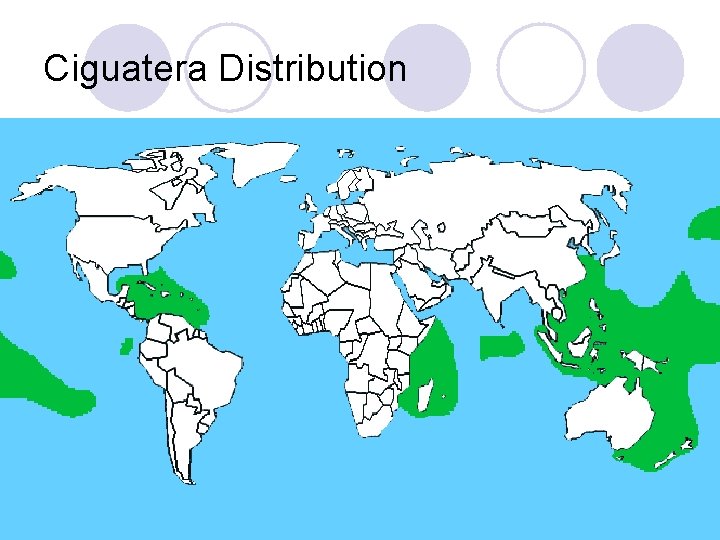
Ciguatera Distribution
Ciguatera Fish Poisoning: Symptoms in humans l Lag time <12 h l Acute onset l Early symptoms (24 -48 h): Gastrointestinal ¡ Pain, cramping, diarrhea, vomiting l Late symptoms ¡ Neurological l Headache, toothache l Temperature disturbance (hot-cold sensation reversal) l Respiratory paralysis and seizure in severe cases ¡ Cardiovascular l Heart rate abnormalities (rare), usually bradycardia
Ciguatera Fish Poisoning: Treatment and prevention l Diagnosis ¡ Biomarkers of exposure not available l Therapy ¡ Not available l Prevention ¡ Complicated l Wide range of susceptible species l Odorless, colorless, tasteless l Avoidance ¡ Large reef fish ¡ Avoiding roe, head, viscera
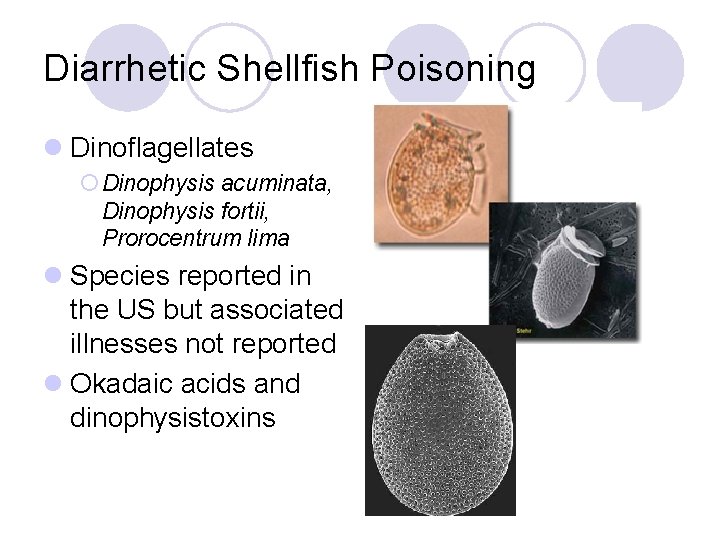
Diarrhetic Shellfish Poisoning l Dinoflagellates ¡ Dinophysis acuminata, Dinophysis fortii, Prorocentrum lima l Species reported in the US but associated illnesses not reported l Okadaic acids and dinophysistoxins
Diarrhetic Shellfish Poisoning: Human Symptoms l Generally mild gastrointestinal illness ¡Diarrhea, nausea, vomiting ¡Rapid onset, rapid resolution ¡No neurotoxic effects ¡Long-term effects? (Possibly tumorigenic) l FDA level in shellfish – 0. 2 ppm okadaic acid plus 35 -methyl-okadaic acid
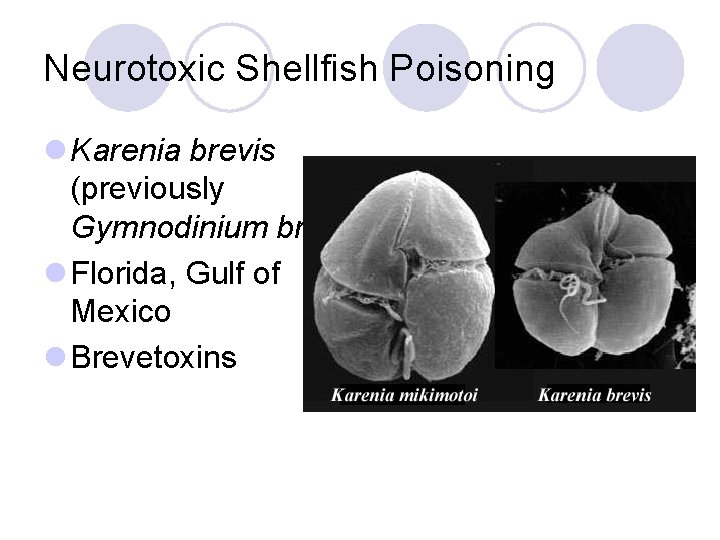
Neurotoxic Shellfish Poisoning l Karenia brevis (previously Gymnodinium breve) l Florida, Gulf of Mexico l Brevetoxins
Neurotoxic Shellfish Poisoning: Human Symptoms l Similar to ciguatera poisoning l Early symptoms: Gastrointestinal ¡ Nausea, diarrhea, vomiting l Late symptoms ¡ Neurological l Tingling l Numbness l Loss of motor control l Usually not associated with human mortality l FDA level in fish – 0. 8 ppm brevitoxin-2 equivalent
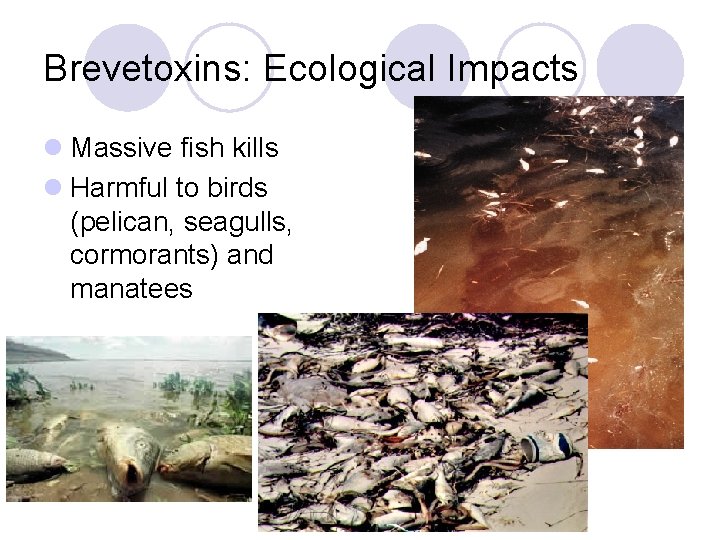
Brevetoxins: Ecological Impacts l Massive fish kills l Harmful to birds (pelican, seagulls, cormorants) and manatees
Brevetoxins: Economical Impacts l Human health-associated impacts l Closure of shellfish beds l Skin and respiratory irritation to humans at the seashore l Losses in commercial catch and tourism
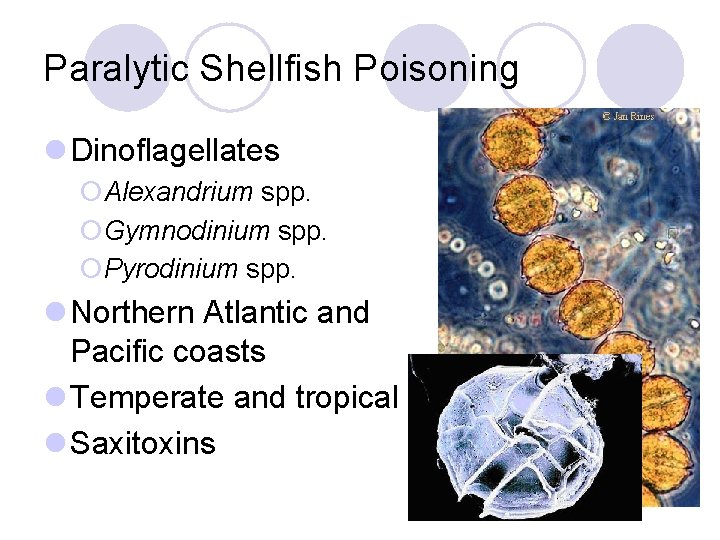
Paralytic Shellfish Poisoning l Dinoflagellates ¡Alexandrium spp. ¡Gymnodinium spp. ¡Pyrodinium spp. l Northern Atlantic and Pacific coasts l Temperate and tropical l Saxitoxins
Paralytic Shellfish Poisoning: Human Symptoms l Rapid onset (~30 min) l Absence of gastrointestinal symptoms l Neurological symptoms ¡ Numbness ¡ Headache ¡ Ataxia ¡ Weakness ¡ Cranial nerve dysfunction ¡ Diaphragmatic paralysis ¡ Death by asphyxiation l Weakness can persist for weeks
Paralytic Shellfish Poisoning: Therapy and Prevention l Therapy ¡Not available (supportive only) l FDA limit in fish 0. 8 ppm
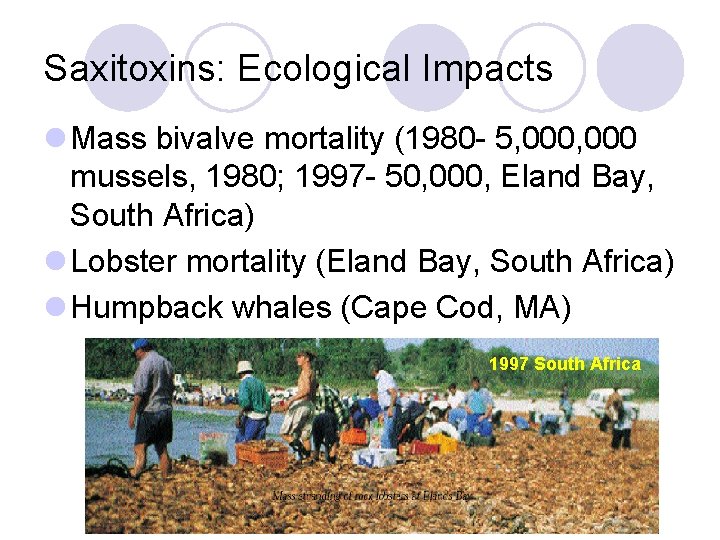
Saxitoxins: Ecological Impacts l Mass bivalve mortality (1980 - 5, 000 mussels, 1980; 1997 - 50, 000, Eland Bay, South Africa) l Lobster mortality (Eland Bay, South Africa) l Humpback whales (Cape Cod, MA) 1997 South Africa
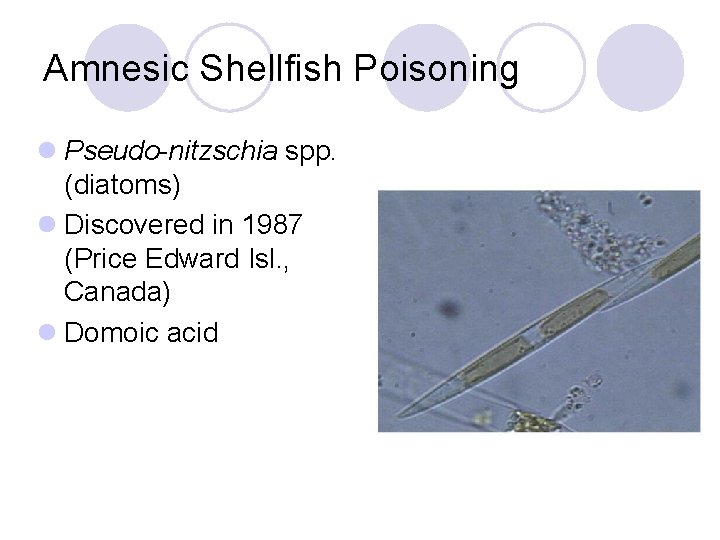
Amnesic Shellfish Poisoning l Pseudo-nitzschia spp. (diatoms) l Discovered in 1987 (Price Edward Isl. , Canada) l Domoic acid
Amnesic Shellfish Poisoning: Human Symptoms l Early symptoms: Gastrointestinal ¡ Nausea, vomiting, diarrhea l CNS symptoms ¡ Dizziness ¡ Cognitive effects ¡ Disorientation ¡ Memory loss ¡ Delirium ¡ Seizures ¡ Agitation l Highly variable course ¡ 10% with permanent neurological damage
Domoic acid: Ecological Effects l 1991 Monterey Bay CA - >100 pelicans and cormorants were found dead or suffering from unusual neurological symptoms l Pseudo-nitzschia australis l Vector: Northern Anchovie
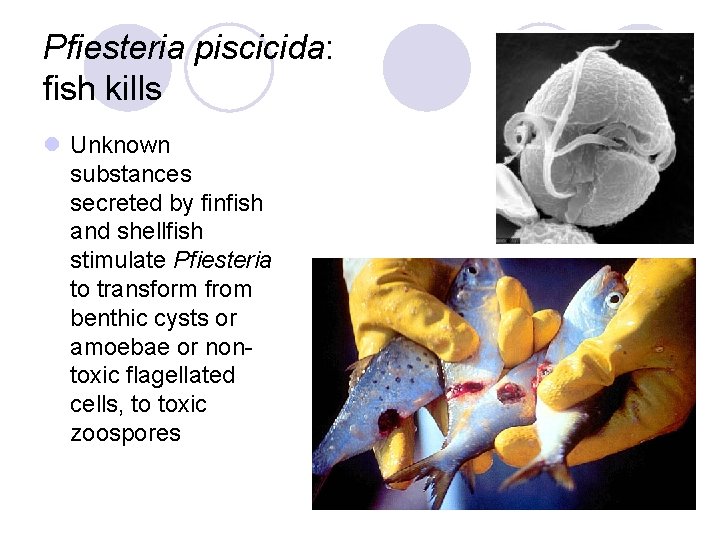
Pfiesteria piscicida: fish kills l Unknown substances secreted by finfish and shellfish stimulate Pfiesteria to transform from benthic cysts or amoebae or nontoxic flagellated cells, to toxic zoospores
Pfiesteria in humans l Rare ¡Narcosis ¡Sores ¡Nausea/vomiting ¡Acute short-term memory loss ¡Severe cognitive impairment l Recovery in 6 -8 weeks, but may re-occur l Most cases – Chesapeake fishermen and algal researchers (aerosol!)
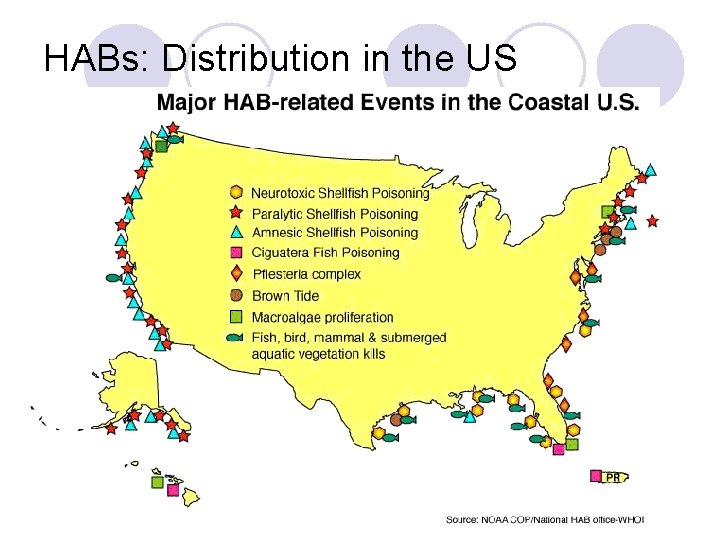
HABs: Distribution in the US
HABs: What can we do about it? l Prevention ¡Complicated ¡Public awareness (=negative publicity for fish and shellfish industry) l Prediction ¡Satellite tracking of red and brown tides ¡Mathematical models predicting blooms
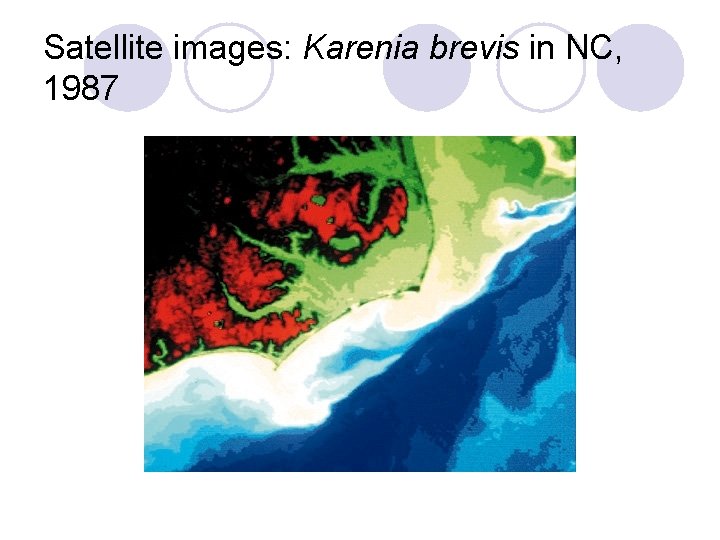
Satellite images: Karenia brevis in NC, 1987
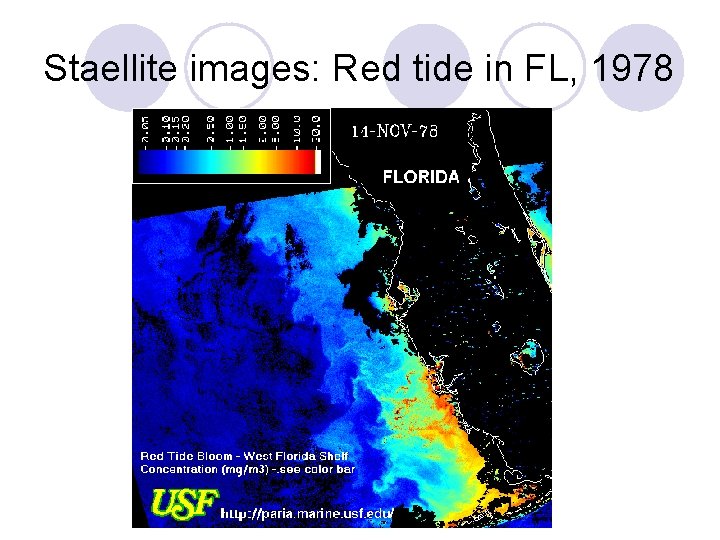
Staellite images: Red tide in FL, 1978
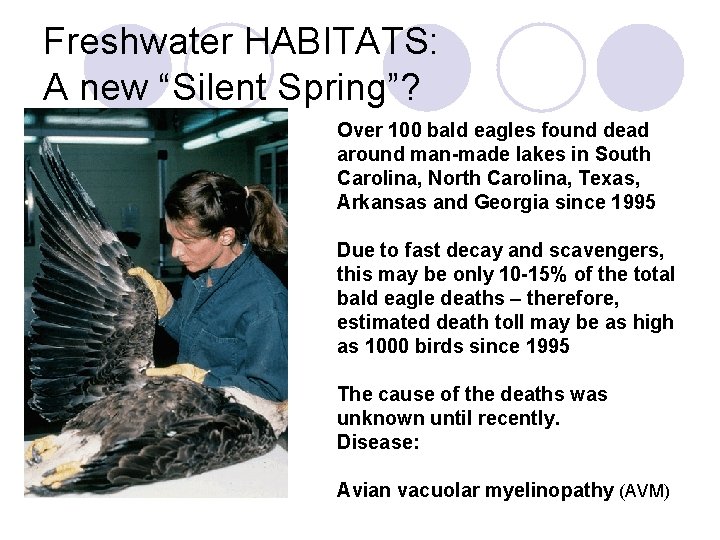
Freshwater HABITATS: A new “Silent Spring”? Over 100 bald eagles found dead around man-made lakes in South Carolina, North Carolina, Texas, Arkansas and Georgia since 1995 Due to fast decay and scavengers, this may be only 10 -15% of the total bald eagle deaths – therefore, estimated death toll may be as high as 1000 birds since 1995 The cause of the deaths was unknown until recently. Disease: Avian vacuolar myelinopathy (AVM)
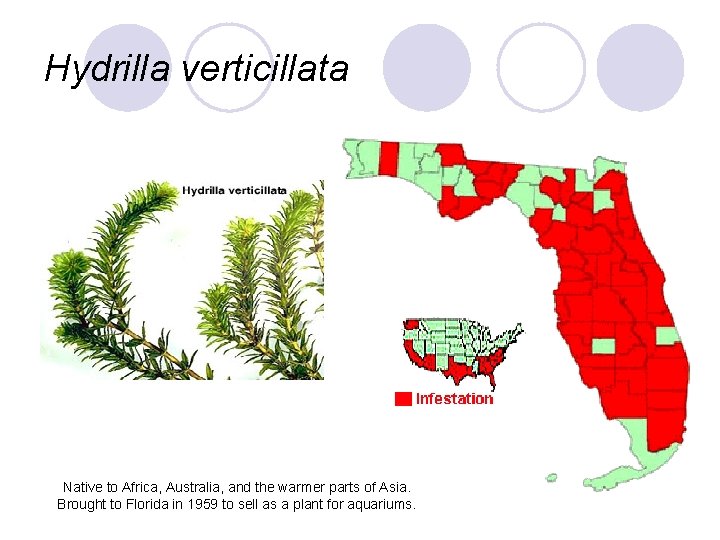
Hydrilla verticillata Native to Africa, Australia, and the warmer parts of Asia. Brought to Florida in 1959 to sell as a plant for aquariums.
Hydrilla verticillata l This abundant source of biomas is a known hyperaccumulator of Mercury, Cadmium, Chromium and Lead, and as such can be used in phytoremediation l Good or bad
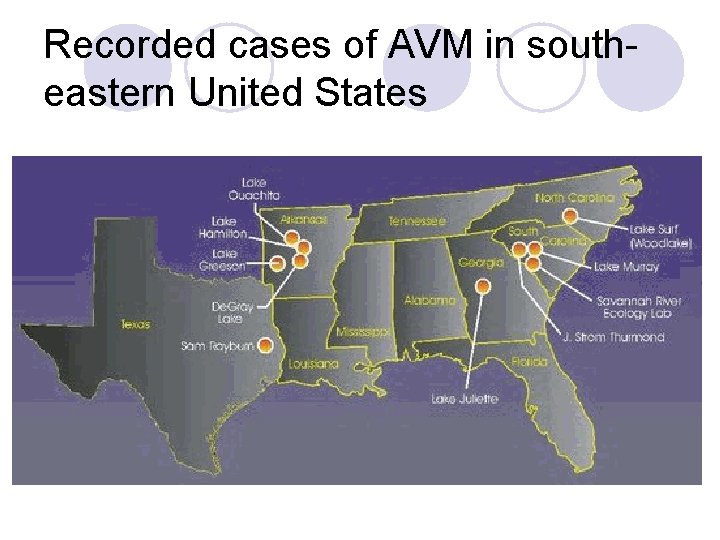
Recorded cases of AVM in southeastern United States
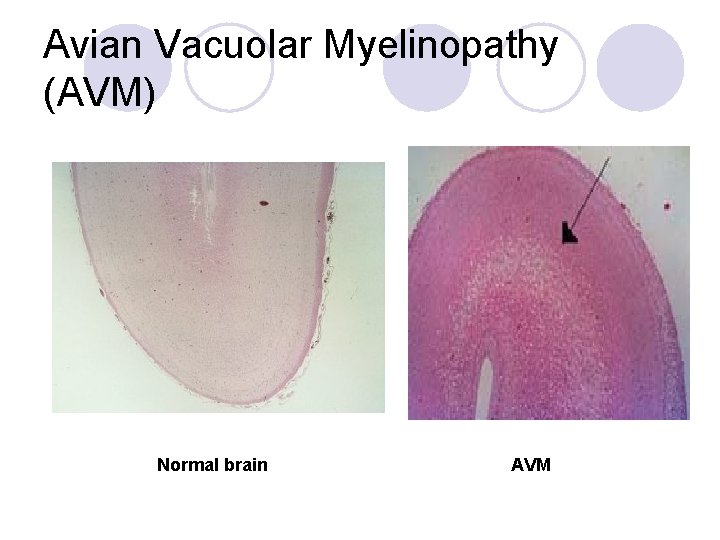
Avian Vacuolar Myelinopathy (AVM) Normal brain AVM
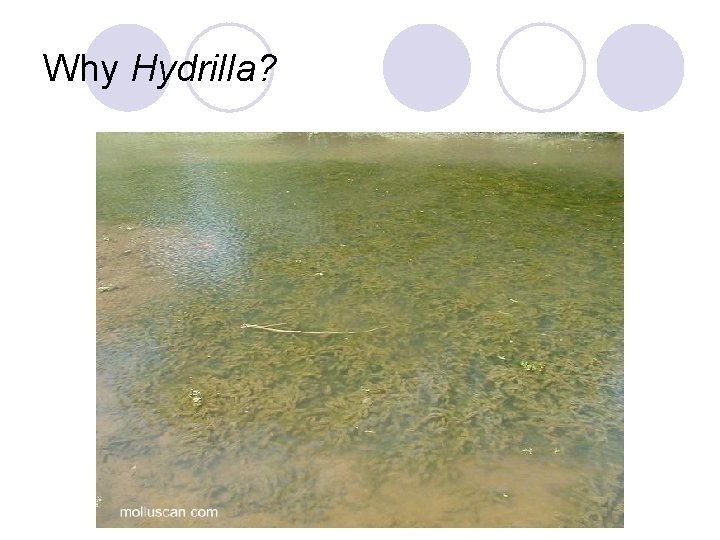
Why Hydrilla?
Hydrilla verticillata l Hydrilla verticillata and an associated epiphytic cyanobacterial species are cause of AVM. l Cyanobacteria produce the neurotoxic amino acid BMAA, l Biomagnification of BMAA occurs in wetland ecosystems l The consumption of fish and waterfowl (e. g. Canada geese and mallards) from AVMconfirmed reservoirs in Arkansas, Texas, Georgia, North Carolina and South Carolina could represent a significant human health risk.
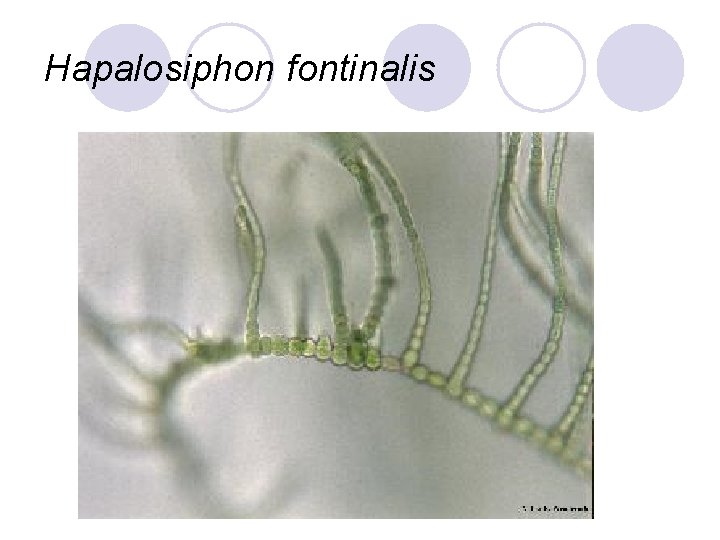
Hapalosiphon fontinalis
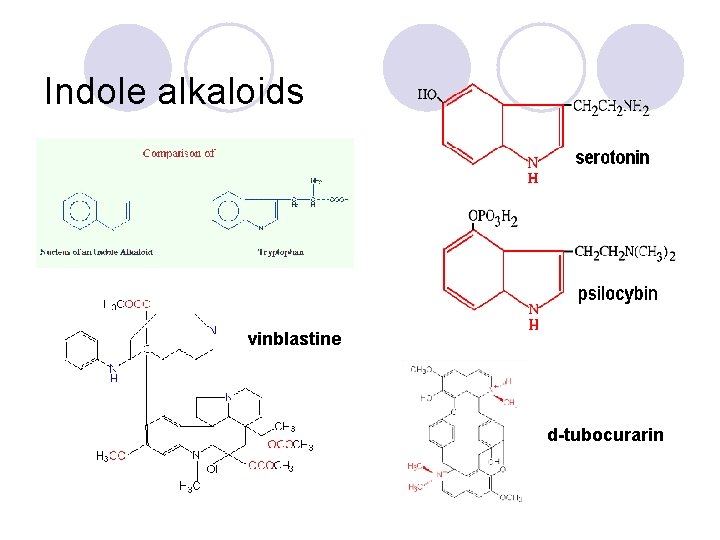
Indole alkaloids vinblastine d-tubocurarin
- Slides: 43