
Harlows experiments on attachment in monkeys American psychologist
- Slides: 15
Harlow’s experiments on attachment in monkeys
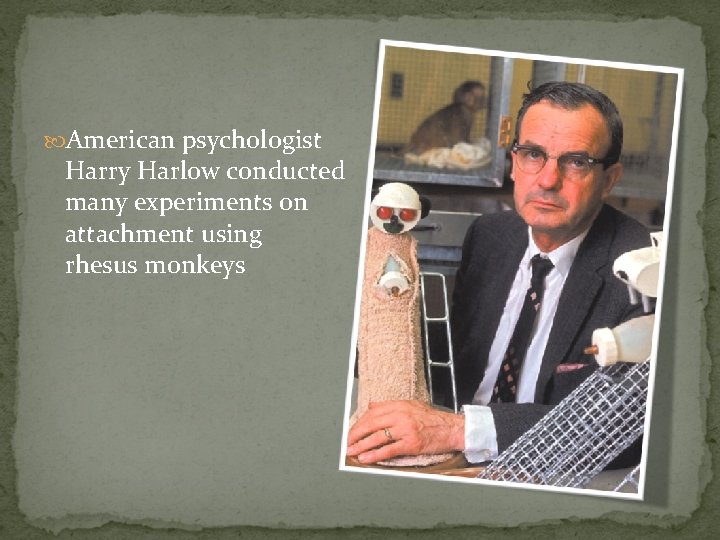
American psychologist Harry Harlow conducted many experiments on attachment using rhesus monkeys
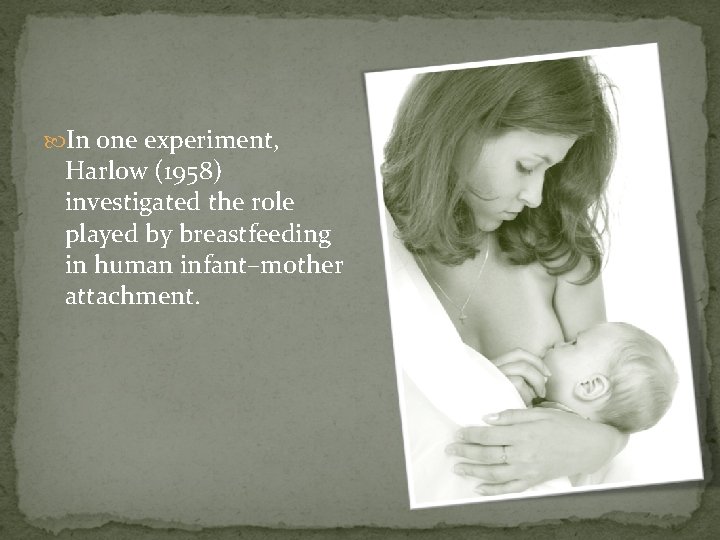
In one experiment, Harlow (1958) investigated the role played by breastfeeding in human infant–mother attachment.
Harlow, H. F. (1958). The nature of love. American Psychologist, 13, 673– 685.
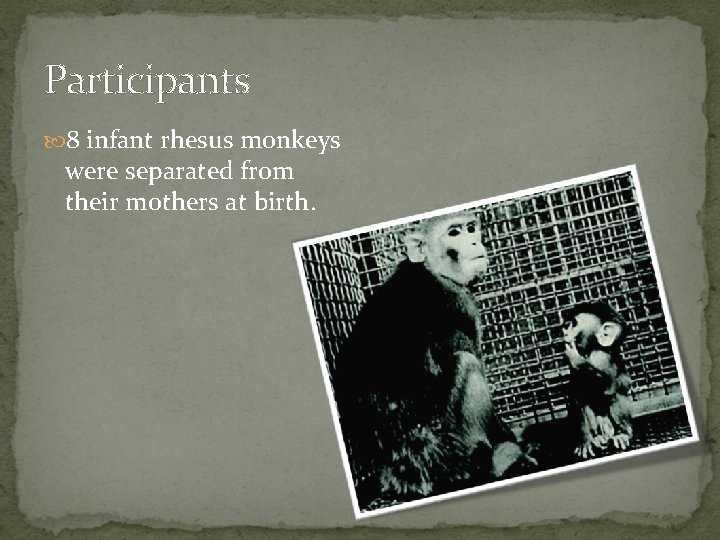
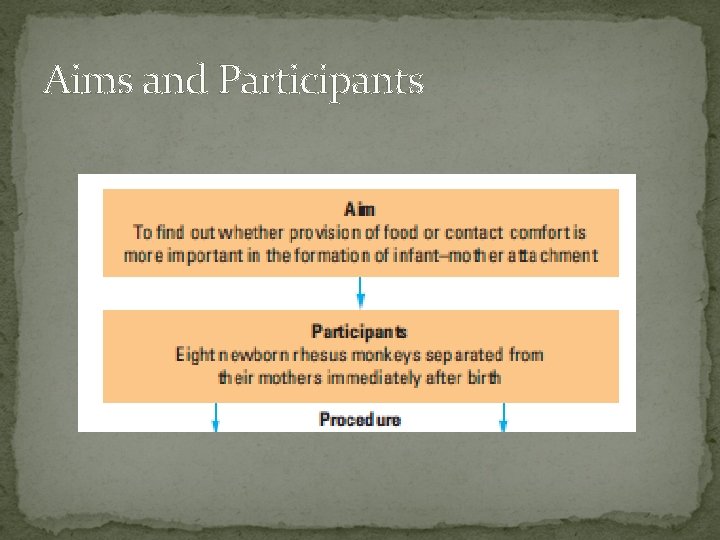
Participants 8 infant rhesus monkeys were separated from their mothers at birth.
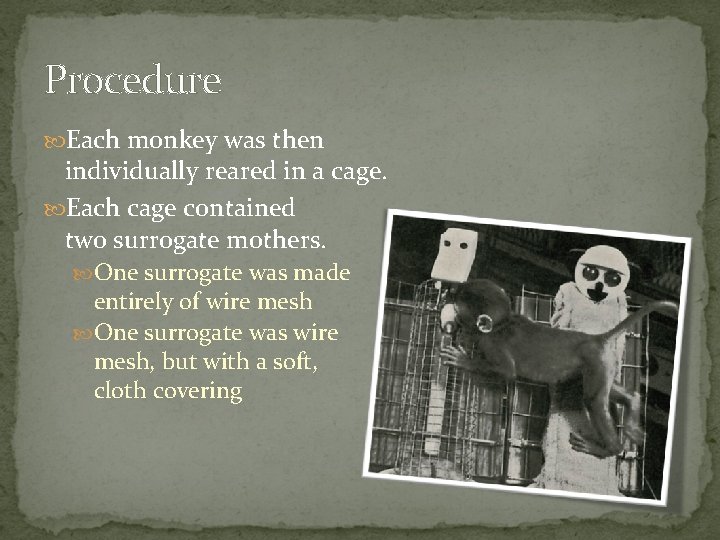
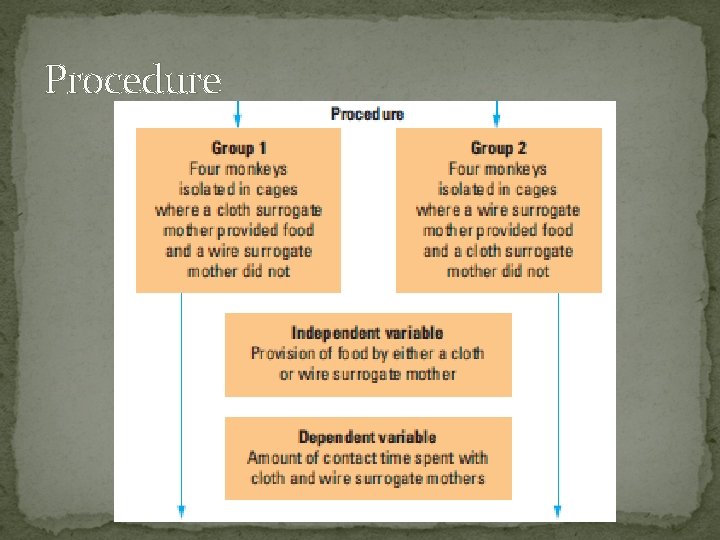
Procedure Each monkey was then individually reared in a cage. Each cage contained two surrogate mothers. One surrogate was made entirely of wire mesh One surrogate was wire mesh, but with a soft, cloth covering
Procedure Group 1: 4 monkeys are each placed in a separate cage in which the cloth surrogate provides food and the wire surrogate does not Group 2: 4 monkeys are each placed in a separate cage in which the wire surrogate provides food and cloth surrogate does not
Procedure Observe each monkey’s preference for feeding from either the cloth or wire surrogate mother Record the time spent each mother type
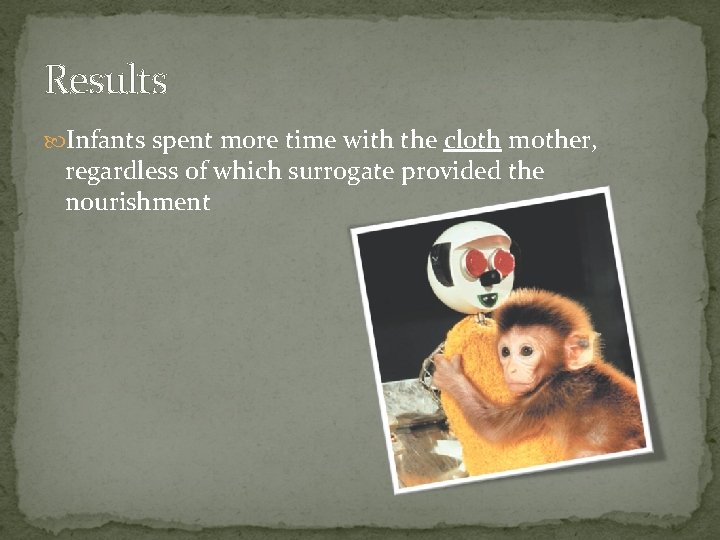
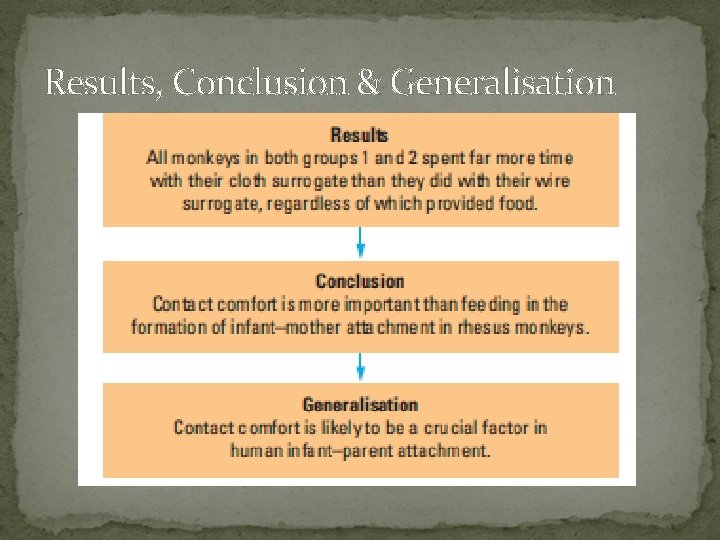
Results Infants spent more time with the cloth mother, regardless of which surrogate provided the nourishment
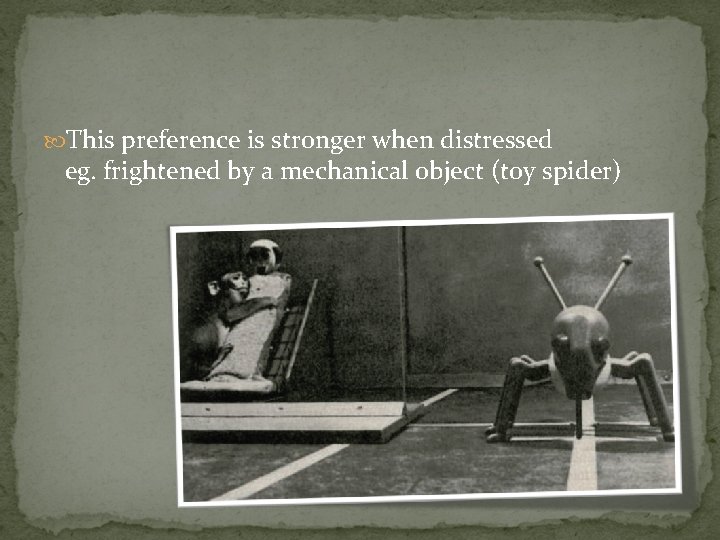
This preference is stronger when distressed eg. frightened by a mechanical object (toy spider)
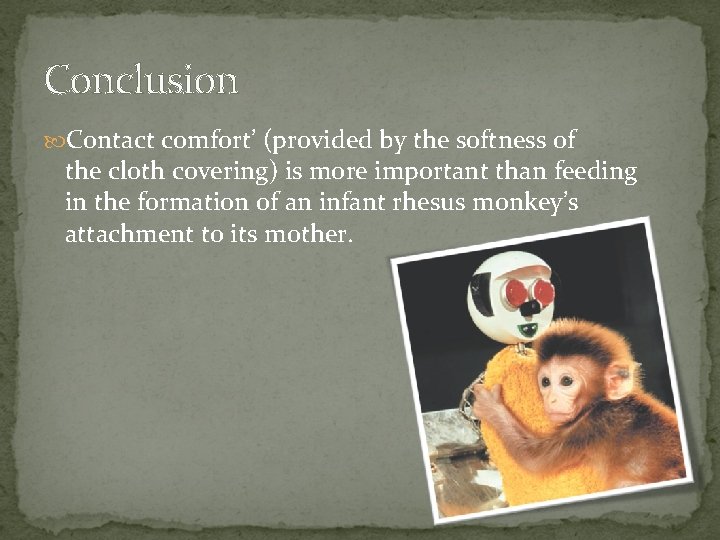
Conclusion Contact comfort’ (provided by the softness of the cloth covering) is more important than feeding in the formation of an infant rhesus monkey’s attachment to its mother.
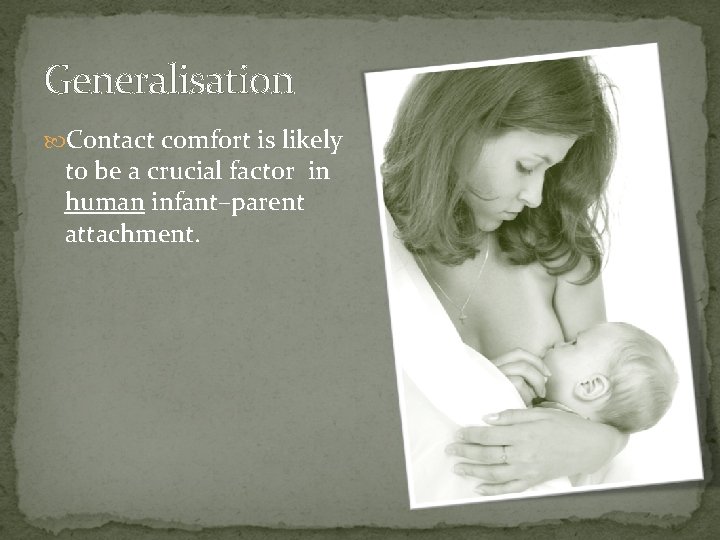
Generalisation Contact comfort is likely to be a crucial factor in human infant–parent attachment.
Aims and Participants
Procedure
Results, Conclusion & Generalisation