
Hardwood Cell Type Longitudinal Parenchyma Always present Small





- Slides: 19
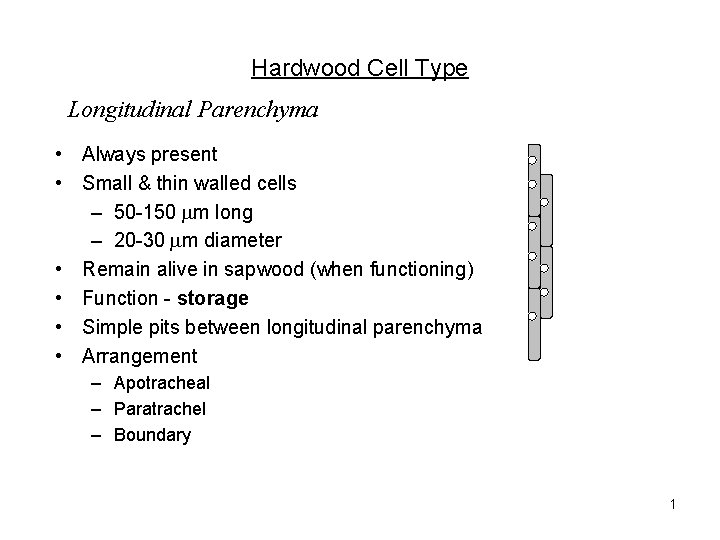
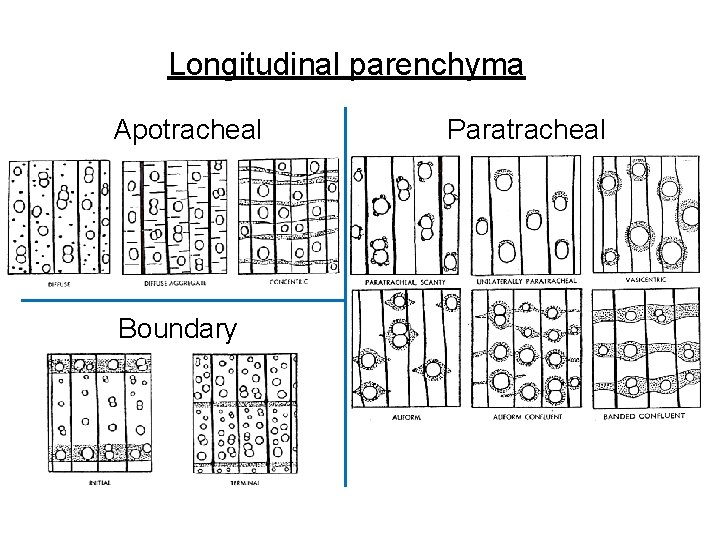
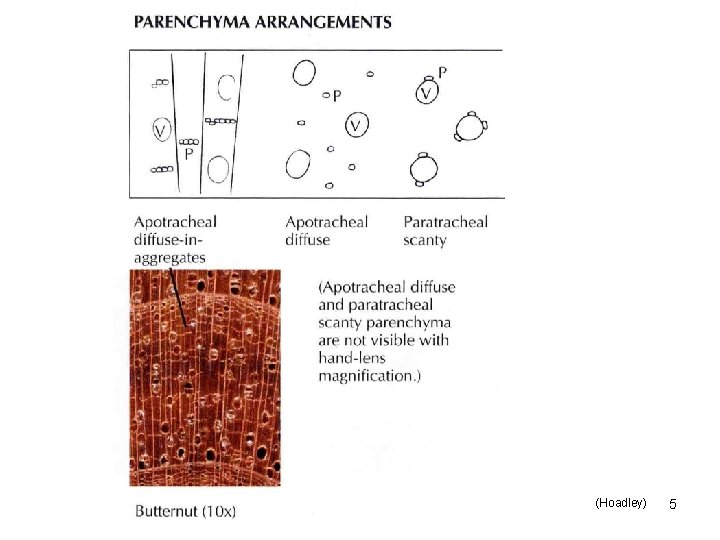
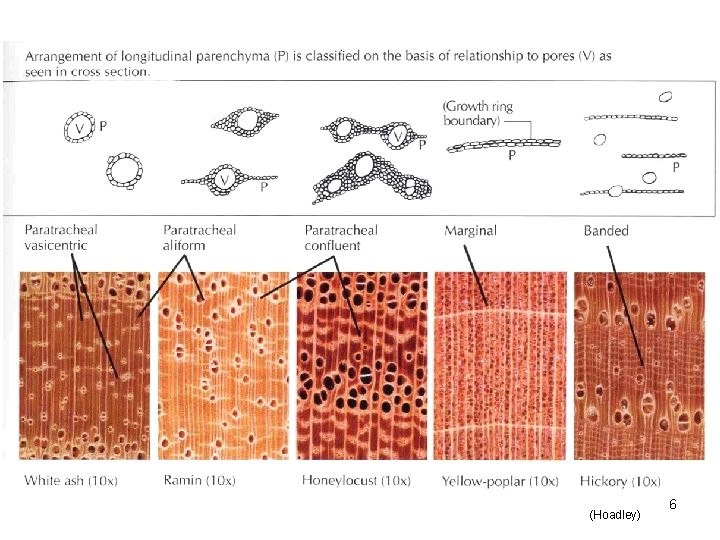
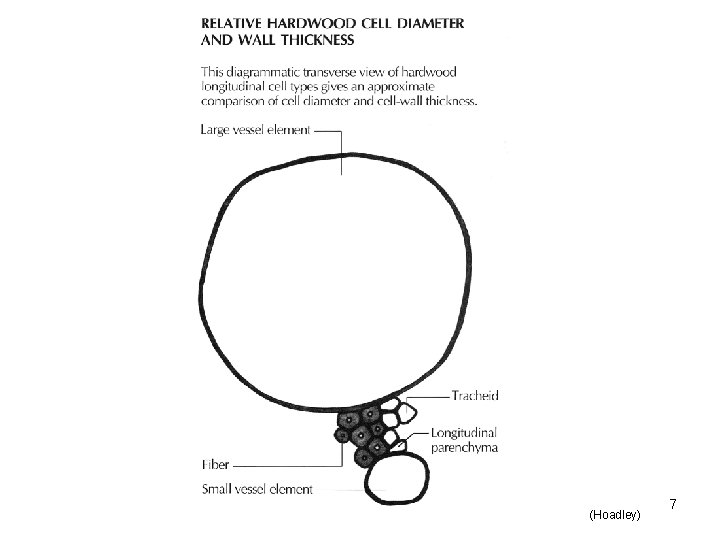
Hardwood Cell Type Longitudinal Parenchyma • Always present • Small & thin walled cells – 50 -150 m long – 20 -30 m diameter • Remain alive in sapwood (when functioning) • Function - storage • Simple pits between longitudinal parenchyma • Arrangement – Apotracheal – Paratrachel – Boundary 1
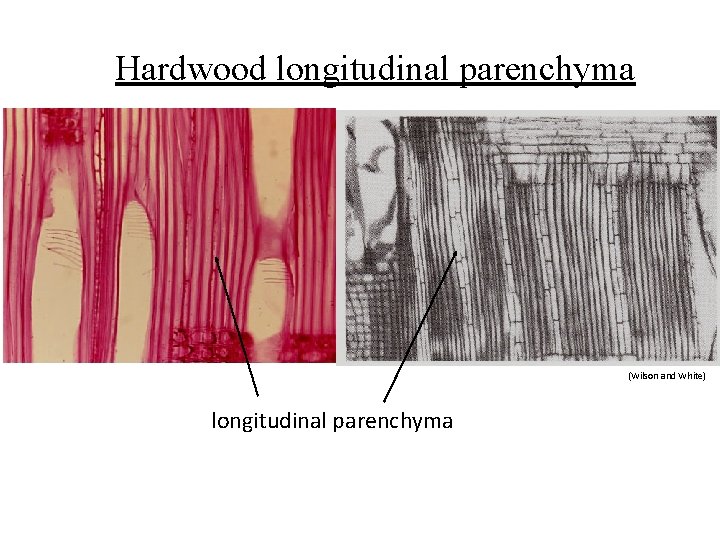
Hardwood longitudinal parenchyma (Wilson and White) longitudinal parenchyma
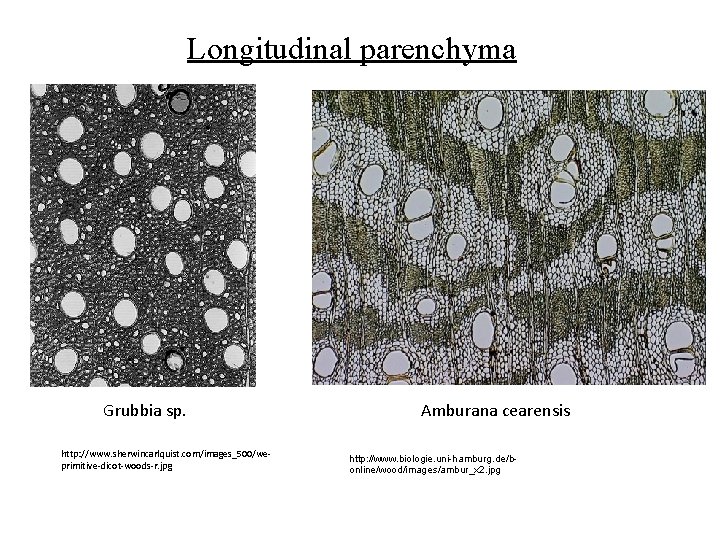
Longitudinal parenchyma Grubbia sp. http: //www. sherwincarlquist. com/images_500/weprimitive-dicot-woods-r. jpg Amburana cearensis http: //www. biologie. uni-hamburg. de/bonline/wood/images/ambur_x 2. jpg
Longitudinal parenchyma Apotracheal Boundary Paratracheal
(Hoadley) 5
(Hoadley) 6
(Hoadley) 7
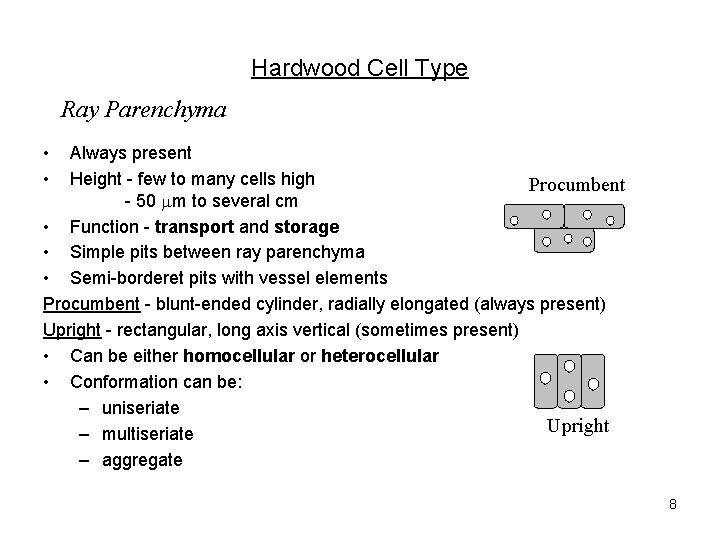
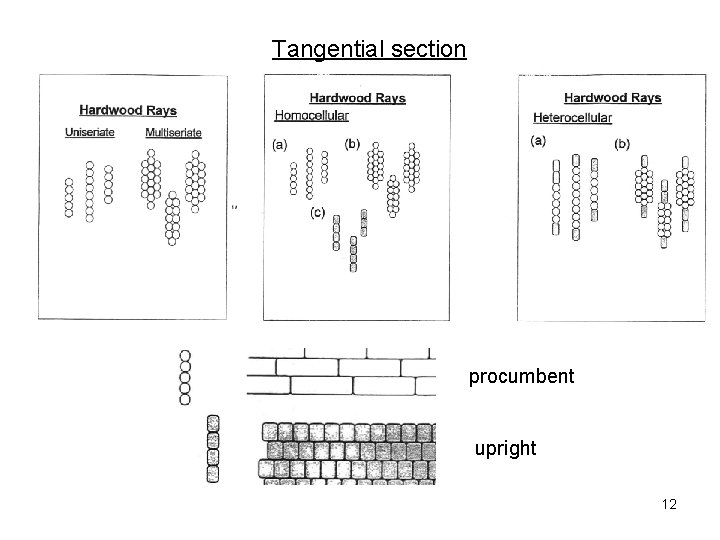
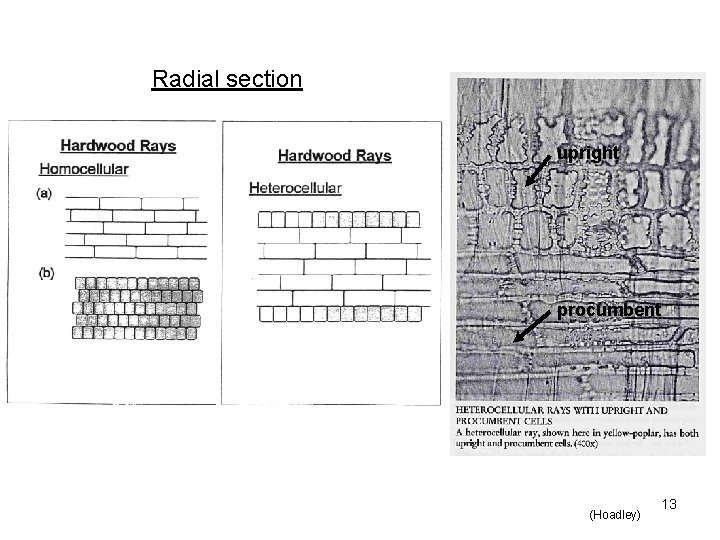
Hardwood Cell Type Ray Parenchyma • • Always present Height - few to many cells high Procumbent - 50 m to several cm • Function - transport and storage • Simple pits between ray parenchyma • Semi-borderet pits with vessel elements Procumbent - blunt-ended cylinder, radially elongated (always present) Upright - rectangular, long axis vertical (sometimes present) • Can be either homocellular or heterocellular • Conformation can be: – uniseriate Upright – multiseriate – aggregate 8
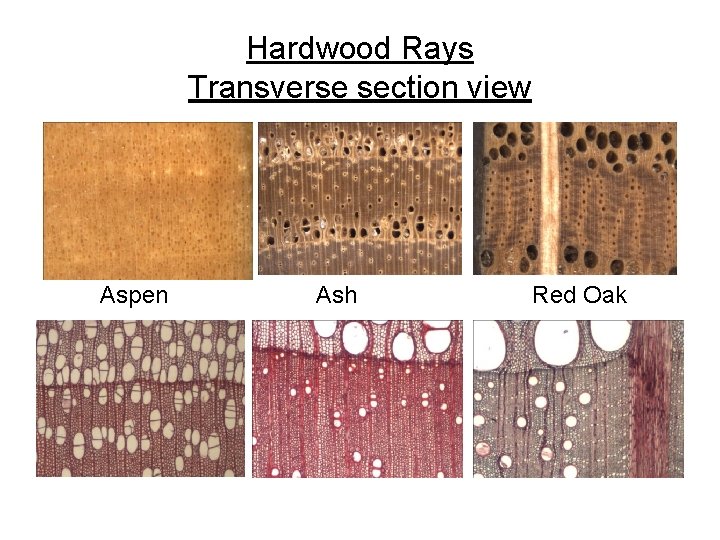
Hardwood Rays Transverse section view Aspen Ash Red Oak
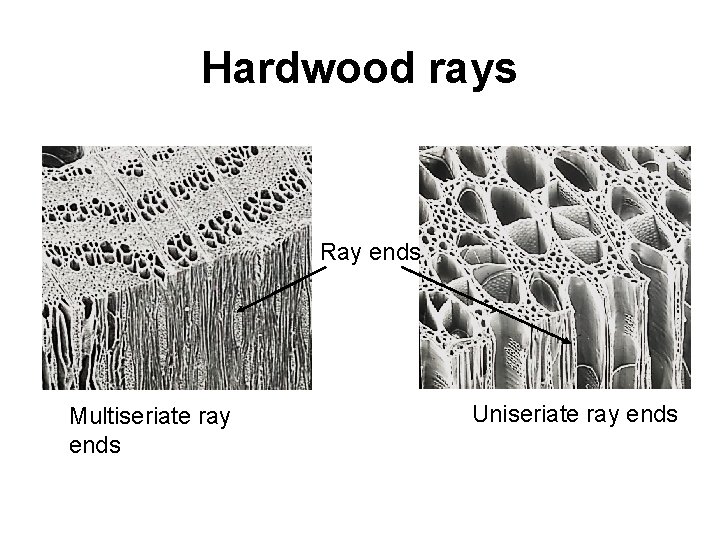
Ray ends Tangential and radial surfaces expose rays in many species to the naked eye. They give wood a certain aesthetic appeal. Ray flecks (Hoadley) 10
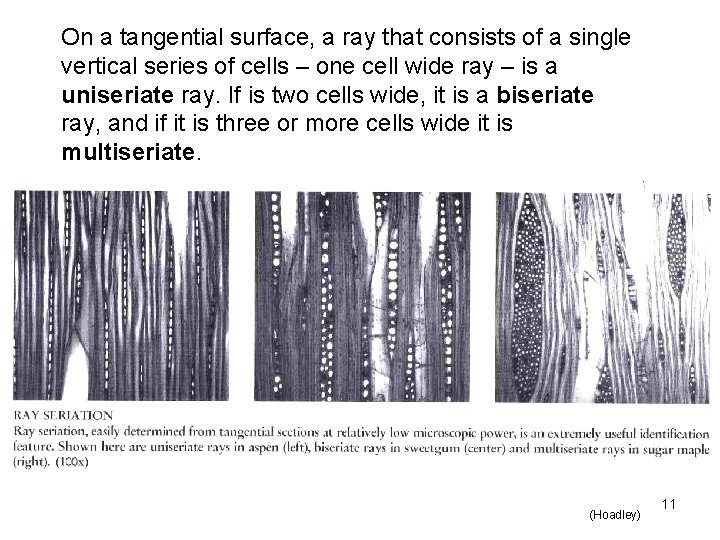
On a tangential surface, a ray that consists of a single vertical series of cells – one cell wide ray – is a uniseriate ray. If is two cells wide, it is a biseriate ray, and if it is three or more cells wide it is multiseriate. (Hoadley) 11
Tangential section procumbent upright 12
Radial section upright procumbent (Hoadley) 13
Hardwood rays Ray ends Multiseriate ray ends Uniseriate ray ends
Fiber Vessel Fiber Model of water flow in hardwoods Longitudinal parenchyma The relative magnitude of the flows are indicated by the sizes and textures of the arrows. Ray parenchyma (Siau) pith bark
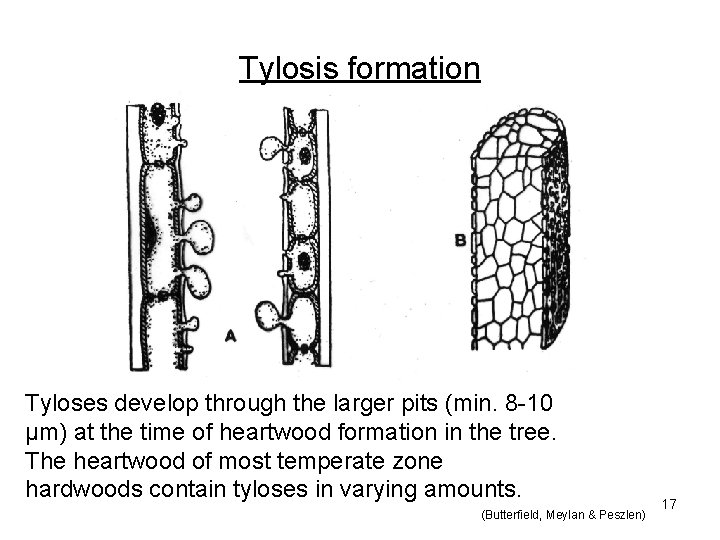
Tyloses Bubble-like or membranous materials that fill or occlude the lumens of vessel elements. They result from the protrusion of a pit membrane and growth of protoplasm into the empty vessel lumen from a living parenchyma cell. The latter may be longitudinal or ray parenchyma. (Côté) 16
Tylosis formation Tyloses develop through the larger pits (min. 8 -10 μm) at the time of heartwood formation in the tree. The heartwood of most temperate zone hardwoods contain tyloses in varying amounts. (Butterfield, Meylan & Peszlen) 17
Tyloses formation (White oak) Sapwood Heartwood (The Wood Database) 18
Tyloses (Butterfield, Meylan & Peszlen) 19