
Hardware TECHNOLOGY GUIDE ONE Computer Hierarchy Mainframes the
- Slides: 14
Hardware TECHNOLOGY GUIDE ONE
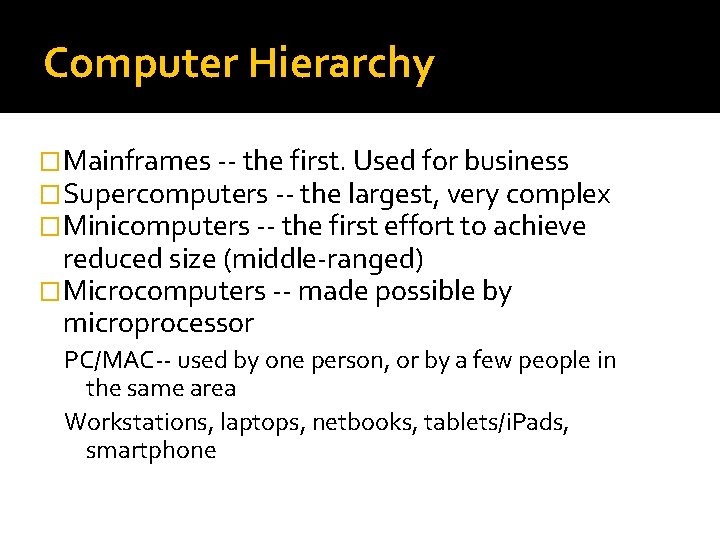
Computer Hierarchy �Mainframes -- the first. Used for business �Supercomputers -- the largest, very complex �Minicomputers -- the first effort to achieve reduced size (middle-ranged) �Microcomputers -- made possible by microprocessor PC/MAC-- used by one person, or by a few people in the same area Workstations, laptops, netbooks, tablets/i. Pads, smartphone
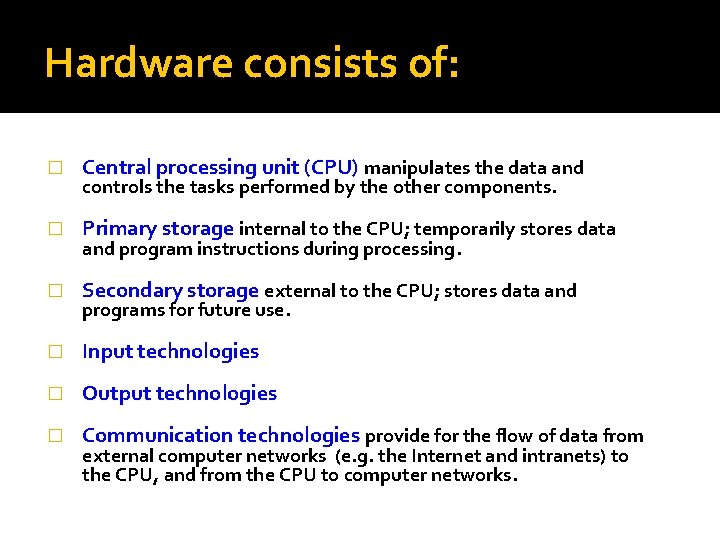
Hardware consists of: � Central processing unit (CPU) manipulates the data and � Primary storage internal to the CPU; temporarily stores data � Secondary storage external to the CPU; stores data and � Input technologies � Output technologies � Communication technologies provide for the flow of data from controls the tasks performed by the other components. and program instructions during processing. programs for future use. external computer networks (e. g. the Internet and intranets) to the CPU, and from the CPU to computer networks.
Computer Memory Two basic categories of computer memory: Primary Storage Secondary Storage Memory Capacity: Bit Byte
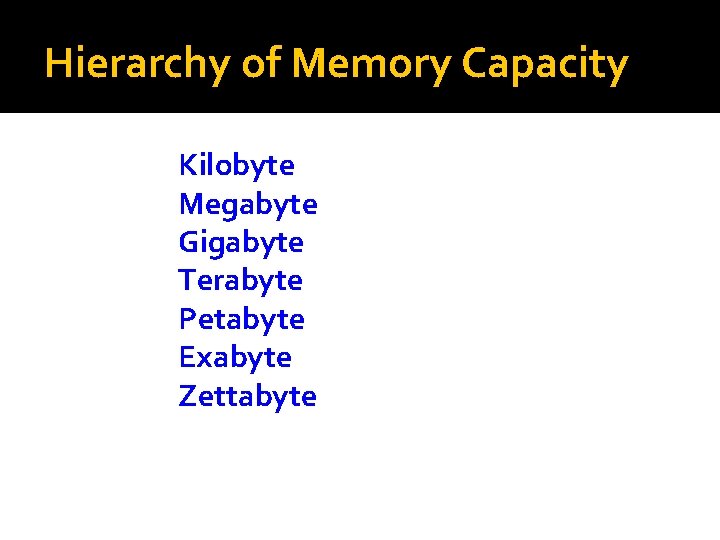
Hierarchy of Memory Capacity Kilobyte Megabyte Gigabyte Terabyte Petabyte Exabyte Zettabyte
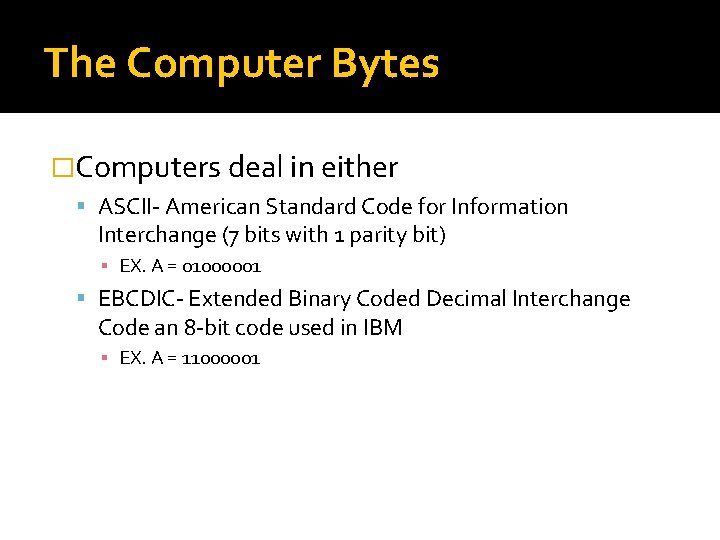
The Computer Bytes �Computers deal in either ASCII- American Standard Code for Information Interchange (7 bits with 1 parity bit) ▪ EX. A = 01000001 EBCDIC- Extended Binary Coded Decimal Interchange Code an 8 -bit code used in IBM ▪ EX. A = 11000001
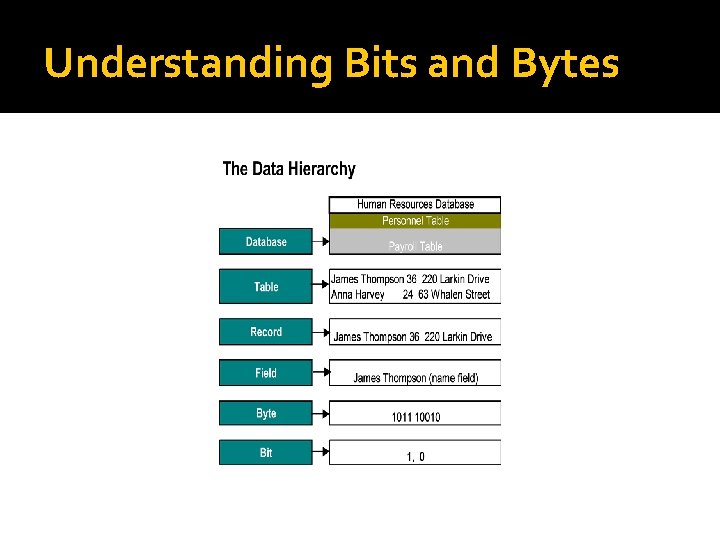
Understanding Bits and Bytes
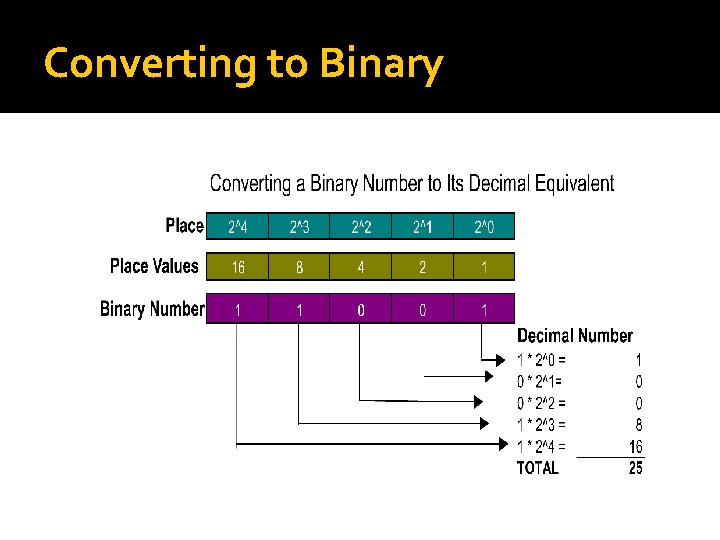
Converting to Binary
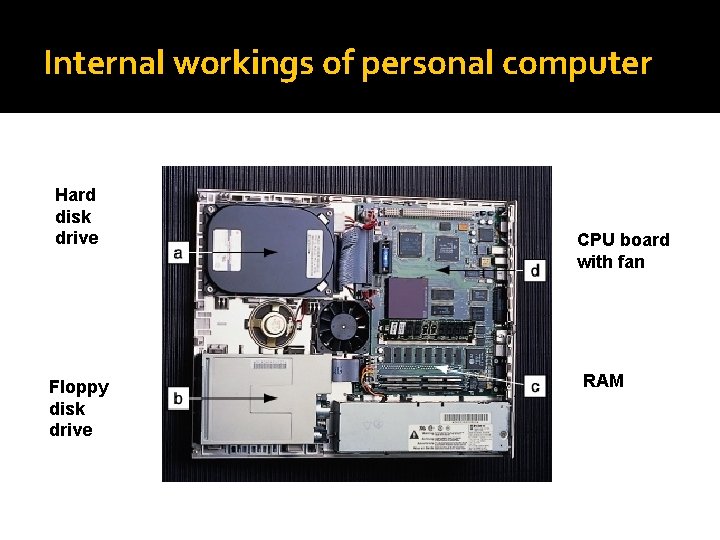
Internal workings of personal computer Hard disk drive Floppy disk drive CPU board with fan RAM
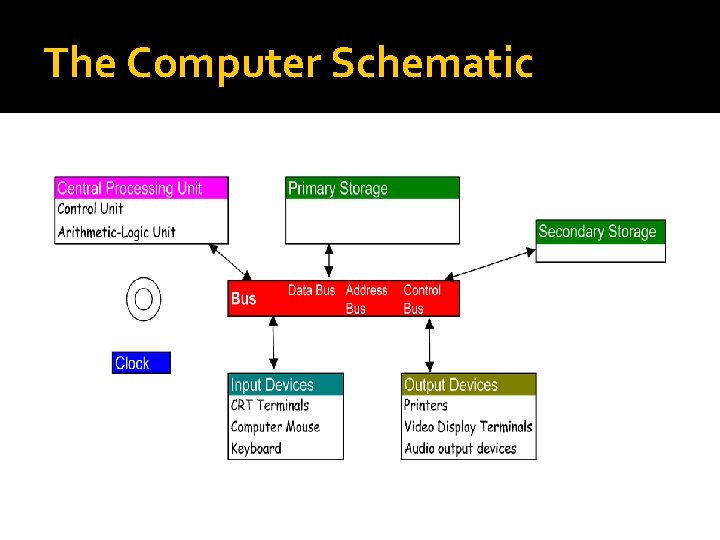
The Computer Schematic
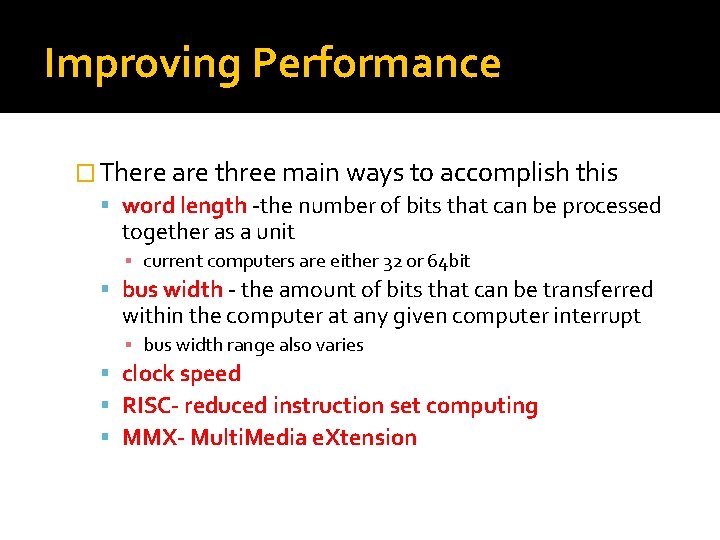
Improving Performance � There are three main ways to accomplish this word length -the number of bits that can be processed together as a unit ▪ current computers are either 32 or 64 bit bus width - the amount of bits that can be transferred within the computer at any given computer interrupt ▪ bus width range also varies clock speed RISC- reduced instruction set computing MMX- Multi. Media e. Xtension
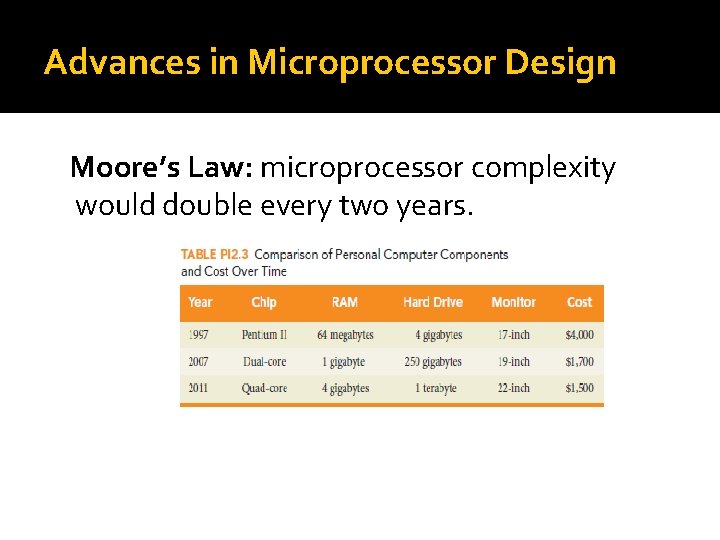
Advances in Microprocessor Design Moore’s Law: microprocessor complexity would double every two years.
Strategic Hardware Issues � How do organizations keep up with the rapid price and performance advancements in hardware? � How often should an organization upgrade its computers and storage systems? � Will upgrades increase personal and organizational productivity?
Strategic Hardware Issues � How can organizations measure such increase? � How should organizations determine the need for new hardware infrastructures? � How do organizations manage employees who can “work from anywhere? ”