
Hardware Organization 1 Outline Four hardware components Processor

- Slides: 16
Hardware Organization 1
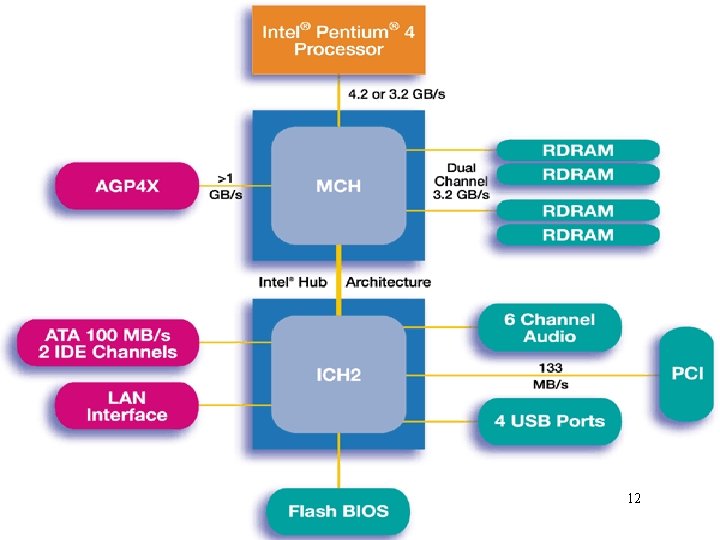
Outline • Four hardware components – – Processor Main memory Peripherals (I/O devices) Connections (buses) • Suggested reading – 1. 4~1. 6 2
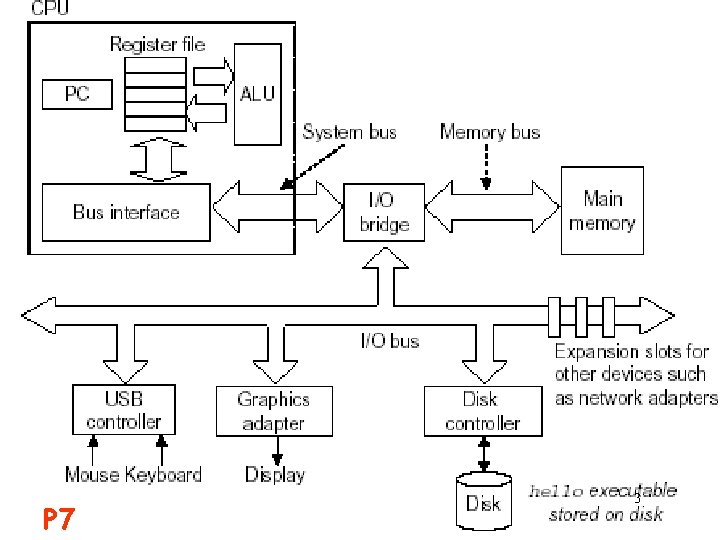
P 7 3
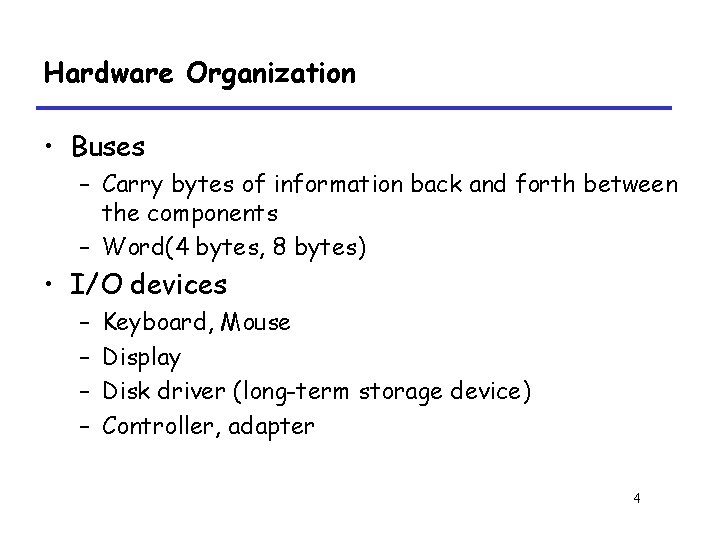
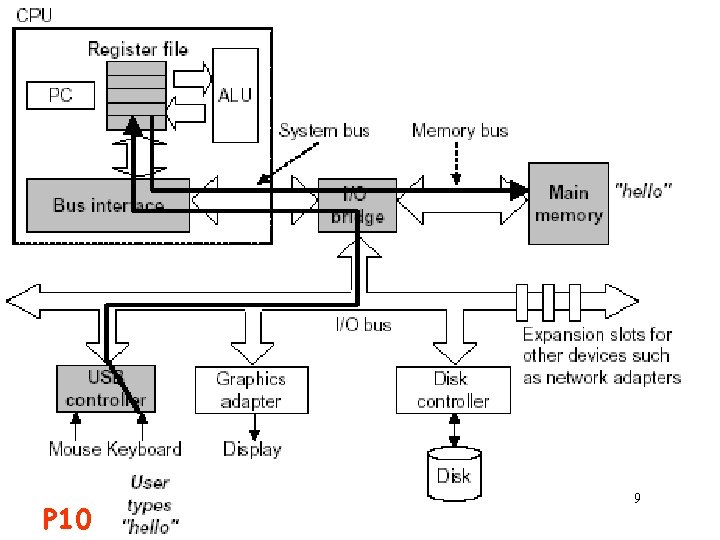
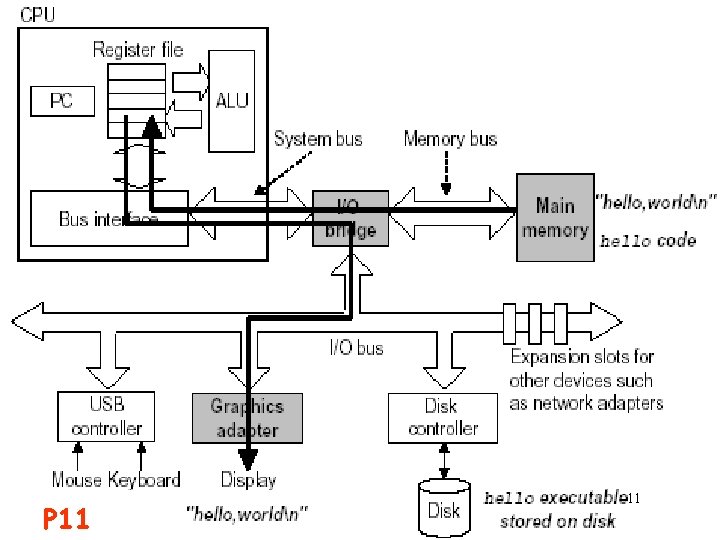
Hardware Organization • Buses – Carry bytes of information back and forth between the components – Word(4 bytes, 8 bytes) • I/O devices – – Keyboard, Mouse Display Disk driver (long-term storage device) Controller, adapter 4
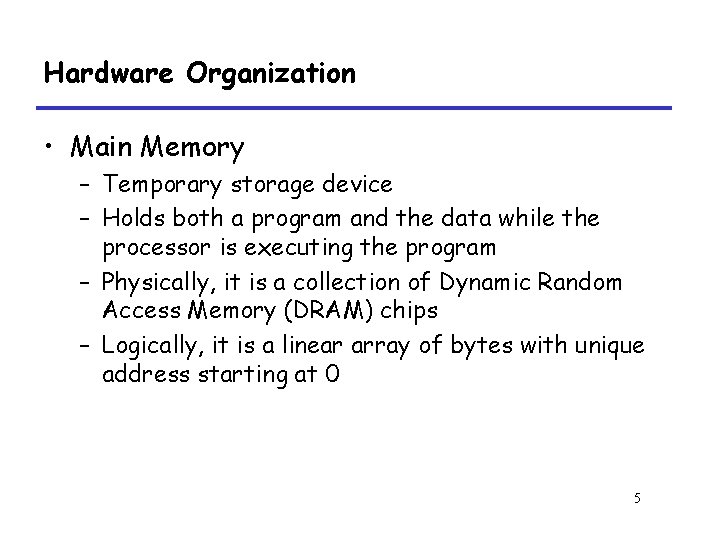
Hardware Organization • Main Memory – Temporary storage device – Holds both a program and the data while the processor is executing the program – Physically, it is a collection of Dynamic Random Access Memory (DRAM) chips – Logically, it is a linear array of bytes with unique address starting at 0 5
6
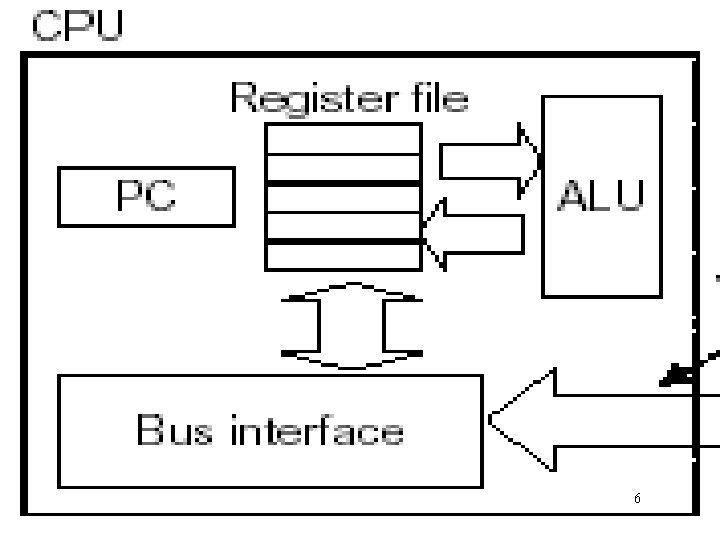
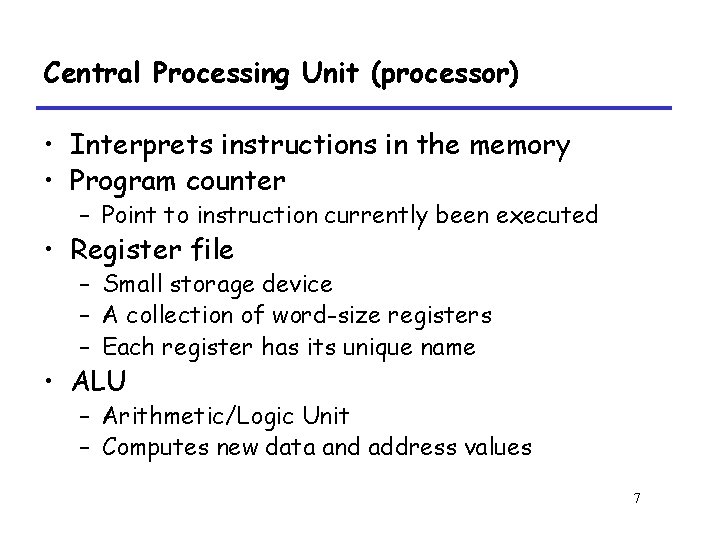
Central Processing Unit (processor) • Interprets instructions in the memory • Program counter – Point to instruction currently been executed • Register file – Small storage device – A collection of word-size registers – Each register has its unique name • ALU – Arithmetic/Logic Unit – Computes new data and address values 7
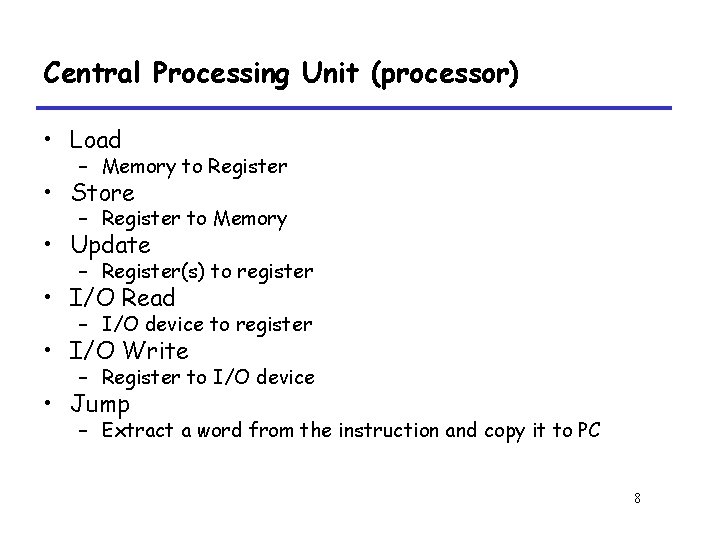
Central Processing Unit (processor) • Load – Memory to Register • Store – Register to Memory • Update – Register(s) to register • I/O Read – I/O device to register • I/O Write – Register to I/O device • Jump – Extract a word from the instruction and copy it to PC 8
P 10 9
P 10 10
P 11 11
12
13
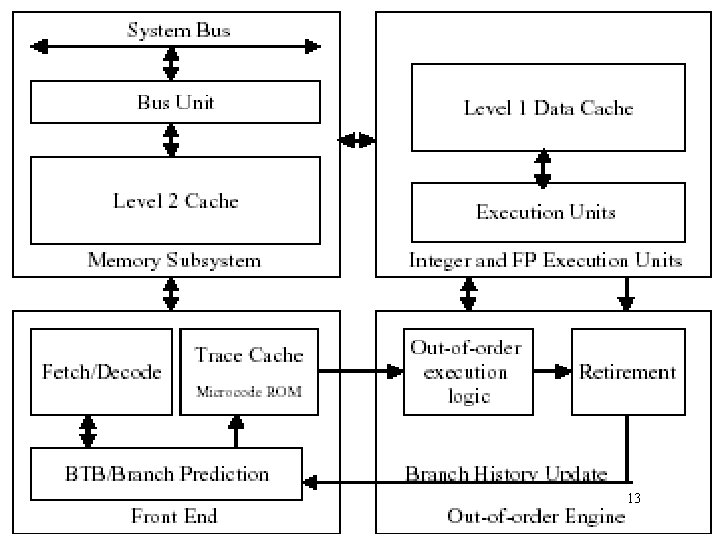
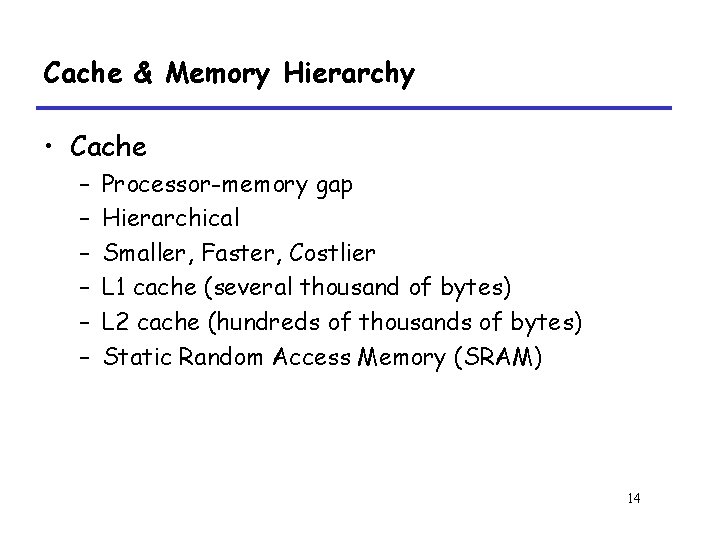
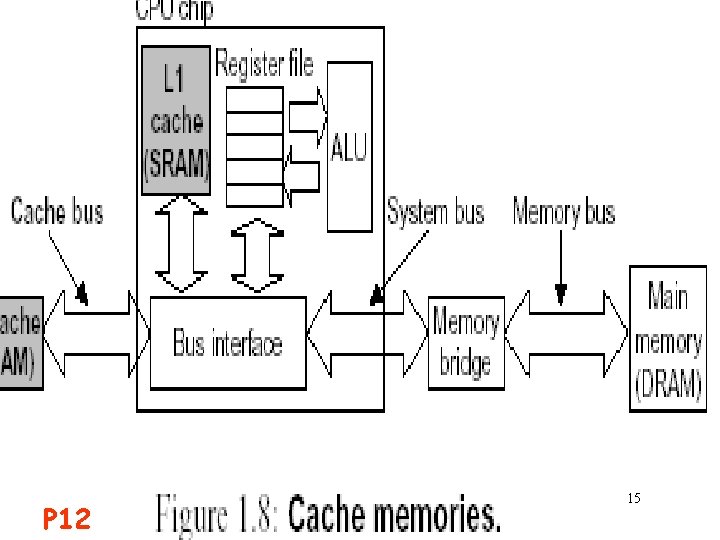
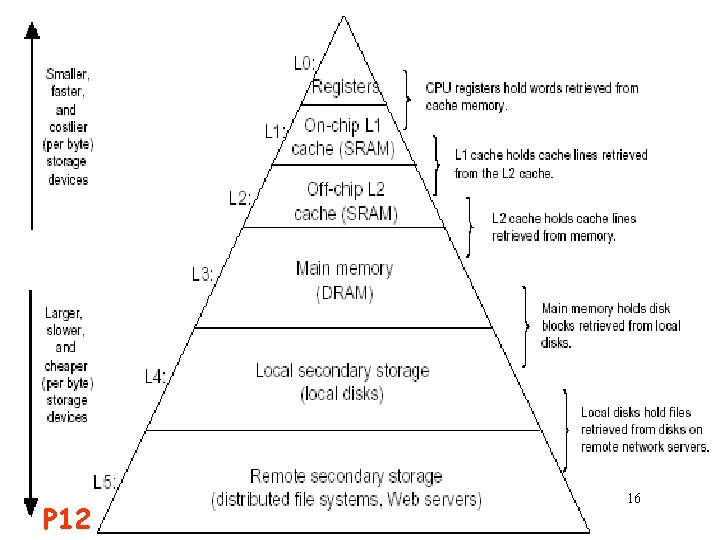
Cache & Memory Hierarchy • Cache – – – Processor-memory gap Hierarchical Smaller, Faster, Costlier L 1 cache (several thousand of bytes) L 2 cache (hundreds of thousands of bytes) Static Random Access Memory (SRAM) 14
P 12 15
P 12 16