
Hardware Chapter Three Computer Hierarchy Mainframes the first
- Slides: 23
Hardware Chapter Three
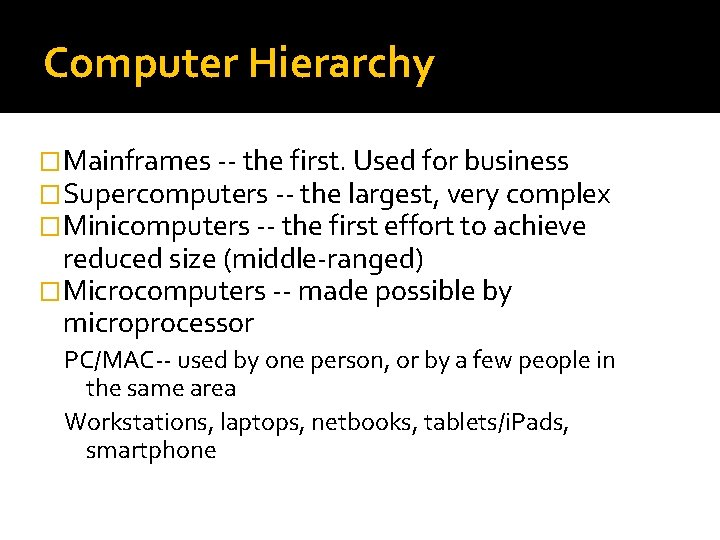
Computer Hierarchy �Mainframes -- the first. Used for business �Supercomputers -- the largest, very complex �Minicomputers -- the first effort to achieve reduced size (middle-ranged) �Microcomputers -- made possible by microprocessor PC/MAC-- used by one person, or by a few people in the same area Workstations, laptops, netbooks, tablets/i. Pads, smartphone
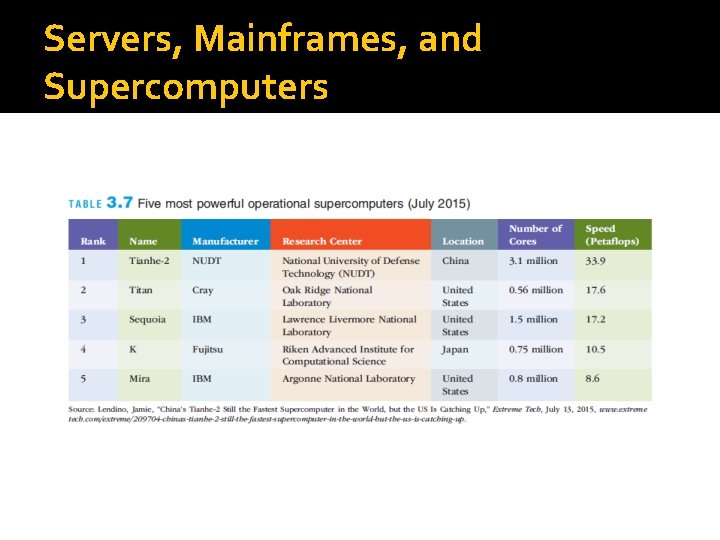
Servers, Mainframes, and Supercomputers
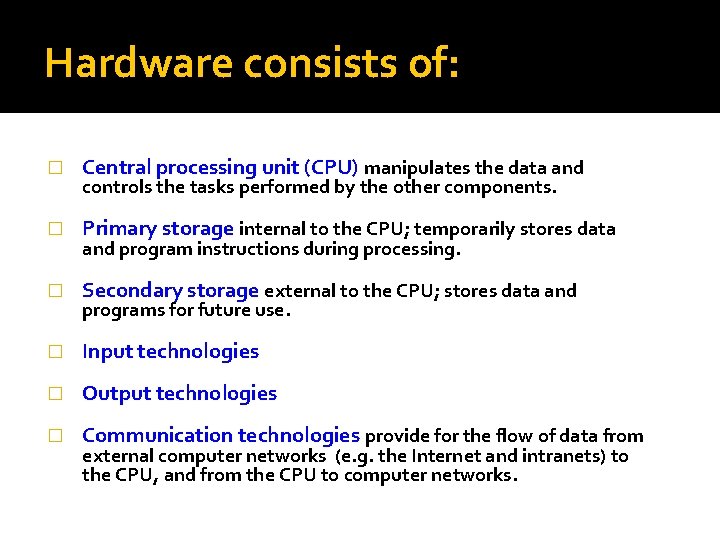
Hardware consists of: � Central processing unit (CPU) manipulates the data and � Primary storage internal to the CPU; temporarily stores data � Secondary storage external to the CPU; stores data and � Input technologies � Output technologies � Communication technologies provide for the flow of data from controls the tasks performed by the other components. and program instructions during processing. programs for future use. external computer networks (e. g. the Internet and intranets) to the CPU, and from the CPU to computer networks.
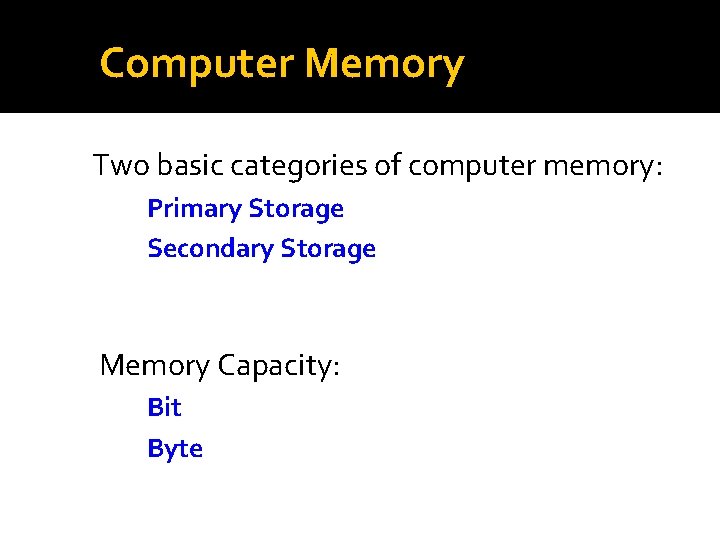
Computer Memory Two basic categories of computer memory: Primary Storage Secondary Storage Memory Capacity: Bit Byte
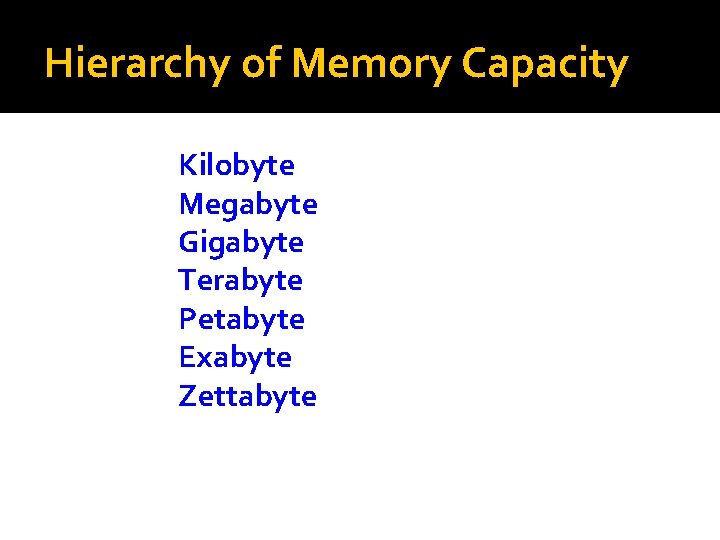
Hierarchy of Memory Capacity Kilobyte Megabyte Gigabyte Terabyte Petabyte Exabyte Zettabyte
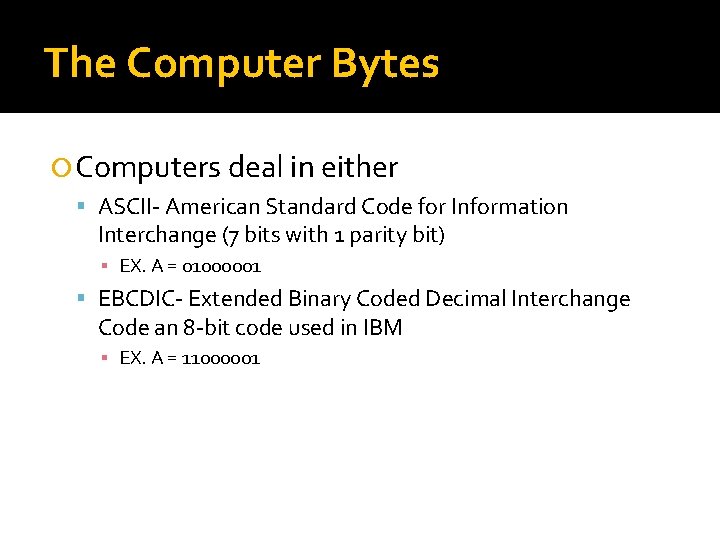
The Computer Bytes Computers deal in either ASCII- American Standard Code for Information Interchange (7 bits with 1 parity bit) ▪ EX. A = 01000001 EBCDIC- Extended Binary Coded Decimal Interchange Code an 8 -bit code used in IBM ▪ EX. A = 11000001
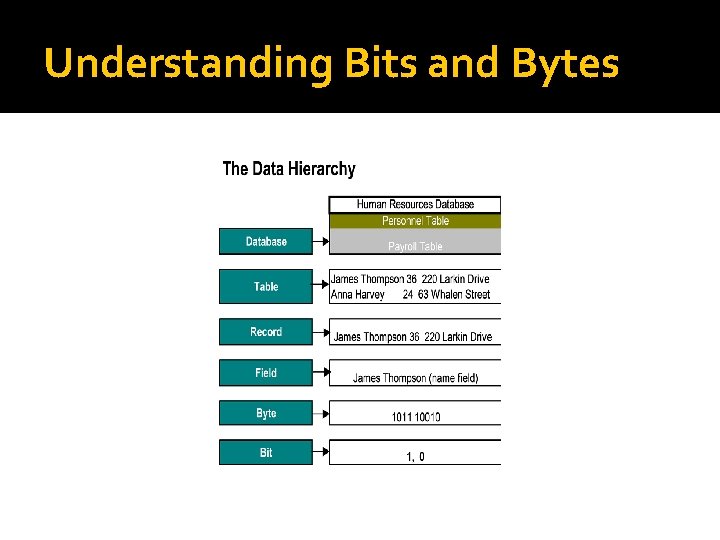
Understanding Bits and Bytes
Converting to Binary
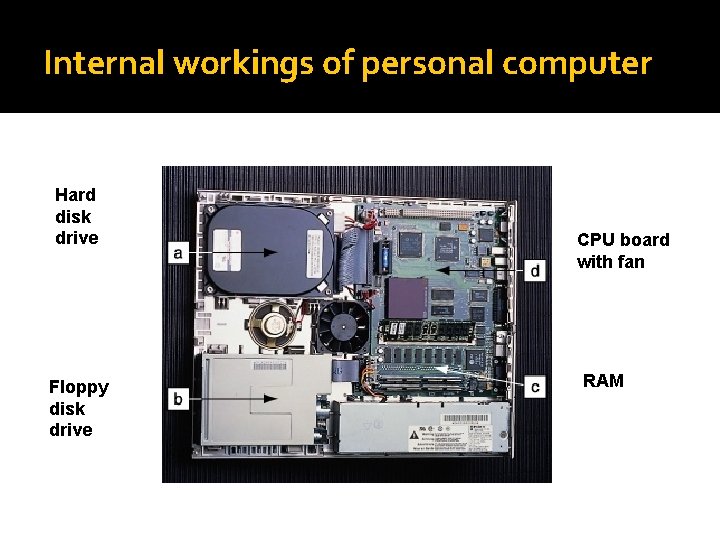
Internal workings of personal computer Hard disk drive Floppy disk drive CPU board with fan RAM
The Computer Schematic
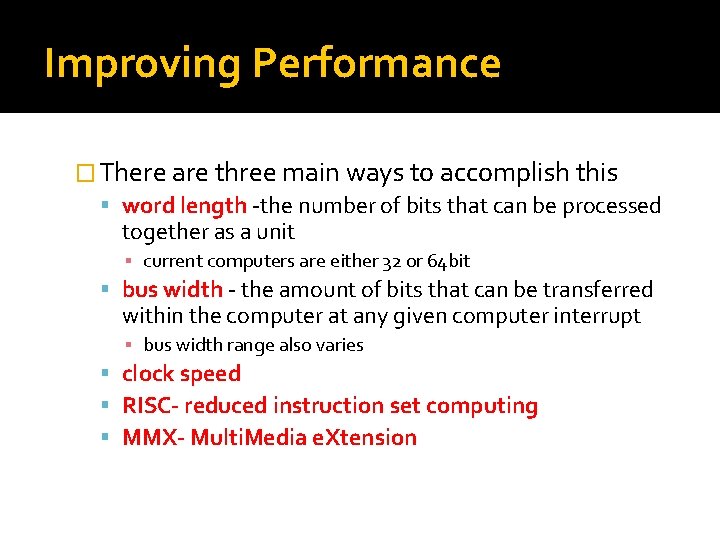
Improving Performance � There are three main ways to accomplish this word length -the number of bits that can be processed together as a unit ▪ current computers are either 32 or 64 bit bus width - the amount of bits that can be transferred within the computer at any given computer interrupt ▪ bus width range also varies clock speed RISC- reduced instruction set computing MMX- Multi. Media e. Xtension
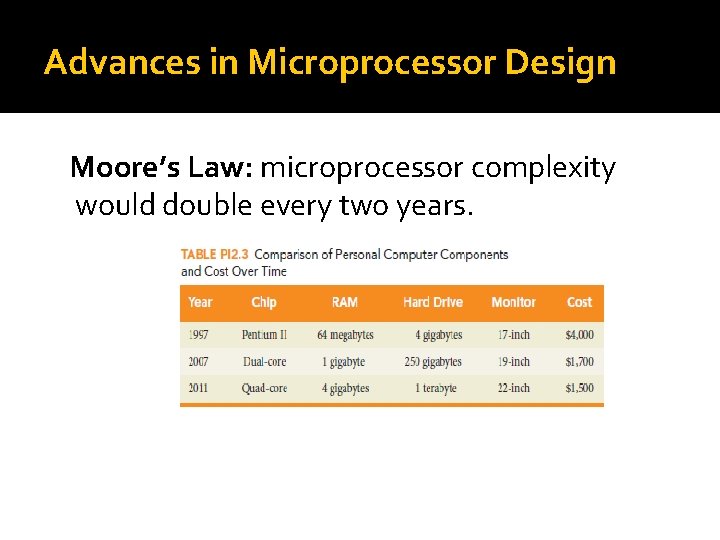
Advances in Microprocessor Design Moore’s Law: microprocessor complexity would double every two years.
Server Farms, Data Centers, and Green Computing This section provides an overview of what the computer industry and various organizations are doing to meet their computing needs in a more efficient and environmentally friendly manner
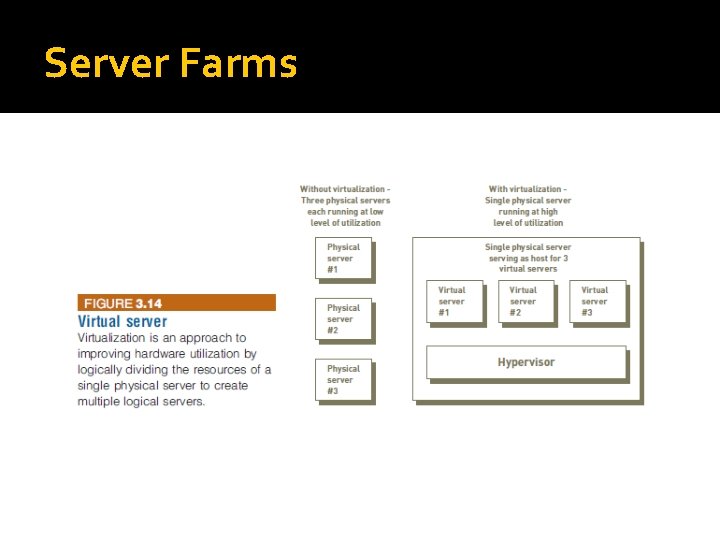
Server Farms Server farm: a room used to house a large number of servers Access to the machines can be controlled and authorized support personnel can more easily manage and maintain the servers Virtual server: a method of logically dividing the resources of a single physical server to create multiple logical servers Each logical server acts as its own dedicated machine Blade server: a server that houses many individual computer motherboards Include one or more processors, computer memory, computer storage, and computer network connections Share a common power supply and air-cooling source within a single chassis
Server Farms
Data Center Data center A climate-and-access-controlled building or a set of buildings that houses the computer hardware that delivers an organization’s data and information services Factors driving growth in data centers: Demand for additional computing capacity Need for additional storage capacity Some organizations are consolidating data centers from many locations down to just a few locations
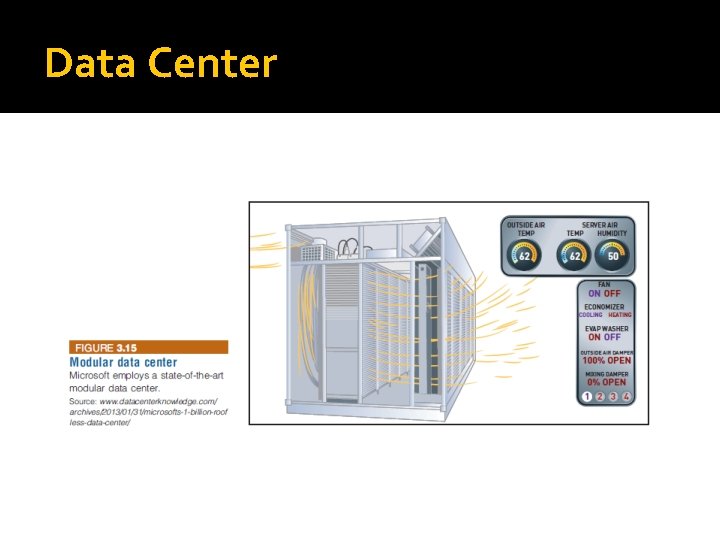
Data Center
Data Center Construction Considerations More efficient operation and reduced energy for processing and cooling ▪ Modular design ▪ Location: areas with milder climates and lower energy rates and land costs Ability to absorb the impact of a disaster (e. g. , hurricane, earthquake, terrorism attack, or war) and quickly restore services
Green Computing A program concerned with the efficient and environmentally responsible design, manufacture, operation, and disposal of ISrelated products Goals Reduce the use of hazardous material Allow companies to lower their power-related costs Enable safe disposal or recycling of equipment
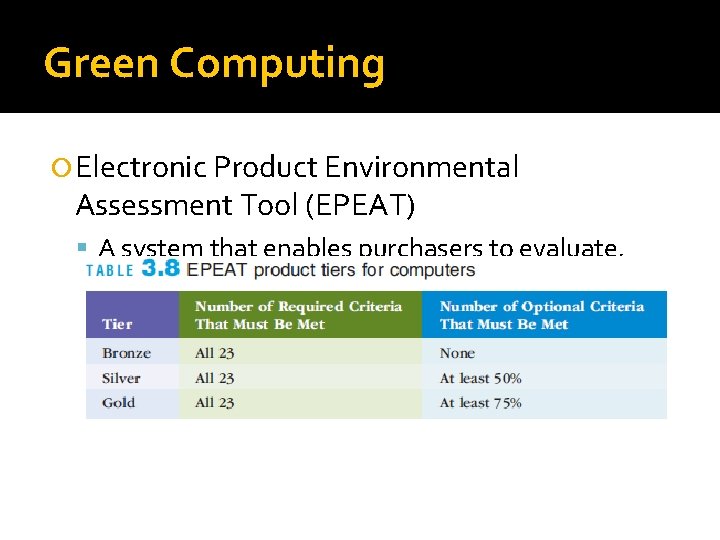
Green Computing Electronic Product Environmental Assessment Tool (EPEAT) A system that enables purchasers to evaluate, compare, and selectronic products based on a total of 51 environmental criteria
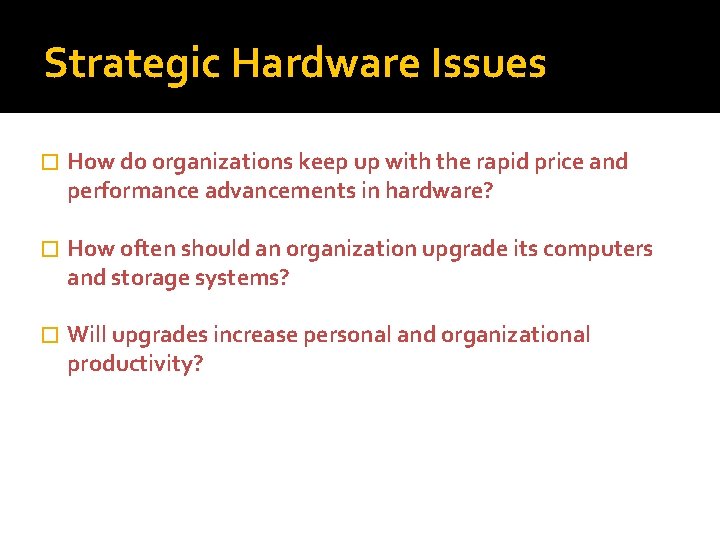
Strategic Hardware Issues � How do organizations keep up with the rapid price and performance advancements in hardware? � How often should an organization upgrade its computers and storage systems? � Will upgrades increase personal and organizational productivity?
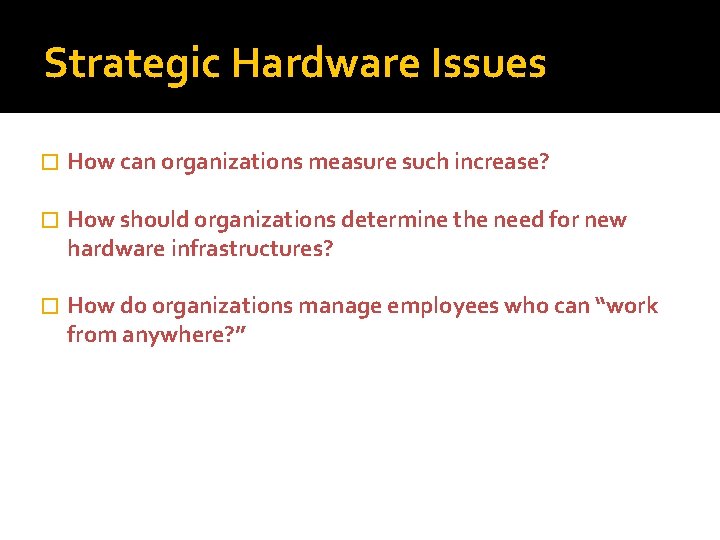
Strategic Hardware Issues � How can organizations measure such increase? � How should organizations determine the need for new hardware infrastructures? � How do organizations manage employees who can “work from anywhere? ”