
Hard Times and WWII Business Cycle Stock Market
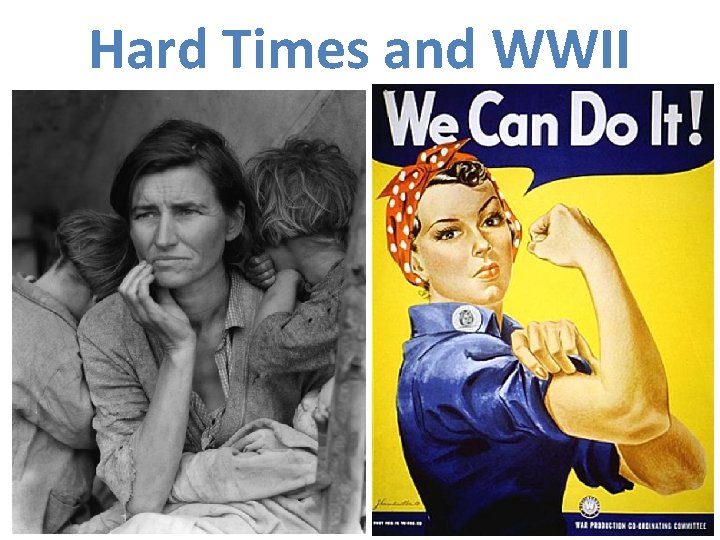
Hard Times and WWII
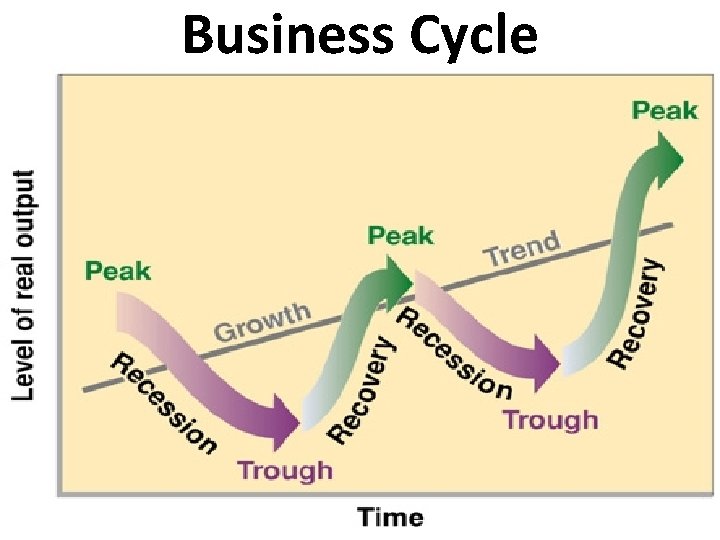
Business Cycle
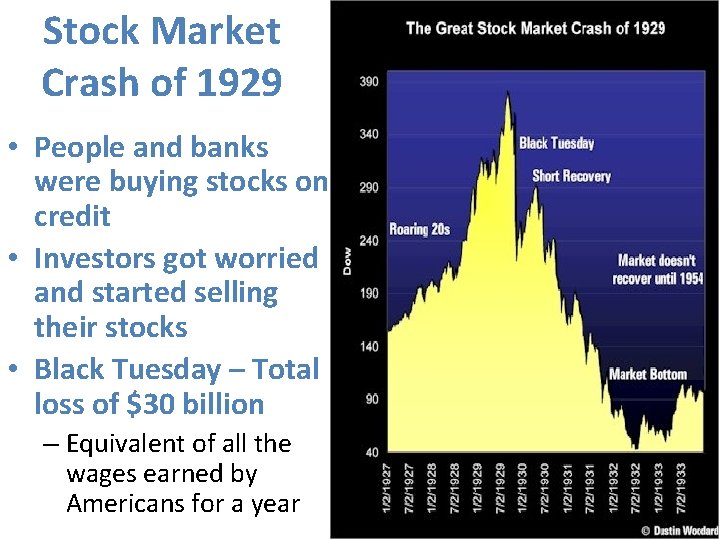
Stock Market Crash of 1929 • People and banks were buying stocks on credit • Investors got worried and started selling their stocks • Black Tuesday – Total loss of $30 billion – Equivalent of all the wages earned by Americans for a year
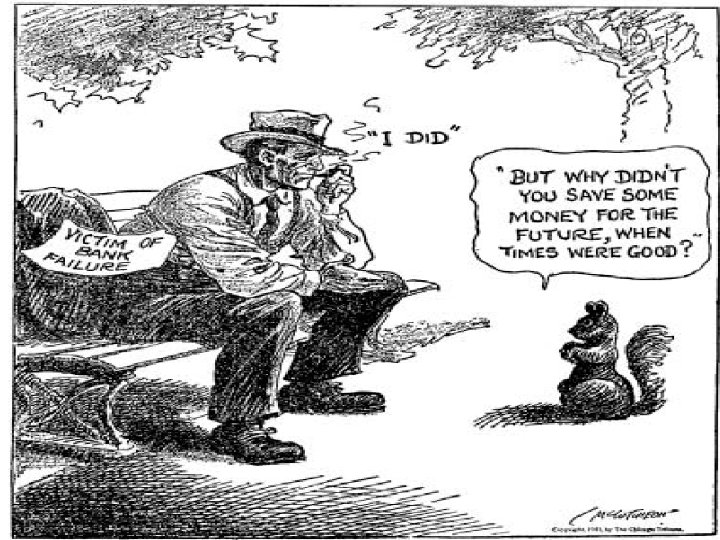
Ripple Effect of the Crash 1. Businesses cannot repay loans to banks 2. Panic – people began making withdrawals from banks (Run on the Bank) 3. Banks had to recall loans – people and businesses cannot repay the loans 4. Banks close 5. Savings Accounts wiped out 6. Businesses could not borrow – cut production 7. Cut the working force – rising unemployment
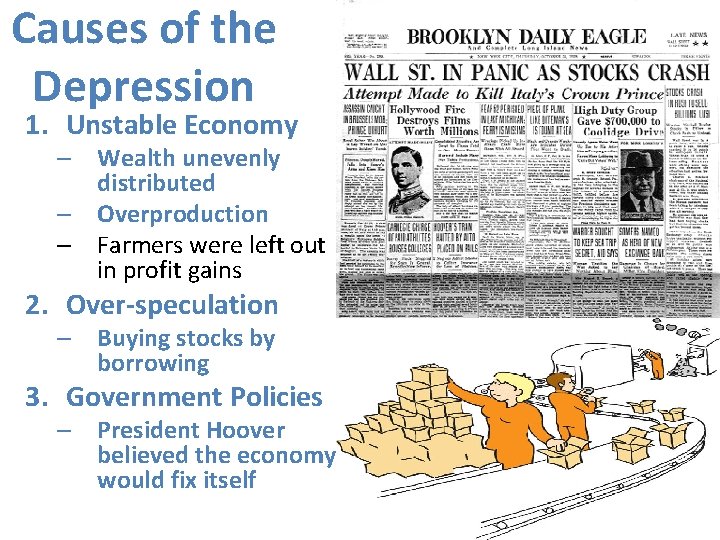
Causes of the Depression 1. Unstable Economy – Wealth unevenly distributed – Overproduction – Farmers were left out in profit gains 2. Over-speculation – Buying stocks by borrowing 3. Government Policies – President Hoover believed the economy would fix itself
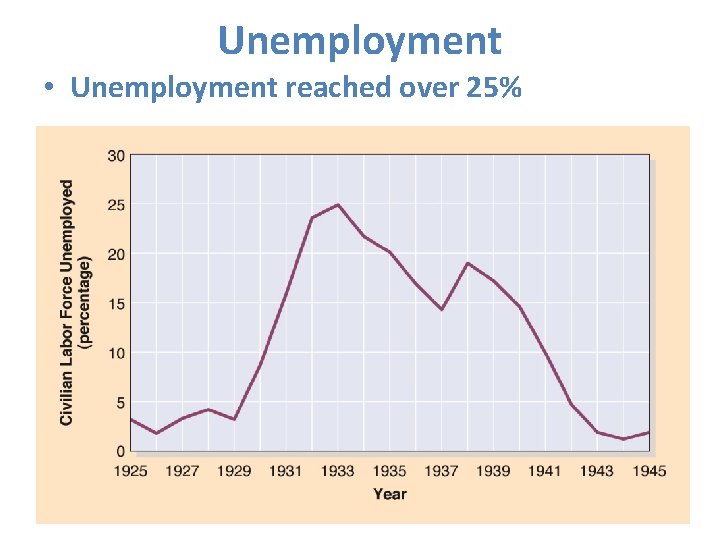
Unemployment • Unemployment reached over 25%
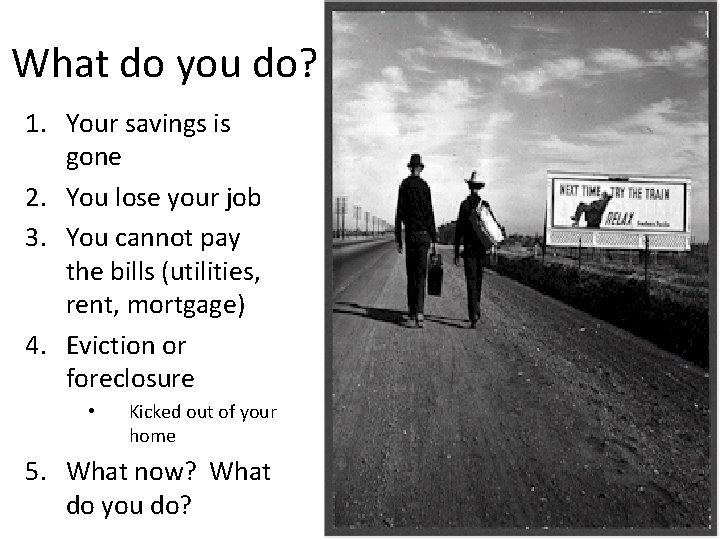
What do you do? 1. Your savings is gone 2. You lose your job 3. You cannot pay the bills (utilities, rent, mortgage) 4. Eviction or foreclosure • Kicked out of your home 5. What now? What do you do?
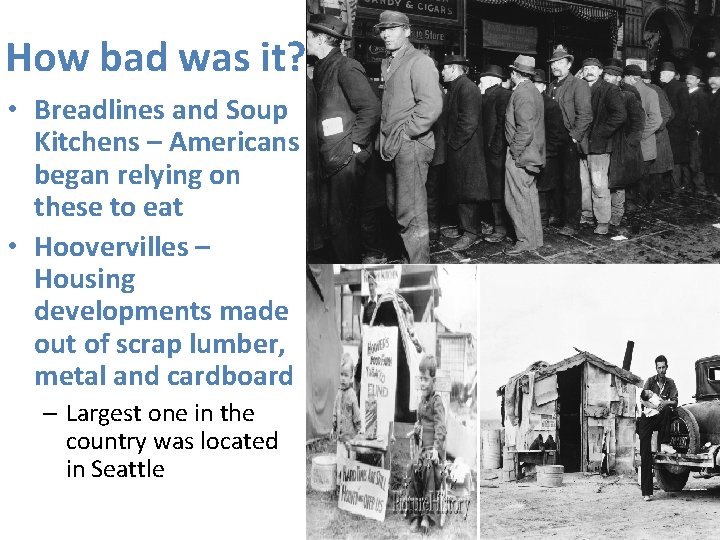
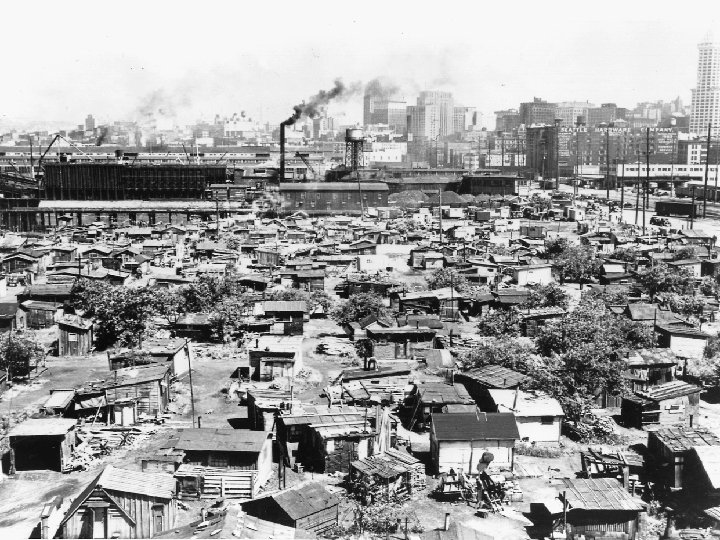
How bad was it? • Breadlines and Soup Kitchens – Americans began relying on these to eat • Hoovervilles – Housing developments made out of scrap lumber, metal and cardboard – Largest one in the country was located in Seattle
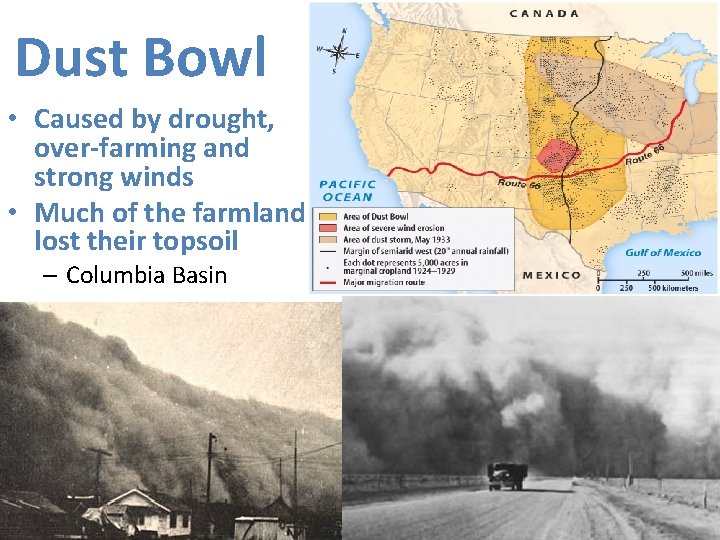
Dust Bowl • Caused by drought, over-farming and strong winds • Much of the farmland lost their topsoil – Columbia Basin
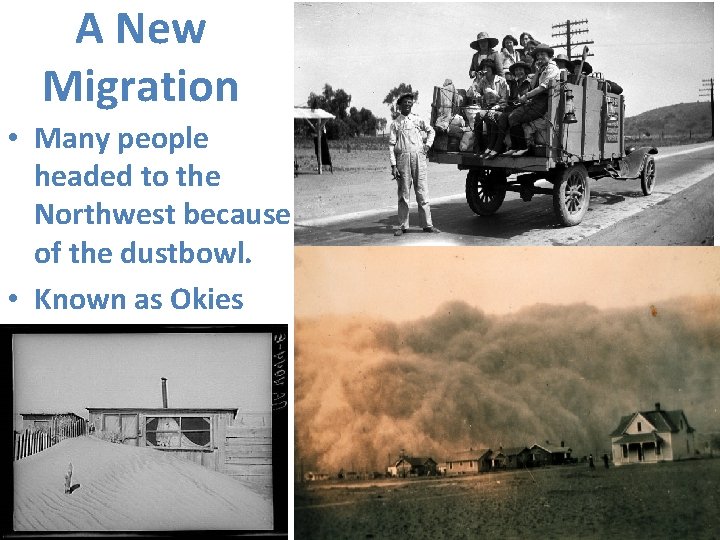
A New Migration • Many people headed to the Northwest because of the dustbowl. • Known as Okies
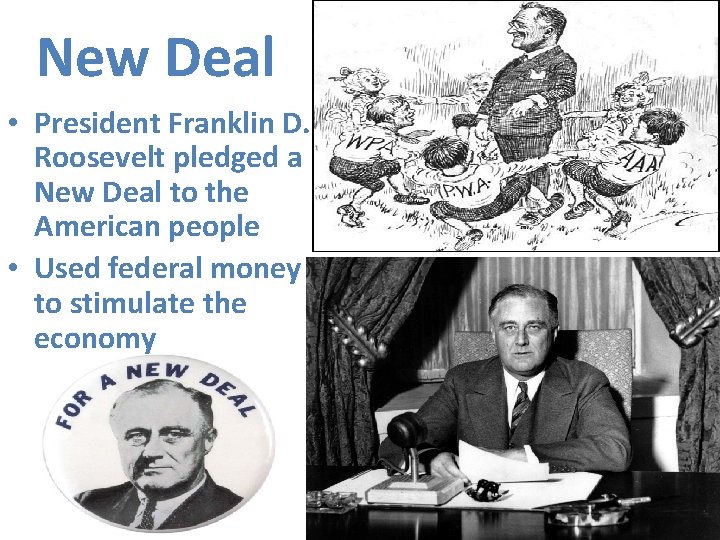
New Deal • President Franklin D. Roosevelt pledged a New Deal to the American people • Used federal money to stimulate the economy
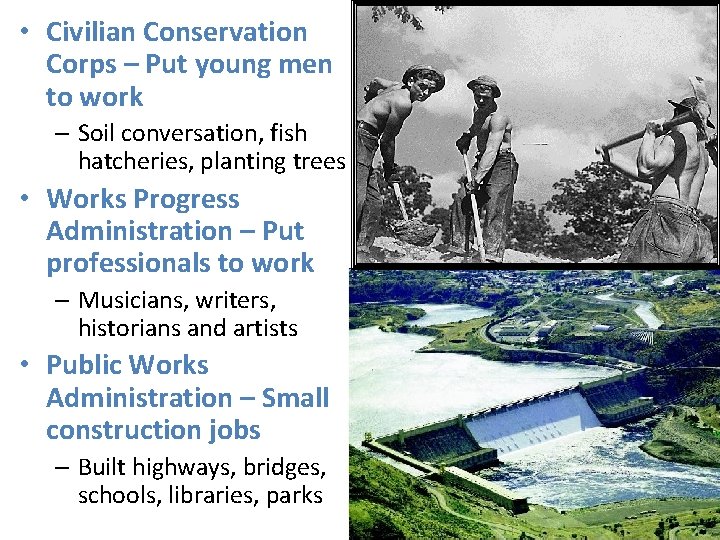
• Civilian Conservation Corps – Put young men to work – Soil conversation, fish hatcheries, planting trees • Works Progress Administration – Put professionals to work – Musicians, writers, historians and artists • Public Works Administration – Small construction jobs – Built highways, bridges, schools, libraries, parks
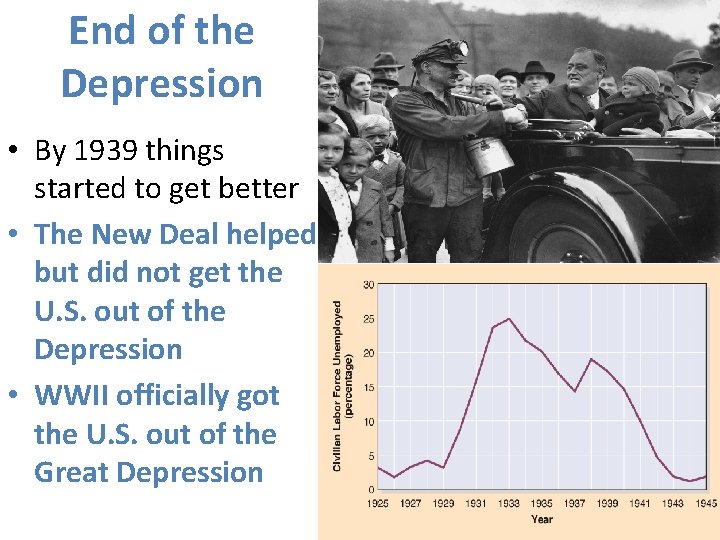
End of the Depression • By 1939 things started to get better • The New Deal helped but did not get the U. S. out of the Depression • WWII officially got the U. S. out of the Great Depression
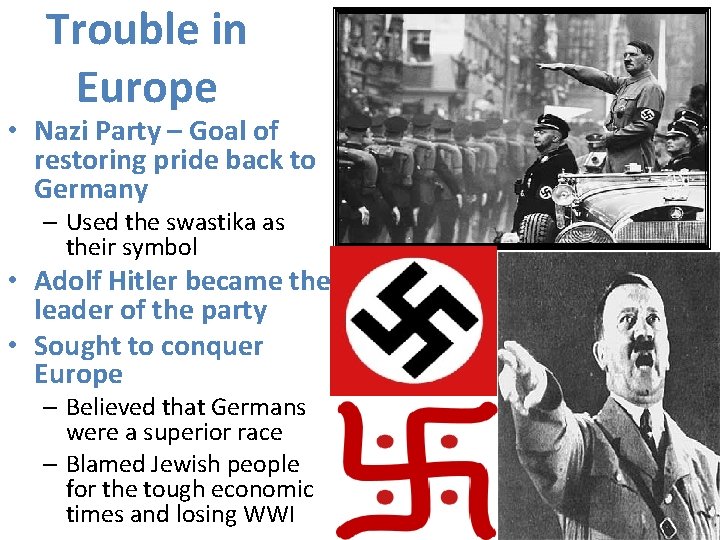
Trouble in Europe • Nazi Party – Goal of restoring pride back to Germany – Used the swastika as their symbol • Adolf Hitler became the leader of the party • Sought to conquer Europe – Believed that Germans were a superior race – Blamed Jewish people for the tough economic times and losing WWI
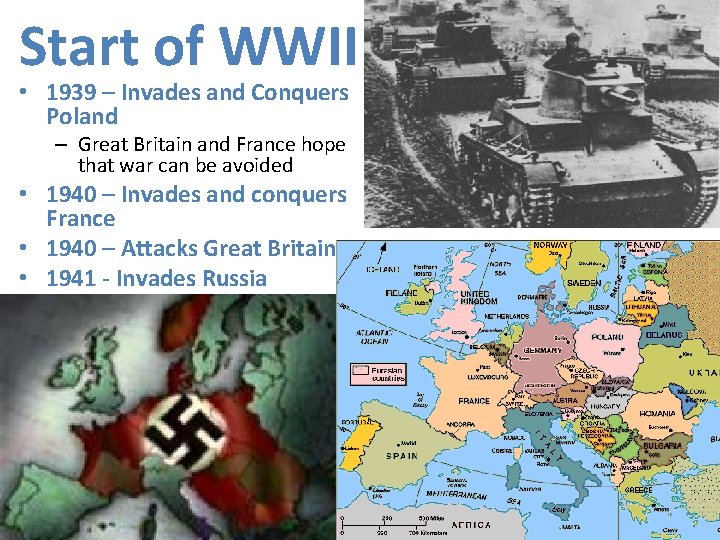
Start of WWII • 1939 – Invades and Conquers Poland – Great Britain and France hope that war can be avoided • 1940 – Invades and conquers France • 1940 – Attacks Great Britain • 1941 - Invades Russia
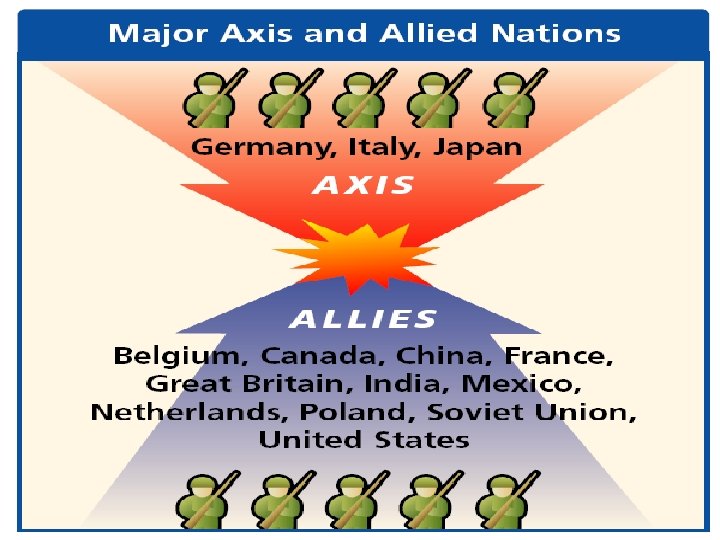
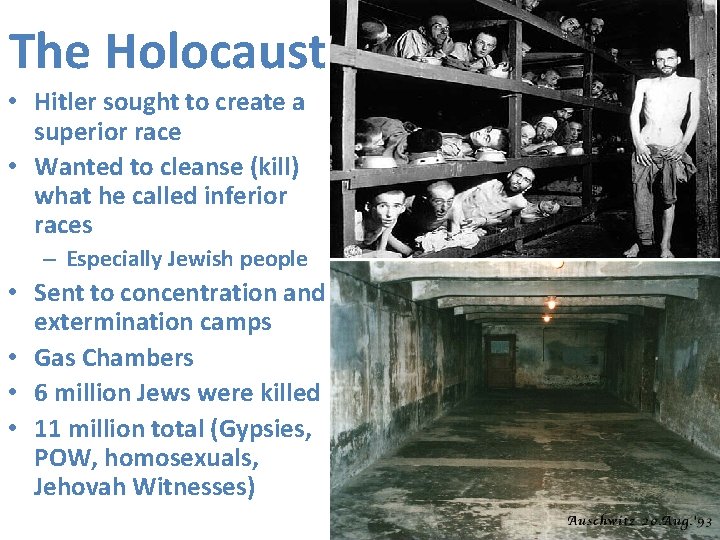
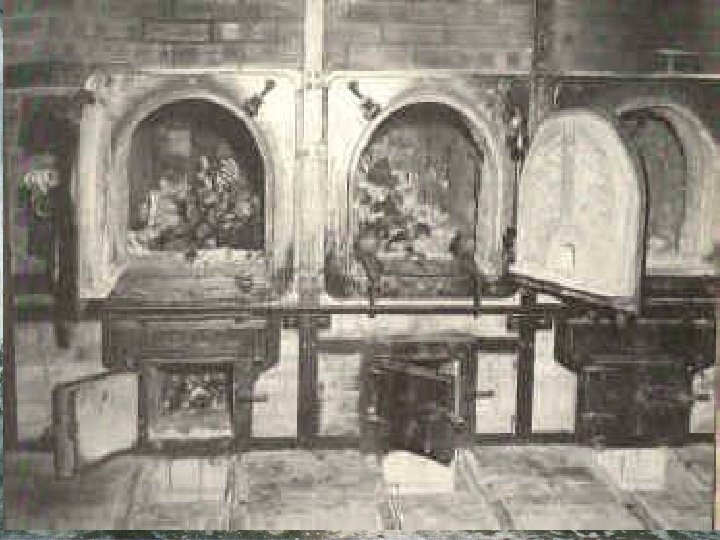
The Holocaust • Hitler sought to create a superior race • Wanted to cleanse (kill) what he called inferior races – Especially Jewish people • Sent to concentration and extermination camps • Gas Chambers • 6 million Jews were killed • 11 million total (Gypsies, POW, homosexuals, Jehovah Witnesses)
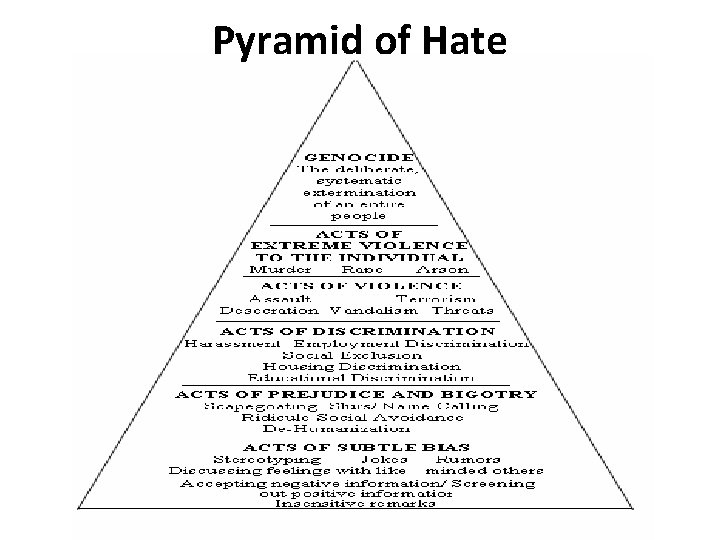
Pyramid of Hate
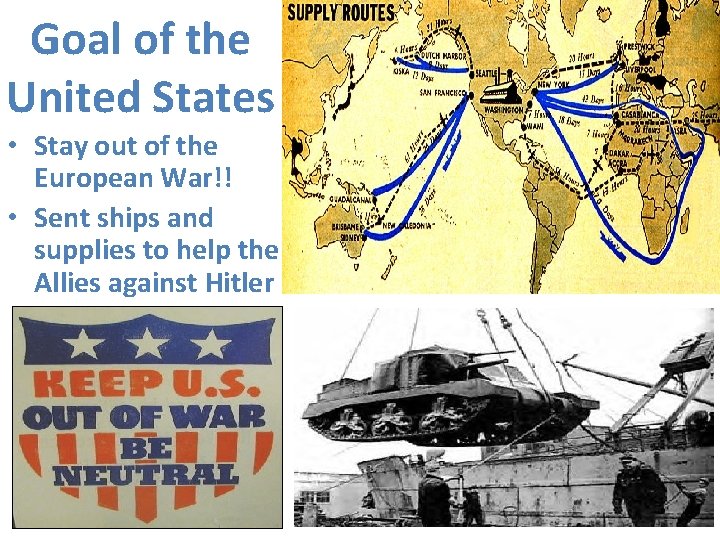
Goal of the United States • Stay out of the European War!! • Sent ships and supplies to help the Allies against Hitler
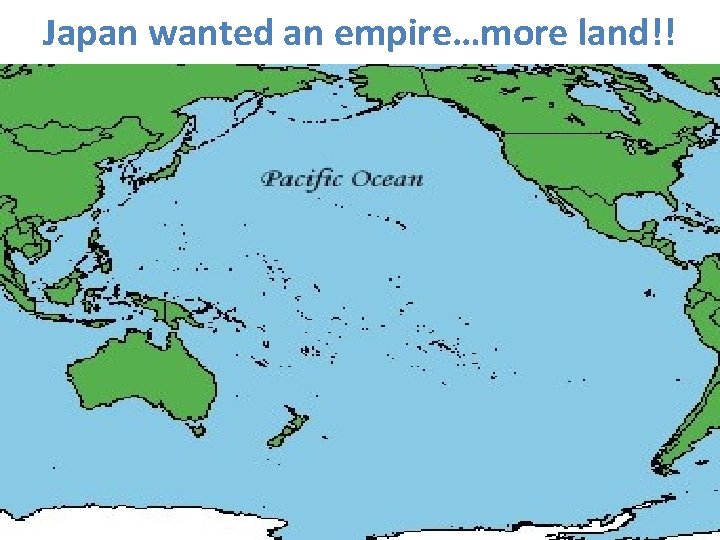
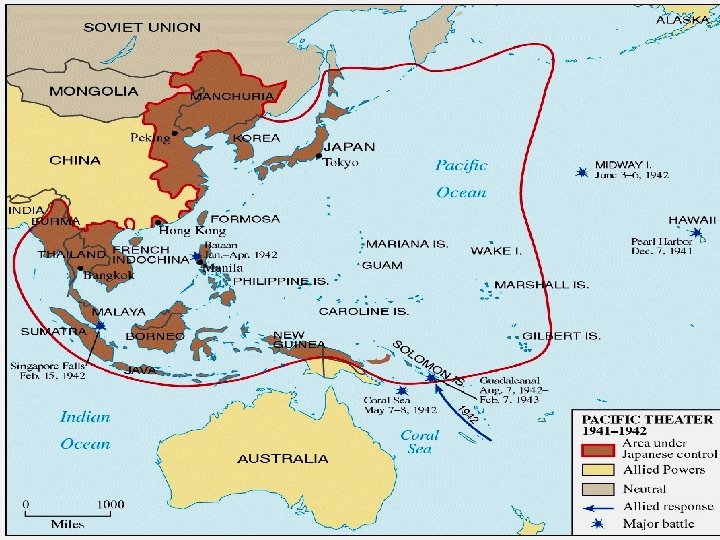
Japan wanted an empire…more land!!
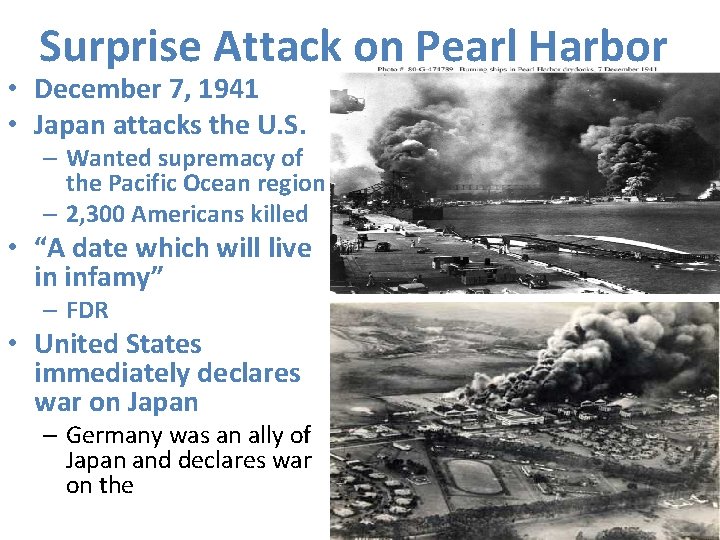
Surprise Attack on Pearl Harbor • December 7, 1941 • Japan attacks the U. S. – Wanted supremacy of the Pacific Ocean region – 2, 300 Americans killed • “A date which will live in infamy” – FDR • United States immediately declares war on Japan – Germany was an ally of Japan and declares war on the
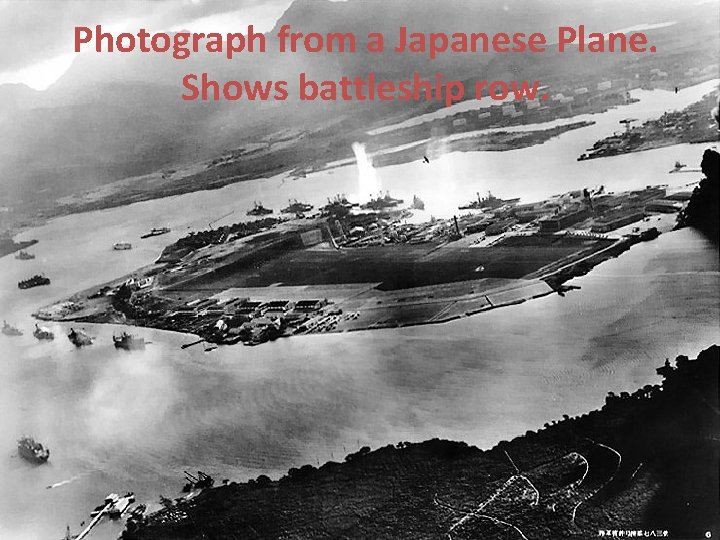
Photograph from a Japanese Plane. Shows battleship row.
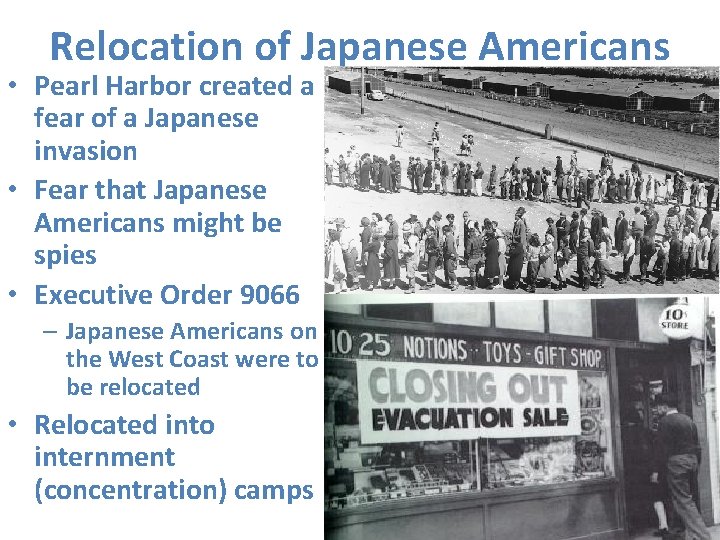
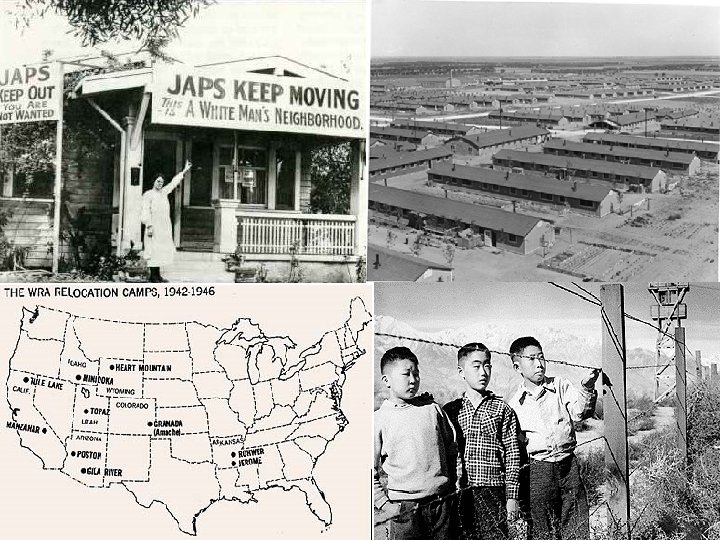
Relocation of Japanese Americans • Pearl Harbor created a fear of a Japanese invasion • Fear that Japanese Americans might be spies • Executive Order 9066 – Japanese Americans on the West Coast were to be relocated • Relocated into internment (concentration) camps
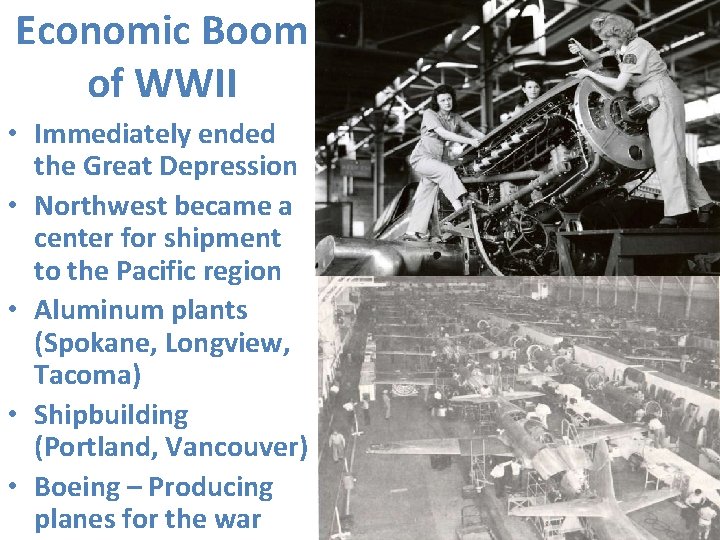
Economic Boom of WWII • Immediately ended the Great Depression • Northwest became a center for shipment to the Pacific region • Aluminum plants (Spokane, Longview, Tacoma) • Shipbuilding (Portland, Vancouver) • Boeing – Producing planes for the war
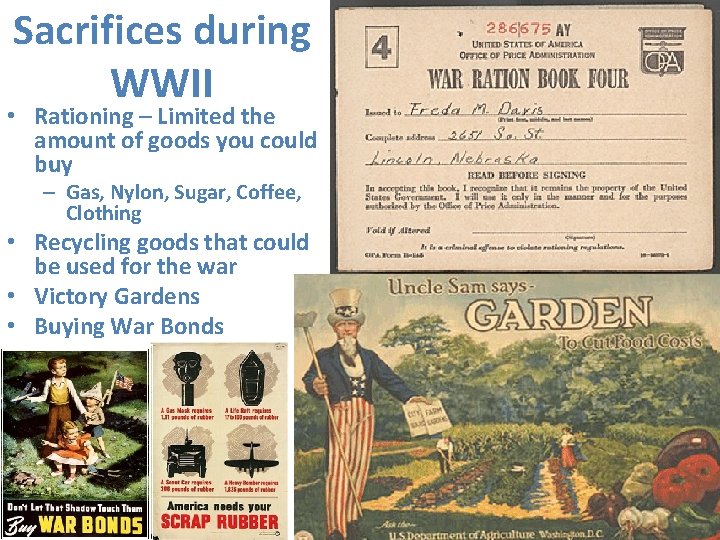
Sacrifices during WWII • Rationing – Limited the amount of goods you could buy – Gas, Nylon, Sugar, Coffee, Clothing • Recycling goods that could be used for the war • Victory Gardens • Buying War Bonds
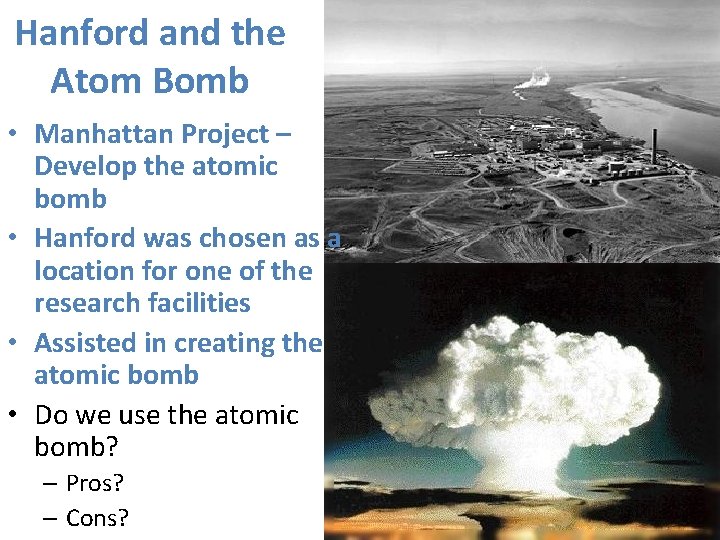
Hanford and the Atom Bomb • Manhattan Project – Develop the atomic bomb • Hanford was chosen as a location for one of the research facilities • Assisted in creating the atomic bomb • Do we use the atomic bomb? – Pros? – Cons?
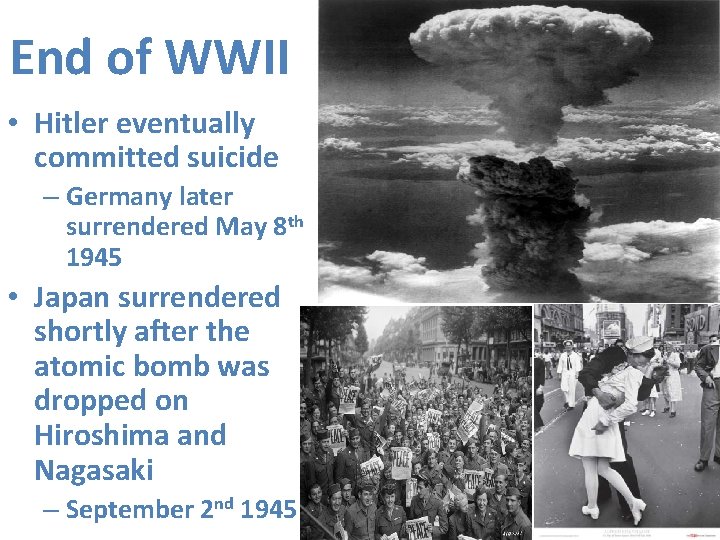
End of WWII • Hitler eventually committed suicide – Germany later surrendered May 8 th 1945 • Japan surrendered shortly after the atomic bomb was dropped on Hiroshima and Nagasaki – September 2 nd 1945
- Slides: 32