
Haptic feedback on the steering wheel to maximize
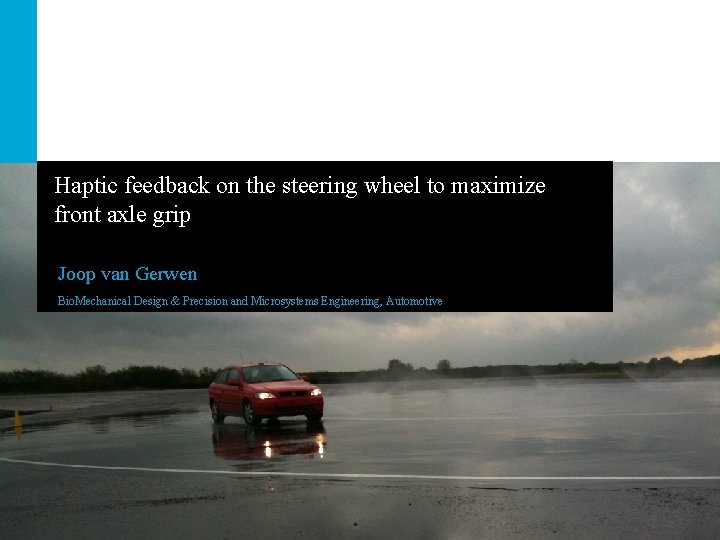
Haptic feedback on the steering wheel to maximize front axle grip Joop van Gerwen Bio. Mechanical Design & Precision and Microsystems Engineering, Automotive Challenge the future 1/28
Contents • Introduction • Methods • Concept • Experiments • Data analysis • Results • Discussion Challenge the future 2/28
Introduction Challenge the future 3/28
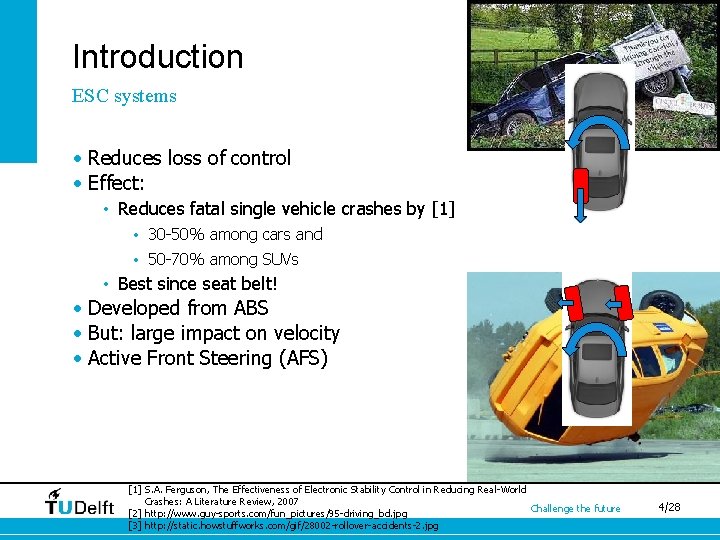
Introduction ESC systems • Reduces loss of control • Effect: • Reduces fatal single vehicle crashes by [1] • 30 -50% among cars and • 50 -70% among SUVs • Best since seat belt! • Developed from ABS • But: large impact on velocity • Active Front Steering (AFS) [1] S. A. Ferguson, The Effectiveness of Electronic Stability Control in Reducing Real-World Crashes: A Literature Review, 2007 Challenge the future [2] http: //www. guy-sports. com/fun_pictures/95 -driving_bd. jpg [3] http: //static. howstuffworks. com/gif/28002 -rollover-accidents-2. jpg 4/28
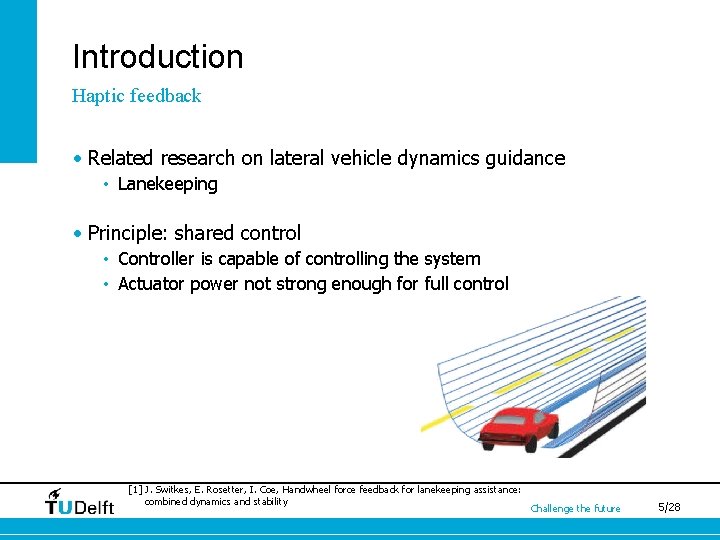
Introduction Haptic feedback • Related research on lateral vehicle dynamics guidance • Lanekeeping • Principle: shared control • Controller is capable of controlling the system • Actuator power not strong enough for full control [1] J. Switkes, E. Rosetter, I. Coe, Handwheel force feedback for lanekeeping assistance: combined dynamics and stability Challenge the future 5/28
Introduction Idea & title explanation • Goal : • Use haptic feedback to let the driver take the corrective AFS action • Guide to maximum front axle grip Challenge the future 6/28

Methods Challenge the future 7/28
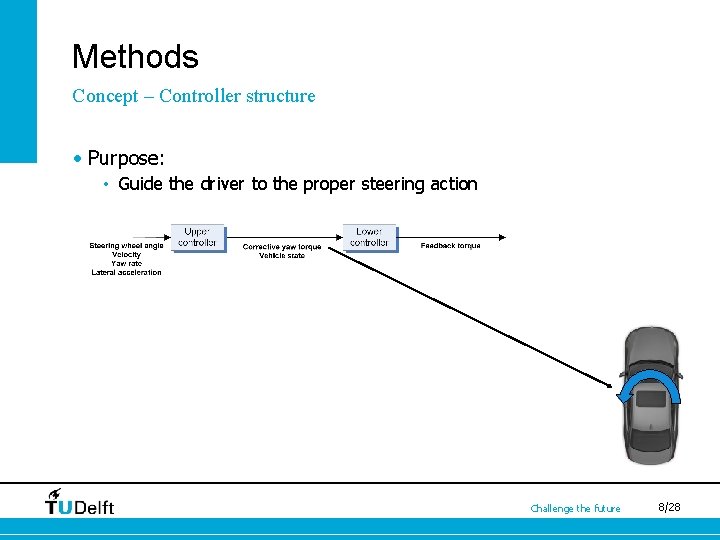
Methods Concept – Controller structure • Purpose: • Guide the driver to the proper steering action Challenge the future 8/28
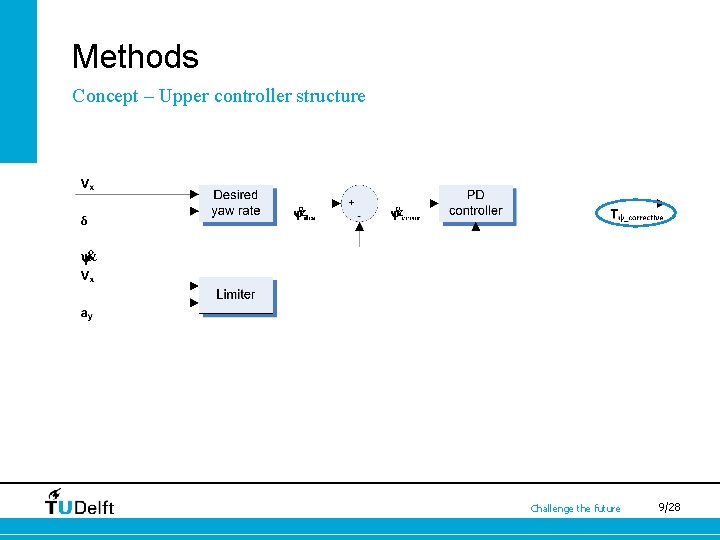
Methods Concept – Upper controller structure Challenge the future 9/28
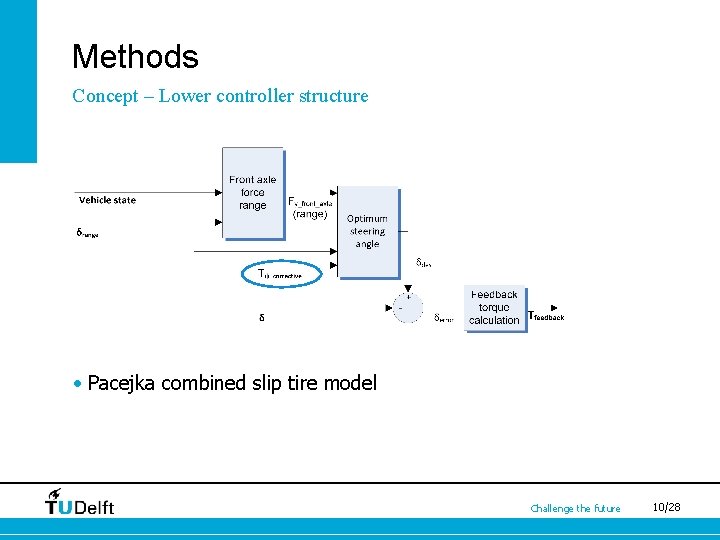
Methods Concept – Lower controller structure • Pacejka combined slip tire model Challenge the future 10/28
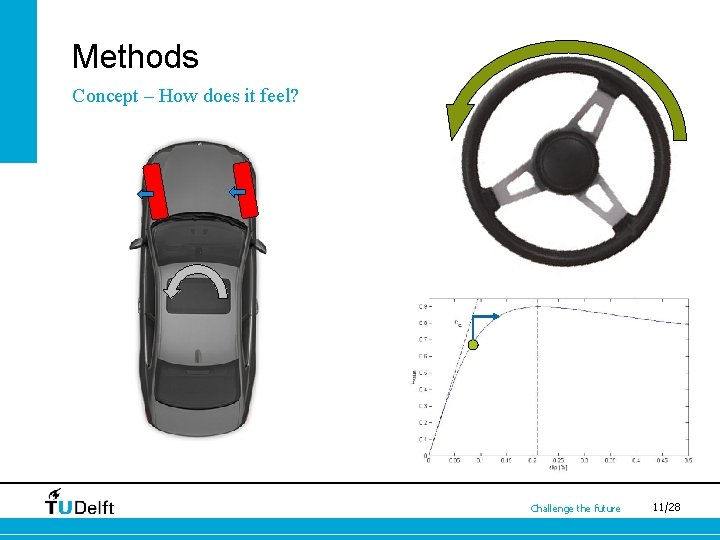
Methods Concept – How does it feel? Challenge the future 11/28
Methods Concept – How does it feel? Challenge the future 12/28
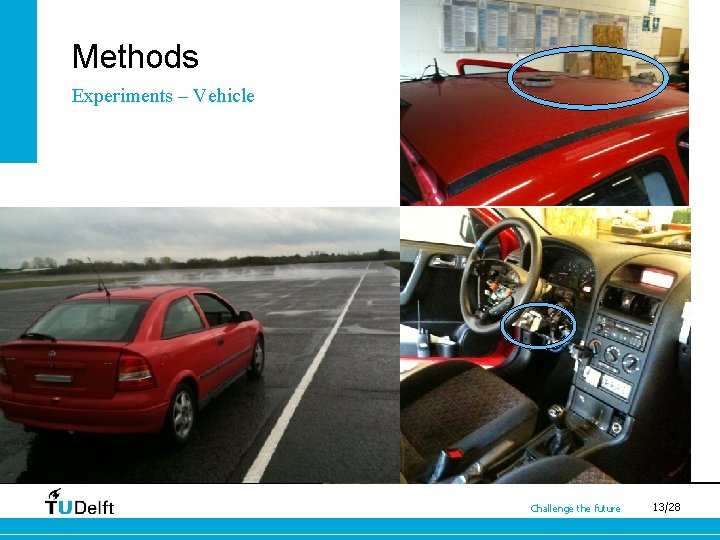
Methods Experiments – Vehicle Challenge the future 13/28
![Methods Experiments – Tracks [1] http: //maps. google. nl Challenge the future 14/28](http://slidetodoc.com/presentation_image_h2/2bbb592e5491e0058e0960ea7ed1b14f/image-14.jpg "Methods Experiments – Tracks [1] http: //maps. google. nl Challenge the future 14/28")
Methods Experiments – Tracks [1] http: //maps. google. nl Challenge the future 14/28
Methods Experiments – Procedures • 9 drivers • 2 tracks • Wet skid-pad • 7 runs of 35 second • Task: follow inner line as fast as possible • Adverse track • 3 runs of 70 second (approximately 2 laps) • Task: take the corners as quick as you can • NASA Task Load Index • 2 experiment days Challenge the future 15/28
Methods Experiments – Pictures & video Challenge the future 16/28
Methods Analysis – Filtering & preparation • Filtered: Driver torque and accelerations (3 Hz anti-causal low pass) • Removed: unwanted data • Wet skid-pad • RMS data • Adverse track • Translation of data • One full, running lap isolated Challenge the future 17/28
Methods Analysis – Metrics • Performance metrics • Example: velocity • Driving behavior metrics • Example: steering wheel angle • Feedback controller metrics • Example: feedback torque Challenge the future 18/28
Results Challenge the future 19/28
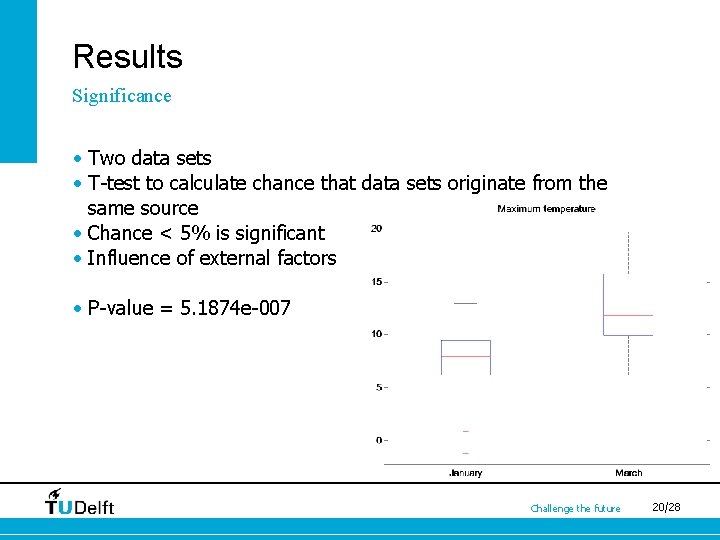
Results Significance • Two data sets • T-test to calculate chance that data sets originate from the same source • Chance < 5% is significant • Influence of external factors • P-value = 5. 1874 e-007 Challenge the future 20/28
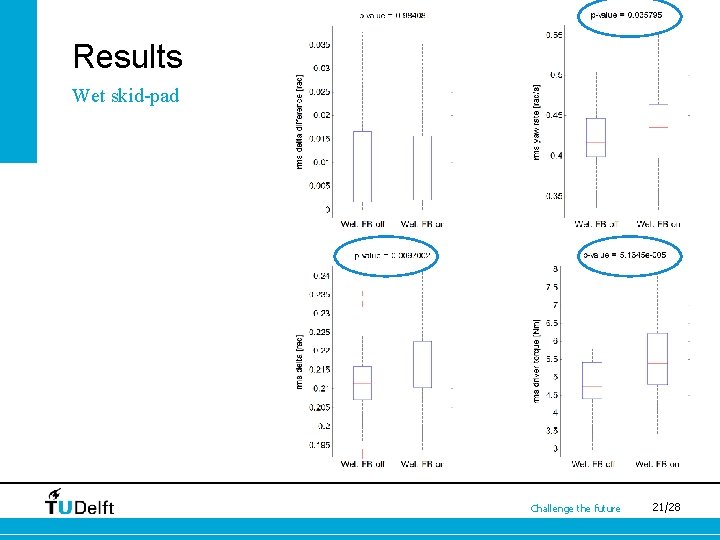
Results Wet skid-pad Challenge the future 21/28
Results Adverse track – Velocity Challenge the future 22/28
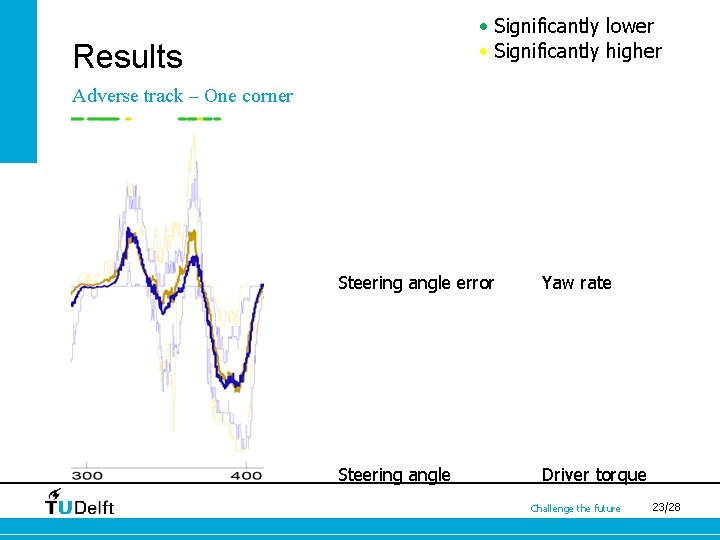
• Significantly lower • Significantly higher Results Adverse track – One corner Steering angle error Yaw rate Steering angle Driver torque Challenge the future 23/28
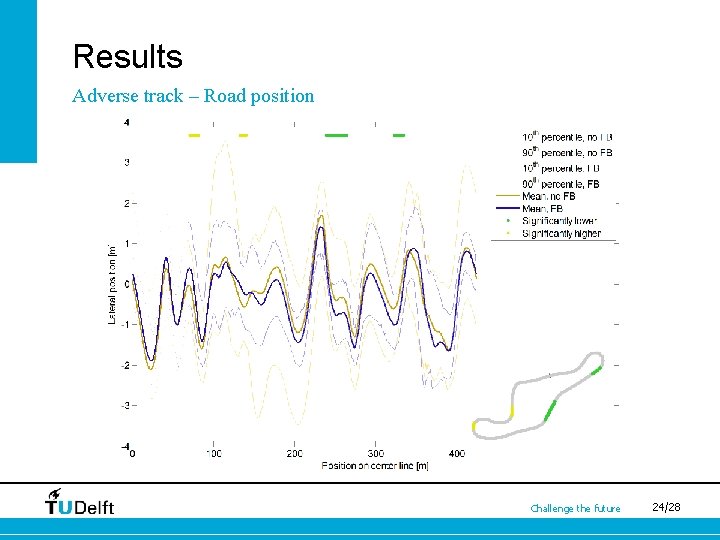
Results Adverse track – Road position Challenge the future 24/28
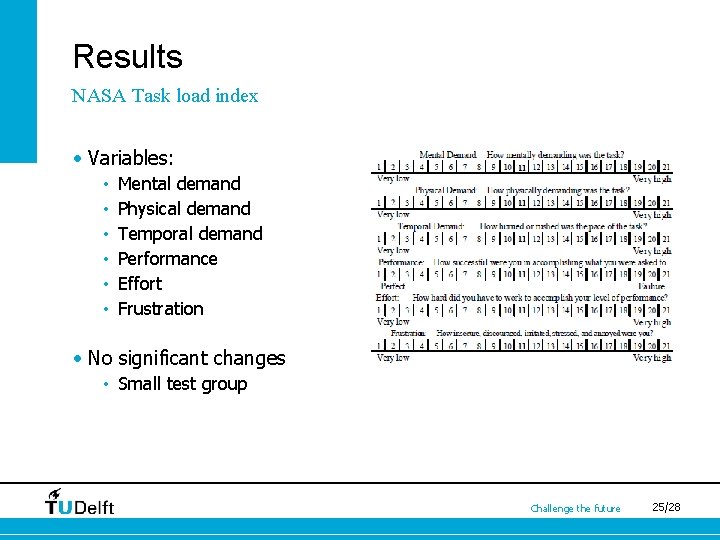
Results NASA Task load index • Variables: • • • Mental demand Physical demand Temporal demand Performance Effort Frustration • No significant changes • Small test group Challenge the future 25/28
Discussion Challenge the future 26/28
Discussion Conclusions – Improvements • Room for improvements: • State estimation & sensing • Tire model vs. force sensing bearing • Haptic feedback philosophy • Desired yaw rate determination very simple • Corrective yaw torque controller • Possible negative stiffness of steering system • Do not prevent drivers from steering back to neutral Challenge the future 27/28
Discussion Conclusions – Significant changes • Haptic feedback caused: • • • Driving behavior change Vehicle eager to steer Higher driver torque Increased yaw rate Drivers were drawn to a trajectory • Potential, but unsafe in current form Challenge the future 28/28

Challenge the future 29/28
- Slides: 29