
Happy Youth Day Make It Count Lecture 09








- Slides: 74
Happy Youth Day Make It Count
Lecture 09: Memory Hierarchy Virtual Memory Kai Bu kaibu@zju. edu. cn http: //list. zju. edu. cn/kaibu/comparch 2016
Lab 2 Report Due Lab 3 Demo due May 18 Report due May 25 Lab 4 Demo due May 25 Report due Jun 01
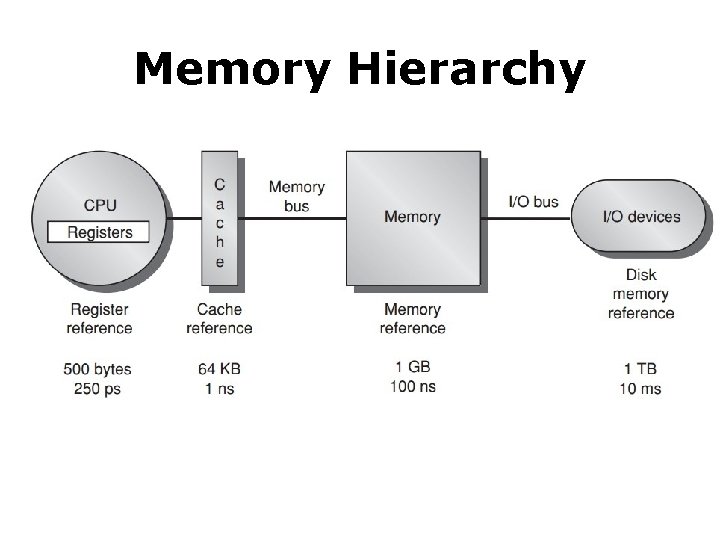
Memory Hierarchy
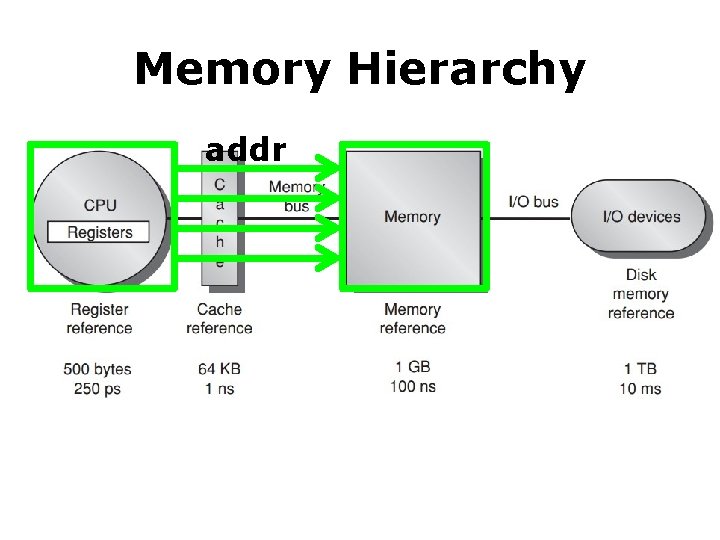
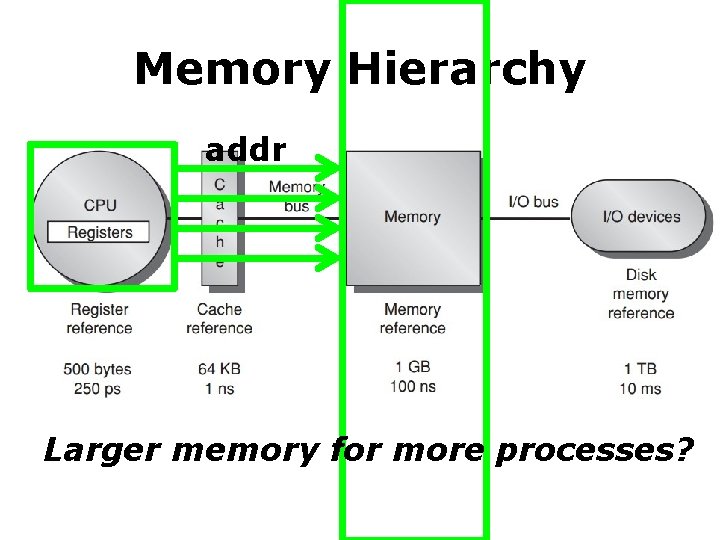
Memory Hierarchy addr
Memory Hierarchy addr Larger memory for more processes?
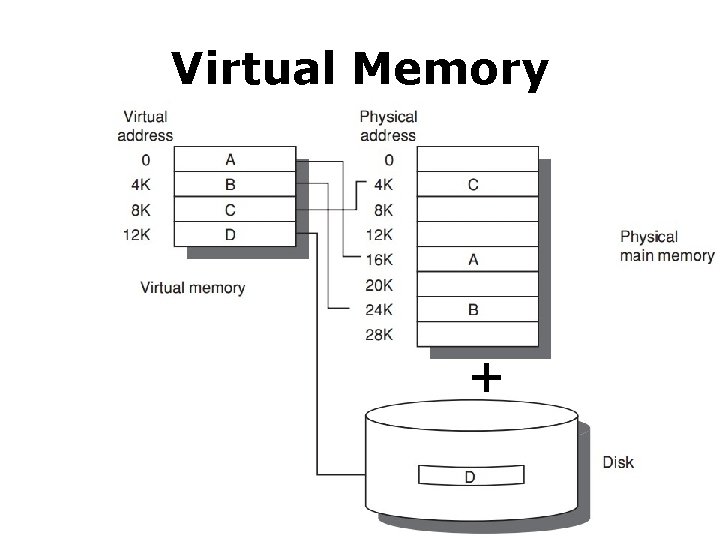
Virtual Memory +
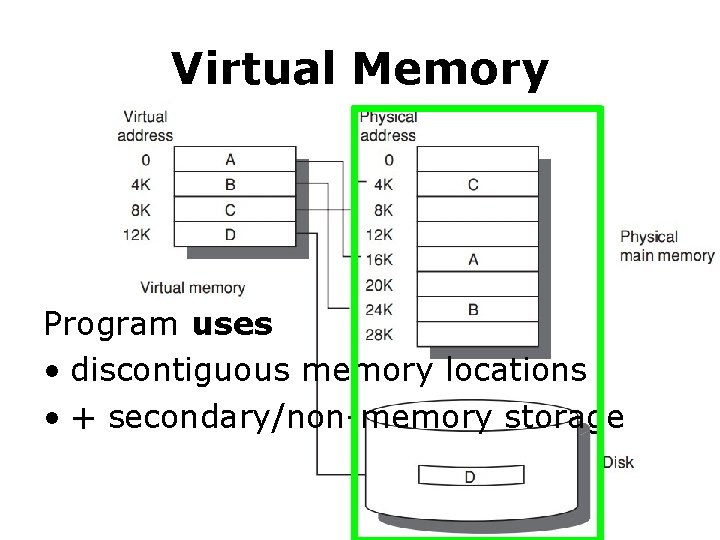
Virtual Memory Program uses • discontiguous memory locations • + secondary/non-memory storage
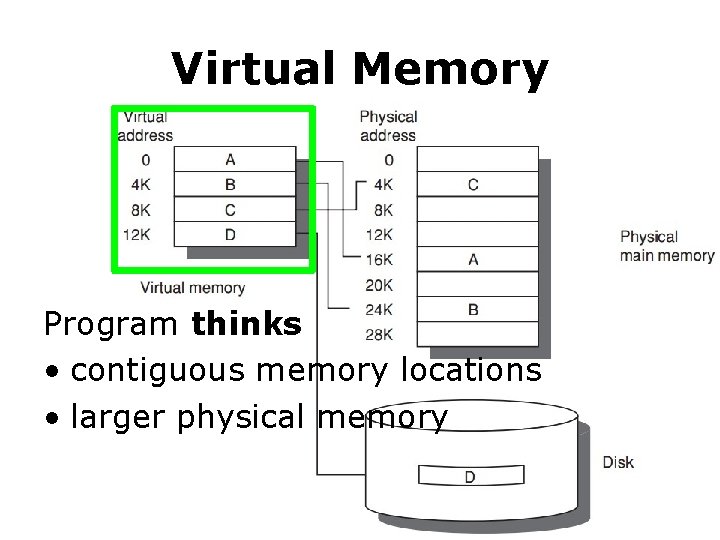
Virtual Memory Program thinks • contiguous memory locations • larger physical memory
Preview • Why virtual memory (besides larger)? • Virtual-physical address translation? • Memory protection/sharing among multi-program?
Appendix B. 4 -B. 5
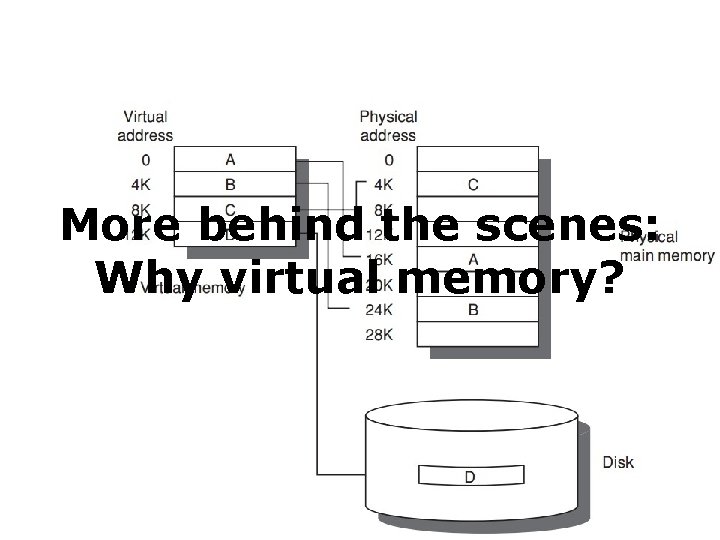
More behind the scenes: Why virtual memory?
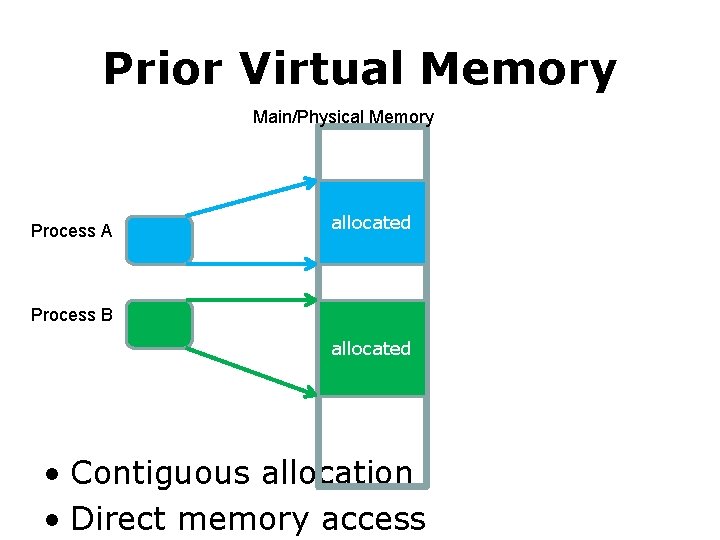
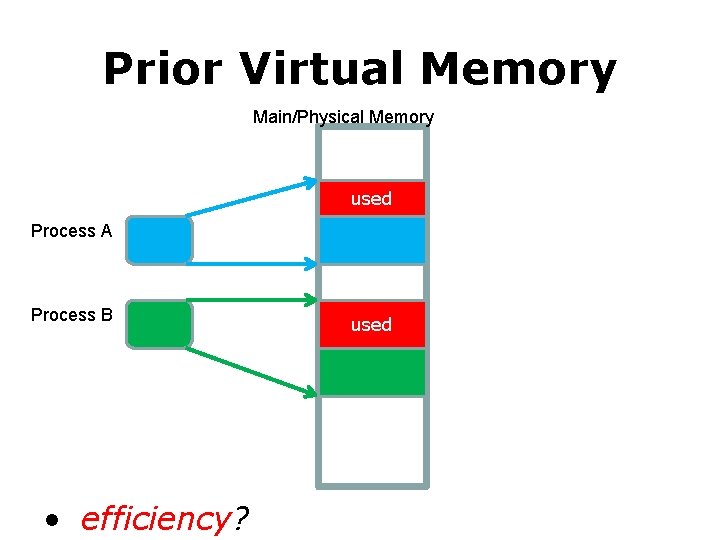
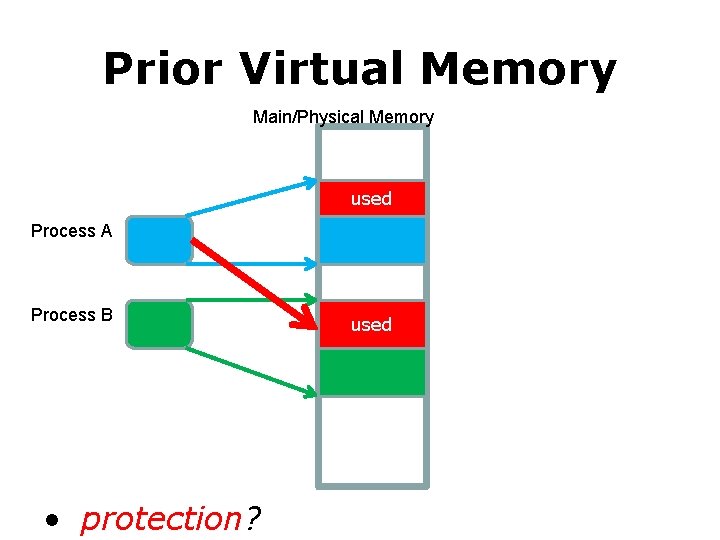
Prior Virtual Memory Main/Physical Memory Process A allocated Process B allocated • Contiguous allocation • Direct memory access
Prior Virtual Memory Main/Physical Memory used Process A Process B • efficiency? used
Prior Virtual Memory Main/Physical Memory used Process A Process B • protection? used
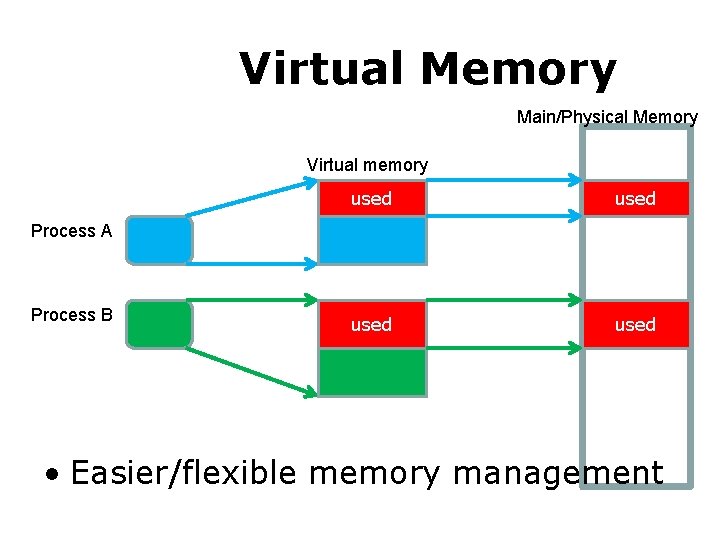
Prior Virtual Memory Main/Physical Memory Virtual memory used Process A Process B • Easier/flexible memory management
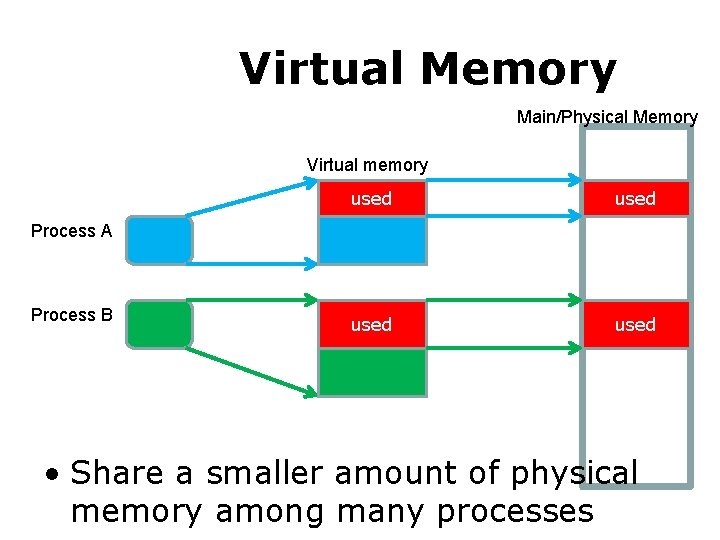
Prior Virtual Memory Main/Physical Memory Virtual memory used Process A Process B • Share a smaller amount of physical memory among many processes
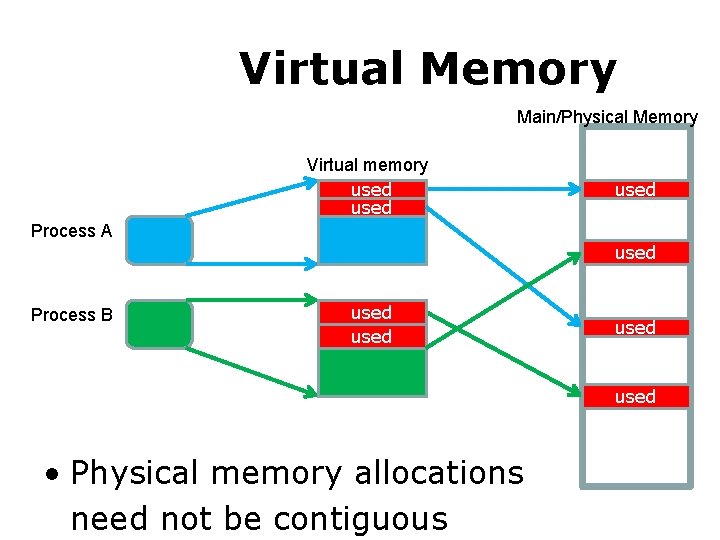
Prior Virtual Memory Main/Physical Memory Virtual memory used Process A used Process B used • Physical memory allocations need not be contiguous
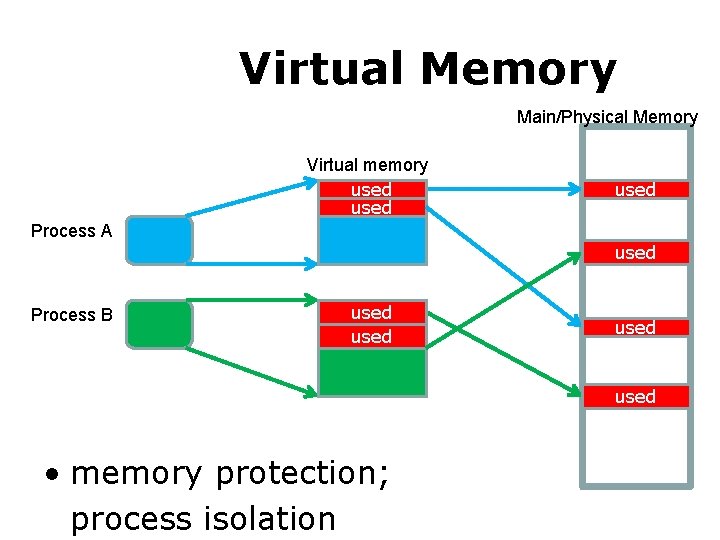
Prior Virtual Memory Main/Physical Memory Virtual memory used Process A used Process B used • memory protection; process isolation
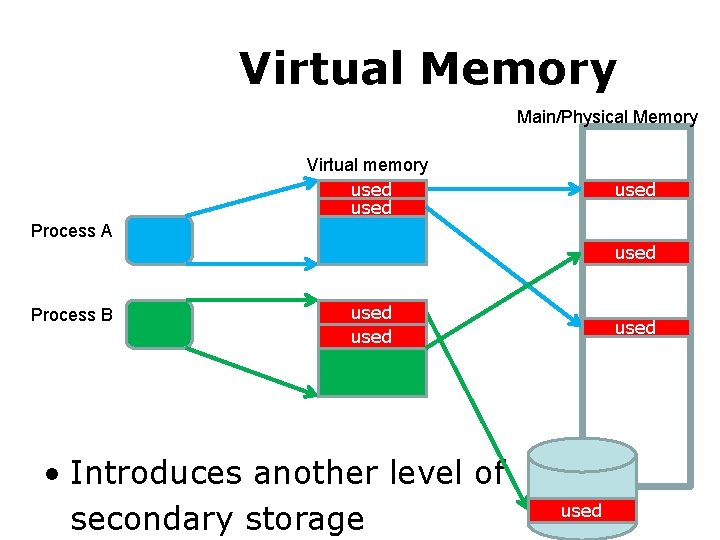
Prior Virtual Memory Main/Physical Memory Virtual memory used Process A used Process B used • Introduces another level of secondary storage used
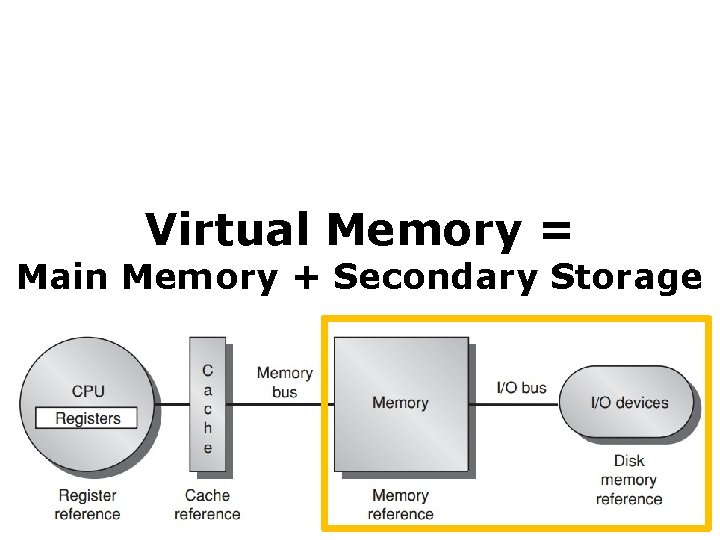
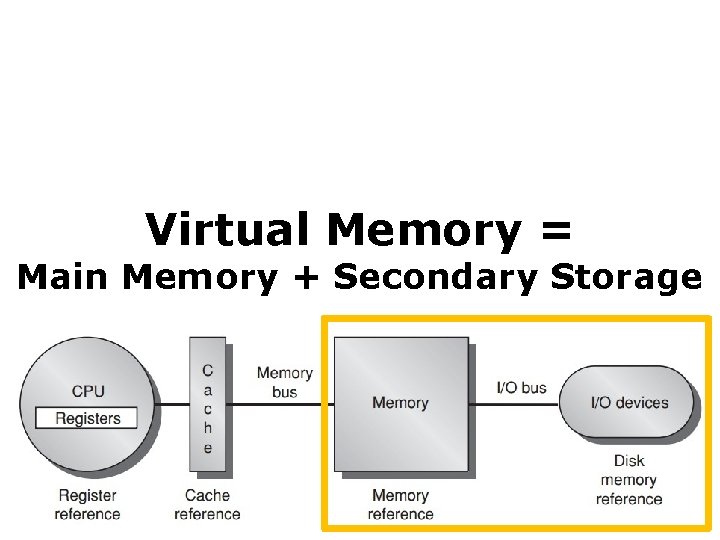
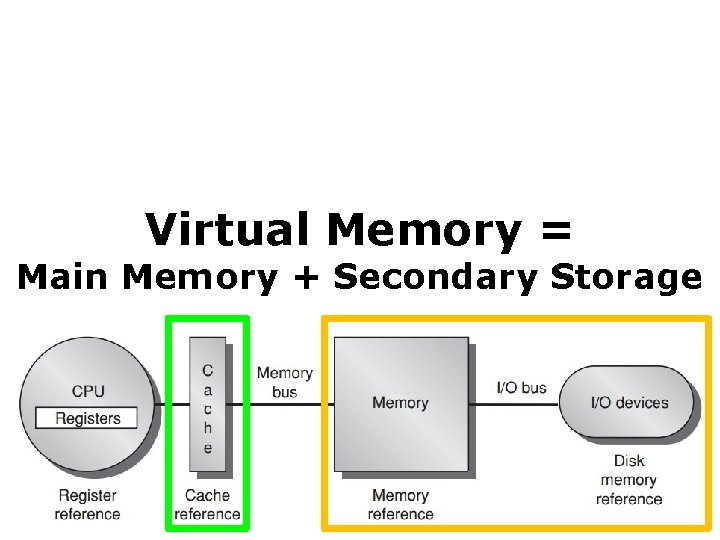
Virtual Memory = Main Memory + Secondary Storage
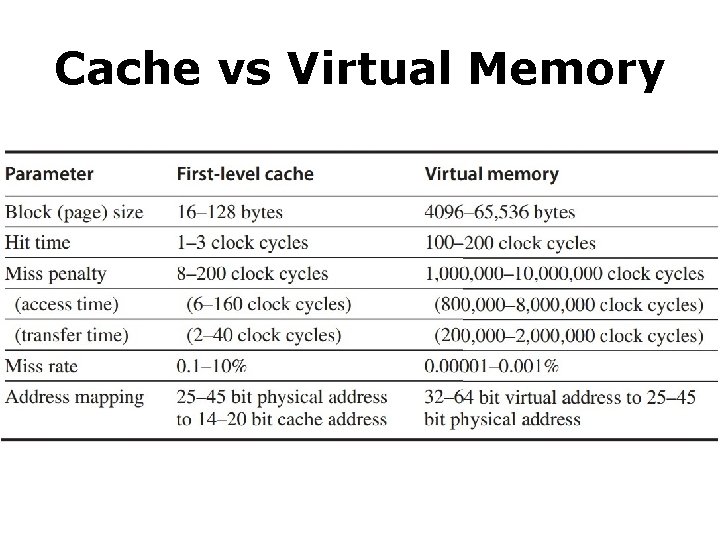
Cache vs Virtual Memory
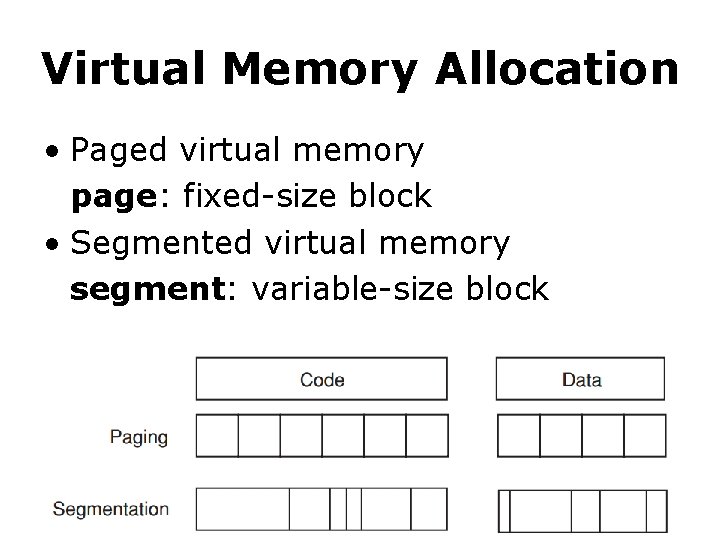
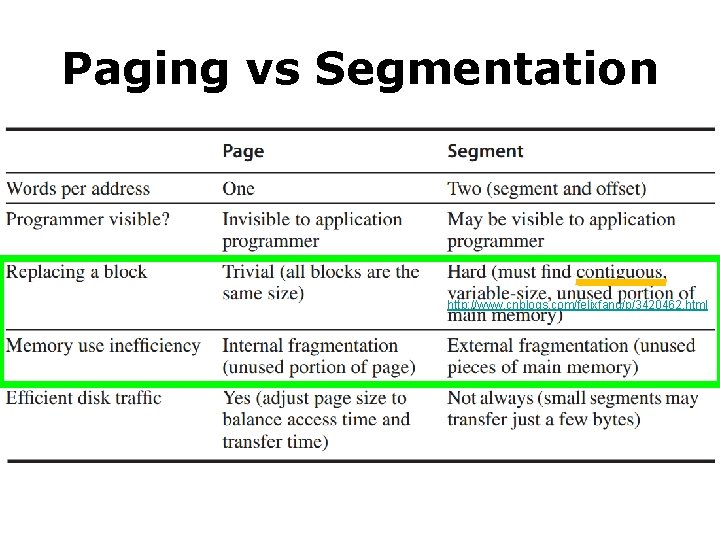
Virtual Memory Allocation • Paged virtual memory page: fixed-size block • Segmented virtual memory segment: variable-size block
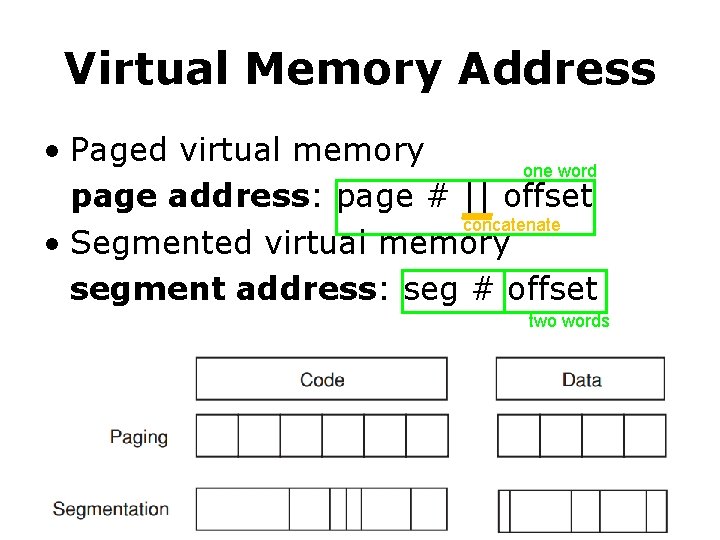
Virtual Memory Address • Paged virtual memory one word page address: page # || offset concatenate • Segmented virtual memory segment address: seg # offset two words
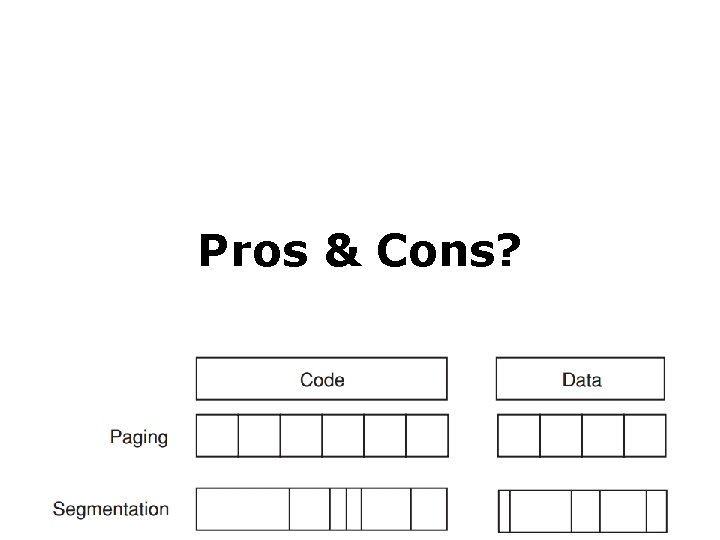
Pros & Cons?
Paging vs Segmentation http: //www. cnblogs. com/felixfang/p/3420462. html
How virtual memory works? Four Questions
How virtual memory works? Four Questions
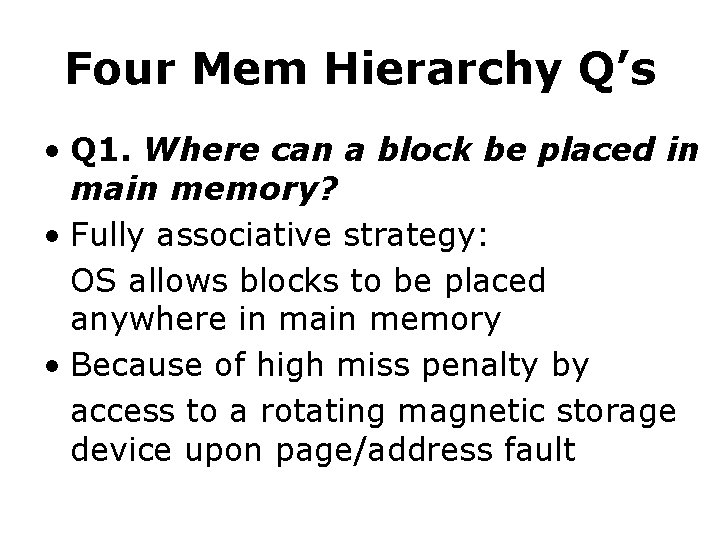
Four Mem Hierarchy Q’s • Q 1. Where can a block be placed in main memory? • Fully associative strategy: OS allows blocks to be placed anywhere in main memory • Because of high miss penalty by access to a rotating magnetic storage device upon page/address fault
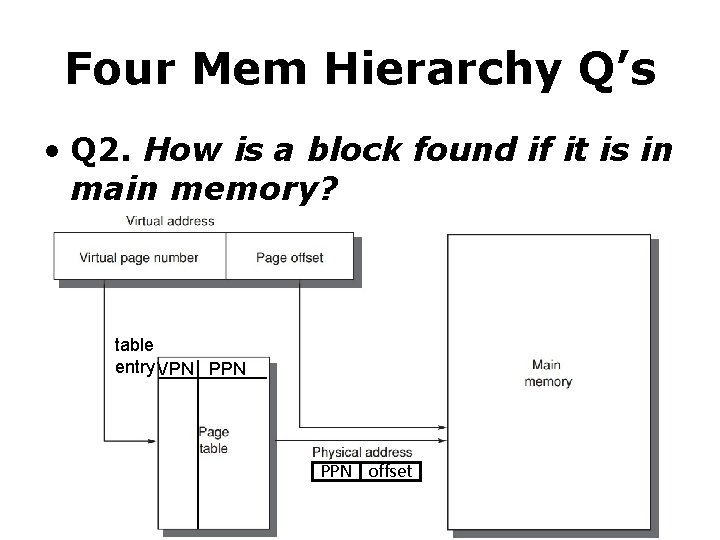
Four Mem Hierarchy Q’s • Q 2. How is a block found if it is in main memory? table entry VPN PPN offset
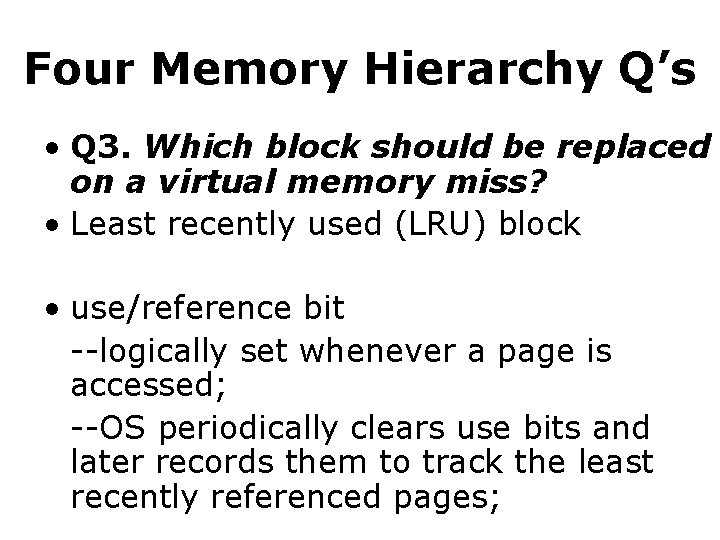
Four Memory Hierarchy Q’s • Q 3. Which block should be replaced on a virtual memory miss? • Least recently used (LRU) block • use/reference bit --logically set whenever a page is accessed; --OS periodically clears use bits and later records them to track the least recently referenced pages;
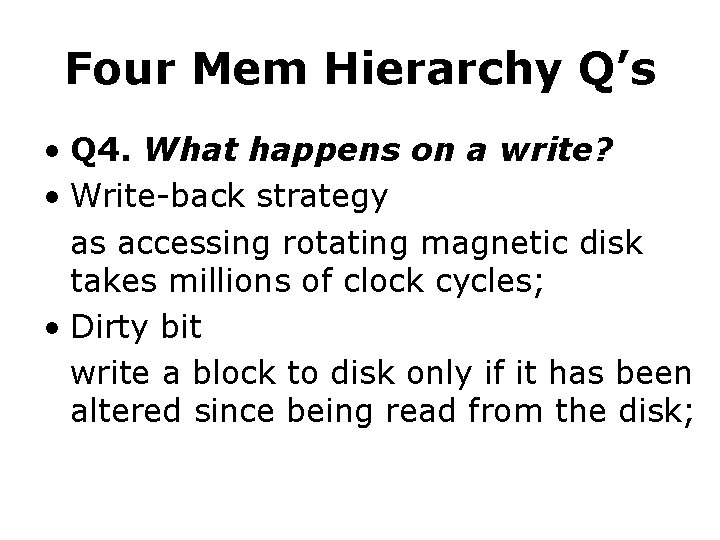
Four Mem Hierarchy Q’s • Q 4. What happens on a write? • Write-back strategy as accessing rotating magnetic disk takes millions of clock cycles; • Dirty bit write a block to disk only if it has been altered since being read from the disk;
Can you tell me more? Address Translation
Can you tell me more? Address Translation
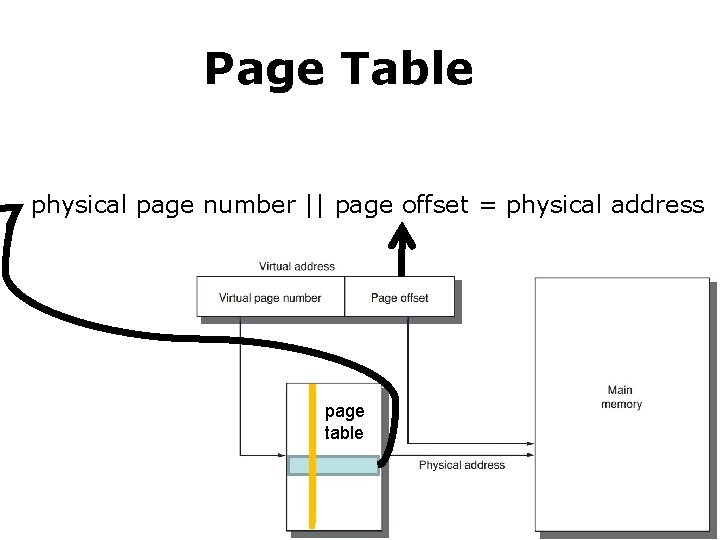
Page Table ? physical page number || page offset = physical address page table
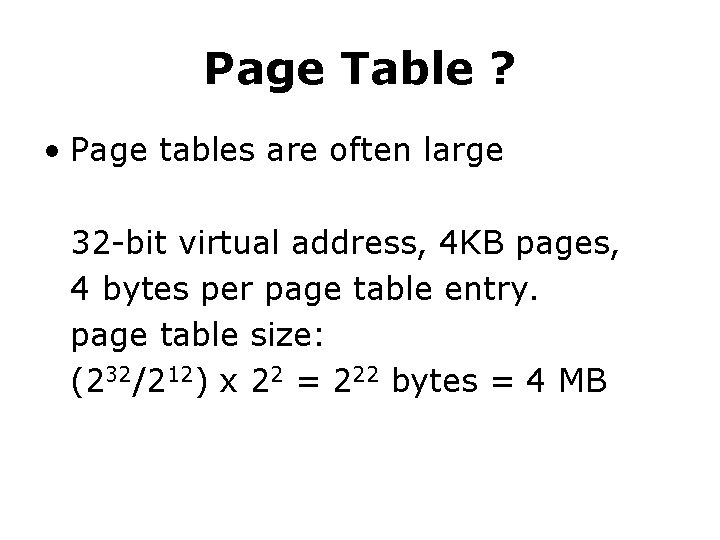
Page Table ? • Page tables are often large 32 -bit virtual address, 4 KB pages, 4 bytes per page table entry. page table size: (232/212) x 22 = 222 bytes = 4 MB
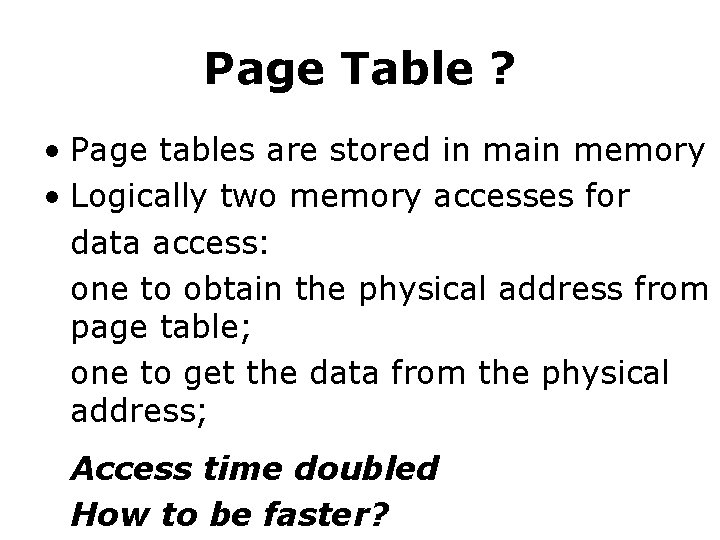
Page Table ? • Page tables are stored in main memory • Logically two memory accesses for data access: one to obtain the physical address from page table; one to get the data from the physical address; Access time doubled How to be faster?
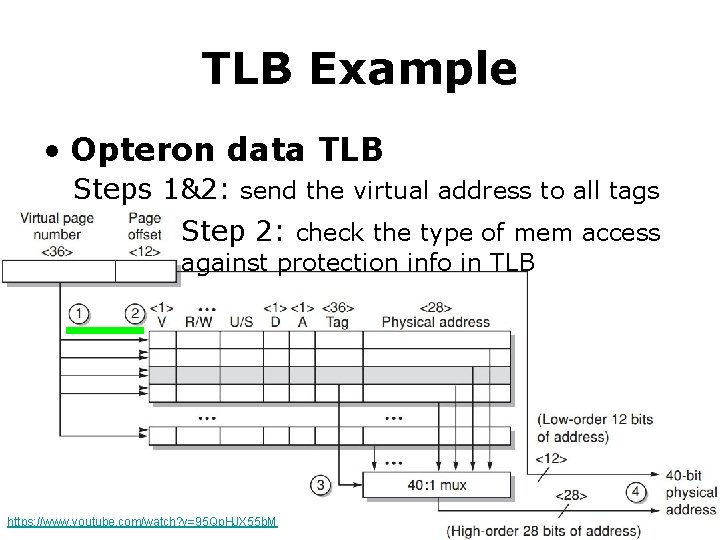
• Translation lookaside buffer (TLB) /translation buffer (TB) a special cache! that keeps (prev) address translations • TLB entry --tag: portions of the virtual address; --data: a physical page frame number, protection field, valid bit, use bit, dirty bit;
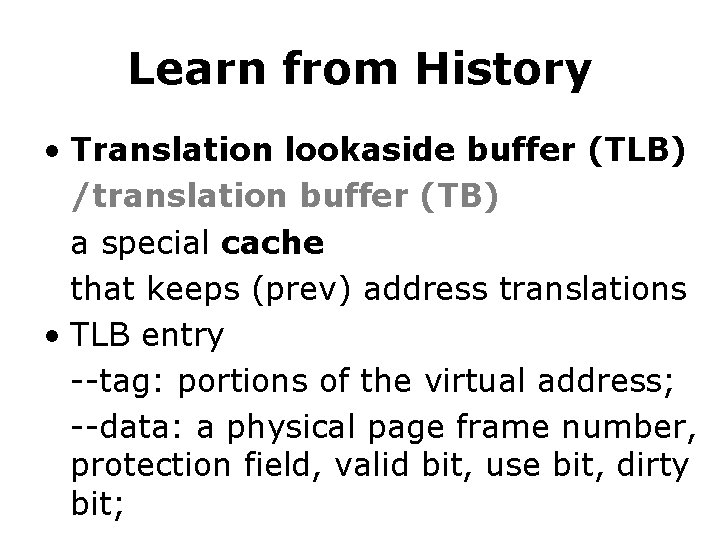
Learn from History • Translation lookaside buffer (TLB) /translation buffer (TB) a special cache that keeps (prev) address translations • TLB entry --tag: portions of the virtual address; --data: a physical page frame number, protection field, valid bit, use bit, dirty bit;
TLB Example • Opteron data TLB Steps 1&2: send the virtual address to all tags Step 2: check the type of mem access against protection info in TLB https: //www. youtube. com/watch? v=95 Qp. HJX 55 b. M
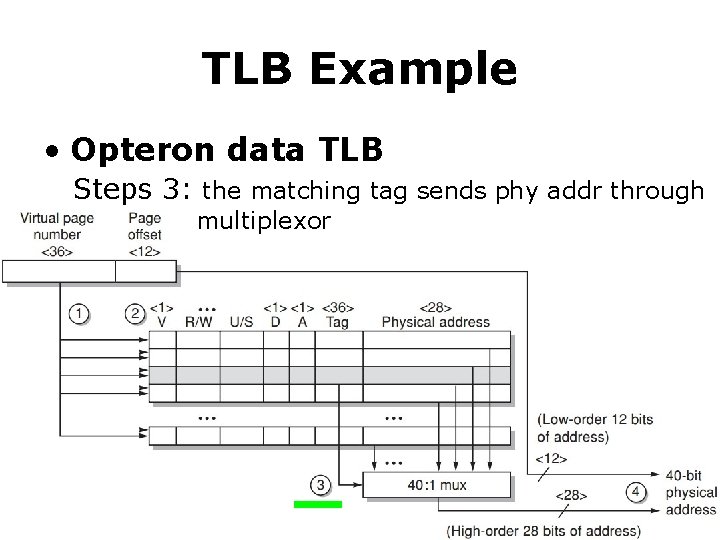
TLB Example • Opteron data TLB Steps 3: the matching tag sends phy addr through multiplexor
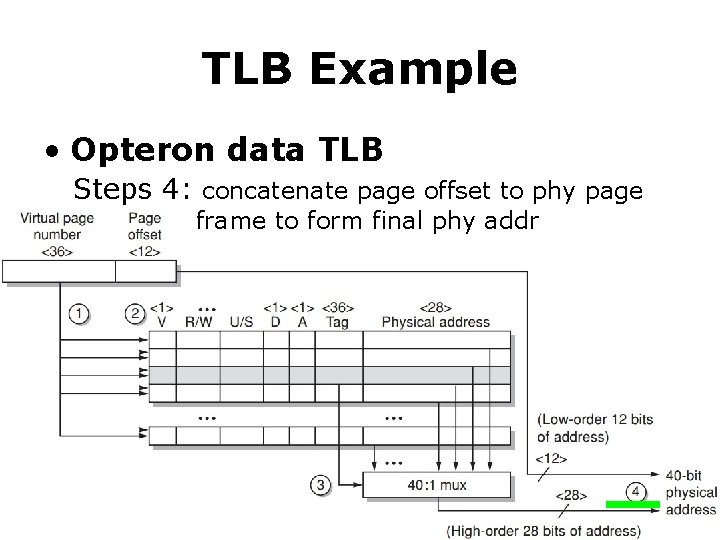
TLB Example • Opteron data TLB Steps 4: concatenate page offset to phy page frame to form final phy addr
Does page size matter?
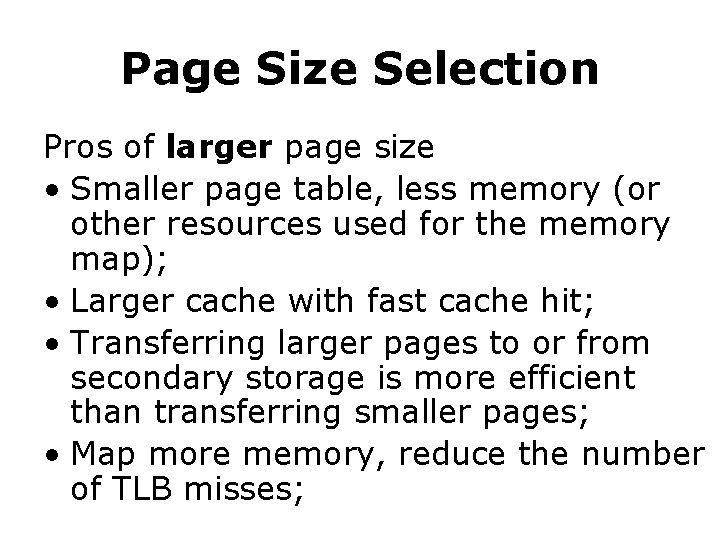
Page Size Selection Pros of larger page size • Smaller page table, less memory (or other resources used for the memory map); • Larger cache with fast cache hit; • Transferring larger pages to or from secondary storage is more efficient than transferring smaller pages; • Map more memory, reduce the number of TLB misses;
Page Size Selection Pros of smaller page size • Conserve storage When a contiguous region of virtual memory is not equal in size to a multiple of the page size, a small page size results in less wasted storage.
Page Size Selection • Use both: multiple page sizes • Recent microprocessors have decided to support multiple page sizes, mainly because of larger page size reduces the # of TLB entries and thus the # of TLB misses; for some programs, TLB misses can be as significant on CPI as the cache misses;
Virtual Memory = Main Memory + Secondary Storage
Virtual Memory = Main Memory + Secondary Storage
Address Translation: one more time, with cache
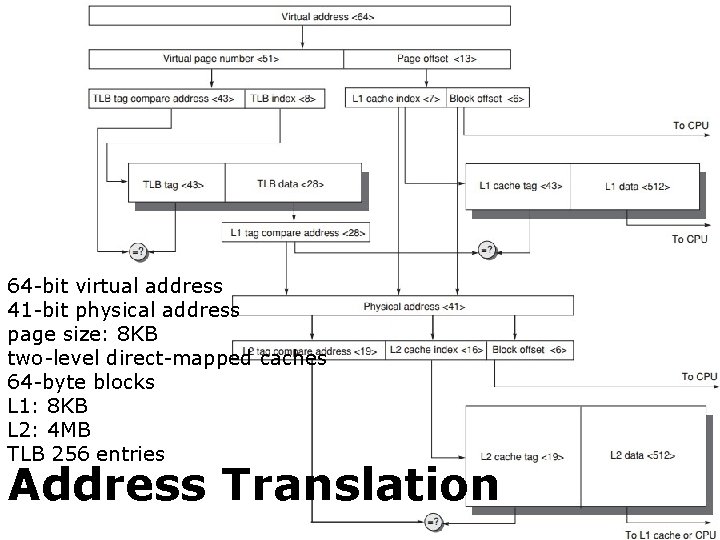
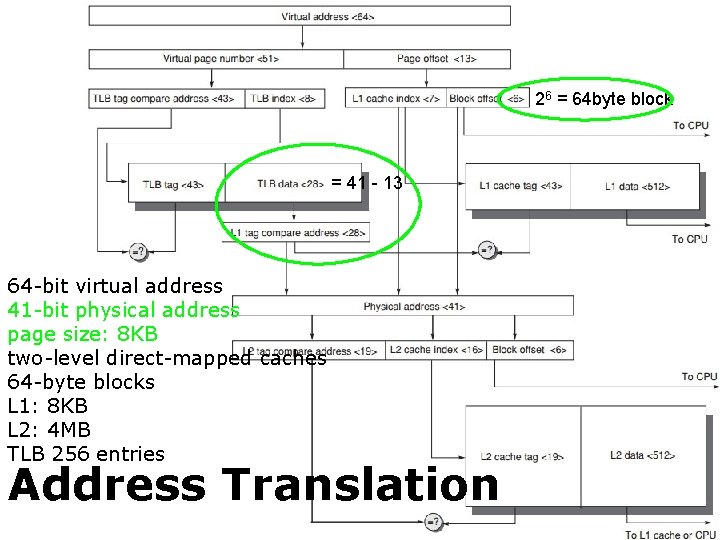
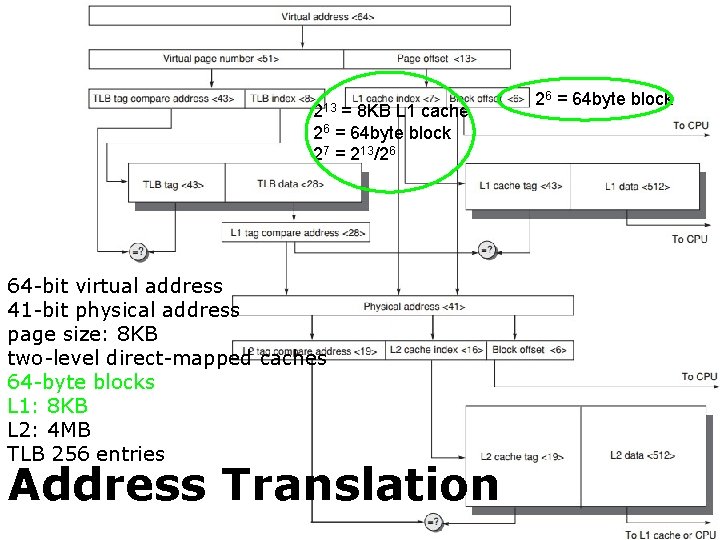
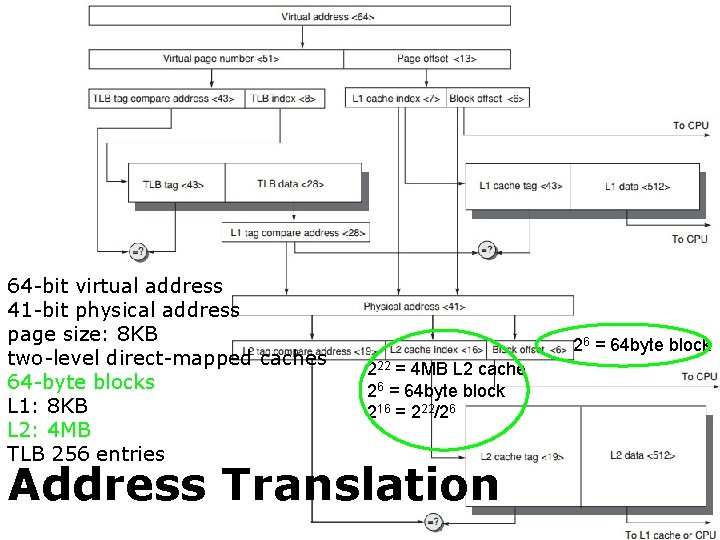
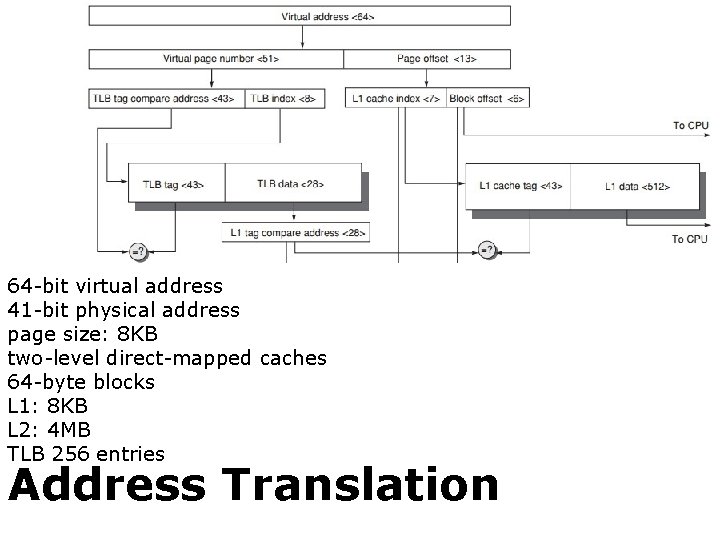
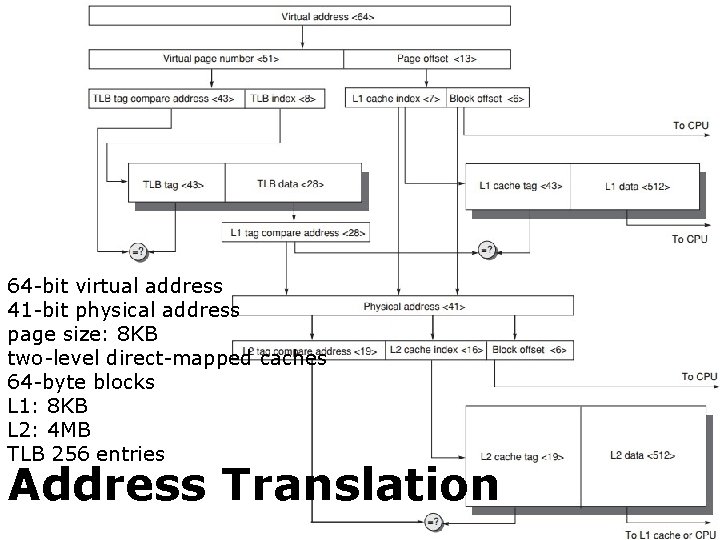
64 -bit virtual address 41 -bit physical address page size: 8 KB two-level direct-mapped caches 64 -byte blocks L 1: 8 KB L 2: 4 MB TLB 256 entries Address Translation
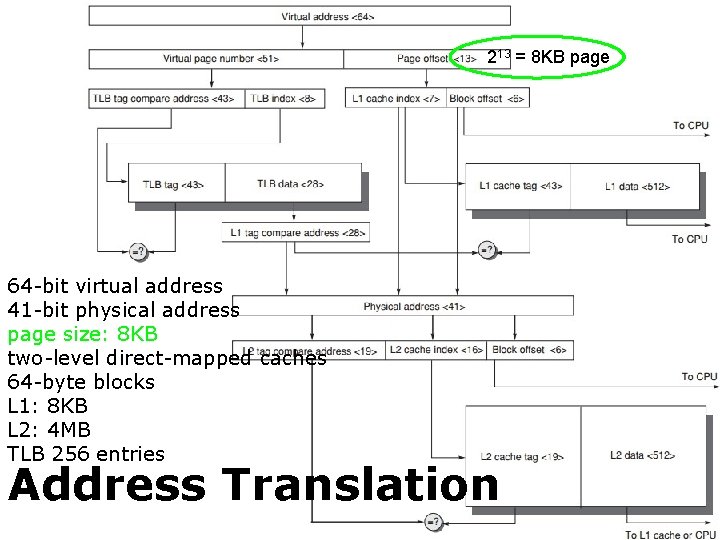
213 = 8 KB page 64 -bit virtual address 41 -bit physical address page size: 8 KB two-level direct-mapped caches 64 -byte blocks L 1: 8 KB L 2: 4 MB TLB 256 entries Address Translation
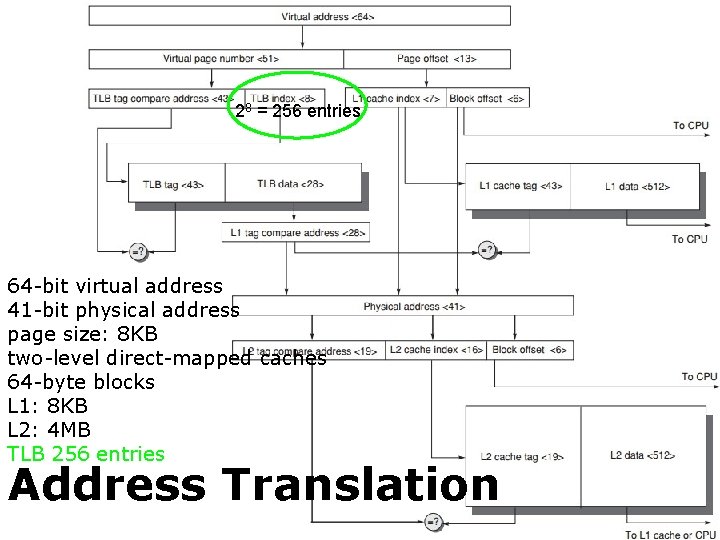
28 = 256 entries 64 -bit virtual address 41 -bit physical address page size: 8 KB two-level direct-mapped caches 64 -byte blocks L 1: 8 KB L 2: 4 MB TLB 256 entries Address Translation
26 = 64 byte block = 41 - 13 64 -bit virtual address 41 -bit physical address page size: 8 KB two-level direct-mapped caches 64 -byte blocks L 1: 8 KB L 2: 4 MB TLB 256 entries Address Translation
213 = 8 KB L 1 cache 26 = 64 byte block 27 = 213/26 64 -bit virtual address 41 -bit physical address page size: 8 KB two-level direct-mapped caches 64 -byte blocks L 1: 8 KB L 2: 4 MB TLB 256 entries Address Translation 26 = 64 byte block
64 -bit virtual address 41 -bit physical address page size: 8 KB two-level direct-mapped caches 64 -byte blocks L 1: 8 KB L 2: 4 MB TLB 256 entries 26 = 64 byte block 222 = 4 MB L 2 cache 26 = 64 byte block 216 = 222/26 Address Translation
ready?
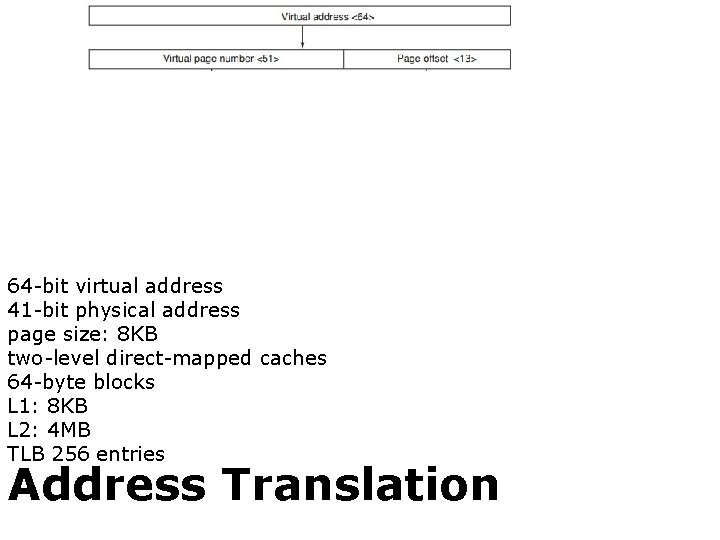
64 -bit virtual address 41 -bit physical address page size: 8 KB two-level direct-mapped caches 64 -byte blocks L 1: 8 KB L 2: 4 MB TLB 256 entries Address Translation
64 -bit virtual address 41 -bit physical address page size: 8 KB two-level direct-mapped caches 64 -byte blocks L 1: 8 KB L 2: 4 MB TLB 256 entries Address Translation
64 -bit virtual address 41 -bit physical address page size: 8 KB two-level direct-mapped caches 64 -byte blocks L 1: 8 KB L 2: 4 MB TLB 256 entries Address Translation
You said virtual memory promised safety? Mem protection & sharing among programs
You said virtual memory promised safety? mem protection & sharing among programs
Multiprogramming • Enable a computer to be shared by several programs running concurrently • Need protection and sharing among programs
Process • A running program plus any state needed to continue running it • Time-sharing shares processor and memory with interactive users simultaneously; gives the illusion that all users have their own computers; • Process/context switch from one process to another
Process • Maintain correct process behavior --computer designer must ensure that the processor portion of the process state can be saved and restored; --OS designer must guarantee that processes do not interfere with each others’ computations; • Partition main memory so that several different processes have their state in memory at the same time
Process Protection • Proprietary page tables processes can be protected from one another by having their own page tables, each pointing to distinct pages of memory; user programs must be prevented from modifying their page tables
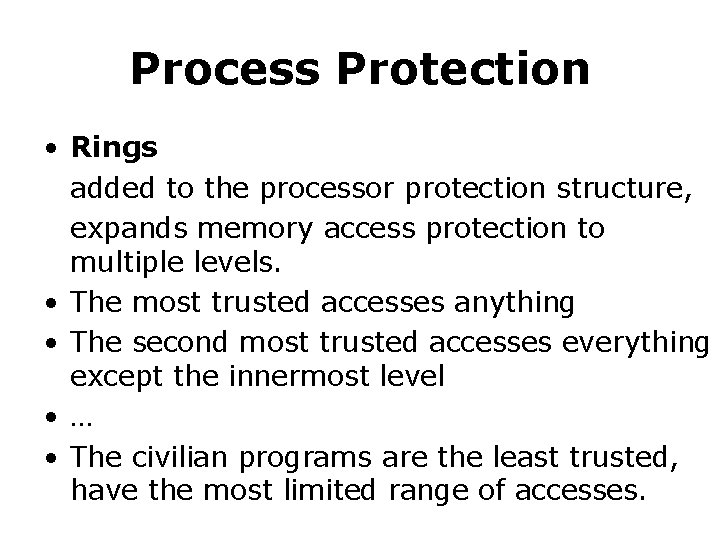
Process Protection • Rings added to the processor protection structure, expands memory access protection to multiple levels. • The most trusted accesses anything • The second most trusted accesses everything except the innermost level • … • The civilian programs are the least trusted, have the most limited range of accesses.
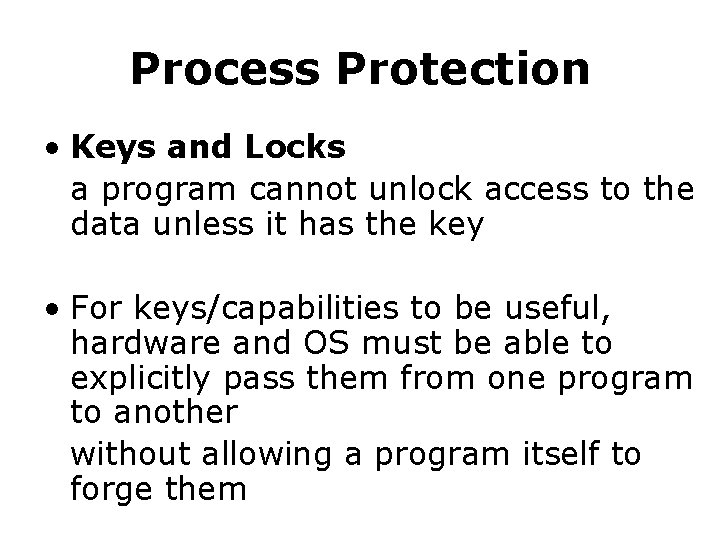
Process Protection • Keys and Locks a program cannot unlock access to the data unless it has the key • For keys/capabilities to be useful, hardware and OS must be able to explicitly pass them from one program to another without allowing a program itself to forge them
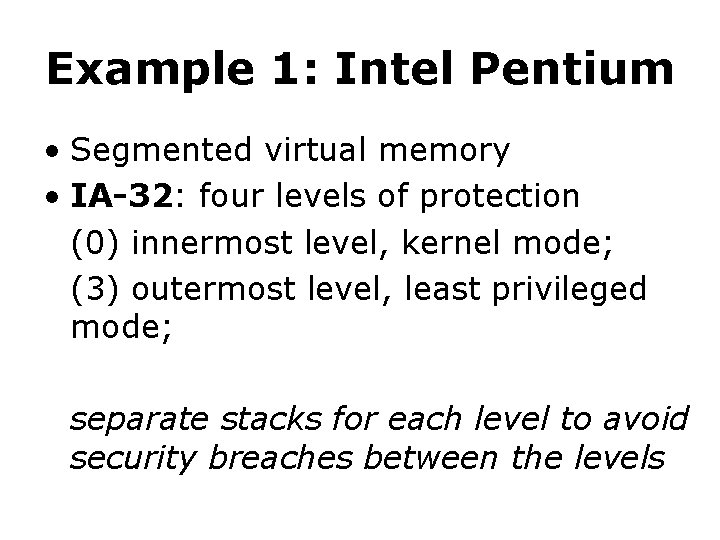
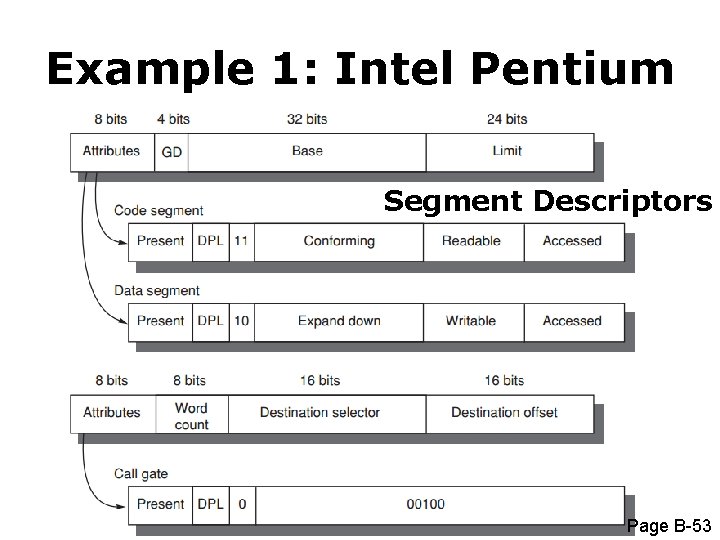
Example 1: Intel Pentium • Segmented virtual memory • IA-32: four levels of protection (0) innermost level, kernel mode; (3) outermost level, least privileged mode; separate stacks for each level to avoid security breaches between the levels
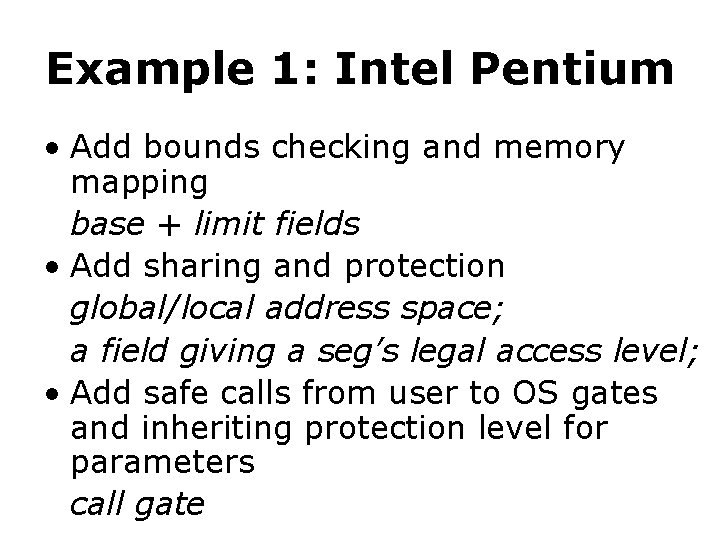
Example 1: Intel Pentium • Add bounds checking and memory mapping base + limit fields • Add sharing and protection global/local address space; a field giving a seg’s legal access level; • Add safe calls from user to OS gates and inheriting protection level for parameters call gate
Example 1: Intel Pentium Segment Descriptors Page B-53
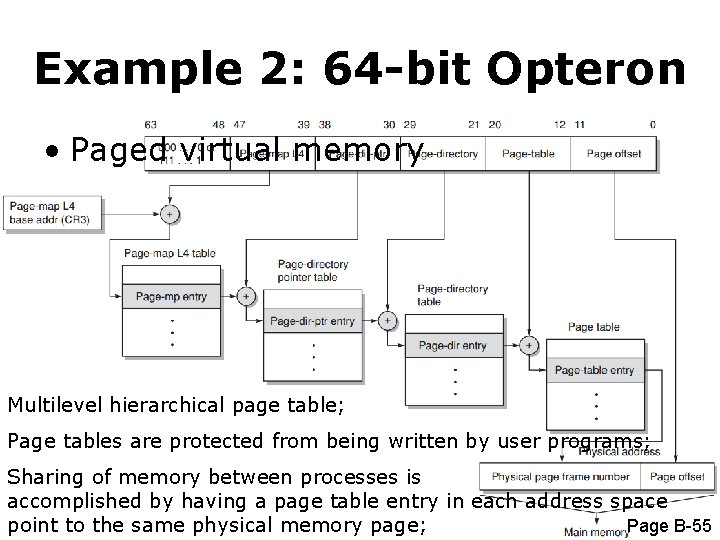
Example 2: 64 -bit Opteron • Paged virtual memory Multilevel hierarchical page table; Page tables are protected from being written by user programs; Sharing of memory between processes is accomplished by having a page table entry in each address space Page B-55 point to the same physical memory page;
#What’s More • The Rise and Rise of Bitcoin • Peaceful Warrior