
Happy Friday Todays Objectives DNA Structure Notes DNA
Happy Friday! Today’s Objectives: DNA Structure Notes DNA Song Finish Race to DNA Practice Page
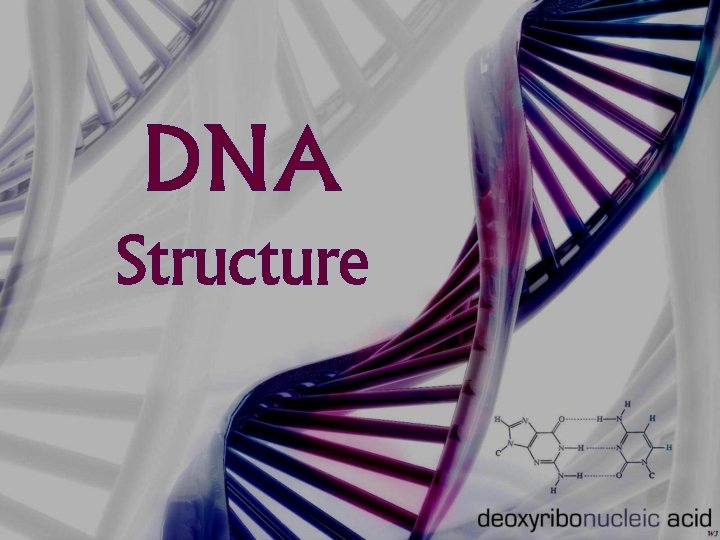
DNA Structure
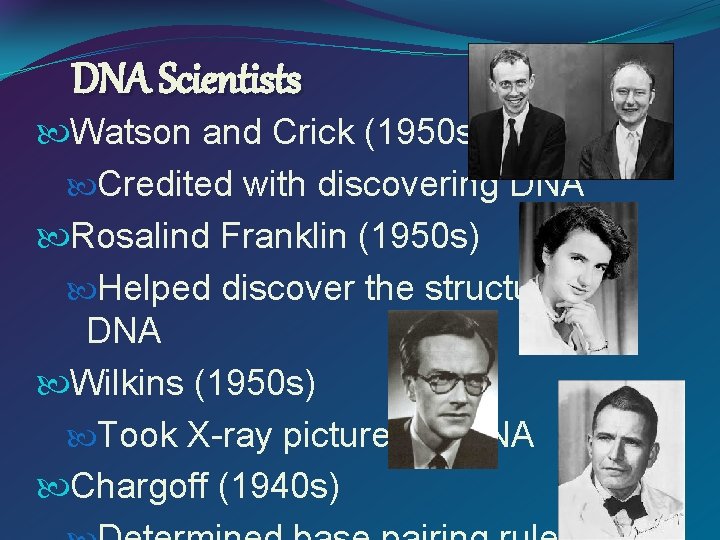
DNA Scientists Watson and Crick (1950 s) Credited with discovering DNA Rosalind Franklin (1950 s) Helped discover the structure of DNA Wilkins (1950 s) Took X-ray pictures of DNA Chargoff (1940 s)
DNA Structure �DNA consists of two molecules that are arranged into a ladder-like structure called a Double Helix. �A molecule of DNA is made up of millions of tiny subunits called Nucleotides. �Each nucleotide consists of: 1. phosphate group 2. 5 -carbon sugar (DNA = deoxyribose) 3. nitrogenous base
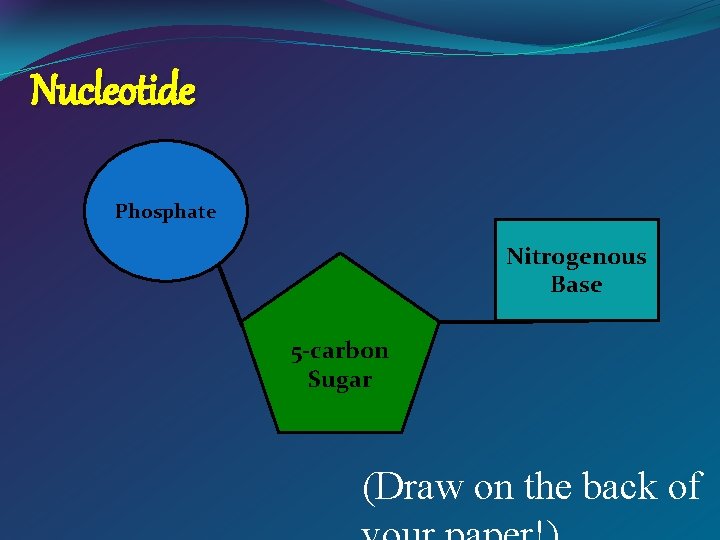
Nucleotide Phosphate Nitrogenous Base 5 -carbon Sugar (Draw on the back of
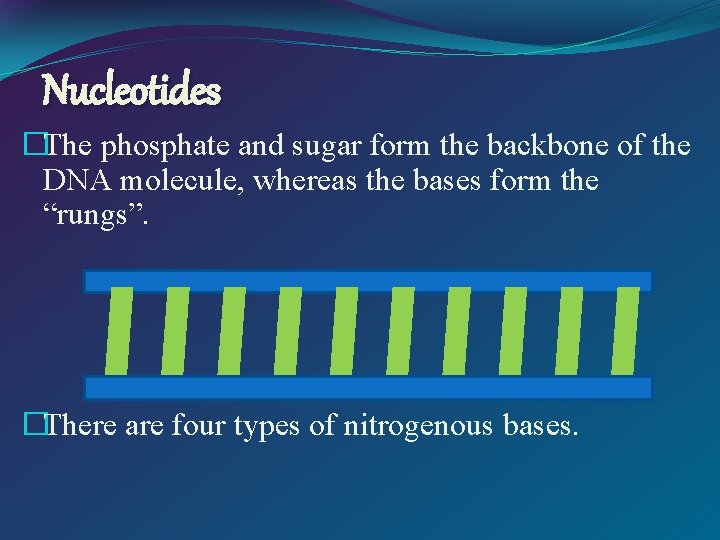
Nucleotides �The phosphate and sugar form the backbone of the DNA molecule, whereas the bases form the “rungs”. �There are four types of nitrogenous bases.
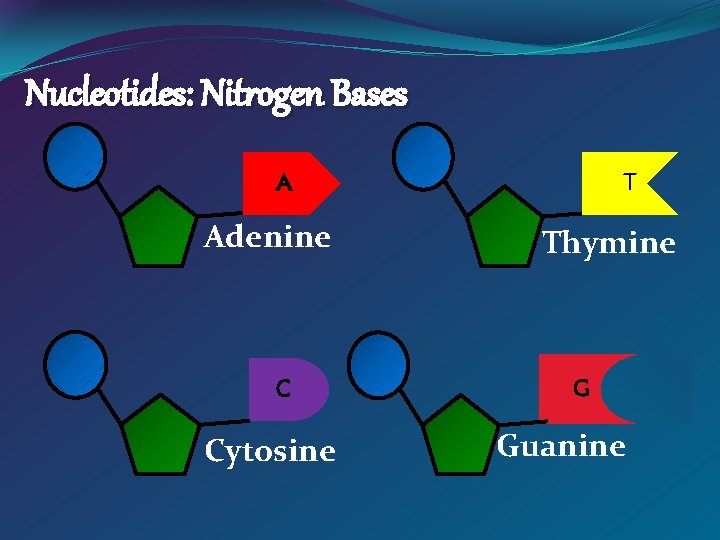
Nucleotides: Nitrogen Bases A Adenine C Cytosine T Thymine G Guanine
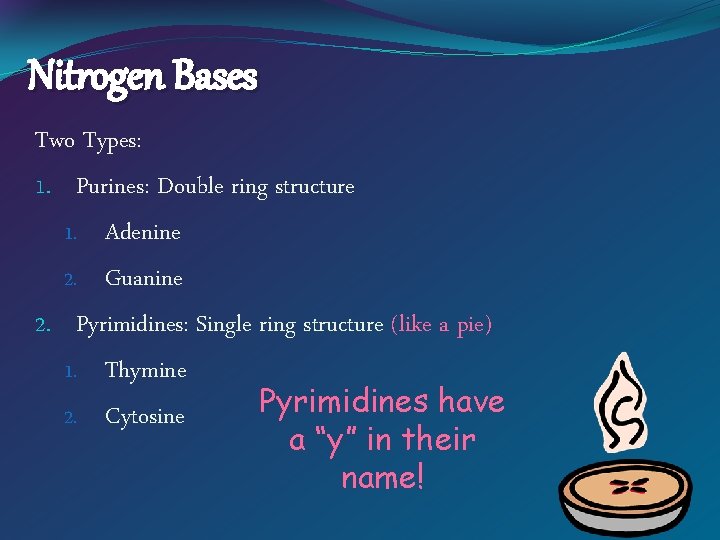
Nitrogen Bases Two Types: 1. Purines: Double ring structure 1. Adenine 2. Guanine 2. Pyrimidines: Single ring structure (like a pie) 1. Thymine Pyrimidines have 2. Cytosine a “y” in their name!
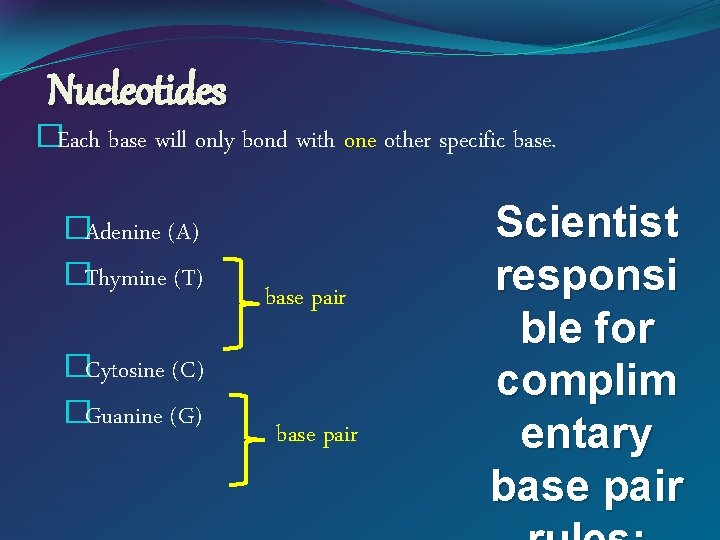
Nucleotides �Each base will only bond with one other specific base. �Adenine (A) �Thymine (T) �Cytosine (C) �Guanine (G) base pair Scientist responsi ble for complim entary base pair
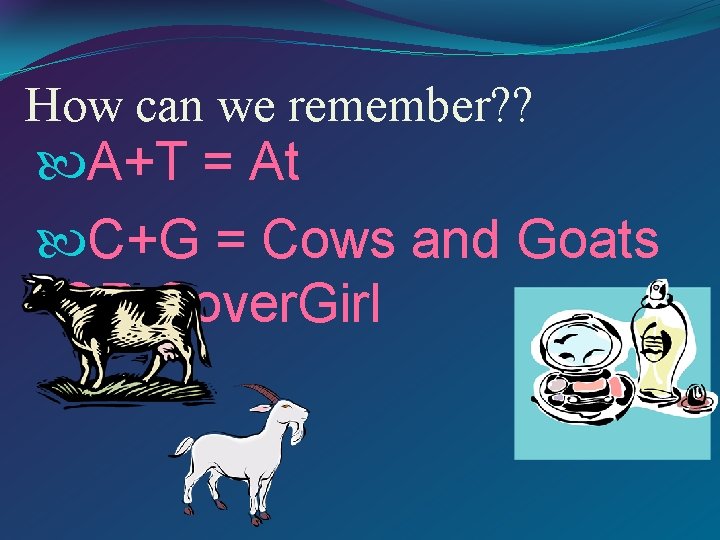
How can we remember? ? A+T = At C+G = Cows and Goats OR Cover. Girl
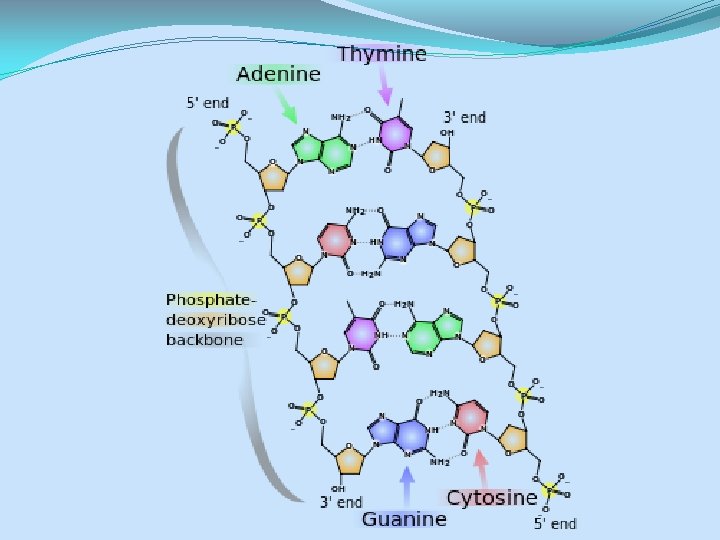
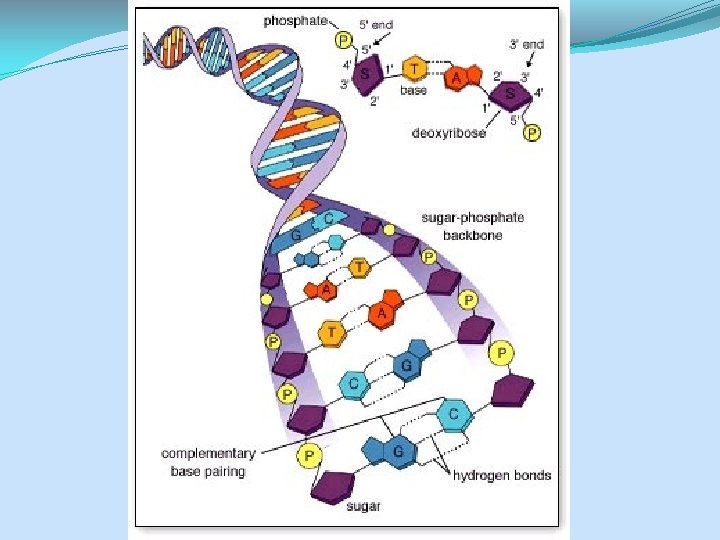
DNA Structure �Because of this complementary base pairing, the order of the bases in one strand determines the order of the bases in the other strand.
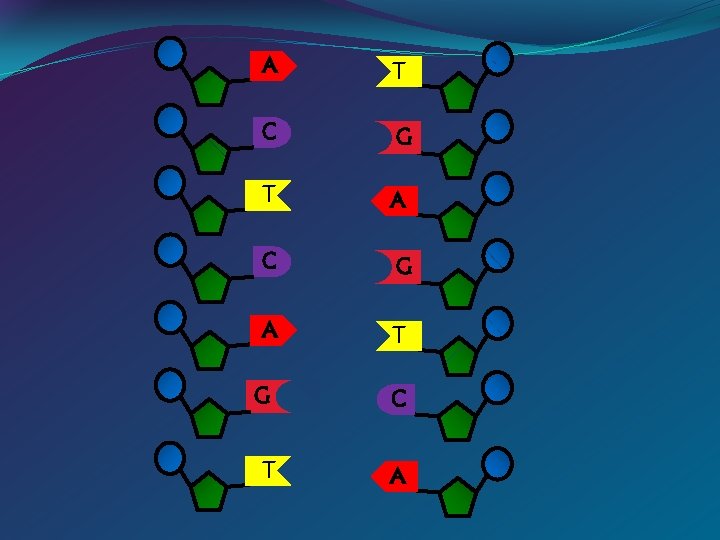
A T C G T A C G A T G C T A
Bonds in DNA Hydrogen Bonds: hold nitrogen bases together (in the middle) Covalent Bonds: hold sugar from one nucleotide to phosphate of a neighboring nucleotide (on the edges)
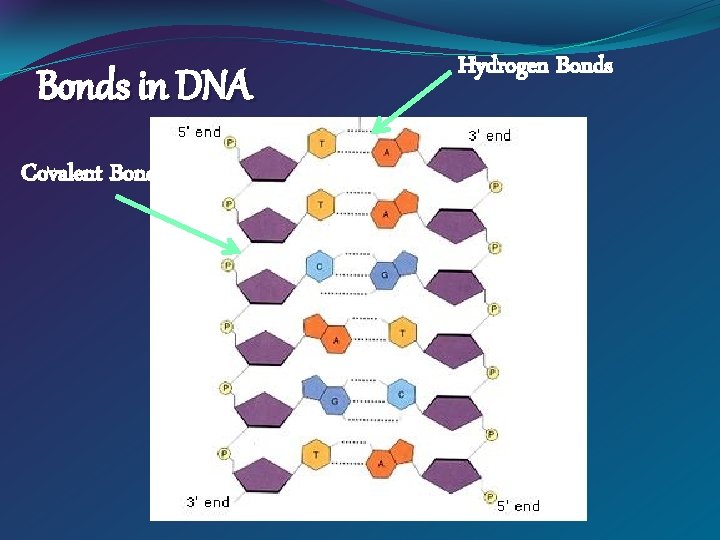
Bonds in DNA Covalent Bonds Hydrogen Bonds
- Slides: 16