
Happily Ever Aftershock A Journey from Reverse Culture



- Slides: 24
Happily Ever Aftershock? A Journey from Reverse Culture Shock to New Identity Elaine Capella, Anthropology, International Studies, French Minor Thesis Mentor: David Mc. Murray, Ph. D. , Anthropology
Studying Abroad
Research Goals • Overview the existing cross-cultural adjustment models for study abroad students • Highlight the importance of studying reverse culture shock • Submit my own model to illustrate the transitional process
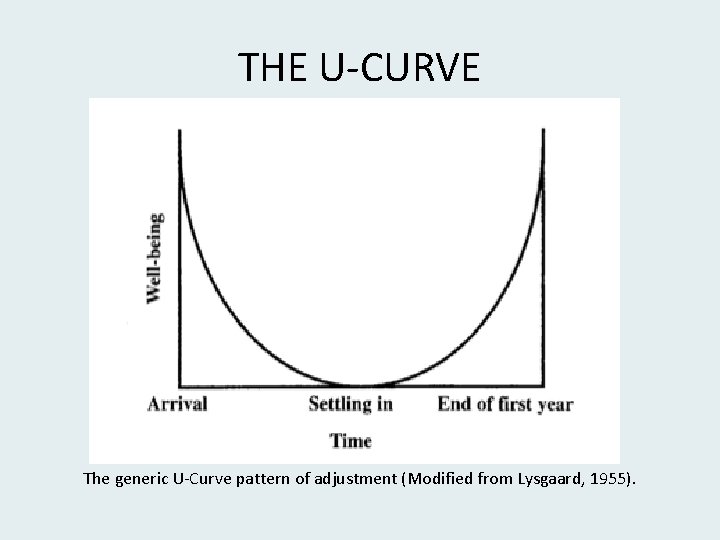
THE U-CURVE The generic U-Curve pattern of adjustment (Modified from Lysgaard, 1955).
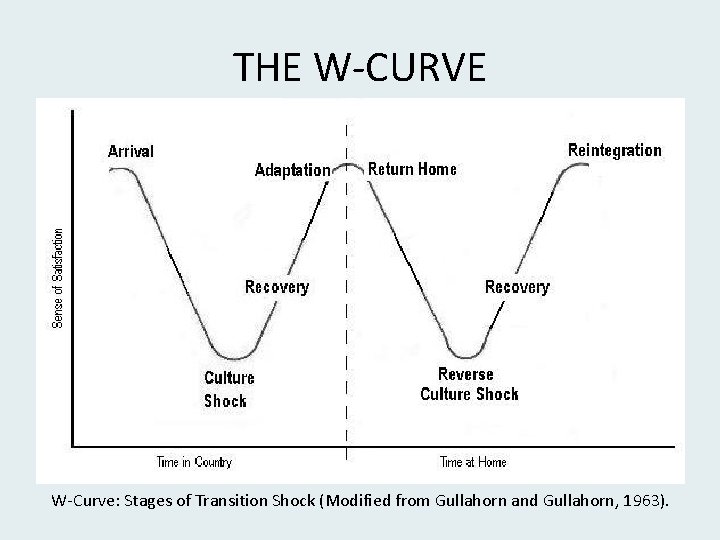
THE W-CURVE W-Curve: Stages of Transition Shock (Modified from Gullahorn and Gullahorn, 1963).
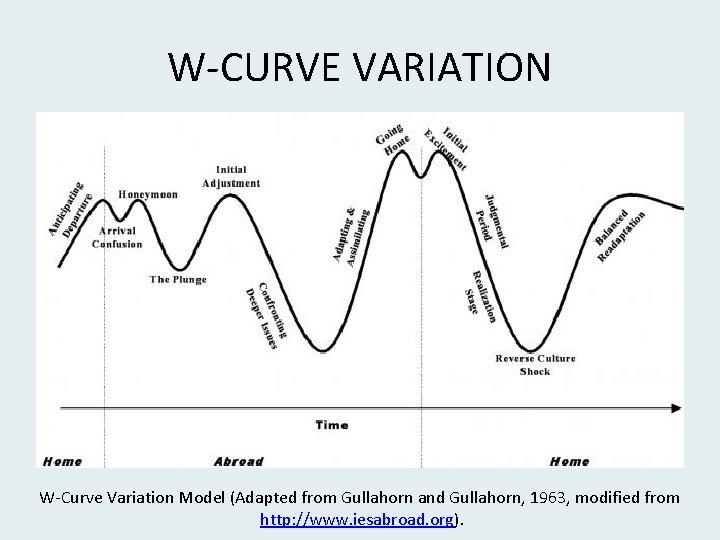
W-CURVE VARIATION W-Curve Variation Model (Adapted from Gullahorn and Gullahorn, 1963, modified from http: //www. iesabroad. org).
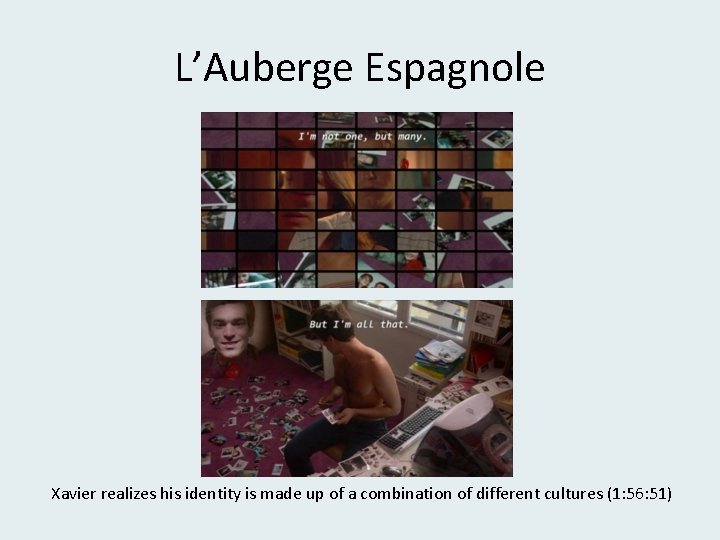
L’Auberge Espagnole Xavier realizes his identity is made up of a combination of different cultures (1: 56: 51)
Home and Family
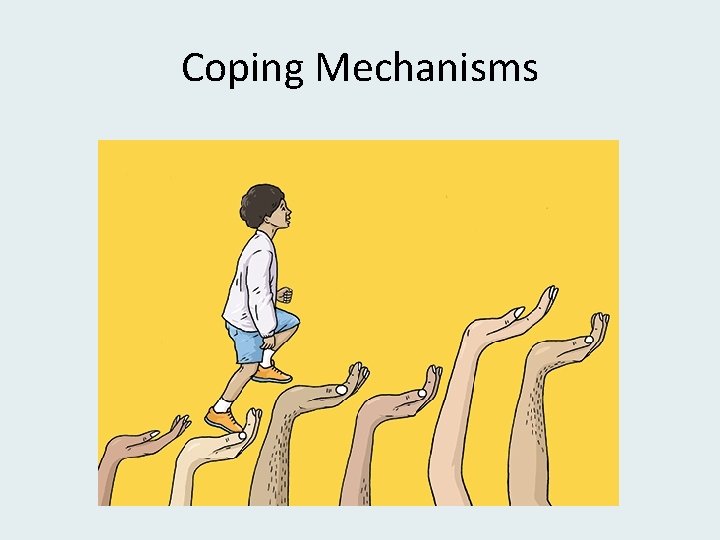
Coping Mechanisms
Methods • Literature Review • Inspiration from Peter Adler’s (1975) “Transitional Experience” – Contact – Disintegration – Reintegration – Autonomy – Independence (p. 16 -18) • Critique against Berardo (2007) four considerations
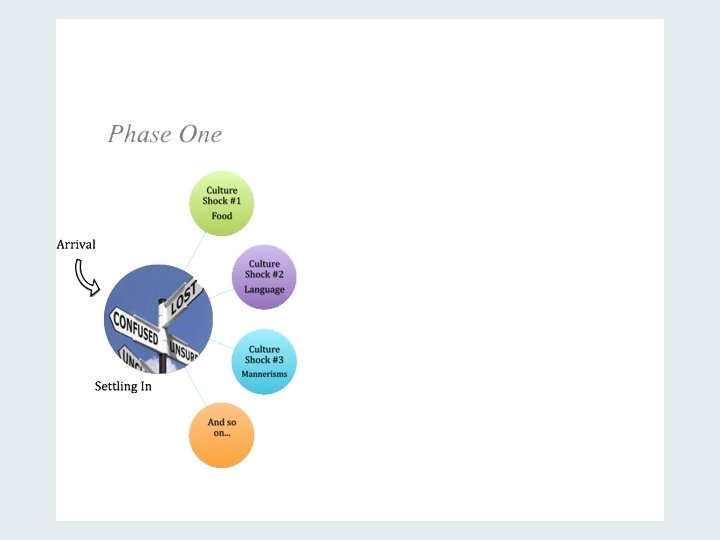
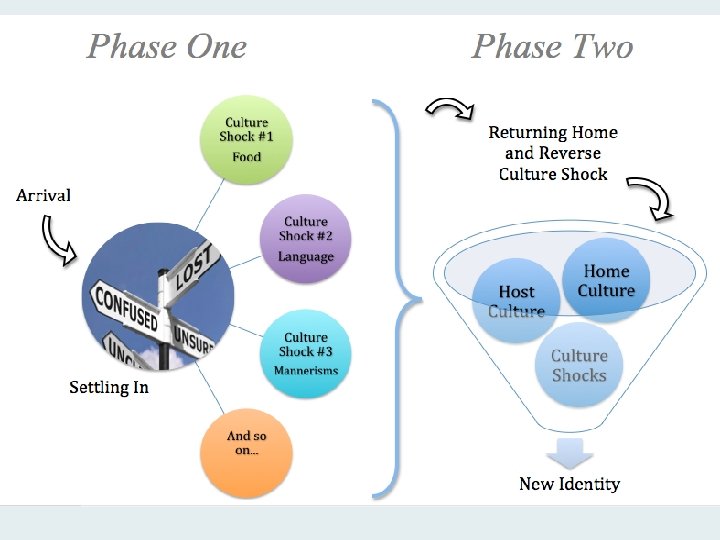
Results The Birth of a Model: The Acculturation Model
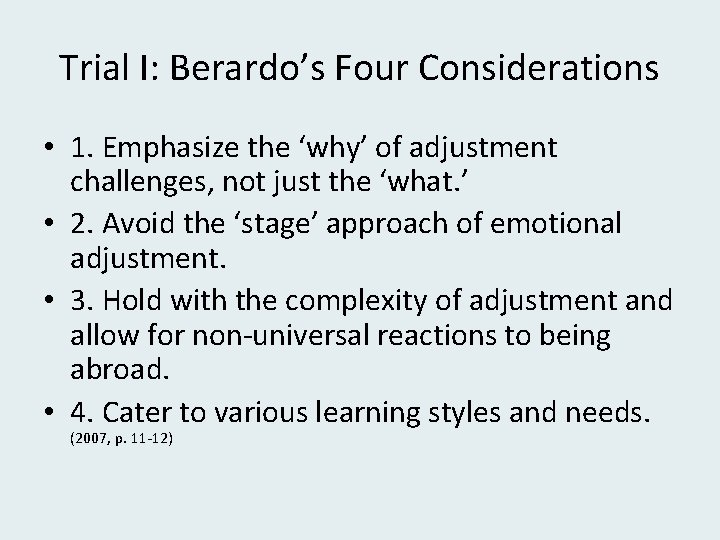
Trial I: Berardo’s Four Considerations • 1. Emphasize the ‘why’ of adjustment challenges, not just the ‘what. ’ • 2. Avoid the ‘stage’ approach of emotional adjustment. • 3. Hold with the complexity of adjustment and allow for non-universal reactions to being abroad. • 4. Cater to various learning styles and needs. (2007, p. 11 -12)
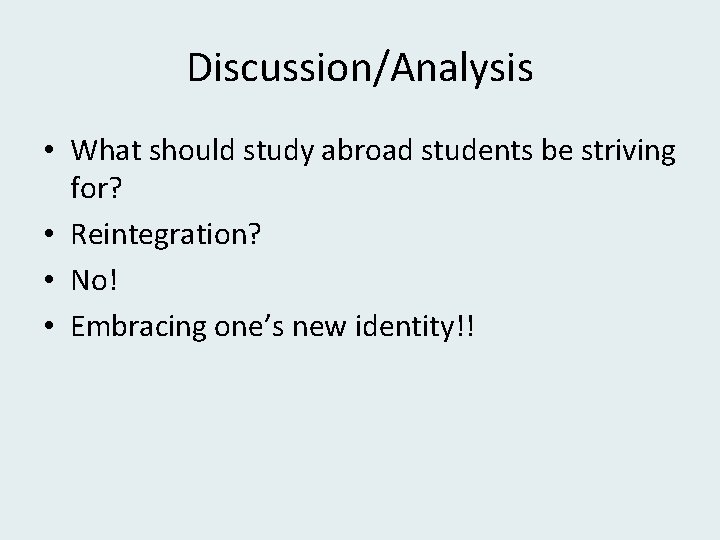
Discussion/Analysis • What should study abroad students be striving for? • Reintegration? • No! • Embracing one’s new identity!!
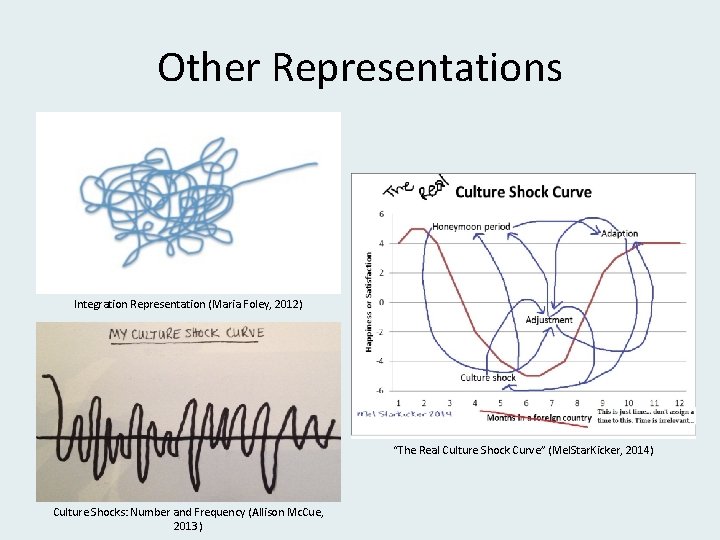
Other Representations Integration Representation (Maria Foley, 2012) “The Real Culture Shock Curve” (Mel. Star. Kicker, 2014) Culture Shocks: Number and Frequency (Allison Mc. Cue, 2013)
Conclusion • Limitations – Lack of published research – Addressing a target audience – Choice to omit smaller phases • Future Study – Testing my model against pre-existing ones – Looking further into “New Identity”
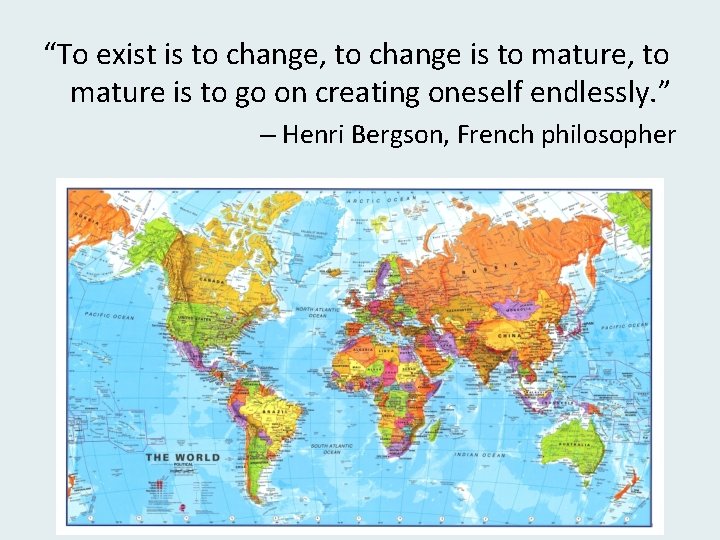
“To exist is to change, to change is to mature, to mature is to go on creating oneself endlessly. ” – Henri Bergson, French philosopher
Acknowledgements I would like to extend my sincerest thanks and appreciation to my thesis support system, especially: • • • David Mc. Murray Nick Fleury Sarah Cunningham Tavia Mendez Theresa Cuenca My family/friends Without you all, I couldn’t have done it!
References • • • • • Adler, P. S. (1975). The transitional experience: An alternative view of culture shock. Journal of humanistic psychology, 15(4), 13 -23. Allison, P. , Davis-Berman, J. , & Berman, D. (2012). Changes in latitude, changes in attitude: analysis of the effects of reverse culture shock–A study of students returning from youth expeditions. Leisure Studies, 31(4), 487 -503. Berardo, K. (2007). Alternatives to the U-Curve Model: Ideas for training for cultural transitions without using the U-curve or stages of adjustment, 1 -30. Retrieved from http: //www. culturosity. com/pdfs/The%20 Alternatives%20 to%20 the%20 U-Curve 2008%20(Berardo). pdf Eide, I. (1970). Students as links between cultures : a cross cultural survey based on Unesco studies. Oslo: Universitetsforlaget. Erickson, P. A. , & Murphy, L. D. (Eds. ). (2013). A History of Anthropological Theory. University of Toronto Press. Foley, M. (2012, August 6). U-Curve? Maybe not [Web log post]. Retrieved from http: //iwasanexpatwife. com/2012/08/06/u-curvemaybe-not/ Gaw, K. F. (2000). Reverse culture shock in students returning from overseas. International Journal of Intercultural Relations, 24(1), 83104. Gisolf, M. (2013) "Liminality and Tourism. " Turismo en Teora. <http: //www. tourismtheories. org/? p=700>. Institute of International Education, Inc. (2015). Open Doors 2014: International Students in the United States and Study Abroad by American Students are at All-Time High [Press release]. Retrieved from http: //www. iie. org/Who-We-Are/News-and-Events/Press. Center/Press-Releases/2014 -11 -17 -Open-Doors-Data Kim, Y. Y. (2001). Becoming intercultural: An integrative theory of communication and cross-cultural adaptation. Sage Publications. La Brack, B. (2010). Theory reflections: Cultural adaptations, culture shock and the “curves of adjustment. , ” 1 -4. Retrieved from http: //www. nafsa. org/_/file/_/theory_connections_adjustment. pdf Levy, B. (Producer), & Klapisch, C. (Director). (2002). L’Auberge Espagnole [Motion picture]. Spain (Mate Producciones S. A. , Via Digital) and France (BAC Films, Ce qui me meut, France 2 Cinéma, Studio Canal). Mc. Cue, A. (2013, December 4). Let’s Take a Moment to Talk Culture Shock [Web log post]. Retrieved from https: //ourhouseinaarhus. wordpress. com/2013/12/ Mel. Start. Kicker. (2014, May 31). The Stages of Culture Shock. Part One: The Honeymoon. [Web log post]. Retrieved from https: //melstarkicker. wordpress. com/2014/05/31/the-stages-of-culture-shock-part-one-the-honeymoon/ Mooradian, B. L. (2004). Going home when home does not feel like home: Reentry, expectancy violation theory, self-construal, and psychological and social support. Intercultural Communication Studies, 13, 37 -50. Ndika, N. (2013). Acculturation: A Pilot Study on Nigerians in America and Their Coping Strategies. SAGE Open, 3(4), 1 -8. Paige, R. M. , Cohen, A. D. , Kappler, B. , Chi, J. C. , & Lassegard, J. P. (2006). Maximizing Study Abroad: A Students' Guide to Strategies for Language and Culture Learning and Use. Center for Advanced Research on Language Acquisition, University of Minnesota. Stewart, L. , & Leggat, P. A. (1998). Culture shock and travelers. Journal of travel medicine, 5(2), 84 -88.
Questions?