
HANTAVIRUS VIRAL EVOLUTION Chelsea Zuania Keerthana Eduardo Transmission
- Slides: 19
HANTAVIRUS: VIRAL EVOLUTION Chelsea, Zuania, Keerthana, Eduardo
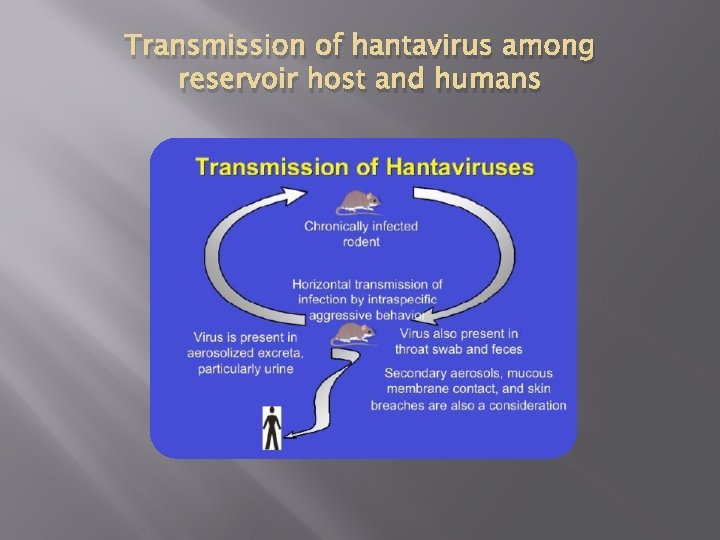
Transmission of hantavirus among reservoir host and humans
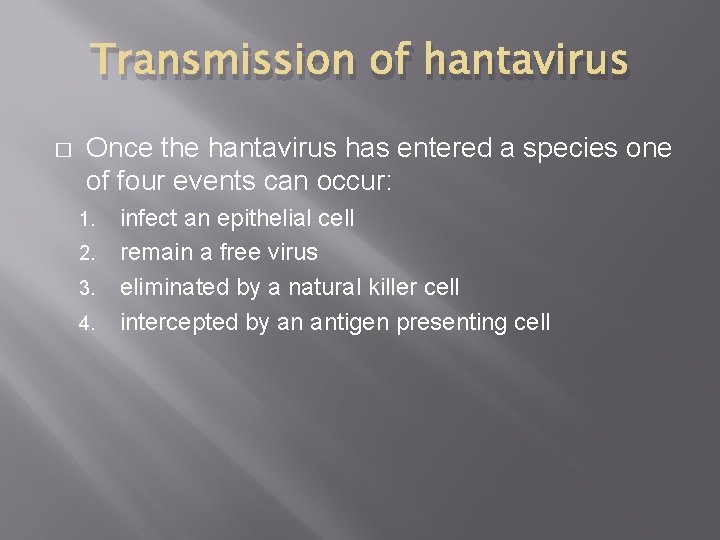
Transmission of hantavirus � Once the hantavirus has entered a species one of four events can occur: 1. 2. 3. 4. infect an epithelial cell remain a free virus eliminated by a natural killer cell intercepted by an antigen presenting cell
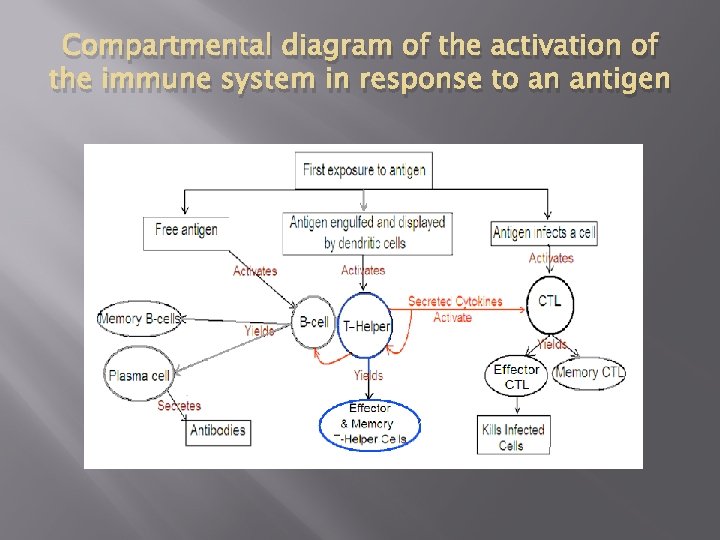
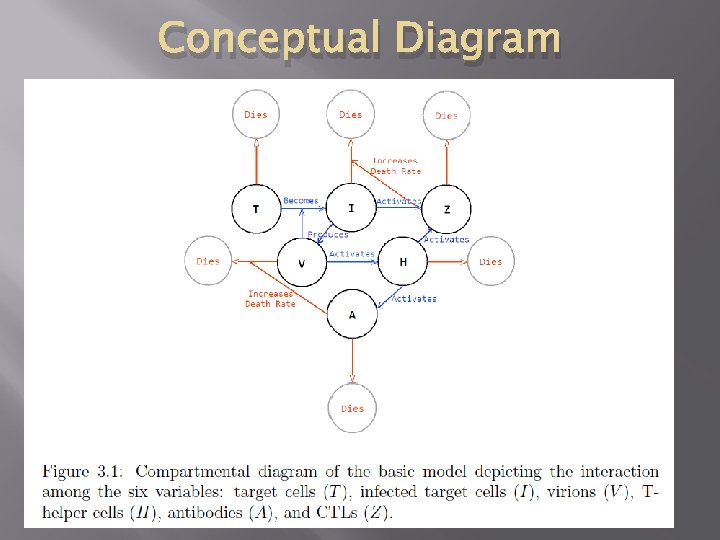
Compartmental diagram of the activation of the immune system in response to an antigen
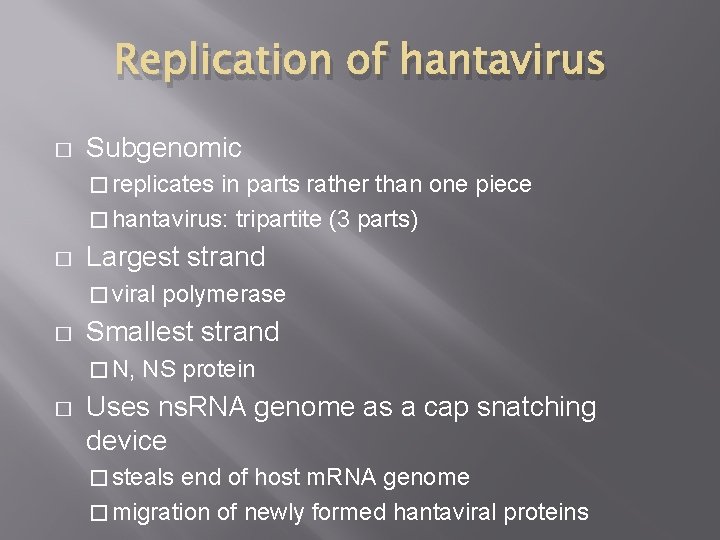
Replication of hantavirus � Subgenomic � replicates in parts rather than one piece � hantavirus: tripartite (3 parts) � Largest strand � viral � Smallest strand � N, � polymerase NS protein Uses ns. RNA genome as a cap snatching device � steals end of host m. RNA genome � migration of newly formed hantaviral proteins
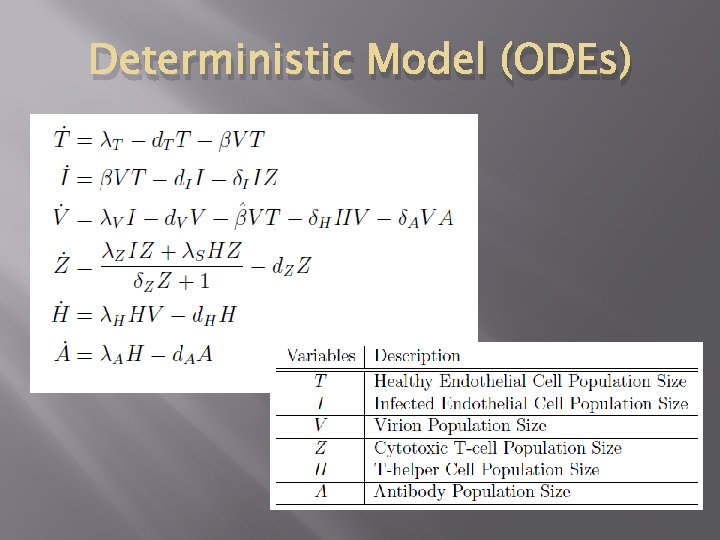
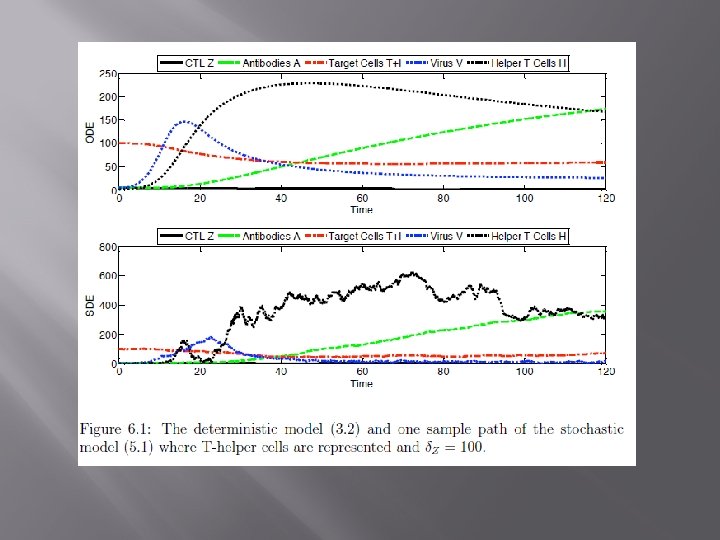
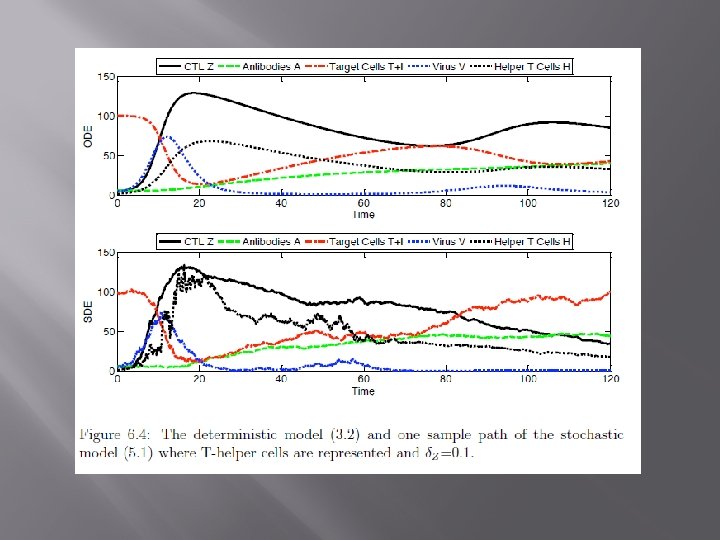
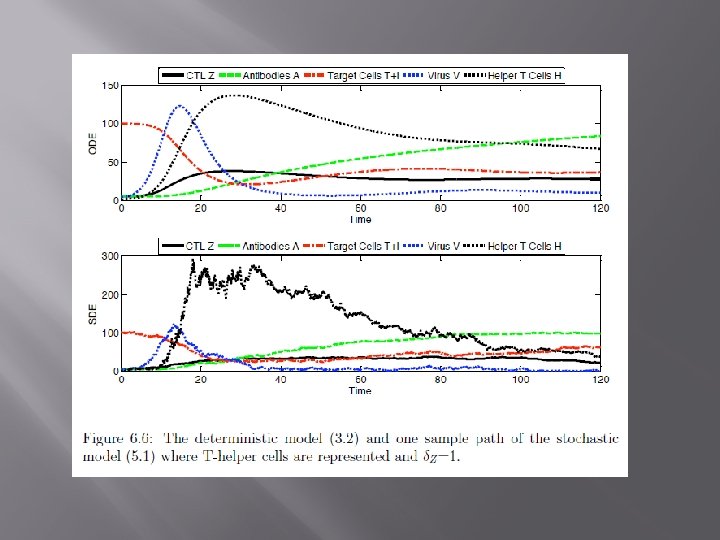
Deterministic Model (ODEs)
Conceptual Diagram
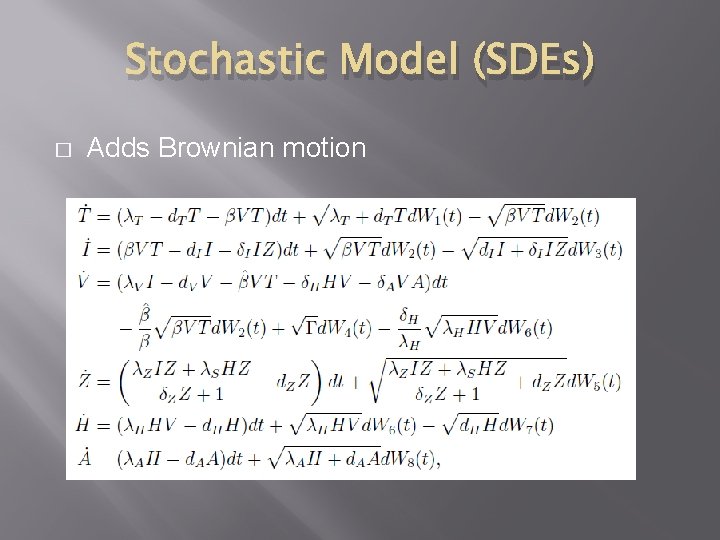
Stochastic Model (SDEs) � Adds Brownian motion
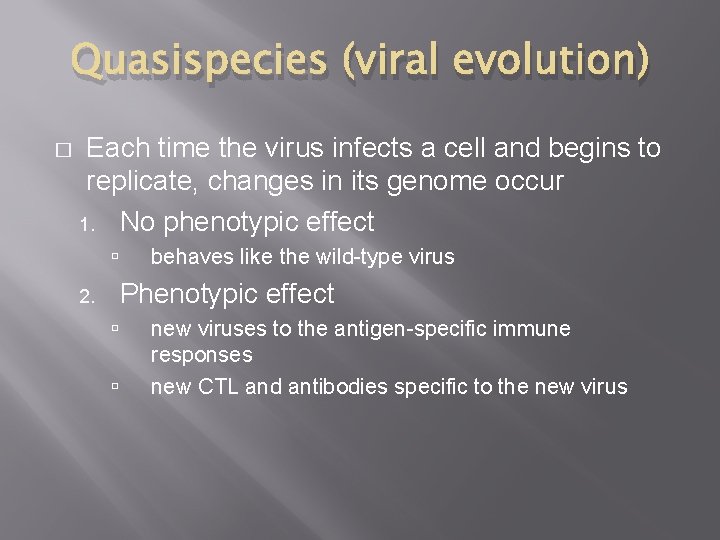
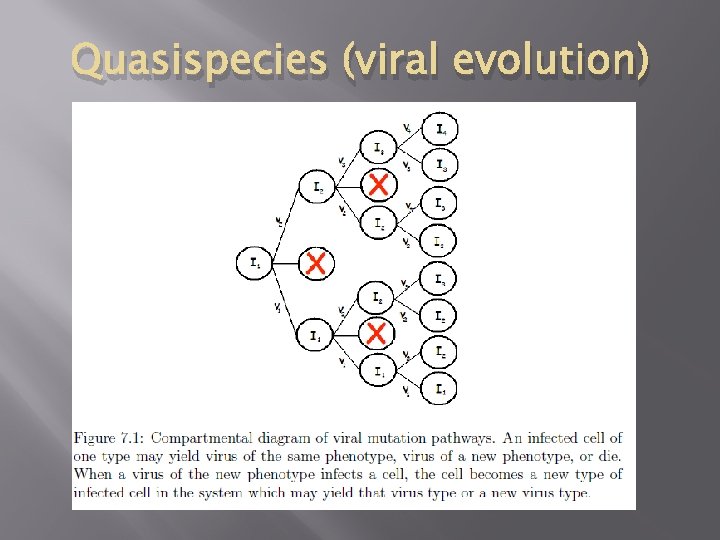
Quasispecies (viral evolution) � Each time the virus infects a cell and begins to replicate, changes in its genome occur 1. No phenotypic effect behaves like the wild-type virus Phenotypic effect 2. new viruses to the antigen-specific immune responses new CTL and antibodies specific to the new virus
Quasispecies (viral evolution)
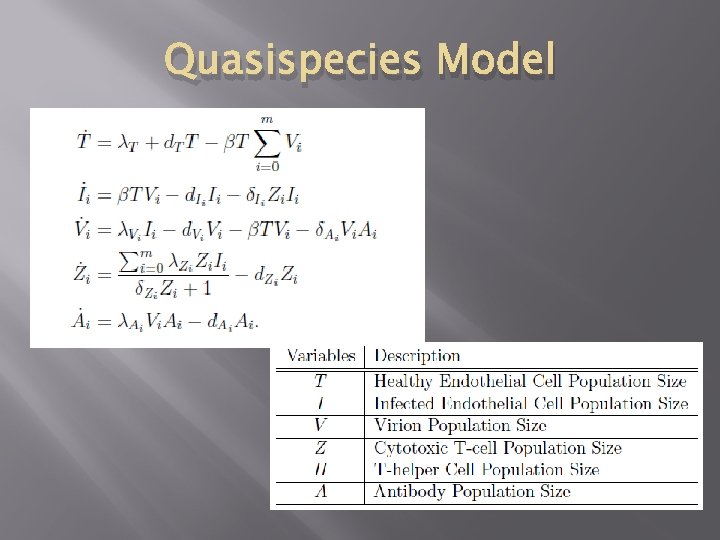
Quasispecies Model
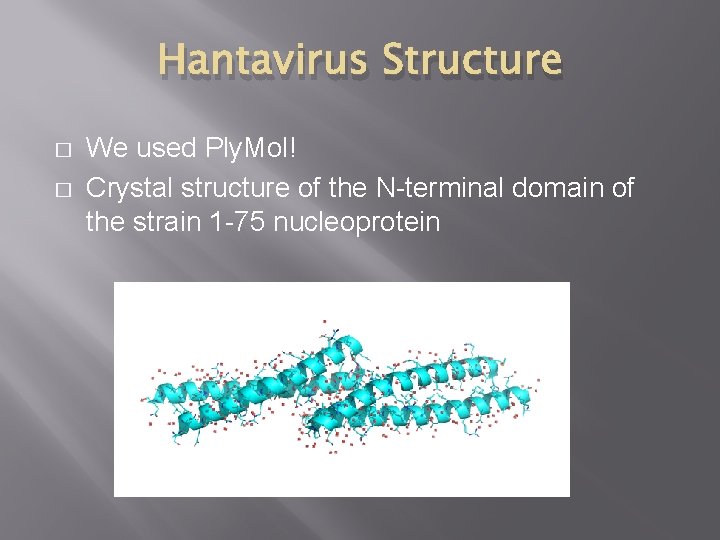
Hantavirus Structure � � We used Ply. Mol! Crystal structure of the N-terminal domain of the strain 1 -75 nucleoprotein
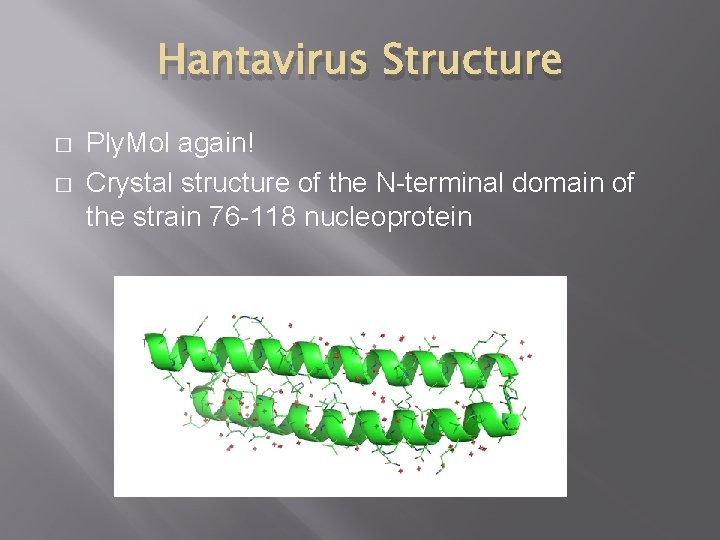
Hantavirus Structure � � Ply. Mol again! Crystal structure of the N-terminal domain of the strain 76 -118 nucleoprotein
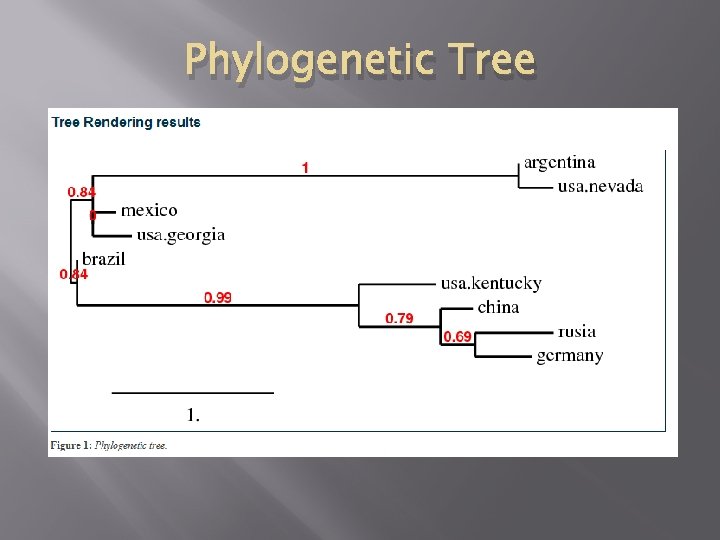
Phylogenetic Tree
Selected References � � � L. J. S. Allen. An Introduction to Stochastic Processes with Applications to Biology. CRC Press/Chapman Hall, Boca Raton, FL, 2 nd edition, 2010. G. Sch onrich, A. Rang, N. L utteke, M. J. Raerty, N. Charbonnel, and R. G. Ulrich. Hantavirus-induced immunity in rodent reservoirs and humans. Immun. Rev. , 225: 163{189, 2008. Wordle, phylogenetic data: http: //www. ncbi. nlm. nih. gov/
The End Or is it