
Hannah Saven Sister L 51 Post operative care


- Slides: 10
Hannah Saven Sister L 51
Post- operative care of children following cardiac surgery-Including Sternotomy and Thoracotomy Wounds
Objectives During this session you will gain an understanding of the following: • Immediate post-op care of a child having undergone heart surgery • Post-op care in HDU and on the children’s cardiac ward • The difference between thoracotomy and sternotomy wounds for children having heart surgery
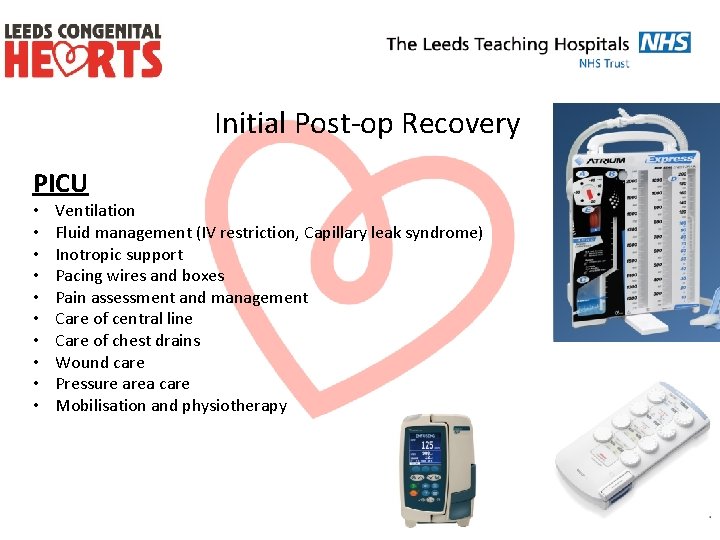
Initial Post-op Recovery PICU • • • Ventilation Fluid management (IV restriction, Capillary leak syndrome) Inotropic support Pacing wires and boxes Pain assessment and management Care of central line Care of chest drains Wound care Pressure area care Mobilisation and physiotherapy
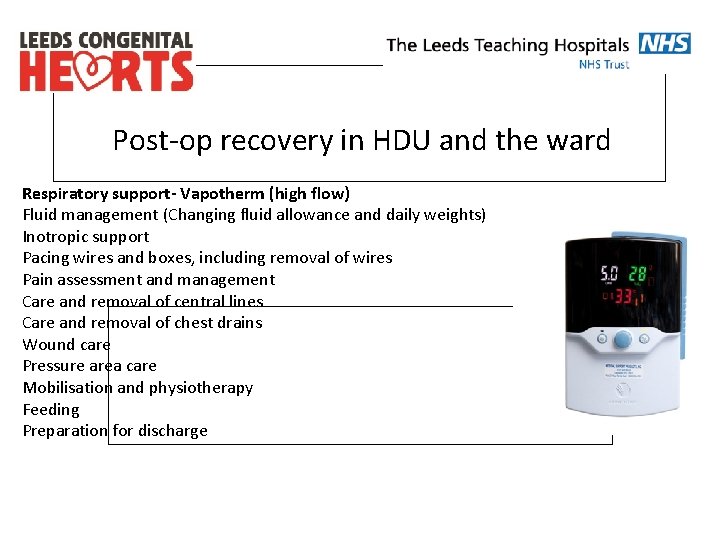
Post-op recovery in HDU and the ward Respiratory support- Vapotherm (high flow) Fluid management (Changing fluid allowance and daily weights) Inotropic support Pacing wires and boxes, including removal of wires Pain assessment and management Care and removal of central lines Care and removal of chest drains Wound care Pressure area care Mobilisation and physiotherapy Feeding Preparation for discharge
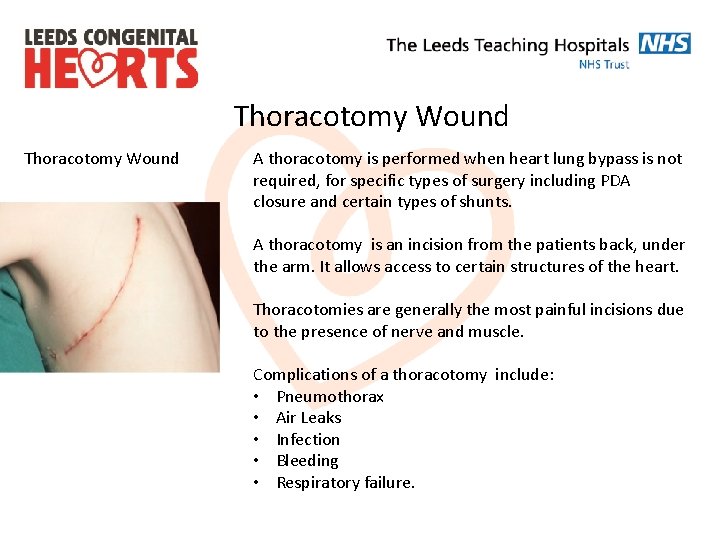
Thoracotomy Wound A thoracotomy is performed when heart lung bypass is not required, for specific types of surgery including PDA closure and certain types of shunts. A thoracotomy is an incision from the patients back, under the arm. It allows access to certain structures of the heart. Thoracotomies are generally the most painful incisions due to the presence of nerve and muscle. Complications of a thoracotomy include: • Pneumothorax • Air Leaks • Infection • Bleeding • Respiratory failure.
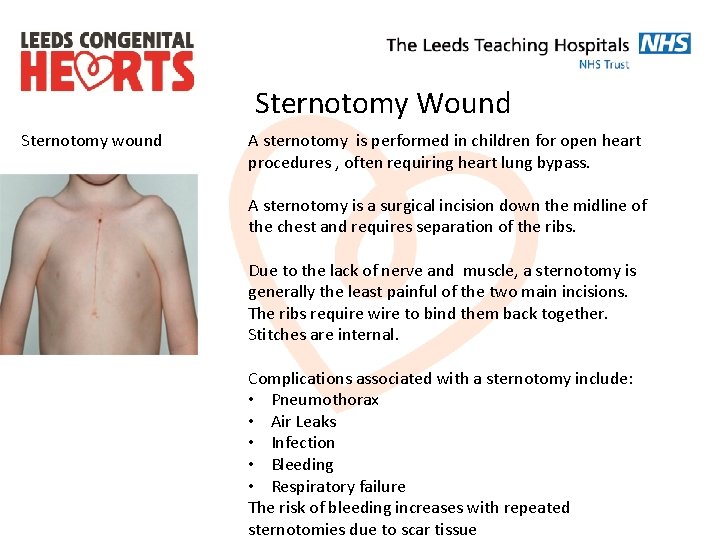
Sternotomy Wound Sternotomy wound A sternotomy is performed in children for open heart procedures , often requiring heart lung bypass. A sternotomy is a surgical incision down the midline of the chest and requires separation of the ribs. Due to the lack of nerve and muscle, a sternotomy is generally the least painful of the two main incisions. The ribs require wire to bind them back together. Stitches are internal. Complications associated with a sternotomy include: • Pneumothorax • Air Leaks • Infection • Bleeding • Respiratory failure The risk of bleeding increases with repeated sternotomies due to scar tissue
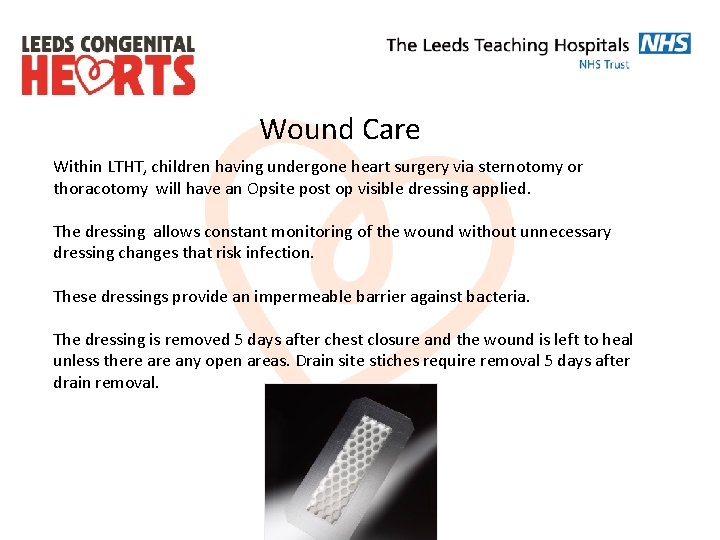
Wound Care Within LTHT, children having undergone heart surgery via sternotomy or thoracotomy will have an Opsite post op visible dressing applied. The dressing allows constant monitoring of the wound without unnecessary dressing changes that risk infection. These dressings provide an impermeable barrier against bacteria. The dressing is removed 5 days after chest closure and the wound is left to heal unless there any open areas. Drain site stiches require removal 5 days after drain removal.
Summary Care of a child following cardiac surgery is complex. Length of stay on PICU is variable depending on many factors. Children undergoing surgery are not usually allowed home before day 5 post op, following and effusion check on echo Most children will be discharged home on diuretics Usual follow up is 2/52 with a registrar and 6/52 with a consultant.