
Handwriting at Parklands Primary School What is Cursive

- Slides: 12
Handwriting at Parklands Primary School
What is Cursive Handwriting? All letters have an entry stroke which means letters always start from the same place. abcdefghijklmn Cursive style makes joining easier and most children should be able to begin joining their writing in Year 1.
Cursive writing from the start – pros • Letters are produced in a flowing movement, which helps the development of a physical memory of how each letter is written. • Letters all start in the same place and flow from left to right, which reduces the likelihood of reversal mix-ups such as b/d and p/q. • Because of the smooth flow, writing soon becomes quicker and easier. • There is no messy transition stage when children move from print to a joined style. If cursive writing is taught from the start, only one style is needed. • A cursive style of handwriting is recommended by the British Dyslexia Association.
Handwriting By the end of year 2 all: • Letters correctly formed using a cursive form. • Lower case letters all sizes accurately. • Upper case letters formed correctly and accurately sized. • Using horizontal and diagonal joins accurately.
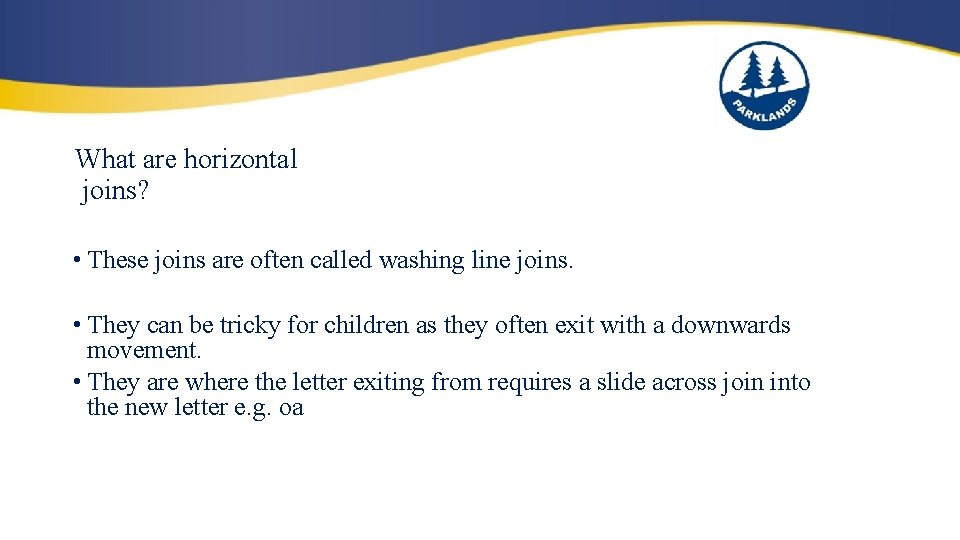
What are horizontal joins? • These joins are often called washing line joins. • They can be tricky for children as they often exit with a downwards movement. • They are where the letter exiting from requires a slide across join into the new letter e. g. oa
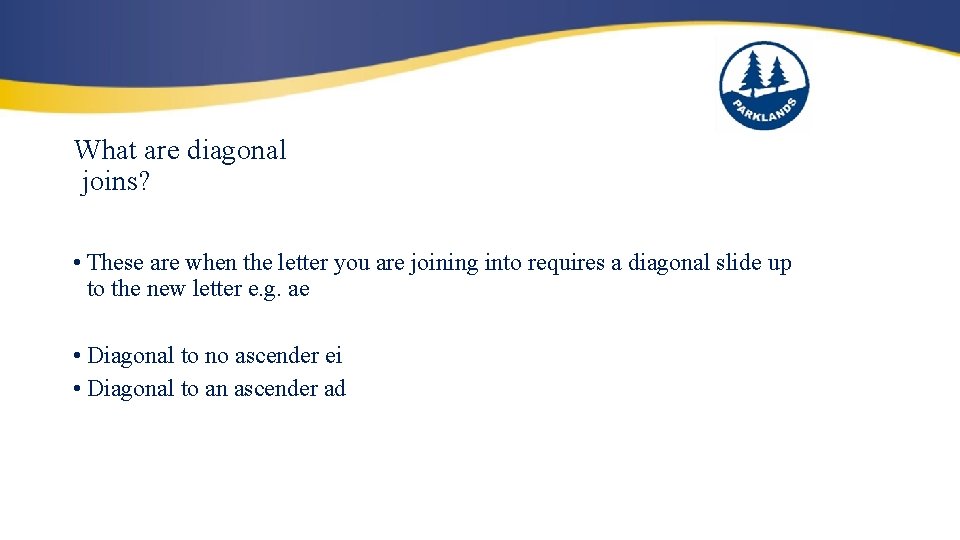
What are diagonal joins? • These are when the letter you are joining into requires a diagonal slide up to the new letter e. g. ae • Diagonal to no ascender ei • Diagonal to an ascender ad
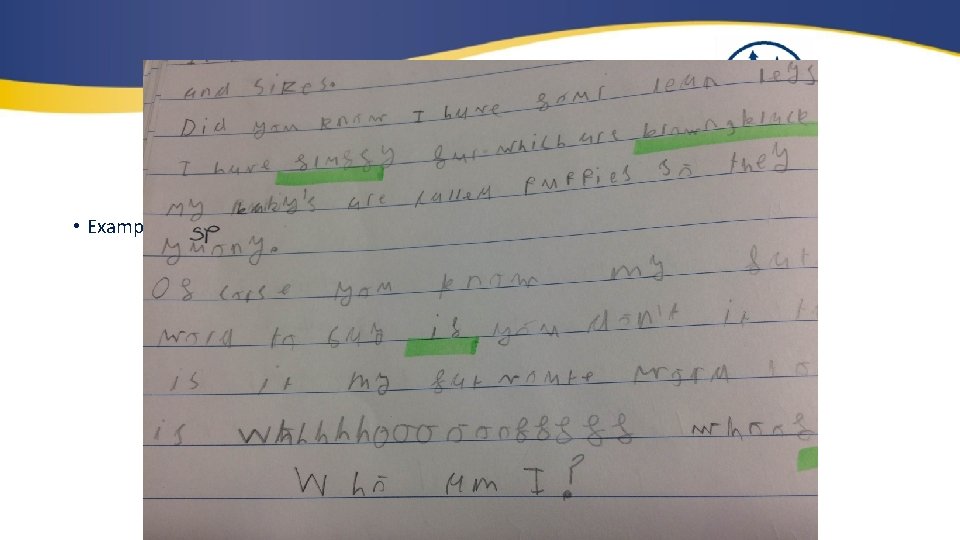
• Example of writing where letters are not formed correctly daniel
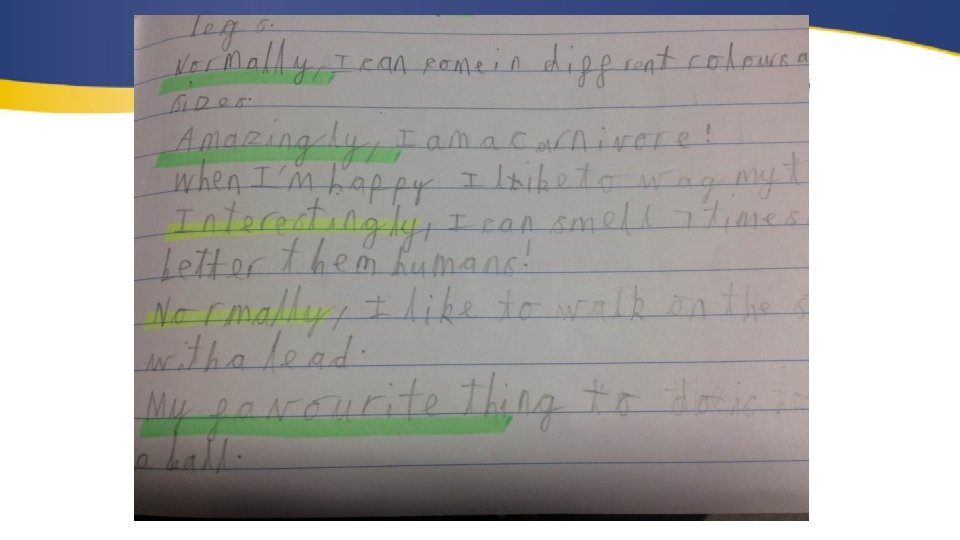
• Example of writing where joins are not correct Arnie
What to look out for… • Orientation • Size of lower case in relation to each other • Size of capitals in relation to lower case • Entry stroke / exit stroke
Things to remember… • Capitals and ascenders to the top • f and t almost to the top • Everything else half way • Descenders – g j y loop back round
Ways to help at home Think three P’s • Posture • Pencil grip • Paper position Regular practice of key skills for words and short sentences. Useful websites: letterjoin. co. uk teachhandwriting. co. uk/letter-joins Apps: crazy cursive letters - joined