
Handout 4 4 3 Tides and Ocean Resources
- Slides: 35
Handout 4 (4 -3) Tides and Ocean Resources
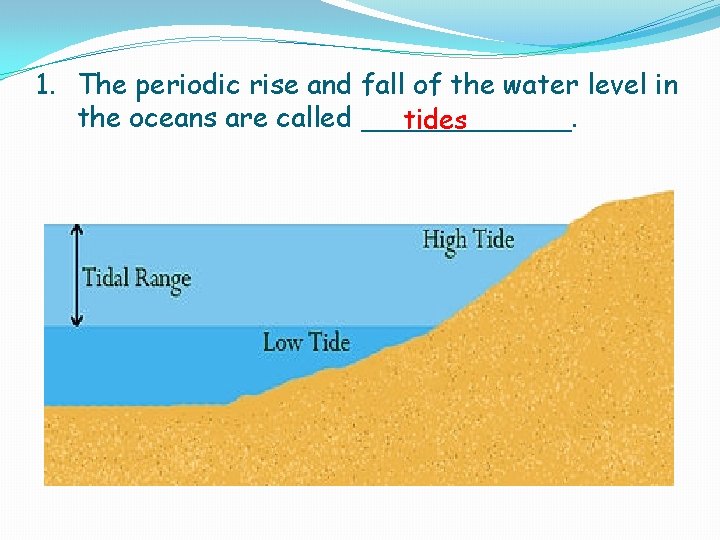
1. The periodic rise and fall of the water level in the oceans are called ______. tides
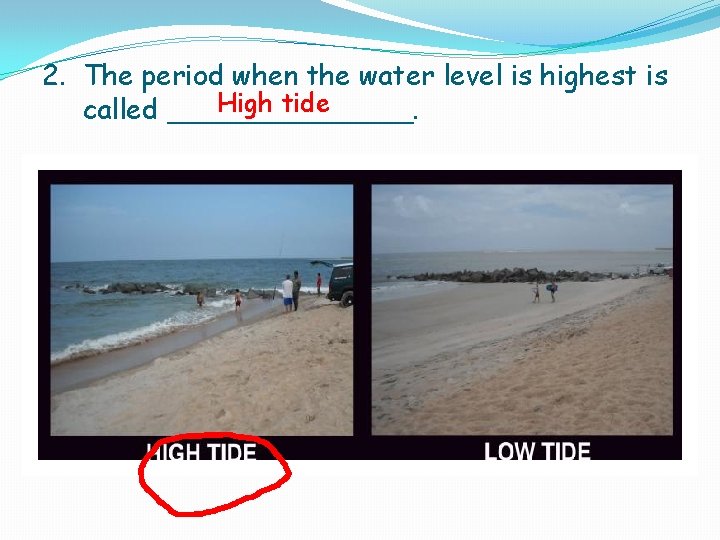
2. The period when the water level is highest is High tide called _______.
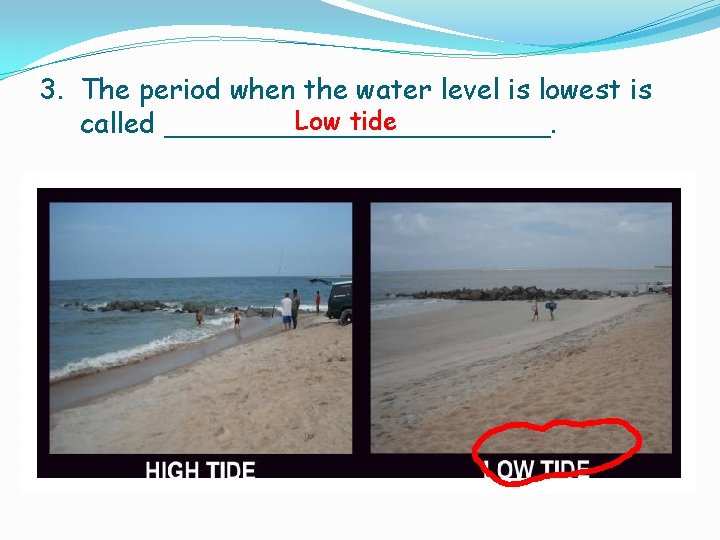
3. The period when the water level is lowest is Low tide called ___________.
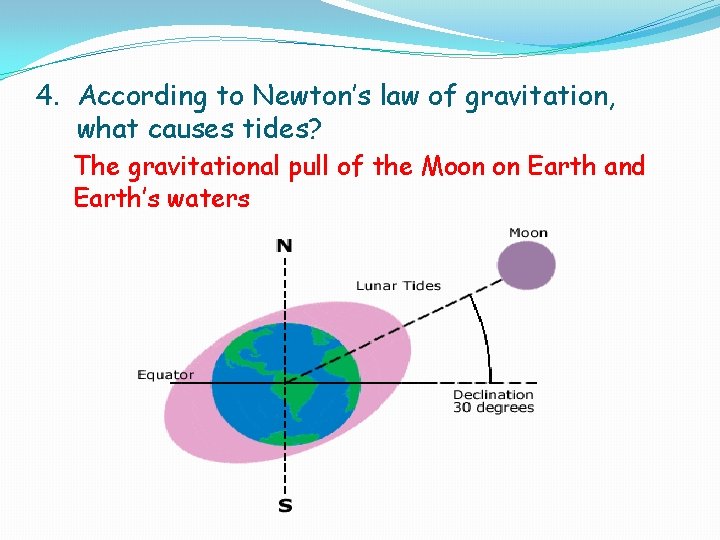
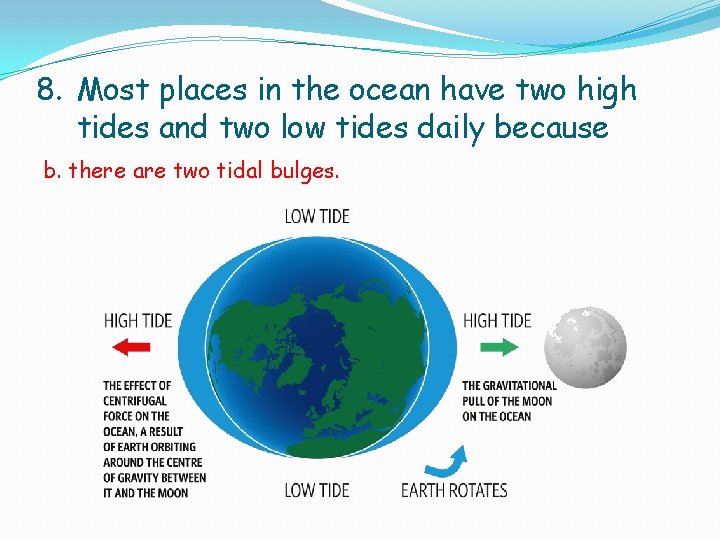
4. According to Newton’s law of gravitation, what causes tides? The gravitational pull of the Moon on Earth and Earth’s waters
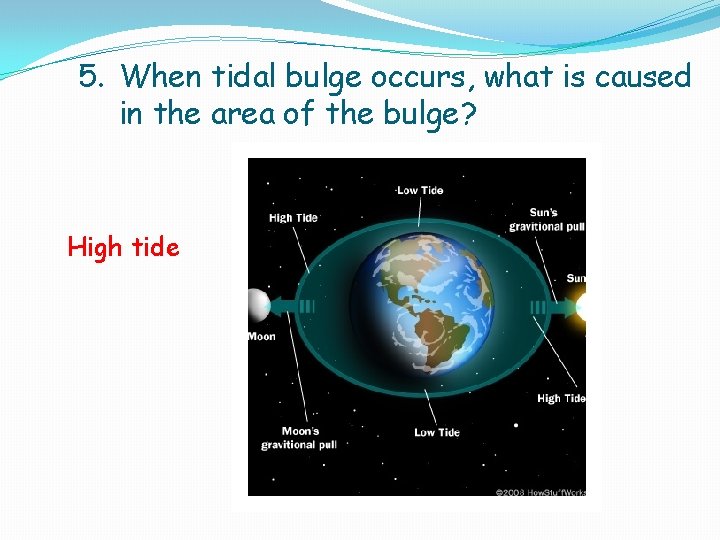
5. When tidal bulge occurs, what is caused in the area of the bulge? High tide
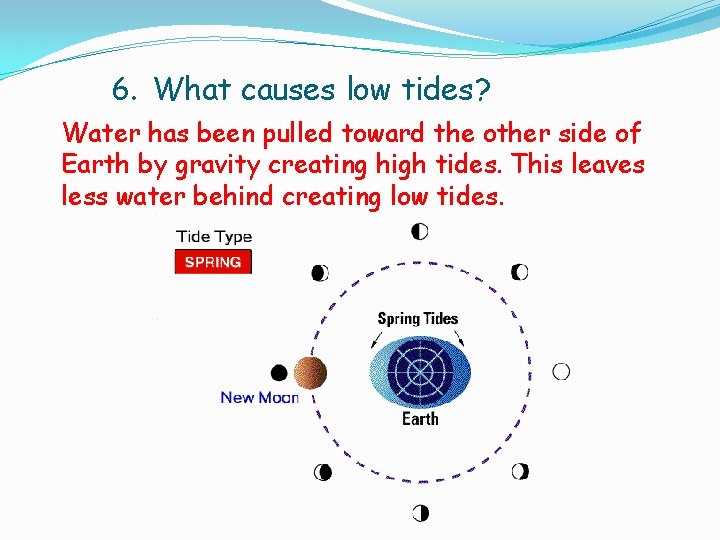
6. What causes low tides? Water has been pulled toward the other side of Earth by gravity creating high tides. This leaves less water behind creating low tides.
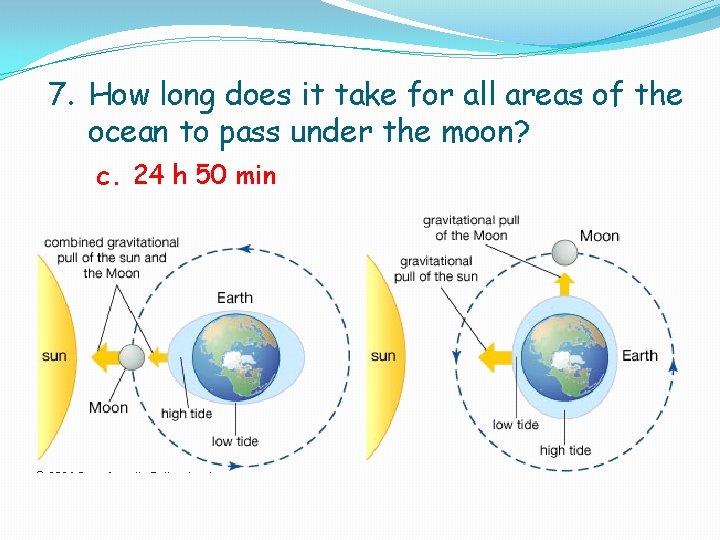
7. How long does it take for all areas of the ocean to pass under the moon? c. 24 h 50 min
8. Most places in the ocean have two high tides and two low tides daily because b. there are two tidal bulges.
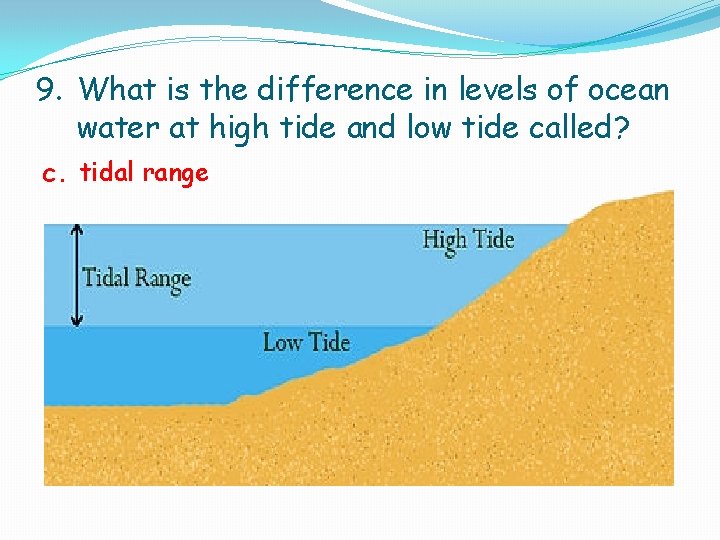
9. What is the difference in levels of ocean water at high tide and low tide called? c. tidal range
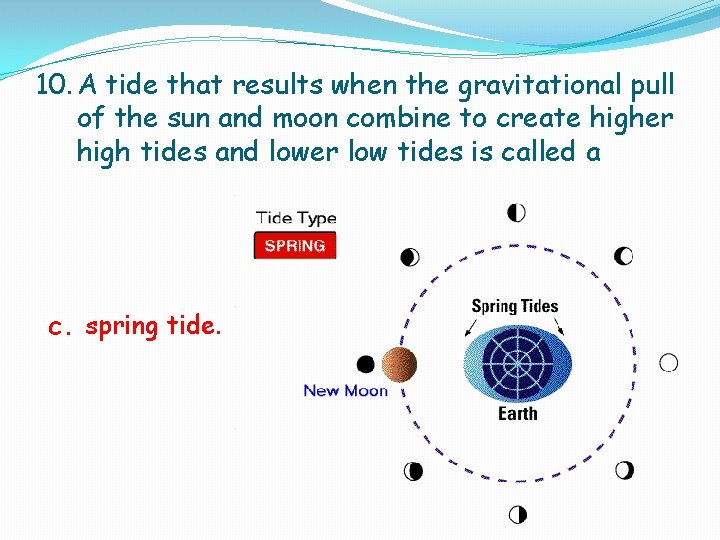
10. A tide that results when the gravitational pull of the sun and moon combine to create higher high tides and lower low tides is called a c. spring tide.
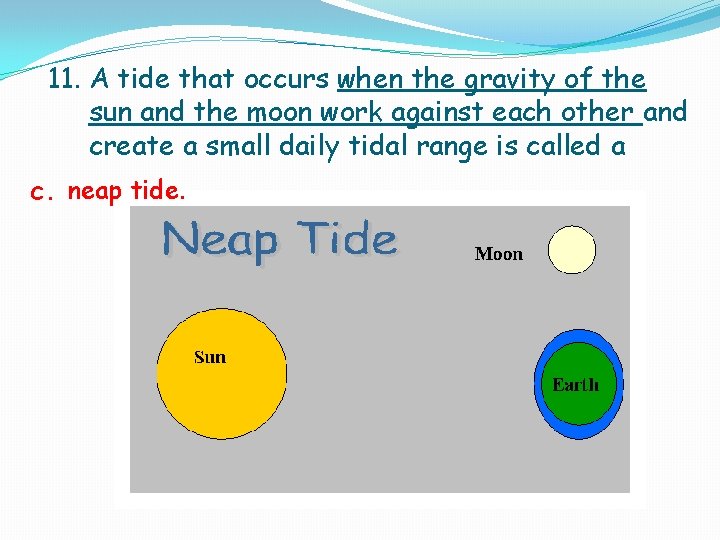
11. A tide that occurs when the gravity of the sun and the moon work against each other and create a small daily tidal range is called a c. neap tide.
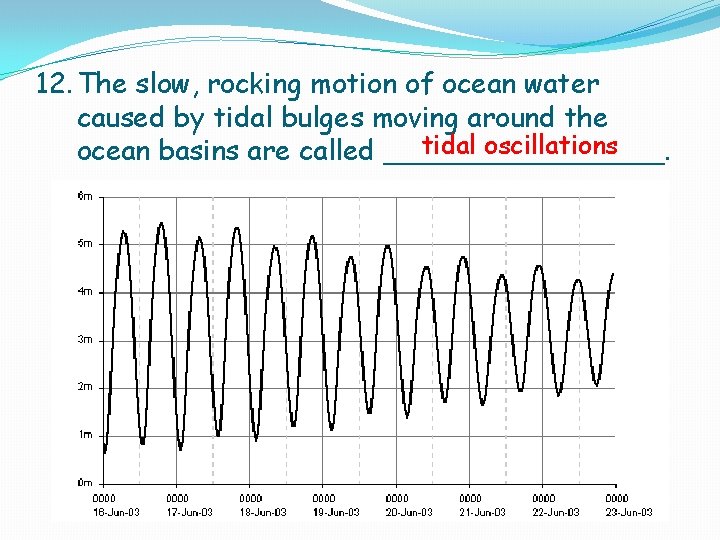
12. The slow, rocking motion of ocean water caused by tidal bulges moving around the tidal oscillations ocean basins are called ________.
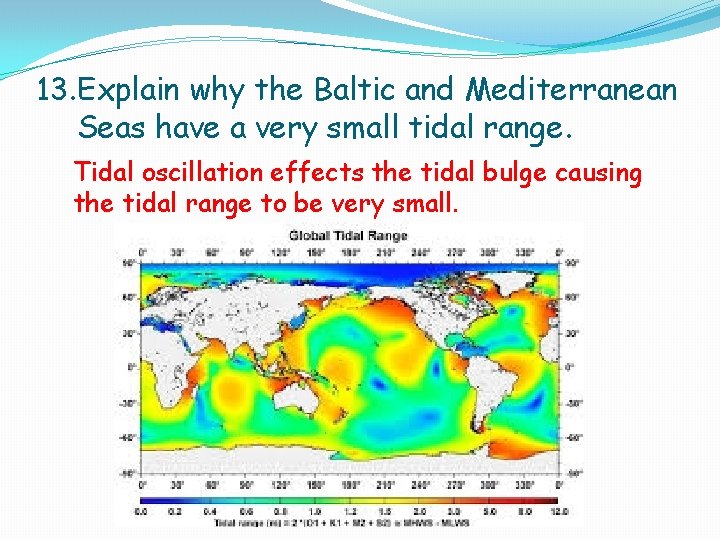
13. Explain why the Baltic and Mediterranean Seas have a very small tidal range. Tidal oscillation effects the tidal bulge causing the tidal range to be very small.
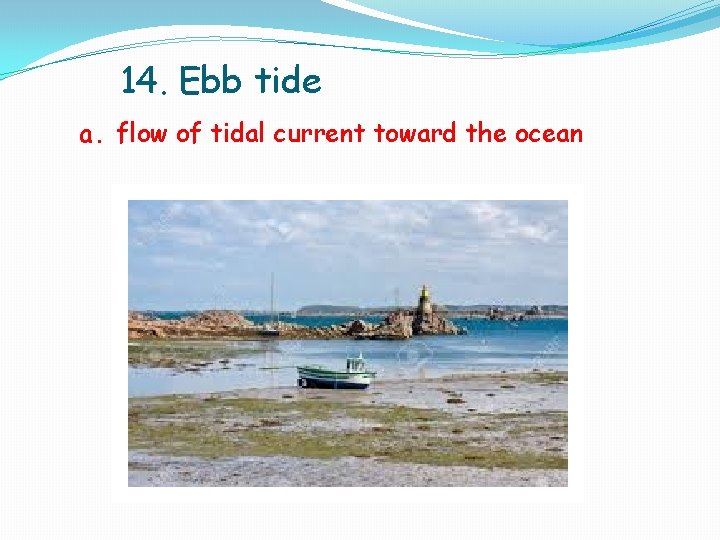
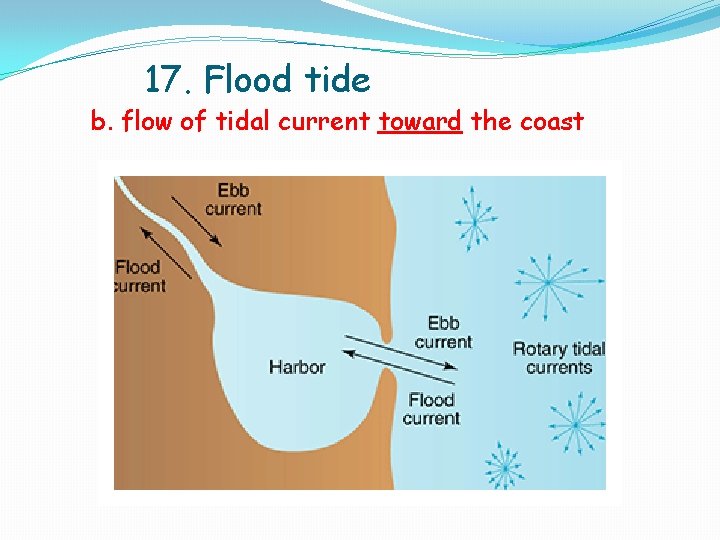
14. Ebb tide a. flow of tidal current toward the ocean
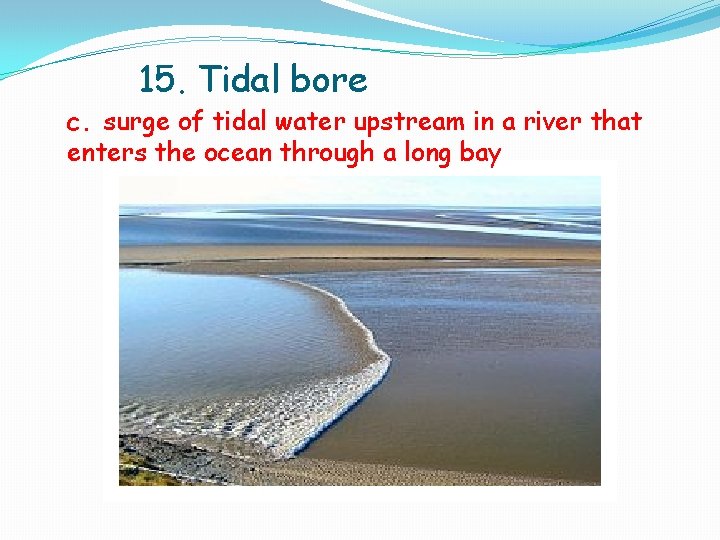
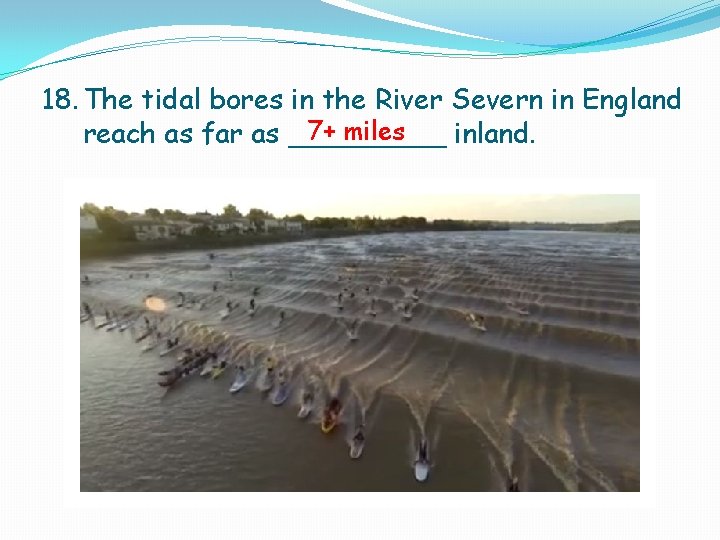
15. Tidal bore c. surge of tidal water upstream in a river that enters the ocean through a long bay
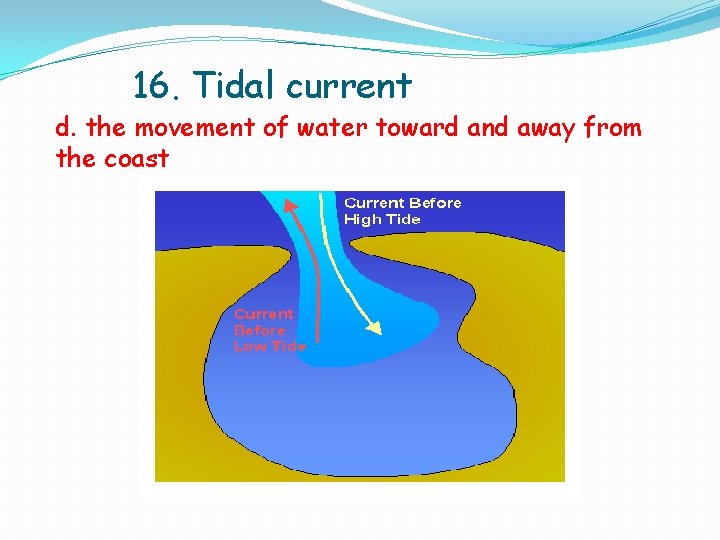
16. Tidal current d. the movement of water toward and away from the coast
17. Flood tide b. flow of tidal current toward the coast
18. The tidal bores in the River Severn in England 7+ miles reach as far as _____ inland.
Ocean Resources
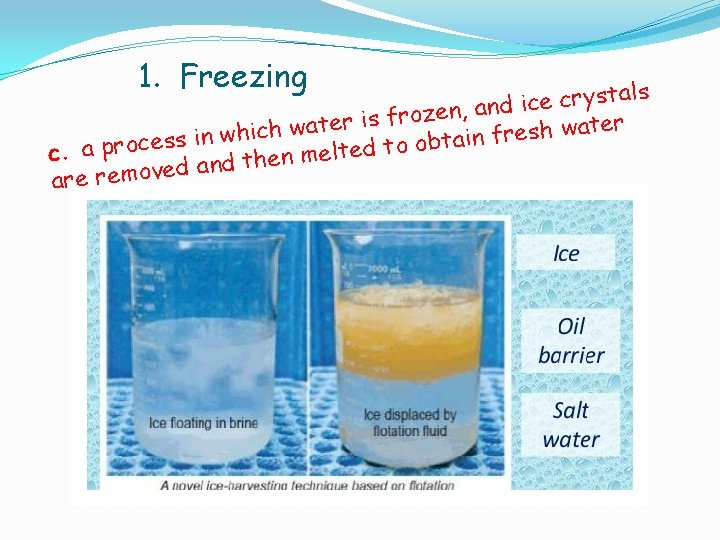
1. Freezing als t s y r c e c i nd a , n e z o r f s er ter i t a a w w h h c i s e h r w f s in ain s t e b c o o o r t p d a e. t c mel n e h t d n a d are remove
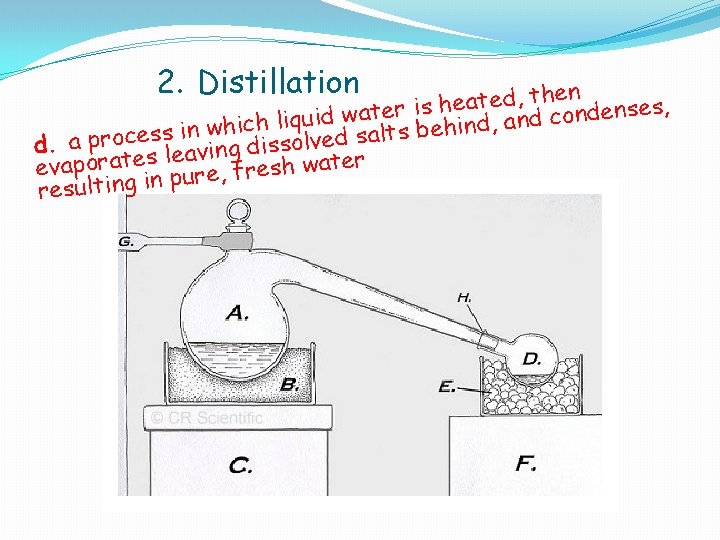
2. Distillation n e h t , d e t a e is h es, s r n e t e a d n w o d c i u d q h li d, an c i n i h h w e n b i s s t s l e a d. a proc s leaving dissolved s evaporate n pure, fresh water resulting i
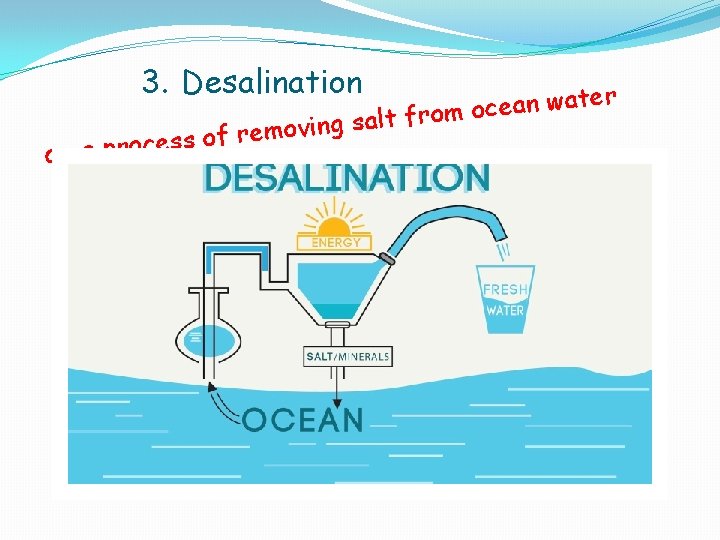
3. Desalination ing v o m e r f o ss a. a proce ter a w n a e c o salt from
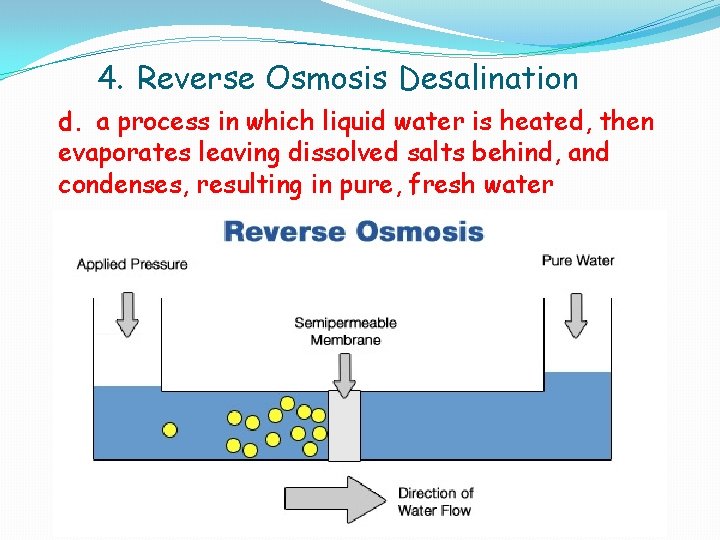
4. Reverse Osmosis Desalination d. a process in which liquid water is heated, then evaporates leaving dissolved salts behind, and condenses, resulting in pure, fresh water
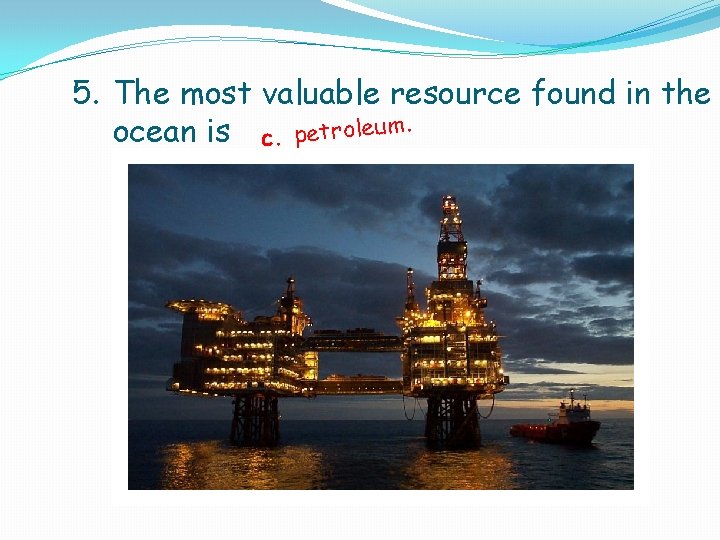
5. The most valuable resource found in the ocean is c. petroleum.
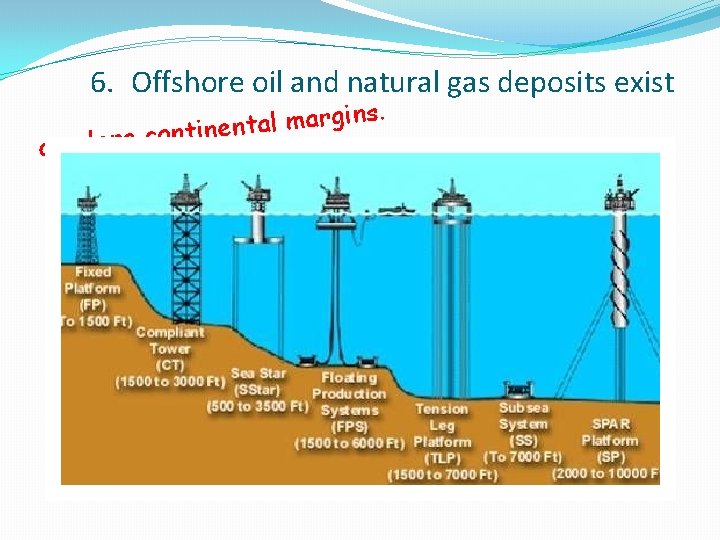
6. Offshore oil and natural gas deposits exist ins. g r a m l a t n tine n o c g n o l a c.
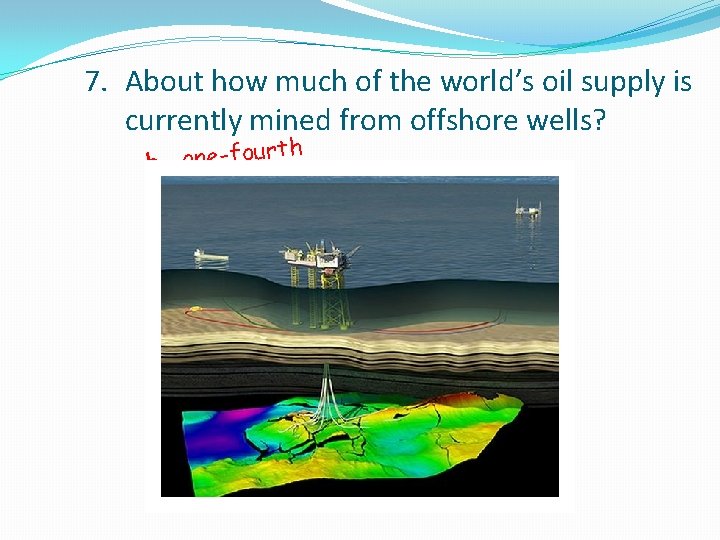
7. About how much of the world’s oil supply is currently mined from offshore wells? rth b. one-fou
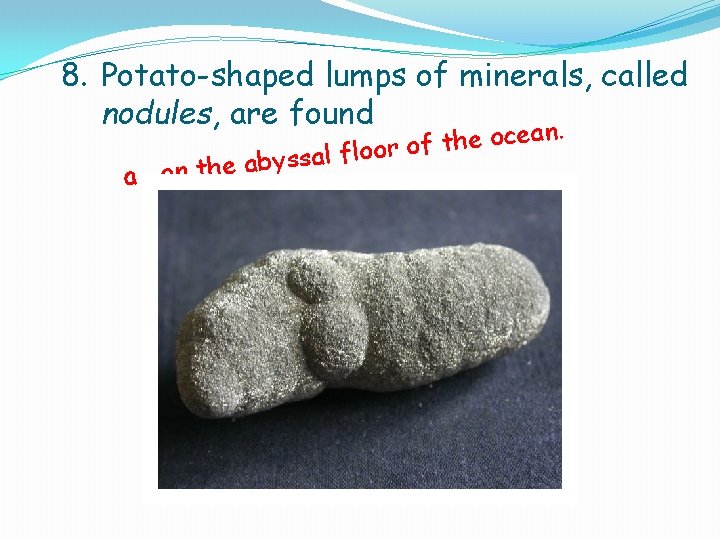
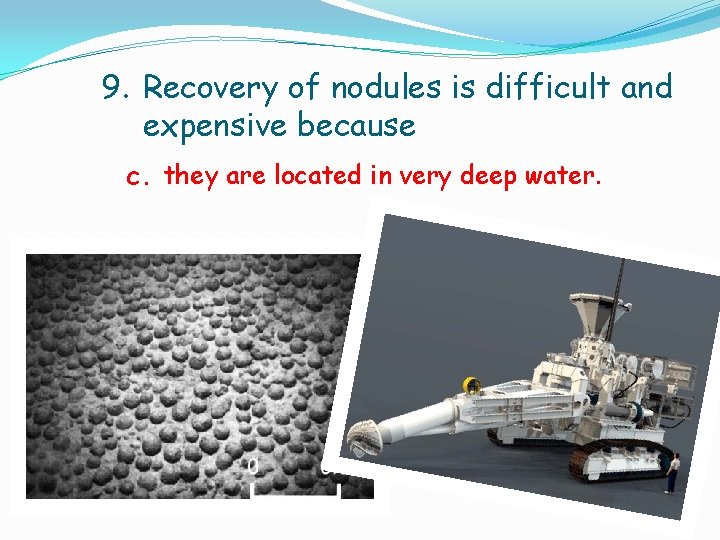
8. Potato-shaped lumps of minerals, called nodules, are found. n by a e h t n o. a ea c o e h t f o ssal floor
9. Recovery of nodules is difficult and expensive because c. they are located in very deep water.
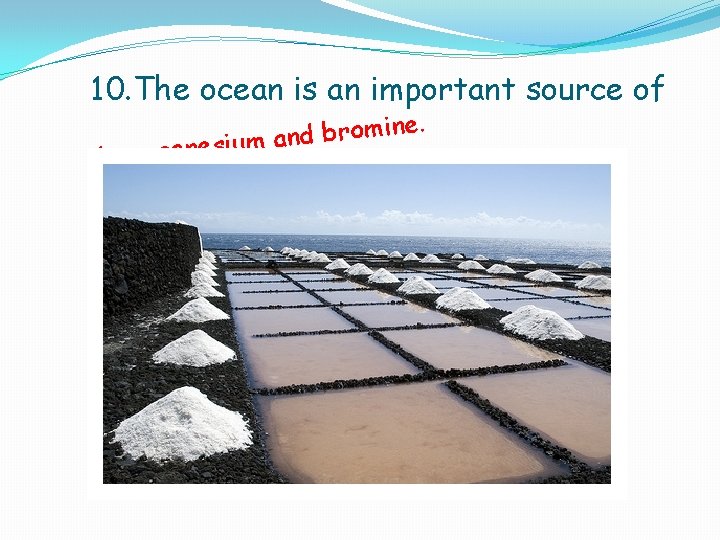
10. The ocean is an important source of e. b. m in m o r b d n a agnesium
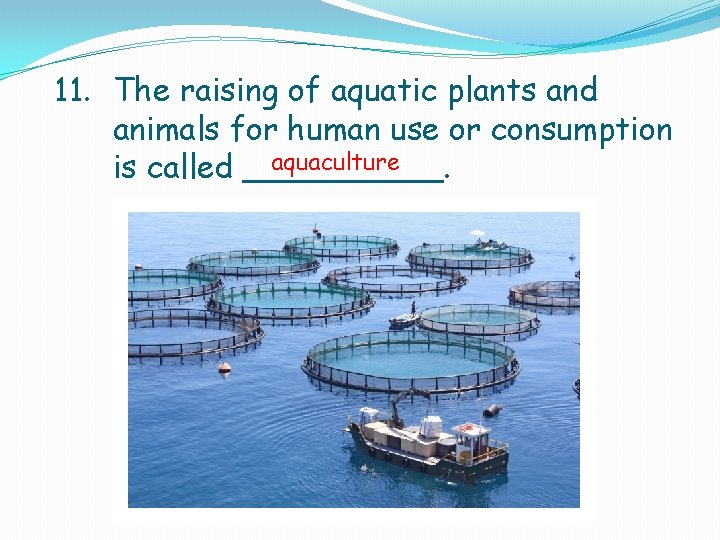
11. The raising of aquatic plants and animals for human use or consumption aquaculture is called _____.
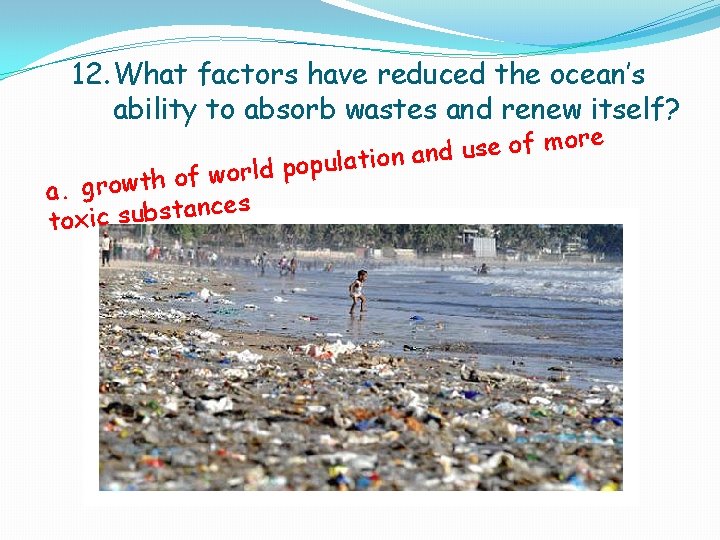
12. What factors have reduced the ocean’s ability to absorb wastes and renew itself? re o m f o e s u nd a n o i t a l u p o dp l r o w f o h t a. grow ces n a t s b u s c i tox
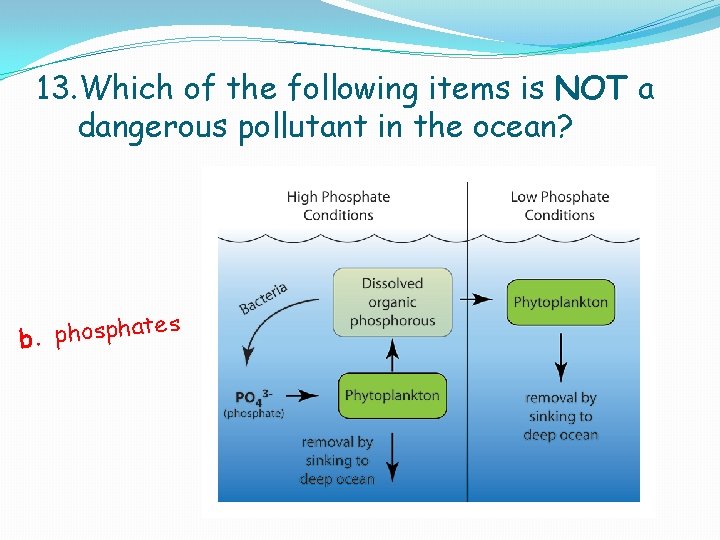
13. Which of the following items is NOT a dangerous pollutant in the ocean? es t a h p s o h p b.
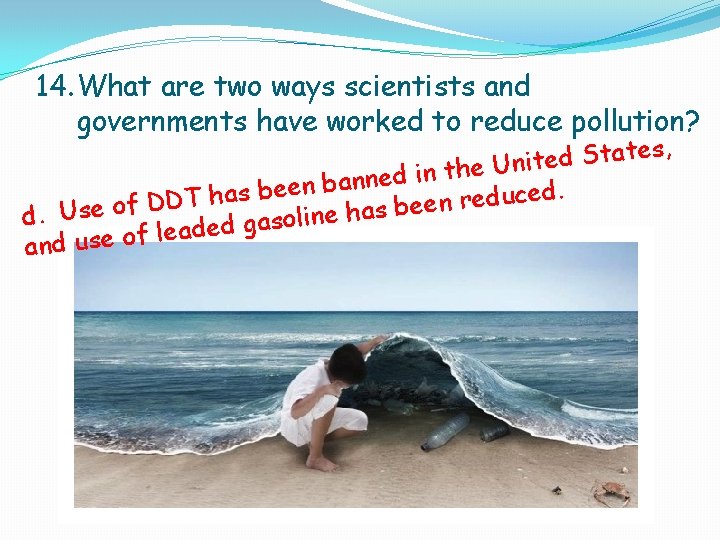
14. What are two ways scientists and governments have worked to reduce pollution? es, t a t S d e t i Un e h t n i d e ann b n e e. b d s e a c h u d T e r D D n ee b s a h e d. Use of n i l so a g d e d a e l and use of
The End