
Handout 1 Standard 2 Objective 3 Plate Tectonics
Handout 1 Standard 2, Objective 3 Plate Tectonics 3
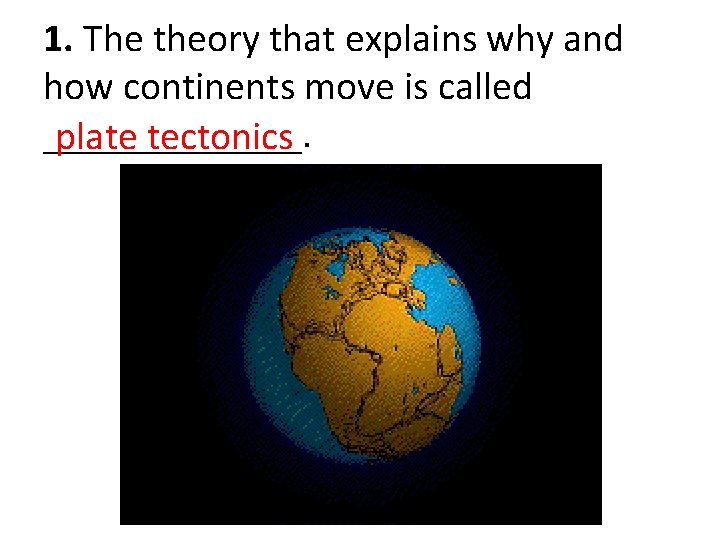
1. The theory that explains why and how continents move is called _______. plate tectonics
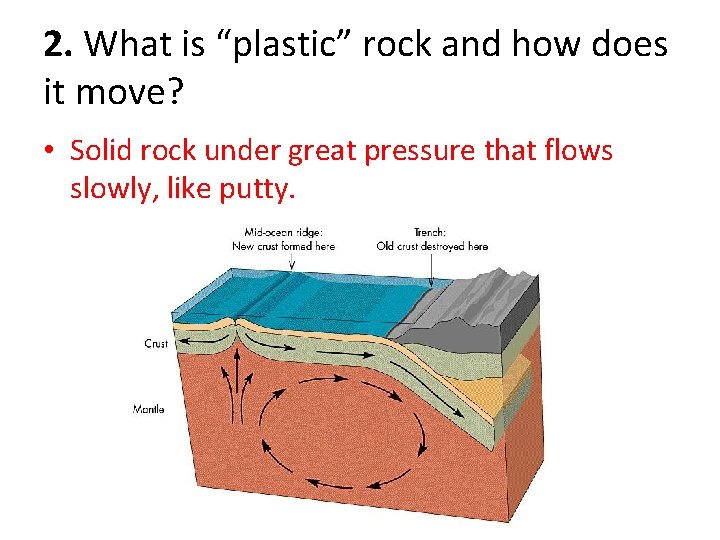
2. What is “plastic” rock and how does it move? • Solid rock under great pressure that flows slowly, like putty.
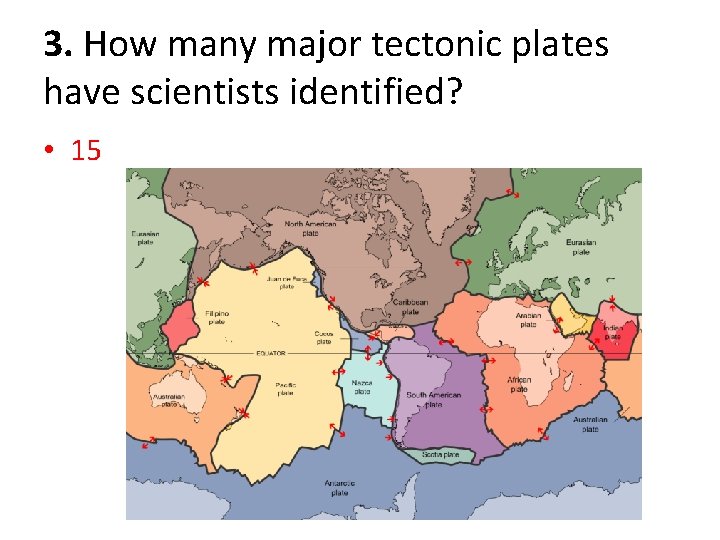
3. How many major tectonic plates have scientists identified? • 15
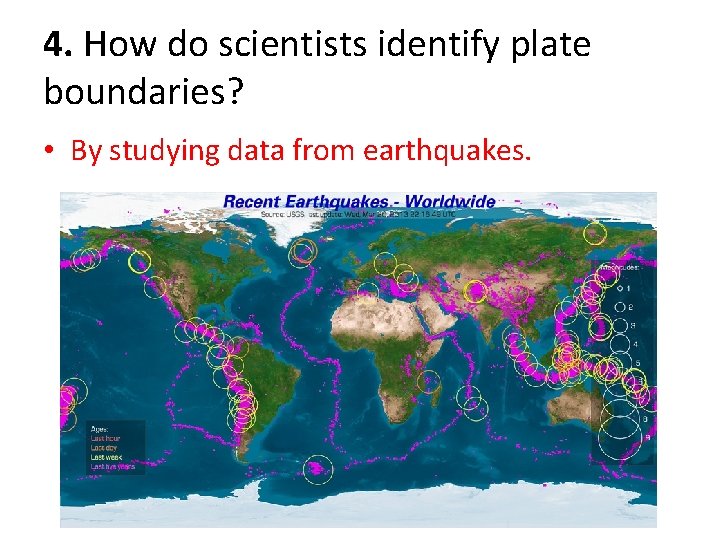
4. How do scientists identify plate boundaries? • By studying data from earthquakes.
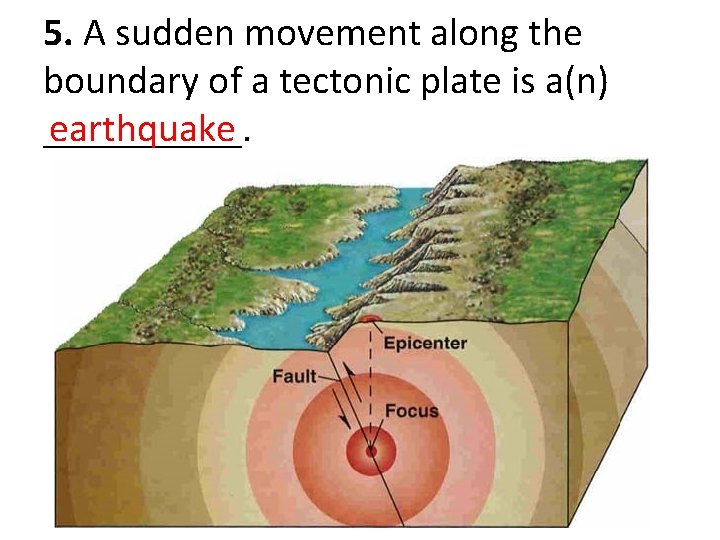
5. A sudden movement along the boundary of a tectonic plate is a(n) _____. earthquake
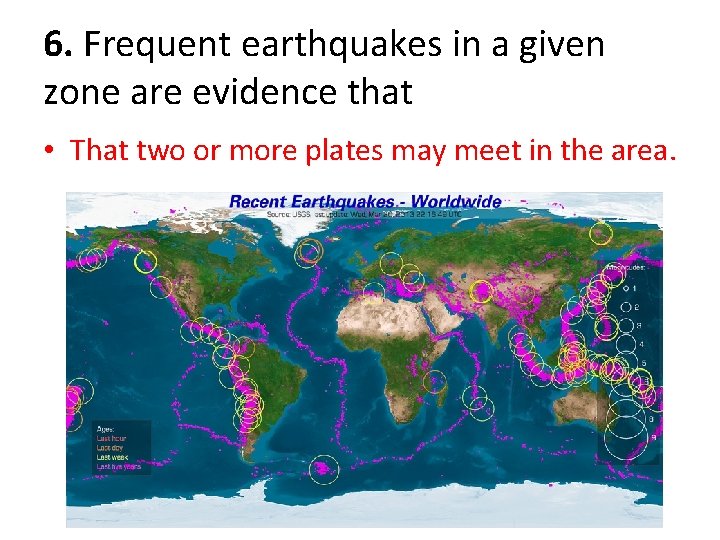
6. Frequent earthquakes in a given zone are evidence that • That two or more plates may meet in the area.
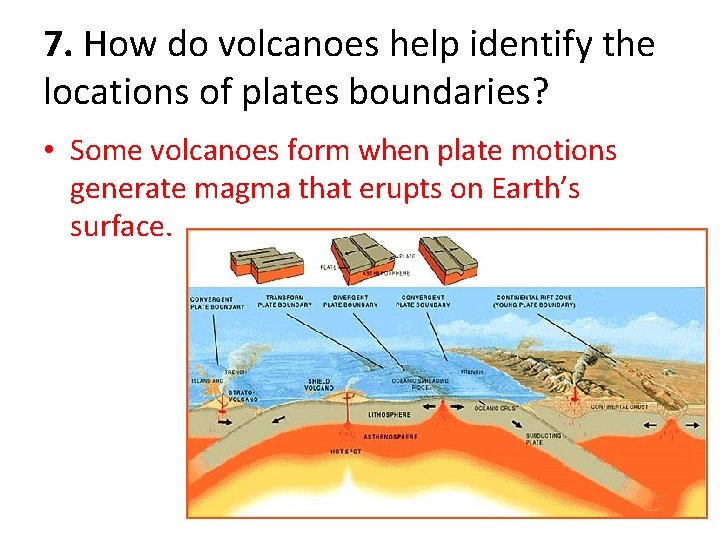
7. How do volcanoes help identify the locations of plates boundaries? • Some volcanoes form when plate motions generate magma that erupts on Earth’s surface.
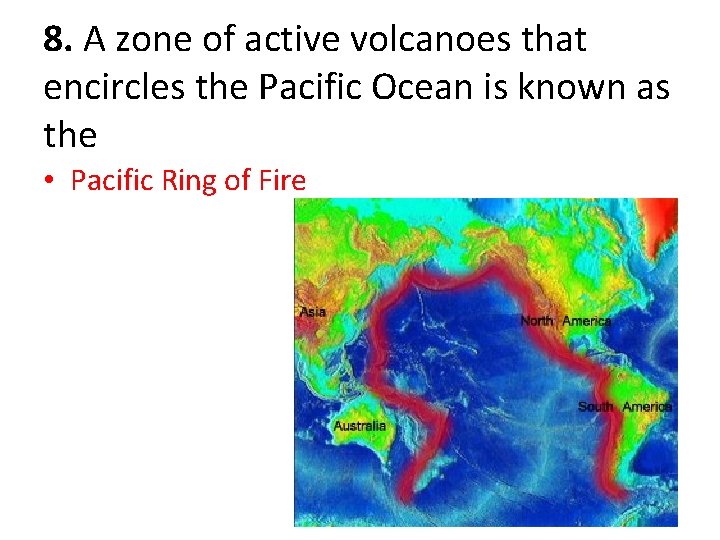
8. A zone of active volcanoes that encircles the Pacific Ocean is known as the • Pacific Ring of Fire
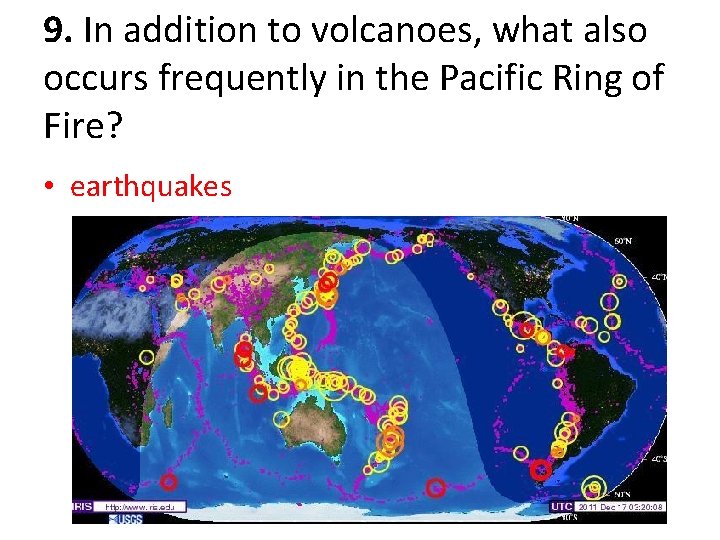
9. In addition to volcanoes, what also occurs frequently in the Pacific Ring of Fire? • earthquakes
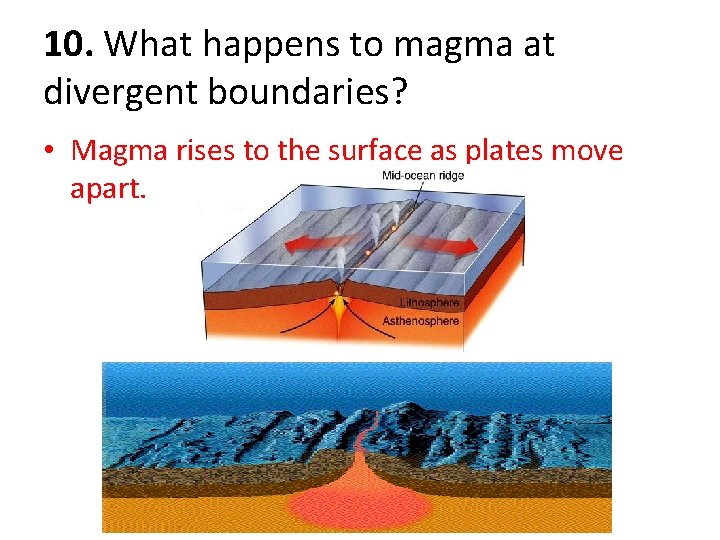
10. What happens to magma at divergent boundaries? • Magma rises to the surface as plates move apart.
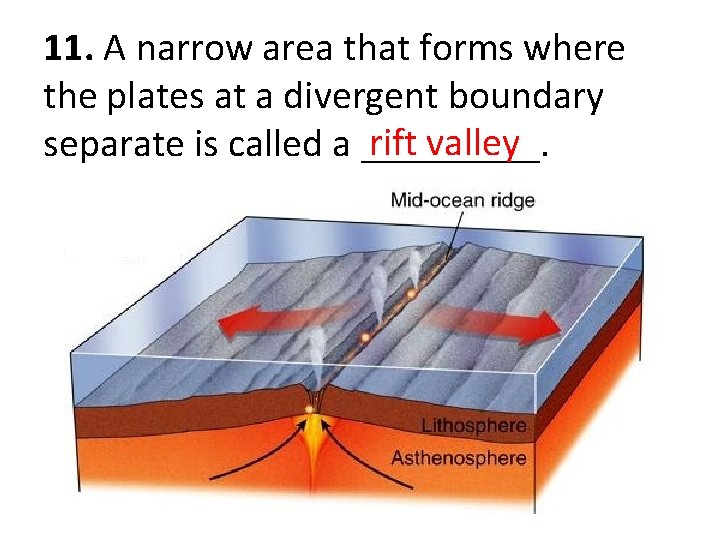
11. A narrow area that forms where the plates at a divergent boundary rift valley separate is called a _____.
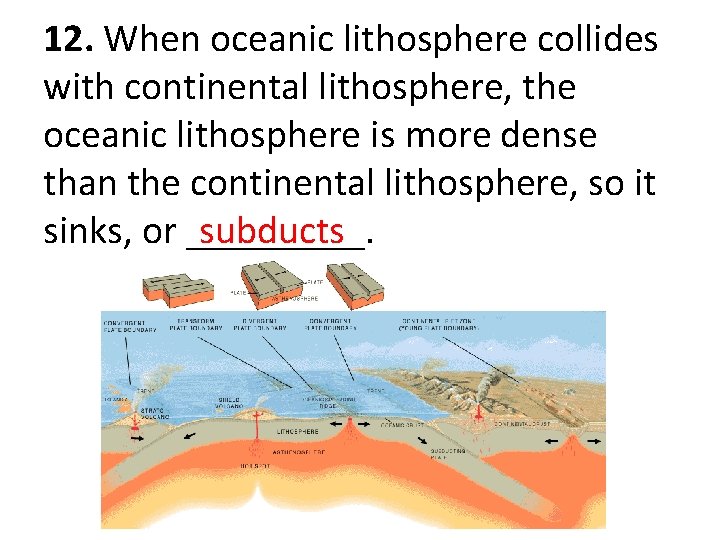
12. When oceanic lithosphere collides with continental lithosphere, the oceanic lithosphere is more dense than the continental lithosphere, so it sinks, or _____. subducts
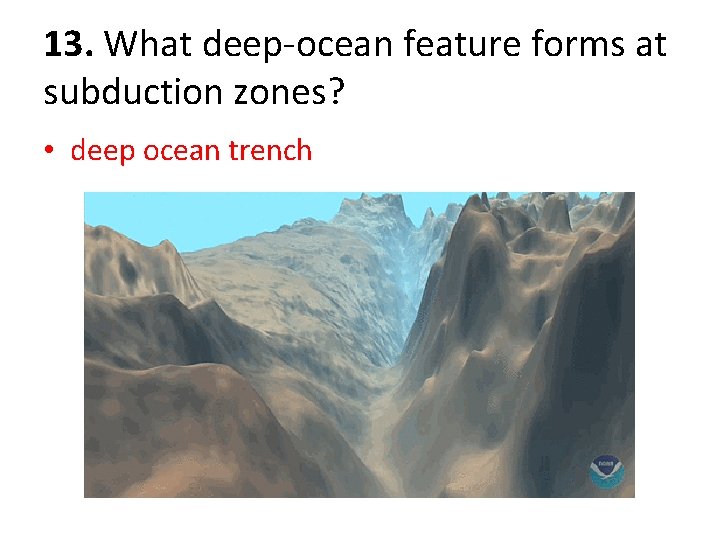
13. What deep-ocean feature forms at subduction zones? • deep ocean trench
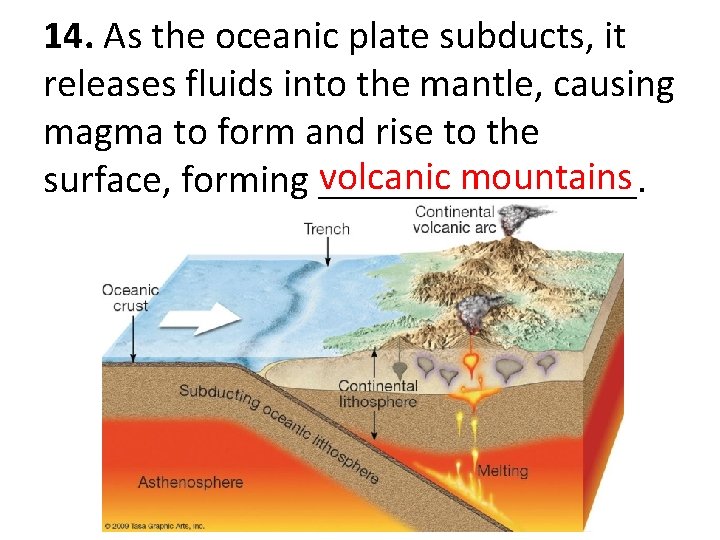
14. As the oceanic plate subducts, it releases fluids into the mantle, causing magma to form and rise to the volcanic mountains surface, forming ________.
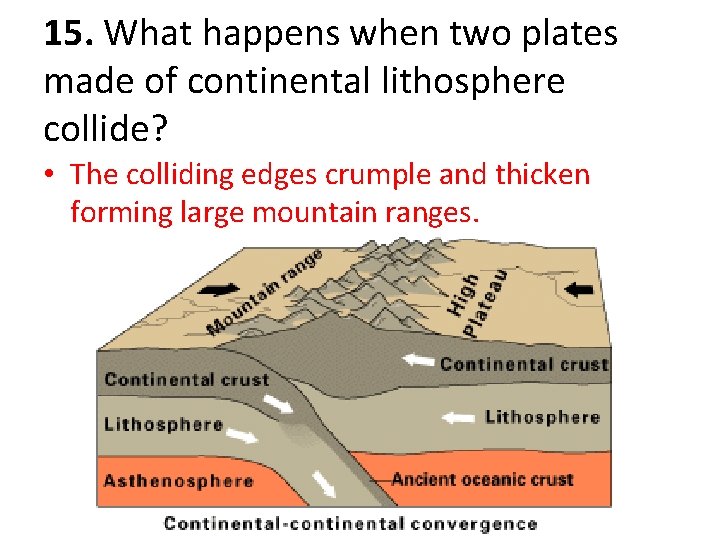
15. What happens when two plates made of continental lithosphere collide? • The colliding edges crumple and thicken forming large mountain ranges.
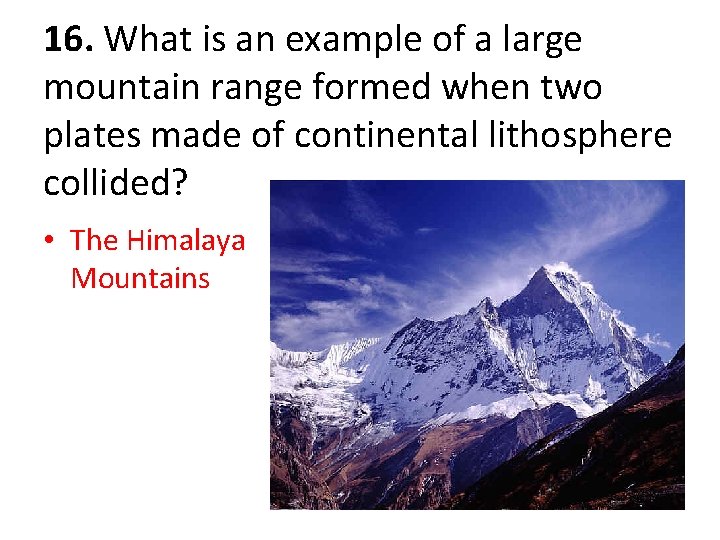
16. What is an example of a large mountain range formed when two plates made of continental lithosphere collided? • The Himalaya Mountains
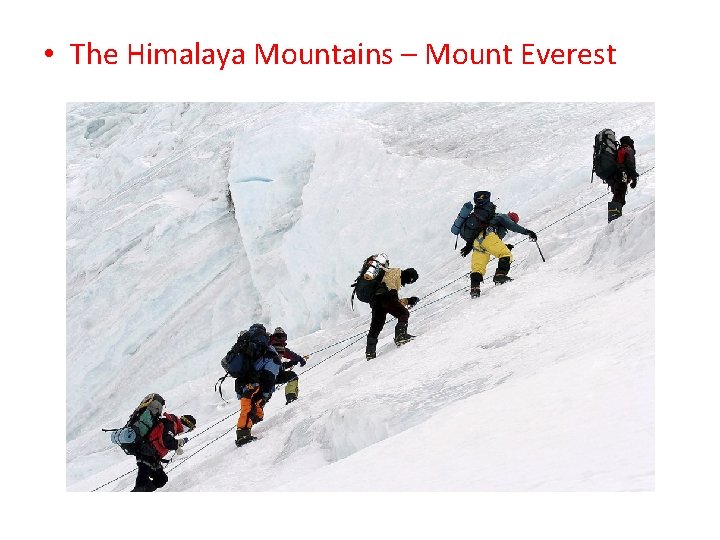
• The Himalaya Mountains – Mount Everest
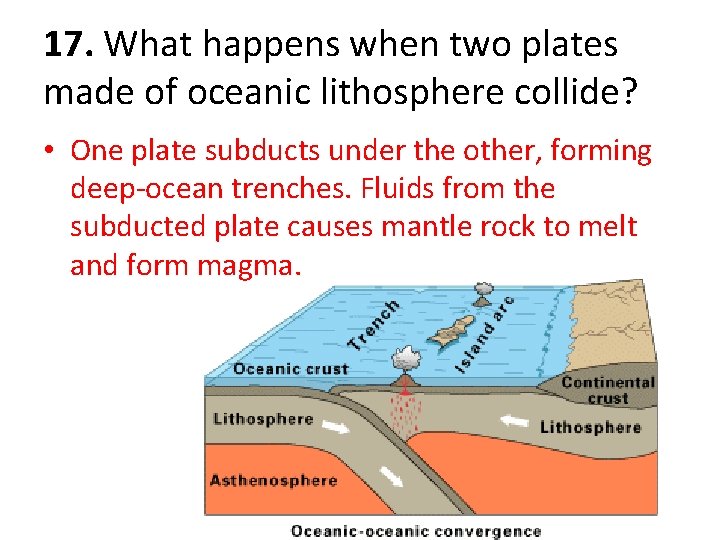
17. What happens when two plates made of oceanic lithosphere collide? • One plate subducts under the other, forming deep-ocean trenches. Fluids from the subducted plate causes mantle rock to melt and form magma.
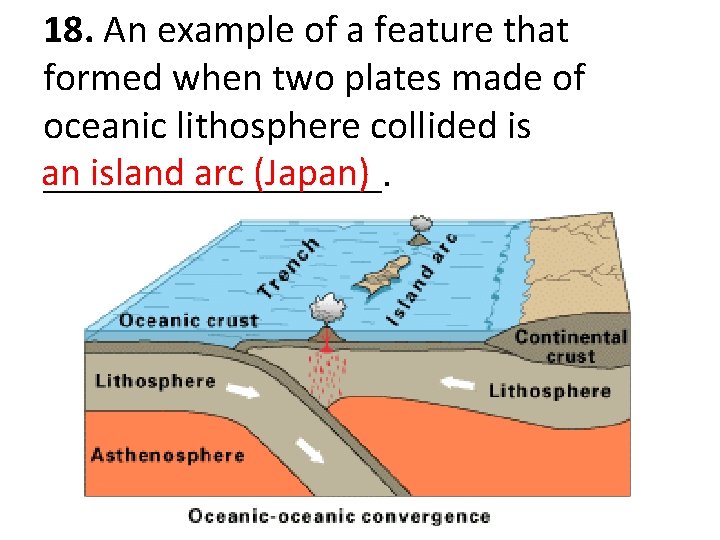
18. An example of a feature that formed when two plates made of oceanic lithosphere collided is an island arc (Japan) _________.
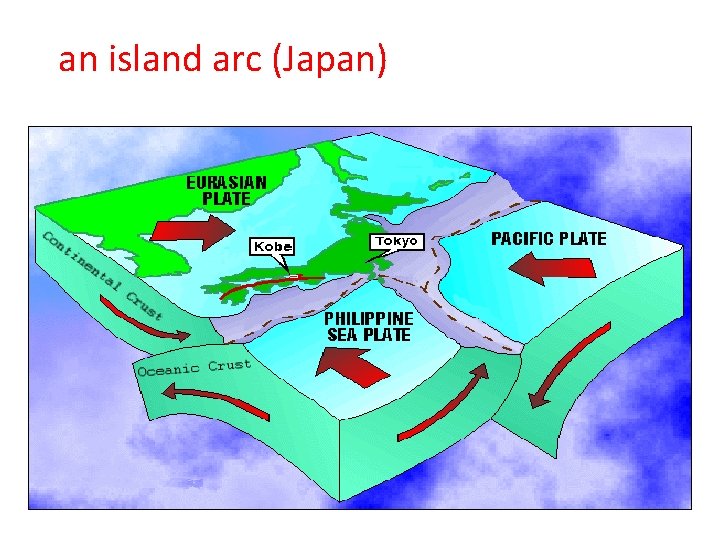
an island arc (Japan)
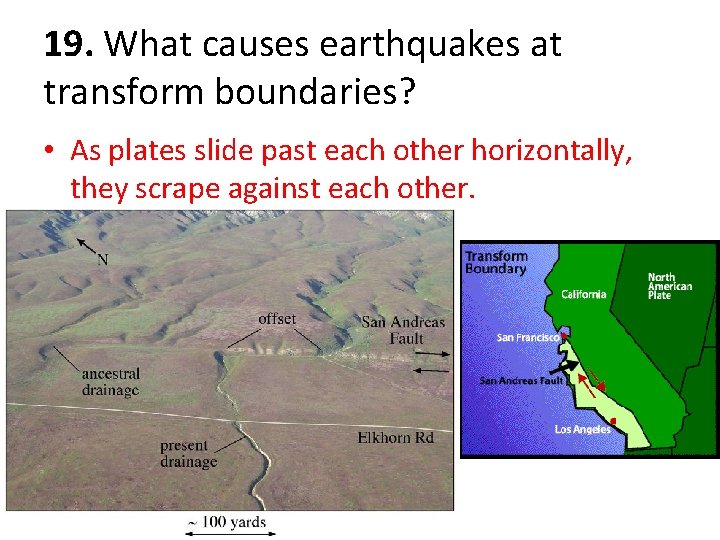
19. What causes earthquakes at transform boundaries? • As plates slide past each other horizontally, they scrape against each other.
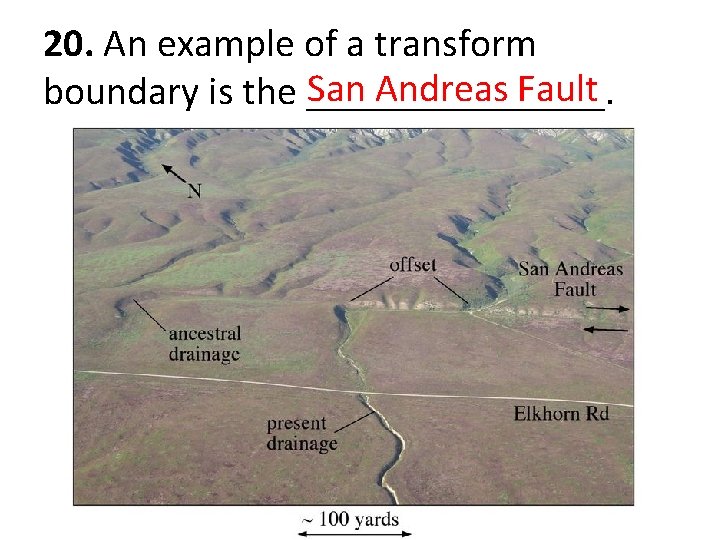
20. An example of a transform San Andreas Fault boundary is the ________.
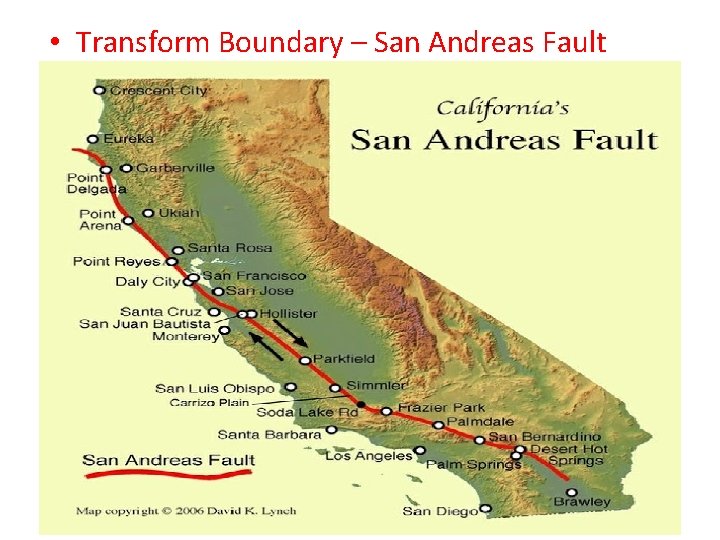
• Transform Boundary – San Andreas Fault
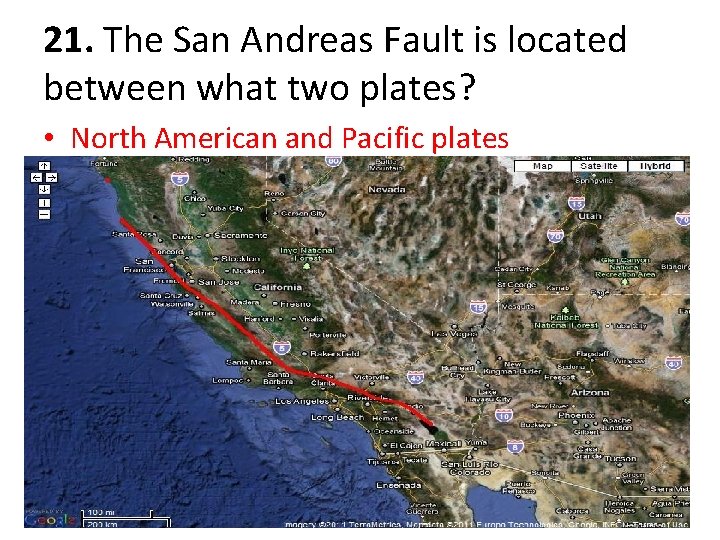
21. The San Andreas Fault is located between what two plates? • North American and Pacific plates
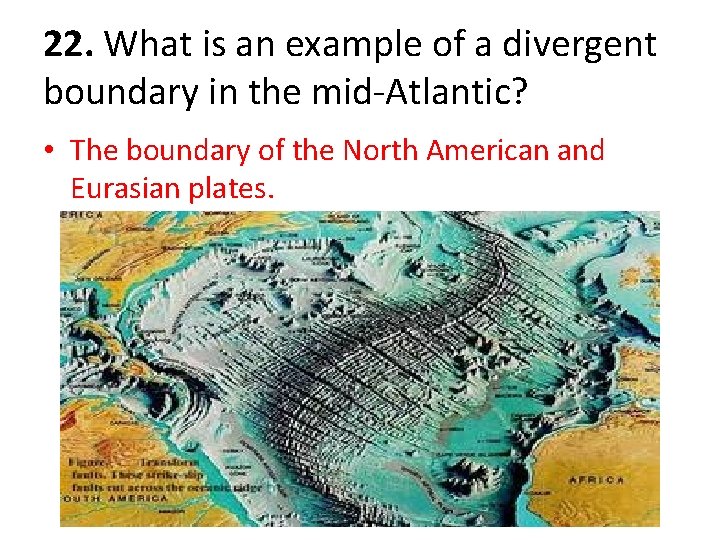
22. What is an example of a divergent boundary in the mid-Atlantic? • The boundary of the North American and Eurasian plates.
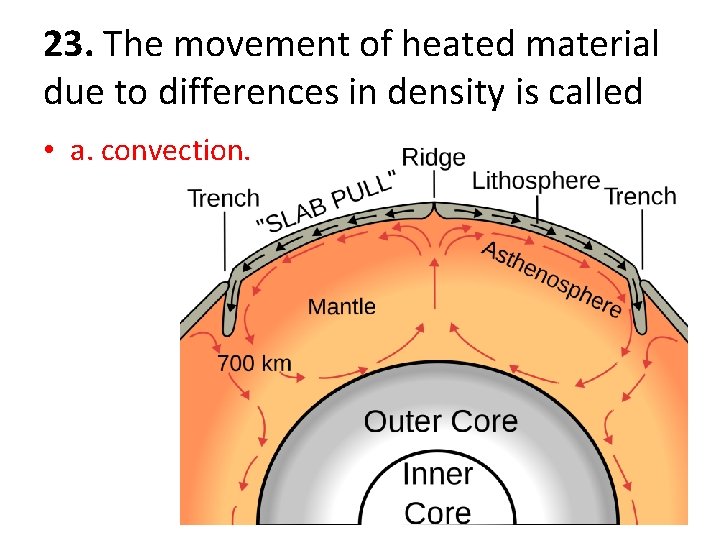
23. The movement of heated material due to differences in density is called • a. convection.
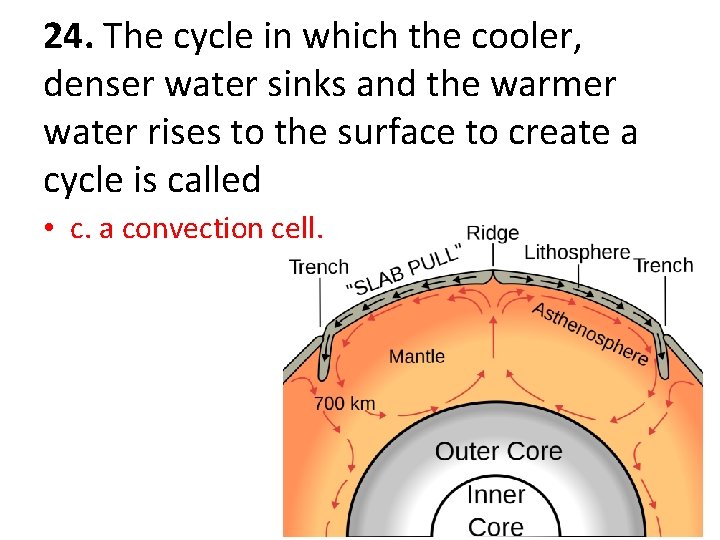
24. The cycle in which the cooler, denser water sinks and the warmer water rises to the surface to create a cycle is called • c. a convection cell.
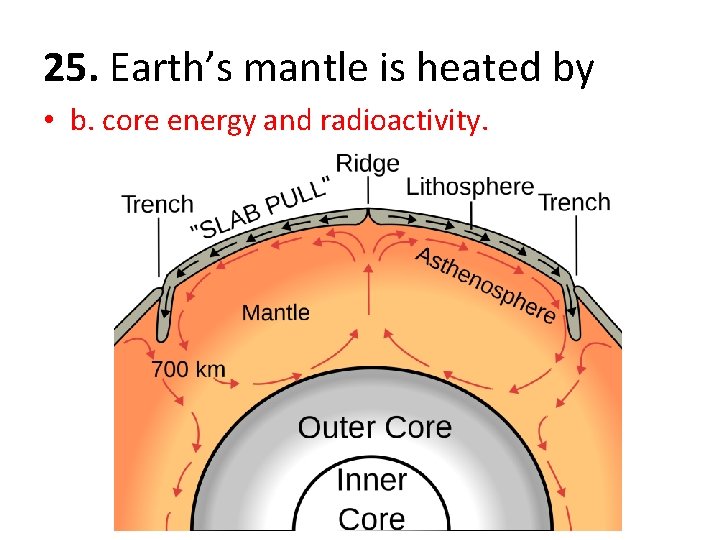
25. Earth’s mantle is heated by • b. core energy and radioactivity.
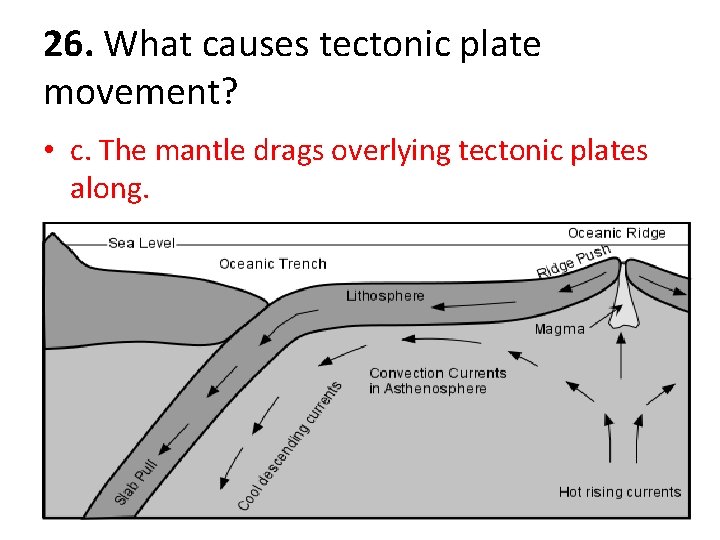
26. What causes tectonic plate movement? • c. The mantle drags overlying tectonic plates along.
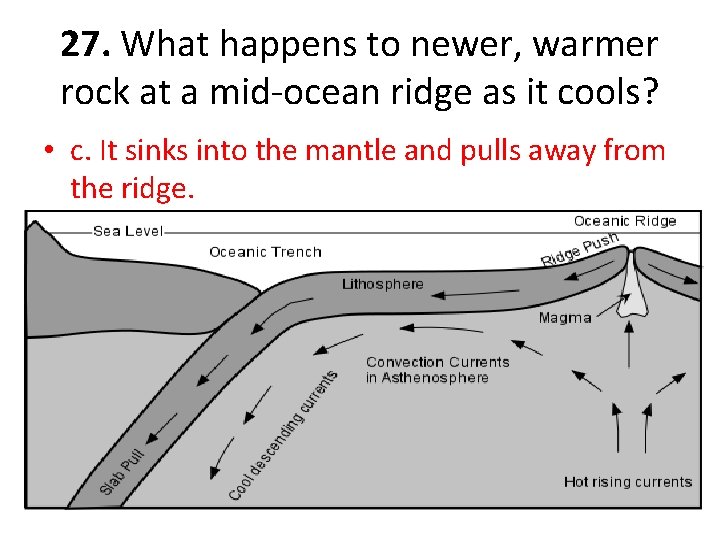
27. What happens to newer, warmer rock at a mid-ocean ridge as it cools? • c. It sinks into the mantle and pulls away from the ridge.
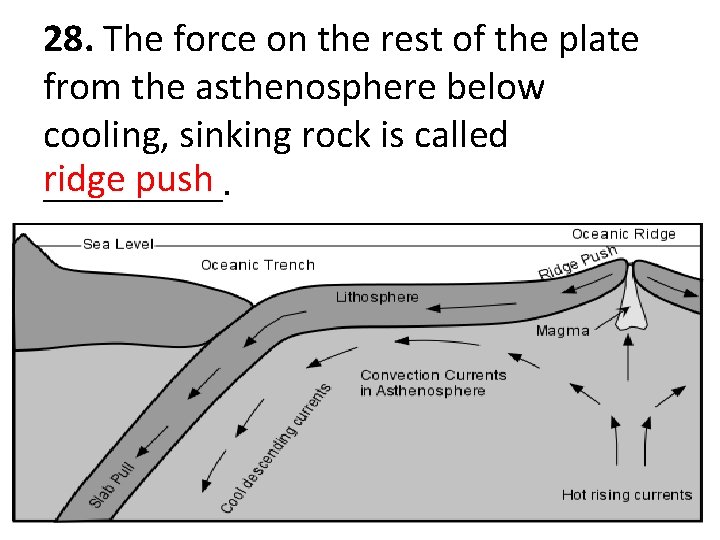
28. The force on the rest of the plate from the asthenosphere below cooling, sinking rock is called ridge push _____.
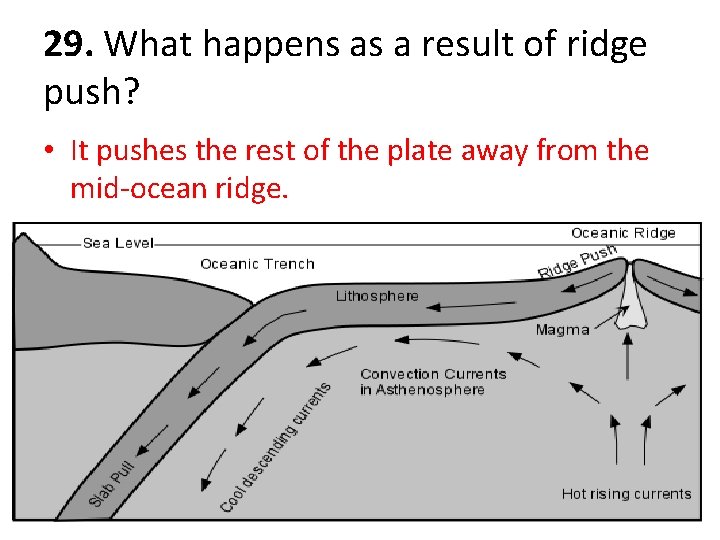
29. What happens as a result of ridge push? • It pushes the rest of the plate away from the mid-ocean ridge.
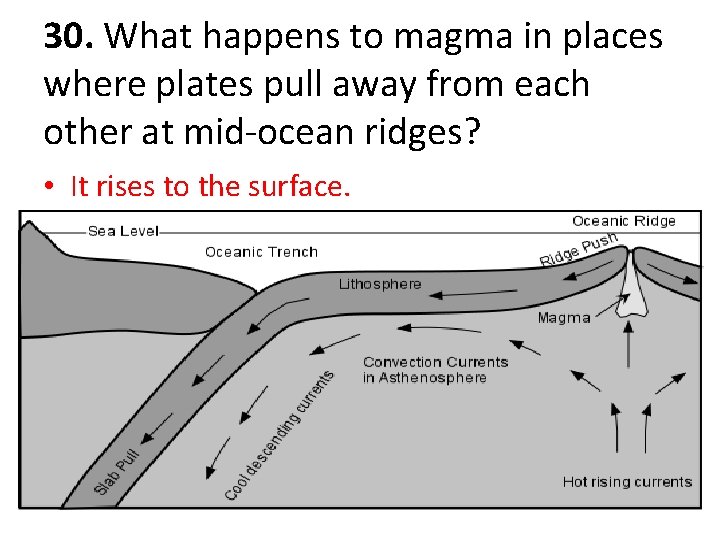
30. What happens to magma in places where plates pull away from each other at mid-ocean ridges? • It rises to the surface.
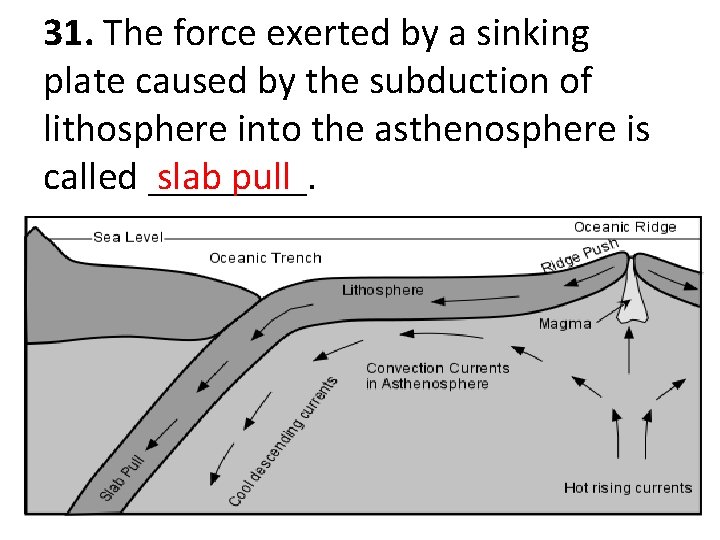
31. The force exerted by a sinking plate caused by the subduction of lithosphere into the asthenosphere is called ____. slab pull
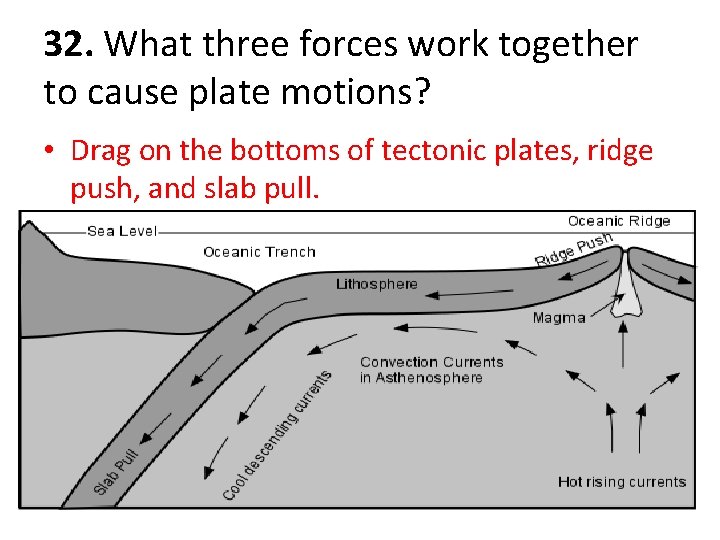
32. What three forces work together to cause plate motions? • Drag on the bottoms of tectonic plates, ridge push, and slab pull.
The End!
- Slides: 37