
Handling Humanitarian Cargo Risk management WFP Logistics We

- Slides: 15
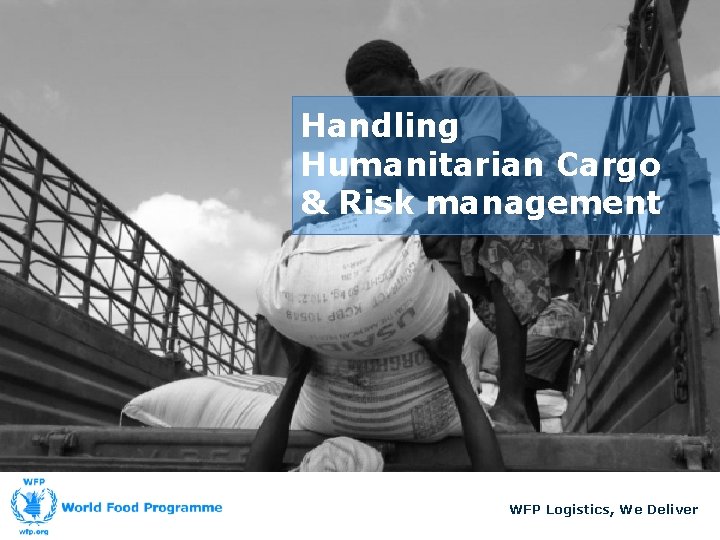
Handling Humanitarian Cargo & Risk management WFP Logistics, We Deliver
Lesson Objectives By the end of this lesson, you will be able to: 1 Recognize the risks in warehouse management 2 Mitigate the risks in warehouse management
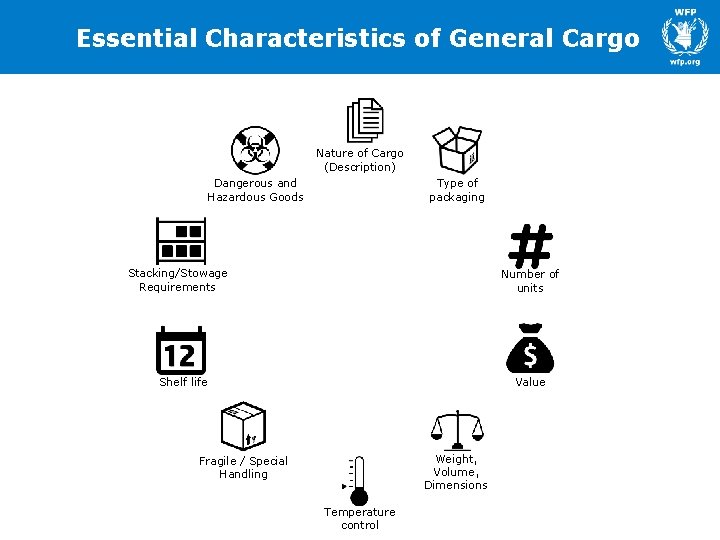
Essential Characteristics of General Cargo Nature of Cargo (Description) Dangerous and Hazardous Goods Type of packaging Stacking/Stowage Requirements Number of units Shelf life Value Weight, Volume, Dimensions Fragile / Special Handling Temperature control
Handling Humanitarian Cargo: Managing Risk What is a threat? What is a vulnerability? What is a risk?
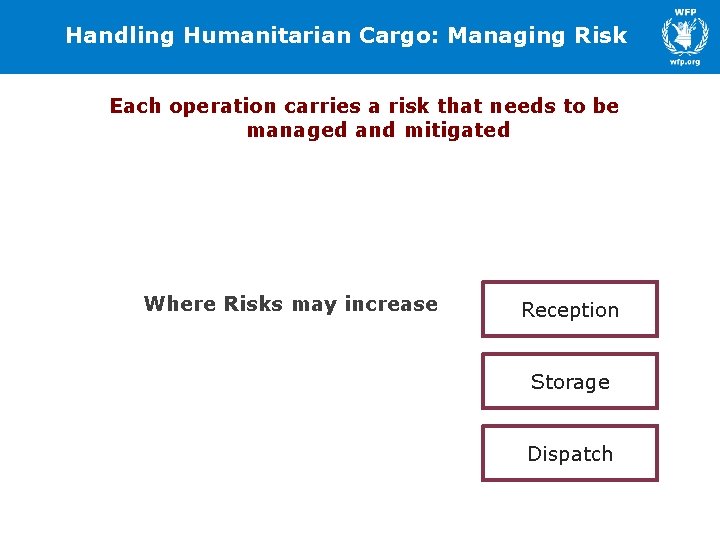
Handling Humanitarian Cargo: Managing Risk Each operation carries a risk that needs to be managed and mitigated Where Risks may increase Reception Storage Dispatch
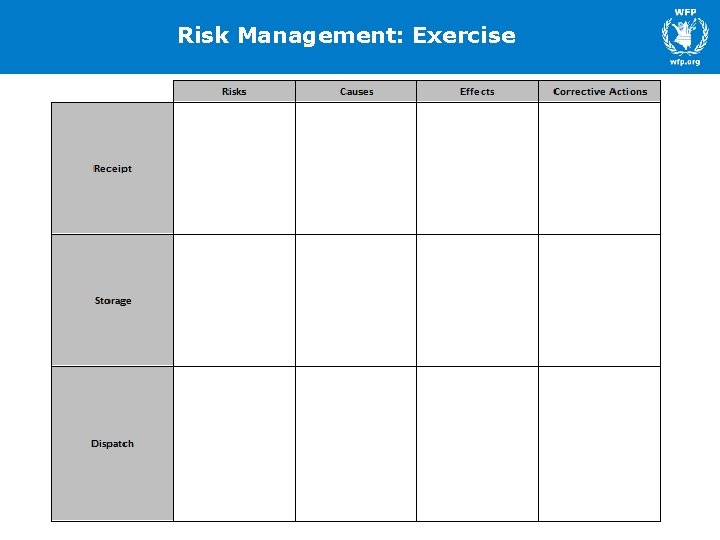
Risk Management: Exercise
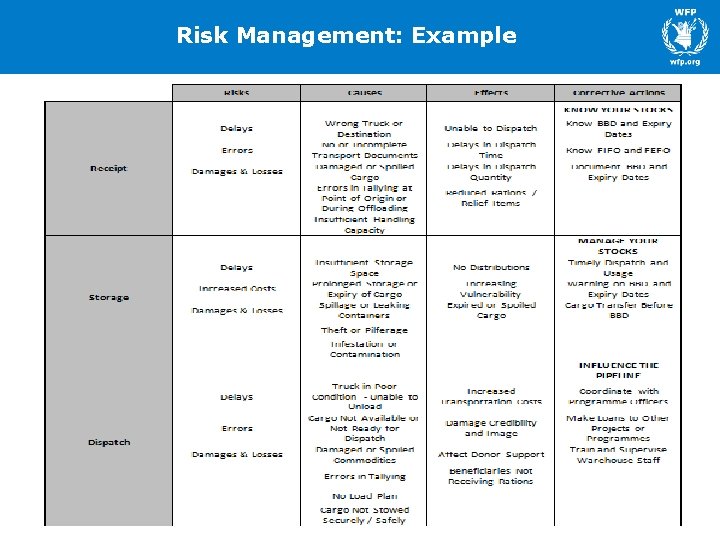
Risk Management: Example
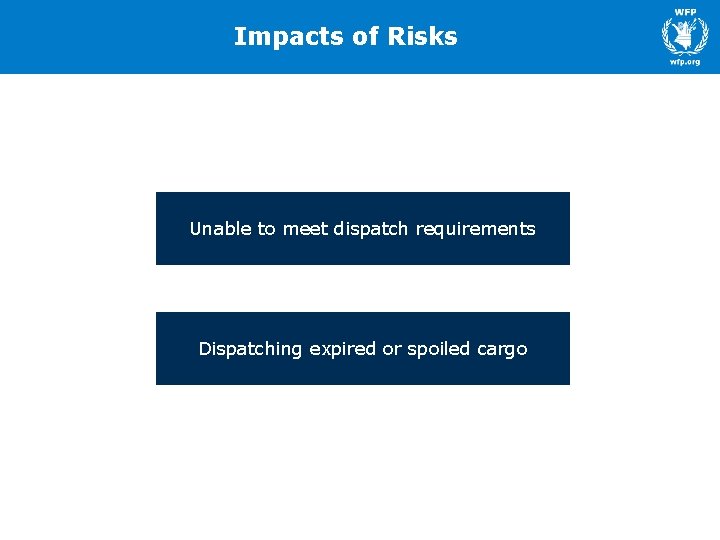
Impacts of Risks Unable to meet dispatch requirements Dispatching expired or spoiled cargo
Managing & Mitigating Risks Plan Operations Carefully Know your stocks Manage your stocks Know the pipeline Train and supervise warehouse staff
Sub-contracting Facilities What and How Do You Communicate the Specific SNF Storage Requirements When Sub-contracting Your Warehouse?
Handling Guidelines: Relief items What additional handling considerations must be made with food vs relief items? Fragility Bulk handling
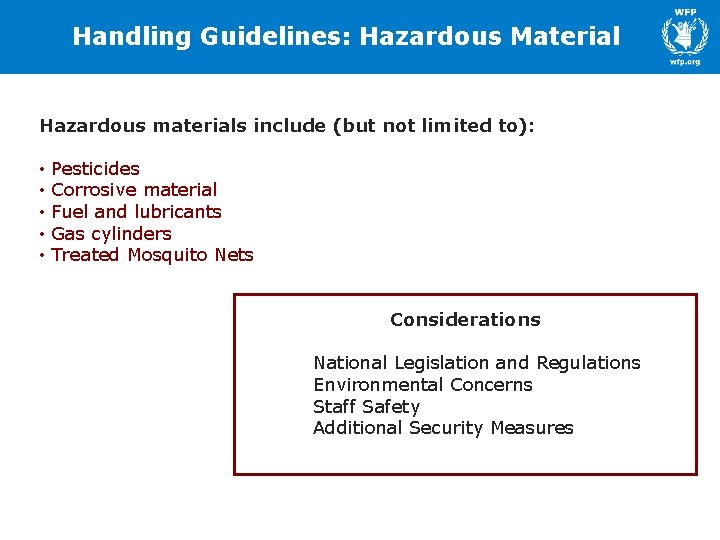
Handling Guidelines: Hazardous Material Hazardous materials include (but not limited to): • • • Pesticides Corrosive material Fuel and lubricants Gas cylinders Treated Mosquito Nets Considerations National Legislation and Regulations Environmental Concerns Staff Safety Additional Security Measures
Mitigating risks: Forklift fail compilation Follow the link: https: //youtu. be/d 1 u. EMJYLS 5 g? list=PLAKQZOExh 9 h. Lwe. Frbi 9 QIBHfv. Vwbd. VM 5 E
Lesson Recap Questions: 1 What are the risks in warehouse management? 2 How can you mitigate the risks in warehouse management?
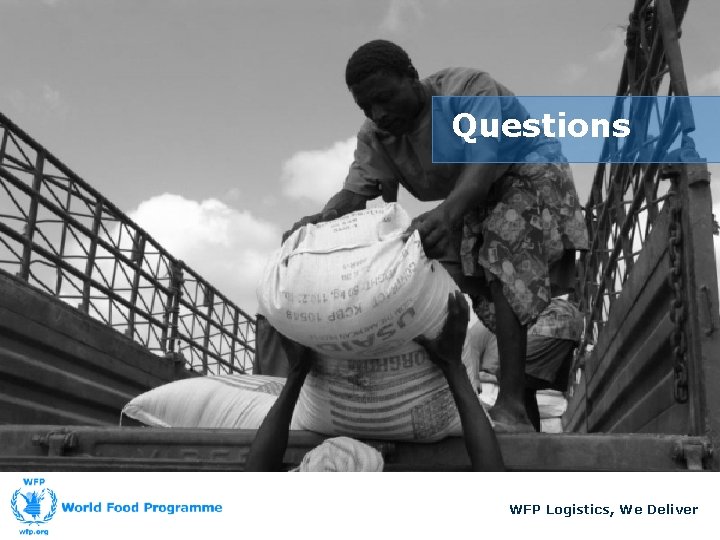
Questions WFP Logistics, We Deliver