
Handcuffing Officer Safety Training Objectives Justification in using
Handcuffing Officer Safety Training
Objectives • • Justification in using handcuffs Explain policies and procedures of using handcuffs Identify the medical implications of using handcuffs Identify the parts and suitable carriage of handcuffs Identify how to maintain your handcuffs How to stay safe when applying/removing handcuffs How to demonstrate a duty of care when applying and removing handcuffs
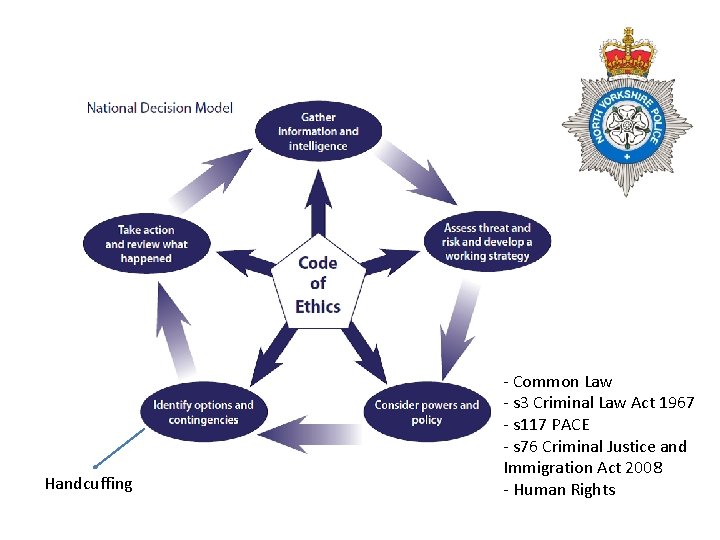
Handcuffing - Common Law - s 3 Criminal Law Act 1967 - s 117 PACE - s 76 Criminal Justice and Immigration Act 2008 - Human Rights
Justification • • Are handcuffs required? Impact factors Length of time handcuffed Objective basis: • • Safety of officer, subject, other people Prevent escape Seriousness of the crime Loss of evidence.
Policies, Procedures • Personal Safety Manual Module 8 Handcuffing Approved techniques and medical implications • NPCC Guidance on the use of Handcuffs • Complete Use of Force Form, PNB etc.
Recommended not to…. • Handcuff a subject to yourself • Handcuff a subject to a fixed object • Handcuff a subject to another subject.
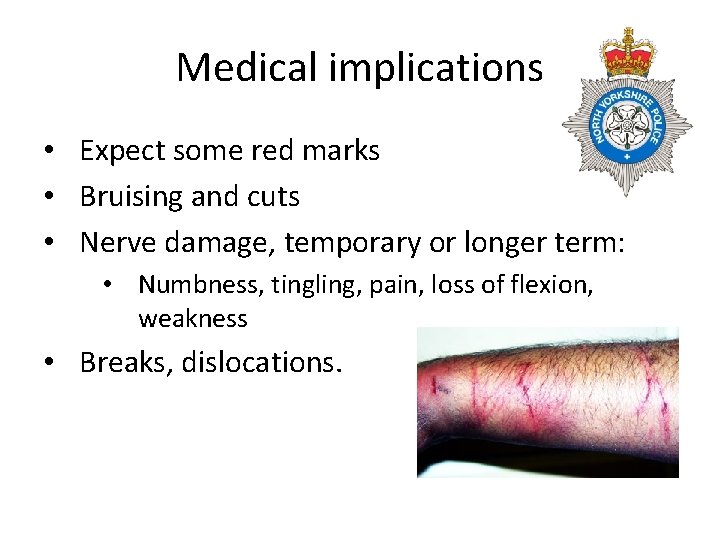
Medical implications • Expect some red marks • Bruising and cuts • Nerve damage, temporary or longer term: • Numbness, tingling, pain, loss of flexion, weakness • Breaks, dislocations.
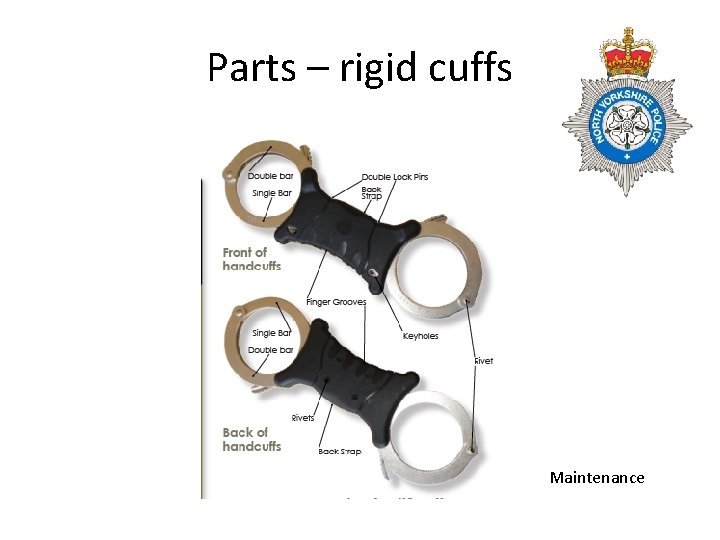
Parts – rigid cuffs Maintenance
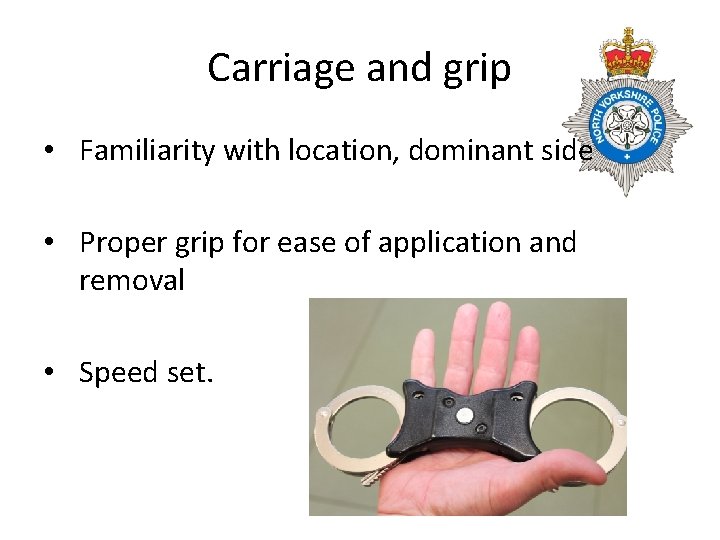
Carriage and grip • Familiarity with location, dominant side • Proper grip for ease of application and removal • Speed set.
Officer Safety • Compliance/Control of subject • Working outside of the fighting arc • Stance and movement • Position of advantage.
Safe approach • • • Communication Out of fighting arc Subject in position of disadvantage Check hands are empty Lying, kneeling, feet together, look away, etc.
Correct application • • • Site of application Push/pull Hand on wrist as a guide Apply by touch – reduced visibility/dark Maintaining awareness.
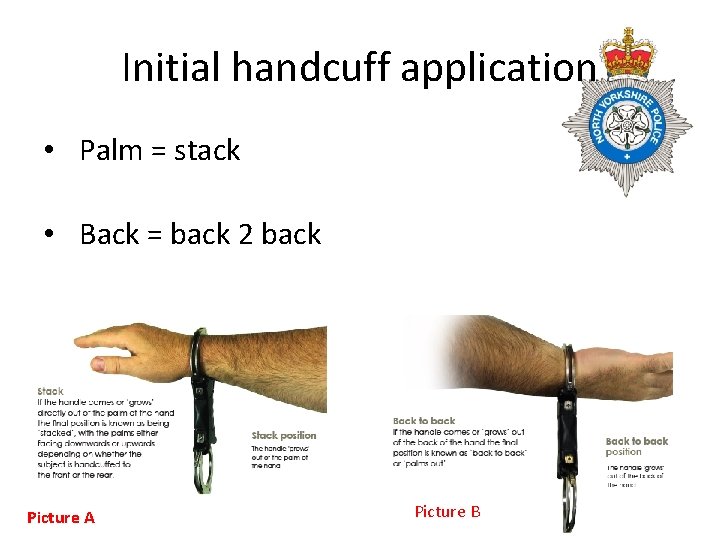
Initial handcuff application • Palm = stack • Back = back 2 back Picture A Picture B
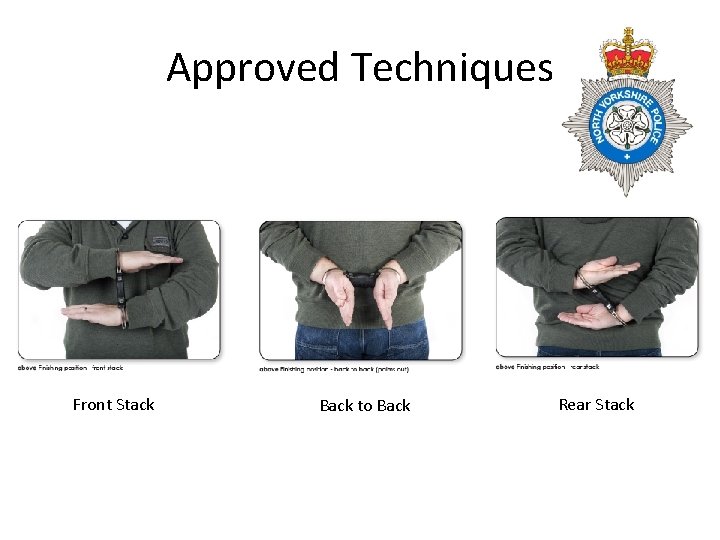
Approved Techniques Front Stack Back to Back Rear Stack
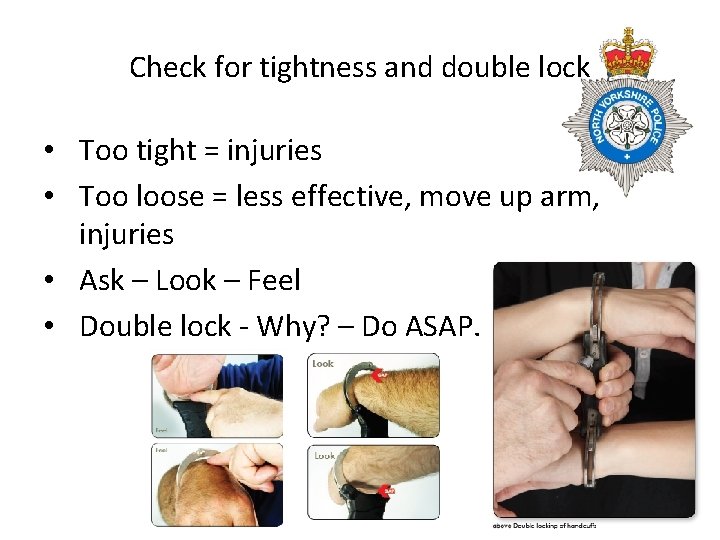
Check for tightness and double lock • Too tight = injuries • Too loose = less effective, move up arm, injuries • Ask – Look – Feel • Double lock - Why? – Do ASAP.
Safe removal • Generally in a safe environment • Do not get complacent • Safe approach – as when applying.
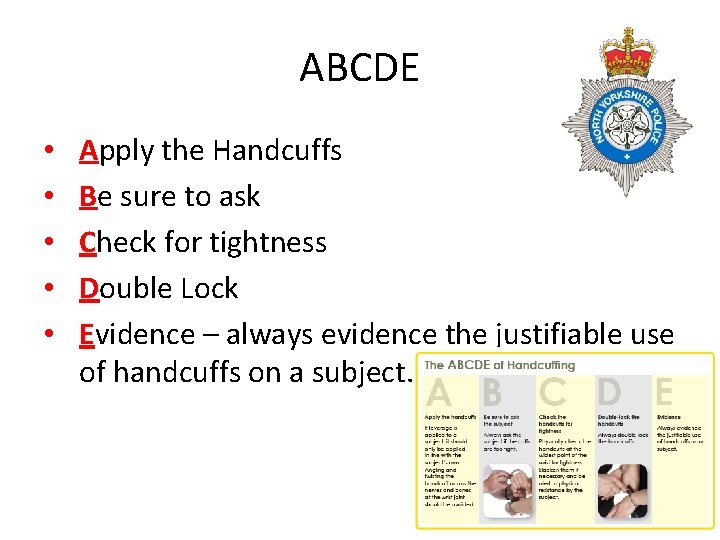
ABCDE • • • Apply the Handcuffs Be sure to ask Check for tightness Double Lock Evidence – always evidence the justifiable use of handcuffs on a subject.
Objectives • • Justification in using handcuffs Explain policies and procedures of using handcuffs Identify the medical implications of using handcuffs Identify the parts and suitable carriage of handcuffs Identify how to maintain your handcuffs How to stay safe when applying/removing handcuffs How to demonstrate a duty of care when applying and removing handcuffs
Further Reading/References NPCC Guidance for use of Handcuffs Personal Safety Module 8
- Slides: 19