
Hand Washing Major aspect of standard precautions Most
- Slides: 6
Hand Washing § Major aspect of standard precautions § Most important aseptic technique § Hands are perfect media for the spread of pathogens (germs) § Purpose – Prevent and control spread of pathogens (germs) – Protect the health care worker and patients from disease and illness 1
Wash Hands (continued) § When do you wash your hands? – – – When arrive to and leaving facility Before and after every patient contact Anytime the hands become contaminated Before and after applying gloves After you cough, sneeze, or use a tissue Before and after any contact with your mouth, eating, drinking, smoking, applying lip balm, or removing or inserting contacts. 2
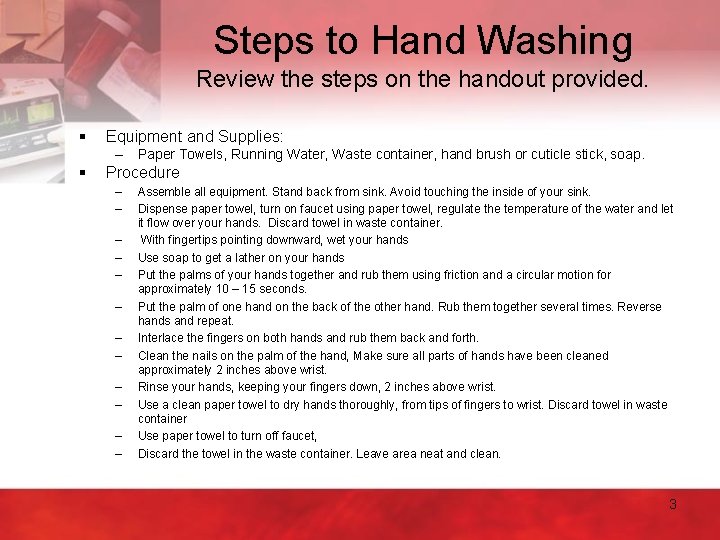
Steps to Hand Washing Review the steps on the handout provided. § Equipment and Supplies: – Paper Towels, Running Water, Waste container, hand brush or cuticle stick, soap. § Procedure – – – Assemble all equipment. Stand back from sink. Avoid touching the inside of your sink. Dispense paper towel, turn on faucet using paper towel, regulate the temperature of the water and let it flow over your hands. Discard towel in waste container. With fingertips pointing downward, wet your hands Use soap to get a lather on your hands Put the palms of your hands together and rub them using friction and a circular motion for approximately 10 – 15 seconds. Put the palm of one hand on the back of the other hand. Rub them together several times. Reverse hands and repeat. Interlace the fingers on both hands and rub them back and forth. Clean the nails on the palm of the hand, Make sure all parts of hands have been cleaned approximately 2 inches above wrist. Rinse your hands, keeping your fingers down, 2 inches above wrist. Use a clean paper towel to dry hands thoroughly, from tips of fingers to wrist. Discard towel in waste container Use paper towel to turn off faucet, Discard the towel in the waste container. Leave area neat and clean. 3
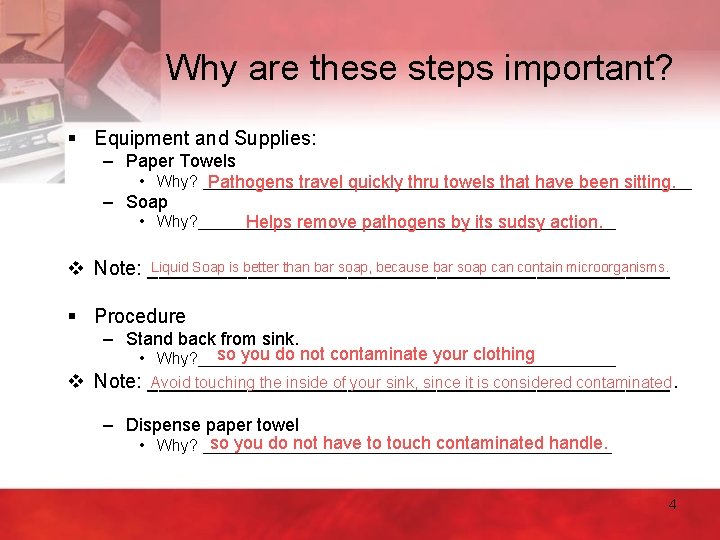
Why are these steps important? § Equipment and Supplies: – Paper Towels • Why? ____________________________ Pathogens travel quickly thru towels that have been sitting. – Soap • Why? ________________________ Helps remove pathogens by its sudsy action. Liquid Soap is better than bar soap, because bar soap can contain microorganisms. v Note: ________________________ § Procedure – Stand back from sink. so you do not contaminate your clothing • Why? ________________________ v Note: ________________________ Avoid touching the inside of your sink, since it is considered contaminated. – Dispense paper towel so you do not have to touch contaminated handle. • Why? _______________________ 4
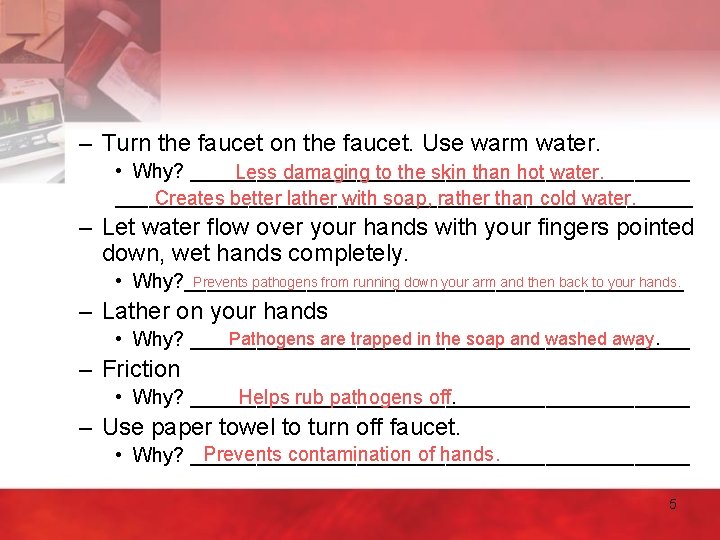
– Turn the faucet on the faucet. Use warm water. • Why? _______________________ Less damaging to the skin than hot water. __________________________ Creates better lather with soap, rather than cold water. – Let water flow over your hands with your fingers pointed down, wet hands completely. Prevents pathogens from running down your arm and then back to your hands. • Why? _______________________ – Lather on your hands Pathogens are trapped in the soap and washed away. • Why? _______________________ – Friction • Why? _______________________ Helps rub pathogens off. – Use paper towel to turn off faucet. Prevents contamination of hands. • Why? _______________________ 5
Does Hand Sanitizer Work? § Sorta… § Used if hands are not contaminated with blood or body fluids § After six to ten cleanings hands need to be washed with soap and water 6