
Hand Tool Safety Objectives To consider some of
Hand Tool Safety
Objectives • To consider some of the hazards associated with the use of hand tools. • To review hand tool safety tips.
Definition Hand tool (noun): a tool held in the hand operated without electricity or other power; any tool or implement designed for manual operation. Source: www. dictionary. com
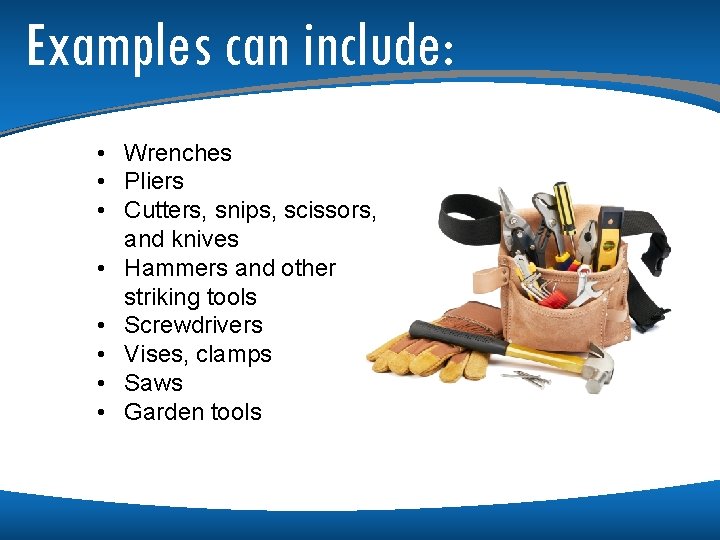
Examples can include: • Wrenches • Pliers • Cutters, snips, scissors, and knives • Hammers and other striking tools • Screwdrivers • Vises, clamps • Saws • Garden tools
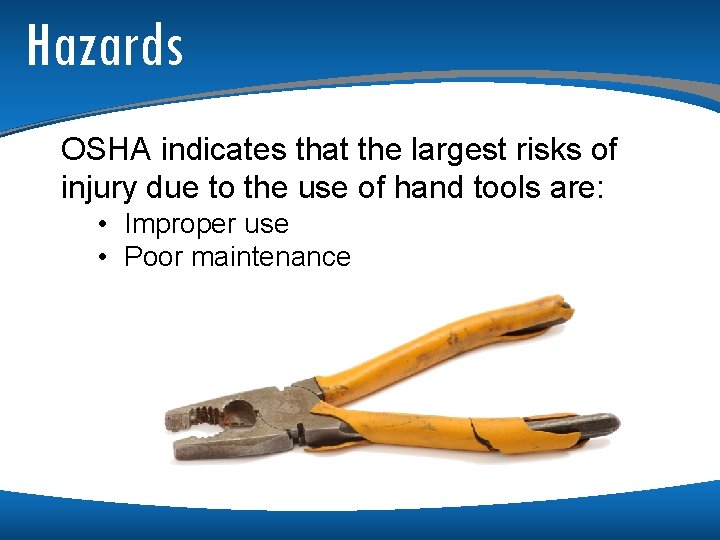
Hazards OSHA indicates that the largest risks of injury due to the use of hand tools are: • Improper use • Poor maintenance
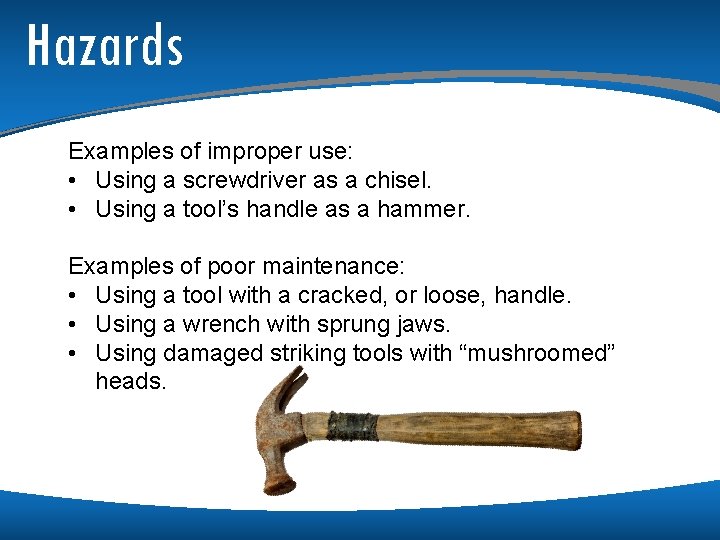
Hazards Examples of improper use: • Using a screwdriver as a chisel. • Using a tool’s handle as a hammer. Examples of poor maintenance: • Using a tool with a cracked, or loose, handle. • Using a wrench with sprung jaws. • Using damaged striking tools with “mushroomed” heads.
Basic Safety Rules • Keep all tools in good condition and regularly maintained. • Use the correct tool for the job. • Check tools for damage before use. • Use tools according to manufacturers’ instructions. • Use the proper personal protective equipment (PPE).
Additional Tips • Make sure your grip and footing are secure when using large hand tools. • Never use metal hand tools that can produce sparks near flammable substances or sources of electrical currents. • Keep tool blades sharp; dull tools are more hazardous. • Carry tools in a tool belt or toolbox. • Do not carry tools up ladders. • Use extra care when using tools at heights; a falling tool could injure a coworker or passerby. • Properly store tools when not in use.
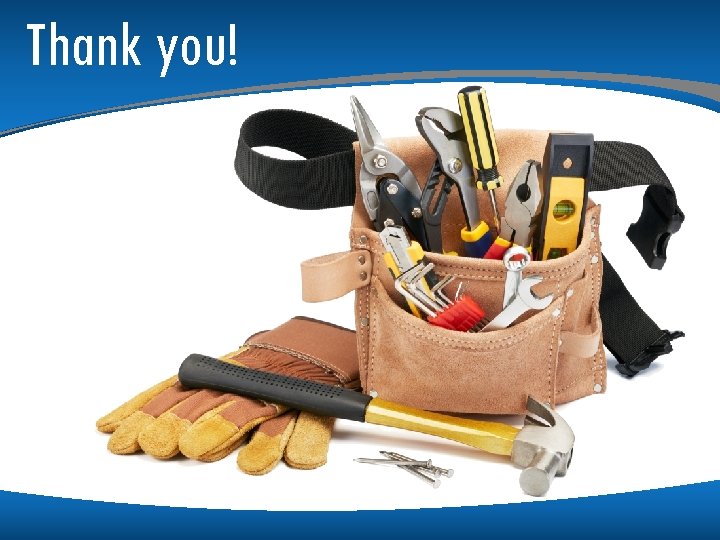
Thank you!
Hand Tool Safety
- Slides: 10