
Hand Safety PRESENTED BY Why hand safety 13
Hand Safety PRESENTED BY
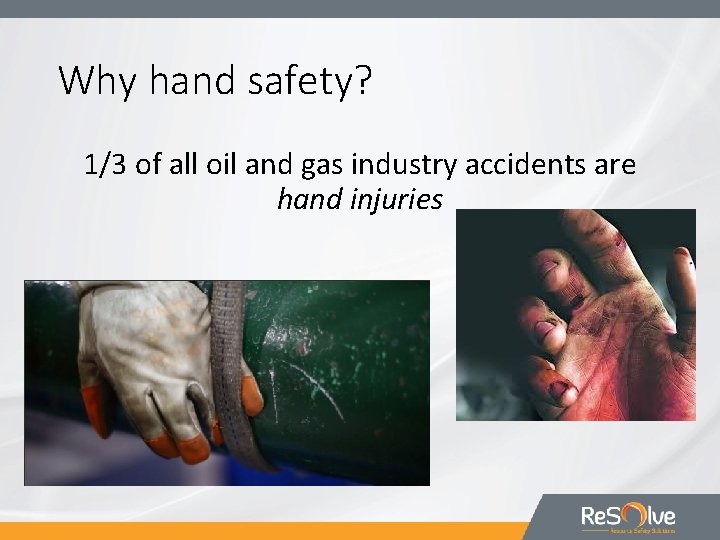
Why hand safety? 1/3 of all oil and gas industry accidents are hand injuries

Hand Hazards • Severe cuts, lacerations, or abrasions • Fractures and amputations • Punctures • Chemical or thermal burns • Electrical dangers • Skin absorption • Harmful temperatures
How can we protect ourselves? • Complete a hazard assessment • JSA (Job Safety Analysis) • Select and wear gloves to protect against hazards specific to job • Gloves are not one type fits all • Wear PPE based on job hazards • Maintain and inspect all tools and equipment • Follow safe work practices • Tool and Equipment Use • Chemical and Electrical safety • Rigging safety, including hands-free methods • Maintain focus on task and stay alert

What Causes Hand Injuries? Causes can include: • Wrong PPE • Faulty equipment • Broken tools or guards • You The most common cause of hand injuries is human error. This can be a result of: • Boredom • Inattentiveness • Distractions
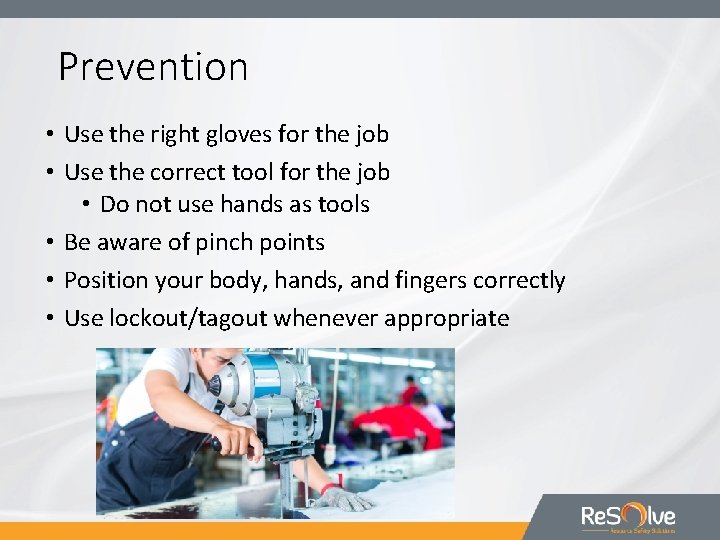
Prevention • Use the right gloves for the job • Use the correct tool for the job • Do not use hands as tools • Be aware of pinch points • Position your body, hands, and fingers correctly • Use lockout/tagout whenever appropriate
Use Caution! • Be aware of moving and rotating parts • These can trap your hands and/or fingers • Do not wear gloves when working with gears or machinery • This could catch or grab the gloves and pull your fingers or hand into the machinery • Be aware of machines or machine parts that heat up. • Be aware of hazards that can smash or crush hands and arms. • Be aware of proper hand placement while working • Remove jewelry • Tuck in or roll up lose clothing
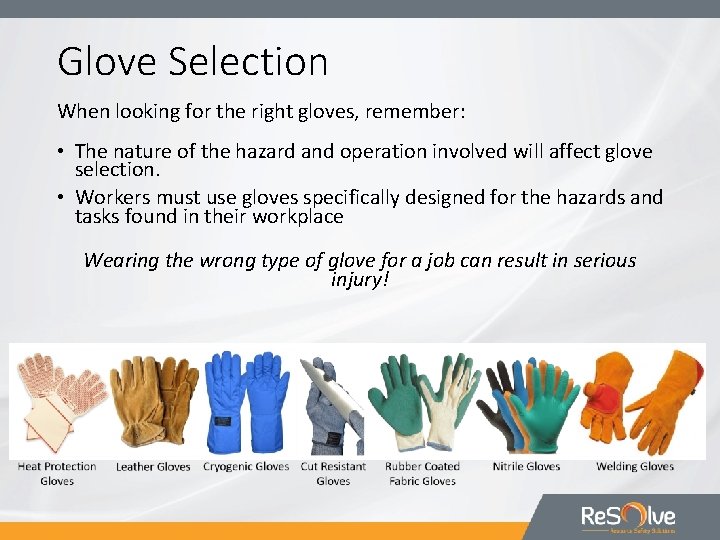
Glove Selection When looking for the right gloves, remember: • The nature of the hazard and operation involved will affect glove selection. • Workers must use gloves specifically designed for the hazards and tasks found in their workplace Wearing the wrong type of glove for a job can result in serious injury!
Glove Selection… When selecting gloves, consider: • Nature of contact • Total immersion, splash, etc. • Area requiring protection • Hand only, forearm, arm • Abrasion or resistance requirements • Grip requirements • Dry, wet, oily • Thermal protection • Type of chemicals handled • Size and Type
Inspection and Maintenance • Keep gloves in a clean, dry place • Dispose of gloves when they are too worn or no longer provide adequate protection • Do NOT patch or “fix” gloves with tape or other material • Inspect gloves for: • Holes • Excessive wear • Excessive buildup of dirt or other materials Be sure to protect what protects you!
First Aid • Put direct pressure on any bleeding wound • Raise the arm above your head to slow bleeding • Wash and bandage all minor cuts, scrapes, and punctures to prevent infection • For burns, run clean, cool water over the affected area for 15 minutes • Wash your hands before touching your face. You can introduce chemicals or particles into your eyes. • If necessary, seek professional medical care

www. resolveok. com
- Slides: 12