
Hand Hygiene Overview Copyright 2014 Meritech Resurgent Health



- Slides: 73
Hand Hygiene Overview Copyright © 2014 Meritech / Resurgent Health and Medical
Hand Hygiene History Copyright © 2014 Meritech / Resurgent Health and Medical
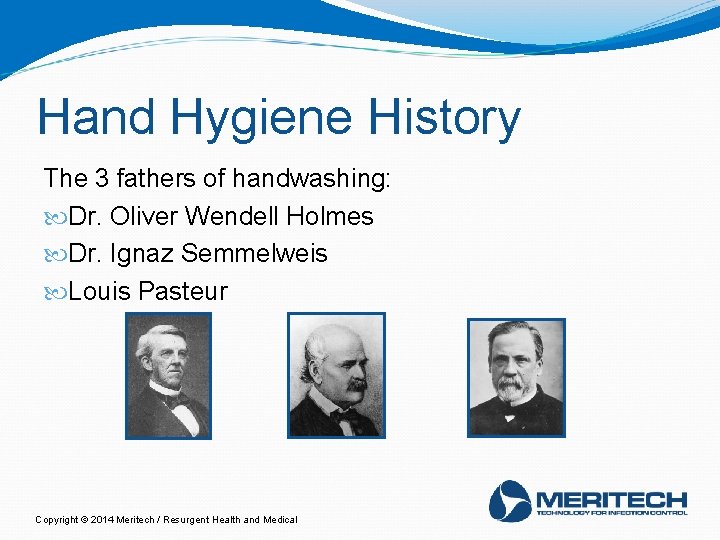
Hand Hygiene History The 3 fathers of handwashing: Dr. Oliver Wendell Holmes Dr. Ignaz Semmelweis Louis Pasteur Copyright © 2014 Meritech / Resurgent Health and Medical
Hand Hygiene History Dr. Oliver Wendell Holmes advocated hand washing to prevent childbed fever. He was horrified by the prevalence in American hospitals of this fever which he believed to be an infectious disease passed to pregnant women by the hands of doctors. His ideas were met with disdain. Copyright © 2014 Meritech / Resurgent Health and Medical
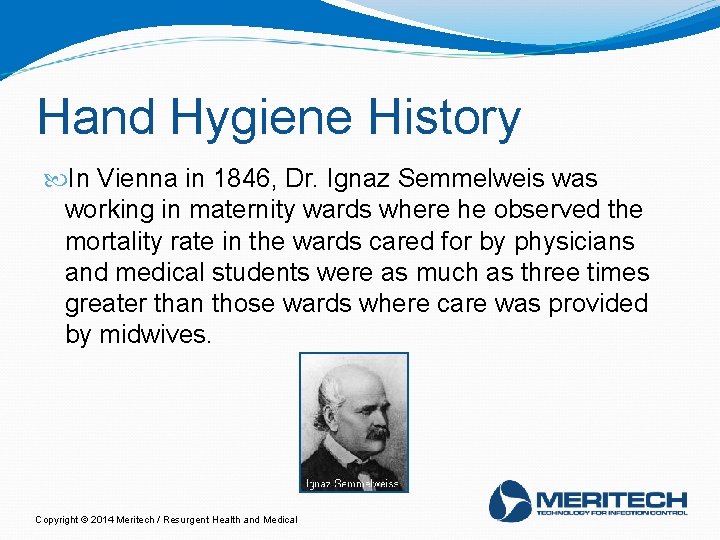
Hand Hygiene History In Vienna in 1846, Dr. Ignaz Semmelweis was working in maternity wards where he observed the mortality rate in the wards cared for by physicians and medical students were as much as three times greater than those wards where care was provided by midwives. Copyright © 2014 Meritech / Resurgent Health and Medical
Hand Hygiene History Semmelweis found that the students were coming straight from the pathology lab without washing their hands. He believed that they were carrying infections from the lab to their patients. When he implemented a handwashing protocol, his mortality rate dropped to less than 1%. Copyright © 2014 Meritech / Resurgent Health and Medical
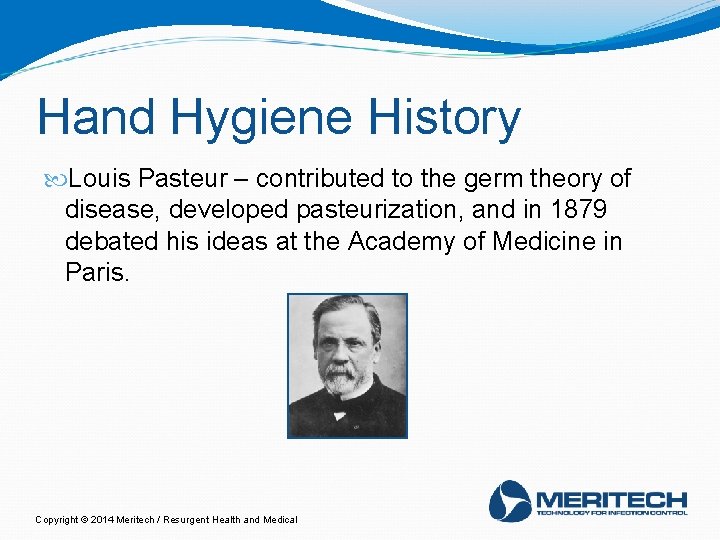
Hand Hygiene History Louis Pasteur – contributed to the germ theory of disease, developed pasteurization, and in 1879 debated his ideas at the Academy of Medicine in Paris. Copyright © 2014 Meritech / Resurgent Health and Medical
Hand Hygiene Today According to the United States Centers of Disease Control and Prevention (CDC): “Handwashing is the single most important means of preventing the spread of infection. ” Copyright © 2014 Meritech / Resurgent Health and Medical
Microbiology 101 Copyright © 2014 Meritech / Resurgent Health and Medical
Terms & Definitions Infection - An infection is the detrimental colonization of a host organism by a foreign species. In infection, the infecting organism seeks to utilize the host’s resources in order to multiply (usually at the expense of the host). The infecting organism, or pathogen, interferes with the normal functioning of the host Copyright © 2014 Meritech / Resurgent Health and Medical
Terms & Definitions Infections can be caused by: A bacteria A virus A fungus A parasite Copyright © 2014 Meritech / Resurgent Health and Medical
Terms & Definitions Microbe – A microorganism that causes disease. This term is no longer in technical use. Antimicrobial – Capable of destroying or inhibiting the growth of microorganisms, e. g. , antimicrobial solutions or antimicrobial drugs Copyright © 2014 Meritech / Resurgent Health and Medical
Terms & Definitions Pathogen – A pathogen or infectious agent is a biological agent that causes disease or illness to its host. The term is most often used for agents that disrupt the normal physiology of a multi-cellular animal or plant. Copyright © 2014 Meritech / Resurgent Health and Medical
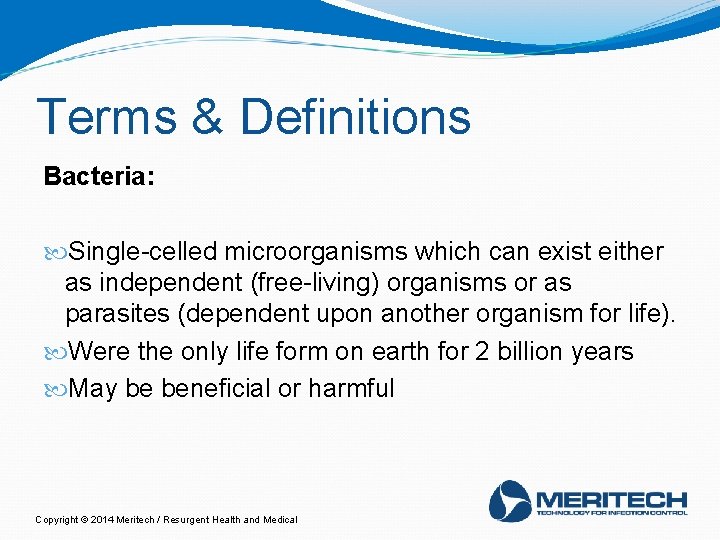
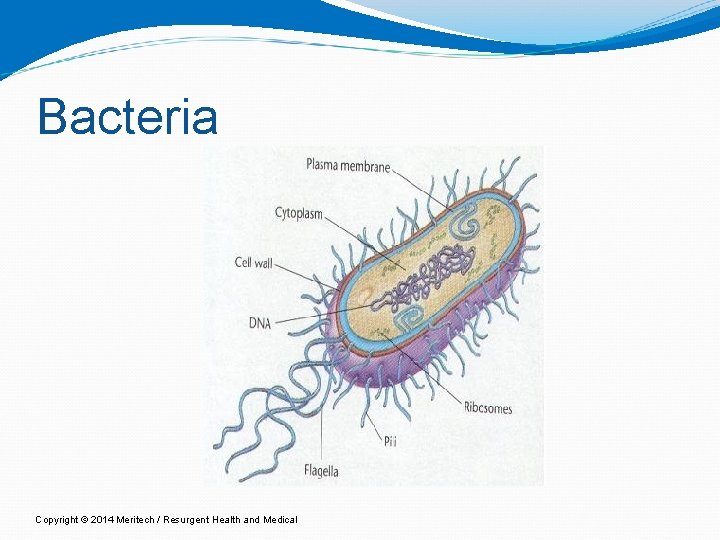
Terms & Definitions Bacteria: Single-celled microorganisms which can exist either as independent (free-living) organisms or as parasites (dependent upon another organism for life). Were the only life form on earth for 2 billion years May be beneficial or harmful Copyright © 2014 Meritech / Resurgent Health and Medical
Bacteria Copyright © 2014 Meritech / Resurgent Health and Medical
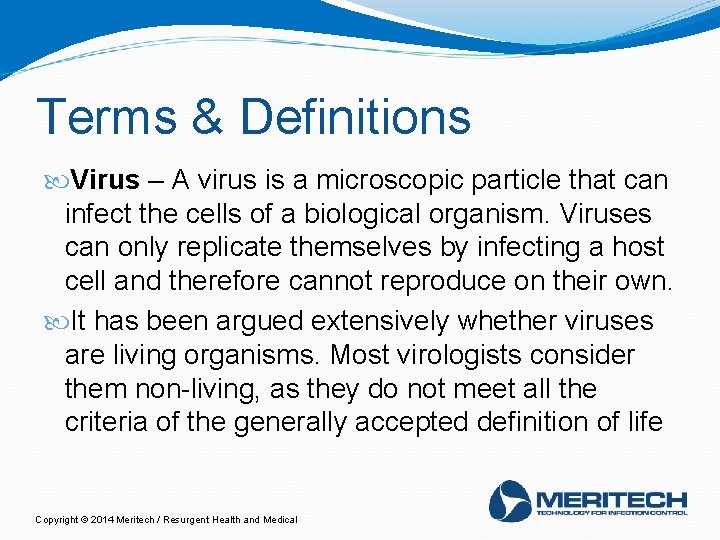
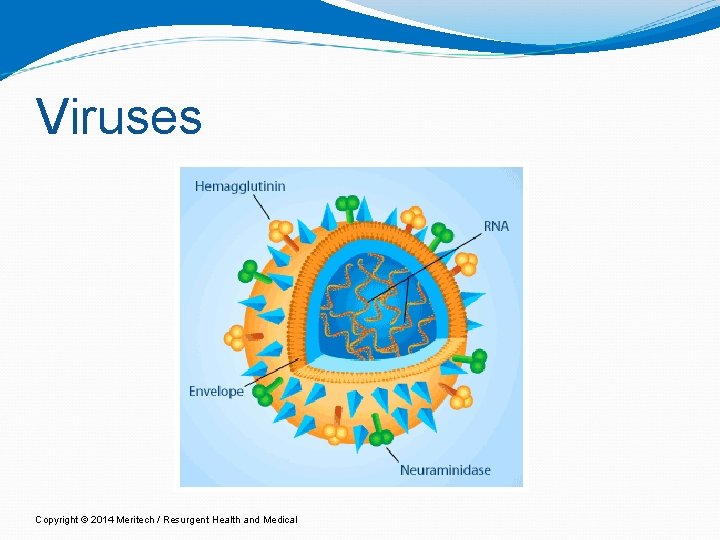
Terms & Definitions Virus – A virus is a microscopic particle that can infect the cells of a biological organism. Viruses can only replicate themselves by infecting a host cell and therefore cannot reproduce on their own. It has been argued extensively whether viruses are living organisms. Most virologists consider them non-living, as they do not meet all the criteria of the generally accepted definition of life Copyright © 2014 Meritech / Resurgent Health and Medical
Viruses Copyright © 2014 Meritech / Resurgent Health and Medical
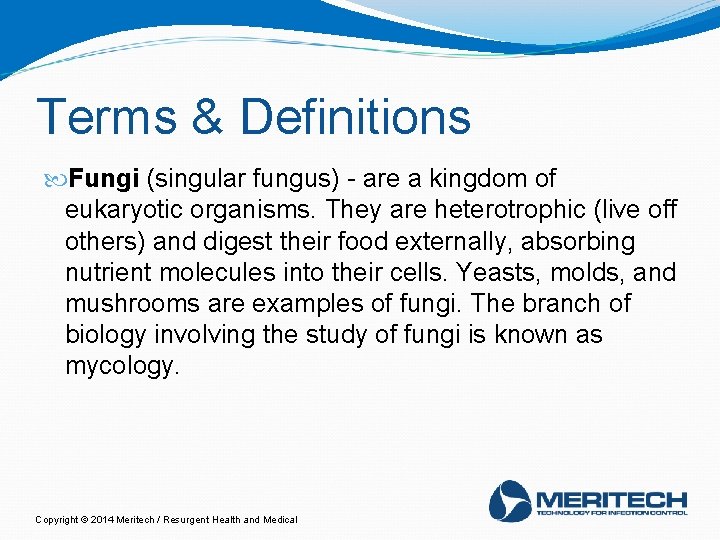
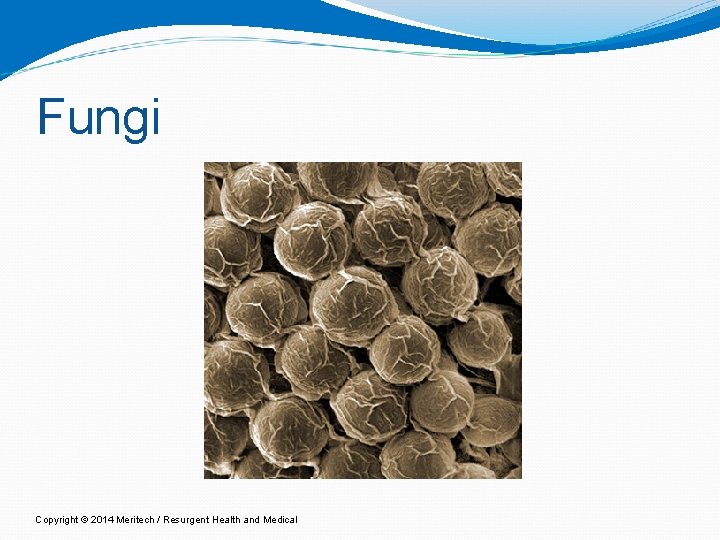
Terms & Definitions Fungi (singular fungus) - are a kingdom of eukaryotic organisms. They are heterotrophic (live off others) and digest their food externally, absorbing nutrient molecules into their cells. Yeasts, molds, and mushrooms are examples of fungi. The branch of biology involving the study of fungi is known as mycology. Copyright © 2014 Meritech / Resurgent Health and Medical
Fungi Copyright © 2014 Meritech / Resurgent Health and Medical
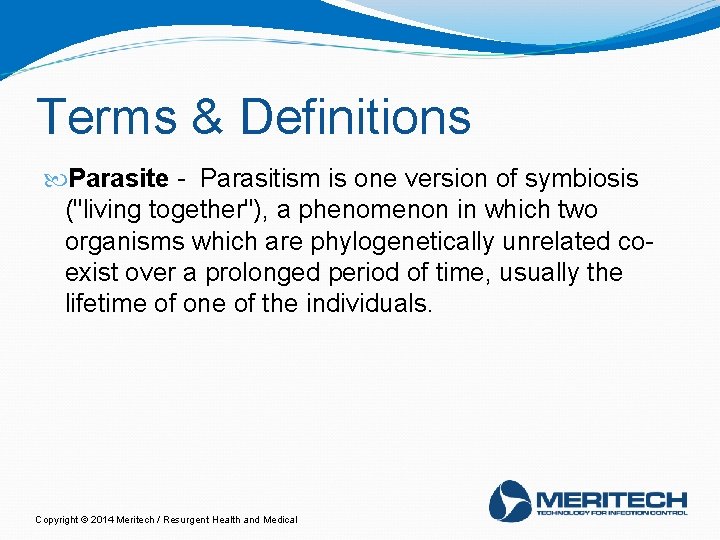
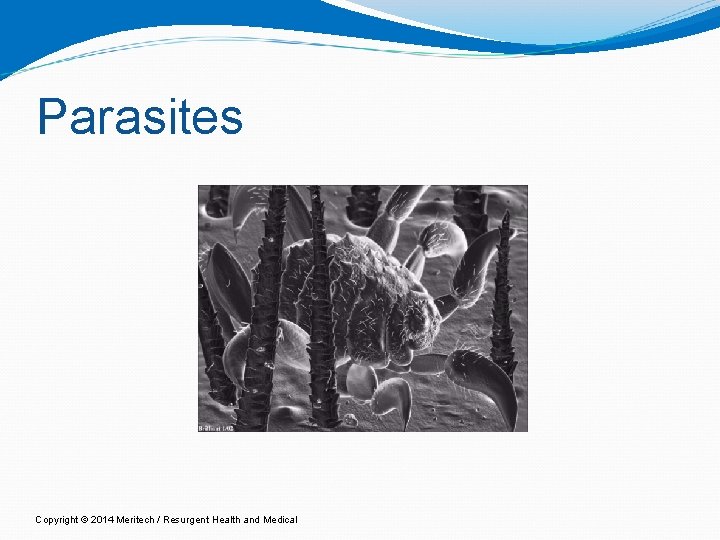
Terms & Definitions Parasite - Parasitism is one version of symbiosis ("living together"), a phenomenon in which two organisms which are phylogenetically unrelated coexist over a prolonged period of time, usually the lifetime of one of the individuals. Copyright © 2014 Meritech / Resurgent Health and Medical
Parasites Copyright © 2014 Meritech / Resurgent Health and Medical
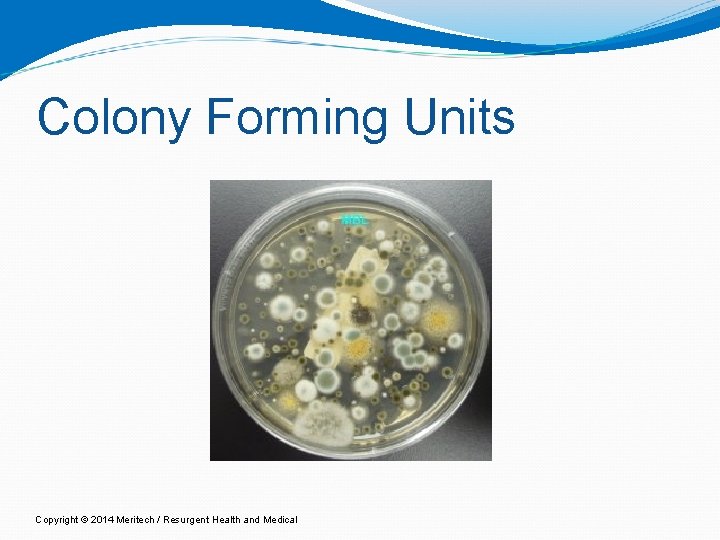
Measuring Antimicrobial Efficacy Antimicrobial properties are measured in their ability to kill or eliminate pathogens Testing protocols consist of sampling the hands before and after a “treatment” of an antimicrobial The labs count the number of “Colony Forming Units” (CFU’s) before and after a treatment by an antimicrobial Copyright © 2014 Meritech / Resurgent Health and Medical
Colony Forming Units Copyright © 2014 Meritech / Resurgent Health and Medical
Units of Measurement The two most common “units of measurement” for the reduction of CFU’s are: A percent reduction, e. g. , “kills 99. 9% of bacteria” A log 10 reduction Copyright © 2014 Meritech / Resurgent Health and Medical
Log Reductions As mnemonic for converting log reductions into percent reductions is the number of the log, e. g. , 1, 2, 3, 4 etc. equates to the number of “nines” (9’s) in the percent reduction: 1 -log = 90% reduction 2 -logs = 99% reduction 3 -logs = 99. 9% reduction 4 logs = 99. 99% reduction Copyright © 2014 Meritech / Resurgent Health and Medical
Healthcare Associated Infections and Food Borne Illness Copyright © 2014 Meritech / Resurgent Health and Medical
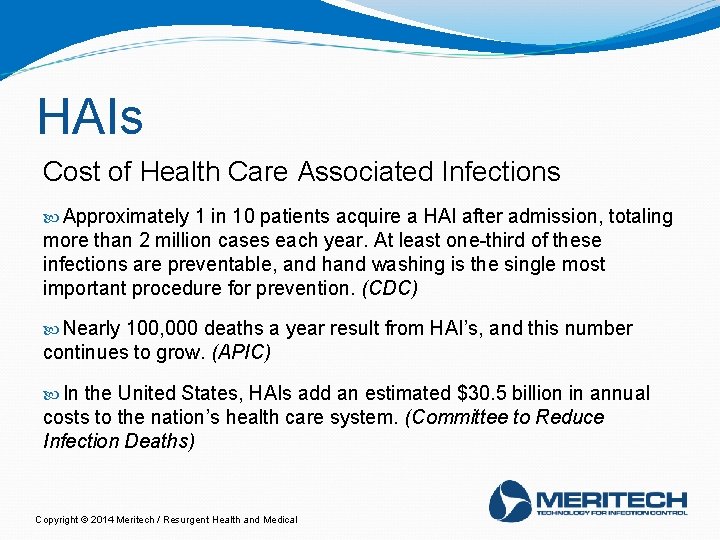
HAIs Cost of Health Care Associated Infections Approximately 1 in 10 patients acquire a HAI after admission, totaling more than 2 million cases each year. At least one-third of these infections are preventable, and hand washing is the single most important procedure for prevention. (CDC) Nearly 100, 000 deaths a year result from HAI’s, and this number continues to grow. (APIC) In the United States, HAIs add an estimated $30. 5 billion in annual costs to the nation’s health care system. (Committee to Reduce Infection Deaths) Copyright © 2014 Meritech / Resurgent Health and Medical
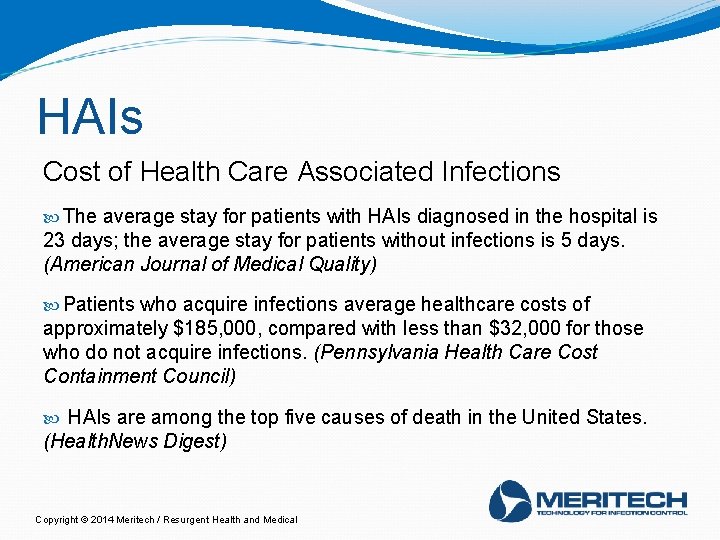
HAIs Cost of Health Care Associated Infections The average stay for patients with HAIs diagnosed in the hospital is 23 days; the average stay for patients without infections is 5 days. (American Journal of Medical Quality) Patients who acquire infections average healthcare costs of approximately $185, 000, compared with less than $32, 000 for those who do not acquire infections. (Pennsylvania Health Care Cost Containment Council) HAIs are among the top five causes of death in the United States. (Health. News Digest) Copyright © 2014 Meritech / Resurgent Health and Medical
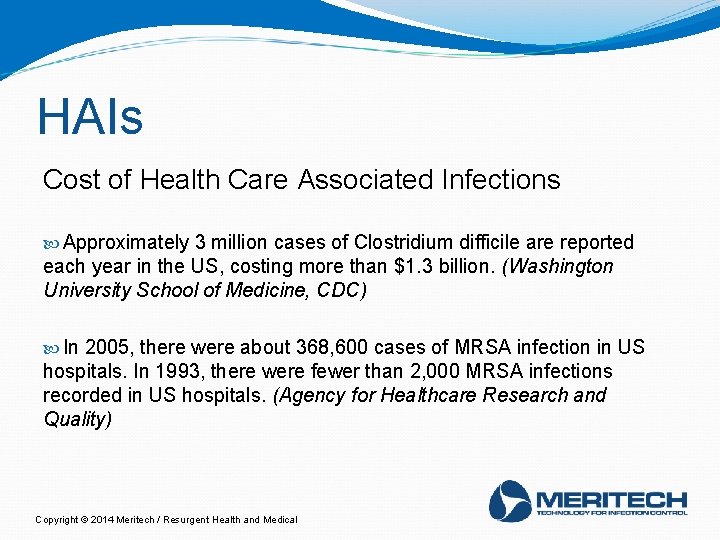
HAIs Cost of Health Care Associated Infections Approximately 3 million cases of Clostridium difficile are reported each year in the US, costing more than $1. 3 billion. (Washington University School of Medicine, CDC) In 2005, there were about 368, 600 cases of MRSA infection in US hospitals. In 1993, there were fewer than 2, 000 MRSA infections recorded in US hospitals. (Agency for Healthcare Research and Quality) Copyright © 2014 Meritech / Resurgent Health and Medical
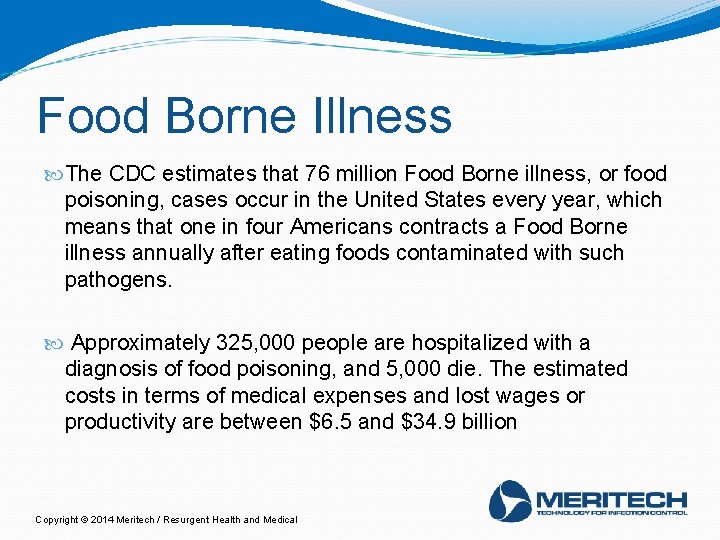
Food Borne Illness The CDC estimates that 76 million Food Borne illness, or food poisoning, cases occur in the United States every year, which means that one in four Americans contracts a Food Borne illness annually after eating foods contaminated with such pathogens. Approximately 325, 000 people are hospitalized with a diagnosis of food poisoning, and 5, 000 die. The estimated costs in terms of medical expenses and lost wages or productivity are between $6. 5 and $34. 9 billion Copyright © 2014 Meritech / Resurgent Health and Medical
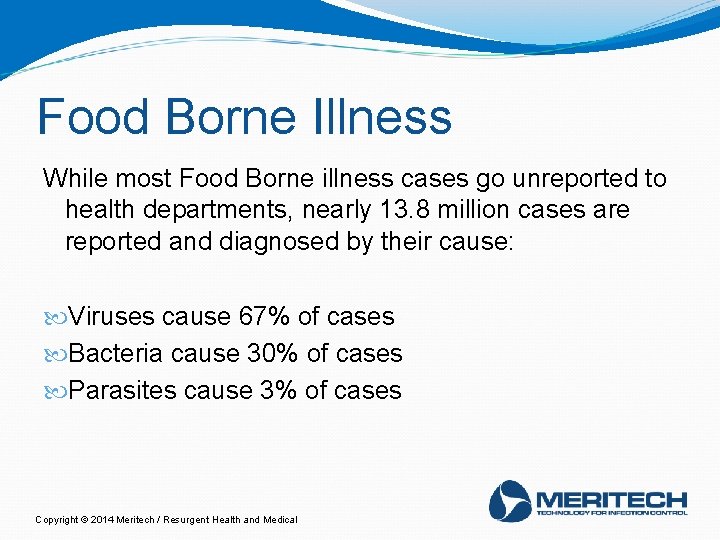
Food Borne Illness While most Food Borne illness cases go unreported to health departments, nearly 13. 8 million cases are reported and diagnosed by their cause: Viruses cause 67% of cases Bacteria cause 30% of cases Parasites cause 3% of cases Copyright © 2014 Meritech / Resurgent Health and Medical
Common Bugs Copyright © 2014 Meritech / Resurgent Health and Medical
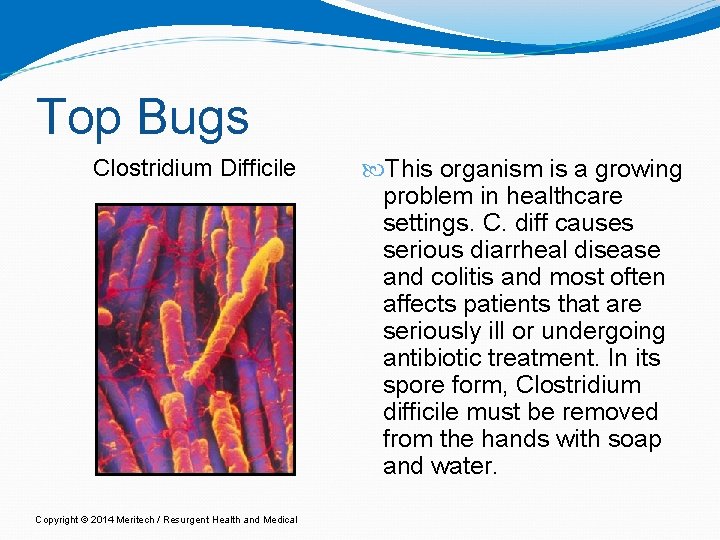
Top Bugs Clostridium Difficile Copyright © 2014 Meritech / Resurgent Health and Medical This organism is a growing problem in healthcare settings. C. diff causes serious diarrheal disease and colitis and most often affects patients that are seriously ill or undergoing antibiotic treatment. In its spore form, Clostridium difficile must be removed from the hands with soap and water.
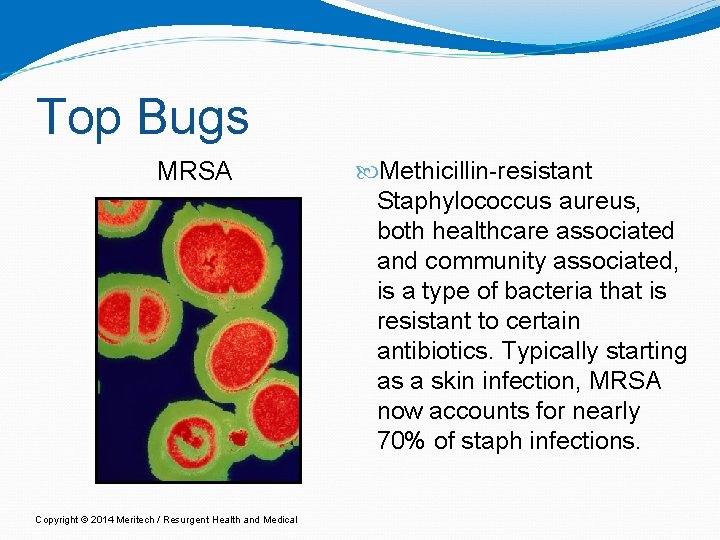
Top Bugs MRSA Copyright © 2014 Meritech / Resurgent Health and Medical Methicillin-resistant Staphylococcus aureus, both healthcare associated and community associated, is a type of bacteria that is resistant to certain antibiotics. Typically starting as a skin infection, MRSA now accounts for nearly 70% of staph infections.
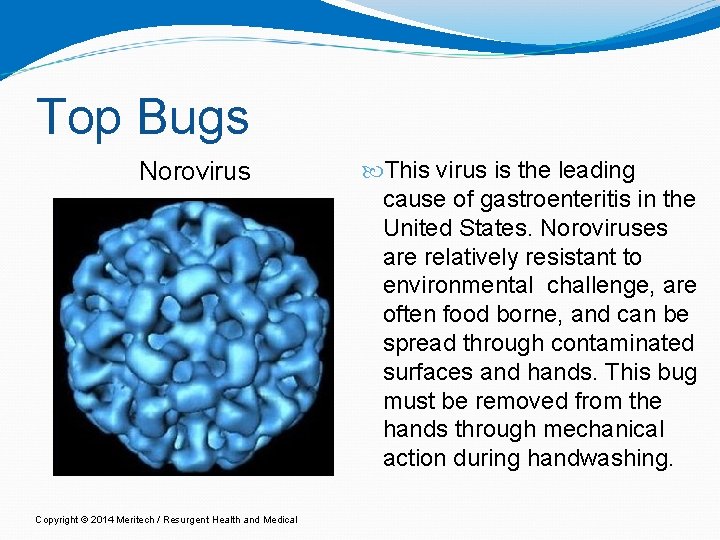
Top Bugs Norovirus Copyright © 2014 Meritech / Resurgent Health and Medical This virus is the leading cause of gastroenteritis in the United States. Noroviruses are relatively resistant to environmental challenge, are often food borne, and can be spread through contaminated surfaces and hands. This bug must be removed from the hands through mechanical action during handwashing.
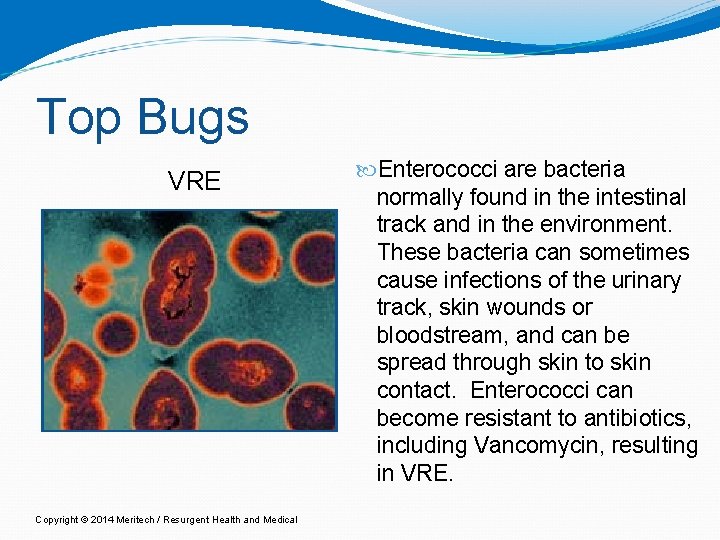
Top Bugs VRE Copyright © 2014 Meritech / Resurgent Health and Medical Enterococci are bacteria normally found in the intestinal track and in the environment. These bacteria can sometimes cause infections of the urinary track, skin wounds or bloodstream, and can be spread through skin to skin contact. Enterococci can become resistant to antibiotics, including Vancomycin, resulting in VRE.
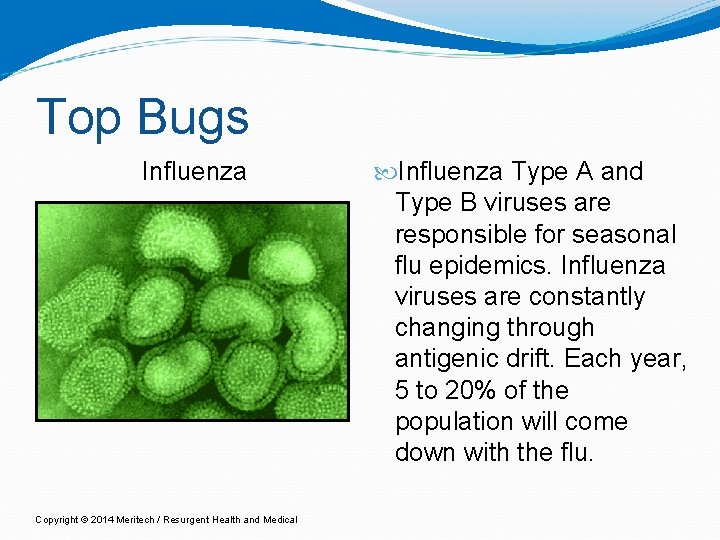
Top Bugs Influenza Copyright © 2014 Meritech / Resurgent Health and Medical Influenza Type A and Type B viruses are responsible for seasonal flu epidemics. Influenza viruses are constantly changing through antigenic drift. Each year, 5 to 20% of the population will come down with the flu.
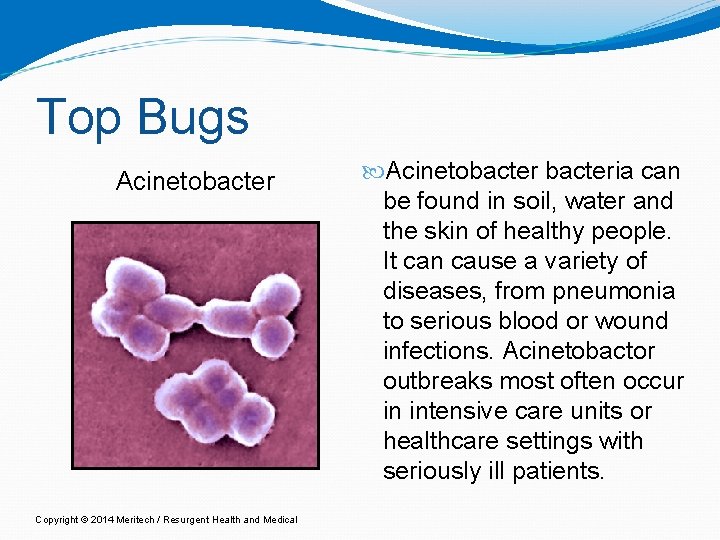
Top Bugs Acinetobacter Copyright © 2014 Meritech / Resurgent Health and Medical Acinetobacteria can be found in soil, water and the skin of healthy people. It can cause a variety of diseases, from pneumonia to serious blood or wound infections. Acinetobactor outbreaks most often occur in intensive care units or healthcare settings with seriously ill patients.
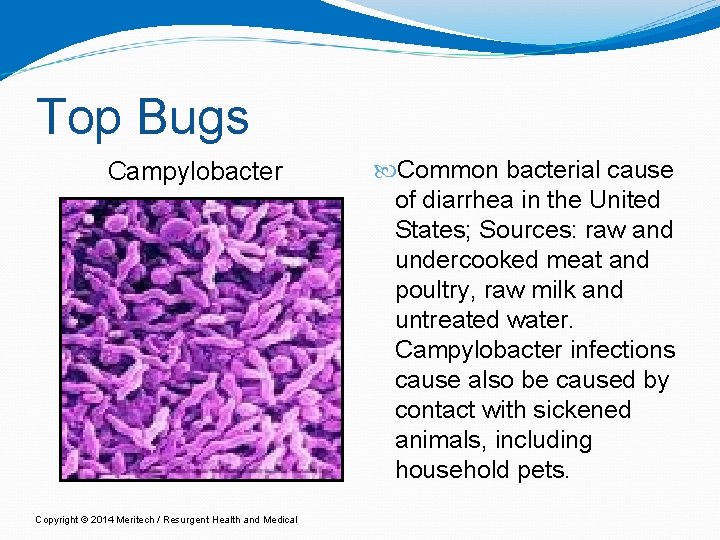
Top Bugs Campylobacter Copyright © 2014 Meritech / Resurgent Health and Medical Common bacterial cause of diarrhea in the United States; Sources: raw and undercooked meat and poultry, raw milk and untreated water. Campylobacter infections cause also be caused by contact with sickened animals, including household pets.
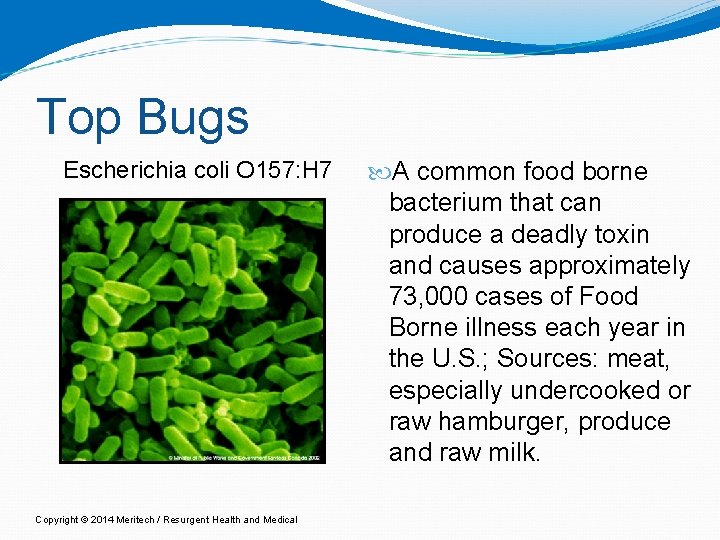
Top Bugs Escherichia coli O 157: H 7 Copyright © 2014 Meritech / Resurgent Health and Medical A common food borne bacterium that can produce a deadly toxin and causes approximately 73, 000 cases of Food Borne illness each year in the U. S. ; Sources: meat, especially undercooked or raw hamburger, produce and raw milk.
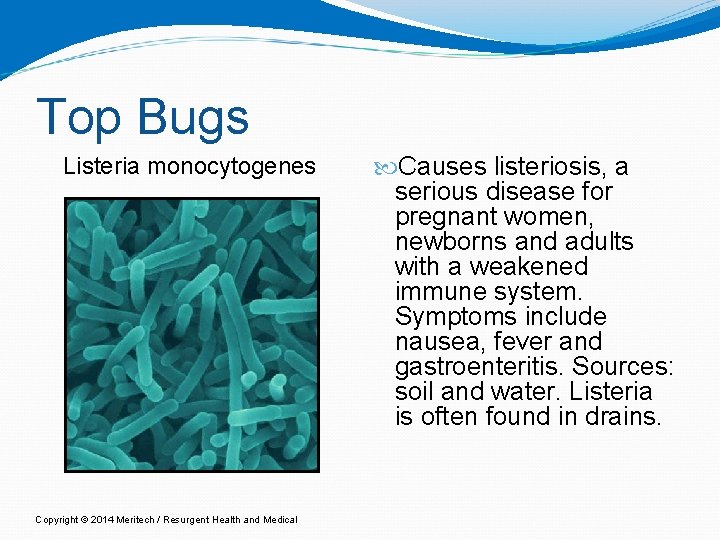
Top Bugs Listeria monocytogenes Copyright © 2014 Meritech / Resurgent Health and Medical Causes listeriosis, a serious disease for pregnant women, newborns and adults with a weakened immune system. Symptoms include nausea, fever and gastroenteritis. Sources: soil and water. Listeria is often found in drains.
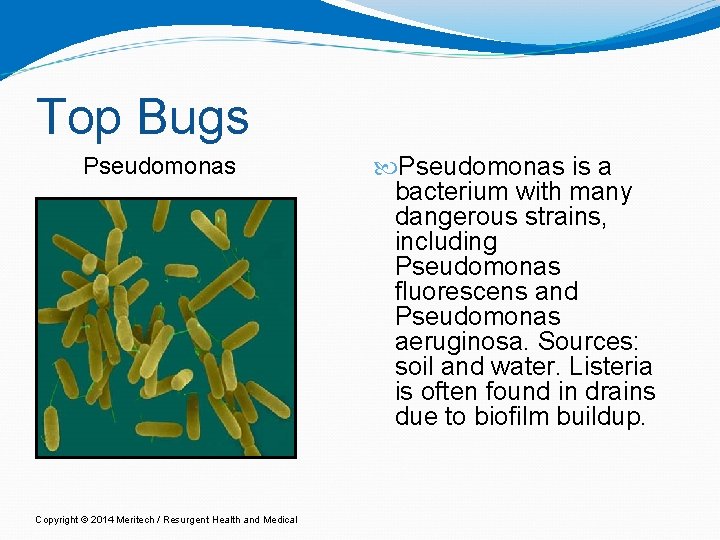
Top Bugs Pseudomonas Copyright © 2014 Meritech / Resurgent Health and Medical Pseudomonas is a bacterium with many dangerous strains, including Pseudomonas fluorescens and Pseudomonas aeruginosa. Sources: soil and water. Listeria is often found in drains due to biofilm buildup.
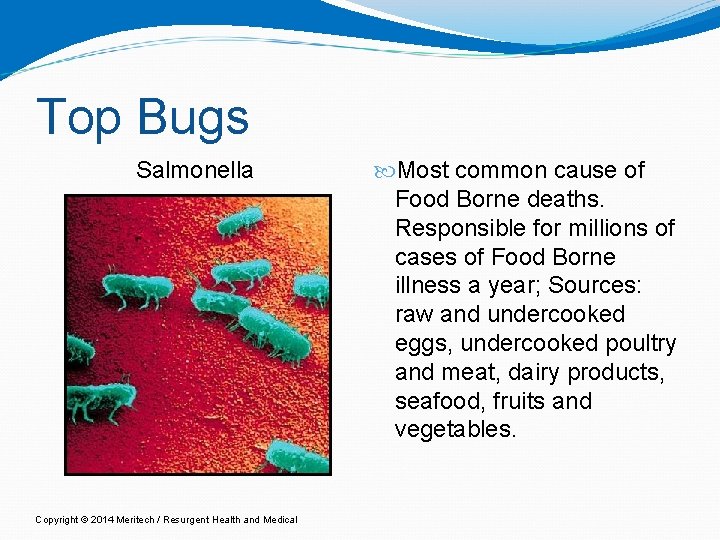
Top Bugs Salmonella Copyright © 2014 Meritech / Resurgent Health and Medical Most common cause of Food Borne deaths. Responsible for millions of cases of Food Borne illness a year; Sources: raw and undercooked eggs, undercooked poultry and meat, dairy products, seafood, fruits and vegetables.
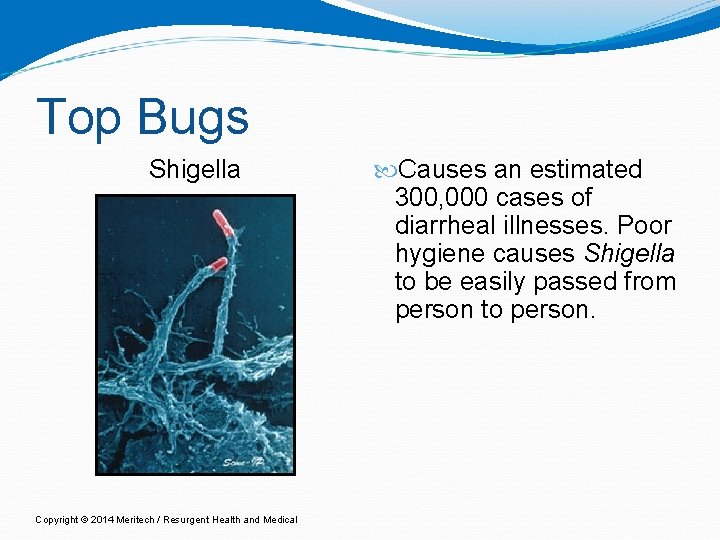
Top Bugs Shigella Copyright © 2014 Meritech / Resurgent Health and Medical Causes an estimated 300, 000 cases of diarrheal illnesses. Poor hygiene causes Shigella to be easily passed from person to person.
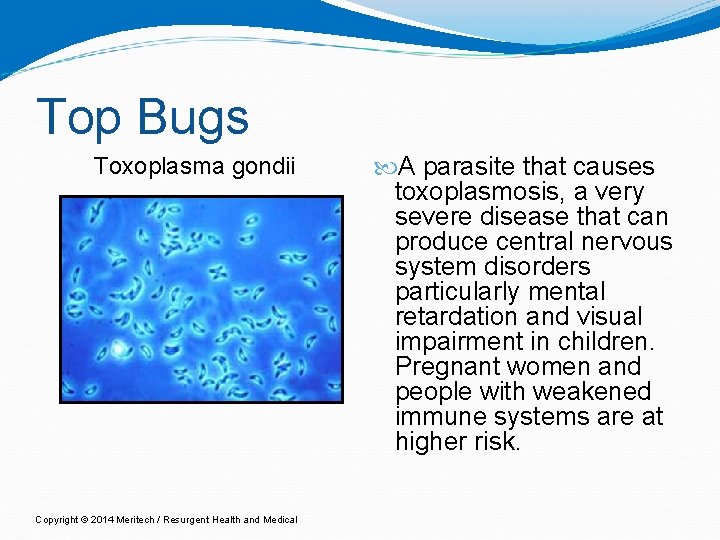
Top Bugs Toxoplasma gondii Copyright © 2014 Meritech / Resurgent Health and Medical A parasite that causes toxoplasmosis, a very severe disease that can produce central nervous system disorders particularly mental retardation and visual impairment in children. Pregnant women and people with weakened immune systems are at higher risk.
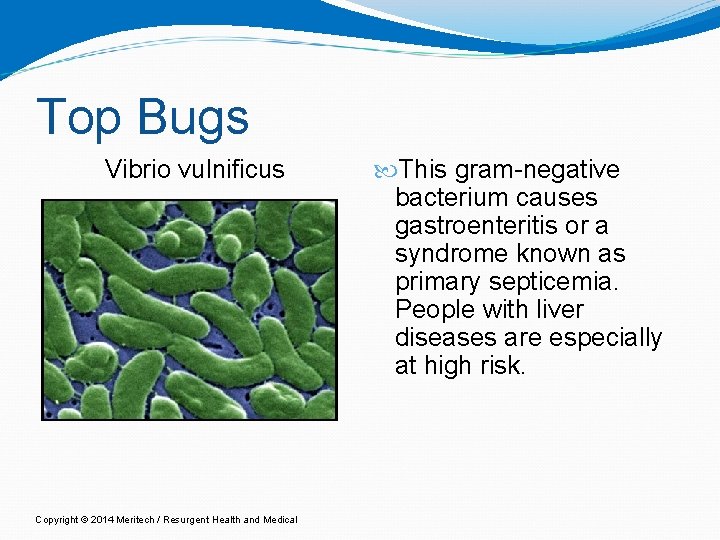
Top Bugs Vibrio vulnificus Copyright © 2014 Meritech / Resurgent Health and Medical This gram-negative bacterium causes gastroenteritis or a syndrome known as primary septicemia. People with liver diseases are especially at high risk.
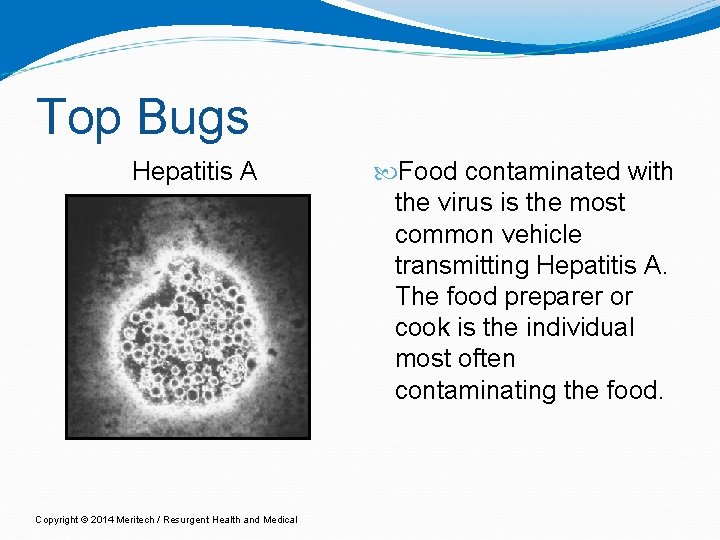
Top Bugs Hepatitis A Copyright © 2014 Meritech / Resurgent Health and Medical Food contaminated with the virus is the most common vehicle transmitting Hepatitis A. The food preparer or cook is the individual most often contaminating the food.
Clinical Background Copyright © 2014 Meritech / Resurgent Health and Medical
Quiz Time What is the body’s largest organ? How much skin does the average person have? What are some of the main functions of skin? How often does our skin replace itself? How are skin health and hygiene related? Copyright © 2014 Meritech / Resurgent Health and Medical
Skin Fun Facts Copyright © 2014 Meritech / Resurgent Health and Medical
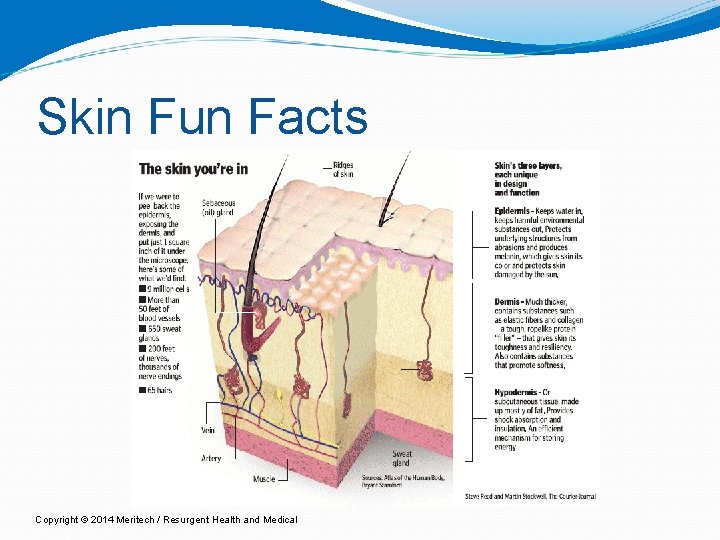
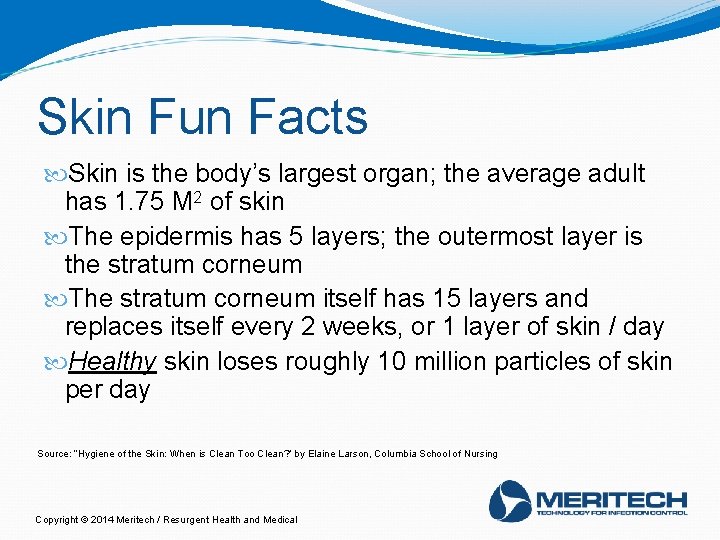
Skin Fun Facts Skin is the body’s largest organ; the average adult has 1. 75 M 2 of skin The epidermis has 5 layers; the outermost layer is the stratum corneum The stratum corneum itself has 15 layers and replaces itself every 2 weeks, or 1 layer of skin / day Healthy skin loses roughly 10 million particles of skin per day Source: “Hygiene of the Skin: When is Clean Too Clean? ” by Elaine Larson, Columbia School of Nursing Copyright © 2014 Meritech / Resurgent Health and Medical
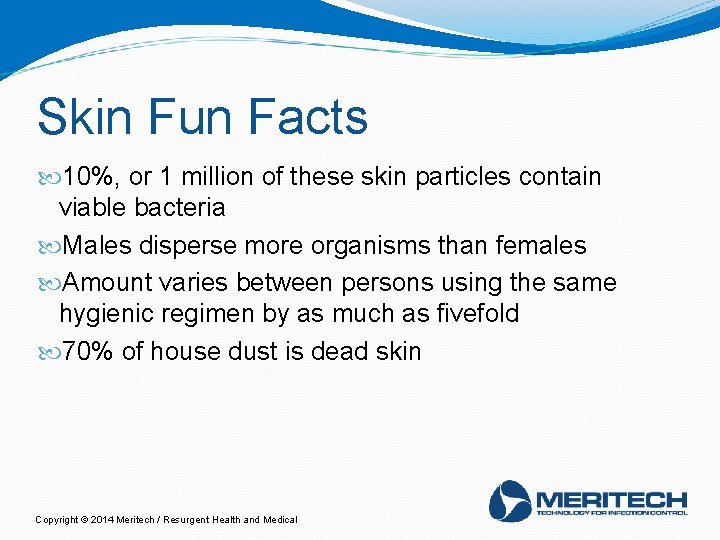
Skin Fun Facts 10%, or 1 million of these skin particles contain viable bacteria Males disperse more organisms than females Amount varies between persons using the same hygienic regimen by as much as fivefold 70% of house dust is dead skin Copyright © 2014 Meritech / Resurgent Health and Medical
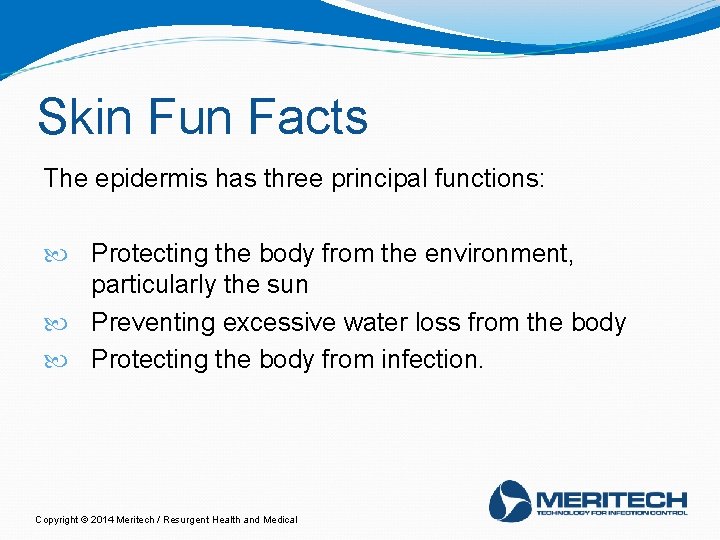
Skin Fun Facts The epidermis has three principal functions: Protecting the body from the environment, particularly the sun Preventing excessive water loss from the body Protecting the body from infection. Copyright © 2014 Meritech / Resurgent Health and Medical
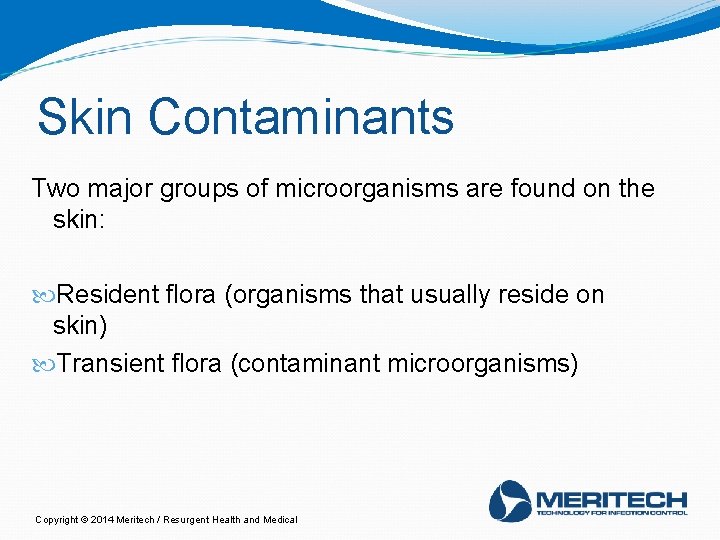
Skin Contaminants Two major groups of microorganisms are found on the skin: Resident flora (organisms that usually reside on skin) Transient flora (contaminant microorganisms) Copyright © 2014 Meritech / Resurgent Health and Medical
Skin Contaminants Resident flora - Unless introduced into body tissues by trauma or medical devices such as intravenous catheters, the pathogenic potential of the resident flora is low Transient flora - are easily removed by handwashing, cause most infections resulting from cross-transmission Copyright © 2014 Meritech / Resurgent Health and Medical
Effect of Soap on Skin Soaps and detergents have been described as the most damaging of all substances routinely applied to skin. Each time the skin is washed it undergoes profound changes, most of which are temporary. Copyright © 2014 Meritech / Resurgent Health and Medical
Effect of Soap on Skin In an investigation of the effect on skin of repeated use of two washing agents, all skin function tests were markedly changed after a single wash Grunewald AM, Gloor M, Gehring W, Kleesz P. Damage to the skin by repetitive washing. Contact Dermatitis 1995; 32: 225 -32. In a study of irritant skin reactions induced by 3 surfactants, damage lasted for several days; complete skin repair was not achieved for 17 days Wilhelm KP, Freitag G, Wolff HH. Surfactant-induced skin irritation and skin repair. Evaluation of the acute human irritation model by noninvasive techniques. J Am Acad Dermatol 1994; 30: 944 -9. Copyright © 2014 Meritech / Resurgent Health and Medical
Effect of Soap on Skin Washing with plain soap may actually increase the potential for microbial transmission because of a 17 fold increase in the dispersal of bacterial colonies from the skin of the hands Meers PD, Yeo GA. Shedding of bacteria and skin squames after handwashing. J Hyg (Camb) 1978; 81: 99 -105. Copyright © 2014 Meritech / Resurgent Health and Medical
Effect of Soap on Skin The numbers of organisms spread from the hands of nurses who washed frequently with an antimicrobial soap actually increased after a period of time; this increase is associated with declining skin health Ojajarvi J, Makela P, Rantsalo I. Failure of hand disinfection with frequent hand washing: a need for prolonged field studies. J Hyg (Camb) 1977; 79: 107 -19. Copyright © 2014 Meritech / Resurgent Health and Medical
Effect of Scrubbing on Skin Shedding Study comparing alcohol to surgical scrub showed that CFU’s were reduced satisfactorily with both No increase in skin shedding after alcohol 18 -fold increase after scrub Conclusion “prolonged vigorous scrubbing is unnecessary. ” Copyright © 2014 Meritech / Resurgent Health and Medical
Skin Health As skin dries out and becomes unhealthy it develops more cracks and crevices The cracks and crevices are breeding grounds for bacteria Unhealthy skin “flakes off” far more than healthy skin Skin health and skin hygiene cannot be separated Copyright © 2014 Meritech / Resurgent Health and Medical
Soaps & Sanitizers Copyright © 2014 Meritech / Resurgent Health and Medical
Antimicrobial Products There are 5 basic antimicrobial formulations: Alcohols Triclosans Chlorhexidine Gluconate (CHGs) Iodophors (iodine formulations) Parachlorometaxylenols (PCMXs) Copyright © 2014 Meritech / Resurgent Health and Medical
Antimicrobials Compounds Are evaluated for effectiveness in 3 areas: Immediate – occur within 1 minute of application Persistent – prevents recolonization for hours after application Residual - antimicrobial properties persist for days even after product discontinued Copyright © 2014 Meritech / Resurgent Health and Medical
Persistence Q: Why is persistence important? A: Persistence is the ability of the agent to continue to reduce the number of bacteria after the initial application period is over A: Because alcohol doesn’t have it! Copyright © 2014 Meritech / Resurgent Health and Medical
Instant Hand Sanitizers One study showed that the application of instant hand sanitizers resulted in a significant increase in bacterial numbers on the surface of the hands Copyright © 2014 Meritech / Resurgent Health and Medical
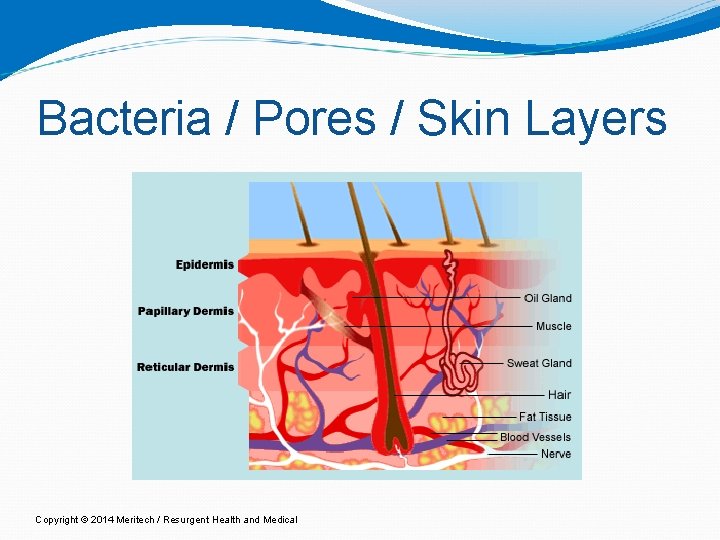
Instant Hand Sanitizers The human skin is composed of multiple layers with bacteria attached to the pores of each layer Alcohol is a powerful drying agent Even though alcohol may kill the organisms on the surface of the skin it appears to simultaneously dry the skin and may pull the bacteria residing in the various skin layers beneath the surface, to the surface Copyright © 2014 Meritech / Resurgent Health and Medical
Bacteria / Pores / Skin Layers Copyright © 2014 Meritech / Resurgent Health and Medical
Instant Hand Sanitizers “Since no rinsing occurs after the application of these instant hand sanitizers, there is no mechanical washing away of the bacteria that has been drawn to the skin surface. The end result is an increase in resident bacterial numbers on the surface of the hands. ” Source: Dairy, Food, and Environmental Sanitation / March 1994 Copyright © 2014 Meritech / Resurgent Health and Medical
Alcohol Formulations Emollients: Emollients are ingredients that lubricate the skin and give the product a soft, smooth feeling. Emollients sit on the surface of the skin and impede water loss or dehydration. They are generally made up of large molecules that help prevent water from leaving the surface of the skin. Copyright © 2014 Meritech / Resurgent Health and Medical
Alcohol Formulations Emollients build up over time, unless there is some mechanical action / washing away of the emollients Emollients become a barrier against alcohol reaching the bacteria that is on the skin The layer of emollients actually become a breeding ground for bacteria Copyright © 2014 Meritech / Resurgent Health and Medical
Alcohol Formulations Meritech’s study showed how alcohol’s efficacy decreases drastically over time: 1 st application with alcohol had 3. 72 log reduction 1 hour post-wash after 11 th application (without washing emollients off between applications) had 0. 41 log reduction Copyright © 2014 Meritech / Resurgent Health and Medical
Questions? We can help! cleantech@meritech. com Copyright © 2014 Meritech / Resurgent Health and Medical