
Hand Hygiene in Healthcare Facilities The Importance of
- Slides: 68
Hand Hygiene in Health-care Facilities The Importance of Proper Hand Hygiene for Health-care Workers
Please Complete Your Pre-Test
Objectives: • Learn the role hand hygiene plays in HAI prevention • Learn the right time and right way for Hand Hygiene • Review the proper use of gloves to prevent germ transmission • Learn to perform observational studies • Learn to evaluate your Hand Hygiene Program • Strategies for improvement
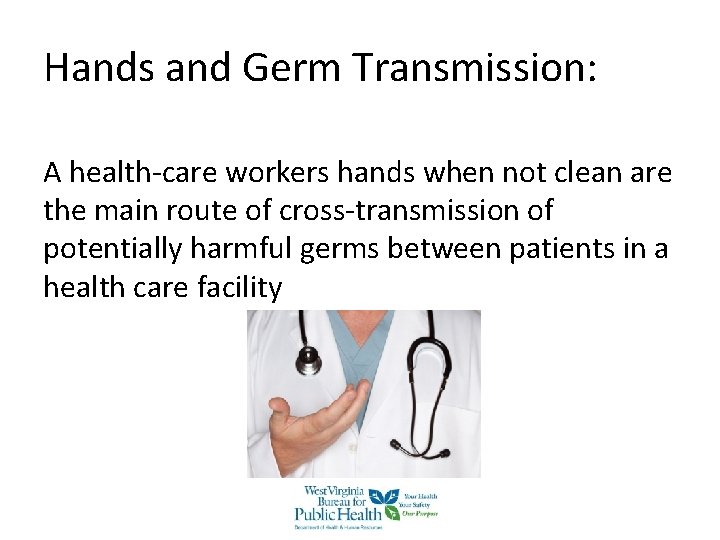
Hands and Germ Transmission: A health-care workers hands when not clean are the main route of cross-transmission of potentially harmful germs between patients in a health care facility
Lack of Hand Hygiene + Patient Care = Increased Risks Increased risk for: • Hand contamination • Potential risk to patient safety
Hand Hygiene in Prevention of HAI’s Hand hygiene is the undisputed single most effective infection control measure in prevention of HAI’s
Increased Compliance with Hand Hygiene means … • Reduced numbers of patients acquiring HAI’s • Decreased waste of resources • Saving lives
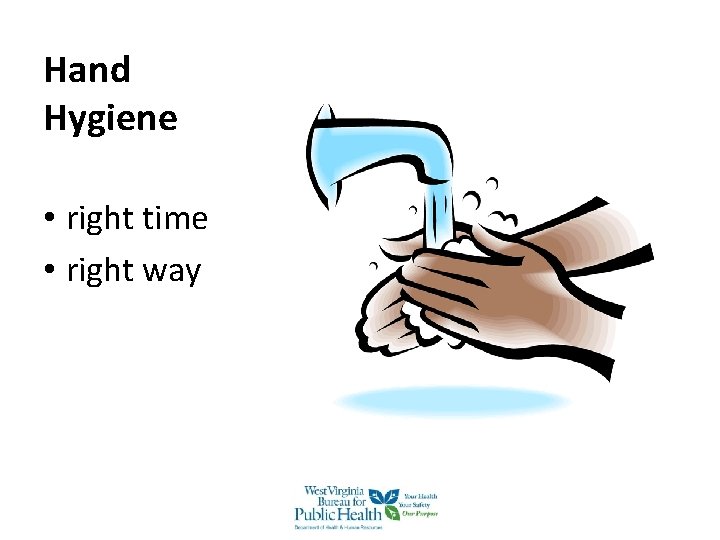
Hand Hygiene • right time • right way
Key Terms • The patient zone- includes the patient, surfaces and items that are temporarily and exclusively dedicated to him/her • The Health care area- all surfaces in the health care setting outside of the patient zone
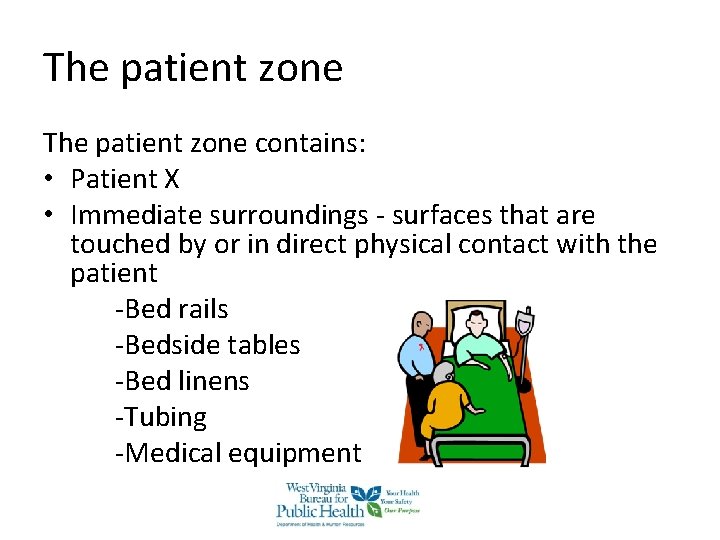
The patient zone contains: • Patient X • Immediate surroundings - surfaces that are touched by or in direct physical contact with the patient -Bed rails -Bedside tables -Bed linens -Tubing -Medical equipment
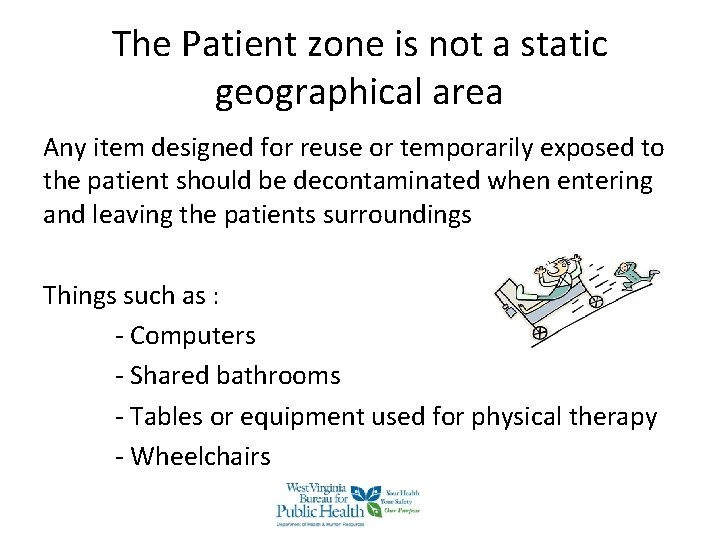
The Patient zone is not a static geographical area Any item designed for reuse or temporarily exposed to the patient should be decontaminated when entering and leaving the patients surroundings Things such as : - Computers - Shared bathrooms - Tables or equipment used for physical therapy - Wheelchairs
The Health-care Area Is everything outside of the patient zone: • Hand hygiene while caring for patients helps to protect the wider health care environment from contamination by patients germs
Right Time To avoid prolonged hand contamination: Perform hand hygiene when indicated
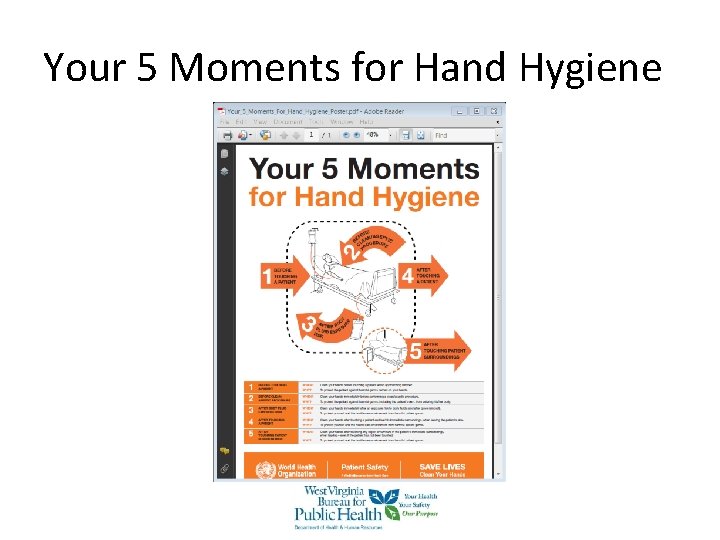
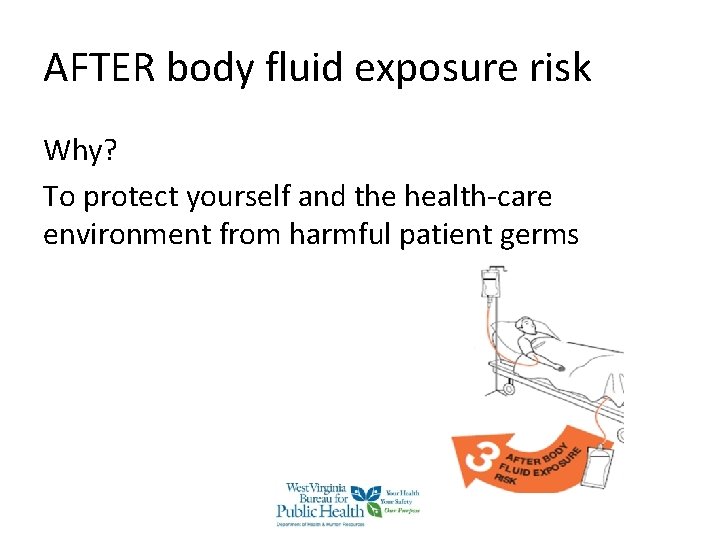
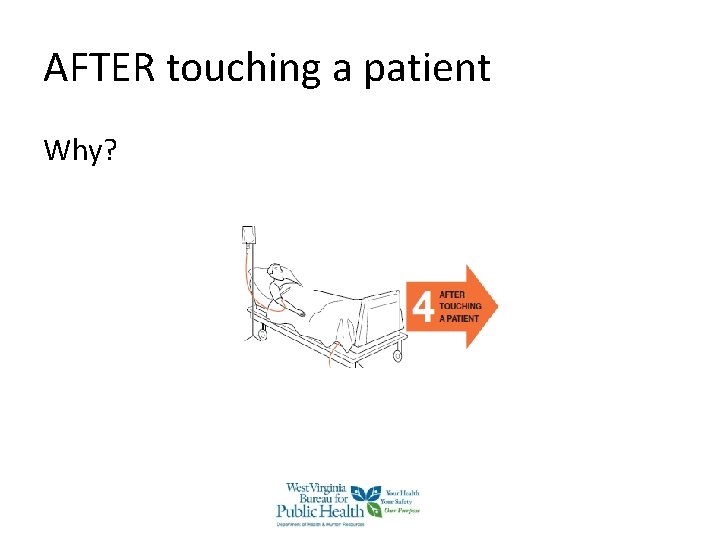
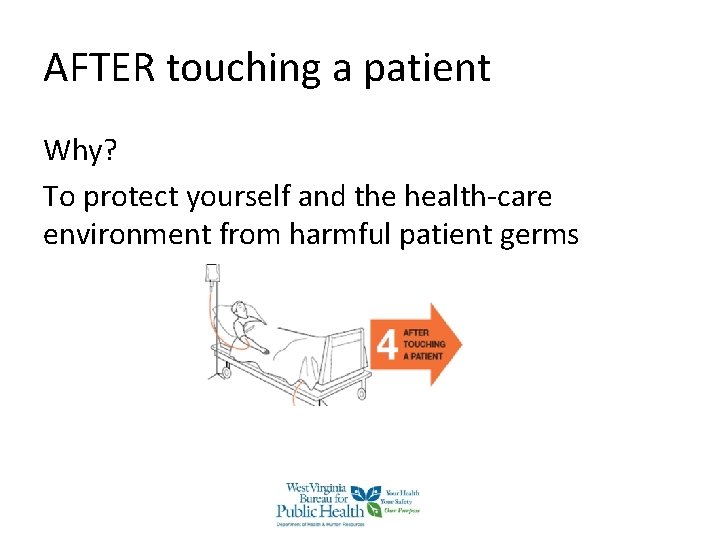
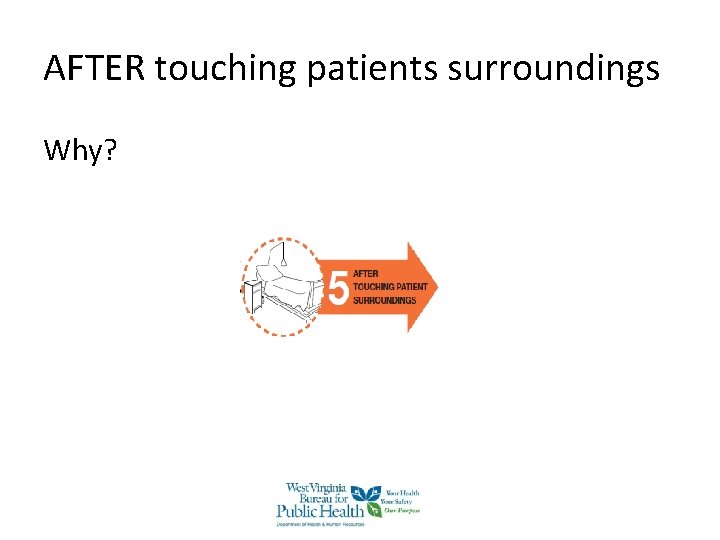
The 5 Moments for Hand Hygiene 1. 2. 3. 4. 5. BEFORE touching a patient BEFORE clean/aseptic procedures AFTER a body fluid exposure risk AFTER touching a patients surroundings
Your 5 Moments for Hand Hygiene
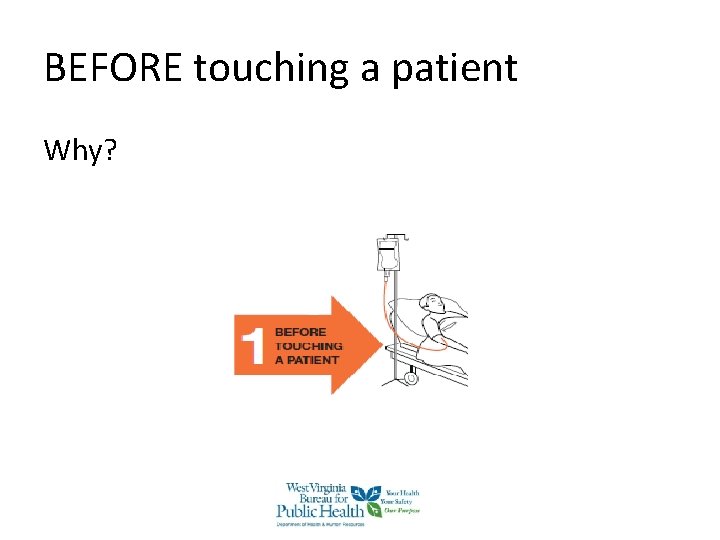
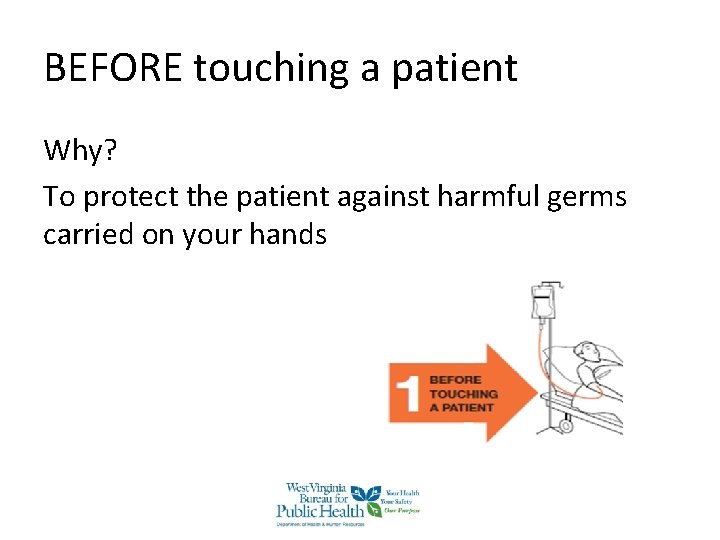
BEFORE touching a patient Why?
BEFORE touching a patient Why? To protect the patient against harmful germs carried on your hands
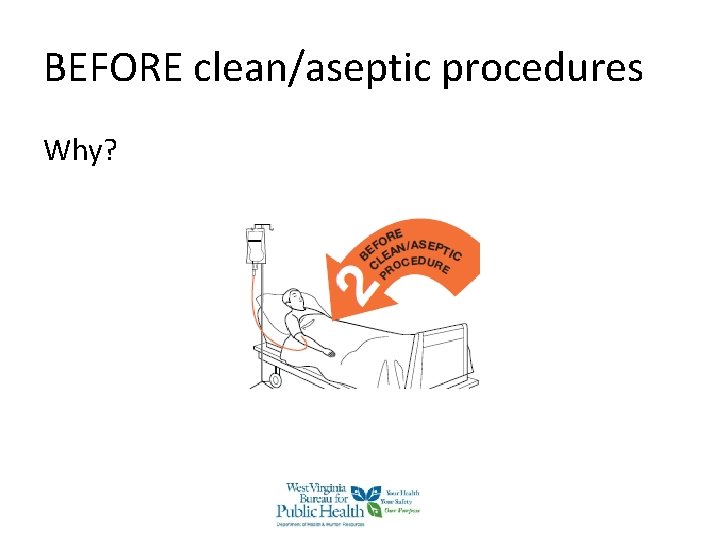
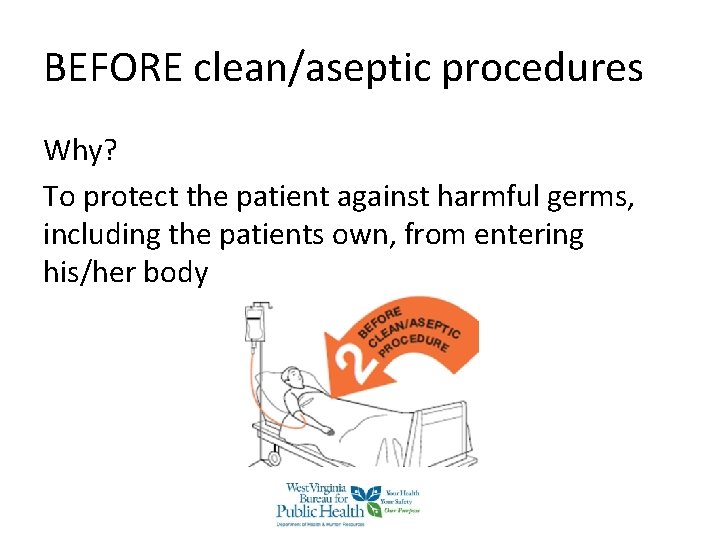
BEFORE clean/aseptic procedures Why?
BEFORE clean/aseptic procedures Why? To protect the patient against harmful germs, including the patients own, from entering his/her body
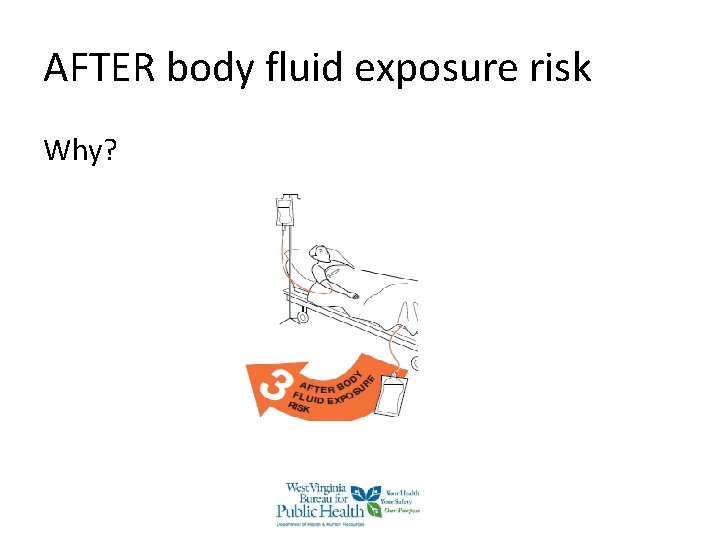
AFTER body fluid exposure risk Why?
AFTER body fluid exposure risk Why? To protect yourself and the health-care environment from harmful patient germs
AFTER touching a patient Why?
AFTER touching a patient Why? To protect yourself and the health-care environment from harmful patient germs
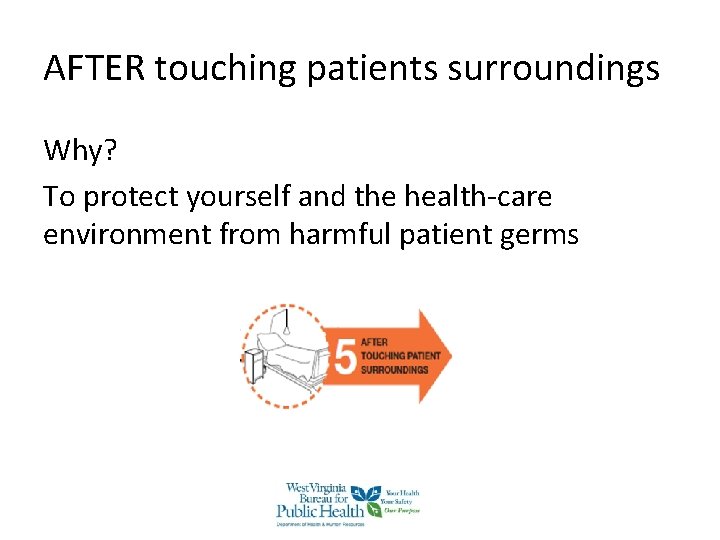
AFTER touching patients surroundings Why?
AFTER touching patients surroundings Why? To protect yourself and the health-care environment from harmful patient germs
Your 5 Moments for Hand Hygiene Film
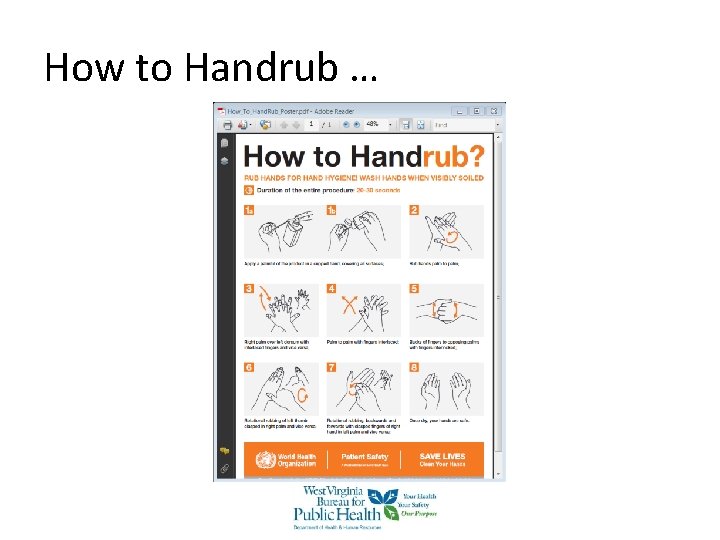
Right Way To avoid prolonged hand contamination: Use the appropriate technique Use an adequate quantity Use for recommended length of time
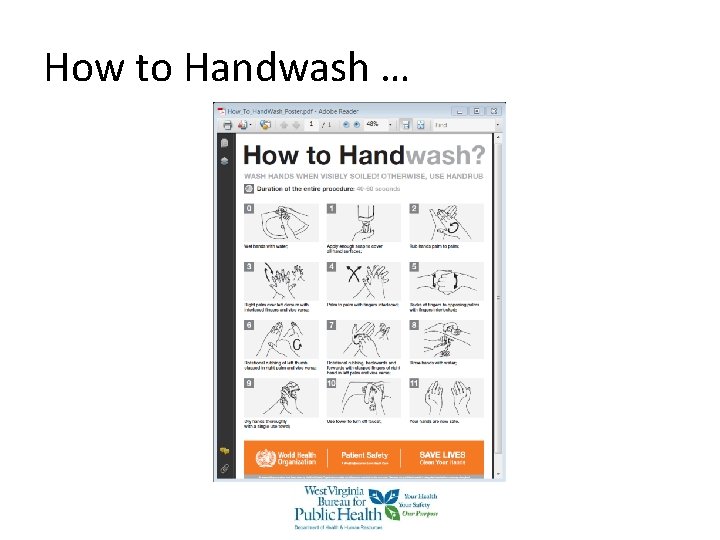
How to Handwash …
How to Handrub …
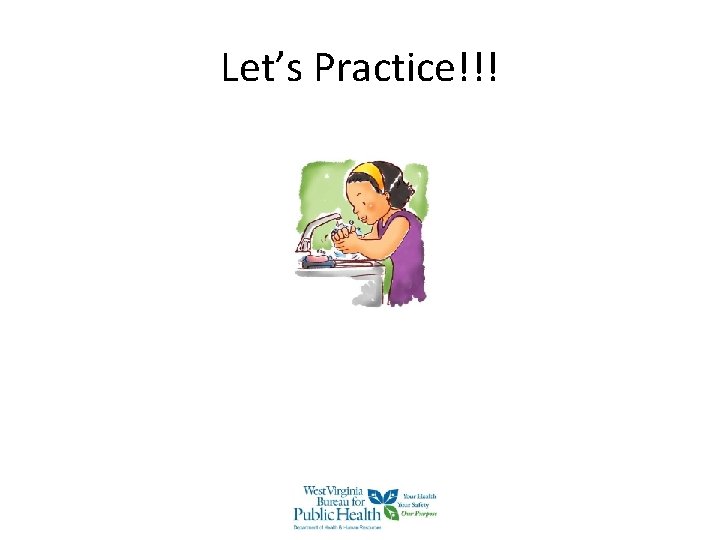
Let’s Practice!!!
Fingernails and Artificial Nails • Natural nail tips should be kept to ¼ inch in length • Artificial nails should not be worn when having direct contact with high-risk patients (e. g. , ICU, OR) 31
Understanding Medical Gloves and proper Glove use Medical gloves – disposable gloves used during medical procedures They include: • Examination gloves (non sterile or sterile) • Surgical gloves that have specific characteristics of thickness, elasticity and strength and are sterile
Gloves DO NOT take the place of hand hygiene • Glove use neither alters nor replaces the performance of hand hygiene • Gloves should be removed and hygiene performed when indicated by the 5 moments of hand hygiene and clean gloves put back on
Rationale for using medical gloves Recommended for two reasons: 1. To reduce the risk of contamination of health -care workers hands with blood and other body fluids 2. To reduce the risk of germ dissemination to the environment and of transmission from the health-care worker to the patient and vice versa, as well as from one patient to another
Inappropriate use of gloves Use of gloves when it is not indicated is a: • Waste of resources • Does not decrease cross-transmission of germs • May result in missed opportunities for hand hygiene • May actually result in germ transmission
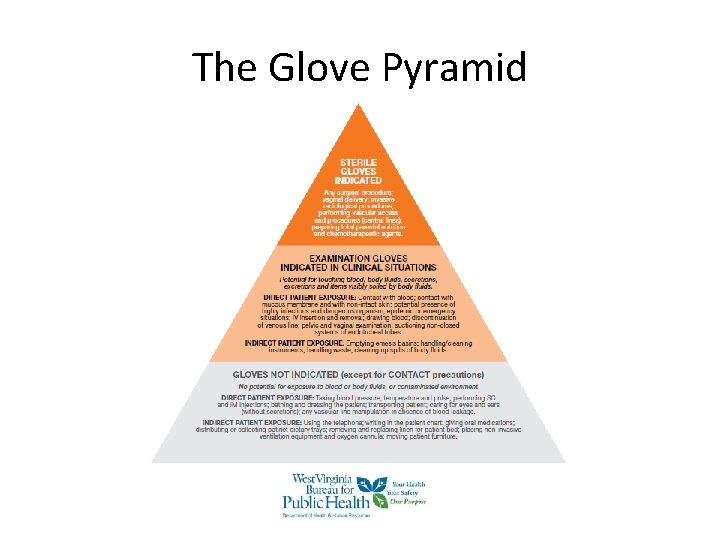
The Glove Pyramid
And Now its time for the GLOVE GAME !!!
GLOVE GAME • • • Assisting a patient with using the bedpan Taking Vital Signs Removing a dressing from a wound Catheter insertion Delivering food trays Emptying emesis basin Changing the linens for a patient with MRSA Changing a central line dressing Administering oral Medications Emptying a Foley catheter bag
Evaluating Your Hand Hygiene Program Why it is important… • Measurement of the effectiveness of current practices • Identifying areas needing increased education • To be able to give feedback to employees on their performance
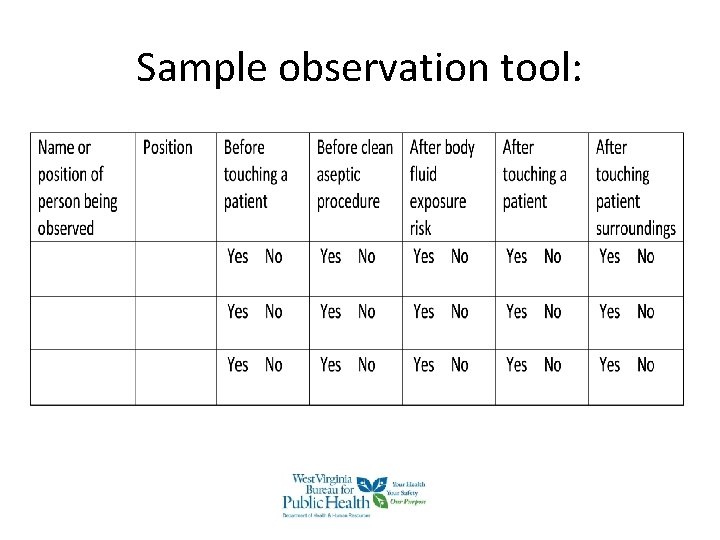
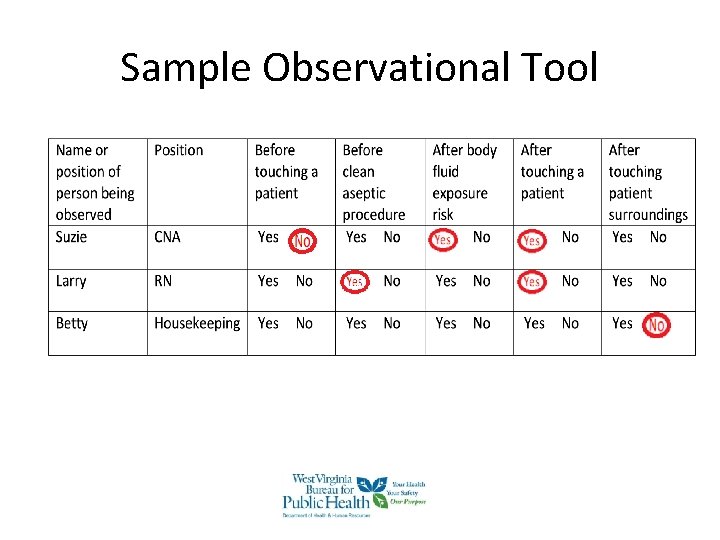
How to observe Hand Hygiene • Direct observation is the most accurate method • Observer must conduct the observation without interfering with ongoing work • Observer should be familiar with “The 5 Moments for Hand Hygiene” and the data collection tool that is being utilized • Identify opportunities for hand hygiene and then record if the worker being observed performed hand hygiene at that time
Sample observation tool:
Sample Observational Tool
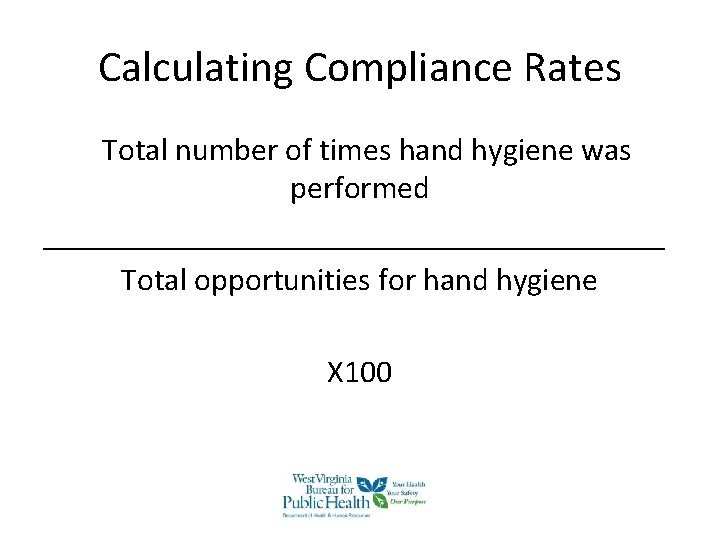
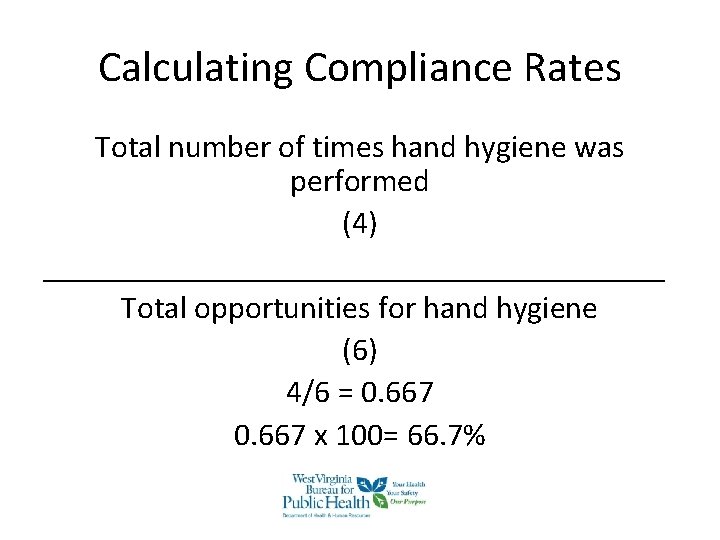
Calculating Compliance Rates Total number of times hand hygiene was performed ____________________ Total opportunities for hand hygiene X 100
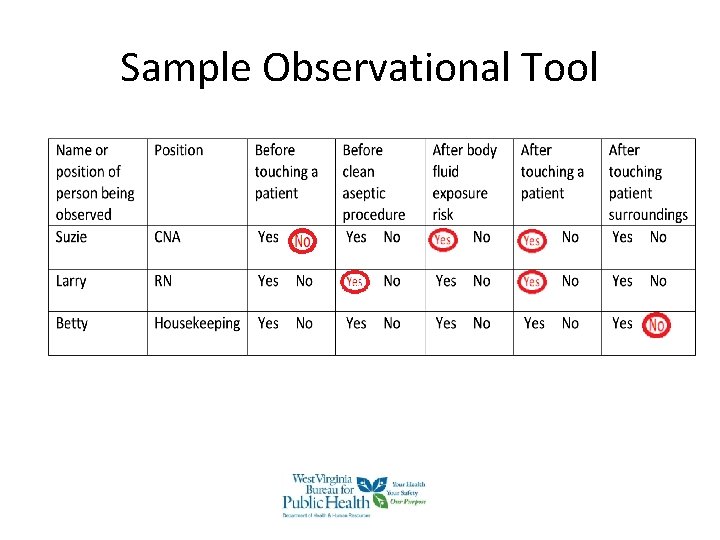
Sample Observational Tool
Calculating Compliance Rates Total number of times hand hygiene was performed (4) ____________________ Total opportunities for hand hygiene (6) 4/6 = 0. 667 x 100= 66. 7%
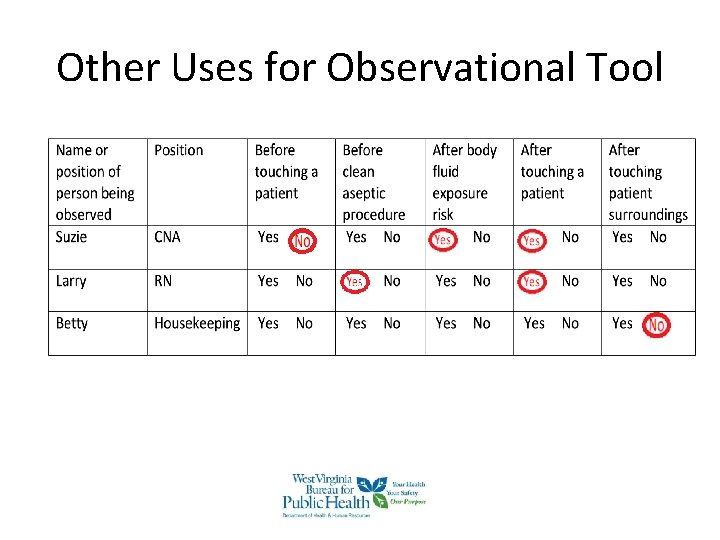
Other Uses for Observational Tool
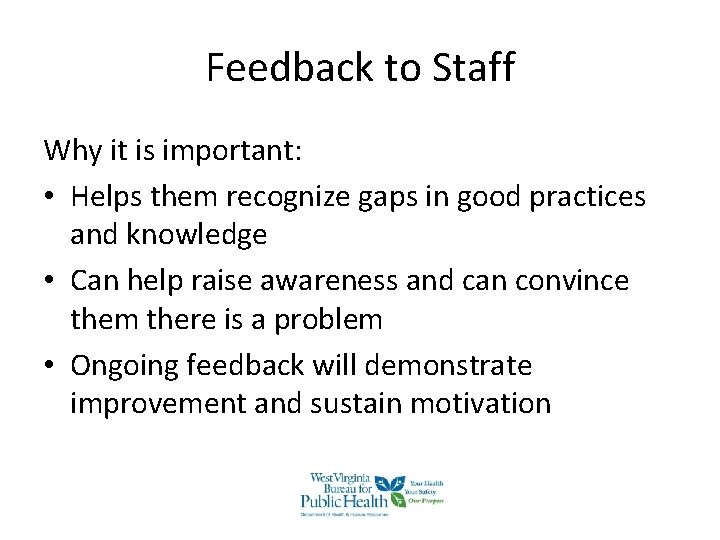
Feedback to Staff Why it is important: • Helps them recognize gaps in good practices and knowledge • Can help raise awareness and can convince them there is a problem • Ongoing feedback will demonstrate improvement and sustain motivation
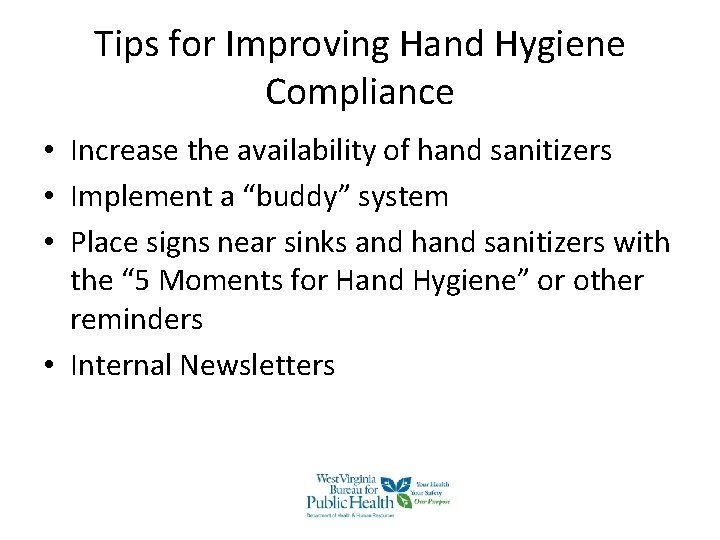
Tips for Improving Hand Hygiene Compliance • Increase the availability of hand sanitizers • Implement a “buddy” system • Place signs near sinks and hand sanitizers with the “ 5 Moments for Hand Hygiene” or other reminders • Internal Newsletters
Answers to Pre-test Which of the following is the main route of crosstransmission of potentially harmful germs between patients in a health- care facility? (Pick one answer only) a. Health- care worker’s hands when not clean b. Air circulating in the facility c. Patient’s exposure to colonized surfaces (i. e. , beds, chairs, tables, floors) between patients d. Sharing non-invasive objects (i. e. , stethoscopes, blood pressure cuffs, etc. ) between patients
Answers to Pre-test Which of the following is the main route of crosstransmission of potentially harmful germs between patients in a health- care facility? (Pick one answer only) a. Health- care worker’s hands when not clean b. Air circulating in the facility c. Patient’s exposure to colonized surfaces (i. e. , beds, chairs, tables, floors) between patients d. Sharing non-invasive objects (i. e. , stethoscopes, blood pressure cuffs, etc. ) between patients
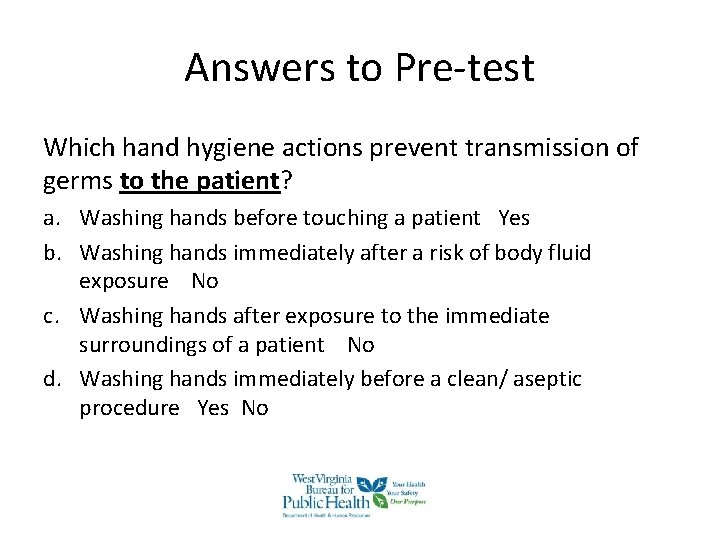
Answers to Pre-test Which hand hygiene actions prevent transmission of germs to the patient? a. Washing hands before touching a patient Yes No
Answers to Pre-test Which hand hygiene actions prevent transmission of germs to the patient? a. Washing hands before touching a patient Yes
Answers to Pre-test Which hand hygiene actions prevent transmission of germs to the patient? a. Washing hands before touching a patient Yes b. Washing hands immediately after a risk of body fluid exposure Yes No
Answers to Pre-test Which hand hygiene actions prevent transmission of germs to the patient? a. Washing hands before touching a patient Yes b. Washing hands immediately after a risk of body fluid exposure No
Answers to Pre-test Which hand hygiene actions prevent transmission of germs to the patient? a. Washing hands before touching a patient Yes b. Washing hands immediately after a risk of body fluid exposure No c. Washing hands after exposure to the immediate surroundings of a patient Yes No
Answers to Pre-test Which hand hygiene actions prevent transmission of germs to the patient? a. Washing hands before touching a patient Yes b. Washing hands immediately after a risk of body fluid exposure No c. Washing hands after exposure to the immediate surroundings of a patient No
Answers to Pre-test Which hand hygiene actions prevent transmission of germs to the patient? a. Washing hands before touching a patient Yes b. Washing hands immediately after a risk of body fluid exposure No c. Washing hands after exposure to the immediate surroundings of a patient No d. Washing hands immediately before a clean/ aseptic procedure Yes No
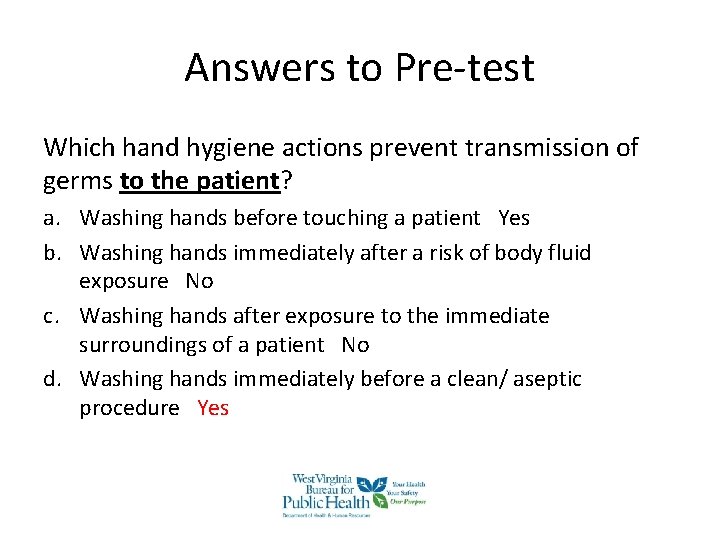
Answers to Pre-test Which hand hygiene actions prevent transmission of germs to the patient? a. Washing hands before touching a patient Yes b. Washing hands immediately after a risk of body fluid exposure No c. Washing hands after exposure to the immediate surroundings of a patient No d. Washing hands immediately before a clean/ aseptic procedure Yes
Answers to Pre-test What is the minimal time needed for alcohol based hand rub to kill most germs on your hands? (Pick one answer only) a. 20 seconds b. 3 seconds c. 1 minute d. 10 seconds
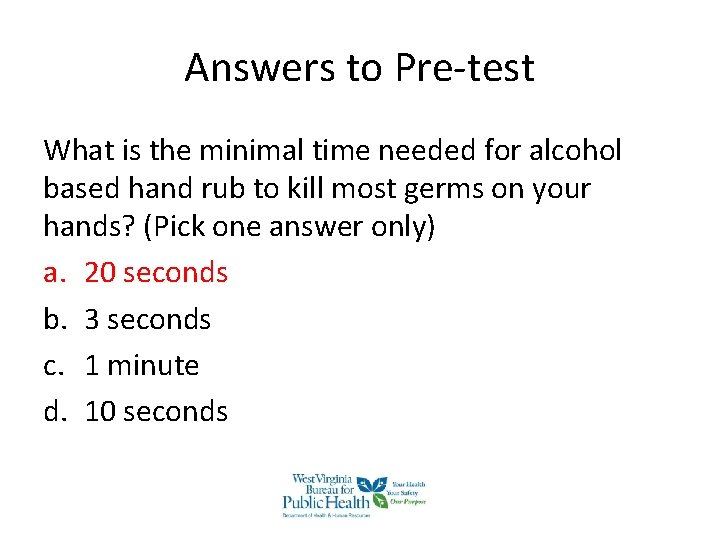
Answers to Pre-test What is the minimal time needed for alcohol based hand rub to kill most germs on your hands? (Pick one answer only) a. 20 seconds b. 3 seconds c. 1 minute d. 10 seconds
Summary: Increased compliance with Hand Hygiene at the appropriate moment and in the appropriate way will lead to reduced numbers of patients acquiring HAI’s and save lives Observational studies are key to determining the effectiveness and direction of your hand hygiene education.
WHO Hand Hygiene Self. Assessment Framework 2010 • WHO Hand Hygiene Self-Assessment Framework 2010 worksheet – Answer the following based on practices at your facility: • 3. 4 and 3. 5 from “Evaluation and feedback” • Entire section of 4 “Reminders in the workplace” • Entire section of 5 “Institutional safety climate for hand hygiene”
Discussion Questions (3. 4) • Does your facility use WHO “My 5 Moments for Hand Hygiene”? • How frequently is direct observation of hand hygiene compliance performed at your facility? • What is the overall hand hygiene compliance rate in your facility?
Discussion Questions (3. 5) • Do you use immediate feedback? • Describe your systematic feedback? – How often? – Audience? – Impact?
Discussion Questions (4) • Please share your experience with hand hygiene workplace reminders? – What has worked well? – Or not? – Types of reminders or promotions?
Discussion Questions (5) • Does anyone have experience with: – Hand hygiene teams? – Visible support from leadership? – Hand hygiene champions or role models? – Patient involvement? – Continuous improvement activities?
References • Center for Disease Control (CDC) • World Health Organization (WHO)
Questions?