
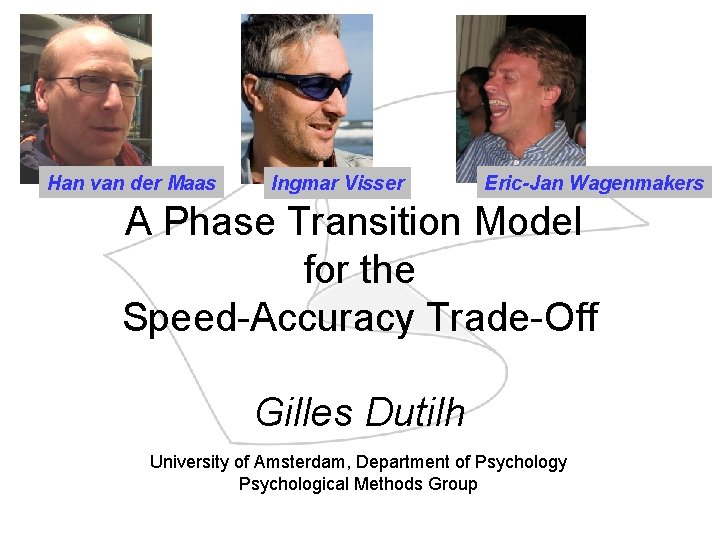
Han van der Maas Ingmar Visser EricJan Wagenmakers
- Slides: 21
Han van der Maas Ingmar Visser Eric-Jan Wagenmakers A Phase Transition Model for the Speed-Accuracy Trade-Off Gilles Dutilh University of Amsterdam, Department of Psychology Psychological Methods Group
Outline of this Talk - Speed-Accuracy Trade-Off - Experimental focus - the Phase Transition Model - Experiment and Data - Conclusions
Speed-Accuracy Trade-Off - Participants can speed up at the cost of accuracy. - Participants can improve their accuracy at the cost of speed - Most models of the SAT implicitly assume a continuous trade-off function.
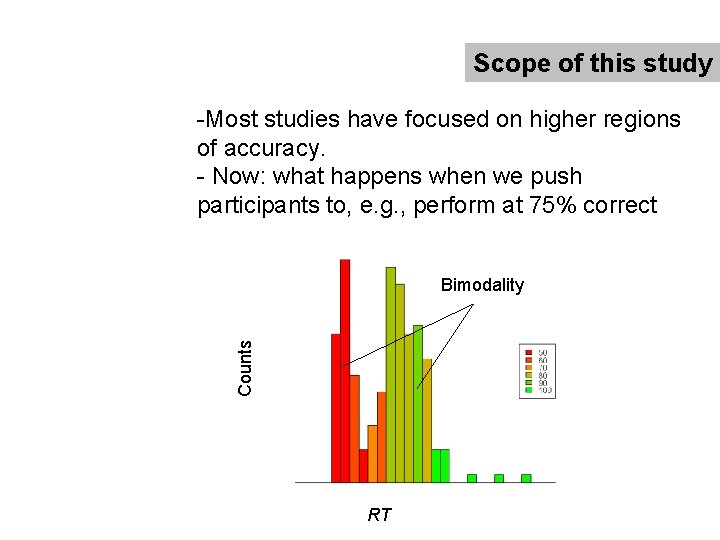
Scope of this study -Most studies have focused on higher regions of accuracy. - Now: what happens when we push participants to, e. g. , perform at 75% correct Counts Bimodality RT
Scope of this study - Bimodality implies two separate modes of processing: - accurate responding - fast guessing - Our main study explores dynamics of the transitions between these modes.
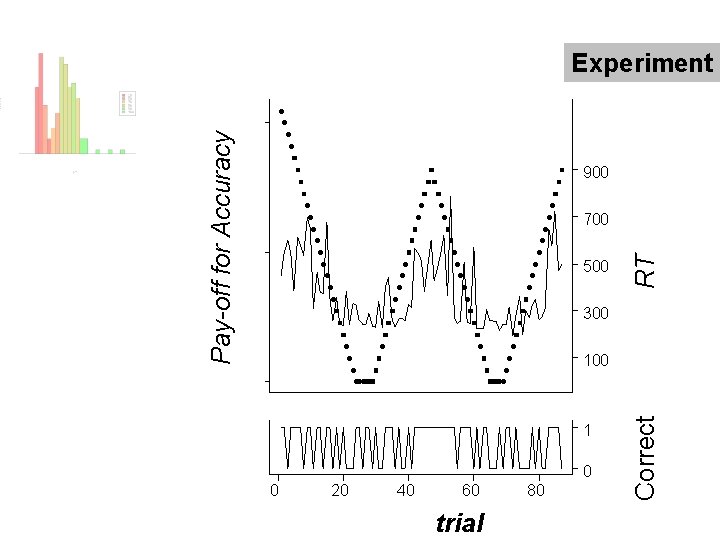
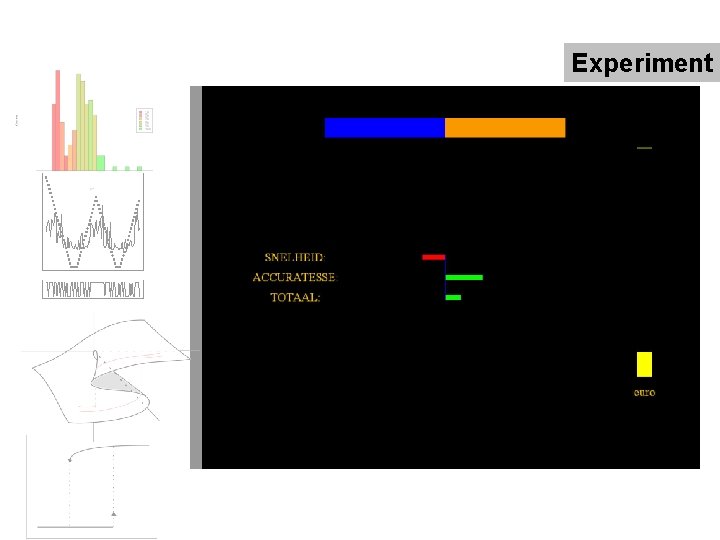
Experiment - Aim: Use reward function to push participants from highly accurate behavior to very fast behavior and back and forth. - Lexical Decision Task - Line Length Discrimination
Pay-off for Accuracy Experiment 900 500 RT 700 300 1 0 0 20 40 60 trial 80 Correct 100
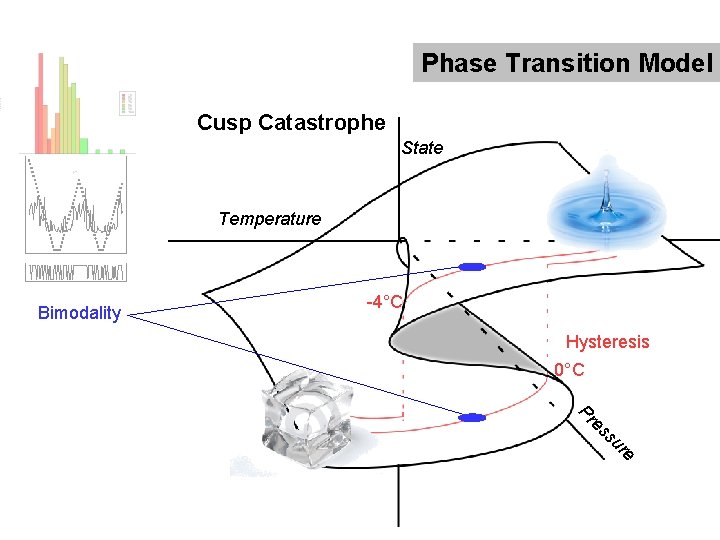
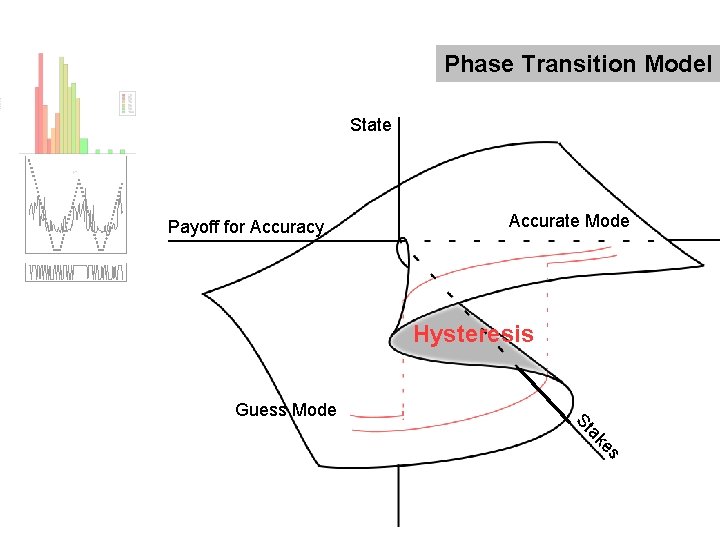
Phase Transition Model - We want a model that describes the dynamics of these two modes. - In physics and biology, it is common to model dynamical systems like these using Catastrophe Theory.
Phase Transition Model Cusp Catastrophe State Temperature Bimodality -4°C Hysteresis 0°C Pr es su re
Phase Transition Model State Payoff for Accuracy Accurate Mode Hysteresis Guess Mode s ke a St
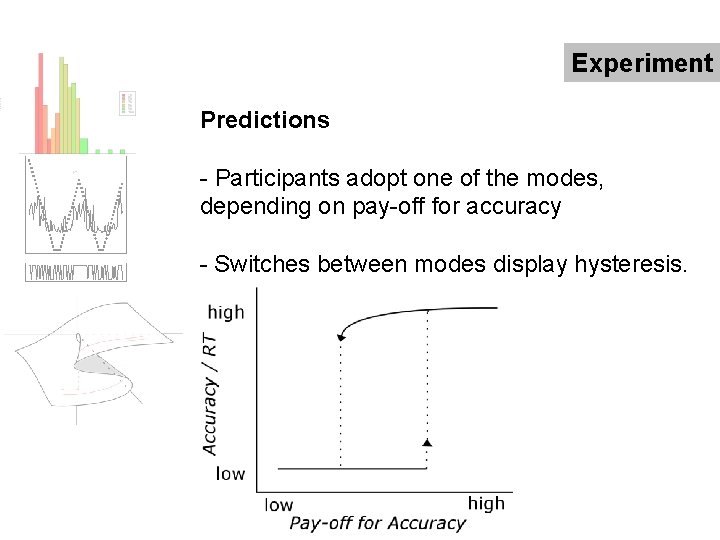
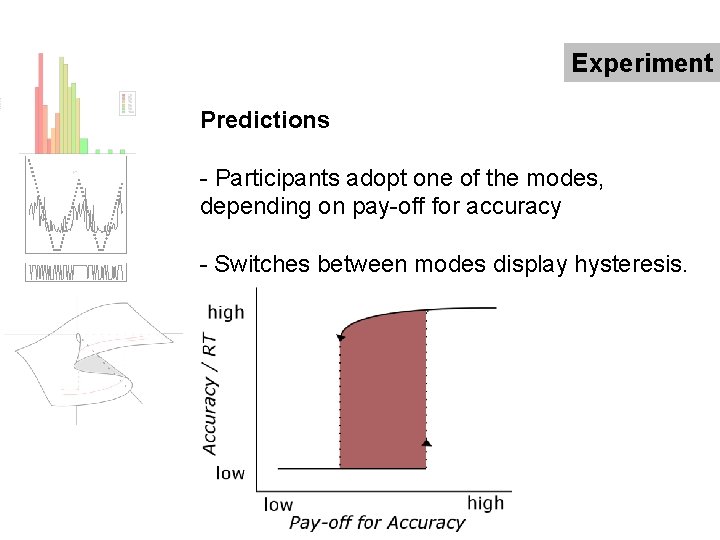
Experiment Predictions - Participants adopt one of the modes, depending on pay-off for accuracy - Switches between modes display hysteresis.
Experiment Predictions - Participants adopt one of the modes, depending on pay-off for accuracy - Switches between modes display hysteresis.
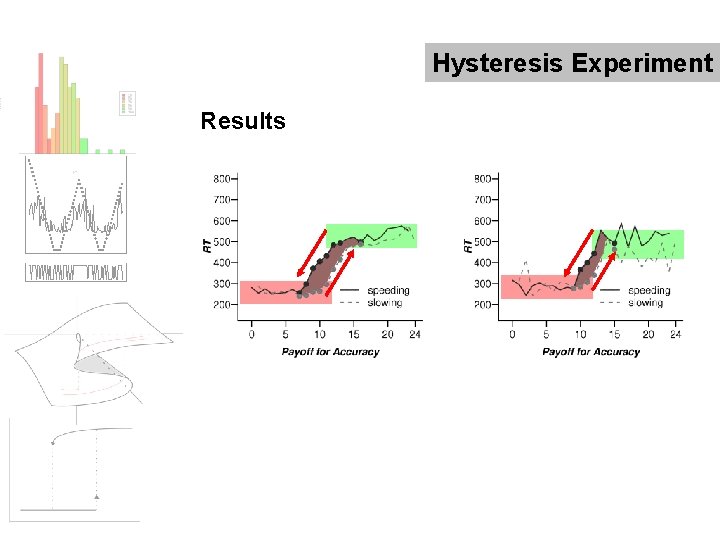
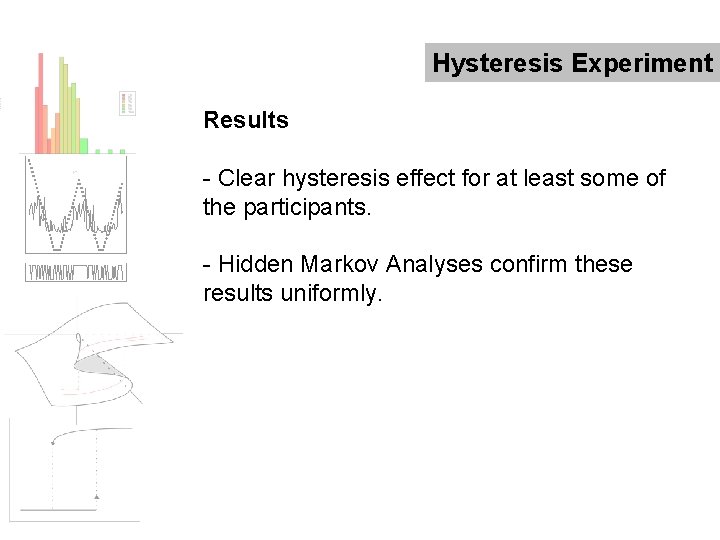
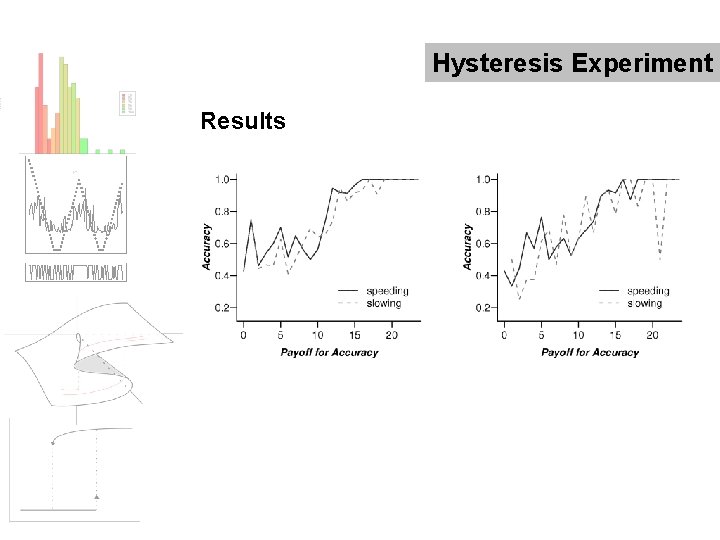
Hysteresis Experiment Results
Hysteresis Experiment Results - Clear hysteresis effect for at least some of the participants. - Hidden Markov Analyses confirm these results uniformly.
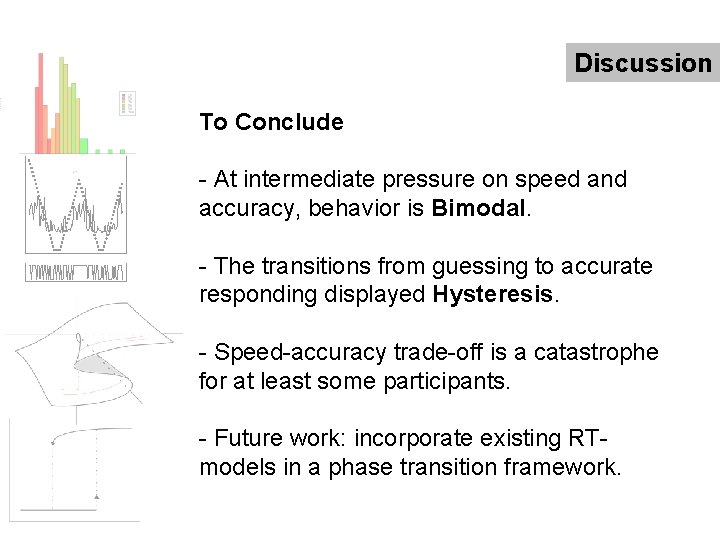
Discussion To Conclude - At intermediate pressure on speed and accuracy, behavior is Bimodal. - The transitions from guessing to accurate responding displayed Hysteresis. - Speed-accuracy trade-off is a catastrophe for at least some participants. - Future work: incorporate existing RTmodels in a phase transition framework.
The end Thank You
Hysteresis Experiment Results
Experiment
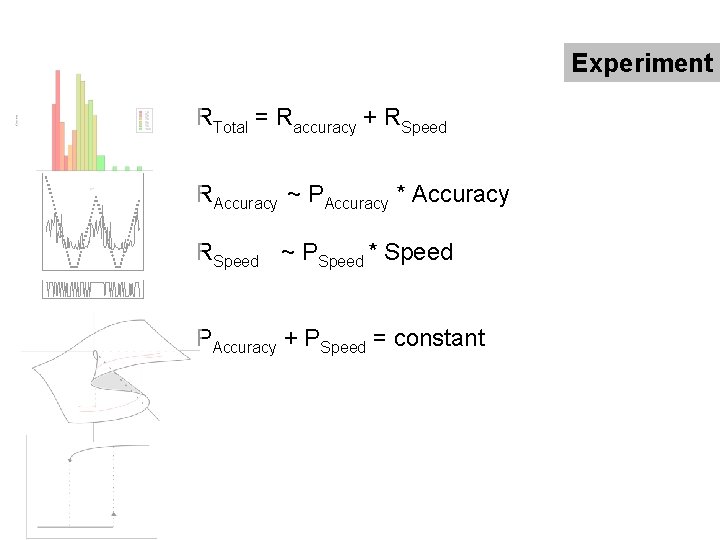
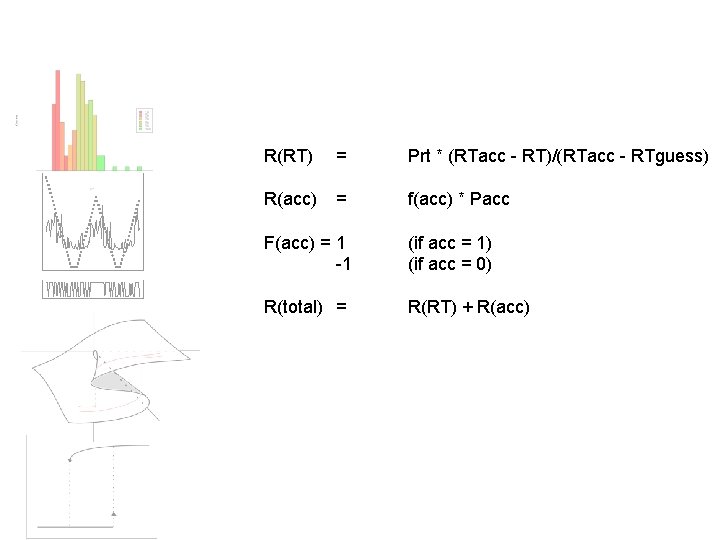
Experiment RTotal = Raccuracy + RSpeed RAccuracy ~ PAccuracy * Accuracy RSpeed ~ PSpeed * Speed PAccuracy + PSpeed = constant
R(RT) = Prt * (RTacc - RT)/(RTacc - RTguess) R(acc) = f(acc) * Pacc F(acc) = 1 -1 (if acc = 1) (if acc = 0) R(total) = R(RT) + R(acc)